Technical Design Solution
1. Cover / Document Information
– Document Title: 100 Units of 40ft High-Cube (40HC) Standard Ocean Shipping Containers Technical Design Solution
– Prepared by: Guangzhou Lain Intelligent System Development Co., Ltd.
– Brand: KITOZER (Pioneer)
– Version: V1.0
– Date: August 2026
2. Table of Contents Structure
1. Company Introduction
2. Project Overview
3. User Requirement Analysis
4. Overall Design Description
5. Detailed Quotation and Configuration List
6. Detailed Technical Parameters of Each System
7. Core Advantages of the Solution
8. Technical Q&A
9. Production Schedule Plan
10. Construction Organization and Production Management Plan
11. After-Sales Service System
12. Operation and Maintenance Training Plan
13. Typical Project Cases
14. SEO Keyword System and Optimization Tags
15. Contact Information
3. Company Introduction
Founded in 2002, Guangzhou Lain Intelligent System Development Co., Ltd. is a high-tech enterprise in China focusing on the R&D, production and sales of modular computer rooms, container-type equipment and intelligent shielding equipment, with its own core brand “KITOZER Pioneer”. With more than 20 years of industry experience, the company has accumulated rich experience in standardized manufacturing and customized transformation.
The company’s main products cover micro-module cold aisles, indoor integrated cabinets, outdoor cabinets, shielded rooms, containerized computer rooms, intelligent shielding cabinets, environmental monitoring systems, UPS supporting systems and other full-category computer room and cabinet equipment. Mastering efficient, energy-saving, green and reliable modular construction technology, the company can provide exclusive customized solutions for different scenarios such as logistics and warehousing, data centers, energy storage power stations, emergency equipment and industrial equipment cabins.
Relying on a flexible customization factory and original production strength, the company has established a full-process quality control system. Product production has detailed process standards, key nodes are protected by third-party testing, and delivery cycles are stable and reliable. On the design side, multiple solution selections can be provided free of charge to highly match customer on-site needs; on the service side, 7×24-hour online technical support is provided, with dedicated personnel following the full project cycle and fully traceable after-sales quality. With excellent product quality and a complete service system, the company’s products and solutions have won recognition and repeat purchases from many domestic and foreign enterprise customers.
Facing the national market, the company supports batch distribution and landing services to many cities across the country including Xi’an, Qingdao, Ningbo and Suzhou, providing customers with one-stop service from solution design, production and manufacturing to installation guidance and after-sales maintenance.
4. Project Background and Objectives
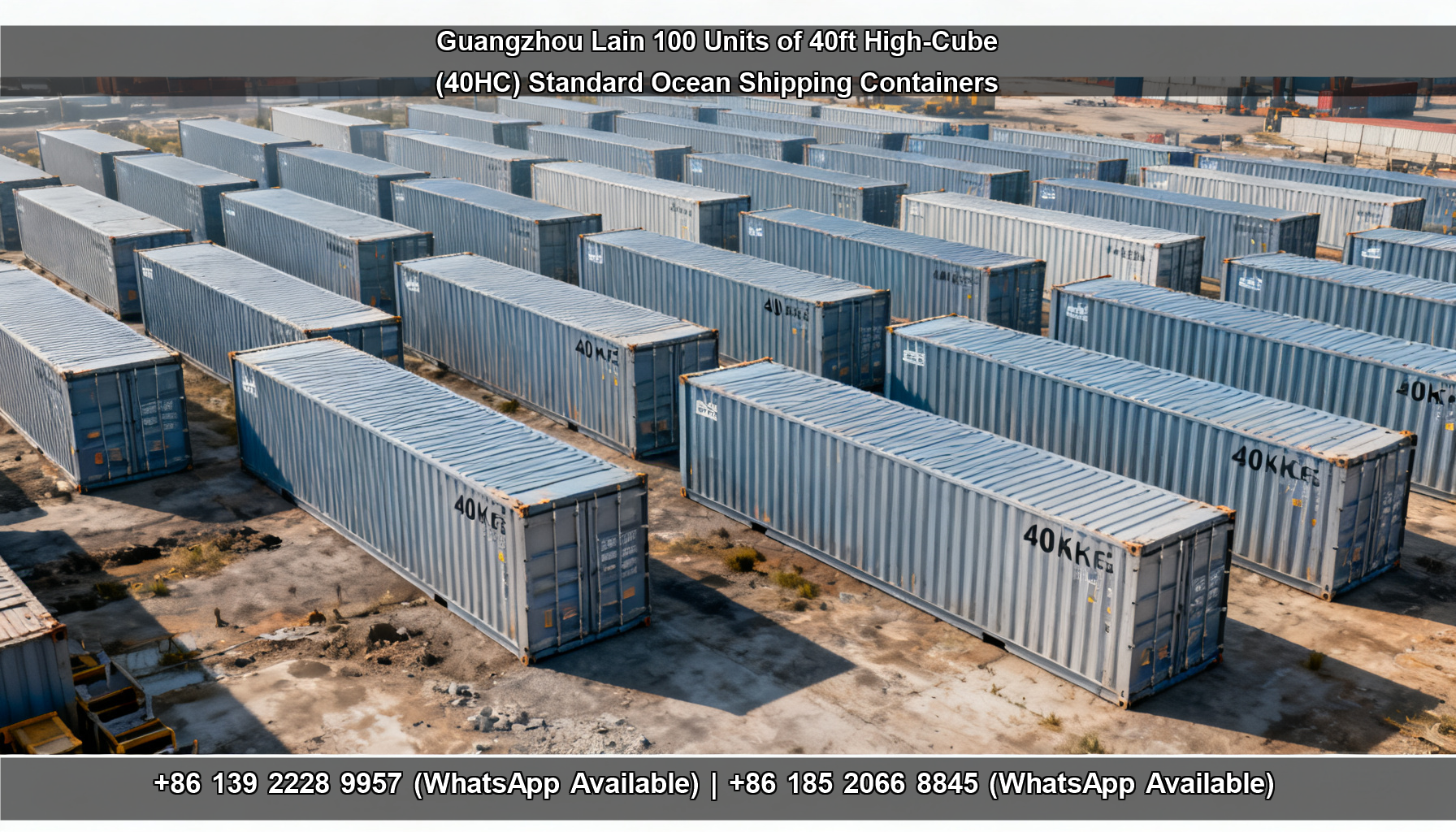
4.1 Project Background
With the rapid development of multimodal transport logistics systems, distributed data centers, new energy storage power stations, outdoor intelligent equipment and other industries, the 40ft high-cube (40HC) standard ocean shipping container has become the core carrier in logistics transportation, modular infrastructure construction and industrial equipment bearing fields, thanks to its high standardization, high space utilization, convenient hoisting and transportation, safe and reliable structure, and secondary transformation capability.
This project addresses the batch usage needs of Xi’an, Qingdao, Ningbo and Suzhou, purchasing 100 units of 40HC standard ocean shipping containers that meet international standards, for logistics warehousing turnover and subsequent modular equipment transformation. The products are required to meet international universal standards, with safe and durable structure, excellent anti-corrosion performance and complete supporting services.
4.2 Project Scale and Delivery Scope
– Product type: 40ft high-cube (40HC) standard dry cargo ocean shipping container
– Procurement quantity: 100 units in total
– Delivery cities: Xi’an, Qingdao, Ningbo and Suzhou, delivered in batches as needed
– Application scenarios: compatible with multiple scenarios including logistics warehousing turnover, containerized computer room transformation, energy storage equipment bearing and outdoor placement of industrial equipment
4.3 Project Objectives
– Deliver 100 units of 40HC containers fully compliant with ISO international standards, the CSC Safety Convention and national standards, with structural strength, anti-corrosion performance and sealing performance reaching industry-leading levels;
– Ensure 100% compatibility of products with global ports, logistics and hoisting systems, meeting the requirements of sea, road and rail multimodal transport;
– Provide complete technical documents, inspection reports, certification qualifications and full-cycle technical services, ensuring standardized customer use and convenient maintenance;
– Reserve structural and interface margins to support subsequent customized transformation by customers, adapting to diversified scenarios such as computer rooms, energy storage and equipment cabins.
5. User Requirement Analysis
5.1 Basic Quantity and Delivery Requirements
– A total of 100 units of 40HC standard ocean shipping containers are procured, which can be delivered in 3-4 batches to the four designated locations of Xi’an, Qingdao, Ningbo and Suzhou according to project progress;
– Each container is accompanied by complete technical documents such as factory certificate of conformity, CSC safety nameplate, inspection report and instruction manual;
– At delivery, the box is intact, the coating is undamaged, accessories are complete and functions are normal, ready for direct use.
5.2 Standard Compliance Requirements
Product design and manufacturing strictly follow international and domestic standards including ISO 6346 “Freight Containers – Coding, Identification and Marking”, ISO 1496-1 “Series 1 Freight Containers – Specification and Testing – Part 1: General Cargo Containers”, the 1972 International Convention for Safe Containers (CSC), GB/T 1413 “Series 1 Freight Containers – Classification, Dimensions and Ratings” and GB/T 17770 “General Technical Requirements for Air/Land/Sea Intermodal Containers”.
The corner castings, dimensions and hoisting interfaces fully comply with ISO universal standards, adapting to all global port hoisting equipment and transport vehicles.
5.3 Core Performance Requirements
– Structural strength: meet the load requirements of multiple working conditions including 9-high full-load stacking, top lifting, bottom lifting, longitudinal securing and transverse impact, with safety factor ≥1.5;
– Anti-corrosion performance: external salt spray tolerance ≥1000 hours, bottom frame salt spray tolerance ≥2000 hours, adapting to complex environments such as coastal high salt spray and inland industrial corrosion;
– Sealing performance: overall protection level reaches IP54 after door closing, rain-proof, dust-proof and splash-proof, protecting internal cargo and equipment from environmental erosion;
– Load-bearing performance: rated load capacity ≥30480kg, floor uniform load ≥1000kg/㎡, meeting heavy cargo loading and equipment bearing needs;
– Service life: main structure service life ≥20 years under normal use conditions, anti-corrosion coating warranty ≥5 years.
5.4 Functional Configuration Requirements
– Standard rear double-leaf outward-opening door structure, with complete door system accessories such as hinges, door lock rods, sealing strips and customs seal lock hasps, flexible opening and reliable locking;
– Standard D-type lashing rings at the bottom inside the box for cargo lashing and fixing needs;
– The box is equipped with drainage holes and insect screens to ensure smooth internal drainage and prevent insects and rodents from entering;
– Equipped with a complete labeling system such as standard box number reflective marking, CSC safety nameplate and load parameter plate, clear and durable;
– Support customized upgrades: side doors can be opened, ventilators added, insulation layers increased, and equipment racks installed inside as required.
5.5 Service and Guarantee Requirements
– Provide professional technical consultation and solution selection guidance to match customer actual use scenarios;
– Provide training services such as operation, daily maintenance and fault troubleshooting;
– Provide complete after-sales warranty services with timely fault response and sufficient repair parts supply;
– Support long-term cooperation and subsequent repeat purchases, ensuring product specification and quality consistency.
6. Design Principles and Applicable Standards
6.1 Applicable Standards
All design, manufacturing and inspection in this solution strictly follow the following standards and specifications:
– ISO 6346:2020 Freight containers – Coding, identification and marking
– ISO 1496-1:2018 Series 1 freight containers – Specification and testing – Part 1: General cargo containers
– ISO 1161:2016 Series 1 freight containers – Corner fittings – Specification
– 1972 International Convention for Safe Containers (CSC)
– GB/T 1413-2008 Series 1 freight containers – Classification, dimensions and ratings
– GB/T 17770-1999 General technical requirements for air/land/sea intermodal containers
– GB/T 26947-2011 Weathering steel plates for ocean shipping containers
– GB 50017-2017 Standard for design of steel structures
– Q/KTZ 001-2023 Guangzhou Lain enterprise standard – Standard ocean shipping container manufacturing specification
6.2 Design Principles
#### 6.2.1 Safety and Reliability Principle
All structural design is based on mechanical calculations. Key load-bearing parts use high-strength steel, and weld strength and structural redundancy are higher than standard requirements, ensuring structural safety throughout the whole process of transportation, stacking, loading/unloading and use, eliminating safety hazards.
#### 6.2.2 Standard and Universal Principle
Strictly follow international universal container standards. Dimension tolerances, corner fitting positions, hoisting interfaces and stacking methods are fully compatible with the global logistics system, seamlessly adapting to sea, road and rail multimodal transport, as well as standard operation equipment of various ports and stations.
#### 6.2.3 Durability and Anti-Corrosion Principle
According to the corrosion environment differences of different box parts, differentiated anti-corrosion solutions are adopted, establishing a multi-layer anti-corrosion system of “pre-treatment + primer + intermediate coat + topcoat + bottom frame special coating”, greatly improving product service life and reducing later maintenance costs.
#### 6.2.4 Economy and Practicality Principle
On the premise of meeting performance indicators, structural design and material selection are optimized to control manufacturing costs; at the same time, box space utilization and use convenience are improved, balancing procurement cost and long-term use value.
#### 6.2.5 Scalable Customization Principle
The main structure of the box reserves transformation margin, supporting subsequent opening of doors and windows, adding ventilation and air conditioning, arranging equipment racks, and adding insulation and fire protection layers. It can be quickly transformed into containerized computer rooms, energy storage cabins, equipment cabins, emergency cabins and other functional boxes, meeting the diversified needs of customers.
7. System Architecture and Working Principle
7.1 Overall Solution Overview
The 100 units of 40HC containers in this project all adopt the standard dry cargo container design of full steel welded structure. The whole is composed of five main structures – the bottom frame system, side wall system, front end wall system, roof system and door system – supported by four auxiliary systems – anti-corrosion coating system, sealing system, marking system and internal auxiliary accessories.
– External dimensions: 12192mm (length) × 2438mm (width) × 2896mm (height);
– Internal dimensions: 12032mm (length) × 2352mm (width) × 2698mm (height);
– Effective volume: about 76.4 cubic meters;
– Tare weight: about 3900kg;
– Maximum gross mass: 34380kg;
– Rated payload: about 30480kg.
Product production is completed in the factory throughout, including prefabrication, welding, spraying, assembly and inspection. Finished products are transported as a whole to delivery locations such as Xi’an, Qingdao, Ningbo and Suzhou, ready for use upon arrival.
7.2 System Composition
The container is composed of the following main systems:
– Bottom frame system: main beams, bottom cross beams, gooseneck tunnel, fork pockets and bottom corner fittings – the main load-bearing structure;
– Side wall system: corrugated side plates, side wall reinforcing ribs, kick plates and corner posts – the side enclosure structure;
– Front end wall system: front wall panel and reinforcing ribs – the front closed enclosure structure;
– Roof system: corrugated roof panels, roof cross beams and edge flashings – the top enclosure structure;
– Door system: left and right door leaves, hinges, lock rods, lock seats and door sealing strips – the rear access and sealing structure;
– Anti-corrosion coating system: multi-layer differentiated coating system;
– Marking system: box number, CSC safety nameplate, load parameter plate and warning signs;
– Internal auxiliary accessories: D-type lashing rings, drainage holes and insect screens.
8. Detailed Technical Design
8.1 Bottom Frame System Design
The bottom frame is the main load-bearing structure of the container, bearing all cargo weight and stacking and hoisting loads. It is welded from high-strength section steel, with good overall rigidity and strong bearing capacity.
– Main beams: hot-rolled H-section steel, 300×150×6.5×9mm, full length 12192mm, Q345B low-alloy high-strength steel, 2 pieces arranged symmetrically along the box length, connected to corner fittings by full-penetration groove welding with 12mm leg height;
– Bottom cross beams: No.10 channel steel (100×48×5.3mm), Q235B carbon steel, 40 pieces, arranged at 305mm spacing, double-sided fillet welding with 6mm leg height; front and rear end beams use thickened No.12 channel steel to enhance impact resistance;
– Gooseneck tunnel: located at the front lower part of the bottom frame, length 3800mm, width 950mm, depth 120mm, 8mm thick reinforcing plate, Q345B steel plate, adapted to the gooseneck structure of container tractors, lowering the transport center of gravity to meet road hauling requirements;
– Fork pockets: 4 positions, symmetrically arranged on both sides of the bottom frame, width 280mm, height 120mm, 6mm liner plate, Q235B steel plate, meeting forklift handling requirements and adapting to standard forklift forks;
– Bottom corner fittings: ISO 1161 standard, external dimensions 178×162×118mm, ZG270-500 high-quality cast steel, water glass precision casting, yield strength ≥270MPa, tensile strength 500-620MPa, single rated vertical load ≥300kN, single rated transverse load ≥150kN, 4 per container at the four corners of the bottom frame.
8.2 Corner Posts and Roof Structure Design
– Vertical corner posts: cold-formed special-shaped closed section, 150mm×150mm, 6mm steel plate, Q355NH weathering structural steel, yield strength ≥355MPa, weathering rate 1/2-1/3 of ordinary carbon steel, 4 per container, fully fused welded to top and bottom corner fittings, straightness tolerance ≤1.5mm, twist tolerance ≤1.5mm;
– Top corner fittings: parameters fully consistent with bottom corner fittings, 4 per container at the four top corners, mainly used for top stacking positioning, top hoisting and top securing;
– Roof cross beams: cold-formed channel steel, No.8 (80×43×5.0mm), Q235B carbon steel, 12 pieces at 1000mm spacing, both ends welded to corner posts/top corner fittings, upper part welded to roof panels, supporting roof loads and enhancing top transverse rigidity.
8.3 Side Wall and Front End Wall Design
– Side wall plates: corrugated profiled steel plates, vertical arrangement, wave height 36mm, wave pitch 200mm, trapezoidal corrugation, 1.6mm steel plate, single plate 2400mm (H) × 1116mm (W), Q355NH weathering structural steel, cold-bent roll forming, lap welding with 30mm lap width, continuous sealed welding, 10 plates per side, 20 plates per container;
– Side wall reinforcing ribs: channel-type cold-formed parts, 2.0mm thick, Q355NH weathering steel, vertical arrangement, 5 per side, 10 per container;
– Kick plates: height 150mm, 2.0mm thick, Q355NH weathering steel, at the bottom of side walls, enhancing bottom impact resistance;
– Front end wall panel: flat wall panel + transverse reinforcing ribs, 1.6mm wall plate, overall 2438mm (W) × 2896mm (H), Q355NH weathering steel, 3 channel-type reinforcing ribs (2.0mm), fully welded around to corner posts, bottom cross beams and roof cross beams, flatness tolerance ≤4mm, diagonal tolerance ≤6mm.
8.4 Roof System Design
– Roof panels: corrugated profiled steel plates, longitudinal arrangement, wave height 25mm, wave pitch 300mm, trapezoidal corrugation, 2.0mm steel plate, single plate width 1040mm, Q355NH weathering structural steel, 5 plates spliced transversely, lap welding + sealant double sealing with 50mm lap width;
– Edge flashings: 50mm height, folded around the perimeter;
– Camber: overall 12mm, higher in the middle and lower around, facilitating rainwater drainage;
– Uniform load capacity: ≥150kg/㎡; concentrated load capacity ≥100kg within 300mm×300mm area;
– Waterproof performance: no leakage at seams, overall rain protection level IP54.
8.5 Floor System Design
– Floor panel: 28mm thick bamboo-wood composite board (bamboo strips and wood strips cross-laminated and hot-pressed), phenolic resin impregnated surface treatment, anti-slip and wear-resistant surface layer, overall 12032mm (L) × 2352mm (W);
– Surface density: ≥1000kg/㎡; static flexural strength ≥80MPa; elastic modulus ≥10000MPa; water absorption thickness expansion ≤8% (24h immersion); abrasion value ≤0.08g/100 revolutions; impact resistance: 1kg steel ball dropped from 1m height without cracks; fire rating B1 (difficult to burn);
– Fixing method: galvanized self-tapping screws M6×50mm, one screw every 200mm on each bottom cross beam, about 200 per container, sealant applied at screw holes to prevent moisture intrusion.
8.6 Door System Design
The door is a rear double-leaf outward-opening structure that can open 270 degrees, with flexible opening/closing, reliable locking and excellent sealing performance.
– Door leaves: 2 leaves (left and right), single leaf 2340mm (H) × 1170mm (W), corrugated profiled steel plate + internal transverse reinforcing ribs, 1.6mm door plate, 4 reinforcing ribs per leaf (2.0mm), Q355NH weathering steel, door frame of 5mm steel plate folded and formed, door leaf flatness ≤2mm, opening angle 0-270 degrees;
– Hinges: heavy cast steel hinges with pins, hinge seat ZG230-450 cast steel, pin 45# steel quenched, pin diameter φ30mm, galvanized passivation surface, single-set load ≥1000kg, fatigue life ≥10000 opening/closing cycles without looseness, 3 sets per door, 6 sets per container, hinge seats fully welded to door leaves and corner posts;
– Door lock rods: diameter φ42mm, wall thickness 3mm, 20# seamless steel pipe, hot-dip galvanized, single length about 2500mm, each lock rod with upper and lower lock heads, one handle seat and one handle; lock head ZG270-500 cast steel with surface quenching, hardness HRC40-45; handle steel plate stamped with rubber grip; locking force ≥500N, door leaf shake after locking ≤1mm; 2 rods per container, one per door;
– Lock seats: ZG270-500 cast steel, 4 per container (2 upper, 2 lower), fixed on door header and threshold respectively, fit clearance with lock heads ≤0.5mm;
– Door sealing strip: EPDM rubber, compound labyrinth section, double sealing structure, Shore hardness 65±5, tensile strength ≥12MPa, elongation at break ≥300%, compression permanent deformation ≤25% (70°C×22h), ozone resistance: no cracks in 100pphm ozone for 48h, operating temperature -40°C ~ +80°C, service life ≥8 years, whole-circle extruded and vulcanized without joints, snap-in fixation, sealing level IP54 after closing;
– Other door accessories: customs seal lock hasp, 3mm galvanized steel plate stamped, with standard seal hole, 2 per container, installed in the middle of the right door; door opening limiter, rubber buffer type, limits maximum opening angle to 270 degrees, 2 per container; threshold, 6mm checkered steel plate folded, height 100mm, anti-slip and wear-resistant.
8.7 Anti-Corrosion Coating System Design
A multi-layer composite anti-corrosion system is adopted with differentiated design according to the corrosion environment differences of different box parts.
– Surface pre-treatment: fully automatic shot blasting, Sa2.5 grade (GB/T 8923), surface roughness Ra40-75μm, cleanliness free of scale, rust, oil, dust and other impurities; primer must be sprayed within 4 hours after blasting to prevent secondary rust;
– Epoxy zinc-rich primer (internal and external): two-component, zinc powder content ≥80% (dry film mass ratio), dry film thickness ≥30μm, adhesion ≥5MPa, salt spray resistance ≥500 hours, pencil hardness ≥2H, impact resistance ≥50cm·kg, high-pressure airless spraying, providing cathodic protection;
– Epoxy micaceous iron oxide intermediate coat (external): two-component, MIO content ≥30%, dry film thickness ≥40μm, adhesion ≥4MPa, salt spray resistance ≥800 hours, extremely low moisture vapor permeability;
– Acrylic polyurethane topcoat (external): two-component, dry film thickness ≥40μm, total external dry film thickness ≥110μm, gloss 60±5 degrees (semi-gloss), QUV aging test 1000 hours with gloss loss ≤15% and color change grade ≤1, salt spray resistance ≥1000 hours without blistering or rusting, gasoline resistance: 72h immersion no abnormality, acid/alkali resistance: 48h immersion in 5% acid/alkali solution no abnormality, standard color RAL 9005 ink black (other colors customizable);
– Epoxy asphalt thick coating (bottom frame bottom): two-component, dry film thickness ≥200μm, adhesion ≥6MPa, salt spray resistance ≥2000 hours, excellent water resistance and soil corrosion resistance, impact resistance ≥80cm·kg, two passes by high-pressure airless spraying;
– Internal wall epoxy topcoat: two-component, dry film thickness ≥50μm, low VOC, wear-resistant, easy to clean and oil-resistant.
8.8 Marking and Auxiliary Accessories Design
– Box number marking: per ISO 6346 coding rules, composed of owner code (3 letters) + equipment identifier (1 letter) + serial number (6 digits) + check digit (1 digit); engineering-grade reflective film, reflection coefficient ≥500cd·lx⁻¹·m⁻², night visible distance ≥300m, arranged on the rear door leaves (1 set each side) and side walls (1 set each side), character height 400mm at door end and 300mm at side walls, weather resistance ≥5 years;
– CSC safety nameplate: 1.5mm aluminum alloy plate, etched and paint-filled, 150mm×100mm, contents include manufacture date, manufacturer, maximum gross mass, tare weight, payload, volume, test pressure and CSC validity; validity 5 years; installed on the inner side of the right door leaf;
– Load parameter plate: aluminum alloy plate, silk-printed, 200mm×150mm, contents include tare weight, maximum gross mass, rated payload, internal dimensions and volume; installed on the right post of the door end;
– D-type lashing rings: 45# steel forged, hot-dip galvanized passivation, D-ring with base, rated working load 20kN (2 tons), breaking force ≥60kN, installation spacing 1016mm, 20 per container (10 per side), base fully welded to bottom cross beams;
– Drainage holes and insect screens: drainage hole diameter φ25mm, 4 per container at the four corners of the bottom frame; insect screen 304 stainless steel, mesh diameter 2mm, snap-in installation for easy disassembly and cleaning.
8.9 Welding Technology Design
– Welding methods: CO2 gas shielded welding (GMAW) for main structure; submerged arc welding (SAW) + CO2 multi-layer multi-pass welding for important welds such as corner fittings and corner posts; argon tungsten arc welding (TIG) for thin plate splicing and sealing welds; manual arc welding (SMAW) for auxiliary accessory welding;
– Welding materials: CO2 welding wire ER50-6 φ1.2mm per GB/T 8110; SAW wire H08A φ4.0mm with flux HJ431; TIG wire ER50-6 φ1.0mm; manual electrode E4303 φ3.2/4.0mm;
– Welding parameters: CO2 gas shielded welding current 180-220A, voltage 24-28V, gas flow 15-20L/min, speed 30-40cm/min; multi-layer multi-pass single pass thickness not exceeding 5mm, interlayer temperature 100-200°C;
– Weld quality requirements: continuous welds free of cracks, porosity, slag inclusion and incomplete fusion; undercut depth ≤0.5mm, continuous length ≤100mm, total length ≤10% of weld total length; leg height meets design requirements with tolerance ±1mm;
– Weld inspection: 100% visual inspection; 100% UT inspection of important welds (corner fittings-corner posts, main beams-corner fittings) per GB/T 11345 grade II; 100% kerosene leakage test of all peripheral welds, 2 hours without leakage; roof seam water test 24 hours without leakage.
8.10 Finished Product Inspection Design
Dimension inspection:
| Inspection item | Standard value | Tolerance |
|---|---|---|
| External length | 12192mm | ±6mm |
| External width | 2438mm | ±4mm |
| External height | 2896mm | ±6mm |
| Internal length | 12032mm | ±10mm |
| Internal width | 2352mm | ±5mm |
| Internal height | 2698mm | ±8mm |
| Corner fitting longitudinal center distance | 12000mm | ±3mm |
| Corner fitting transverse center distance | 2259mm | ±2mm |
| Diagonal difference | – | ≤10mm |
Performance tests:
– Stacking test: apply vertical uniform load of 1.8 times the rated load for 24 hours; after unloading, residual deformation ≤2mm, no cracks or permanent deformation;
– Top lifting test: lift the box by top corner fittings in empty state, hold 5 minutes off the ground, no cracks or deformation at all parts, reliable corner fitting connection;
– Bottom lifting test: lift the box by bottom corner fittings in full-load state, hold 5 minutes off the ground, maximum bottom frame deformation ≤5mm, residual deformation ≤1mm after unloading;
– Longitudinal securing test: apply rated longitudinal securing force, no permanent deformation, structure intact;
– Sealing water spray test: spray all box seams and doors with 0.1MPa water pressure for 30 minutes, no leakage inside;
– Door opening/closing test: 50 continuous opening/closing cycles, flexible rotation, reliable locking, no jamming or looseness.
9. Recommended Configuration and Preliminary Budget
9.1 Box Main Structure Configuration (per unit)
| No. | Component | Specification | Material | Qty | Unit |
|---|---|---|---|---|---|
| 1 | Bottom frame main beam | 300×150×6.5×9mm, full length 12192mm | Q345B low-alloy steel | 2 | pcs |
| 2 | Bottom cross beam | No.10 channel steel, spacing 305mm | Q235B carbon steel | 40 | pcs |
| 3 | Gooseneck tunnel assembly | Standard size, depth 120mm | Q345B steel plate | 1 | set |
| 4 | Vertical corner post | 150×150mm special section, 6mm thick | Q355NH weathering steel | 4 | pcs |
| 5 | Top corner fitting | ISO standard 178×162×118mm | ZG270-500 cast steel | 4 | pcs |
| 6 | Bottom corner fitting | ISO standard 178×162×118mm | ZG270-500 cast steel | 4 | pcs |
| 7 | Side wall corrugated plate | Wave height 36mm, 1.6mm thick | Q355NH weathering steel | 20 | sheets |
| 8 | Side wall reinforcing rib | Channel type, 2.0mm thick | Q355NH weathering steel | 10 | pcs |
| 9 | Front end wall panel | Flat wall + ribs, 1.6mm thick | Q355NH weathering steel | 1 | pcs |
| 10 | Front end wall reinforcing rib | 3 transverse ribs, 2.0mm thick | Q355NH weathering steel | 3 | pcs |
| 11 | Roof cross beam | No.8 channel steel, spacing 1000mm | Q235B carbon steel | 12 | pcs |
| 12 | Roof corrugated plate | Wave height 25mm, 2.0mm thick | Q355NH weathering steel | 5 | sheets |
| 13 | Bamboo-wood composite floor | 28mm thick, phenolic impregnated | Bamboo-wood composite | 1 | pcs |
| 14 | Threshold assembly | Checkered steel folded, height 100mm | Q235B checkered steel | 1 | set |
| 15 | Door header assembly | Steel plate folded | Q235B steel plate | 1 | set |
9.2 Door System Configuration (per unit)
| No. | Component | Specification | Material | Qty | Unit |
|---|---|---|---|---|---|
| 1 | Left door leaf assembly | 2340×2585mm, corrugated structure | Q355NH weathering steel | 1 | leaf |
| 2 | Right door leaf assembly | 2340×2585mm, corrugated structure | Q355NH weathering steel | 1 | leaf |
| 3 | Door hinge assembly | Heavy cast steel, with pin | ZG230-450 cast steel + 45# steel | 6 | sets |
| 4 | Door lock rod assembly | φ42mm, with lock head and handle | 20# seamless steel pipe + cast steel | 2 | pcs |
| 5 | Door lock seat | Matched with lock head | ZG270-500 cast steel | 4 | pcs |
| 6 | Door sealing strip | Labyrinth section, full circle without joints | EPDM rubber | 1 | circle |
| 7 | Customs seal lock hasp | Standard seal hole | Galvanized steel plate | 2 | pcs |
| 8 | Door opening limiter | Rubber buffer type | Rubber + steel plate | 2 | pcs |
9.3 Anti-Corrosion and Marking System Configuration (per unit)
| No. | Component | Specification | Qty | Unit |
|---|---|---|---|---|
| 1 | Shot blasting pre-treatment | Sa2.5 grade, Ra40-75μm | 1 | item |
| 2 | Epoxy zinc-rich primer | Dry film ≥30μm, internal and external surfaces | 1 | item |
| 3 | Epoxy micaceous iron oxide intermediate coat | Dry film ≥40μm, external surface | 1 | item |
| 4 | Acrylic polyurethane topcoat | Dry film ≥40μm, external, RAL9005 | 1 | item |
| 5 | Epoxy asphalt bottom frame coating | Dry film ≥200μm, bottom frame lower surface | 1 | item |
| 6 | Internal wall epoxy topcoat | Dry film ≥50μm, internal surface | 1 | item |
| 7 | Box number reflective marking | Engineering-grade reflective film, door end + both sides | 1 | set |
| 8 | CSC safety nameplate | Aluminum alloy etched, 150×100mm | 1 | pcs |
| 9 | Load parameter plate | Aluminum alloy silk-printed, 200×150mm | 1 | pcs |
| 10 | Warning signs | Stacking, hoisting, weight limit signs | 1 | set |
9.4 Internal Auxiliary Accessories Configuration (per unit)
| No. | Component | Specification | Material | Qty | Unit |
|---|---|---|---|---|---|
| 1 | D-type lashing ring | Rated load 2t | 45# forged steel galvanized | 20 | pcs |
| 2 | Drainage hole assembly | φ25mm, with insect screen | Stainless steel + plastic | 4 | sets |
| 3 | Floor fixing screw | Self-tapping galvanized screw | Galvanized steel | 200 | pcs |
| 4 | Door handle sleeve | Anti-slip insulated | Rubber | 2 | pcs |
9.5 Total Summary for 100 Units and Cost Description
| No. | Cost item | Description | Total price |
|---|---|---|---|
| 1 | Box main structure cost | Materials and processing for all main structures of 100 units | Calculated on actual basis |
| 2 | Door system cost | All door system accessories and assembly for 100 units | Calculated on actual basis |
| 3 | Anti-corrosion and marking cost | Coating and marking production/installation for 100 units | Calculated on actual basis |
| 4 | Auxiliary accessories cost | Internal accessories and auxiliary materials | Calculated on actual basis |
| 5 | Manufacturing labor cost | Full-process labor for cutting, welding, assembly, spraying | Calculated on actual basis |
| 6 | Inspection and testing cost | Raw material, process, finished product and third-party testing | Calculated on actual basis |
| 7 | Transportation and delivery cost | Delivery to Xi’an, Qingdao, Ningbo, Suzhou | Calculated on actual basis |
| 8 | Technical service cost | Solution design, technical documents, training, after-sales | Calculated on actual basis |
| 9 | Taxes | VAT special invoice | Calculated on actual basis |
| – | Total | – | Per final calculation |
Reference estimate note: The configuration list above is provided for engineering planning purposes. Final quotation is precisely calculated according to actual delivery quantity, delivery location and customization needs, and a detailed itemized quotation can be provided. All prices are reference estimates in RMB (CNY) and do not constitute a formal commercial quotation from Guangzhou Lain.
10. Technical Specifications
Reference estimate note: All specifications below are reference estimates in RMB (CNY) and do not constitute a formal commercial quotation from Guangzhou Lain. Final pricing depends on actual requirements, quantity and customization.
10.1 Overall Dimensions and Weights
| Item | Value |
|---|---|
| External dimensions | 12192mm (L) × 2438mm (W) × 2896mm (H) |
| Internal dimensions | 12032mm (L) × 2352mm (W) × 2698mm (H) |
| Effective volume | ≈76.4 m³ |
| Tare weight | ≈3900kg |
| Maximum gross mass | 34380kg |
| Rated payload | ≈30480kg |
| Floor uniform load | ≥1000kg/㎡ |
| Protection level after door closing | IP54 |
| Main structure service life | ≥20 years |
10.2 Main Structure Technical Parameters
| Component | Parameter |
|---|---|
| Main beam | Hot-rolled H-section 300×150×6.5×9mm, Q345B, yield ≥345MPa, tensile 470-630MPa, elongation ≥21%, impact energy (0°C) ≥34J, straightness ≤2mm/full length |
| Bottom cross beam | No.10 channel steel (100×48×5.3mm), Q235B, spacing 305mm, 40 pcs; front/rear ends No.12 channel steel |
| Gooseneck tunnel | Length 3800mm, width 950mm, depth 120mm, reinforcing plate 8mm, Q345B |
| Fork pocket | 4 positions, width 280mm, height 120mm, liner 6mm, Q235B |
| Corner post | 150×150mm closed section, 6mm, Q355NH, yield ≥355MPa, tensile 490-630MPa, straightness/twist ≤1.5mm |
| Corner fitting | ISO 1161, 178×162×118mm, ZG270-500 cast steel, yield ≥270MPa, tensile 500-620MPa, elongation ≥12%, hardness HB140-180, vertical load ≥300kN, transverse load ≥150kN |
| Side wall plate | Wave height 36mm, pitch 200mm, 1.6mm, Q355NH, 20 sheets/unit |
| Front wall panel | 1.6mm flat + 3 ribs (2.0mm), Q355NH, flatness ≤4mm, diagonal ≤6mm |
| Roof cross beam | No.8 channel steel (80×43×5.0mm), Q235B, spacing 1000mm, 12 pcs |
| Roof plate | Wave height 25mm, pitch 300mm, 2.0mm, Q355NH, 5 sheets, camber 12mm, uniform load ≥150kg/㎡ |
| Floor panel | 28mm bamboo-wood composite, phenolic impregnated, static flexural ≥80MPa, elastic modulus ≥10000MPa, fire rating B1 |
10.3 Door System Technical Parameters
| Component | Parameter |
|---|---|
| Door leaf | 2 leaves, 2340×1170mm each, 1.6mm corrugated plate + 4 ribs (2.0mm), Q355NH, opening 0-270° |
| Hinge | Heavy cast steel with pin, pin φ30mm (45# quenched), load ≥1000kg/set, fatigue ≥10000 cycles, 6 sets/unit |
| Lock rod | φ42mm, 3mm wall, 20# seamless pipe, hot-dip galvanized, locking force ≥500N, shake ≤1mm |
| Lock head | ZG270-500 cast steel, surface quenched, HRC40-45 |
| Lock seat | ZG270-500, 4/unit, fit clearance ≤0.5mm |
| Door sealing strip | EPDM labyrinth, Shore 65±5, tensile ≥12MPa, elongation ≥300%, -40°C~+80°C, life ≥8 years, seamless full circle |
10.4 Anti-Corrosion Coating Technical Parameters
| Layer | Dry film thickness | Key performance |
|---|---|---|
| Shot blasting pre-treatment | – | Sa2.5, Ra40-75μm |
| Epoxy zinc-rich primer | ≥30μm | Zinc ≥80%, adhesion ≥5MPa, salt spray ≥500h |
| Epoxy micaceous iron oxide intermediate | ≥40μm | MIO ≥30%, salt spray ≥800h |
| Acrylic polyurethane topcoat | ≥40μm | QUV 1000h gloss loss ≤15%, salt spray ≥1000h, RAL9005 |
| Epoxy asphalt bottom coating | ≥200μm | Salt spray ≥2000h, adhesion ≥6MPa |
| Internal wall epoxy topcoat | ≥50μm | Low VOC, wear-resistant |
| Total external coating | ≥110μm | – |
10.5 Welding and Inspection Technical Parameters
| Item | Parameter |
|---|---|
| Main structure welding | CO2 GMAW; important welds SAW + multi-layer multi-pass |
| Welding materials | ER50-6 / H08A+HJ431 / E4303 |
| Weld quality | No cracks/porosity/slag/incomplete fusion; undercut ≤0.5mm |
| UT inspection | 100% of corner fitting and main beam important welds, GB/T 11345 grade II |
| Kerosene leakage test | 100% peripheral welds, 2h no leakage |
| Water test | Roof seams, 24h no leakage |
| Finished tests | Stacking 1.8× rated 24h, top/bottom lifting, longitudinal securing, 0.1MPa water spray 30min, door 50 cycles |
11. Key Advantages and Customer Value
11.1 Standard Compliance, Globally Universal
The products strictly follow international standards such as ISO 6346, ISO 1496 and the CSC international convention, as well as national standards such as GB/T 1413. Dimensions, interfaces and performance are fully compatible with the global logistics system, and can directly participate in international ocean shipping and multimodal transport, meeting the logistics and transformation use needs of different regions such as Xi’an, Qingdao, Ningbo and Suzhou.
11.2 Structural Safety, Redundant Design
The main structure uses high-strength weathering steel, with thickened design at key load-bearing parts and safety factors higher than standard requirements. Important welds are fully penetrated and 100% flaw-detected. Finished products pass multiple performance tests such as stacking, hoisting and securing, ensuring structural safety under various harsh working conditions.
11.3 Multi-Layer Anti-Corrosion, Ultra-Long Life
A multi-layer differentiated anti-corrosion system of “shot blasting pre-treatment + epoxy zinc-rich primer + epoxy micaceous iron oxide intermediate coat + polyurethane topcoat + bottom frame special epoxy asphalt coating” is adopted, with total external dry film thickness ≥110μm and bottom frame bottom ≥200μm. Salt spray tolerance far exceeds industry conventional levels, and the main structure service life can reach more than 20 years in normal environments.
11.4 Controllable Quality, Original Factory
With its own production base and full-process independent manufacturing, from raw material procurement, cutting and forming, welding and assembly to spraying and inspection, every process has strict quality control standards; key links are supported by third-party testing, ensuring stable and consistent quality of every product.
11.5 Flexible Customization, Multi-Scenario Adaptation
The box reserves sufficient transformation margin. According to customer needs, side doors can be opened, ventilation equipment added, insulation layers increased, equipment racks installed inside, and it can be converted into containerized computer rooms, energy storage cabins, equipment cabins, emergency cabins, etc., adapting to logistics, data center, new energy, industrial, emergency and other application scenarios.
11.6 Full-Cycle Service, Worry-Free Guarantee
Full-cycle services are provided from solution design, production and manufacturing, logistics delivery to installation guidance, operation training and after-sales maintenance; 7×24-hour technical response, on-site service available nationwide, free repair and replacement during the warranty period, and lifetime cost-price maintenance after the warranty period.
12. Technical Q&A (50+ Items)
12.1 Basic Knowledge
Q1: What is the difference between a 40HC container and a 40GP container?
A: 40HC is a 40ft high cube container and 40GP is a 40ft standard (general purpose) container. Both have the same length and width but different heights: 40HC external height is 2896mm with internal height about 2698mm; 40GP external height is 2591mm with internal height about 2385mm. 40HC is about 31cm higher inside than 40GP, with 10-15% more volume, more suitable for loading light bulky goods, tall cargo, and for conversion into computer rooms, equipment cabins and other scenarios with high internal space requirements.
Q2: What are the tare weight and payload of a 40HC container?
A: The tare weight of a standard steel dry cargo 40HC container is about 3.9 tons (3900kg), which fluctuates slightly depending on the configuration; the rated maximum gross mass is 34.38 tons, so the rated payload is about 30.48 tons. The actual loading weight should be determined in combination with the weight limit requirements of the transport route.
Q3: What is the internal volume of a 40HC container?
A: The internal dimensions of a standard 40HC dry cargo container are about 12.03m × 2.35m × 2.70m, with a theoretical volume of about 76.4 cubic meters. In actual loading, due to different cargo packaging and stacking methods, the effective loading volume will vary; light bulky cargo can usually be loaded at about 65-70 cubic meters.
Q4: What is CSC certification for containers? What is its function?
A: CSC is the abbreviation of the International Convention for Safe Containers, an international convention formulated by the International Maritime Organization under the United Nations. A container with a CSC certification nameplate proves that its structural safety meets international standards and can legally participate in international ocean shipping, rail intermodal and other cross-border transport. It is a necessary qualification for international circulation of containers.
Q5: What is the function of corner fittings on standard containers?
A: Corner fittings are the core components of container standardization, distributed at the eight corners of the box. They have three main functions: first, stacking positioning – upper and lower boxes are aligned and stacked through corner fittings to prevent sliding; second, hoisting operations – port spreaders and forklifts lift the box through corner fittings; third, securing and fixing – during transport, the box is fixed on ships, trucks and trains through corner fittings to prevent displacement.
Q6: Can 40HC containers be stacked? How many layers at most?
A: Standard full-load containers can be stacked. Ports and terminals usually stack 5-7 layers, and empty boxes can be stacked more than 9 layers. Our boxes fully comply with ISO stacking standards and can withstand 9-high stacking loads in full-load state. When stacking, corner fittings must be aligned; misaligned stacking is strictly forbidden.
Q7: What does “dry cargo container” mean?
A: A dry cargo container (general purpose container) is the most common type of container, used for transporting general dry goods such as machinery, building materials, daily necessities and packaged goods. It has no special ventilation, refrigeration or liquid systems inside, and is the most widely used, most standardized and most cost-effective container type in the container fleet.
Q8: What is the difference between a container and a containerized computer room?
A: A container is a standard transport unit; a containerized computer room is a functional box formed by transforming a container, adding internal equipment such as IT racks, power distribution, air conditioning, monitoring and fire protection. The container provides the standardized, weather-resistant shell; the containerized computer room is the integrated final product. Our company can provide both standard containers and complete containerized computer room transformation services.
12.2 Technical Parameters
Q9: What steel is used for your box? How is its corrosion resistance?
A: The main enclosure structure (side walls, end walls, roof plates and corner posts) uses Q355NH weathering structural steel, commonly known as Corten steel, whose atmospheric corrosion resistance is 2-3 times that of ordinary carbon steel; main load-bearing structures such as bottom frame main beams use Q345B low-alloy steel with high strength and good toughness. On this basis, we also do a complete multi-layer anti-corrosion coating, with dual guarantees for anti-corrosion performance.
Q10: How long can the anti-corrosion coating last? How many hours of salt spray test can it pass?
A: Our external surface adopts a three-layer system of “epoxy zinc-rich primer + epoxy micaceous iron oxide intermediate coat + acrylic polyurethane topcoat” with total dry film thickness ≥110μm, and the neutral salt spray test can reach more than 1000 hours; the bottom frame bottom uses epoxy asphalt thick coating with salt spray test up to 2000 hours. In normal outdoor use environments, we provide a 5-year coating warranty, and the service life is longer with normal maintenance.
Q11: What is the sealing performance of the box? Will rain enter?
A: The door adopts a labyrinth EPDM rubber sealing strip, full circle without joints, matched with a multi-point locking door lock rod structure, with uniform and reliable sealing; all welding seams of the box are fully welded and sealed. Before leaving the factory, all finished products undergo water spray tests – continuous 0.1MPa water spray for 30 minutes without leakage – and the overall protection level reaches IP54, so normal rainy weather will not cause water entry.
Q12: What material is the floor? How much weight can it bear?
A: The floor is a 28mm thick bamboo-wood composite board, treated with phenolic resin impregnation, wear-resistant, anti-slip, insect-proof and anti-corrosion. The floor uniform load is ≥1000kg/㎡, and the whole box has a rated payload of 30.48 tons, which can be fully carried in a uniformly distributed state. For heavy equipment with concentrated loads, pads or reinforced bottom frames need to be added according to the load situation.
Q13: How many degrees can the door open? Is it laborious to open and close?
A: The standard double-leaf door has a maximum opening angle of 270 degrees and can be fully opened against the side wall without occupying loading/unloading space. The door lock rod adopts a labor-saving lever design, matched with well-lubricated hinges; under normal conditions, one person can easily open and close it.
Q14: How much load can a single D-type lashing ring bear?
A: The D-type lashing ring is forged from 45# steel with hot-dip galvanized passivation treatment. Its rated working load is 20kN (2 tons) and breaking force is ≥60kN, meeting the lashing needs of heavy cargo. 20 lashing rings are arranged per container along both sides of the bottom frame at 1016mm spacing, which can be flexibly matched with lashing belts, chains and steel wire ropes.
Q15: Why use weathering steel? What is its advantage?
A: Weathering steel forms a dense and stable rust layer (patina) on the surface through the addition of alloying elements such as copper, chromium and nickel. This rust layer blocks the further intrusion of oxygen and moisture, so its atmospheric corrosion resistance is 2-3 times that of ordinary carbon steel, and after long-term use, its anti-corrosion performance does not decline but becomes more stable. This makes it especially suitable for the long-term outdoor use environment of containers.
Q16: What does the IP54 protection level mean?
A: In the IP code, the first digit indicates dust protection and the second digit indicates water protection. IP54 means: 5 – dust cannot completely enter but cannot affect normal operation (dust-proof); 4 – water splashing from any direction has no harmful effects (splash-proof). For containers, this means it can effectively block dust and withstand rain and splash, protecting internal cargo and equipment.
Q17: What are the dimensions of the container’s corner fitting holes?
A: The corner fitting top and bottom holes are standard ISO openings: the top hole is an elliptical hole of about 124.5mm × 61.5mm, and the side holes are also standard sizes. These hole specifications are the same worldwide, ensuring that all port spreaders, twist locks, lashing devices and lifting equipment can interface directly without any adaptation.
12.3 Procurement and Delivery
Q18: What is the production cycle for 100 units of 40HC containers?
A: For standard specification products with sufficient raw materials, the production cycle of a single batch is about 25-30 days; 100 units can be delivered in batches – the first batch of 20-30 units can be delivered in about 20 days, and subsequent batches are produced in sequence. The specific cycle will be precisely arranged according to order scheduling and delivery plans.
Q19: Can delivery be made to Xi’an, Qingdao, Ningbo and Suzhou? How is transportation charged?
A: Delivery can be made to all provinces and cities nationwide, including Xi’an, Qingdao, Ningbo and Suzhou. Transportation costs are calculated separately according to the delivery location, quantity and transport method (road/sea), and delivery to the designated site is available. Batch procurement can enjoy more favorable transport prices.
Q20: What documents and qualifications are included when purchasing containers?
A: Each container leaves the factory with: product certificate of conformity, factory inspection report, CSC safety nameplate and instruction manual. For batch procurement, complete technical documents such as material certificates and third-party test reports can be provided to meet project acceptance needs.
Q21: Can the color, box number and marking be customized?
A: Yes. The standard color is RAL9005 ink black, and other RAL color numbers can be customized according to customer needs; box numbers can be made according to the coding rules specified by the customer; customer logos, company names and project markings can also be added.
Q22: Do you support international standards inspection and certification?
A: Yes. Our products fully comply with ISO 6346, ISO 1496 and CSC requirements, and each container is equipped with a CSC safety nameplate, which can directly participate in international ocean shipping. Third-party inspection (such as class society survey) can be arranged according to customer requirements, and the corresponding test reports and certificates can be provided.
Q23: Can the delivery schedule be adjusted flexibly?
A: Yes. The delivery plan can be adjusted according to the customer’s actual needs. We will arrange the production sequence and delivery batches in priority order according to the urgent nodes of the customer’s project to ensure that the customer’s key nodes are given priority.
12.4 Use and Maintenance
Q24: What daily maintenance does a container need?
A: Daily maintenance mainly includes: 1. regularly check the door lock rods and hinges, apply lubricating oil, and keep opening/closing flexible; 2. regularly clean the drainage holes to prevent blockage and water accumulation; 3. regularly check the door sealing strip, and replace it promptly if damaged; 4. avoid sharp and hard objects hitting the coating, and repaint promptly if paint falls off to prevent rust spreading; 5. regularly clean debris inside the box to keep it dry and clean.
Q25: How to repair the paint if it falls off the container?
A: Small-area paint loss can be repaired by yourself: first use sandpaper to polish off the rust and loose coating, clean it, then apply epoxy zinc-rich primer and topcoat of the same color in sequence; for large-area coating damage, it is recommended to contact professionals for repair. We can provide repair paint and repair tools as a package.
Q26: Can the door sealing strip be replaced if it ages?
A: Yes. The door sealing strip is snap-in installed without welding; the same specification sealing strip can be purchased and replaced by yourself, and the operation is simple. We can provide original EPDM sealing strip accessories.
Q27: What should be noted when loading heavy cargo?
A: When loading heavy cargo: first, pay attention to the uniform load of the floor (≥1000kg/㎡); for concentrated heavy loads, pads should be added to spread the load; second, use D-type lashing rings to firmly lash the cargo to prevent displacement during transport; third, pay attention to the total weight not exceeding the rated payload, and consider the road weight limit requirements of the transport route.
Q28: How to prevent condensation inside the container?
A: Condensation is mainly caused by large temperature differences between day and night or humid environments. Measures include: keeping the inside dry, using desiccants, ensuring drainage holes are unblocked, and for long-term storage, appropriately increasing ventilation. For cargo sensitive to moisture, desiccant bags and moisture-proof packaging are recommended.
Q29: How long is the service life of the container? What affects it?
A: Under normal use, the main structure service life of the container is ≥20 years. The main factors affecting service life are: use environment (coastal high salt spray, industrial pollution areas have more severe corrosion), maintenance status (regular inspection and repair can greatly extend life), use intensity (frequent hoisting and rough handling will accelerate wear), and coating integrity (timely repair of coating damage can prevent rust expansion).
Q30: Is the container suitable for long-term outdoor placement?
A: Yes. Containers are designed for long-term outdoor placement and can withstand sun, rain, wind and snow. With the multi-layer anti-corrosion coating system and IP54 sealing, long-term outdoor placement will not cause structural safety problems. It is recommended to choose a flat, well-drained location for placement and perform regular inspections.
Q31: Can a container be used as a temporary warehouse?
A: Absolutely. Containers are widely used as temporary or permanent warehouses. They have the advantages of being weatherproof, theft-proof, movable and reusable, and can be locked and secured. For storage use, it is recommended to keep the inside dry and ventilated, arrange shelving reasonably, and pay attention to the floor load capacity.
12.5 Customization and Transformation
Q32: Can a 40HC container be transformed into a containerized computer room? Is the structural load enough?
A: It can be fully transformed. The 40HC standard box has sufficient internal space and high structural strength, and is a common carrier for containerized computer rooms. The floor uniform load of 1 ton/㎡ can meet the bearing needs of server racks, UPS, air conditioning and other equipment; for heavy equipment, the bottom frame can also be reinforced accordingly. We can provide a complete set of solutions from the box to computer room integration.
Q33: Can side doors and windows be opened? Will it affect the structure?
A: Yes, side doors and windows can be opened. We will make targeted structural reinforcement designs according to the position and size of the openings, adding reinforcing ribs and reinforcement frames around the openings to ensure that the overall structural strength is not affected after opening, in compliance with safety standards.
Q34: Can insulation be added? Will condensation occur inside after insulation?
A: Insulation treatment can be done, usually using rock wool, polyurethane and other insulation materials, with decorative panels on the inside and outside. With good insulation and a reasonable ventilation or air conditioning system, condensation can be effectively avoided; for scenarios such as computer rooms and energy storage cabins, dehumidification and ventilation systems can also be equipped to ensure a stable internal environment.
Q35: Can it be transformed into an energy storage container?
A: Yes. 40HC containers are a common carrier for energy storage containers. The bottom frame can be reinforced to meet the heavy load of battery packs; reserved equipment installation interfaces and pipeline channels are convenient for on-site integration; high-grade anti-corrosion solutions adapt to coastal humid and high-salt environments; reserved fire protection, air conditioning and electrical interfaces meet the integration needs of energy storage power stations.
Q36: Can ventilation and air conditioning be installed?
A: Yes. Ventilators, exhaust fans and split air conditioners can be installed according to needs. For ventilation equipment installation, openings are cut with structural reinforcement; for air conditioning, consideration is given to the installation position, drainage, power access and condensation prevention. The installation of ventilation and air conditioning systems is a standard option for container transformation projects.
Q37: Can the interior be decorated?
A: Yes. Interior decoration can include insulation layers, decorative panels, anti-static flooring, lighting, power sockets, cable trays, shelves and other contents. We can provide integrated decoration solutions according to the use scenario (office, equipment room, accommodation, etc.).
Q38: Can the container be used as an emergency shelter or accommodation?
A: Yes. Containers can be transformed into emergency shelters, accommodation rooms, field offices and other functional spaces. By adding insulation, interior decoration, doors and windows, lighting and power systems, a comfortable living environment can be created. They are widely used in construction sites, emergency rescue, field operations and other scenarios.
12.6 Quality and Inspection
Q39: What quality inspections do the containers undergo before leaving the factory?
A: Every container undergoes: raw material incoming inspection, process inspection during production, 100% finished product appearance inspection, dimension inspection, sealing water spray test, door opening/closing test, and proportional sampling of mechanical performance tests (stacking, lifting, securing). All inspection records are archived, and a factory certificate of conformity and inspection report are issued.
Q40: How are the welds tested?
A: Important welds (corner fittings-corner posts, main beams-corner fittings) undergo 100% ultrasonic flaw detection per GB/T 11345 grade II; all peripheral welds undergo 100% kerosene leakage test (2 hours without leakage); roof seams undergo water test (24 hours without leakage); and all welds undergo 100% visual inspection.
Q41: What does the stacking test do? How is it carried out?
A: The stacking test verifies the container’s ability to bear the load of stacked boxes. The test applies a vertical uniform load of 1.8 times the rated load for 24 hours; after unloading, the residual deformation must be ≤2mm with no cracks or permanent deformation. This ensures the container is safe when stacked 9-high in full-load state at ports.
Q42: Can third-party inspection be arranged before delivery?
A: Yes. According to customer requirements, third-party inspection institutions can be arranged for pre-shipment inspection, including dimension inspection, structural inspection, coating inspection, water spray test and other items, and third-party inspection reports can be provided to ensure product quality meets project acceptance requirements.
Q43: What is the tolerance range of the container dimensions?
A: According to ISO standards: external length tolerance ±6mm, external width ±4mm, external height ±6mm, internal length ±10mm, internal width ±5mm, internal height ±8mm, corner fitting longitudinal center distance ±3mm, transverse center distance ±2mm, diagonal difference ≤10mm. Our finished products are 100% dimension inspected to ensure they meet these tolerances.
Q44: How to check whether a container meets ISO standards on site?
A: On-site checks include: 1. check whether the CSC safety nameplate is complete and within validity; 2. check whether the box number marking complies with ISO 6346 coding rules; 3. check whether the corner fittings are standard size and intact; 4. check whether external dimensions meet the standard values; 5. check whether the door seal, floor and coating are intact. Professional inspection can also be entrusted to third-party institutions.
12.7 Transport and Safety
Q45: What should be noted during container transport?
A: During transport: 1. use professional container transport vehicles and fix the box through corner fittings; 2. check the box appearance and accessories before loading and do protection to prevent collision during transport; 3. choose compliant logistics routes and carriers; 4. comply with road, sea and rail transport weight and dimension limits; 5. track the transport progress throughout the whole process.
Q46: How is the container fixed on the truck?
A: Containers are fixed on trucks through twist locks or locking pins at the four corner fittings, combined with lashing chains or steel wire ropes. Before departure, confirm that all locking devices are in place, then re-check the fixing status at rest stops during long-distance transport to ensure transport safety.
Q47: What safety matters should be noted during hoisting operations?
A: During hoisting: 1. use hoisting equipment matching the corner fittings (spreader or sling with twist locks); 2. hoist through the four top or bottom corner fittings simultaneously, and it is strictly forbidden to use single-point or two-point lifting; 3. keep personnel away from the hoisting area; 4. confirm the hoisting weight is within the equipment capacity; 5. lower gently and align the corner fittings when stacking.
Q48: Can people stay inside the container during loading and unloading or transport?
A: No. It is strictly forbidden for people to stay inside the container during hoisting, loading/unloading and transport. This is a basic safety rule. The container door should be opened for ventilation before entering after long-term sealing, and attention should be paid to oxygen and harmful gas checks, especially after long-term airtight storage.
Q49: How to prevent the cargo inside the container from shifting?
A: Measures to prevent cargo shifting: 1. use D-type lashing rings to lash cargo with lashing belts, chains or steel wire ropes; 2. fill gaps with padding or air bags; 3. use dunnage and friction mats to increase friction; 4. distribute heavy cargo evenly and place it low; 5. for liquid or bulk cargo, use appropriate packaging and containers.
Q50: What are the precautions for stacking containers?
A: When stacking: 1. corner fittings must be aligned, and misaligned stacking is strictly forbidden; 2. check the load-bearing capacity of the ground/base; 3. the lower layer must be placed on a flat, solid foundation; 4. pay attention to the stacking limit (full load 5-7 layers at ports, empty 9 layers); 5. secure the top layer with lashing; 6. regularly check the stacking state, especially in windy weather.
Q51: What should be done if the container is deformed after collision?
A: If the container is deformed after collision: 1. first assess the degree of deformation and whether it affects structural safety; 2. for minor deformation of wall plates, local repair can be carried out; 3. for deformation of corner posts, main beams or corner fittings, professional assessment is required; 4. if it affects the ISO standard dimensions or stacking/hoisting functions, it must be repaired by professionals or taken out of service.
Q52: How is the customs seal applied?
A: After the container door is locked, insert the seal through the customs seal hole of the right door lock hasp and fasten it. The seal number should be recorded and match the shipping documents. Before opening the seal, check whether the seal number is consistent and whether there are signs of damage; if the seal is broken, report it in time.
Q53: Does the container need a foundation when placed outdoors?
A: Containers can be placed directly on flat, solid ground or on concrete foundations, sleepers or steel supports. For long-term placement, it is recommended to use sleepers or a foundation to raise the bottom frame to avoid long-term contact with wet ground and to facilitate drainage. The ground should be flat and well-drained to prevent uneven settlement.
Q54: Can containers be connected to form a larger space?
A: Yes. Multiple containers can be spliced together by removing adjacent side walls to form larger spaces, which are widely used in container office parks, hotels, dormitories, exhibition spaces and other projects. Splicing requires professional structural design to ensure the opening is reinforced and the overall structure is safe.
Q55: How to choose between a new container and a used container?
A: New containers have the advantages of guaranteed quality, complete certificates, consistent appearance and long service life, suitable for projects with strict quality requirements such as transformation, international transport and long-term use; used containers have lower prices, suitable for temporary storage, low-cost scenarios, but need to check the remaining service life, corrosion status and whether the certificates are complete. Our company can provide both new containers and selected high-quality used containers.
13. Construction Schedule
13.1 Total Construction Period Description
The total production cycle of this project’s 100 units of 40HC standard ocean shipping containers is 30 calendar days, delivered in 3 batches: the first batch of 30 units delivered on day 20, the second batch of 35 units on day 25, and the third batch of 35 units on day 30, distributed to Xi’an, Qingdao, Ningbo and Suzhou respectively.
13.2 Detailed Production Schedule
| Stage | Work Contents | Duration | Time | Remarks |
|---|---|---|---|---|
| Stage 1: Production preparation | Raw material procurement, inspection and warehousing; production drawings confirmation; production plan scheduling; personnel and equipment deployment | 3 days | Day 1-3 | Steel, accessories, coatings all in place |
| Stage 2: Cutting and forming | Steel plate leveling, CNC cutting; corrugated plate roll forming; section steel cutting and drilling; corner post bending; accessory cutting | 5 days | Day 4-8 | All parts cutting completed |
| Stage 3: Component welding | Bottom frame assembly welding; side wall assembly welding; front end wall assembly welding; roof assembly welding; door leaf assembly welding; corner fitting welding | 5 days | Day 9-13 | Each component welded by teams in parallel |
| Stage 4: Overall assembly welding | Box general assembly; large seam welding; shape correction and straightening; accessory welding; kerosene leakage test | 3 days | Day 14-16 | Box main body formed |
| Stage 5: Surface treatment | Overall shot blasting; cleaning and dust removal; quality inspection; transfer to spraying workshop | 2 days | Day 17-18 | Reach Sa2.5 blasting standard |
| Stage 6: Anti-corrosion spraying | Spray epoxy zinc-rich primer; spray epoxy micaceous iron oxide intermediate; spray polyurethane topcoat; spray epoxy asphalt on bottom frame; spray internal walls | 3 days | Day 19-21 | Next coat after each coat dries |
| Stage 7: Assembly and commissioning | Install door sealing strips; install door lock rods and hinges for commissioning; install lashing rings and drainage holes; paste markings and install nameplates; door opening/closing commissioning | 3 days | Day 22-24 | All accessories installed |
| Stage 8: Finished product inspection | Dimension inspection; appearance inspection; sealing water spray test; performance sampling; document compilation; factory certificate issuance | 2 days | Day 25-26 | 100% full inspection, reports issued |
| Stage 9: Shipment and delivery | Loading and fixing; batch transport; arrival unloading; on-site acceptance; document handover | 4 days | Day 27-30 | Batch delivery to four locations |
13.3 Batch Delivery Plan
| Batch | Quantity | Completion Time | Delivery Location |
|---|---|---|---|
| Batch 1 | 30 units | Day 20 | Qingdao 15, Ningbo 15 |
| Batch 2 | 35 units | Day 25 | Suzhou 20, Qingdao 15 |
| Batch 3 | 35 units | Day 30 | Xi’an 30, Suzhou 5 |
Note: The delivery plan can be adjusted according to the customer’s actual needs, prioritizing urgent nodes.
14. Construction Organization and Quality/Safety Measures
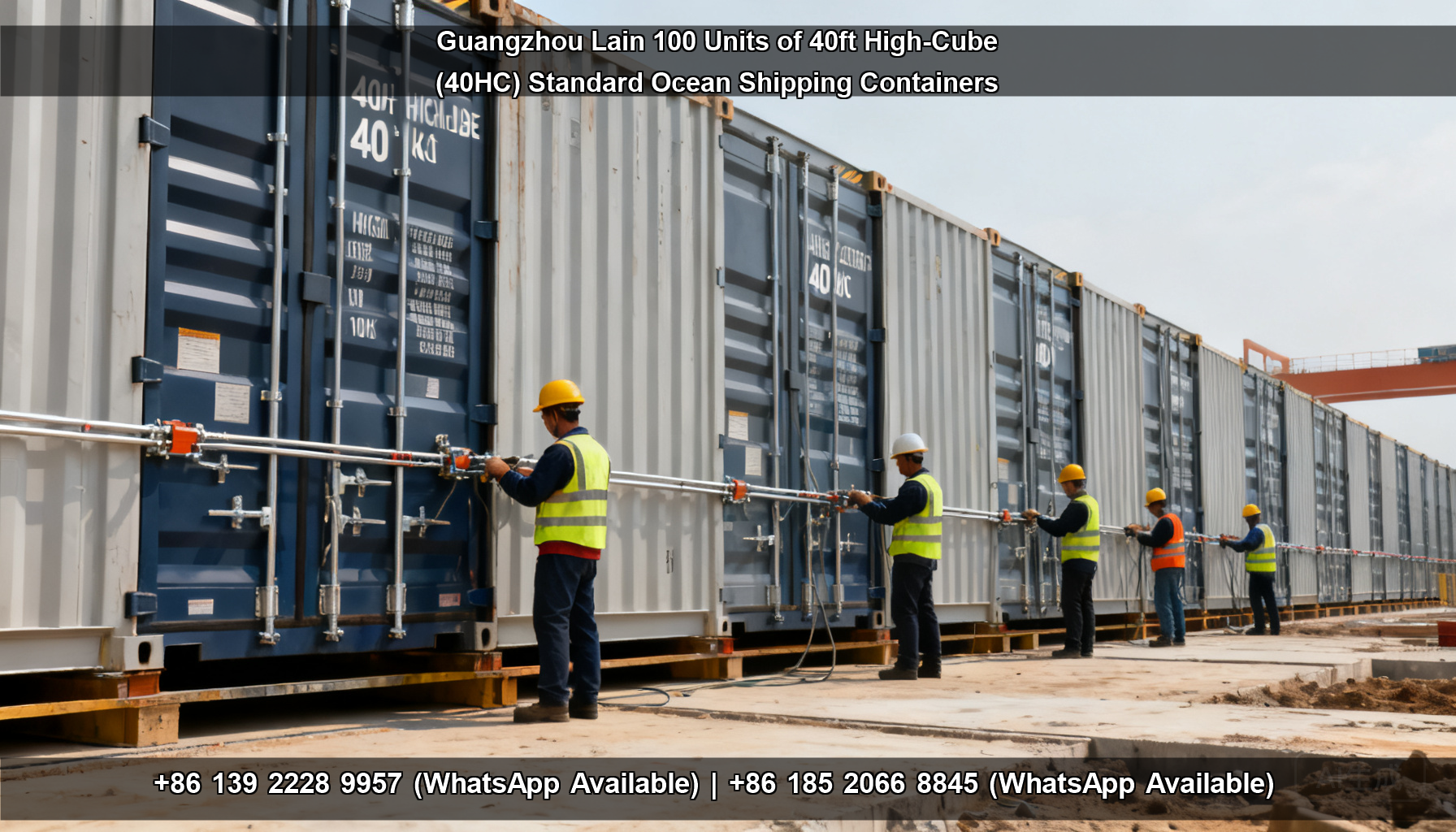
14.1 Project Organization Structure
A dedicated project team is established to coordinate the production, quality, delivery and service of the whole project:
– Project manager: 1 person, overall responsibility for project coordination, progress control, customer liaison and resource coordination;
– Technical director: 1 person, responsible for technical solutions, drawings and processes, and technical problem solving;
– Production supervisors: 2 persons, responsible for production plan execution, team management and progress promotion;
– Quality supervisor: 1 person, responsible for raw material inspection, process inspection, finished product inspection and quality control;
– Procurement supervisor: 1 person, responsible for raw material and accessory procurement and supply chain management;
– After-sales supervisor: 1 person, responsible for delivery, training, after-sales and customer service.
14.2 Production Personnel Configuration
| Work type | Number | Responsibility |
|---|---|---|
| Cutting workers | 8 | Steel and section cutting, CNC equipment operation |
| Welders | 20 | Component welding, assembly welding, all certified |
| Riveters | 10 | Assembly, shape correction, fitting |
| Spraying workers | 8 | Shot blasting, painting, certified |
| Assembly workers | 10 | Accessory installation, commissioning |
| Inspectors | 4 | Incoming, process, finished product inspection |
| Forklift/overhead crane operators | 4 | Material lifting and turnover |
| Management personnel | 6 | Production, quality, safety, technical management |
14.3 Production Process Flow
Raw material procurement and inspection → CNC cutting and forming → component assembly welding → component inspection → box general assembly → overall welding → shape correction and straightening → weld leakage test → shot blasting → blasting inspection → primer spraying → intermediate coat spraying → topcoat spraying → coating inspection → accessory assembly → door system commissioning → marking installation → finished product full inspection → performance sampling → warehousing pending shipment → loading and shipment → on-site acceptance
14.4 Quality Control System
A three-level quality inspection system is implemented with full-process quality traceability:
– Incoming inspection: all steel, welding materials, accessories and coatings must be inspected upon entry, checking material certificates, certificates of conformity and specification parameters; unqualified products are strictly prohibited from warehousing;
– Process inspection: after each process, team self-inspection, inter-process mutual inspection and quality inspector special inspection are carried out; unqualified previous processes are strictly prohibited from flowing to the next process; key processes (welding, spraying) set quality control points with full records;
– Finished product inspection: 100% appearance inspection, dimension inspection, sealing test and opening/closing test of finished products; mechanical performance tests by proportional sampling; all inspection records archived, with factory certificate of conformity and inspection reports issued.
14.5 Safety Production Management
– Establish and improve the safety production management system, carry out three-level safety education for all personnel, and ensure 100% of special operation personnel hold certificates;
– The production site is equipped with fire-fighting equipment and protective supplies, with special protection measures for dangerous operations such as welding and spraying;
– Daily pre-shift safety disclosure and weekly safety inspections to eliminate safety hazards;
– Formulate emergency plans to deal with sudden safety incidents and ensure personnel and equipment safety.
14.6 Transport and Delivery Plan
– Professional container transport vehicles are used, with the box fixed through corner fittings, ensuring safe and reliable transport;
– Before loading, re-check the box appearance and accessories, do protection work, and prevent collision during transport;
– Choose compliant logistics routes and carriers, and track the transport progress throughout the whole process;
– Upon arrival, cooperate with the customer for on-site acceptance, hand over documents and materials, and confirm the product is intact.
15. After-Sales Service
15.1 Warranty Period
– The main structure of the box is warranted for 2 years from the date of acceptance;
– The anti-corrosion coating is warranted for 5 years; large-area rusting and peeling due to non-human damage is repaired free of charge;
– Wearing parts such as door system accessories and sealing strips are warranted for 1 year;
– Quality problems caused by non-human reasons within the warranty period are repaired and replaced free of charge.
15.2 Service Response Mechanism
– A 7×24-hour service hotline is established to accept customer consultations and repair reports at any time;
– Respond within 1 hour after receiving a repair report and provide a solution;
– On-site service within 24 hours in the Pearl River Delta region, and within 48 hours in major cities nationwide such as Xi’an, Qingdao, Ningbo and Suzhou;
– General faults solved within 24 hours, major faults solved within 72 hours.
15.3 Service Contents within Warranty Period
– Free technical consultation and use guidance;
– Regular return visits to understand product use and provide maintenance suggestions;
– Free repair and free accessory replacement for quality problems;
– One free operation and maintenance training;
– Technical support for assisting customers in customized transformation.
15.4 Services Outside Warranty Period
– Lifetime technical support and maintenance services;
– Original accessories at cost price with transparent pricing;
– Annual maintenance agreements can be signed to provide regular inspection and maintenance services;
– Value-added services such as box transformation, renovation and relocation.
15.5 Complaint Handling Process
Customer complaint → customer service registration and acceptance → transfer to responsible person → contact customer within 2 hours to verify the situation → formulate handling plan → execute handling → customer confirmation → return visit and archiving → summary and improvement
16. Training Plan
16.1 Training Objectives
Enable the customer’s operators and maintenance personnel to master the correct use methods, daily maintenance skills, common fault troubleshooting and handling methods of 40HC containers, ensuring safe, efficient and long-term equipment use.
16.2 Training Targets
– Equipment management personnel;
– On-site operators;
– Daily maintenance personnel;
– Safety management personnel.
16.3 Training Contents
Theoretical training
– Container structure and working principle: overall structure, system composition and functions;
– Main technical parameters: dimensions, load capacity, performance indicators, standards and specifications;
– Safety use instructions: safety specifications and prohibitions for hoisting, stacking and loading;
– Daily maintenance knowledge: maintenance points, maintenance cycles and precautions for each component;
– Common faults and handling methods: troubleshooting and handling of common problems such as door lock faults, sealing problems and coating damage.
Practical training
– Door operation practice: correct opening/closing, locking and customs seal application methods;
– Cargo lashing practice: use of lashing rings and fixing methods of lashing belts;
– Daily inspection practice: items and methods of daily, weekly and monthly inspections;
– Simple fault handling practice: door lock lubrication, sealing strip replacement, small-area paint repair and other practical drills.
16.4 Training Methods
– On-site training: face-to-face theoretical explanation + practical drills at the customer site after delivery, suitable for batch procurement customers;
– Online training: remote training through video conference, suitable for small-quantity procurement or distant customers;
– Video tutorials: provide standardized operation and maintenance video tutorials for viewing at any time;
– Document delivery: provide paper + electronic “Use and Maintenance Manual” for convenient reference at any time.
16.5 Training Cycle and Assessment
– Standard training duration: 1 day (half day theory + half day practice);
– After training, theory + practice assessment is conducted, and training certificates are issued to those who pass;
– Training contents and duration can be customized according to customer needs.
17. Anonymous Typical Project Scenarios
The following cases are anonymous, generalized examples based on typical project implementations; no real customer names or locations are disclosed.
17.1 Port Logistics Park 40HC Container Procurement Project (Coastal City B)
Project Background
A large logistics enterprise in a coastal city procured containers for port import/export cargo turnover and road transport, requiring compliance with ocean shipping standards, excellent anti-corrosion performance and adaptation to the coastal high salt spray environment.
Project Scale
60 units of 40HC standard ocean shipping containers.
Solution Highlights
An enhanced anti-corrosion solution was adopted: an additional anti-corrosion topcoat was applied on the external surface, the bottom frame anti-corrosion layer was thickened, and salt spray performance was improved by 30%; all box numbers were customized according to the customer’s logistics system coding rules.
Customer Feedback
After more than two years of use, the product structure remained intact, the anti-corrosion layer showed no obvious fading or rust, opening/closing was smooth, fully meeting the high-intensity use needs of the port, and 40 more units were subsequently repurchased.
17.2 Distributed Data Center Containerized Computer Room Project (Western City C)
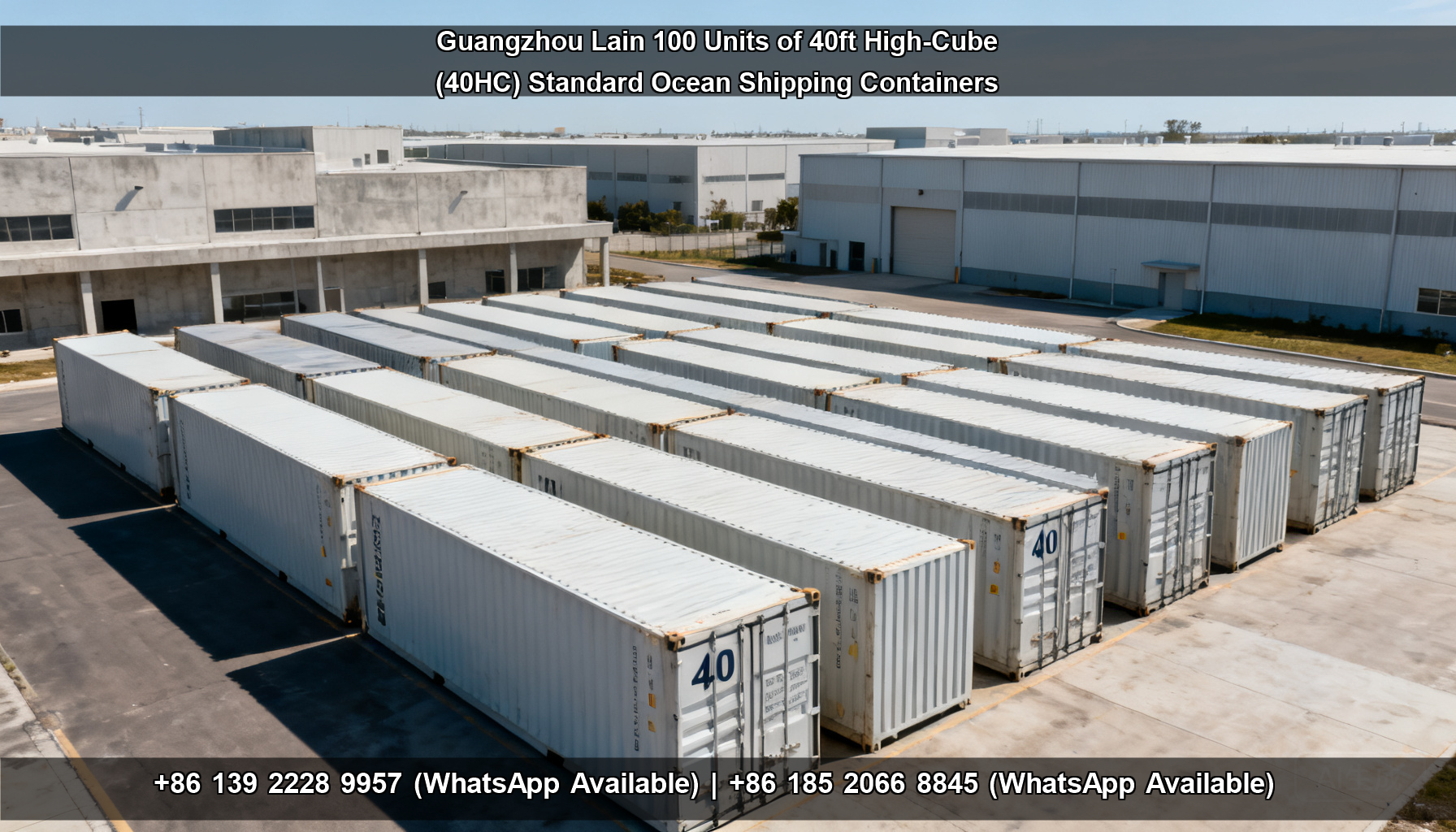
Project Background
An IDC operator in a western city built distributed computing nodes, adopting containerized computer rooms for rapid deployment, requiring high structural strength, strong transformability and high protection level.
Project Scale
24 units of 40HC containers transformed into computer rooms.
Solution Highlights
Customized transformation based on standard 40HC boxes: insulation layers, anti-static floors, rack mounting frames and cable entry ports were added; the box structure was reinforced to meet the load-bearing requirements of racks and equipment.
Customer Feedback
The box transformation adaptability was good, the structure was stable, sealing and protection performance met standards, and the project went from ordering to delivery and commissioning in only 45 days, quickly meeting business launch needs.
17.3 Grid-Side Energy Storage Power Station Container Project (Port City D)
Project Background
An energy storage power station project adopted 40HC containers as battery cabin carriers, requiring strong load-bearing capacity, good anti-corrosion and sealing, adaptation to the coastal humid environment, and reserved fire protection, air conditioning and electrical interfaces.
Project Scale
18 units of 40HC energy storage containers.
Solution Highlights
The bottom frame was reinforced to meet the heavy load of battery packs; a high-grade anti-corrosion solution was adopted to adapt to the coastal high-humidity and high-salt environment; equipment installation interfaces and pipeline channels were reserved for convenient on-site integration.
Customer Feedback
The box dimensions were accurate, structural strength met design requirements, anti-corrosion and sealing performance passed third-party testing, and the power station fire protection and safety acceptance was smoothly passed.
17.4 Smart Manufacturing Park Equipment Cabin Project (Eastern City E)
Project Background
A smart manufacturing enterprise urgently needed outdoor equipment placement space due to capacity expansion, and adopted containers transformed into equipment cabins, requiring rapid delivery, relocatability and high protection level.
Project Scale
12 units of 40HC industrial equipment cabins.
Solution Highlights
Side doors and observation windows were opened, lighting and power distribution systems were added inside, the floor was treated for anti-slip and wear resistance; the box was insulated to ensure the equipment operating environment.
Customer Feedback
Fast delivery, no civil works required on site, ready for use after direct landing and wiring; the equipment operated stably, the box protection was in place, and procurement continued for subsequent capacity expansion.
18. SEO Optimization Section
18.1 Keyword Classification
Core primary keywords
40HC container, 40ft high cube, standard ocean shipping container, container manufacturer
SEM search keywords
40HC container procurement, 40ft high cube container manufacturer, standard ocean shipping container price, 100 containers batch procurement, container custom production manufacturer
GEO search keywords
Xi’an 40HC container, Qingdao ocean shipping container, Ningbo 40ft high cube, Suzhou container manufacturer, Shandong container manufacturer, Shaanxi container supplier, Zhejiang container wholesale, Jiangsu container customization
High-conversion long-tail keywords
100 units 40HC container procurement quotation, Xi’an Qingdao Ningbo Suzhou container delivery, 40ft high cube container technical solution, ISO standard ocean shipping container manufacturer, CSC certified container price
Industry traffic keywords
Container technical design solution, ocean shipping container configuration list, container technical parameter explanation, container manufacturing process, container anti-corrosion process, 40HC container dimensions
Brand-specific keywords
KITOZER container, Guangzhou Lain container, Pioneer container, Lain Intelligent container
Dropdown/related search keywords
What are the dimensions of a 40HC container, how many cubic meters can a 40ft high cube hold, how much is an ocean shipping container, container manufacturer ranking, how to do container anti-corrosion, how many years is the container service life
18.2 SEO Optimization Tags
– Page core optimization tag: 100 Units of 40ft High-Cube (40HC) Standard Ocean Shipping Containers Technical Design Solution
– Title tag: 40HC Container Technical Design Solution_100 Units 40ft High Cube Ocean Shipping Containers Configuration List – Guangzhou Lain
– Meta Keywords: 40HC container, 40ft high cube, standard ocean shipping container, container manufacturer, container technical solution, container configuration list, CSC certified container
– Meta Description: Guangzhou Lain professionally provides the technical design solution for 100 units of 40HC standard ocean shipping containers, including detailed configuration lists, full-dimension technical parameters, production schedules and after-sales services; ISO/CSC dual standards, deliverable to Xi’an, Qingdao, Ningbo and Suzhou.
– H1 tag: 100 Units of 40ft High-Cube (40HC) Standard Ocean Shipping Containers Technical Design Solution
– H2 tags: Company Introduction, Project Overview, User Requirement Analysis, Overall Design Description, Quotation and Configuration List, Product Technical Parameters, Solution Advantages, Technical Q&A, Production Schedule, Construction Organization Plan, After-Sales Service, Training Plan, Project Cases
18.3 Internal Link Anchor Text Layout
– Core anchor text: 40HC container, ocean shipping container, container manufacturer
– Long-tail anchor text: 40ft high cube container technical parameters, container technical design solution, 100 containers procurement quotation
– Related anchor text: containerized computer room, micro-module cold aisle, shielded cabinet, integrated cabinet
19. Official Contact Information
– Company Name: Guangzhou Lain Intelligent System Development Co., Ltd.
– Brand: KITOZER (Pioneer)
– Website: https://gdlain.com
– Tel: +86 139 2228 9957 (WeChat available), +86 185 2066 8845 (WeChat available)
– Address: No. 5 Huashan Road, Shilou Town, Panyu District, Guangzhou, China