Technical Design Solution — 5 kW Rated Output · 5 kWh Home Grid-Tied / Off-Grid Energy Storage
Prepared by: Guangzhou Lain Intelligent System Development Co., Ltd. | Brand: KITOZER | Version: V1.0
Document-Level Disclaimer: The configuration and budget information shown in this document are provided for preliminary design, technical discussion and budgetary reference only. They do not constitute a formal commercial quotation from Guangzhou Lain Intelligent System Development Co., Ltd. Final product selection, quantities, specifications and pricing are subject to the actual project requirements and the company’s formal quotation.
1. Company Introduction
Guangzhou Lain Intelligent System Development Co., Ltd. was established in 2002 and is a high-technology enterprise specializing in computer room construction, new energy storage and intelligent electrical equipment R&D, production and sales. With more than two decades of industry experience, the company owns the KITOZER brand, and its products cover integrated data cabinets, micro-module cold aisle systems, outdoor cabinets, shielding rooms, intelligent shielding equipment and residential energy storage systems, providing customized overall solutions for data centers, industrial buildings, residential homes and new energy power stations.
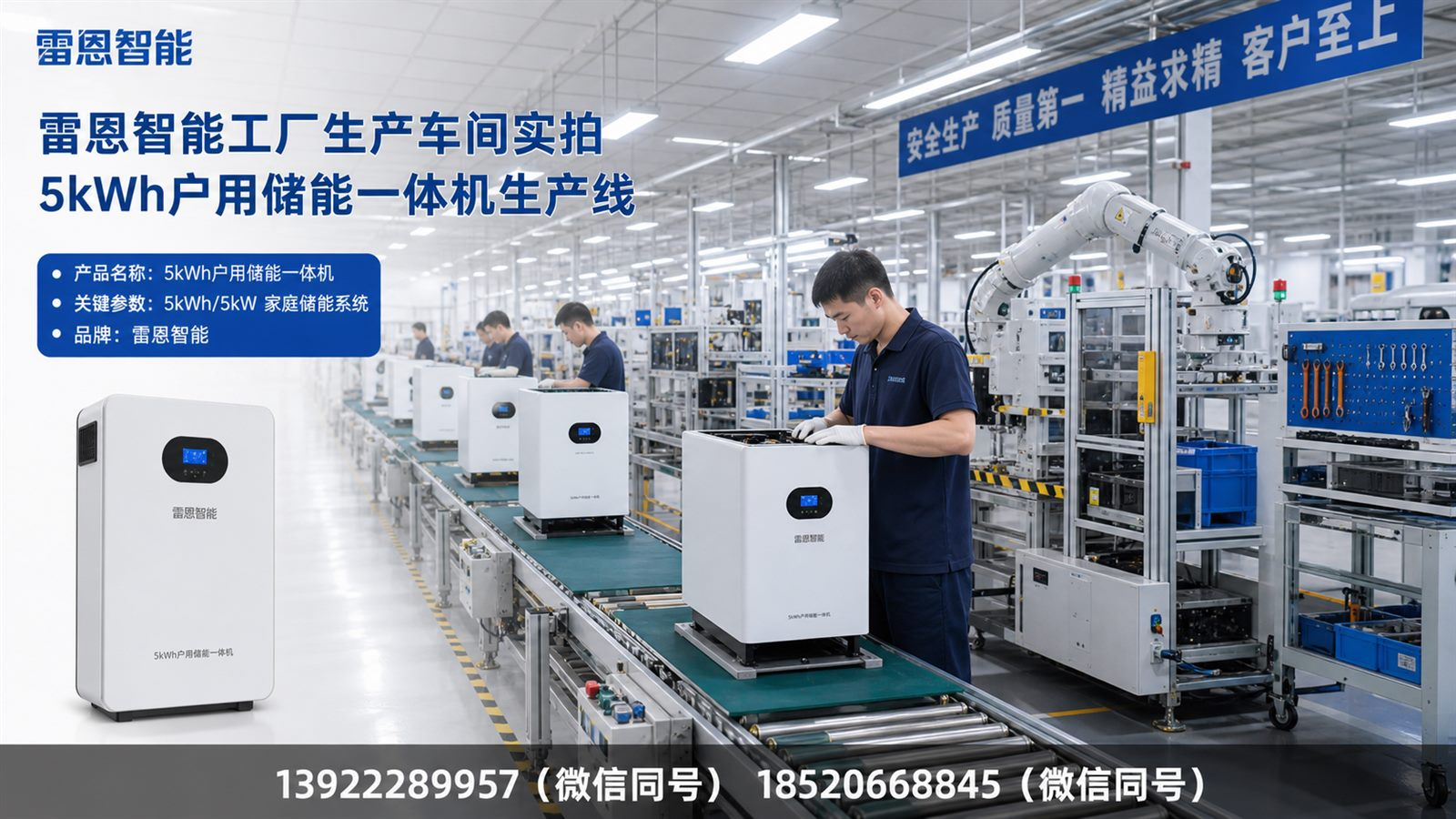
The company operates a flexible customization production base with a professional R&D team and quality control system, holds multiple product patents and industry qualifications, and all products are verified by third-party testing organizations. As a source factory, the company provides free multiple differentiated design options matched to the customer’s actual application scenarios, capacity needs, installation conditions and budget.
A 7×24 professional online service system responds quickly to technical consultation, troubleshooting and after-sales needs, with dedicated personnel following the full project cycle from design, production and delivery to installation, commissioning and O&M support. In the new energy storage field, the company offers a full range of residential and commercial energy storage products covering 2 kWh–200 kWh, supporting grid-tied, off-grid and hybrid modes for PV matching, peak-valley arbitrage and backup power applications.
2. Project Overview
2.1 Project Background
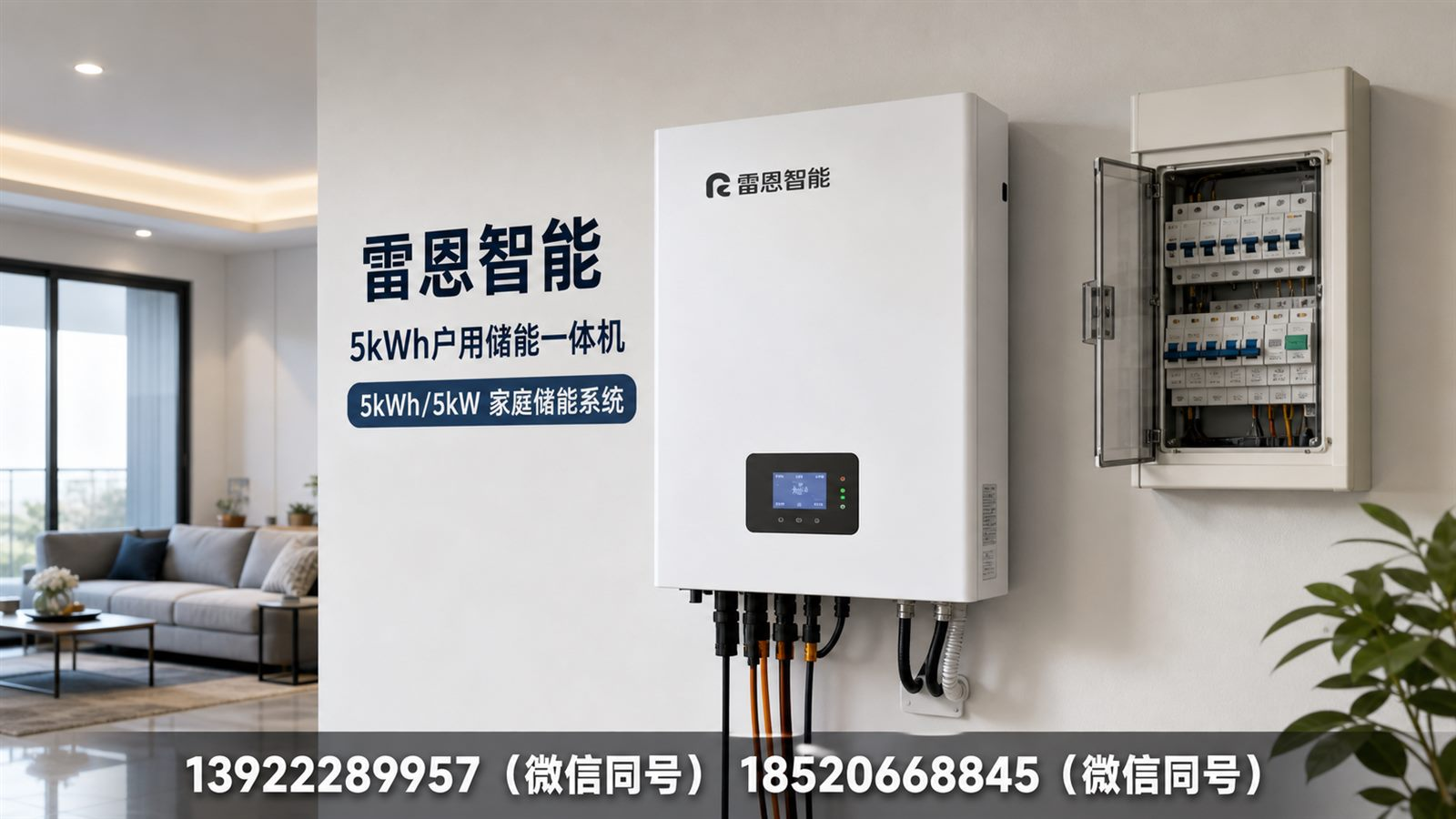
Driven by the national “dual carbon” strategy, residential PV installations continue to grow, household electricity demand rises, peak-valley price gaps widen, and grid stability is insufficient in some areas. Household demand for independent power control, cost optimization and emergency backup is increasing. Residential energy storage — the core device for PV matching, electricity optimization and emergency supply — has become an important part of home energy management.
Many market products suffer from low conversion efficiency, short battery life, insufficient safety protection and complex operation. For the mainstream household need of 5 kWh capacity and 5 kW output with grid/off-grid dual use, intelligent monitoring and safe durable design, this solution presents a highly integrated, reliable, cost-effective residential energy storage all-in-one machine.
2.2 Project Objectives
– Capacity: a 5.12 kWh LFP battery pack (nominal 5 kWh) for daily peak-valley arbitrage and emergency supply, matching most households.
– Power: 5 kW rated AC output, 6 kW peak — simultaneously driving air conditioners, refrigerators, TVs, lighting and kitchen appliances, with motor-start surge capability.
– Modes: grid-tied and off-grid seamless switching — peak-valley arbitrage and PV self-consumption with surplus storage on-grid; automatic off-grid backup within ≤10 ms during outages.
– Safety: multi-layer electrical protection + battery management + structural protection, compliant with national electrical and storage product standards.
– Intelligence: local touch display and mobile APP remote monitoring with real-time data, fault alarms and simple operation.
– Long life, low O&M: LFP cycle life ≥6,000 cycles, system design life ≥10 years, minimal routine maintenance.
2.3 Applicable Scenarios
Ordinary urban households (peak-valley arbitrage, short outage backup); villas and large homes (with PV for energy independence); rural self-built homes (unstable grid, frequent outages); remote/mountain areas (independent off-grid with PV); guesthouses and small shops (supply stability and cost optimization); home offices and medical backup.
3. User Requirement Analysis
3.1 Capacity Requirements
Nominal 5 kWh usable capacity: ~5 hours supply at 1 kW average load; ~16 hours at 300 W critical load; one daily cycle transfers 5 kWh of peak-time electricity for most households’ evening base use. This solution uses a 51.2V/100Ah LFP pack (5.12 kWh rated) with margin to avoid full charge/discharge and extend battery life.
3.2 Power Output Requirements
5 kW rated output covers simultaneous typical household loads (1.5 HP inverter AC ≈1200 W, refrigerator ≈150 W, 55″ TV ≈150 W, lighting ≈100 W, rice cooker ≈800 W, microwave ≈1200 W, washing machine ≈500 W — total ≈4100 W) with margin. 6 kW peak handles motor-start surge of AC/refrigerator compressors.
3.3 Functional Mode Requirements
– Grid-tied: charge from the grid at low tariff, discharge to household loads at peak tariff (arbitrage); with PV, prioritize PV power, store surplus, export when full.
– Off-grid: on grid outage, disconnect from the grid and switch to inverter output within ≤10 ms, powering sensitive loads without interruption.
– Hybrid dispatch: automatic optimization of charge/discharge strategy per tariff, PV power and load.
– Backup mode: battery kept at full standby, discharging only during outages.
3.4 Safety Protection Requirements
Battery protection (overcharge, over-discharge, overcurrent, short circuit, over-temperature, low temperature); electrical protection (independent DC/AC breakers, fuses, surge protectors; power/weak-current separation); structural safety (metal enclosure, secure wall mounting, lockable door); reliable grounding; emergency stop button.
3.5 Intelligent Monitoring Requirements
Local display of SOC, voltage, current, charge/discharge status and faults; WIFI + APP remote monitoring with historical data and earnings statistics; fault alarms locally and via APP push; parameter setting via display or APP.
3.6 Installation and O&M Requirements
Wall-mounted compact design (suitable for balconies, garages, storerooms); clear terminals for simple wiring; no wear parts, routine dust-filter cleaning only; 10+ year design life; parallel expansion supported.
3.7 Compatibility Requirements
Compatible with mainstream residential PV inverters (DC or AC coupling); supports Modbus for home energy management and smart home systems; adapts to 220V/50Hz domestic grids per national grid-connection standards.
4. Overall Design Description
4.1 Design Basis
Key standards: GB/T 36276-2018 (Lithium-ion batteries for electric energy storage); GB/T 34120-2017 (Power conversion system for electrochemical energy storage); GB/T 34131-2017 (Battery management system for electrochemical energy storage power station); GB 51377-2019 (Design standard for electrochemical energy storage power station); GB 7251.1-2013 (Low-voltage switchgear and controlgear assemblies); GB/T 19064-2003 (Household solar PV power system); GB/T 17626 series (EMC); GB 50054-2011 (Low-voltage electrical installations); plus grid-company distributed generation interconnection regulations. Governing editions are confirmed per project.
4.2 Design Principles
Safety first (industrial/automotive-grade components, multi-layer protection); high efficiency (PCS inverter efficiency ≥97.5%, standby ≤5 W); intelligence (auto-adaptive scheduling, easy UI); economy (long-life design, fast payback via arbitrage); scalability (parallel units, open protocols); environmental compliance.
4.3 System Architecture
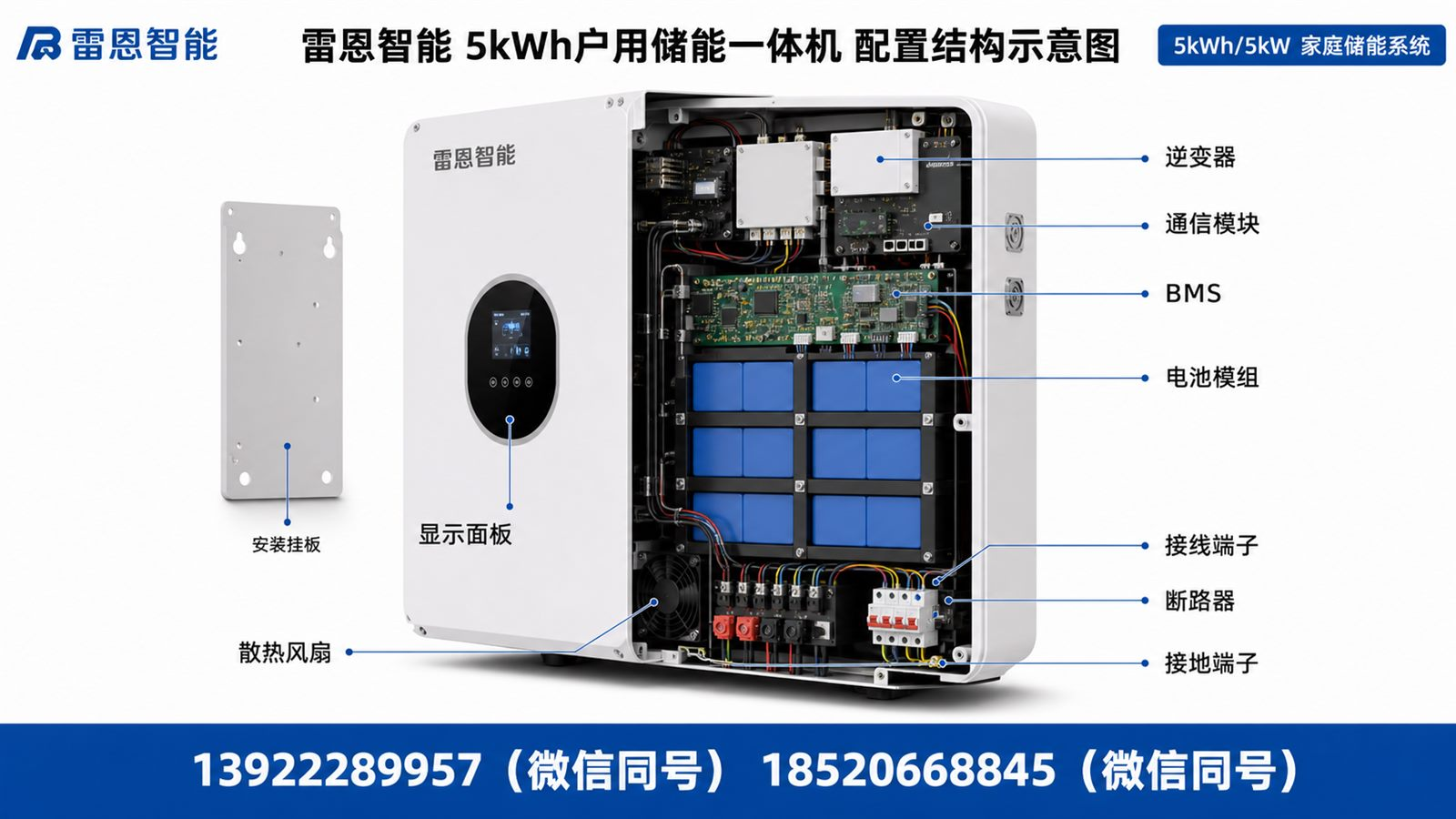
Six integrated subsystems: battery unit, bidirectional PCS, BMS, distribution/protection, monitoring/communication, structure/thermal.
Power flow: grid/PV → DC distribution → PCS → battery (charge); battery → BMS → PCS inverter → AC distribution → loads (discharge); grid-tied sync; off-grid island micro-grid (220V/50Hz). Signal flow: BMS collects cell voltage/current/temperature, executes protection, communicates via CAN with PCS; monitoring unit collects data, displays locally, uploads to cloud.
4.4 Working Principle
4.4.1 Grid-Tied Charging — during low tariff or PV surplus, the PCS converts grid AC (or regulates PV DC) to charge the LFP pack; BMS monitors each cell and stops at target SOC to prevent overcharge; synchronized with grid frequency/phase per interconnection code.
4.4.2 Grid-Tied Discharging — during peak tariff or when load exceeds PV, the pack DC is inverted to 220V/50Hz AC for the loads, grid supplements shortfall; surplus can feed back to the grid if enabled; BMS stops at discharge cutoff.
4.4.3 Off-Grid Supply — on outage, islanding detection disconnects the grid relay within ≤10 ms and switches to off-grid inversion; PV can continue charging the battery; seamless return to grid on restoration.
4.4.4 Standby — low-power standby (≤5 W) with monitoring and communication retained, ready to respond to dispatch or outage.
4.5 Overall Performance
| Indicator | Value |
|---|---|
| Rated storage capacity | 5.12 kWh (51.2V/100Ah, nominal 5 kWh) |
| Rated output power | 5 kW continuous |
| Peak output power | 6 kW for 10 s |
| DC nominal voltage | 51.2 V (16S LFP) |
| AC output | 220V ±15%, single-phase |
| Rated frequency | 50 Hz ±0.5 Hz |
| Max inverter efficiency | ≥97.5% |
| Battery cycle life | ≥6,000 cycles (80% capacity retention) |
| Grid/off-grid switch time | ≤10 ms |
| Protection rating | IP54 |
| Operating temperature | −20 °C ~ 60 °C (discharge) |
| Mounting | Wall-mounted, indoor |
| Design life | ≥10 years |
| Communication | WIFI / RS485 (APP remote monitoring) |
5. Recommended Configuration and Reference Budget
The following is the recommended configuration for one 5kWh/5kW residential energy storage all-in-one unit. Quantities, model codes and specifications follow the source document’s standard offering and are provided for preliminary design and budgetary reference only. No official price database is available for this trial; final pricing is confirmed in the company’s formal quotation.
5.1 Energy Storage Battery Unit
| No. | Item | Specification | Qty |
|---|---|---|---|
| 1 | LFP prismatic cells | 3.2V/100Ah, LFP, cycle ≥6,000 | 16 |
| 2 | Cell fixing bracket | Flame-retardant V0 ABS+PC, insulation/buffer pads | 1 set |
| 3 | Power busbars | T2 tinned copper, 1.5 mm | 1 set |
| 4 | Insulation parts | Epoxy + kraft paper composite | 1 set |
| 5 | Cell temperature sensors | NTC 10kΩ, ±0.5 °C | 4 |
5.2 Bidirectional PCS Unit
| No. | Item | Specification | Qty |
|---|---|---|---|
| 1 | Bidirectional storage inverter | 5 kW rated / 6 kW peak, grid/off-grid, 2×MPPT | 1 |
| 2 | Grid/off-grid relay | 220V/50A magnetic latching | 1 |
| 3 | IGBT heat sink assembly | High-density fin aluminum + insulation pad | 1 set |
| 4 | Filter circuit | LC filter, THD ≤3% | 1 set |
5.3 BMS Unit
| No. | Item | Specification | Qty |
|---|---|---|---|
| 1 | BMS main board | 16S, active balancing ≥1 A, multi-protection, CAN | 1 |
| 2 | Voltage sensing harness | 20AWG silicone, XH2.54 | 1 set |
| 3 | Hall current sensor | ±200 A, ±0.5% | 1 |
| 4 | Balancing discharge resistors | Power type, 1 A matching | 16 |
5.4 Distribution and Electrical Protection Unit
| No. | Item | Specification | Qty |
|---|---|---|---|
| 1 | DC main breaker | 2P, DC63A, 6 kA | 1 |
| 2 | AC output breaker | 2P, AC32A, C-curve | 1 |
| 3 | PV input breaker | 2P, DC20A | 1 |
| 4 | DC surge protector | T2, DC60V, 20 kA | 1 |
| 5 | AC surge protector | T2, AC275V, 20 kA | 1 |
| 6 | DC fuses | DC63A, 10×38 mm | 2 |
| 7 | Power terminal block | 100A, 4-way, copper | 1 set |
| 8 | Signal terminal block | 10A, 20-way | 1 set |
| 9 | Grounding terminal block | Brass M4, 6-way | 1 set |
5.5 Structure and Thermal Unit
| No. | Item | Specification | Qty |
|---|---|---|---|
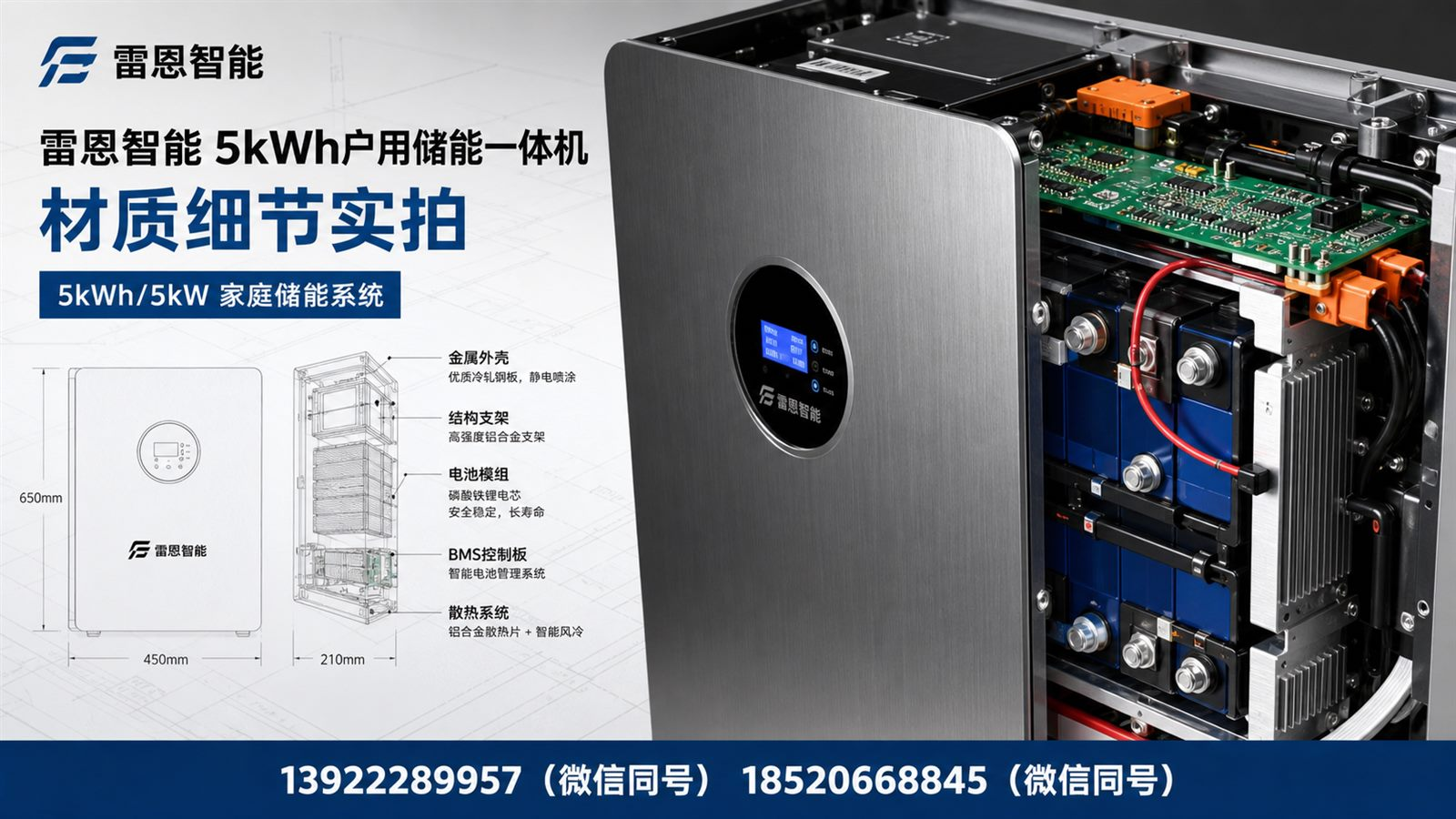
| 1 | Enclosure | Cold-rolled steel, powder coated, wall-mount, IP54, 550×450×200 mm | 1 |
| 2 | Internal mounting plate | 2 mm galvanized steel | 1 |
| 3 | Axial cooling fans | DC12V 12025, temperature-controlled | 2 |
| 4 | Dust filters | Nylon 60-mesh | 2 |
| 5 | Wall-mount bracket | 3 mm steel, load ≥80 kg | 1 set |
| 6 | Insulation standoffs | Nylon M4/M5, 15 mm | 1 set |
5.6 Monitoring and Communication Unit
| No. | Item | Specification | Qty |
|---|---|---|---|
| 1 | LCD touch display | 3.5″, color, capacitive | 1 |
| 2 | WIFI module | 2.4G, MQTT, cloud platform | 1 set |
| 3 | RS485 port | Modbus-RTU | 1 |
| 4 | Status LED set | Power/run/fault/mode | 1 set |
| 5 | Emergency stop button | Mushroom, NC, IP65 | 1 |
5.7 Auxiliary and Standard Accessories
Internal power cables (DC 10 mm² / AC 6 mm² flame-retardant), signal cables (0.75 mm² shielded), cable fixing accessories, thermal grease (≥2.0 W/m·K), standard fasteners M3–M6, nameplates and warning labels — 1 set each.
5.8 Optional Expansion
Networked smoke alarm (linked shutdown); 4G full-network module (no-WIFI scenarios); parallel communication kit (multi-unit expansion).
5.9 Engineering Fees (Reference)
Equipment body cost (items 1–7 above); installation and commissioning; transport; VAT invoice; optional extended warranty/annual inspection. Totals are confirmed in the formal quotation.
Pricing disclaimer: The configuration and budget shown in this document are provided for preliminary design, technical discussion and budgetary reference only. They do not constitute a formal commercial quotation from Guangzhou Lain Intelligent System Development Co., Ltd. Final product selection, quantities, specifications and pricing are subject to the actual project requirements and the company’s formal quotation. Any budget references are stated in RMB/CNY only.
6. Detailed Technical Specifications
6.1 Battery System
6.1.1 LFP Cell — 3.2V/100Ah prismatic; rated energy 320 Wh; charge cutoff 3.65V±0.05V, discharge cutoff 2.5V±0.05V; max continuous charge 50A (0.5C), discharge 100A (1C), peak 200A (2C/30 s); efficiency ≥98%; self-discharge ≤3%/month; AC resistance ≤1.5 mΩ; aluminum case ≈173×71×130 mm, ≈3.2 kg; charge 0–45 °C (recommended 10–30 °C), discharge −20–60 °C; altitude ≤2000 m; cycle ≥6,000 (80% retention); calendar life ≥10 years; capacity deviation ≤±2%, voltage ≤±50 mV; passes overcharge/over-discharge/short-circuit/needle/crush/thermal-box (130 °C/30 min) tests without fire or explosion per GB/T 31485-2015.
6.1.2 Pack — 16S1P, 51.2V/100Ah, 5.12 kWh, operating 40–58.4V; max charge 50A, discharge 100A; ≈55 kg; insulation ≥100 MΩ; IP20 module.
6.1.3 Support bracket — ABS+PC UL94 V0, −40–120 °C, insulation ≥3 kV AC/1 min; cell gap 2 mm with cooling channels; silicone foam buffers (0.05 W/m·K, V0); no deformation at 100 kg.
6.1.4 Busbars — T2 copper ≥99.95%, tinned ≥5 μm, 1.5 mm × 20 mm; 100A continuous with ≤30 K rise; contact resistance ≤0.1 mΩ; PVC insulation 105 °C/1 kV; 15 inter-cell bars + positive/negative busbars.
6.1.5 Temperature sensors — NTC 10kΩ @25 °C, B=3435K±1%, ±0.5 °C, response ≤5 s, −40–125 °C.
6.2 Bidirectional PCS
6.2.1 DC side — rated 51.2V (40–60V); max input 120A; 2 independent MPPT (20–55V, 15A each, tracking ≥99.5%); reverse-polarity protection.
6.2.2 AC side — 5 kW rated / 6 kW peak (10 s); 220V ±15%; 50 Hz (49.5–50.5 Hz grid); pure sine, THD ≤3% (linear) / ≤5% (non-linear); PF ≥0.99 (0.8 lead–lag adjustable); up to 6 units parallel; per GB/T 28387, NB/T 32004.
6.2.3 Efficiency — max inverter ≥97.5%; European ≥96.8%; charge ≥97%; standby ≤5 W; no-load ≤30 W; forced air cooling with temperature control.
6.2.4 Protection — DC overvoltage 62V (alarm/stop charge), undervoltage 40V; DC overcurrent 130A (lockout); AC over/undervoltage 264V/176V, over/underfrequency 51.5/47.5 Hz (disconnect grid); output overload 110%/60 s, 150%/10 s; short circuit instant hardware trip; anti-islanding active+passive ≤2 s; over-temperature derate ≥85 °C / stop ≥95 °C; surge differential 20 kA / common 40 kA.
6.2.5 Core devices — industrial IGBT module 1200V/100A; 20 kHz SPWM; sendust-core filter inductor; film capacitors; 32-bit industrial DSP 150 MHz.
6.2.6 Environment — −20–60 °C (derate >40 °C); storage −40–85 °C; noise ≤45 dB @1 m; IP20 module; ≈350×250×100 mm, ≈8 kg.
6.3 BMS
32-bit ARM MCU 72 MHz; 16 voltage channels (±5 mV, 0–5V), 8 temperature channels, Hall current ±200A (±0.5% FS); 9–36V DC supply; static ≤0.5 W, working ≤2 W; CAN 2.0B + RS485 + 2 dry contacts; FR-4 UL94 V0; −40–85 °C. SOC accuracy ≤±3% (Ah-integration + OCV calibration + Kalman); SOH ≤±5%. Protection (two-level, thresholds configurable): cell overvoltage alarm 3.55V / protection 3.65V (stop charge); undervoltage 2.8V/2.5V (stop discharge); pack 58.4V/40V; charge overcurrent 45A/55A (5 s); discharge 90A/110A (5 s); short circuit 200A hardware ≤100 μs; charge high-temp 45 °C/50 °C, low-temp 5 °C/0 °C; discharge high 55 °C/60 °C, low −10 °C/−20 °C; insulation alarm <1 MΩ, protection <500 kΩ. Active balancing ≥1 A (≥85% efficiency, start ΔV ≥50 mV, stop ≤20 mV, full SOC range). Black-box (10 s pre-fault data), 100 fault records, cycle counting, energy statistics, sleep/wake.
6.4 Distribution and Protection Devices
DC main breaker 2P DC100V/63A C-curve 6 kA (GB 14048.2); AC output breaker 2P AC230V/32A 6 kA (GB 10963.1); PV breaker 2P DC100V/20A; DC SPD T2 DC60V 20 kA, Up ≤150V, ≤25 ns (GB/T 18802.1); AC SPD T2 AC275V 20 kA, Up ≤1.5 kV, thermal disconnect; DC fuses 10×38 mm DC100V/63A 10 kA gG, both polarities; power terminal block 100A/660V; signal terminal block 10A/250V; grounding terminal block brass M4 ×6 (grounding resistance ≤4 Ω).
6.5 Structure and Thermal
Enclosure: cold-rolled steel 1.5 mm frame / 1.2 mm door, acid-wash phosphating + electrostatic powder coating, C3 corrosion class; wall-mount single-door, triangular key lock, IP54; 550×450×200 mm, ≈45 kg; bottom cable entries with waterproof glands; side intake / top exhaust airflow; 4×M8 back mounting holes; static load ≥80 kg (4× safety factor). Fans: 12025 DC12V 0.3A, 2500 rpm, ≥80 CFM, ≤35 dB, dual ball bearing, ≥50,000 h, PWM temperature control. Dust filter: 60-mesh nylon, ≥80% efficiency (>10 μm), washable, clean every 6 months. Bracket: 3 mm L-type steel ×2, ≥80 kg, M8×80 expansion bolts. Standoffs: PA66 V0, AC 2 kV, ≥500 N pull.
6.6 Monitoring and Communication
3.5″ TFT capacitive touch (320×480, 260k colors, ±70° viewing, LED backlight ≥50,000 h, panel IP65) showing SOC/SOH, cell voltages, currents, power, generation statistics, mode, faults; parameter menus; WIFI module 2.4G IEEE 802.11 b/g/n, MQTT 3.1.1, WPA/WPA2, cloud platform with real-time data, history curves, alarm push, remote settings, OTA; RS485 Modbus-RTU 9600/19200/38400 bps, 1200 m, 32 nodes, 15 kV ESD; 4 status LEDs (power/run/fault/mode); emergency stop mushroom button 40 mm, NC, IP65 panel, one-key battery main-circuit cutoff.
6.7 Accessories
Internal power cables ZR-BVR 10 mm² DC / 6 mm² AC, oxygen-free copper, 450/750V, numbered; signal cable RVVP 0.75 mm² shielded; cable ties/fixed mounts; thermal grease ≥2.0 W/m·K, ≥15 kV/mm; fasteners M3–M6 4.8-grade galvanized (110% of usage); aluminum nameplate + PVC warning labels per GB 7251.1.
7. Core Advantages and Customer Value
7.1 Technical Performance
– High conversion efficiency: new-generation high-frequency IGBT topology with optimized SPWM — peak inverter efficiency 97.5%, European efficiency 96.8%, MPPT tracking ≥99.5%; ~5–8% more energy converted per year than conventional units.
– Long-life LFP cells: A-grade LFP, ≥6,000 cycles (80% retention at 1C) — over 16 years at one daily cycle; vs lead-acid’s 300–500 cycles, lifecycle cost is dramatically lower.
– Precise SOC estimation: Ah-integration + OCV calibration + extended Kalman filter with temperature/aging correction — SOC accuracy ±3% (industry typical ±5–10%).
– Active balancing: ≥1 A active energy-transfer balancing (5× more efficient than passive), extending pack life by 30%+.
– Seamless grid/off-grid switching: high-speed magnetic latching relay + fast islanding detection — ≤10 ms switchover, sensitive loads never restart.
7.2 Safety Protection
– Three-level electrical protection: fuses + breakers + BMS software protection, redundant so no single failure leaves the system unprotected.
– Intrinsically safe battery: LFP decomposition >500 °C, passes needle/crush/short/overcharge tests without fire or explosion; double insulation between shell and cells.
– Structure and environment: cold-rolled steel IP54 enclosure, dust/splash resistant; separated power/weak-current zones; wall-mounted height keeps it away from children and flooding.
– Grounding and lightning: dedicated grounding terminal (≤4 Ω); T2 SPDs on both DC and AC sides.
– Emergency stop and alarms: mushroom E-stop plus local audible/visual and APP push alarms.
7.3 Intelligent O&M
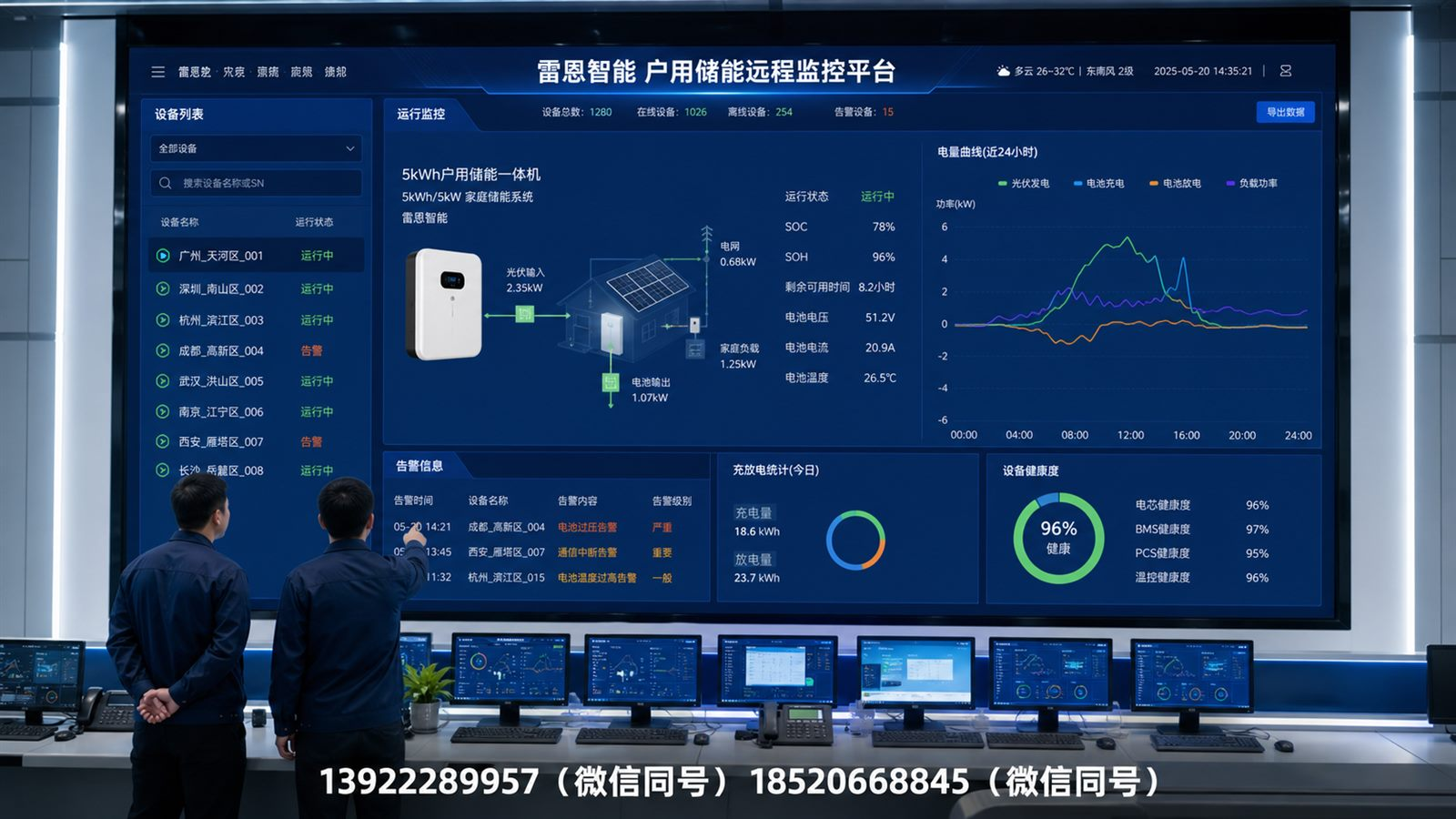
– Full-scenario remote monitoring via APP/cloud with real-time data and daily/monthly/yearly history.
– Smart charge/discharge scheduling (peak-valley arbitrage, self-consumption, backup modes) with automatic execution.
– Proactive fault prediction from hundreds of monitored parameters; remote-assisted troubleshooting.
– Lifetime OTA firmware upgrades.
7.4 Economic Benefits
– Peak-valley arbitrage: with a 0.5 yuan/kWh spread and 4 kWh/day cycled, ≈730 yuan/year saved; with PV, payback in 5–8 years.
– Near-zero O&M cost; outage-loss avoidance (food spoilage, business interruption) can itself cover much of the equipment cost.
7.5 Installation Adaptability
– Wall-mounted, only 20 cm deep — fits walls, balcony sides and garage walls without floor space.
– Factory pre-wired and tested; on-site connection of grid, PV, load and ground only — 1–2 hours by a certified electrician.
– Compatible with mainstream PV inverters (retrofit-friendly); multi-unit parallel expansion protects the initial investment.
7.6 Brand and Service
– Source factory with 10+ years of power electronics manufacturing; 100% factory-tested before delivery.
– 7×24 technical hotline, 30-minute response; on-site within 24 h urban / 48 h suburban.
– 3-year whole-unit warranty, 5-year cell warranty; cost-price parts after warranty.
8. Technical Q&A
Q1. What is a residential energy storage all-in-one unit?
A: It integrates the battery pack, inverter, BMS and distribution protection in one enclosure for energy storage, electricity optimization and backup supply — usable with PV or standalone on the grid.
Q2. What does “5 kWh storage” mean?
A: The battery’s rated capacity is about 5 kWh; usable capacity is typically 4.5–5 kWh depending on temperature and discharge rate.
Q3. What appliances can 5 kW output drive?
A: Most household appliances running simultaneously (AC ≈1200 W, fridge 150 W, TV 150 W, rice cooker 800 W, microwave 1200 W, lighting ≈500 W — ≈4000 W total); 6 kW peak handles motor-start surge.
Q4. What is the difference between grid-tied and off-grid?
A: Grid-tied connects to the mains (charge from grid, feed back surplus); off-grid runs independently from battery inversion during outages — effectively a large UPS.
Q5. How does it differ from a UPS?
A: UPS provides short backup (minutes–hours) for sensitive devices; the storage all-in-one provides long-duration supply plus peak-valley arbitrage and PV storage at lower cost.
Q6. LFP or lead-acid?
A: LFP for home storage: 10×+ cycle life, higher safety, higher density, maintenance-free; lead-acid is cheaper upfront but shorter-lived and higher lifecycle cost.
Q7. Do I need grid approval to install storage?
A: Off-grid/backup use needs no application; grid-tied with surplus export requires interconnection filing with the local grid company — the manufacturer can assist.
Q8. How long will a 5 kWh system last?
A: 10+ years with one daily cycle; 15+ years when used mainly as backup; whole-unit design life ≥10 years.
Q9. Does low temperature affect capacity?
A: Charging below 0 °C is restricted; below −20 °C discharge capacity drops to ~70–80%. Indoor installation minimizes impact; low-temperature models available for outdoor use.
Q10. Does high temperature matter?
A: Above 45 °C accelerates aging; above 60 °C protection trips. Install in ventilated, shaded positions.
Q11. Is the 10 ms switchover truly seamless?
A: Yes — far below the hold-up time of computers/routers, so loads never restart and the change is imperceptible.
Q12. Why does SOC accuracy (±3%) matter?
A: Inaccurate SOC can show 20% when empty or full when not — harming experience and risking overcharge/over-discharge. ±3% is an industry-leading level.
Q13. What does IP54 mean?
A: 5 = dust-protected (no harmful deposit); 4 = splash-proof from all directions — suitable indoors, balconies and under eaves, not for rain soaking.
Q14. Where should it be installed?
A: Indoor ventilated dry locations (storeroom, garage, balcony interior) or under-eave walls; solid load-bearing walls; away from direct sun, flammables and child reach.
Q15. Does wall mounting require special walls?
A: Solid concrete or brick walls; hollow brick/gypsum walls need reinforcement. The unit weighs ≈45 kg — solid walls are fine.
Q16. How long does installation take?
A: 1–2 hours for a certified electrician (wiring + commissioning), longer with extra cabling or brackets.
Q17. Can storage be added to an existing PV system?
A: Yes — DC-side (before the PV inverter) or AC-side (parallel in the home grid); most systems can be retrofitted.
Q18. Can I install it myself?
A: Not recommended — live wiring and grid commissioning carry shock risk and may void warranty; use a certified electrician or authorized installer.
Q19. Is daily operation manual?
A: No — after mode setup the system runs unattended: automatic grid/off-grid switching and charge/discharge; only parameter changes or data viewing need operation.
Q20. What happens during a power outage?
A: The system detects the outage and switches to battery supply within 10 ms automatically; returns to grid mode automatically on restoration.
Q21. What if the unit is unused for a long time?
A: Charge to ~50% SOC, switch off the main breaker and disconnect the grid; check and top up every 3–6 months.
Q22. Is the APP free?
A: Basic monitoring is free for life; optional premium features may be added separately.
Q23. No WIFI at home?
A: A 4G communication module option provides remote monitoring via mobile data — suitable for rural/remote sites.
Q24. What routine maintenance is needed?
A: Clean the intake dust filter every 3–6 months; check terminals for looseness/heat; keep ventilation clear.
Q25. Can a single faulty cell be replaced?
A: Yes — BMS manages cells individually, so a faulty cell can be replaced alone without replacing the whole pack.
Q26. Does it need water/electrolyte refills?
A: No — LFP cells are fully sealed and maintenance-free, unlike lead-acid.
Q27. Can the unit be hosed down?
A: No — wipe the enclosure with a damp cloth, always with power disconnected.
Q28. Can the battery catch fire?
A: LFP is thermally stable and passes nail/crush/short tests without fire or explosion; with BMS multi-protection and structural design, the fire probability is extremely low.
Q29. Is it safe during lightning?
A: Yes — T2 SPDs on both sides absorb induced surges; with proper grounding, safe in thunderstorms (most cautious users may still open the main switch in extreme storms).
Q30. Can children get hurt?
A: The locked door prevents access to internals; the enclosure is not live; only the E-stop and display are external. Mounting out of reach adds safety.
Q31. What is the warranty?
A: 3 years whole unit, 5 years cells, from acceptance; free repair/part replacement for non-human faults.
Q32. How fast is on-site service?
A: Urban 24 h, suburban 48 h; most issues are resolved remotely first.
Q33. Is extended warranty available?
A: Yes — purchasable extension for whole unit and cells.
Q34. Can it be relocated when moving house?
A: Yes — professional disassembly, re-installation and re-commissioning are available.
9. Construction Schedule
Total ≈7 working days for a single 5 kWh unit: preparation (2 days — site survey, plan confirmation, materials, approvals); delivery and acceptance (1 day — open-box check, power-on pre-test); mounting (1 day — bracket, enclosure, grounding ≤4 Ω); electrical wiring (1 day — DC/AC/PV/communication, insulation tests); commissioning (1 day — insulation, no-load power-on, parameter setting, grid-tied commissioning, off-grid switch test, loaded test, APP setup); acceptance, handover and training (1 day). Weather/approval delays extend the schedule.
10. Construction Organization, Quality and Safety Measures
10.1 Organization
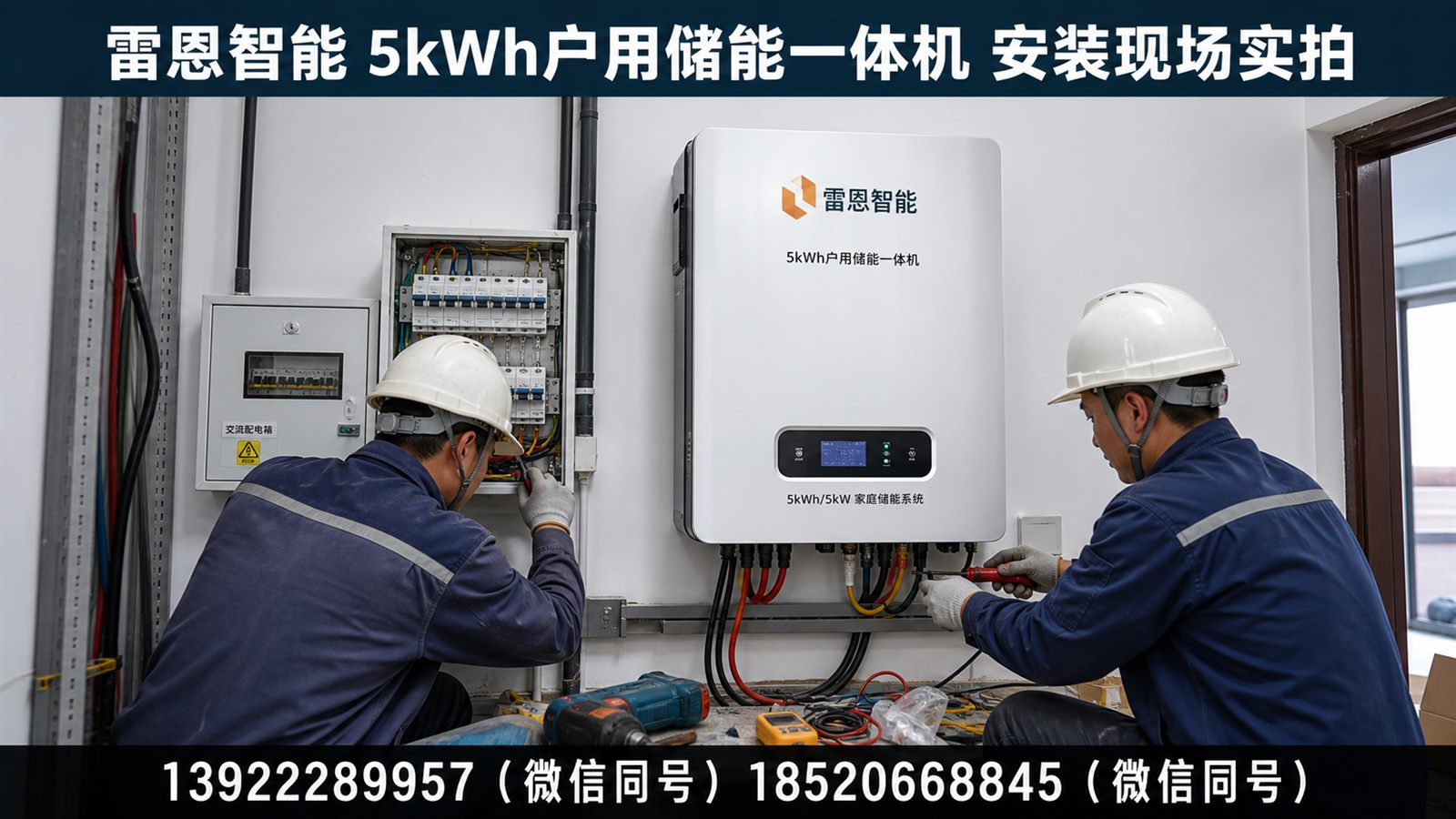
Project manager (schedule/quality/safety/cost, customer liaison); technical lead (solution, disclosure, commissioning, training); electrical installer (installation, wiring); safety officer (site safety, PPE, hazard checks).
10.2 Preparation
Technical: drawing/solution review, disclosure, work instructions, test instruments. Materials: per config list with visual checks; tools (impact drill, multimeter, megger, crimper, levels); PPE (helmet, insulated gloves/shoes, harness, fire extinguisher). Site: clear work area, temporary power with RCD, warning signs.
10.3 Key Processes
Bracket: locate/level, drill per expansion-bolt depth, fix and shake-test. Enclosure: two-person lift onto bracket, level within 2 mm, door operation smooth. Grounding: ground electrode ≥2.5 m deep, yellow-green cable to terminal bar, resistance ≤4 Ω. Wiring: weak before strong, device side before grid side, all switches off; correct polarity/phase; torque per spec; numbered and labeled; insulation test before power-on. Commissioning: check wiring/switches → DC then AC power-up → no-load then loaded tests → grid-tied parameters verified → simulated outage switch test → charge/discharge tests → APP binding and remote functions → ≥2 h continuous loaded trial.
10.4 Quality Control
Three-inspection system (self, mutual, dedicated); key control points: terminal crimping/polarity, grounding ≤4 Ω, insulation, grid parameters, enclosure levelness; standards GB 50303, GB 50054, manufacturer installation spec, grid-company interconnection requirements; non-conformances stop work until rectified and re-accepted.
10.5 Safety and Civilized Construction
RCD-protected temporary power; two-person live work; de-energized wiring with “Do Not Close” tags; insulated gloves; ladder supervision; no open flames; daily cleanup; minimal noise; protect the customer’s property.
10.6 Emergency Response
Electric shock: cut power/insulated removal, CPR if needed, call 120. Fire: cut power, extinguisher; if uncontrollable, evacuate and call 119. Equipment damage: stop, record, assess, repair or return-to-factory, reschedule. Schedule delay: adjust plan, add resources, communicate with the customer, document evidence.
11. After-Sales Service
11.1 Warranty
– Whole unit: 3 years free warranty from acceptance.
– LFP cells: 5 years, with capacity retention ≥80% of nominal during warranty.
– Non-human quality faults during warranty: free repair, free part replacement, free on-site service.
– Exclusions: human damage, unauthorized disassembly/modification, force majeure (flood, fire, lightning) — paid repair available.
11.2 Response Mechanism
7×24 hotline; 30-minute initial response with preliminary solution; remote-first troubleshooting; on-site within 24 h urban / 48 h suburban / negotiated remote; 24-hour follow-up call after each repair (closed loop).
11.3 Service Content
– Remote support: operation guidance, fault diagnosis, remote commissioning, firmware upgrades, tariff strategy advice (WeChat/phone/remote desktop).
– On-site service: hardware repair, relocation/re-installation, periodic inspection, capacity expansion, on-site training.
– Periodic inspection: one free on-site inspection per year during warranty — battery health, protection verification, terminal tightening, thermal system cleaning, parameter optimization, hazard check, with a written report.
– Software upgrades: firmware/APP/cloud upgrades free for life, OTA without disassembly.
– Spare parts: core parts stocked; cost-price supply after warranty; ≥5 years of spares for discontinued models.
11.4 Post-Warranty Service
Paid repair at parts + service cost only (no hidden fees); annual maintenance agreements (2 inspections/year, priority service, parts discounts); trade-in upgrade programs; free lifetime technical consultation.
11.5 Service Supervision
Dedicated complaint hotline; satisfaction follow-up after every service; continuous process improvement; uniform trained and certified service personnel.
12. Training Plan
12.1 Objectives
Enable users to understand the system’s working principles and structure; master daily operation, mode switching and parameter setting; use the APP for data viewing and alarms; perform routine maintenance; identify and handle common faults; follow safety and emergency procedures.
12.2 Audience
Household users and daily managers; property O&M staff (as needed); basic operation and advanced maintenance tiers.
12.3 Content
– Theory: system composition (battery/PCS/BMS/distribution) and principles; grid-tied/off-grid/standby modes; LFP battery fundamentals; electrical and battery safety.
– Hands-on: power on/off and E-stop; display navigation (SOC, voltages, currents, faults); mode and charge/discharge scheduling settings; simulated outage switch test; APP registration, binding, data/history/alarm viewing and settings.
– Maintenance: routine inspection, dust-filter cleaning, terminal and grounding checks, long-term storage care.
– Troubleshooting: fault LED identification; simple faults (tripping, no display, no charge/discharge); reporting process; abnormal smell/sound/heat response.
– Safety: no unauthorized disassembly/modification; no wet-hand operation or water washing; keep flammables away; fire/electric-shock emergency procedures.
12.4 Method
On-site hands-on training at acceptance; instructional videos; paper and electronic User Manual and Maintenance Guide; ongoing online Q&A.
12.5 Assessment
Practical operation check (power on/off, mode setting, APP use) + knowledge questions; sign-off upon passing; free retraining until mastered.
13. Anonymous Typical Project Scenarios
*All scenarios below are anonymous, generalized examples for reference. They do not refer to any real customer, project address or testimonial.*
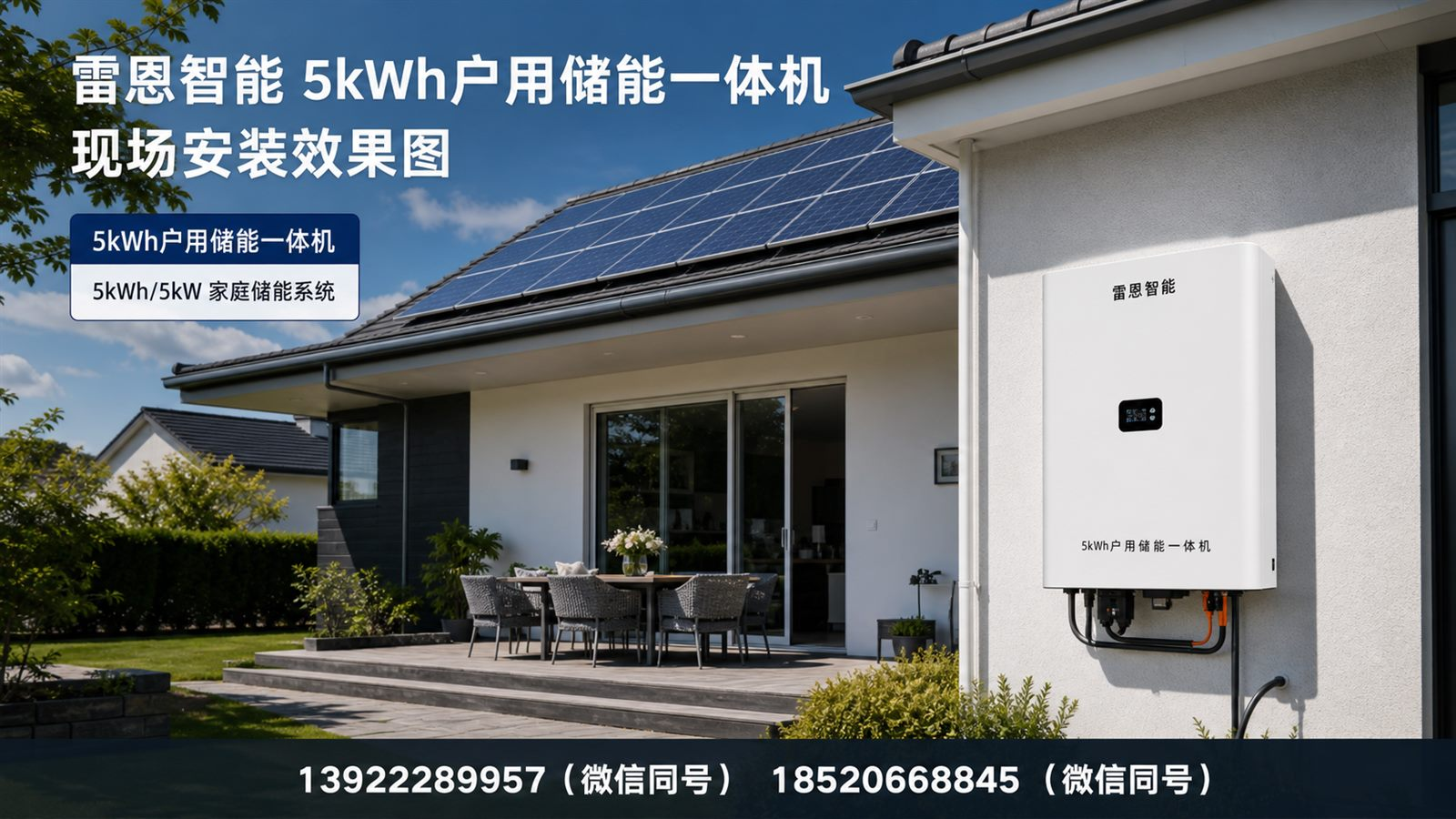
Scenario A — Urban villa PV-plus-storage project.
A villa with an existing 8 kW PV system added one 5kWh/5kW unit (AC-coupled) in self-consumption + arbitrage mode with backup. Outcome: PV self-consumption rose from 30% to 70%; combined savings ≈¥2,500/year with ~6-year payback; over 8 hours of outage backup for fridge, network, lighting and AC; stable, quiet operation with APP monitoring.
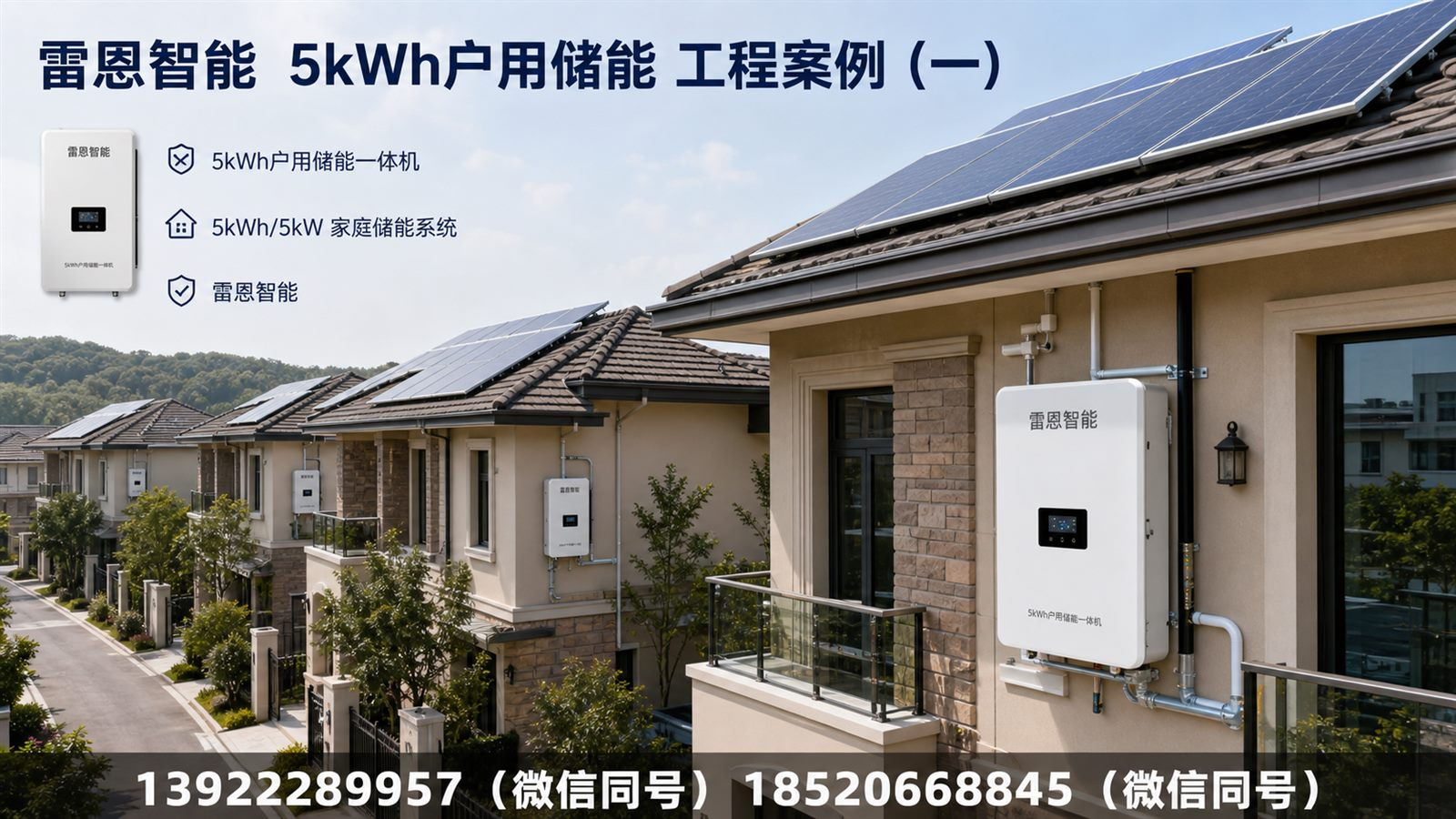
Scenario B — Rural self-built home storage supply.
A rural home with unstable grid and frequent outages added a 5kWh/5kW unit (DC-coupled PV, hybrid mode). Outcome: outages no longer affect the household; grid consumption fell over 60%; the unit handled rural dust and winter low temperatures reliably; simple enough for elderly users.
Scenario C — Country guesthouse backup power.
A remote guesthouse suffering peak-season outages installed two 5kWh/5kW units in parallel (10 kWh/10 kW). Outcome: seamless switchover guests never notice; monthly arbitrage savings of several hundred yuan; easy parallel expansion; remote monitoring for the owner.
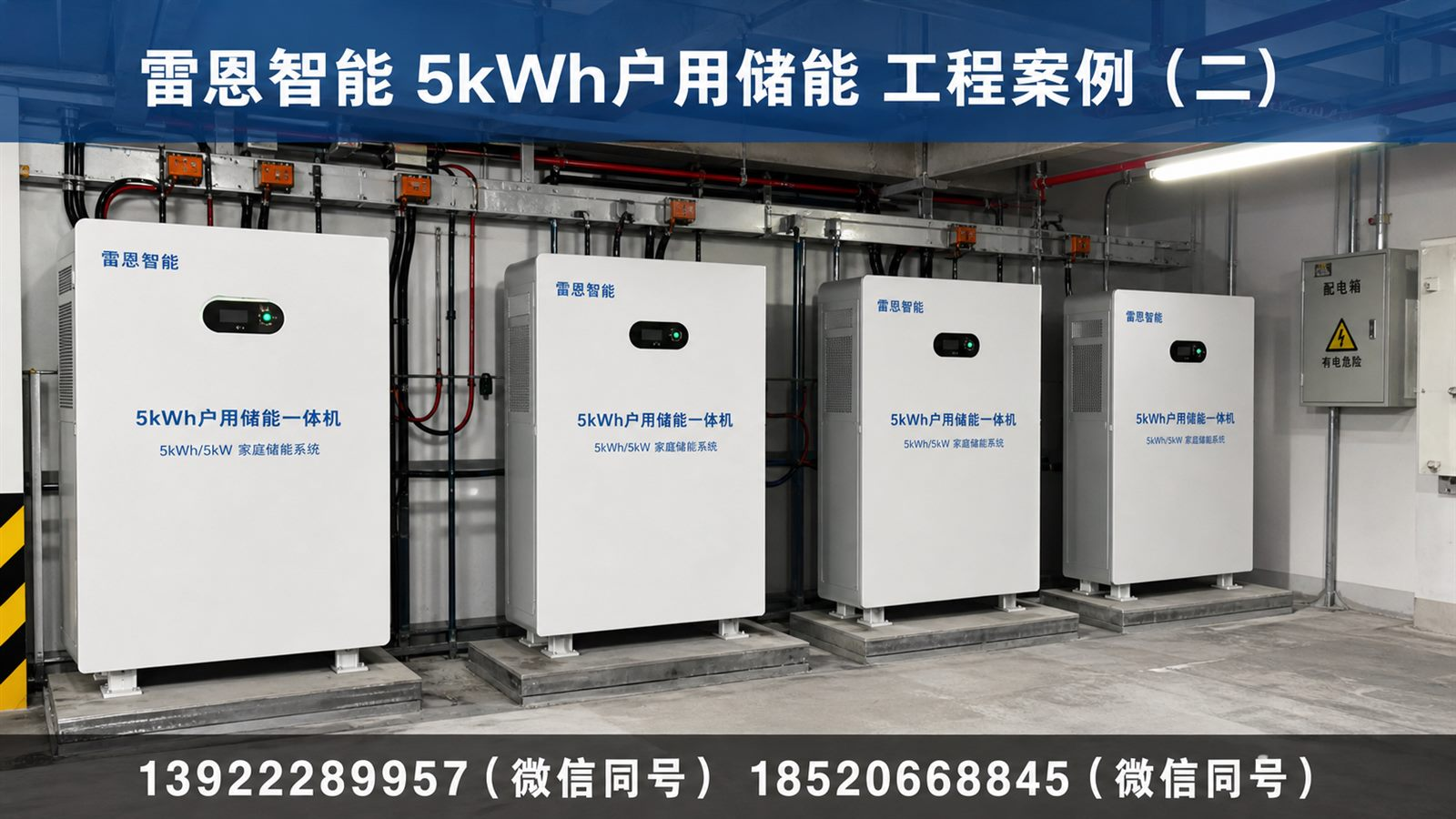
Scenario D — Independent off-grid studio.
A suburban studio avoided expensive grid connection by installing two 5 kWh units + 8 kW PV as a fully off-grid system with a diesel generator for extreme weather. Outcome: complete grid independence; full daytime and basic evening supply on sunny days; 1–2 days of autonomy in overcast weather; stable, quiet operation.
14. SEO Optimization
14.1 Keyword Classification
– Core keywords: residential energy storage all-in-one, 5kWh energy storage system, 5kW home energy storage, 5 kWh home battery.
– Long-tail keywords: 5kWh home battery system price, 5kW residential energy storage manufacturer, wall-mounted home battery, grid-tied off-grid home storage, home LFP battery, residential PV-storage installation, home backup power.
– Industry keywords: home energy storage system, household battery storage, PV home storage, grid/off-grid storage all-in-one, LFP energy storage, residential storage solution.
– Brand keywords: KITOZER residential storage, Lain home energy storage, Guangzhou Lain storage.
– Geographic keywords: Guangzhou home energy storage, Guangdong household storage, Panyu storage manufacturer, Pearl River Delta storage installation.
14.2 SEO Tags
– SEO Title: 5kWh Residential Energy Storage All-in-One | 5kW Home Energy Storage System | Lain KITOZER
– Meta Keywords: residential energy storage all-in-one, 5kWh storage system, 5kW home energy storage, 5 kWh home battery, grid-tied off-grid storage, LFP energy storage, Guangzhou storage manufacturer
– Meta Description: Guangzhou Lain provides 5kWh/5kW residential energy storage all-in-one systems — seamless grid/off-grid switching, long-life LFP batteries, smart remote monitoring for peak-valley arbitrage, PV self-consumption and backup power; source factory, customizable.
– H1: 5kWh/5kW Residential Energy Storage All-in-One System Technical Design Solution
– H2 structure: Project Overview | User Requirement Analysis | Overall Design | Recommended Configuration | Technical Specifications | Core Advantages | Technical Q&A | Construction Plan | After-Sales Service
14.3 Internal Link Anchors
– Core anchors: residential energy storage all-in-one.
– Long-tail anchors: 5kW home energy storage system, 5 kWh home battery.
– Related anchors: integrated data cabinet, micro-module cold aisle, outdoor cabinet, computer room construction.
*Note: keywords are placed naturally; no keyword stuffing.*
15. Official Contact Information
– Company: Guangzhou Lain Intelligent System Development Co., Ltd.
– Website: https://gdlain.com
– Phone: +86 13538869979 / +86 13538869979
– Address: No. 5 Huashan Road, Shilou Town, Panyu District, Guangzhou, Guangdong, China