1. Overview: One Platform for Solar, Storage and the Whole Site
Solar plants, battery energy storage systems (BESS), EV charging hubs and hybrid stations are rarely run as one facility. The PV inverter has its own app, the storage system its own battery management system, the charging piles their own operator portal, and the air conditioner, fire panel and security cameras yet another set of screens. Field staff must log into several systems to answer one question: is the site healthy and making money? New-energy site intelligence integration solves this by unifying solar generation, storage, loads, environment and safety into a single O&M platform with one database, one alarm list and one dashboard.
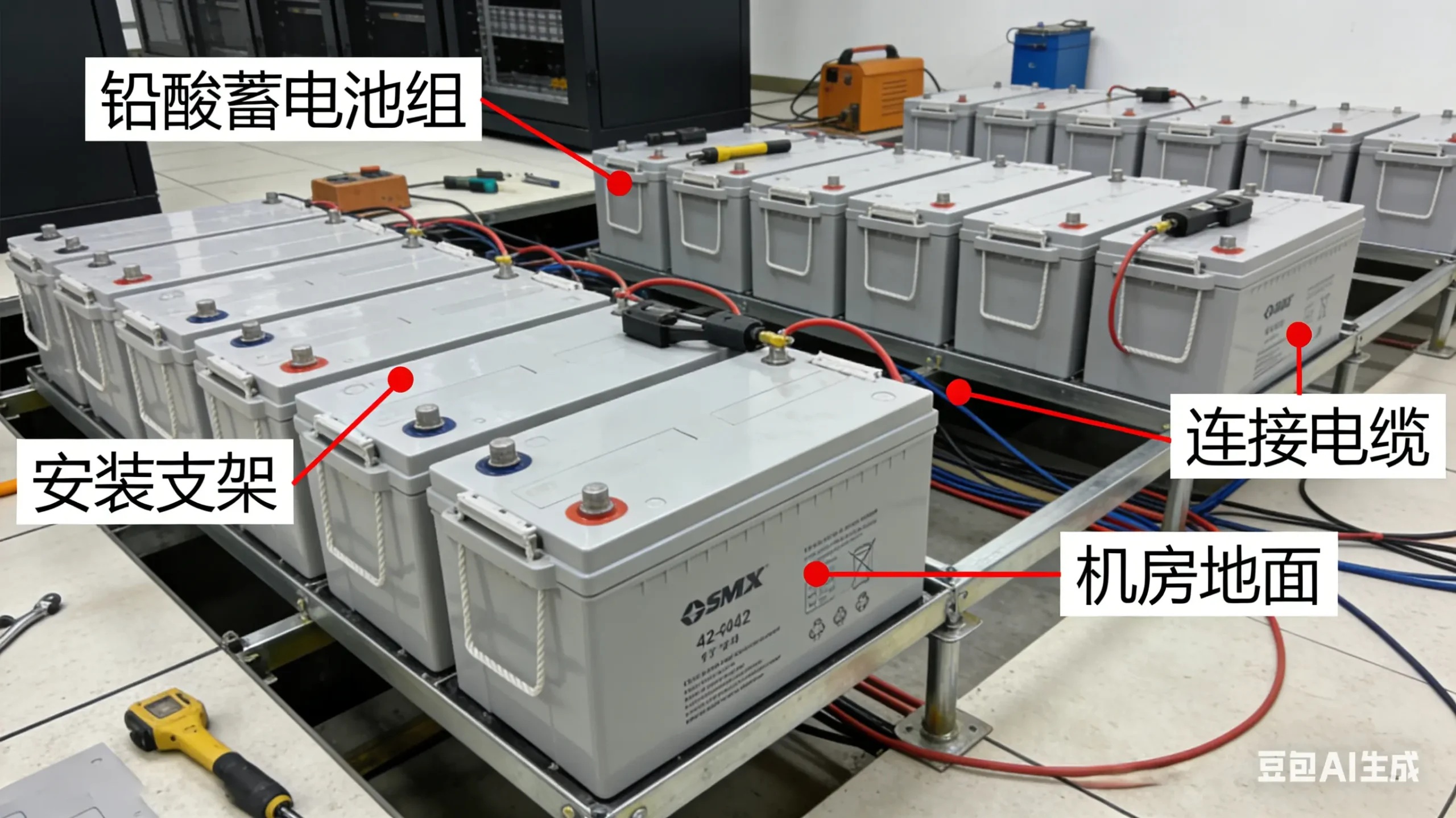
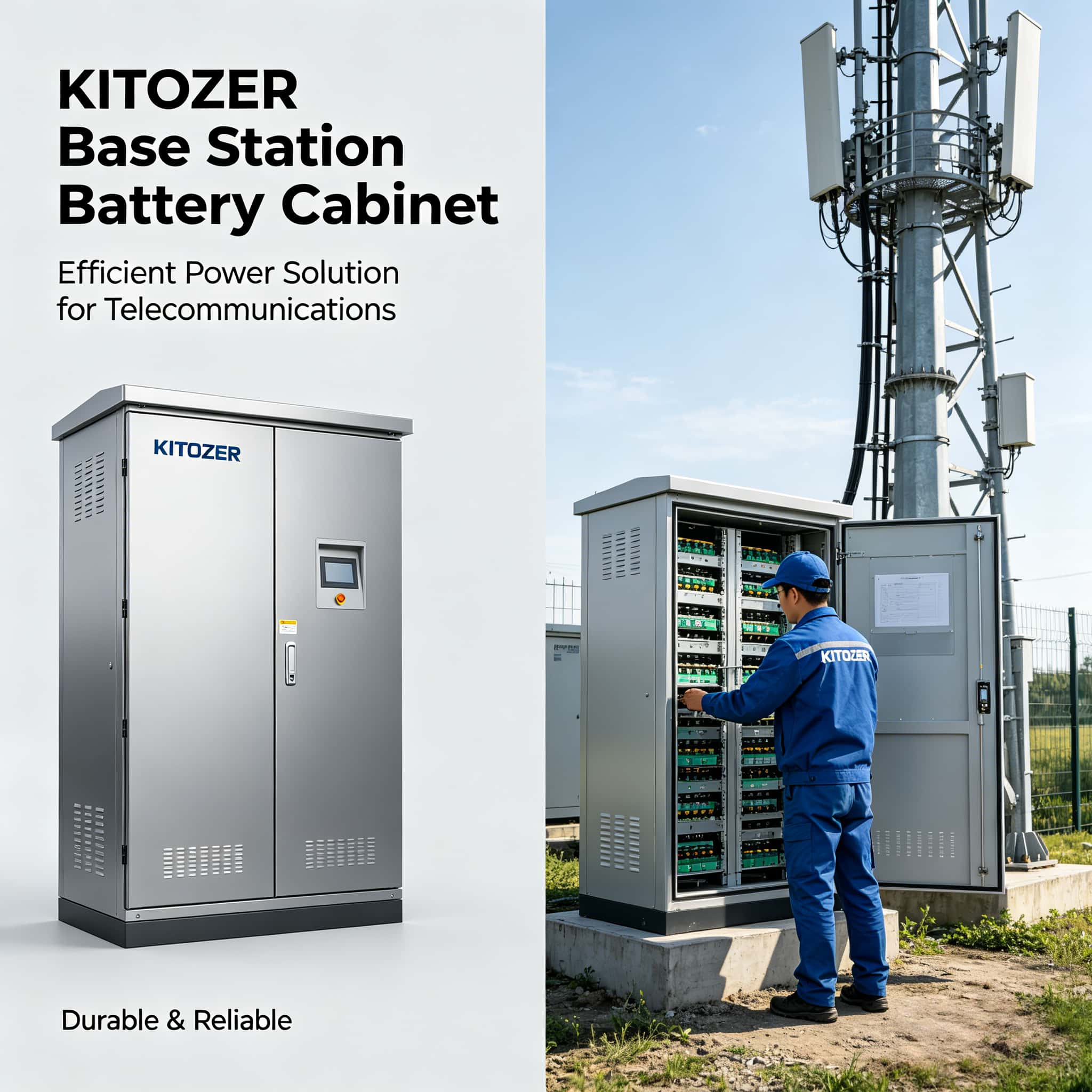
Guangzhou Lain Intelligent System Development Co., Ltd. (KITOZER) designs and delivers this integration for solar-plus-storage sites, commercial & industrial energy projects, base stations with PV and EV charging hubs — from the battery cabinets and power distribution we manufacture to the monitoring software that ties everything together. This guide explains what an integrated new-energy site platform covers, how it is built, and what it returns to operators.
2. What New-Energy Site Intelligence Integration Covers
An integrated platform treats every device that produces, stores or consumes electricity on the site as one managed asset base. The core domains are:
- Solar PV — inverter status, string current and voltage, DC/AC energy, yield and derating.
- Energy storage — battery SOC/SOH, cell and pack voltage, current, temperature and balancing.
- Power conversion — PCS, UPS and DC/DC converter state, efficiency and protection events.
- Loads — EV chargers, site loads and export/import power at the grid connection.
- Environment — cabinet and room temperature, humidity, water leakage and smoke/fire detection.
- Safety & security — door access, cameras, fire suppression and alarm condition monitoring.
All domains share the same time base, the same alarm rules and the same user permissions, so operators compare generation with consumption, correlate alarms and dispatch maintenance from one screen.
3. Solar PV Monitoring: From Inverters to Yield
PV monitoring on an integrated platform goes deeper than the inverter vendor’s own app because it compares generation with site conditions and storage behavior:
| Data Group | What Is Collected | O&M Value |
|---|---|---|
| Inverter status | Online/offline, faults, derating, communication health | Immediate visibility of generation loss |
| String data | Per-string current and voltage, mismatch detection | Finds soiling, shading and failed modules early |
| Energy metering | DC/AC energy, daily/monthly yield, PR calculation | Tracks performance ratio against expectation |
| Weather context | Irradiance and temperature (where sensors exist) | Separates weather loss from equipment loss |
| Power quality | Voltage, frequency and harmonics at the AC side | Detects grid and wiring problems |
When a string underperforms, the platform raises an alarm with the exact combiner or string ID, and the maintenance team arrives knowing which module to inspect rather than testing every string.
4. Battery Storage Monitoring: SOC, SOH, Thermal and Safety
A lithium battery that is mis-operated is a safety and financial risk: over-charge, over-discharge and thermal runaway develop quietly before they become visible. Integrated storage monitoring continuously reads the battery management system (BMS) and adds the site context the BMS does not see:
- SOC and SOH trends — capacity fade tracked over months to schedule replacement before revenue loss.
- Cell and pack balance — voltage spread between cells warns of imbalance and aging.
- Thermal supervision — pack, cabinet and room temperature with rate-of-rise alarms.
- Protection events — over-voltage, under-voltage, over-current and insulation faults logged with time stamps.
- Cabinet environment — humidity, smoke, water leak and door-open status inside battery cabinets.
- Fire integration — links to the fire alarm and suppression panel so one event triggers the full picture.
Because the platform stores years of battery data with consistent formatting, operators can compare packs, justify early replacement and provide evidence for warranty claims.
5. EV Charging and Load Integration
Hybrid sites combine solar and storage with EV charging, and the value is in orchestrating the three. The platform monitors each charger’s state, session energy, power draw and faults, then shows how charging interacts with PV output and battery state:
| Scenario | What the Platform Shows | Control Value |
|---|---|---|
| Daytime charging | PV generation vs charger demand in real time | Maximizes self-consumption of solar |
| Night / peak charging | Battery discharge covering charger demand | Shaves peak grid demand and cost |
| Grid constraint | Site import against connection limit | Prevents overload and penalty charges |
| Charger fault | Charger state, error code and session history | Fast dispatch with the right spare part |
With load and generation in one system, the operator sees at a glance whether the site is importing, exporting or self-balancing — and can schedule storage to improve the mix.
6. Power Distribution and Cabinet Infrastructure
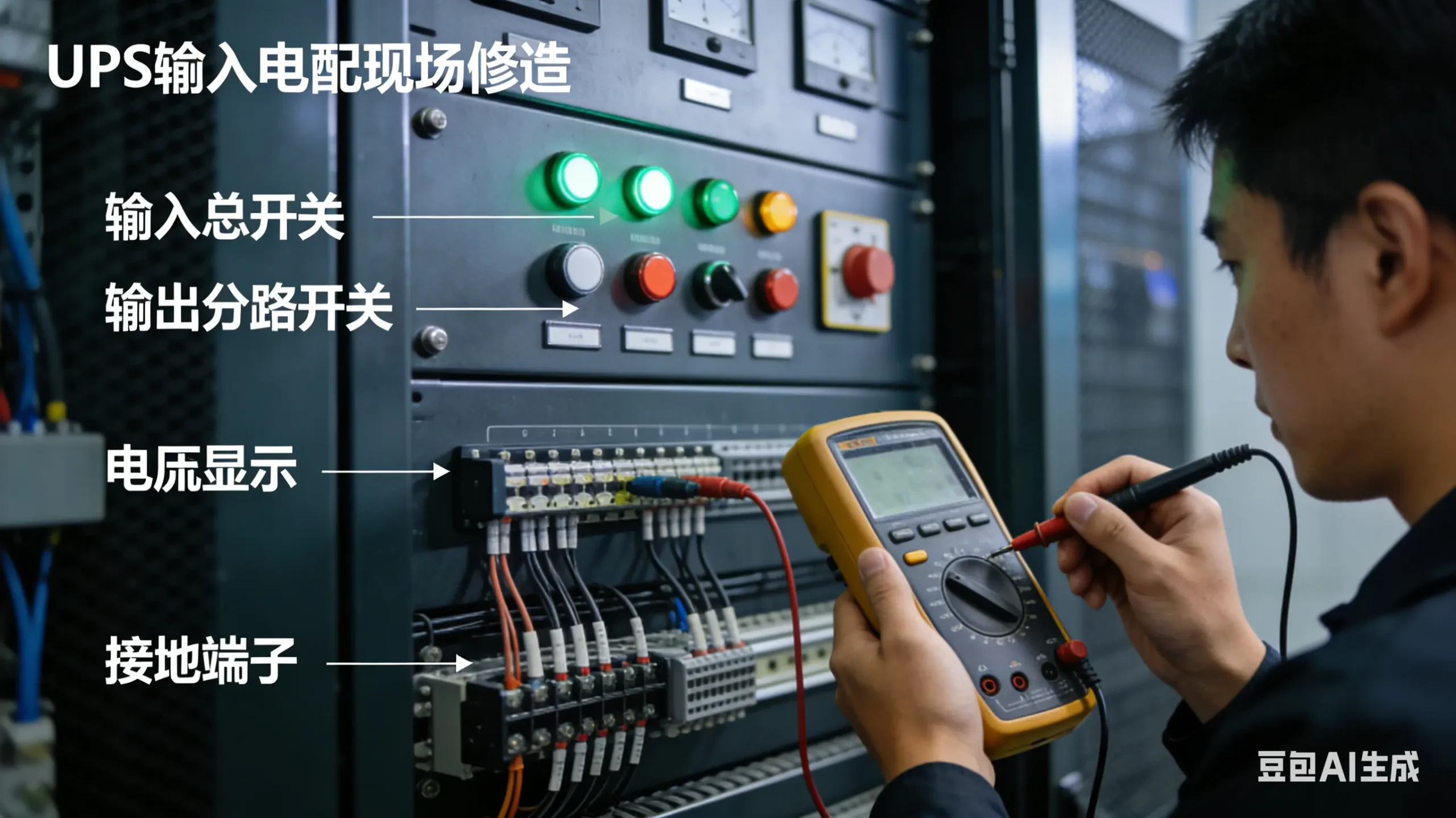
The intelligence platform is only as reliable as the power path it monitors. KITOZER supplies and supervises the physical distribution layer of new-energy sites: DC combiner boxes, PV and storage DC/AC switchgear, UPS input/output distribution cabinets, outdoor weatherproof enclosures and battery cabinets. Each is monitored for:
- Circuit status — breaker state, branch current and voltage at the distribution point.
- Cabinet environment — temperature, humidity and condensation inside sealed outdoor cabinets.
- Door and tamper events — access logging for safety and theft protection.
- Spare and metering points — branch energy metering for per-load cost allocation.
Manufacturing the cabinets in-house means monitoring sensors are integrated during production, not retrofitted, which keeps installations clean and commissioning fast.
7. Environmental Monitoring at the Site
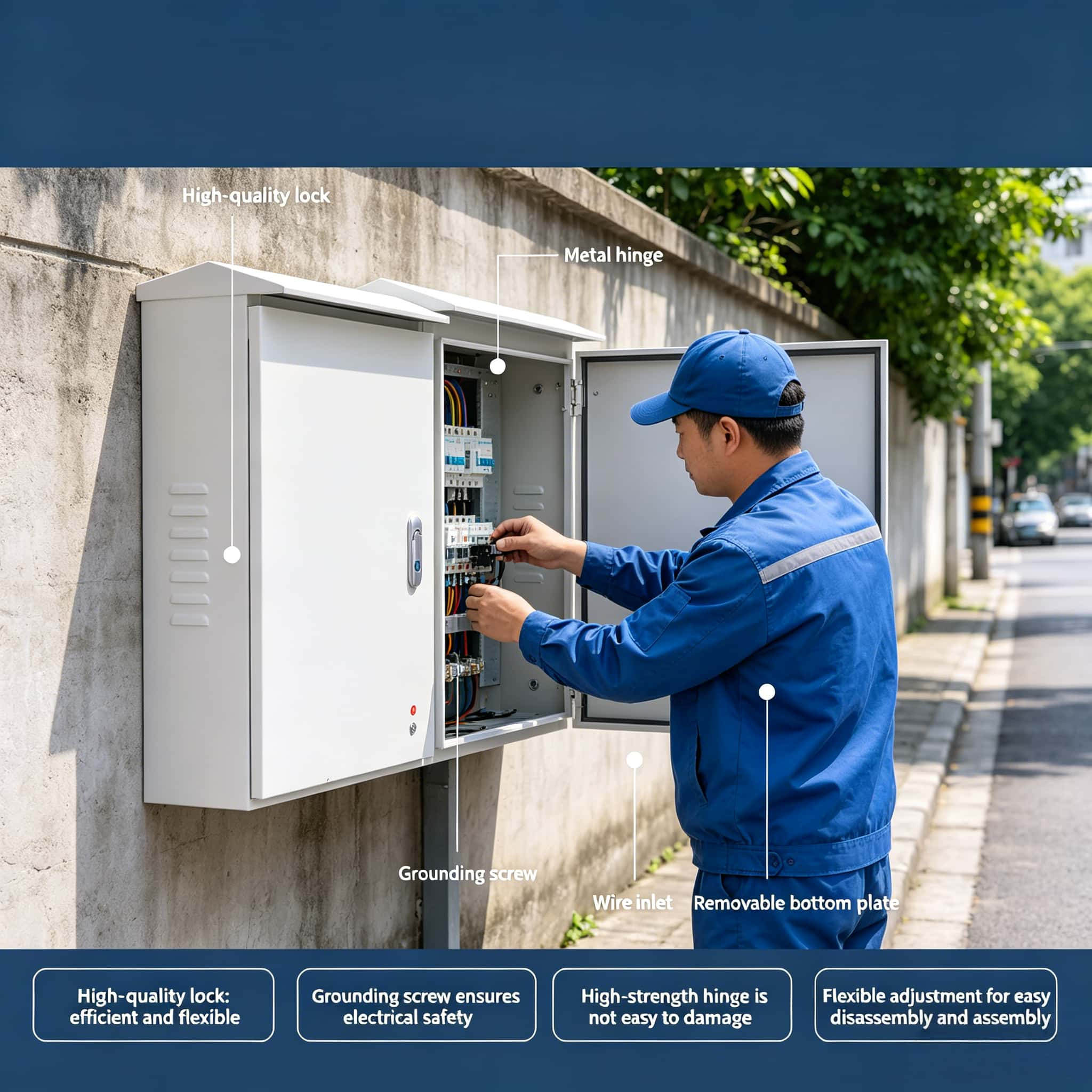
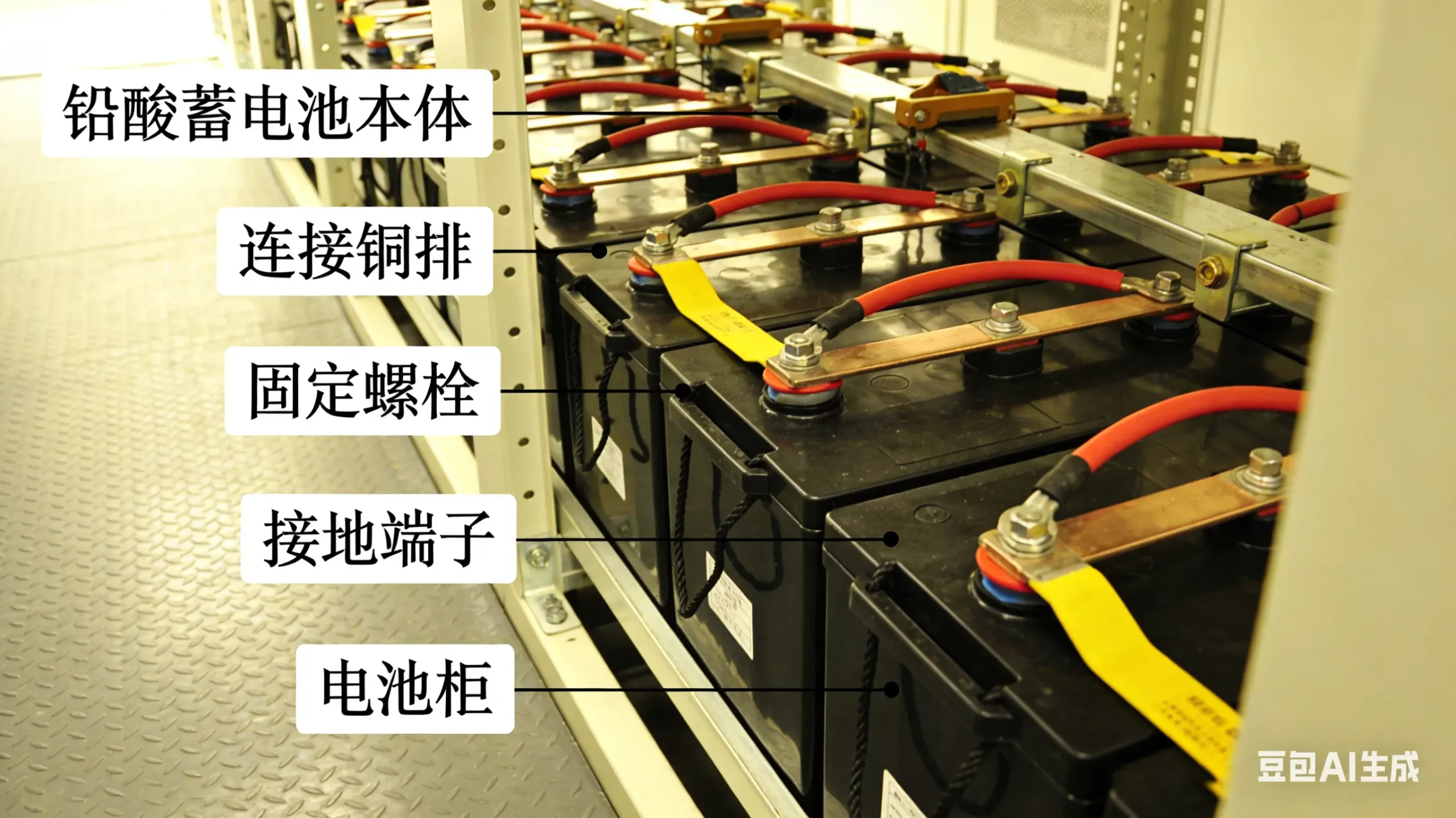
Heat is the enemy of power electronics, and moisture is the enemy of high-voltage connections. Every outdoor cabinet, battery room and container in a new-energy site should be watched continuously:
| Sensor | Protection Target | Alarm Example |
|---|---|---|
| Temperature / humidity | Inverters, BMS, chargers, batteries | High cabinet temperature before derating |
| Water leakage | Cable trenches, battery rooms | Leak detected under rack row |
| Smoke / fire | Whole site | Smoke in battery cabinet triggers fan-off and alarm |
| Fan / cooling status | Power conversion equipment | Cooling failure with cabinet hot |
| Weather station | Site planning and safety | Wind or lightning risk for outdoor areas |
Environment alarms are correlated with electrical data: a hot cabinet with a failing fan points to cooling maintenance; the same temperature with an over-current event points to a different root cause.
8. Alarm Management and Remote O&M
An integrated platform changes alarm handling from paging through multiple apps to one disciplined workflow:
- Unified alarm list — PV, storage, power, environment and security alarms in one chronological feed.
- Severity and acknowledgement — criticality levels, assignment and acknowledgement tracking.
- Notification rules — SMS, app push or email by severity and time of day.
- Remote diagnostics — live data and historical trends reviewed without a site visit.
- Work order handoff — alarm history attached to the dispatch so the technician arrives prepared.
- Event forensics — full time-stamped history reconstructs what happened before and after an incident.
Typical sites reduce routine site visits by 30-50% when alarms are trustworthy and remotely diagnosable — the truck roll happens because a fault exists, not because nobody is sure.
9. Unified Dashboards, Reports and Data Ownership
The platform gives each stakeholder the view they need from the same data:
- Operator dashboard — live status of generation, storage, charging, loads and alarms.
- Owner report — energy flow, revenue, availability and performance ratio per month.
- Maintenance report — alarm counts by device type, MTTR and repeated-fault devices.
- Compliance archive — retained logs for grid connection and safety audits.
Because all data is stored in the operator’s own platform rather than scattered across vendor clouds, the site owner keeps a complete, exportable history — an asset when changing service providers, financing the project or selling it.

10. Cybersecurity and Multi-Site Architecture
New-energy sites are becoming targets: inverters, BMS units and chargers with open ports can be abused to disrupt generation or access the wider network. Lain integrates platforms with security as a design constraint:
- Segmentation — monitoring network separated from control and office networks.
- Secure transport — VPN or encrypted uplinks between sites and the central platform.
- Access control — per-user roles for viewing, operating and configuring devices.
- Audit logging — every command and configuration change recorded per user.
- Firmware and patch tracking — device versions inventoried so updates are planned.
Multi-site operators get a single pane across hundreds of locations, with each site’s data isolated by role and aggregated only where the operator chooses.
11. Deployment Roadmap for Existing and New Sites
Integration projects follow a repeatable path whether the site is new or already operating:
| Phase | Activities | Deliverable |
|---|---|---|
| 1. Audit | Inventory devices, protocols, network and data points | Integration map and point schedule |
| 2. Design | Gateway placement, network layout, alarm rules, dashboards | Platform design document |
| 3. Commission | Install gateways, connect devices, verify every data point | Point-to-point test report |
| 4. Configure | Alarm thresholds, roles, reports and notification rules | Live platform |
| 5. Train & handover | Operator training, documentation, SLA definition | Accepted O&M system |
For new sites, Lain integrates monitoring during manufacturing and construction so commissioning data is available from day one; for operating sites, integration is phased by subsystem to avoid downtime.
12. Frequently Asked Questions
New-Energy Site Intelligence Integration FAQ
1. What is new-energy site intelligence integration?
It is a unified O&M platform that brings solar PV, battery storage, EV charging, power distribution, environment and security monitoring into one system with shared data, alarms and dashboards for a new-energy site.
2. Why not just use each vendor’s own app?
Vendor apps create silos: separate logins, separate alarm lists and no correlation between generation, storage and loads. Integration gives one database and one workflow, which is what operators actually need.
3. Can it work with existing inverters, BMS and chargers?
Yes — Lain integrates with common Modbus/TCP, CAN and vendor protocols through gateways, and adds sensors where equipment has no digital output.
4. What does it monitor on the battery?
State of charge, state of health, cell/pack voltage and temperature, balancing, protection events, and the cabinet environment including smoke and water leakage.
5. Does it control the storage system or only monitor?
Monitoring is the core; where the BMS/PCS supports it, the platform can also dispatch charging and discharging according to schedules or grid signals.
6. How does it help reduce operating cost?
Fewer site visits through remote diagnosis, faster fault resolution with full history, earlier detection of performance loss, and better data for warranty and financing.
7. Is the data stored on our side?
Yes — the platform can be hosted on your server or a private cloud, with full data export, so the owner keeps the historical record.
8. Is remote access secure?
Access is role-based over encrypted links with audit logging; monitoring networks are separated from control networks to reduce attack surface.
9. Can it monitor multiple sites from one console?
Yes — the multi-site architecture aggregates hundreds of locations with per-site isolation and site-level dashboards.
10. How do we start an integration project?
Contact Lain for an audit: we inventory your equipment and protocols, deliver an integration map and point schedule, then commission the platform in phases with training and handover.
13. Related Solutions
- Microgrid Distribution Module
- Microgrid Monitoring System
- Energy Efficiency Monitoring System
- Industrial Energy Submetering System
- Gas Energy Monitoring System
- LiFePO4 Batteries for UPS
About Guangzhou Lain Intelligent System Development Co., Ltd.
Guangzhou Lain Intelligent System Development Co., Ltd. delivers new-energy site intelligence integration for solar-plus-storage plants, C&I energy projects, base stations and EV charging hubs — unifying PV, battery, charging, power distribution, environment and security monitoring in one O&M platform, backed by in-house battery cabinets, power distribution and outdoor enclosures. From single rooms to enterprise facilities, KITOZER provides design, manufacturing, integration, testing and after-sales service. Export and support scope are confirmed on the quotation.
Contact us for a free technical consultation:
- Company: Guangzhou Lain Intelligent System Development Co., Ltd.
- Address: 1st Floor, Building A, Chaotian Industrial Park, Zhongrun Industrial Park, Shilou Town, Panyu District, Guangzhou, Guangdong, China
- Tel/WeChat: +86 13538869979
- WhatsApp: +86 13538869979
- Email: zl19068534140@gmail.com
- Website: www.gdlain.com | Request a Quote
Typical response time: within one business day. Project references, drawings and samples are available on request.