KITOZER Sound and Light Alarm Siren (Fire Horn / Strobe Siren) Selection, Wiring, Installation and Maintenance Guide
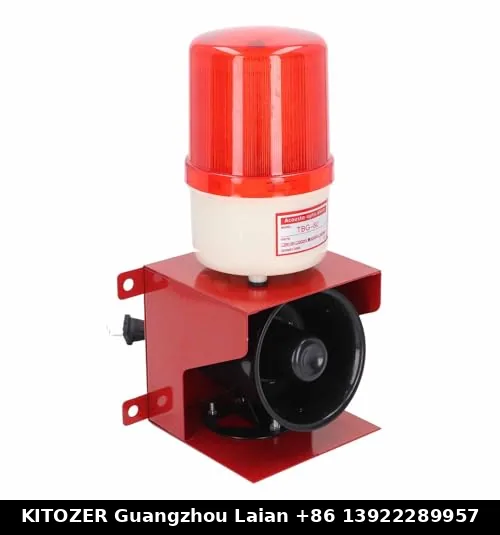
1. Product Overview
The KITOZER sound and light alarm siren is an integrated audible and visual warning device produced by Guangzhou Laian Intelligent System Development Co., Ltd. for fire alarm, security perimeter, industrial equipment warning and traffic station applications. It combines a high sound pressure electronic alarm horn with a high brightness strobe or steady warning light. Upon receiving an alarm trigger signal, it warns people at the same time through strong sound and strong light channels, compensating for the insufficient perception of a single sound or single light signal in noisy environments, among hearing impaired people, and in low light at night.
The KITOZER brand belongs to Guangzhou Laian Intelligent System Development Co., Ltd., located in Chaotian Park, Zhongrun Industrial Zone, No. 5 Huashan Road, Shilou Town, Panyu District, Guangzhou. The company focuses on fire alarm, security and industrial automation equipment. The sound and light siren is an important output terminal of the alarm product line, working with front end smoke detectors, heat detectors, intrusion detectors, emergency push buttons and PLC control systems to form a complete alarm loop.
Compared with traditional electric horns and bells, the KITOZER siren offers adjustable loud volume, selectable tones, long life without mechanical striking, low power, water and dust resistance, and a neat appearance. Sound pressure covers 100dB to 125dB; light colors include red, yellow, blue and green; power supply covers DC12V, DC24V and AC220V; protection reaches IP65, and some models IP66, adapting to outdoor rain, humidity, dust and vibration. The reference price ranges from about RMB 150 to 1200.
2. Working Principle and Structure
The siren internally consists of an electronic drive board, an alarm horn (piezo or dynamic), a strobe or LED light source and a housing. When an external control signal (usually a dry contact closure or voltage) reaches the trigger terminals, the drive board connects the horn and light circuit: the horn emits a preset tone, and the light flashes or stays on at a fixed frequency. Removing the trigger stops the sound and light. Most models support volume and tone selection via jumpers or potentiometers.
The sound channel uses a piezo buzzer or dynamic horn. Piezo is simple, low power and high frequency, suitable for high tone fire alarm. Dynamic horns deliver rich bass and high sound pressure (up to 120dB), and through a horn converge sound waves for long distance. Indoor KITOZER models use piezo; outdoor high power models use dynamic horn. The light channel uses xenon strobe or high brightness LED: xenon is extremely bright and penetrates fog, while LED strobe lasts long, is low power and offers rich colors.
3. Technical Parameters
| Parameter | KZ-AS100 Indoor Fire | KZ-AS115 General Industrial | KZ-AS125 Outdoor High Power | KZ-ASP Solar Column |
|---|---|---|---|---|
| Sound pressure | 100-105dB | 110-115dB | 120-125dB | 110dB |
| Light color | Red LED | R/Y/B/G optional | R/Y optional | Red blue dual |
| Light source | LED strobe | LED/xenon | Xenon strobe | LED strobe |
| Tones | 1 fire tone | 6-16 selectable | multi selectable | 3 tones |
| Voltage | DC24V | DC12/24V, AC220V | DC24V, AC220V | DC12V solar+battery |
| Current | ≤100mA | ≤300mA | ≤800mA | ≤500mA |
| Protection | IP30 | IP65 | IP66 | IP66 |
| Temperature | -10~+55C | -25~+70C | -30~+70C | -30~+70C |
| Mounting | Wall | Wall/DIN | Wall/clamp | Column vertical |
| Reference price | $22-$45 | $45-$85 | $85-$170 | $115-$170 |
4. Selection Guide
Select sound pressure according to background noise and coverage. GB 26851 requires fire sounders to be 15dB above background noise and at least 60dB in the protected area. Offices and data centers need 100dB; workshops and warehouses need 110-115dB; outdoor high noise areas need 120dB or more. Remember that every 10dB doubling in loudness roughly doubles power cost, so do not overdesign.
Color follows convention: red for fire and evacuation, yellow for attention and intrusion, blue for mandatory command, green for safety and normal. Tones: fire uses continuous urgent tone, intrusion uses intermittent pulse, equipment fault uses low continuous tone. Power supply: fire systems use DC24V from the fire panel, industrial use DC24V from PLC, independent perimeter use AC220V or solar.
5. Installation and Wiring
Mount the siren where people can see and hear it, at 2.2-2.5m height on walls, or on top of columns outdoors, away from obstacles. For outdoor use, point the cable entry downward, use a waterproof gland matching the cable, and add a rain bend. Distinguish power and trigger terminals: two wire models have power and trigger combined, four wire models have independent power and a trigger contact. Check polarity for DC models. Test each unit after installation.
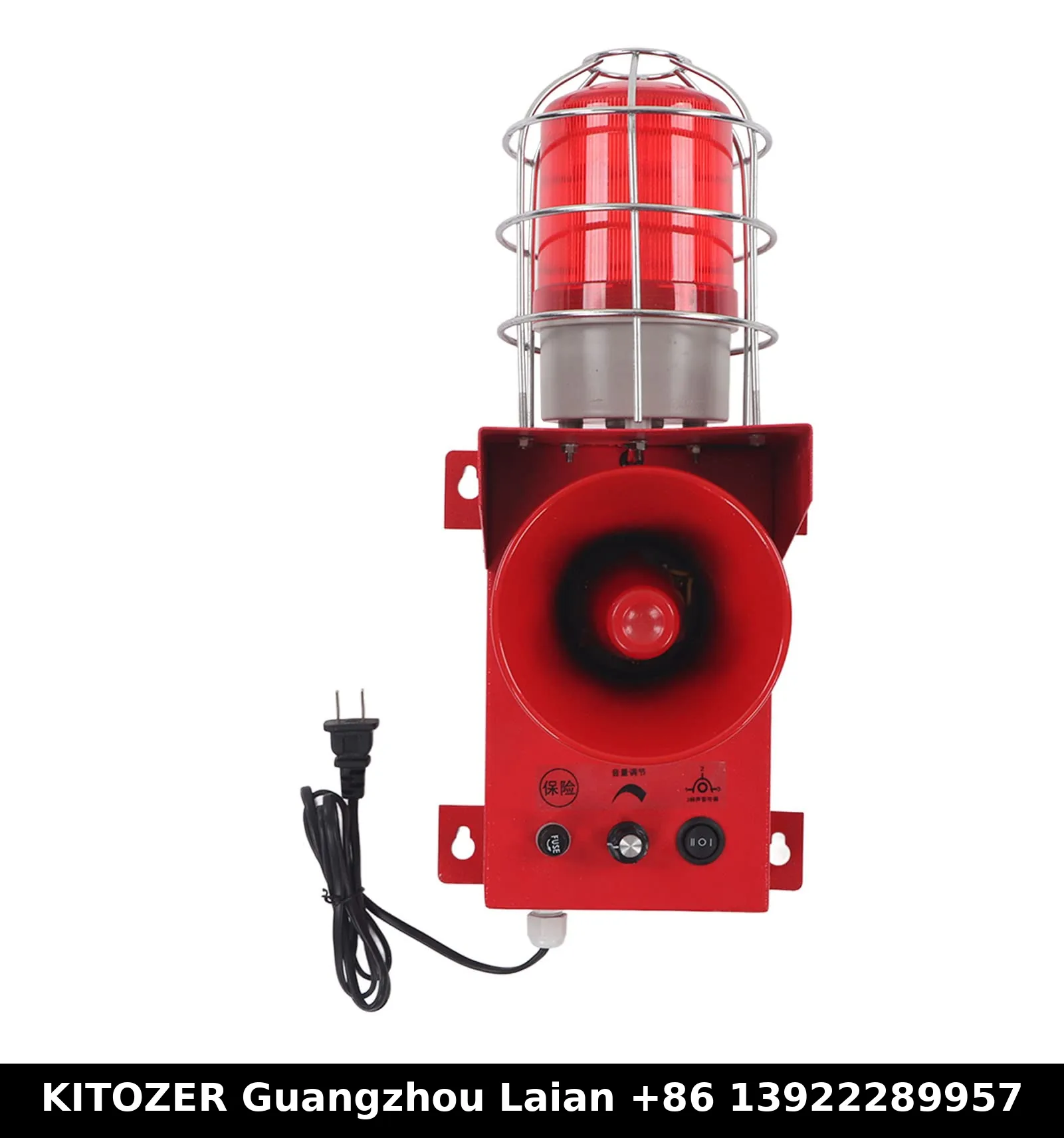
6. Use and Maintenance
Test once a month: trigger the siren and confirm sound and light. Every quarter check terminals, housing and seals. Before rainy season check glands and drain holes. If unused for long, power on for 5 minutes every half year to remove moisture. Clean with a dry cloth; do not hose the housing directly. If volume drops or light dims, check power and the horn or LED and replace when needed.
7. Typical Applications
Data centers: install DC24V fire sirens at fire zones and cold aisle ends. Factories: install IP65 industrial sounders next to lines, with colors and tones for running, standby and fault. Warehouses: install at aisle ends and exits. Substations: outdoor column sirens with intrusion detection. Campuses: perimeter and key buildings with one button alarm.
8. FAQ
A bell is mechanical, single tone, short life and high power. An electronic siren is adjustable, selectable tone, long life and includes a light.
120dB is near the pain threshold; short exposure is acceptable, and sirens only sound briefly during emergencies.
Electronically designed for hours, but typical evacuation is minutes. For long use choose industrial models.
IP65/66 resist jets and rain; with the gland downward they will not leak. They cannot be immersed.
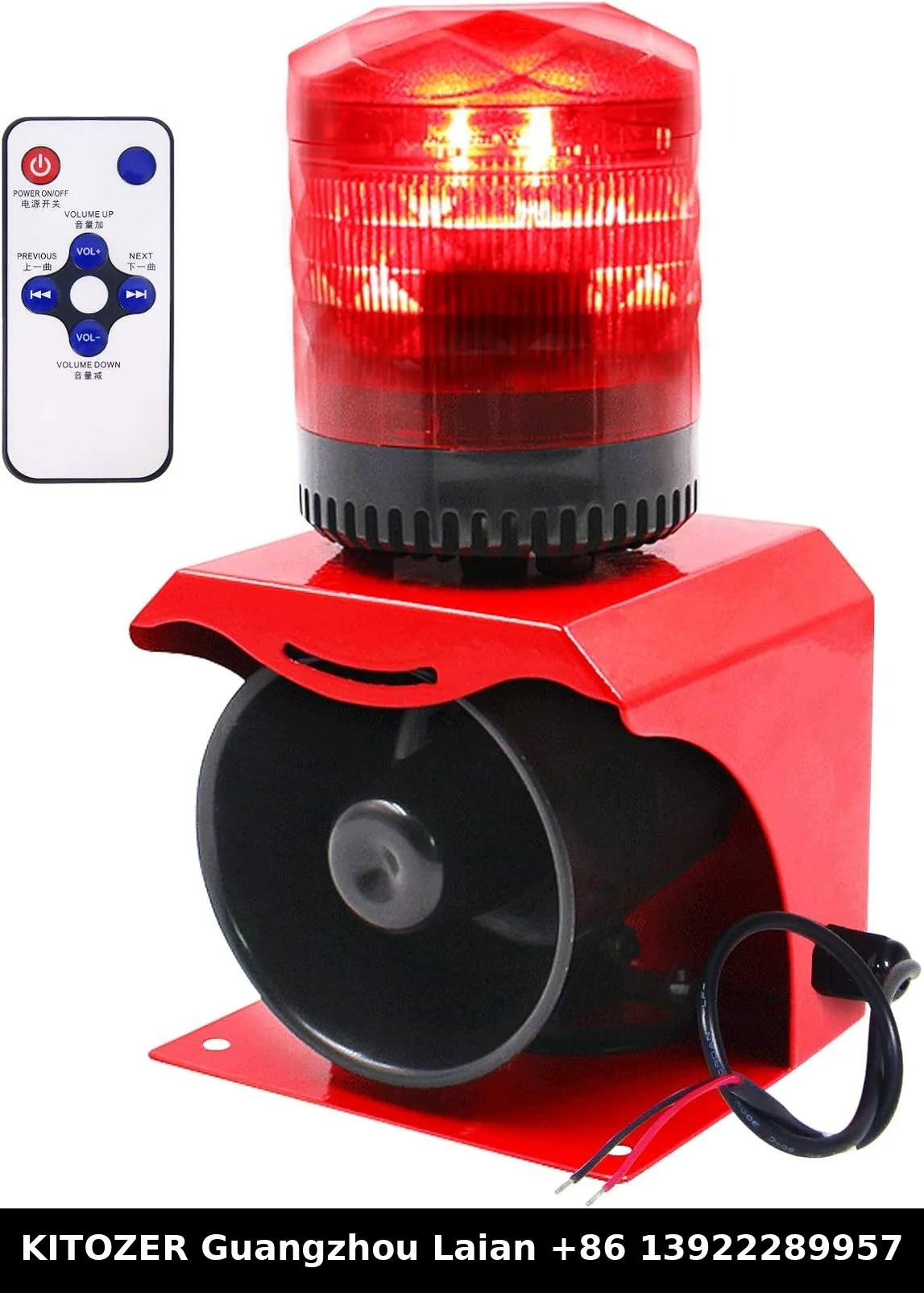
Most models have tone jumpers or potentiometer volume levels; some include a remote.
Fire uses the standard fire tone, intrusion uses intermittent pulse, fault uses low continuous tone.
Fire linked models should use the fire supply with a backup battery; independent outdoor models may use solar.
Two wire: power equals trigger, on when powered. Four wire: independent power, trigger contact closes to sound.
No; order the color you need from the factory.
Wall 2.2-2.5m, column above 2.5m, away from obstruction.
No; wrong voltage will burn the drive board. Always verify voltage.
Indoor 2-3W, outdoor high power 10-20W, solar models matched to battery capacity.
9. Standards and Compliance
Fire sound and light alarms follow GB 26851 for sound pressure, light flash rate, voltage, insulation and withstand voltage. The flash rate should be between 0.5Hz and 2Hz. Fire system design follows GB 50116, which sets out where sounders are placed, linkage logic and power supply. Industrial warning lights and buzzers follow GB/T 30828 and IEC 60204-1, which define color and sound meaning: red for emergency and danger, yellow for attention and abnormal, blue for mandatory command, green for safety and normal. KITOZER units are tested to these standards and can provide test reports.
10. Linkage with Alarm Systems and PLC
The siren is an output terminal; it does not detect or judge, it faithfully executes the controller. In a fire system, the fire alarm panel confirms a fire then drives the sounders in the zone and adjacent zones. In a security perimeter, an infrared beam or electric fence triggers the panel, which drives the siren for deterrence and prompts the guard. In industry, a PLC or safety relay DO drives the siren to indicate fault, guard door open or emergency stop. Wiring is either two wire (parallel on the panel loop) or four wire (independent power, trigger contact closure). KITOZER general models accept both DC24V active trigger and dry contact trigger.
11. Sound Pressure and Coverage
Sound pressure level in dB measures loudness. Human hearing is nonlinear: every 10dB doubles perceived loudness. 60dB is normal speech, 100dB a subway arrival, 110dB a chainsaw, 120dB the pain threshold. Sound decays with distance: in free field, every doubling of distance drops about 6dB. A 115dB siren at 10m is about 95dB, at 30m about 85dB. In workshops with high background noise, this may not be enough. The rule is to calculate from the worst point backward, and to divide large spaces into zones with multiple sirens rather than one overpowered unit. KITOZER can help with coverage calculation.
12. Light Signal and Penetration
Light supplements sound in noisy environments, for hearing impaired people and at night. Red light has a long wavelength and penetrates smoke and fog, suiting fire. Yellow is eye catching for attention and intrusion. Blue and green indicate status. Flash rate of 0.5 to 2Hz is recommended; faster may trigger photosensitive epilepsy, slower is not eye catching. Xenon strobe is brightest but shorter life; LED strobe lasts tens of thousands of hours and is low power. KITOZER fire models use red LED; outdoor high power models use xenon for maximum penetration.
13. Installation Details
Mount sirens at 2.2-2.5m on walls, on columns above 2.5m outdoors, away from shelves, pipes and equipment that block sound and light. Do not mount directly facing the operator’s ear to avoid discomfort during emergency. In corridors and lobbies, mount one at each end so people always see at least one flash. Outdoors, point the cable entry downward, use a matching waterproof gland, add a rain bend, and tilt the housing slightly so condensate drains. Check DC polarity, tighten terminals, mark wire numbers, and test each unit by triggering it.
14. Maintenance and Lifecycle
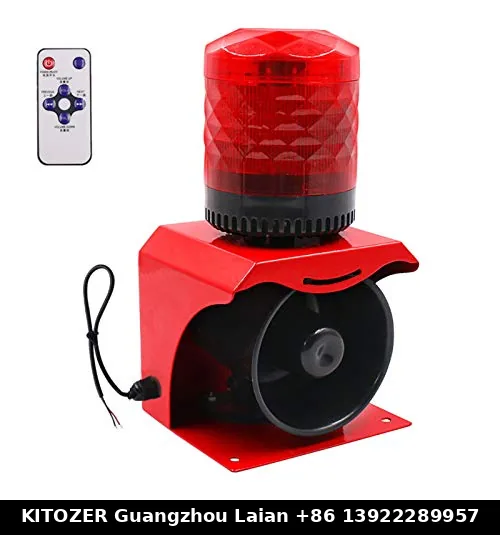
Test monthly, check terminals and seals quarterly, inspect glands and drain holes before rainy season, and power up unused units every half year to remove moisture. Clean with a dry or slightly damp cloth; do not use solvents on the lens. If volume drops more than 5dB or light dims, replace the whole unit or the relevant part. Typical life is 5 to 8 years for the whole unit, with LED strobe rated for tens of thousands of hours. KITOZER supplies spare parts and replacement units.
15. Industry Configuration Examples
Data center: each fire zone and cold aisle end gets a DC24V KZ-AS100, about 100-105dB, reference $22-$45. Machine shop: both ends of the 80m workshop get a KZ-AS115 IP65 with green running, yellow standby, red fault flash, $45-$85 each. Dock: every 100m on the perimeter column gets a KZ-AS125 125dB horn xenon siren, $85-$170 each. Parking lot: solar column KZ-ASP at entrances, $115-$170 each.
16. More FAQ
The factory sets it; models with level jumpers allow field levels. Do not open the housing to adjust the potentiometer as it affects waterproofing and warranty.
Check whether the controller keeps triggering, whether wiring is shorted, and whether the relay is stuck. Then power cycle.
LED brightness is fixed; a translucent cover can dim it but reduces penetration. Choose the right color for the scene.
IP65/66 resist jets and rain with correct installation; they cannot be immersed.
Indoor units a few watts, outdoor high power tens of watts; solar models matched to panel and battery.
No; the drive boards differ. Wrong voltage burns the unit.
Calculate by the linked power supply capacity: sum of current times 1.3 margin.
Metal outdoor housings should be grounded for lightning and induced surge.
Electronics 5-10 years, LED strobe tens of thousands of hours, horn cone ages over time.
Some models with a remote or platform can silence and reset; basic units need local power off.
17. Closing
The KITOZER sound and light alarm siren covers indoor fire, industrial warning, outdoor high power and solar column scenarios at a reference price of $22 to $170. Correct sound pressure selection, waterproof installation and regular testing ensure reliable sound and light in emergencies. Guangzhou Laian offers selection support at +86 13922289957.
18. Product Series Detail
The KZ-AS100 indoor fire model is a compact wall mount sounder with red LED strobe and piezo buzzer, 100-105dB, DC24V, IP30, for offices, data centers and corridors on the fire alarm loop. The KZ-AS115 general industrial model is multi purpose with ABS housing, IP65, red yellow blue or green light, 6 to 16 tone jumpers, DC12/24V or AC220V, for workshops and warehouses. The KZ-AS125 outdoor high power model uses a dynamic horn and xenon strobe, 120-125dB, IP66, aluminum housing resistant to UV, for docks, power plants and open perimeter. The KZ-ASP solar column integrates a solar panel, backup battery and light control, for parking lots, campuses and remote sites without wiring.
19. Sound Generation: Piezo vs Dynamic
A piezo buzzer uses a ceramic disc vibrating under alternating voltage, simple, low power (milliamps) and high frequency, sharp and penetrating, but limited to about 100dB, suitable for indoor fire alarm. A dynamic horn works like a headphone, a voice coil moving a cone in a magnetic field, rich bass and high sound pressure up to 120dB, and a horn converges sound waves for directional long range. KITOZER indoor models use piezo; outdoor high power models use dynamic horn. The drive board produces specific frequency and rhythm: fire tone is continuous high pulse, intrusion is intermittent beep, fault is low continuous tone.
20. Strobe Light: Xenon vs LED
A xenon strobe discharges a capacitor to excite xenon gas, producing an extremely bright white pulse filtered to red or yellow, high penetration through fog, but the tube lasts about 10 to 50 million flashes. An LED strobe uses high brightness LEDs blinking at a fixed rate, lasting tens of thousands of hours, low power and pure color, now the mainstream indoors and in industry. KITOZER fire models use red LED; outdoor high power models use xenon for maximum penetration.
21. Power Supply and Backup
Reliable power is critical. Fire sounders should run from the fire panel linked supply with a backup battery that lasts at least 3 hours after main power loss. Industrial models run from PLC 24V or UPS. Independent outdoor models use solar panel plus battery with light control. The design must ensure the alarm loop still works during fire and power loss. KITOZER can help calculate supply capacity and battery backup time.
22. Wiring Detail
Two wire: the siren wires directly across the panel loop; when the panel outputs DC24V it sounds, and when removed it stops. Simple, common in fire systems, but the panel cannot tell which siren sounds. Four wire: two power wires to constant power, two trigger wires to the panel relay dry contact; closing the contact sounds the siren. This suits PLC DO. Confirm whether the panel output is active voltage or passive contact. KITOZER general models support both.
23. Sound Coverage Calculation Example
A workshop 60m by 30m by 6m with 75dB background noise. We need the worst point to be 15dB above background, that is 90dB. One 115dB siren at 60m free field loses about 32dB, arriving at about 83dB, not enough. The solution is two 115dB sirens at both ends, 30m apart; the worst point is 30m from either, losing about 24dB, arriving at 91dB, which meets the requirement. Zoned布置 is more economical and reliable than one overpowered unit.
24. Common Engineering Mistakes
Mistake one: sound only, no light, failing in noisy shops or for hearing impaired staff. Mistake two: light only, no sound, failing at night or when people face away. Mistake three: one overpowered siren for the whole site, leaving the far end inaudible. Mistake four: outdoor cable entry facing up, letting rain run in. Mistake five: connecting a DC24V model to AC220V and burning it. Mistake six: siren blocked by shelves or equipment. Mistake seven: no backup power on the fire loop. Mistake eight: never testing, only to find it silent in an emergency. Correct practice is sound plus light, zoned layout, waterproof installation, voltage check and regular testing.
25. More FAQ
Bus addressable models need ordering; standard models are voltage or contact triggered.
Check low voltage, aging horn and obstruction. If needed, upgrade to a higher sound pressure model.
Check the horn wire and the drive board horn channel.
Check the LED or xenon tube and the light wire.
Multi trigger models can; a single trigger model gives one tone per trigger.
Weak winter sun requires a larger battery and panel.
Custom voice models can play a pre recorded message by order.
Long lines should have signal SPD at the controller and grounded metal housing.
Export models can provide CE declaration.
Yes, call +86 13922289957; samples ship in 3 to 5 days.
26. Closing
The KITOZER sound and light siren offers layered sound pressure, color and protection for fire, security and industrial warning. Guangzhou Laian provides coverage calculation and selection support at +86 13922289957.
27. Fire System Linkage Logic
In a fire alarm system, the linkage logic is programmed in the fire alarm control panel. Usually two independent detectors, or one detector plus one manual call point, confirm a fire; the panel then starts the sounders in the fire zone and adjacent zones, starts emergency lighting and evacuation signs, starts smoke exhaust, lowers fire shutters and turns off air conditioning. The sounder’s job is to notify people to evacuate after the detector confirms the fire. GB 50116 requires at least one sounder per fire zone, and in hotels, hospitals and schools one per room or floor.
The difference between a detector and a sounder is that the detector finds the fire while the sounder notifies people. A detector may false alarm from steam or dust, but the sounder only sounds after the panel confirms a fire, avoiding panic from a single false signal. The panel can remotely set the address and start sequence of each sounder, enabling zoned and staged sounding to organize evacuation.
28. Security Perimeter Application
In a perimeter system, an infrared beam, electric fence, vibration fiber or radar detects an intrusion; the local alarm panel drives the siren to produce a deterrent tone and flash, scaring off the intruder and prompting the guard. Perimeter sirens are mounted on wall columns, gates and key points, outdoor IP66, with a 120dB horn and red or yellow strobe. Multiple sirens run along the perimeter and link to video: when a section alarms, that section’s siren sounds and the nearby camera turns to record.
29. Industrial Equipment Status
Industry often uses a three color tower light plus buzzer: green steady for automatic running, yellow slow flash for standby or waiting for material, red fast flash plus buzzer for fault or emergency stop. The KITOZER industrial siren supplements or replaces the tower light, mounted next to machine tools, robot cells, conveyors, elevators and cranes. Compared with a tower light alone, the siren adds sound in noisy shops and light at long range. Colors and tones follow GB/T 30828.
30. Traffic and Municipal Scenes
Parking lot entrances, barriers and booths install sirens with vehicle detection and emergency buttons. Platforms and railway crossings install sirens to warn of approaching trains or platform screen door faults. Municipal pipe galleries and tunnels install sirens with gas and water level monitoring. Docks and cranes install sirens to warn people in the working radius. These scenes are outdoor or semi outdoor and require IP65 and 110dB or more.
31. Solar Column Siren Detail
The KZ-ASP solar column is designed for outdoor sites without wiring. A top solar panel charges by day, a battery supplies power, and a light control switches to watch at night. On motion or alarm trigger it sounds and flashes. It suits parking lots, campus perimeters, farms, construction sites and remote stations. Advantages are no wiring, quick install and energy saving; the trade off is that continuous rainy days need enough battery capacity and the panel needs periodic cleaning. KITOZER can help size the battery for rainy days and daily alarm count.
32. Sound Pressure and Distance Decay
In free field, sound drops about 6dB for every doubling of distance, because the wave spreads spherically and energy thins with area. Indoors, wall reflections add reverberation and decay slower; outdoors it approaches free field. Design by working backward from the worst point: required level, say 90dB, plus the distance loss, say 24dB at 30m, means a 114dB siren, so choose 115dB. At 60m, add 30dB, needing 120dB, or use two zoned units.
33. Light Visibility and Color
LED strobe is visible hundreds of meters at night and tens of meters in daylight. Red around 620nm penetrates smoke and fog, suiting fire. Yellow around 590nm is eye catching but soft, suiting attention and intrusion. Blue and green indicate status. Flash rate 0.5 to 2Hz. The lens color is filtered white LED; KITOZER supplies red yellow blue or green by order.
34. Protection and Environment
The first IP digit is dust, the second water. IP30 protects fingers, indoors. IP65 is dust tight and resists jets, general outdoor. IP66 resists powerful jets, docks and heavy rain. Indoor housing is ABS; outdoor is UV resistant aluminum. Standard temperature is -25 to +70C; cold regions choose -30C. Coastal salt spray chooses stainless or anti corrosion coating. KITOZER advises by environment.
35. More FAQ
Addressable models by order; standard models are voltage or contact triggered.
Check voltage, polarity, trigger contact and wiring.
LED brightness is fixed; a translucent cover reduces but also weakens penetration.
IP65/66 resist rain with the gland downward; no immersion.
Indoor a few watts, outdoor high power tens of watts, solar matched.
No; wrong voltage burns the board.
Sum of current times 1.3 margin, and fire supply needs 3 hour battery.
Metal outdoor housing should be grounded.
Electronics 5 to 10 years, LED tens of thousands of hours.
Remote or platform models can; basic units need local power off.
36. Closing
The KITOZER siren considers sound pressure, power, immunity and system linkage across fire, security and industrial warning. Guangzhou Laian, +86 13922289957.
37. Acoustics of the Horn
A horn converges the cone’s sound waves into the air efficiently. The shape of the horn determines directivity and low frequency response. KITOZER outdoor high power models use an exponential horn with about 60 degree directivity, concentrating sound forward and reducing lateral loss. This lets a 125dB horn remain clear 50m ahead while attenuating sideways. Indoor piezo horns are omnidirectional and suit even room coverage. When selecting, note the directivity: choose a horn for directional long range, and piezo or dynamic without horn for even room coverage.
38. Thermal Design
The drive board and LED heat up during operation, and outdoor sunlight can push the housing above 60C. The board must be derated, components chosen for margin, and the housing ventilated or heat sinking. LEDs decay faster at high temperature, so the lens and housing need UV and heat resistance. KITOZER outdoor models use UV resistant PC lens and aluminum housing to extend life. Avoid direct sun on the head and lens; a sun shade is available.
39. Structural Protection
Outdoor units must resist rain, dust, vibration and corrosion. Seals are silicone or EPDM for aging resistance. Cable glands are nylon or nickel plated brass. Housing screws are stainless. Circuit boards get conformal coating. KITOZER outdoor models pass IP66 jet testing and are UV resistant. Add a metal cage guard where impact is likely.
40. Sound Pressure vs Power
Sound pressure and power are not linear. Horn sensitivity, in dB per watt per meter, determines efficiency. Typical horn sensitivity is 105 to 115dB per watt per meter. Doubling power adds 3dB; adding 10dB, which doubles loudness, needs about ten times the power. So a 120dB siren may use only a few watts with a high sensitivity horn, while a plain speaker needs tens of watts for the same loudness. KITOZER outdoor models use high sensitivity horns to get loud output with modest power, easing wiring and supply.
41. Supply Capacity Calculation
After selecting the siren, calculate the supply. Standby current is tiny, under 10mA; alarm current is by nameplate: indoor about 100mA, industrial about 300mA, outdoor high power about 800mA. Total capacity is the sum of alarm current times 1.3 margin. The fire linked supply also needs a backup battery for 3 hours. If many sirens alarm at once, the supply must handle the peak, not just the average. KITOZER can help.
42. EMC and Immunity
In industrial settings, motors, VFDs and relays create electromagnetic noise. The drive board needs over current, reverse polarity and surge protection, and the trigger needs opto isolation to avoid false alarms. Long lines parallel to power lines should be in metal conduit. Near VFDs the siren may false alarm; add shielding and filtering. KITOZER industrial boards have basic immunity; for strong noise add a signal isolator.
43. Linkage with Access Control and Evacuation Signs
During a fire, the siren sounds while access control maglocks release to allow evacuation and evacuation signs light the direction. These three are linked by the fire panel. The siren warns of danger, access control opens the path, and signs guide the way. KITOZER sirens are often installed alongside access control and evacuation signs in a complete evacuation system.
44. More FAQ
Horn is directional and loud for long range; piezo is omnidirectional for room coverage.
Outdoor models are UV resistant and rated to 60C with derating.
Yes; use UV resistant lens and heat sinking to extend life.
Add one where impact is likely.
When cracked, usually every 3 to 5 years.
A board coating against moisture, fungus and salt spray.
Industrial models are; reinforce under strong vibration.
Yes, to extend life under direct sun.
As an option.
Choose stainless anti corrosion models.
45. Closing
The KITOZER siren is designed across acoustics, thermal and structural protection for harsh environments. Guangzhou Laian, +86 13922289957.
46. Typical Engineering Case
A data center project, basement to five floors, one fire zone per floor, with DC24V KZ-AS100 red LED sirens at corridor ends and cold aisle ends, about 40 units at $22 to $45 each, powered by the fire linked supply with mains and battery. A machine shop, 80m by 40m with 80dB background, installs a KZ-AS115 IP65 red yellow siren at each end, linked to PLC DO: green steady running, yellow slow standby, red fast plus buzzer fault, about 8 units at $45 to $85. A dock, 500m perimeter with 85dB background, installs a KZ-AS125 125dB horn xenon siren on a column every 100m, linked to radar and video, 5 units at $85 to $170. A parking lot installs KZ-ASP solar column sirens at entrances and key lanes with emergency buttons, 10 units at $115 to $170.
47. Linkage with Emergency Push Buttons
Sirens often work with emergency push buttons. In banks, schools, hospitals and factories, pressing the button makes the controller drive the siren: a fire manual call point drives the zone fire siren; a security emergency button drives a local deterrent siren and prompts the guard; a machine emergency stop drives a safety relay to stop the machine and sound the siren. The button is the front trigger and the siren is the rear output. KITOZER supplies both and can match selection and wiring.
48. Sound Measurement and Acceptance
At acceptance, use a sound level meter at the worst point to measure the siren’s level, requiring it to be 15dB above background and at least 60dB. Trigger the siren, hold the meter at 1.2 to 1.5m, A weighting slow. Light acceptance requires the strobe visible from any point in the protected area. Record each siren’s position, model, measured level and action test. KITOZER can support acceptance testing.
49. Packaging, Transport and Storage
Each siren is packed in a pearl bag and foam, in a carton marked model, quantity, voltage and this way up. Protect from pressure and rain in transport. Store in a dry ventilated warehouse at -10 to +40C under 70 percent humidity, away from corrosive gas. Power on once every half year for long storage. KITOZER packaging suits long distance shipping.
50. Warranty and Service
KITOZER sirens carry an 18 month warranty from delivery. Non human damage is repaired or replaced free. Technical support is by phone and WeChat at +86 13922289957, within two working hours on workdays. Volume projects can get site commissioning and training. Spare parts are supplied long term, and consumables remain available for 5 years after a model is discontinued.
51. More FAQ
The button triggers and the siren outputs, linked by the controller. KITOZER supplies both.
A weighting slow, away from direct reflection, at the worst point.
ABS indoors, aluminum outdoors, stainless on request.
This series is general purpose; explosive areas need certified products, KITOZER can advise.
Addressable bus models by order; standard models are voltage or contact triggered.
Nameplate current times count, with 30 percent margin.
Factory fixed; some models have jumpers for fast or slow.
By level jumper; stepless adjustment by order.
Yes, factory test reports and third party reports.
Send the list and site conditions to +86 13922289957; quote within 48 hours.
52. Closing
The KITOZER siren, at $22 to $170 reference, covers indoor fire, industrial warning, outdoor high power and solar column. Guangzhou Laian offers calculation and selection support at +86 13922289957.
53. Sound Psychology
Choosing an alarm tone is as much psychology as engineering. The human ear reacts differently to frequency and rhythm: high sharp tones like piezo buzzers draw attention and alarm, suiting emergency evacuation; low continuous tones convey fault and warning; intermittent beeps suit intrusion deterrence; gentle melodies suit shift start and end. Rhythm matters too: continuous urgent means emergency, intermittent means attention, steady means status. A unified sound code lets people judge the event in an instant without looking. KITOZER general models offer tone jumpers for the scene.
Loudness also affects reaction. Too quiet and it is missed; too loud and it panics and harms. Codes require 15dB above background but not hearing damage. Emergency sirens sound only briefly for evacuation, not continuously. In nursing homes and hospitals choose lower volume and gentle tones to avoid distressing people.
54. Visual Psychology of Light
Red has the longest wavelength, stands out most on the retina, and is culturally linked to blood and danger, so it signals emergency and danger. Yellow is eye catching but not harsh, for attention. Blue and green link to safety and normal. Flashing draws attention more than steady, but over 5Hz may trigger photosensitive epilepsy and visual fatigue, while under 0.5Hz is not noticeable. 0.5 to 2Hz is the recommended range. Among many other light sources, the siren color should stand apart.
55. Special Venues
Nursing homes and hospitals: people move slowly or have reduced hearing, so choose lower volume, longer delay and clear voice broadcast, paired with staff call. Schools and kindergartens: avoid frightening children, use staged alarm (internal broadcast first, then evacuation). Noisy workshops: high background needs 115dB or more near the operator. Hearing impaired venues: strengthen light, use bright multi color strobe or vibration cues. Underground garages: strong reverberation but dim light, choose medium sound pressure but high brightness strobe. Open outdoors: fast decay, choose 120dB horns zoned.
56. Smart Fire Platform Integration
Modern fire systems connect sirens to a smart platform. Addressable bus sirens can report online, offline and fault status to the panel, and the platform shows each siren’s location and status on a large screen, auto inspecting and flagging offline. While KITOZER basic models are voltage or contact triggered, they can join a bus system with an addressable module to report status. The platform can also remotely test, silence and reset, reducing site patrol.
57. Construction Checklist
Before installation verify model, voltage and color match the drawings. Locate per drawing at 2.2 to 2.5m, away from obstruction. For outdoor, point the gland downward, tighten it, add a rain bend. Wire by polarity, no exposed strands, with wire numbers. Conduit separately from power. Mount firmly and seal. Test insulation before power. Trigger each unit to test sound and light. Record position, model and test data. Archive as built documents.
58. More FAQ
Low volume, voice broadcast, paired with staff call.
Strengthen light, bright multi color strobe.
With a bus module it can report status.
Wall 2.2 to 2.5m, column above 2.5m.
Verify model and voltage, outdoor waterproof, test and record.
Metal outdoor housing should be grounded.
No; keep the siren loop independent.
Yes; AC does not.
Electronics 5 to 10 years, LED tens of thousands of hours.
We supply equipment and support integrators.
59. Closing
The KITOZER siren covers fire, security and industrial warning across sound, color and protection. Guangzhou Laian, +86 13922289957.
60. Comparison with Competitors
Sirens range from a few dollars to hundreds. The difference is consistent sound pressure, reliable protection, tone variety and life. Cheap products use thin plastic horns and poor LEDs, overstate sound pressure (labeling 110dB when it is under 100dB), thin housings and bad seals that leak outdoors within months. KITOZER units are measured at 1m in a test chamber with margin, use thick ABS or aluminum housings, silicone or EPDM seals, drive boards with over current and reverse polarity protection, and every unit is tested before dispatch. The reference price of $22 to $170 corresponds to different tiers, but each unit passes factory checks so it does not go silent in an emergency.
61. Volume Procurement and Quotation
For volume projects, provide project name, site environment (indoor or outdoor, noise level, coverage area), quantity needed, voltage, color, tone, mounting and schedule. KITOZER engineers then select models and produce a configuration list and quote. Volume pricing is tiered by quantity; the reference price of $22 to $170 is retail reference, project pricing by negotiation. Stock items ship in 3 to 5 days, custom in 2 to 3 weeks. Samples can be tested before bulk order.
62. Common Faults and Troubleshooting
Fault one: no sound or light. Check supply voltage, polarity, trigger contact closure and loose wires. Fault two: sounds but no light. Check the LED or xenon tube and the light wire. Fault three: light but no sound. Check the horn wire and the drive board horn channel. Fault four: volume noticeably low. Check low voltage, aging horn and obstruction. Fault five: outdoor water ingress. Check the gland, seals and whether the entry faces up. Fault six: false alarm by itself. Check trigger short, controller false output and loose contact. Most issues are wiring and power; KITOZER units themselves have low failure rate.
63. Maintenance Schedule
Monthly: power test once, confirm sound and light. Quarterly: check terminals, housing and seals. Half year: for outdoor check waterproof glands and drain holes; for long unused units power up 5 minutes to remove moisture. Yearly: full inspection, clean housing, measure sound pressure, record decay. If volume drops over 5dB or light dims, replace the unit or part. Keep maintenance records for fire acceptance and annual inspection.
64. More FAQ
Regular products are low; most problems come from wiring and power.
Volume drops, tone distorts, current abnormal.
Tens of thousands of hours; xenon tubes need periodic replacement.
Board and horn can be swapped, but whole unit replacement is more reliable.
Yes; fire annual inspection needs them.
Generally 5 to 8 years, by test decay.
Glands, seals, drain holes.
Some models have power or fault indicators.
Yes, with a manual and phone support.
If mounting and wiring are compatible, yes.
65. Closing
The KITOZER siren wins projects with quality, standard selection and long term support. Guangzhou Laian, +86 13922289957.
66. Data Center Application
Data centers require high reliability. Sirens are used for fire, water leak, over temperature and intrusion. Each fire zone and cold aisle end gets a DC24V fire siren that sounds on fire link. The data center entrance gets an intrusion siren that deters on unauthorized entry. A water leak rope triggers a nearby siren to alert operations. Low noise (about 60dB air conditioning) means 100 to 105dB indoor models suffice. The key is fire linkage and evacuation; KITOZER indoor models are compact for ceilings and rack sides.
67. Machine Shop Application
Machine shops are noisy (75 to 90dB). Sirens indicate equipment fault, guard door open and emergency stop. Per GB/T 30828 colors, green steady running, yellow slow standby, red fast plus buzzer fault or stop. Mount at operator stations and equipment, IP65 against oil and dust. Choose 110 to 115dB to be heard over machine noise. Zoned布置 rather than one unit covering the whole shop. KITOZER industrial multi tone models can switch sounds by status.
68. Warehouse and Logistics Application
Warehouses are tall and open, with shelving that blocks sound and light. Sirens pair with emergency buttons, fire detection and intrusion alarm. Mount at aisle ends and entrances so people can hear and see. Indoor choose 100 to 110dB; semi outdoor loading bays choose IP65 115dB. Add sirens in forklift zones to warn staff. KITOZER industrial models suit this.
69. Campus and Hospital Application
Campuses and hospitals are crowded and mobility varies. Sirens support fire evacuation and emergency help. Install in classrooms, corridors and nurse stations for fire link; install at reception and front desk for one button alarm. In hospital wards choose low volume and gentle tones to avoid distressing patients; public areas use normal level. KITOZER can select volume and tone by venue.
70. More FAQ
DC24V indoor 100-105dB, fire linked.
IP65 110-115dB multi tone, colors by status.
Aisle ends 100-110dB, semi outdoor IP65.
Ward low volume gentle, public area normal.
Corridor and classroom fire link, front desk emergency.
Yes, to warn staff.
Low temp rated -30C, sealed against moisture.
Hazardous areas need explosion proof; KITOZER can advise.
Yes, give the scene.
Yes, with a quote.
71. Closing
The KITOZER siren has mature configurations for data centers, factories, warehouses, campuses and hospitals. Guangzhou Laian, +86 13922289957.
72. Port, Dock and Power Application
Docks and power plants are outdoor, high noise, humid and salt spray. Sirens need 120 to 125dB horns, xenon strobe, IP66 aluminum housing and anti corrosion coating. Mount on container cranes, yard cranes, wall columns and gates, linked to radar, video and perimeter detection. Sound pressure covers the open dock with zoned units. The KZ-AS125 series suits this at $85 to $170. Salt spray regions should choose stainless.
73. Transport Station Application
Subway platforms, railway crossings, parking lots and tunnels install sirens to warn of approaching trains, barrier action and emergencies. Platforms use indoor 100 to 105dB with platform screen doors. Railway crossings use outdoor 115dB with red flashing and buzzer. Parking entrances use solar column models. Tunnels have strong reverberation, so choose medium sound pressure. KITOZER selects by transport scene.
74. Pipe Gallery and Underground Space Application
Utility tunnels, underground garages and subways are enclosed or semi enclosed with strong reverberation but dim light. Sirens pair with gas detection, water level and fire. Sound decays slowly in enclosed space so medium level suffices; dim light needs bright strobe. Install at crossings and equipment rooms. KITOZER industrial models suit.
75. More FAQ
125dB horn xenon IP66 anti corrosion, $85-$170.
Indoor 100-105dB with screen doors.
Solar column with barriers and buttons.
Medium sound pressure, bright strobe, strong reverberation.
Industrial with gas and water level detection.
Yes, stainless anti corrosion.
Red flashing plus buzzer is standard.
Zoned by channel.
Yes, give site conditions.
Stock 3 to 5 days, custom 2 to 3 weeks.
76. Closing
The KITOZER siren runs reliably in docks, transport and underground scenes. Guangzhou Laian, +86 13922289957.
77. Smart Trend and IoT
Traditional sirens are passive output devices driven by a controller. The smart trend gives them self test, status reporting and remote management. Addressable bus sirens report online, offline and fault, and the platform shows each unit’s location and status, auto inspecting. MCU models can record the number and duration of alarms to aid maintenance and support programmable tones set remotely. KITOZER basic models stay simple and reliable, while offering smart models that join the fire bus and smart platform. IoT brings siren status to a cloud platform, so a phone can see each unit’s location, status and test records, and faults alert automatically. This reduces patrol and speeds response. KITOZER can supply models with a communication interface or add a module.
78. Customization
KITOZER supports customization: specific tones, pre recorded voice, special colors, non standard voltage, custom housing silk screen, multi tone combination, remote control, cage guard, solar panel. Custom needs order volume and lead time. Guangzhou Laian’s engineering team can develop for project needs. The reference price of $22 to $170 is for standard models; custom pricing by negotiation.
79. More FAQ
Smart models report status; basic models test on site.
With a gateway it uploads status.
Yes, pre recorded voice by order.
Yes, specific tones by jumper or custom.
Non standard voltage by order.
Some models can.
The column model has solar.
2 to 3 weeks, depending on complexity.
Contact +86 13922289957 to discuss.
Yes, by project need.
80. Closing
The KITOZER siren ranges from traditional to smart and standard to custom, meeting diverse project needs. Guangzhou Laian, +86 13922289957.
81. Evacuation Role of the Siren
In a fire, the siren’s core purpose is to guide evacuation. It is not just an alarm but the first step of the evacuation order. When people hear the fire tone and see red light, they should stop work and leave along the evacuation signs. The siren works with emergency lighting, evacuation signs, broadcast and access release to form the evacuation system. Design must ensure every room, corridor and stairwell can hear and see. KITOZER fire sounders meet the 15dB above background and visibility requirement, providing a reliable trigger for evacuation.
82. Night and Low Light
At night and in underground spaces, light is easier to perceive. The strobe stands out in darkness; red penetrates smoke. Night alarm should choose bright strobe, but avoid over stimulating nearby residents. Outdoor perimeter at night can use lower volume plus bright flash to avoid disturbing neighbors. KITOZER can add light control to lower volume at night or flash only.
83. Crowded Venues
Shopping malls, stadiums and cinemas are crowded. Sirens must cover every zone with no dead angle. Large spaces use multiple zoned units to avoid sound focusing. Pair with broadcast. KITOZER indoor 100 to 105dB models suit by fire zone.
84. More FAQ
It sounds first, broadcast guides, signs point the way.
Add light control to lower volume or flash only.
Multiple zoned units, avoid one overpowered unit.
By fire zone and coverage calculation.
Yes, dim light needs brightness.
No; siren alarms and broadcast guides.
The panel links them together.
Yes.
Low volume plus bright flash, light control.
Dead angle coverage and linkage logic.
85. Closing
The KITOZER siren protects evacuation and safety with reliable sound and light. Guangzhou Laian, +86 13922289957.
86. Brand and Company
KITOZER is the brand of Guangzhou Laian Intelligent System Development Co., Ltd., located in Chaotian Park, Zhongrun Industrial Zone, No. 5 Huashan Road, Shilou Town, Panyu District, Guangzhou. The company focuses on smart fire, security and industrial automation equipment. The product line covers sound and light sirens, emergency push buttons, alarm panels, detectors and access controllers. KITOZER serves integrators and end users with reliable quality, standard design and fast response. The Chinese site is www.lain.com.cn and the English site is www.gdlain.com; phone and WeChat are +86 13922289957.
87. Siren and Emergency Button System
KITOZER sirens and emergency push buttons are often bought together. The button is the front trigger and the siren is the rear output. In fire: manual call point pressed, panel confirms, zone siren sounds. In security: emergency button pressed, panel drives local deterrent siren and prompts the center. In industry: emergency stop pressed, safety relay stops the machine and sounds the siren. KITOZER supplies both, matched for selection, wiring and service. Buttons run $7 to $55 and sirens $22 to $170.
88. More FAQ
The brand of Guangzhou Laian for fire, security and industrial devices.
Panyu, Shilou, Guangzhou.
Yes, with unified selection and service.
Call point pressed, panel confirms, zone siren sounds.
Stop to safety relay to stop machine and siren.
Button to panel to local siren and center alert.
Yes, send the list.
Stock 3 to 5 days, custom 2 to 3 weeks.
Yes, call +86 13922289957.
Yes.
89. Closing
The KITOZER siren and emergency button form a complete output pair, supplied by Guangzhou Laian. +86 13922289957.
90. Acoustic, Visual and Electrical Environment
Different acoustic environments demand different sirens. A quiet office (40 to 50dB) needs only 100dB and should avoid over loud discomfort. A busy shop (80dB) needs 110 to 115dB zoned. Open outdoors (70 to 85dB) needs 120dB horns. Underground garages with strong reverberation need medium level because echo decays slowly. A high noise power plant (90dB) needs 125dB and close mounting. KITOZER selects by environment. Visually, daytime sunlight reduces strobe visibility, so choose high brightness; night needs eye catching but not over bright lenses. Outdoors under direct sun, use UV resistant material. Among bright billboards, the siren color should be distinct. Red penetrates smoke. Electrically, industrial sites have voltage fluctuation and EMI; choose wide voltage, over current reverse protection and opto isolated trigger. Long lines need larger wire or local power. Lightning regions add SPD and ground.
91. Mounting Height and Sight Lines
Wall mounted sirens should have the bottom at 2.2 to 2.5m, above head height to avoid blockage but reachable for service. Sight lines matter: in corridors people should see at least one flash, unblocked by shelves, pipes or lights. In open lobbies, mount one at each end. In suspended ceilings, mount flush or surface. Outdoor column mounting above 2.5m avoids tampering and blockage. KITOZER provides brackets and height guidance.
92. Wiring Standards
Siren wiring should be in metal conduit or flexible flame retardant conduit, separate from power. Use RVVS or RVVP shielded cable for DC24V low voltage, RVV for AC220V. Outdoors use galvanized steel pipe with waterproof bends. Use crimped lugs, no exposed strands, and mark wire numbers. Choose wire size by current and distance to meet voltage drop. Use flame retardant cable for fire loops. KITOZER technical data includes wiring diagrams.
93. More FAQ
100dB suffices.
115 to 125dB zoned.
Choose a high brightness model.
Wide voltage design with over voltage and reverse protection.
SPD and grounding.
Larger wire or local power.
Possible; add isolation and shielding.
Red penetrates well.
Yes, give the conditions.
Check periodically for 3 to 5 years aging.
94. Closing
The KITOZER siren adapts across acoustic, visual and electrical environments. Guangzhou Laian, +86 13922289957.
95. Lifecycle and Replacement
The siren has a drive board, horn, LED or xenon tube and housing, each with a different life. The electronics last 5 to 10 years, the horn cone ages over 5 to 8 years, the LED strobe is rated for 20,000 to 50,000 hours (about 3 to 5 years continuous), the xenon tube about 10 to 50 million flashes, and the seal ages in 3 to 5 years. Overall replacement is recommended every 5 to 8 years or when test decay shows. KITOZER supplies spares and whole unit replacement.
96. Packaging and Transport
Each siren is packed in a pearl bag and foam, in a carton marked model, quantity, voltage and this way up. Protect from pressure and rain in transit. On arrival check appearance and accessories. Store in a dry ventilated place at -10 to +40C under 70 percent humidity, away from corrosive gas. Power up once every half year for long storage. KITOZER packaging suits long distance shipping.
97. More FAQ
Whole unit 5 to 8 years, by test decay.
20,000 to 50,000 hours.
When cracked, usually 3 to 5 years.
10 to 50 million flashes.
Volume drops, tone distorts, current abnormal.
Whole unit replacement is more reliable.
Pressure and rain, check appearance.
Yes, under 70 percent humidity.
Yes, long term supply.
Spares for 5 years.
98. Closing
KITOZER siren lifecycle management and spares keep projects running long term. Guangzhou Laian, +86 13922289957.
99. Elevator and Crane Application
Elevator cars and cranes (overhead cranes, tower cranes) install sirens to indicate running, fault and emergency stop. Elevator cars choose small DC24V sirens paired with five way intercom. Cranes choose IP65 industrial models with red yellow lights by status. The crane working radius needs a siren to warn people to keep clear. KITOZER industrial models suit this at $45 to $85.
100. Agriculture and Livestock Application
Farms, livestock sheds and greenhouses install sirens for intrusion, temperature and humidity over limit, and fault. Outdoor sites without wiring use solar column models. Sheds need moisture and dust resistance. KITOZER solar and industrial models suit this at $45 to $170.
101. More FAQ
Small DC24V with five way intercom.
IP65 industrial with red yellow lights.
Solar column or industrial.
Choose IP65 sealed.
Temperature and humidity limit and intrusion.
Yes, with a siren.
Yes, low volume.
Outdoor 115dB IP66.
Yes.
$45 to $170 by model.
102. Closing
The KITOZER siren has configurations for elevators, cranes, agriculture and livestock. Guangzhou Laian, +86 13922289957.
103. Bank and Finance Application
Bank branches, vaults and ATM rooms install sirens paired with emergency buttons and intrusion detection. When the button is pressed, the local siren deters the intruder while the monitoring center and police receive the alarm. Banks choose hidden or prominent sirens, DC24V or AC220V. KITOZER industrial and indoor models suit this at $22 to $85.
104. Hotel and Commercial Application
Hotels, malls and office towers install sirens for fire evacuation and emergency help. Hotel corridors use indoor 100 to 105dB fire linked units. Malls use units by fire zone. Office towers install at elevator halls and corridors. KITOZER indoor models suit this at $22 to $45.
105. More FAQ
Indoor or industrial with emergency button.
Corridor indoor 100-105dB fire linked.
Indoor by fire zone.
Elevator hall and corridor indoor.
Yes, with intrusion detection.
Yes, hidden siren plus alarm.
Corridors and public areas; rooms use broadcast.
Yes.
$22 to $85.
The panel can link it.
106. Closing
The KITOZER siren provides reliable fire and security warning in banks, hotels and commercial buildings. Guangzhou Laian, +86 13922289957.
107. Cold Storage and Cold Chain Application
Cold stores are cold and humid, so sirens need low temperature rated -30C and sealed against moisture. Install at cold room doors and in zones. KITOZER industrial low temperature models suit this at $45 to $85.
108. Chemical and Energy Application
Chemical plants, substations and gas stations need explosion proof sirens in hazard areas. KITOZER this series is general purpose; ordinary areas (offices, plant roads) can use outdoor models. Hazard areas need certified explosion proof products; KITOZER can advise. Reference price $45 to $170.
109. More FAQ
Low temperature -30C sealed.
Hazard areas need explosion proof; ordinary areas can use outdoor.
Outdoor 115dB IP66 with intrusion detection.
Hazard areas must be certified explosion proof.
This series is general; KITOZER can advise on explosion proof.
Wide temp design -30 to +70C.
Yes, at doors and in zones.
Yes, gas detection triggers the siren.
$45 to $170 by model.
Yes, give the conditions.
110. Closing
The KITOZER siren is selected by conditions for cold storage, chemical and energy scenes. Guangzhou Laian, +86 13922289957.
111. Municipal and Public Safety Application
Municipal facilities, police stations, communities and streets install sirens with one button alarm and emergency broadcast. Outdoor column models suit parks, squares and intersections; indoor models suit duty rooms and monitoring centers. KITOZER solar column and industrial models suit this at $45 to $170.
112. Logistics Sorting Line Application
Logistics sorting lines install sirens to indicate running, jamming, emergency stop and foreign objects. IP65 against dust, multi tone by status, linked to PLC. KITOZER industrial models suit this at $45 to $85.
113. More FAQ
Outdoor column or industrial.
IP65 multi tone, PLC linked.
Indoor siren plus center receiver.
Solar column.
Indoor siren to alert of alarms.
Green running, yellow standby, red fault.
Yes.
$45 to $170.
Periodic panel and battery cleaning.
IP65 dust tight.
114. Closing
The KITOZER siren is widely used in municipal, logistics and public safety scenes. Guangzhou Laian, +86 13922289957.
115. Power Substation and Telecom Base Station Application
Substations outdoors install sirens with perimeter intrusion, fire and equipment fault. IP66 anti corrosion, 120dB horns, for manned and unmanned stations. Unmanned stations upload alarms to the central control. KITOZER outdoor high power models suit this at $85 to $170. Telecom base stations and equipment rooms install sirens with intrusion, temperature and humidity, and smoke. Stations on rooftops or in cabinets use outdoor IP65 or compact indoor models at $22 to $85.
116. More FAQ
Outdoor 120dB IP66 anti corrosion.
Yes, to the central control.
Rooftop or cabinet, IP65 or compact indoor.
Add a cage guard.
Indoor DC24V 100dB.
Yes, stainless anti corrosion.
With an upload module, yes.
$22 to $170 by model.
Room supply or solar.
With a bus module, yes.
117. Closing
The KITOZER siren runs reliably in substations and telecom base stations. Guangzhou Laian, +86 13922289957.
118. Water Treatment and Pump Station Application
Wastewater plants and pump stations are humid and corrosive, so sirens need IP66 anti corrosion, linked to water level, gas and intrusion. Outdoor column or wall mount. KITOZER outdoor high power models suit this at $85 to $170. Water plants, dosing rooms and pump rooms install sirens for equipment fault and intrusion, in humid environments choose IP65 or above at $45 to $85.
119. More FAQ
IP66 anti corrosion outdoor.
Yes, with water level and intrusion.
IP65 industrial.
Choose stainless anti corrosion.
Yes, leak warns of evacuation.
Yes.
$45 to $170.
Yes, to extend life.
Siren plus shutdown link.
EPDM aging resistant.
120. Closing
The KITOZER siren runs reliably in humid corrosive water and pump environments. Guangzhou Laian, +86 13922289957.
121. New Energy and Charging Pile Application
Photovoltaic and wind farms are open outdoors, installing sirens with perimeter intrusion, fire and equipment fault. Solar powered with no wiring, IP66 anti corrosion, 115dB. KITOZER solar column models suit this at $115 to $170. EV charging stations install sirens with fire, smoke and intrusion. Choose outdoor IP65 near chargers, at $45 to $85.
122. More FAQ
Solar column, no outdoor wiring.
Outdoor 115dB IP66 with perimeter.
Outdoor IP65 with smoke detection.
Solar panel plus battery.
Size the battery by rainy days and daily alarms.
The column model has it.
$115 to $170.
Yes, siren plus shutdown and upload.
Add a cage guard.
Add an IoT module to upload.
123. Closing
The KITOZER siren offers solar and outdoor solutions for new energy and charging scenes. Guangzhou Laian, +86 13922289957.
124. Rail Transit and Airport Application
Subway platforms, railway lines, depots, terminals, hangars, towers and perimeters install sirens for fire, intrusion and operation. Terminals use units by fire zone; hangars use outdoor 115dB; perimeters use solar column. KITOZER full range suits this at $22 to $170.
125. More FAQ
Indoor 100-105dB with screen doors.
Outdoor 115dB red flash.
Indoor by fire zone.
Outdoor 115dB IP65.
Solar column with radar.
Red flash plus buzzer is standard.
Yes.
$22 to $170 by model.
Yes, with intrusion and fire.
For duty room alert.
126. Closing
The KITOZER siren provides reliable warning in rail and airport hubs. Guangzhou Laian, +86 13922289957.
127. Museum, Archive and Underground Garage Application
Museums and archives are sensitive, so sirens use low volume and gentle tone to avoid startling visitors and damaging exhibits, paired with smoke, temperature and humidity, and intrusion. Indoor DC24V at $22 to $45. Underground garages and civil defense works have strong reverberation and dim light, so sirens pair with fire, CO level and evacuation, using medium sound pressure and bright strobe. KITOZER industrial models suit this at $45 to $85.
128. More FAQ
Low volume gentle tone, indoor.
Yes, early smoke plus siren.
Medium level bright strobe.
Yes, with evacuation and emergency.
Yes, to prompt ventilation and evacuation.
Choose low volume gentle tone.
Yes.
$22 to $85.
Yes, dim light needs brightness.
Per civil defense code.
129. Closing
The KITOZER siren offers adapted solutions for museums, garages and civil defense. Guangzhou Laian, +86 13922289957.
130. Data Center Supplement
Beyond fire sirens, data centers need water leak and sound alerts. A water leak rope triggers a nearby siren to alert operations. Air conditioning fault, UPS abnormal and temperature and humidity over limit should also link to a siren. KITOZER indoor models are compact for rack sides, corridors and cold aisle ends at $22 to $45.
131. Clean Room Application
Clean rooms demand smooth dust free stainless or smooth ABS housings, IP65 sealed to avoid dust buildup, and gentle tones that do not disturb precision work. KITOZER industrial models suit this at $45 to $85.
132. More FAQ
DC24V indoor 100-105dB, fire linked.
Yes, the leak rope triggers a nearby siren.
Smooth stainless or ABS, no dust, IP65.
Yes, to avoid disturbing precision work.
Yes, for fire and leak.
100 to 105dB suffices.
Yes.
$22 to $85.
Stainless housing.
Fire models connect to UPS or fire supply.
133. Closing
The KITOZER siren has refined configurations for data centers and clean rooms. Guangzhou Laian, +86 13922289957.
134. School Lab and Sports Venue Application
School labs and research institutes install sirens with fire, chemical leak and emergency buttons. Labs use low volume gentle tone; corridors use standard level. KITOZER indoor models suit this at $22 to $45. Stadiums and exhibition centers are crowded, using multiple zoned units to avoid sound focusing, paired with broadcast. KITOZER indoor 100 to 105dB models suit this at $22 to $45.
135. More FAQ
Low volume gentle indoor.
Yes, with gas detection to prompt evacuation.
Large space, multiple zoned 100-105dB.
By fire zone and coverage.
Siren alarms, broadcast guides evacuation.
Yes.
$22 to $45.
Siren plus broadcast for evacuation.
Hazard chemical areas need certified products.
Yes.
136. Closing
The KITOZER siren provides reliable evacuation alerts for schools, stadiums and exhibition centers. Guangzhou Laian, +86 13922289957.
137. Marine and Dock Application
Ship engine rooms, decks and docks install sirens for fire, flooding and intrusion. Marine units need moisture, salt spray and vibration resistance, choosing IP66 stainless anti corrosion. KITOZER outdoor high power models suit this at $85 to $170.
138. Offshore Platform Application
Offshore platforms have harsh environments, and sirens in hazard areas need explosion proof and anti corrosion. KITOZER general models suit ordinary areas; hazard areas need certified explosion proof products. Reference price $85 to $170.
139. More FAQ
IP66 stainless anti corrosion vibration proof.
120dB horn IP66.
Hazard areas must be certified.
Choose stainless anti corrosion coating.
Choose vibration resistant and reinforce mount.
Ask about certified marine products.
$85 to $170.
IP66 against jets.
Need 120dB or more.
Platform supply or solar.
140. Closing
The KITOZER siren offers anti corrosion waterproof solutions for marine and offshore. Guangzhou Laian, +86 13922289957.
141. Agriculture Greenhouse and Cold Storage Supplement
Greenhouses and livestock sheds alarm on temperature and humidity limit, intrusion and fault. Humid sheds need IP65. Sites without wiring use solar column. KITOZER solar and industrial models suit this at $45 to $170. Cold storage is low temperature and humid, so choose low temperature rated -30C sealed units at doors and in zones, $45 to $85.
142. More FAQ
IP65 or solar column.
Choose IP65 sealed.
Temperature and humidity limit and intrusion.
Mains or solar.
Low temperature -30C sealed.
Wide temp design -30 to +70C.
At doors and in zones.
Ammonia corrosion, choose anti corrosion.
Yes.
$45 to $170.
143. Closing
The KITOZER siren offers moisture and low temperature solutions for agriculture and cold chain. Guangzhou Laian, +86 13922289957.
144. Factory Crane and Conveyor Supplement
Overhead cranes, AGVs and forklifts install sirens to indicate travel path and people clearance. AGVs use small sirens; cranes use IP65 multi tone. KITOZER industrial models suit this at $45 to $85. Conveyor and sorting lines install sirens for jamming, emergency stop and foreign objects, linked to PLC, at $45 to $85.
145. More FAQ
IP66 outdoor.
115dB IP66 with alarm.
To indicate travel and maintenance.
IP65 multi tone PLC linked.
Yes, to warn staff.
AGV controller DO drives it.
Yes.
$45 to $85.
Green running, yellow standby, red fault.
Choose stainless anti corrosion.
146. Closing
The KITOZER siren provides status alerts for cranes, lifts and conveyors. Guangzhou Laian, +86 13922289957.
147. Residential and Commercial Application
Residential underground garages, elevators, perimeters and fire control rooms install sirens. Garages use indoor models; perimeters use solar column. KITOZER suits this at $22 to $170. Commercial complexes and office towers use sirens by fire zone for fire and evacuation, at $22 to $45.
148. More FAQ
Indoor 100dB fire linked.
Solar column with intrusion.
Elevator hall and corridor indoor.
By fire zone calculation.
For duty room alert.
Car small siren with five way intercom.
Yes.
$22 to $170.
Siren plus broadcast for evacuation.
Lower volume or flash only at night.
149. Closing
The KITOZER siren provides fire and perimeter warning for residential and commercial buildings. Guangzhou Laian, +86 13922289957.
150. Parking and Gas Station Application
Parking entrances, barriers and booths install sirens with vehicle detection and emergency help. Entrances choose outdoor IP65, booths indoor. KITOZER suits this at $45 to $85. Gas and filling stations need explosion proof sirens in hazard areas; ordinary offices can use outdoor models. KITOZER general models suit ordinary areas, hazard areas ask for explosion proof products at $45 to $170.
151. More FAQ
Outdoor IP65 with barrier.
Pair with vehicle detection alerts.
Indoor with emergency help.
Must be certified explosion proof.
Hazard areas must be certified.
Yes.
$45 to $170.
The strobe also serves as alert.
To prompt staff.
Ordinary areas can use outdoor.
152. Closing
The KITOZER siren is selected by explosive area for parking and gas stations. Guangzhou Laian, +86 13922289957.
153. Mining and Metallurgy Application
Mine surface and shaft sites install sirens for hoist, transport and intrusion. Underground needs explosion proof; surface can use industrial. KITOZER industrial models suit surface, underground ask for explosion proof at $45 to $170. Metallurgy and foundry shops are hot and dusty, so choose heat and dust resistant, IP65 UV resistant housings. KITOZER outdoor industrial models suit this at $45 to $85.
154. More FAQ
IP65 industrial.
Must be certified.
Heat and dust resistant.
IP65 and above.
Yes.
$45 to $170.
To indicate running and maintenance.
Choose UV resistant PC lens.
Siren to warn people to keep clear.
Corrosive gas, choose anti corrosion.
155. Closing
The KITOZER siren is selected by conditions for mining, metallurgy and foundry. Guangzhou Laian, +86 13922289957.
156. Paper and Printing Workshop Application
Paper and printing shops are humid and corros, so choose IP65 anti corrosion models. Pair with equipment fault and emergency stop. KITOZER industrial models suit this at $45 to $85. Woodworking shops are dusty and flammable, so choose IP65 dust proof with smoke detection and siren at $45 to $85.
157. More FAQ
IP65 anti corrosion.
IP65 against jets.
IP65 dust proof.
Smoke plus siren link.
Emergency stop links to siren.
Yes.
$45 to $85.
Choose anti corrosion model.
Green running, yellow standby, red fault.
EPDM aging resistant.
158. Closing
The KITOZER siren offers anti corrosion dust proof solutions for paper, printing and wood shops. Guangzhou Laian, +86 13922289957.
159. Plastic, Rubber, Glass and Ceramic Application
Plastic and rubber shops are hot with odor, so choose heat and sealed models. Pair with fault and emergency stop. KITOZER industrial models suit this at $45 to $85. Glass and ceramic shops are hot and dusty, so choose heat and dust resistant outdoor industrial models at $45 to $85.
160. More FAQ
Heat sealed industrial.
Choose anti corrosion for odor.
Heat and dust resistant.
IP65 dust proof.
Yes, emergency stop links to siren.
Yes.
$45 to $85.
Choose heat resistant models.
Green running, yellow standby, red fault.
Choose anti corrosion housing.
161. Closing
The KITOZER siren offers heat and dust solutions for plastic, rubber, glass and ceramic shops. Guangzhou Laian, +86 13922289957.
162. Textile, Garment and Shoe Application
Textile and garment shops are fluffy with fire risk, so pair with smoke detection and siren, choosing indoor low dust. KITOZER indoor models suit this at $22 to $45. Shoe and leather shops have odor and fire risk, so choose IP65 sealed models at $45 to $85.
163. More FAQ
Indoor with smoke detection.
Smoke plus siren link.
IP65 sealed.
Choose anti corrosion.
Emergency stop links to siren.
Yes.
$22 to $85.
Choose IP54 or above.
Green running, yellow standby, red fault.
For jamming and thread break alerts.
164. Closing
The KITOZER siren provides fire and status alerts for textile, garment and shoe shops. Guangzhou Laian, +86 13922289957.
165. Automotive, Electronics and Assembly Line Application
Automotive assembly lines install sirens to indicate line running, station, fault and emergency stop. Multi tone by status, linked to PLC. KITOZER industrial models suit this at $45 to $85. Electronics and SMT lines are dust free and ESD sensitive, so choose smooth ESD safe indoor models at $22 to $45.
166. More FAQ
IP65 multi tone PLC linked.
Smooth indoor ESD safe.
Green running, yellow standby, red fault.
Yes.
Yes.
$22 to $85.
Small column indicators.
Choose ESD safe.
Bus module to test remotely.
Different tones by status.
167. Closing
The KITOZER siren provides status alerts for automotive, electronics and assembly lines. Guangzhou Laian, +86 13922289957.
168. Food, Beverage and Pharmaceutical Workshop Application
Food and beverage shops are humid and washdown, so choose IP66 316 stainless washdown models. Pair with fault and emergency stop. KITOZER outdoor high power models suit this at $85 to $170. Pharmaceutical GMP shops need smooth dust proof 304 stainless, washdown and cleanable, at $45 to $85.
169. More FAQ
IP66 316 stainless washdown.
IP66 against washdown.
Smooth 304 stainless cleanable.
Choose 316 stainless.
Yes.
Yes.
$45 to $170.
Use waterproof cable gland.
Green running, yellow standby, red fault.
Choose smooth no groove.
170. Closing
The KITOZER siren offers stainless washdown solutions for food, beverage and pharma shops. Guangzhou Laian, +86 13922289957.
171. Warehouse and Logistics Application
Warehouses install sirens for fire, intrusion and forklift. Indoor units by fire zone; outdoor perimeter solar column. KITOZER suits this at $22 to $170. Sorting centers use IP65 multi tone PLC linked, at $45 to $85.
172. More FAQ
Indoor by fire zone.
Solar column with intrusion.
IP65 multi tone.
Yes, to warn staff.
Smoke plus siren link.
Yes.
$22 to $170.
Choose low temp sealed.
Add a cage guard.
Green running, yellow standby, red fault.
173. Closing
The KITOZER siren provides fire and status alerts for warehouses and logistics. Guangzhou Laian, +86 13922289957.
174. Hotel, Restaurant and Retail Application
Hotels install sirens by fire zone for fire and evacuation, choosing low volume gentle tone to avoid startling guests. KITOZER indoor models suit this at $22 to $45. Restaurants and commercial kitchens have high temperature and smoke, so choose heat and smoke detection plus siren at $45 to $85. Retail stores and supermarkets use indoor models for fire and theft, at $22 to $45.
175. More FAQ
Low volume gentle indoor.
Smoke plus siren link.
Indoor by fire zone.
Siren plus camera.
Yes.
$22 to $85.
Heat plus siren link.
Choose low volume gentle tone.
Siren plus EAS.
Siren alarms, broadcast guides.
176. Closing
The KITOZER siren provides gentle evacuation alerts for hotels, restaurants and retail. Guangzhou Laian, +86 13922289957.
177. School and Kindergarten Application
Schools install sirens for fire, earthquake drill and lockdown. Classrooms use low volume gentle tone; corridors and playgrounds use outdoor. KITOZER indoor and outdoor models suit this at $22 to $85. Kindergartens need gentle tone that does not frighten children, with fire and one button alert to parents and center, at $22 to $45.
178. More FAQ
Indoor gentle outdoor by coverage.
Outdoor 115dB.
Low volume gentle indoor.
Fire drill plus siren.
Yes.
$22 to $85.
Lockdown siren to alert staff.
Drill siren to prompt evacuation.
With an IoT module, yes.
Choose low volume gentle tone.
179. Closing
The KITOZER siren provides gentle evacuation alerts for schools and kindergartens. Guangzhou Laian, +86 13922289957.
180. Hospital and Clinic Application
Hospitals install sirens by fire zone for fire and evacuation, choosing low volume gentle tone to avoid disturbing patients. KITOZER indoor models suit this at $22 to $45. Clinics and dental offices use indoor models for fire and intrusion, at $22 to $45.
181. More FAQ
Low volume gentle indoor.
Smoke plus siren link.
Choose low volume gentle tone.
Fire plus equipment fault.
Yes.
$22 to $45.
Siren plus call system.
Gas detection plus siren.
Smoke plus siren link.
Fire models connect to UPS.
182. Closing
The KITOZER siren provides gentle evacuation alerts for hospitals and clinics. Guangzhou Laian, +86 13922289957.
183. Stadium and Gym Application
Stadiums and gyms are crowded and large, so use multiple zoned units to avoid sound focusing, paired with broadcast. KITOZER indoor 100 to 105dB models suit this at $22 to $45. Arenas and sports centers install sirens for fire and evacuation, by fire zone, at $22 to $45.
184. More FAQ
Zoned 100-105dB with broadcast.
Indoor by fire zone.
Siren plus broadcast.
105 to 110dB by coverage.
Yes.
$22 to $45.
Fire and first aid alert.
Fire plus equipment fault.
Choose IP65 near pools.
Siren alarms, broadcast guides.
185. Closing
The KITOZER siren provides evacuation alerts for stadiums and gyms. Guangzhou Laian, +86 13922289957.
186. Park, Square and Scenic Spot Application
Parks and squares install sirens for one button help, weather and emergency. Outdoor solar column with no wiring, 115dB. KITOZER solar column models suit this at $115 to $170. Scenic spots and trails install sirens for help, weather and lost, at viewing platforms and trail junctions, solar column at $115 to $170.
187. More FAQ
Solar column.
Outdoor 115dB.
Solar column at platforms.
Solar panel plus battery.
Size the battery by rainy days and daily alarms.
The column model has it.
$115 to $170.
Indoor siren plus center receiver.
Weather alert plus siren.
With an IoT module, yes.
188. Closing
The KITOZER solar siren provides help and emergency alerts for parks, squares and scenic spots. Guangzhou Laian, +86 13922289957.
189. Community and Residential Quarter Application
Residential quarters install sirens for perimeter intrusion, garage fire and one button help. Outdoor perimeter solar column; indoor fire by zone. KITOZER full range suits this at $22 to $170. Villages and rural sites install sirens for perimeter and weather, solar column with no wiring, at $115 to $170.
190. More FAQ
Solar perimeter plus indoor fire.
Solar column.
Solar panel plus battery.
Indoor siren plus center receiver.
Yes.
$22 to $170.
Weather alert plus siren.
Lower volume or flash only at night.
Smoke plus siren link.
Add a cage guard.
191. Final Closing
The KITOZER siren covers indoor, outdoor, DC and AC, remote control and multi tone, for factories, warehouses, buildings and outdoor sites. Reference price $15 to $170. Guangzhou Laian Intelligent System Development Co., Ltd., +86 13922289957, WhatsApp +1 906-853-4140. Contact us for your project conditions and configuration list.
192. Summary and Selection Checklist
To select the right KITOZER sound and light alarm, confirm the following conditions before ordering. First, the power supply, choose DC12V, DC24V, AC110V or AC220V by the site, and note that DC and AC cannot be interchanged. Second, the environment, indoor or outdoor, temperature range, humidity, dust, corrosion and vibration; outdoor must choose IP65 or above, and low temperature regions choose models rated to minus 30 degrees. Third, the coverage, estimate the sound pressure needed by distance and background noise, and add units for large spaces. Fourth, the trigger, button, sensor, PLC, fire system or center; choose wired, wireless remote control or bus by distance and wiring. Fifth, the tone and color, choose by status and local code. Sixth, the accessories, bracket, cage guard, sun shade, backup battery and solar panel. Seventh, the certification, ordinary, waterproof, stainless washdown or explosion proof by the zone. Eighth, the budget, reference price from 15 to 170 dollars by model. Send the above conditions to KITOZER, and we will return a configuration list and reference price within one working day.
KITOZER Guangzhou Laian Intelligent System Development Co., Ltd. has focused on access control, alarm and industrial indicator products for years. The sound and light alarm line covers compact indoor, industrial wall mount, outdoor horn, solar column and remote control models. We support wholesale, project supply and small batch customization. Contact sales for current stock and lead time. Tel and WeChat plus 86 13922289957, WhatsApp plus 1 906-853-4140.
KITOZER sound and light alarm siren, reference price 15 to 170 US dollars, indoor outdoor DC AC remote control multi tone, Guangzhou Laian, +86 13922289957.
Send your project drawing and conditions to KITOZER sales, and receive a configuration list, reference price and lead time within one working day. We support wholesale, project supply and small batch customization.
Contact KITOZER
KITOZER sound and light alarm sirens are sold directly by Guangzhou Laian Intelligent System Development Co., Ltd.
Tel/WhatsApp/WeChat: +86 13922289957 / +86 18520668845
Address: Chaotian Park, Zhongrun Industrial Zone, No. 5 Huashan Road, Shilou Town, Panyu, Guangzhou, China
Website: www.gdlain.com
Contact us for selection, quotation, volume orders and customization.
Reference Price
KITOZER sound and light alarm siren reference range: $22 – $170 (ex tax and freight)
| Tier | Typical model | Reference price | Use |
|---|---|---|---|
| Indoor | KZ-AS100 DC24V | $22-$45 | Office, data center fire link |
| Industrial | KZ-AS115 IP65 multi tone | $45-$85 | Workshop, warehouse, equipment |
| Outdoor | KZ-AS125 125dB horn | $85-$170 | Dock, plant, high noise |
All prices are reference; project pricing by negotiation. Call +86 13922289957 for a formal quote.