Technical Design Solution
Project No.: LAIN-YL-2026-001 | Prepared by: Guangzhou Lain Intelligent System Development Co., Ltd. | Brand: KITOZER | Version: V1.0
Document-Level Disclaimer: The configuration and budget information shown in this document are provided for preliminary design, technical discussion and budgetary reference only. They do not constitute a formal commercial quotation from Guangzhou Lain Intelligent System Development Co., Ltd. Final product selection, quantities, specifications and pricing are subject to the actual project requirements and the company’s formal quotation.
1. Company Introduction
Guangzhou Lain Intelligent System Development Co., Ltd. was established in 2002 and is headquartered in Panyu District, Guangzhou. It is a national high-technology enterprise specializing in data center infrastructure, intelligent computer rooms, liquid cooling systems and electromagnetic shielding equipment R&D, production and sales. With more than two decades of industry experience, the company owns the KITOZER brand, and its product line covers micro-module cold aisles, integrated cabinets, outdoor cabinets, shielding rooms and cabinets, container data centers and liquid cooling data center systems, providing one-stop solutions for government, finance, communications, internet, education, medical and industrial customers.
The company operates a modern production base with a professional R&D team, mastering high-efficiency cooling, electromagnetic shielding, intelligent environmental monitoring and green energy-saving technologies, and holds dozens of product patents and software copyrights with ISO9001, ISO14001 and OHSAS18001 certifications. In liquid cooling, the company has independently developed cold-plate and immersion liquid cooling systems supporting single-cabinet heat dissipation from 10 kW to over 100 kW, helping data centers achieve green upgrades with low PUE, high reliability and easy O&M.
2. Project Overview
2.1 Project Background
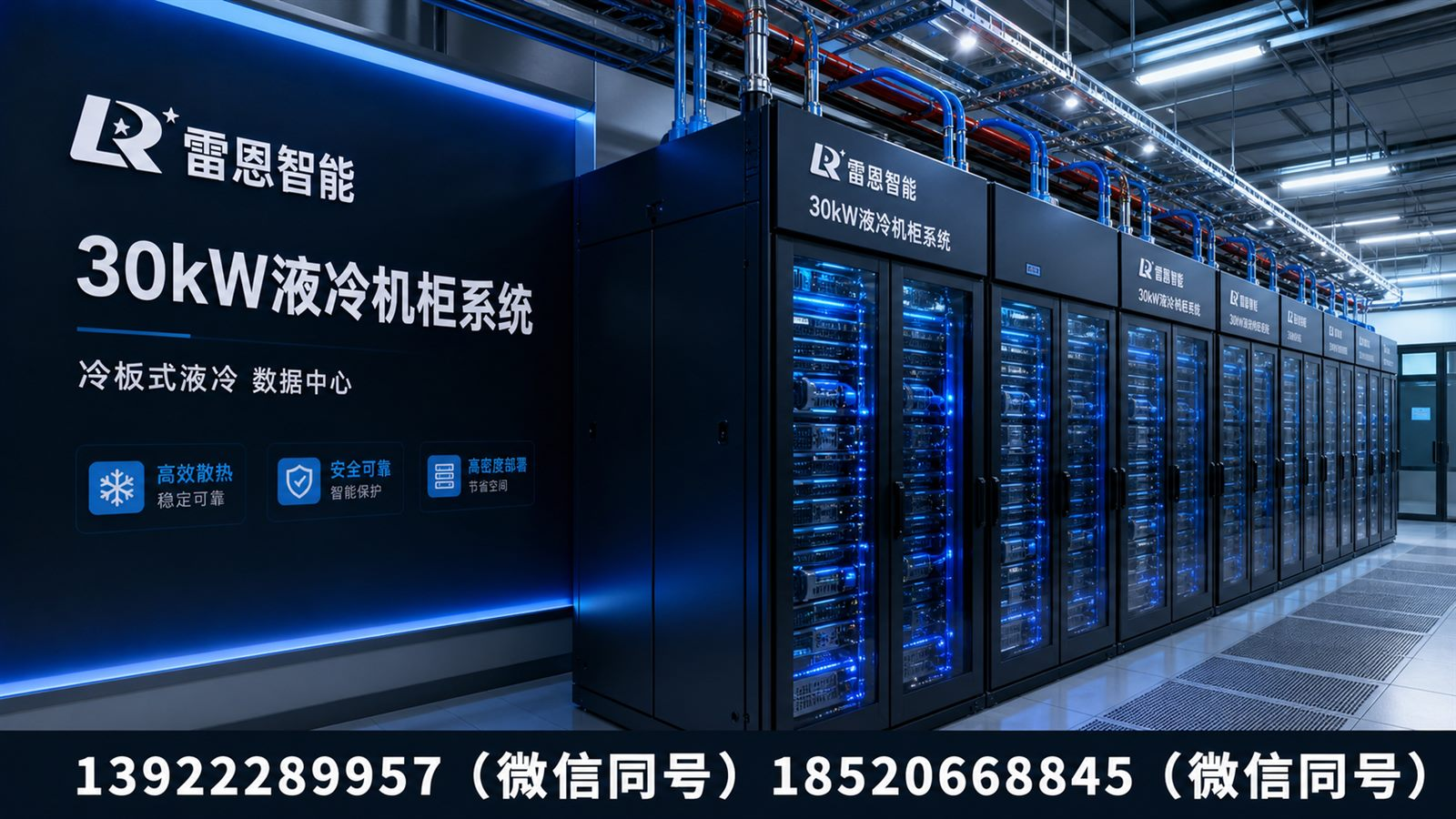
As AI, big data, cloud computing and HPC workloads expand rapidly, server compute density keeps rising — single-cabinet power density has climbed from the traditional 3–5 kW to 10 kW, 20 kW and above 30 kW. Traditional air cooling faces insufficient cooling capacity, high energy consumption, noise pollution and poor space utilization. Liquid cooling, with higher heat-transfer efficiency, lower energy use and better noise control, has become the core cooling solution for next-generation high-density data centers. Cold-plate liquid cooling, compatible with standard server architectures with low retrofit difficulty and high reliability, is a mainstream technical route.
2.2 Project Overview
| Item | Detail |
|---|---|
| Project name | 30kW cold-plate liquid cooling cabinet system construction |
| Technical route | Cabinet-level CDU secondary-side isolated cold-plate liquid cooling |
| Cabinet quantity | 205 × 42U standard cold-plate liquid cooling cabinets |
| Single-cabinet rated heat dissipation | 30 kW (peak 35 kW) |
| Total heat load | 6,150 kW |
| Cooling source | Closed-circuit evaporative cooling towers + high-temperature screw chillers for supplement |
| Architecture | Full primary/secondary isolation, N+1 redundancy |
| Design targets | Annual comprehensive PUE ≤1.2; availability ≥99.99% (Class A data center) |
2.3 Project Objectives
– Cooling: single-cabinet rated 30 kW, peak 35 kW, stable CPU temperatures at full load.
– Energy efficiency: maximize free cooling, variable-frequency matching of cooling to load, PUE ≤1.2.
– Reliability: N+1 redundant core equipment, multi-seal piping, complete leak detection, ≥99.99% availability.
– Intelligence: real-time monitoring, automatic alarms, intelligent linkage, integration with existing DCIM.
– Scalability: modular architecture with reserved margins for more cabinets and higher per-cabinet power.
– Compliance: electrical, pressure, leak and fire safety per national codes with certified components.
3. User Requirement Analysis
3.1 Basic Cooling Requirements
– Single-cabinet rated cooling ≥30 kW for dual high-power CPU servers at full load, with ≥15% redundancy margin.
– Secondary-side supply temperature stably ≤35 °C, return ≤45 °C for optimal chip operating temperature.
– Coolant: 25% ethylene glycol aqueous solution with corrosion/scale inhibitors — safe, environmentally friendly, compatible with all system materials.
– Full primary/secondary isolation — primary water never contacts server cold plates, protecting terminal equipment.
3.2 Cabinet Structure Requirements
– Standard 42U cabinet, 19-inch standard, compatible with standard rack servers without major modification.
– Static load ≥1500 kg; high-opening-ratio mesh doors front/rear, 3-point security locks.
– Top/bottom liquid and cable entry openings with sealing and fire-stop kits.
– Complete grounding with dedicated copper busbar; reserved space for liquid piping, CDU and monitoring.
3.3 Power Distribution Requirements
– Dual intelligent PDU per cabinet for redundant power; full electrical parameter monitoring (current, voltage, power, energy, PF), remote on/off and overload protection with alarms.
– Dedicated grounding busbar; cable entries with IP65-sealed glands; reserved expansion margin.
3.4 Monitoring and Safety Requirements
– Position-locating leak detection per cabinet (accuracy ±10 cm), immediate audible/visual alarm with valve linkage.
– Temperature, pressure and flow sensors at key nodes with automatic alarms.
– Local touch display per cabinet plus remote upload to DCIM; multi-level alarms (audible/visual, SMS, popup) with traceable fault records.
– Centralized cold-station automatic control (chillers, pumps, valves) without manual attendance.
3.5 Reliability and O&M Requirements
– N+1 redundant core pumps and cooling equipment; self-sealing quick couplings for hot-swap server maintenance without coolant leakage.
– Automatic venting, pressure stabilization and water make-up; online-replaceable filters and modular key components.
– Total project duration ≤90 days; complete documentation and training; warranty ≥2 years whole system, ≥3 years core components.
4. System Overall Design
4.1 Design Basis
Key standards: GB 50174-2017 (Design code for data centers); GB 50462-2016 (Construction and acceptance of data center infrastructure); GB/T 2887-2011; T/CCSA 317-2021 (Liquid cooling data center technical specification); YD/T 3984-2021; GB/T 39661-2020 (Cold-plate liquid cooling server cooling requirements and test methods); GB 50316-2000 (2008) (Industrial metal piping); GB 50054-2011; GB 50057-2010; GB 40879-2021 (Data center energy efficiency limits); plus customer site conditions. Governing editions confirmed per project.
4.2 Design Principles
Reliability first (N+1 redundancy, mature technology, Class A availability); high efficiency (free cooling, variable frequency, precise load matching); safety compliance (3C for electrical, pressure-vessel codes for pressure parts, full leak detection); intelligent O&M (digital monitoring, remote + local, fault self-diagnosis); scalability (modular with reserved margins); economy (optimized configuration, lifecycle cost optimization).
4.3 System Architecture (Five Layers)
1. Cooling source layer: closed evaporative cooling towers, high-temperature screw chillers, primary pump sets, headers — with evaporative/dry/mechanical modes auto-switched by outdoor temperature.
2. Main piping layer: main supply/return lines, row piping, valve assemblies, insulation — loop design for uniform pressure and temperature.
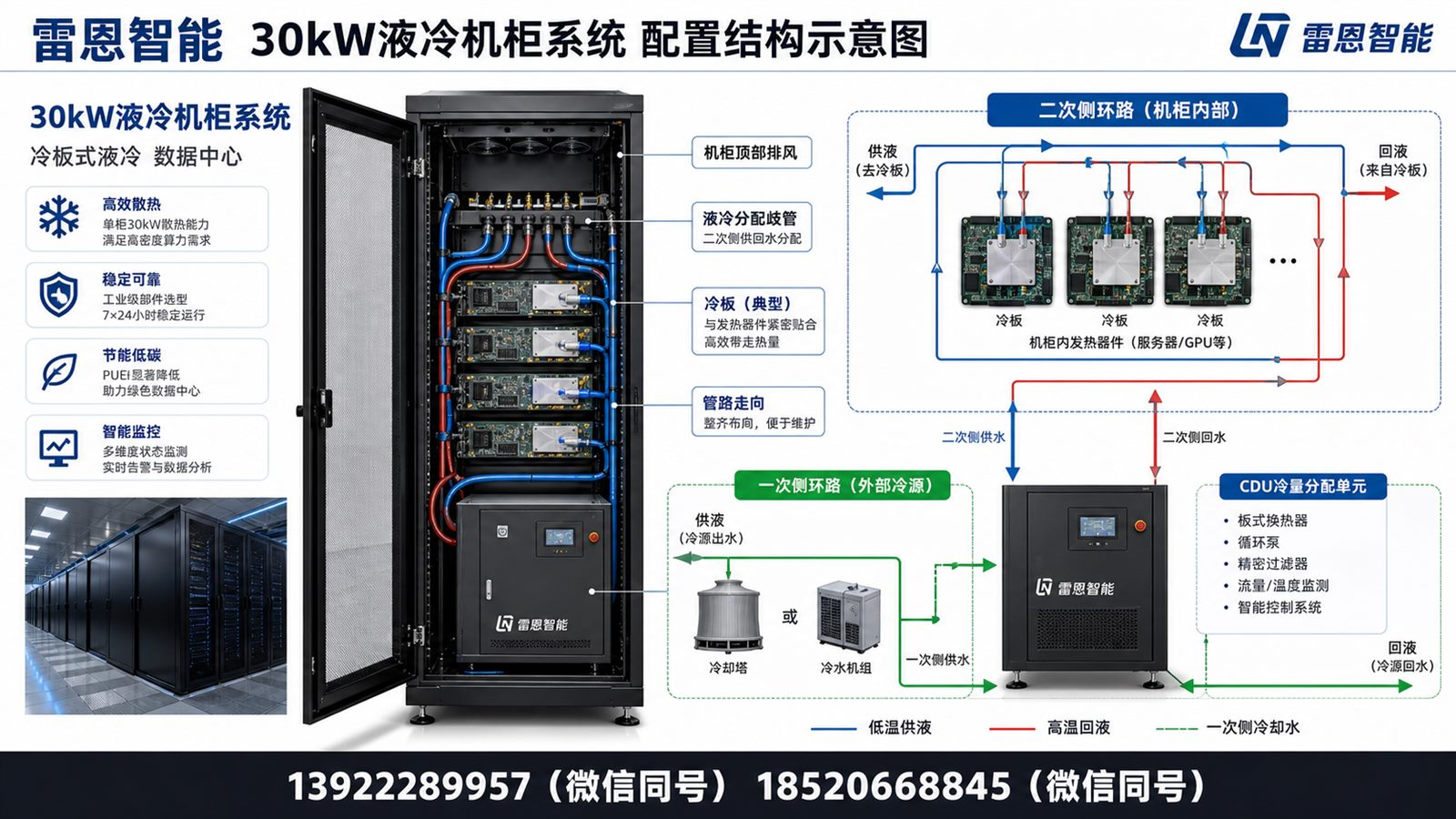
3. Cabinet heat-exchange distribution layer: cabinet-level CDU (plate heat exchanger, circulation pump, filter, expansion tank, sensors, control) achieving primary/secondary isolation.
4. Terminal cooling layer: CPU cold plates, TIM, branch hoses, quick couplings — direct chip cooling via microchannel cold plates.
5. Monitoring management layer: sensors, cabinet local controllers, cold-station PLC, DCIM interface — unified local/remote management.
4.4 Design Operating Conditions
| Parameter | Value |
|---|---|
| Summer outdoor design dry-bulb / wet-bulb | 35 °C / 28 °C |
| Primary supply / return | 30 °C / 38 °C (ΔT 8 °C) |
| Secondary supply / return | 35 °C / 45 °C (ΔT 10 °C) |
| Design working / test pressure | 1.0 MPa / 1.5 MPa |
| Single-cabinet rated / peak cooling | 30 kW / 35 kW |
4.5 Coolant Selection
25% ethylene glycol aqueous solution with inhibitors: freezing point ≈ −15 °C; anti-corrosion for carbon steel, stainless steel, copper and aluminum; scale inhibition; stable, non-toxic, environmentally friendly; good thermophysical properties.
5. Detailed Technical Specifications
5.1 Cabinet Structure System
5.1.1 42U Cold-Plate Liquid Cooling Cabinet
– Dimensions: 2000 mm (42U) × 600 mm × 1200 mm deep; front/rear door opening ≥130°; side doors tool-free removable; square-hole rail depth adjustment ≥100 mm; 19-inch standard (rail pitch 465 mm, accuracy ±0.1U).
– Material/process: cold-rolled steel frame ≥2.0 mm, doors ≥1.5 mm, galvanized square-hole rails ≥2.0 mm (No.12 steel); electrostatic powder coating 60–80 μm, hardness ≥2H, adhesion grade 0 (GB/T 9286-1998), salt spray ≥48 h (GB/T 10125-2012), RAL7035 standard.
– Load: static ≥1500 kg, dynamic ≥1000 kg, top ≥200 kg, base ≥1800 kg, per-column ≥500 kg; leveling feet ±25 mm.
– Configuration: single front mesh door + double rear mesh doors with 3-point locks; side doors with quick latches; top panel with 2×DN50 liquid openings + 4 cable entries with rubber seals and fire-stop; 4 adjustable rails; vertical cable managers; rear liquid piping brackets; 3×30 mm grounding copper busbar; M16 leveling feet.
– Performance: IP41; EMC per GB/T 17626; seismic 8-degree per GB 50260-2013; all materials B1 flame rating; supports seamless multi-cabinet ganging.
5.1.2 Heavy Leveling Base — Q235 welded, 600×1200 mm, No.10 channel main frame + 5 mm bottom plate; 4×M16 galvanized leveling feet (±25 mm), static load ≥2000 kg; grounding terminal reserved; rubber anti-slip pads.
5.1.3 Cabinet Grounding Assembly — T2 tinned copper busbar 30×3 mm ×1900 mm (conductivity ≥98% IACS), 6 mm² yellow-green ground cable 2 m, M8 stainless bolts; grounding resistance ≤1 Ω.
5.2 Liquid Cooling Core Heat-Exchange Units
5.2.1 Cabinet-Level CDU (Coolant Distribution Unit)
– Performance: rated cooling 35 kW (primary 30 °C in / secondary 45 °C in), applicable 10–35 kW; heat-exchange efficiency ≥95%; working pressure 1.0 MPa, test 1.5 MPa; design life ≥15 years; 19-inch 3U rack-mount at cabinet bottom.
– Plate heat exchanger: brazed 316L stainless plates (40 plates), pure-copper brazing, area ≥2.5 m², coefficient ≥3000 W/(m²·K), 1.6 MPa/120 °C; DN20 ports; primary ≤50 kPa / secondary ≤60 kPa pressure drop; fully brazed, gasket-free, leak-proof.
– Secondary circulation pump: magnetically driven centrifugal (sealless, zero leakage), 8 m³/h, 12 m head, 0.37 kW, 220V AC, IP55, 304 stainless body, PPS impeller, silicon-carbide bearings; 0–10V variable frequency; ≤55 dB(A); life ≥50,000 h; optional redundant dual pump.
– Precision filter: Y-type 5 μm, 304 stainless body, PP melt-blown cartridge, DN20, 1.6 MPa, differential-pressure indicator, bypass for online cartridge change.
– Expansion tank: 12 L diaphragm type, pre-charge 0.2 MPa, max 1.0 MPa, EPDM diaphragm.
– Valves: 4× DN20 304 ball valves (primary/secondary supply/return with position indication), auto vent valve, safety valve (0.8 MPa), drain valve, non-return valve; PTFE seals; ≥10,000 cycles.
– Sensors: 2× PT100 A-class supply/return temperature; 2× pressure transmitters 0–1.0 MPa ±0.2% FS 4–20 mA; turbine flow sensor 0.5–10 m³/h ±1%; position-locating leak detection cable at CDU base.
– Control: ARM industrial controller; 4.3″ color touchscreen (480×272) showing temperatures, pressures, flow, status and faults; pump frequency control, temperature auto-regulation, alarm and valve-linkage; RS485 (Modbus-RTU) + Ethernet (TCP/IP); ≥30 days data storage; 220V AC.
– Physical: 482.6×132×600 mm, ≈45 kg, 1.5 mm steel frame, 304 internal piping, RAL7035, IP31.
5.2.2 CPU Liquid Cooling Cold Plate
– Performance: rated ≥200 W, peak ≥280 W; thermal resistance ≤0.15 °C/W (incl. TIM); design flow 0.5–1.5 L/min; pressure loss ≤30 kPa @1 L/min; working pressure 1.0 MPa; life ≥10 years.
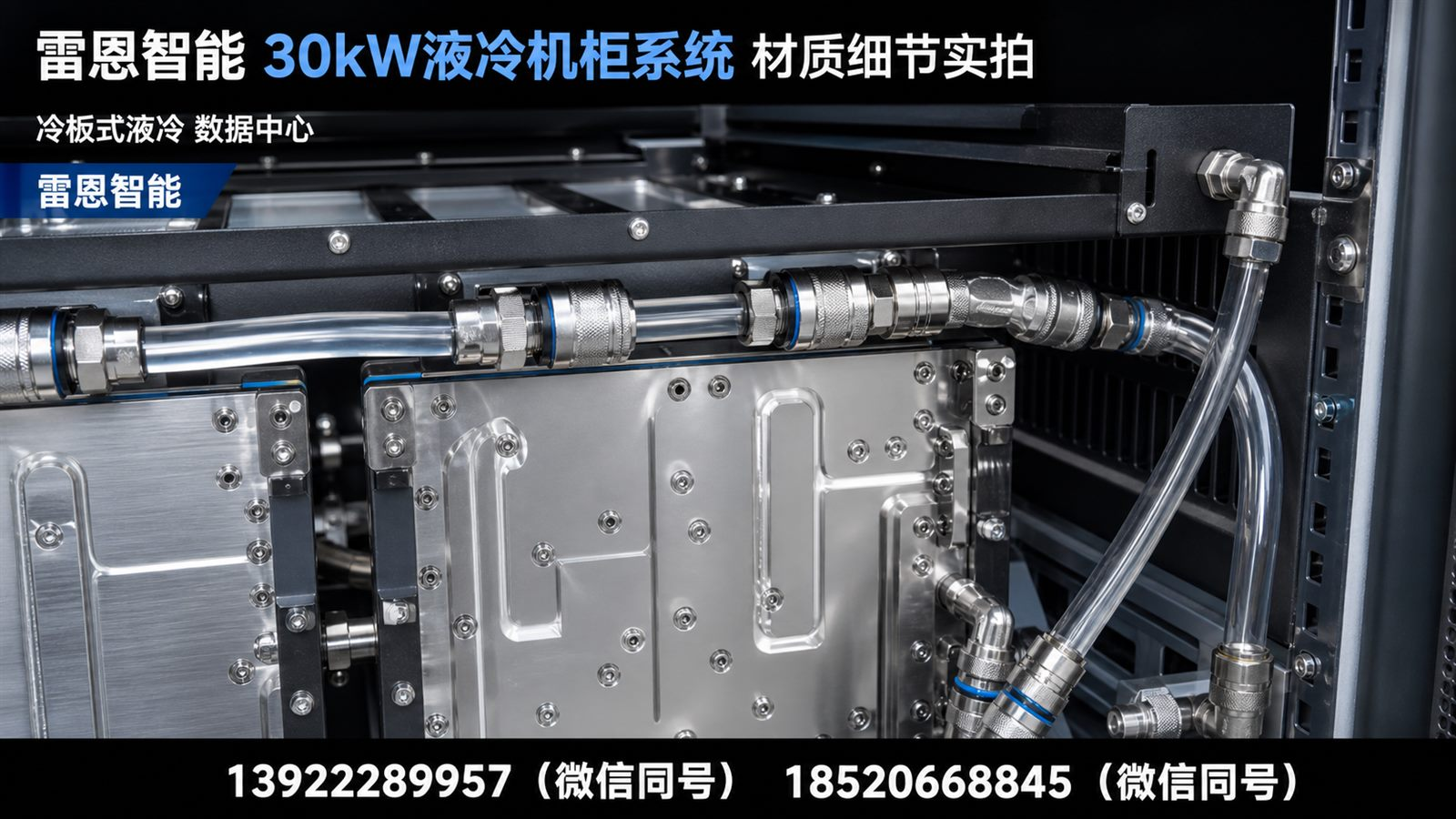
– Structure/material: T2 copper base (≥99.9%) with electroless nickel plating 5–8 μm; parallel microchannel structure (≥60 channels, 0.3 mm wide × 1.5 mm high); base 1.5 mm, total 5.0 mm; φ8 quick-connect ports (UQD compatible).
– Process: vacuum diffusion welding, fully welded sealing (no adhesive/gaskets), flatness ≤0.03 mm/100 mm, Ra ≤0.8 μm, ultra-pure ultrasonic cleaning.
– Reliability: 1.5 MPa hydrostatic 30 min; thermal shock −20~80 °C 1000 cycles; vibration per GB/T 2423.10; 48 h salt spray.
– Compatibility: Intel LGA3647/4189/1700; AMD SP3/SP5/AM5; original heat-sink mounting hardware; nano thermal gel TIM.
5.2.3 Thermal Interface Material (TIM) — nano carbon-based gel, λ ≥8.0 W/(m·K), thermal resistance ≤0.05 °C·cm²/W, −50~200 °C, Shore 00 60±10, volume resistivity ≥10¹⁴ Ω·cm, breakdown ≥15 kV/mm, UL94 V-0, RoHS/REACH, non-curing, recommended thickness 0.3–0.5 mm, reworkable.
5.3 Coolant Distribution and Piping System
5.3.1 Cabinet Supply/Return Manifold — 304 stainless vertical manifold, DN25 main (2 mm wall), 24 supply + 24 return φ8 branch ports, DN20 threaded main ports; 1.6 MPa design / 2.0 MPa test; 1800 mm; 24 branch miniature ball valves, main ball valves, auto vent at top, drain at bottom; EPDM seals; mounting brackets and flow-direction labels.
5.3.2 Branch Liquid Hoses — PFA inner layer + 304 stainless braid + optional PVC jacket; φ8 mm ID, 1 mm wall; working 1.6 MPa, burst ≥6.4 MPa; −40~150 °C; min bend radius 30 mm (dynamic); inner Ra ≤0.2 μm; ≥10,000 bend cycles; 304 quick couplings with EPDM seals, self-sealing, ≥1000 mate cycles with zero leakage.
5.3.3 Self-Sealing Quick Couplings (UQD) — φ8 mm, 304 stainless body/poppet, EPDM seals; working 1.0 MPa, burst ≥4.0 MPa; leakage ≤0.01 mL per mate; insertion force ≤50 N; ≥2000 cycles; double-ended self-sealing (both halves close on disconnect); blind-mate taper guide ±2 mm; latch lock.
5.3.4 Main Piping — 304 seamless stainless steel (GB/T 14976): DN350 ×6 mm main, DN100 ×3 mm row, DN50 ×2.5 mm branch; solution-annealed and passivated; Ra ≤1.6 μm; design 1.6 MPa, test 2.4 MPa; TIG argon-arc welding (single-side weld, double-side forming), 100% visual + 10% radiographic inspection; stainless clamps on channel supports at 1.5–2 m; slope ≥3‰ with drain valves at low points and auto vents at high points; B1 rubber-plastic insulation 20 mm (≤DN100) / 30 mm (DN350 main), λ ≤0.034 W/(m·K), aluminum-foil fiberglass jacket.
5.4 Power Distribution System
5.4.1 Intelligent Rack PDU — 380V 3-phase 5-wire input, 32 A, 50 Hz; 24×C13 + 4×C19 outlets (10 A / 16 A); rated 22 kW; monitors voltage (±0.5%), current (±1%), power (±1%), PF, energy with 1 s sampling and ≥1 year storage; local LCD + Web + SNMP (Modbus-RTU/SNMP v1/v2c/v3/HTTP); remote total (optional per-outlet) control; over/under-voltage, overcurrent, overload, over-temperature alarms with email/SNMP Trap; multi-level user management; remote firmware upgrade; aluminum housing 482.6×44.45×1200 mm; nickel-plated phosphor-bronze sockets ≥10,000 cycles; built-in surge module 20 kA (8/20 μs); IP20.
5.4.2 Cabinet Grounding Busbar — T2 tinned copper 10×2 mm ×1900 mm, ≥98% IACS, insulator-mounted, 10×M6 terminals, resistance ≤1 Ω.
5.4.3 Cable Sealing Glands — 304 stainless, M32×1.5, for 10–25 mm cables, IP65, EPDM seal, −40~120 °C, optional Ex d IIB T6.
5.5 Monitoring and Safety Protection System
– Position-locating leak detection: sensing cable (φ6 mm, max 100 m per run, ±10 cm accuracy, IP65, detects water/glycol/coolant) + controller (4 loops, response ≤2 s, audible/visual alarm, 2 relay outputs 5A/250V, RS485 Modbus, self-diagnosis of cable open/short).
– PT100 temperature sensors: A-class, ±0.15 °C (0–100 °C), −50~150 °C, 304 stainless probe φ6 mm, G1/2 thread, IP65, drift ≤0.1 °C/yr.
– Pressure transmitters: diffused-silicon, 0–1.0 MPa, ±0.2% FS, 4–20 mA, 24V DC, 316L diaphragm, IP65.
– Turbine flow sensors: ±1.0%, repeatability ≤0.2%, pulse/4–20 mA, 1.6 MPa, −20~120 °C, 10D/5D straight-pipe requirement.
– Cabinet local control unit: 32-bit ARM Cortex-M4 168 MHz, 4.3″ TFT touchscreen, 8 AI + 16 DI, 8 relay outputs, 2×RS485 + Ethernet + USB, Modbus-RTU/TCP/HTTP, ≥30 days storage, ≤15 W, IP30, embedded in front door.
– Audible/visual alarm: red LED strobe 1–2 Hz, ≥85 dB(A) @1 m, 24V/220V, IP54, top-mounted.
5.6 Cooling Source System (Cold Station)
5.6.1 Closed Evaporative Cooling Tower — rated 1500 kW (35/28 °C, 38/30 °C); water flow 320 m³/h; airflow 250,000 m³/h; fan 30 kW VFD, spray pump 7.5 kW; EER ≥20 (evaporative mode); dry mode ≈400 kW @15 °C; noise ≤70 dB(A) @10 m; 304 stainless serpentine coils (DN32 ×2 mm, area ≈1200 m², 1.6/2.4 MPa design/test, passivated); wing-type FRP axial fan, 6 blades, VFD, IP55/F; PVC drift eliminator ≤0.001%; centrifugal spray nozzles ≈120, PP; 8 m³ 304 basin; float + solenoid dual make-up; PLC auto control with evaporative/dry/mixed modes and protection (low water, overload, freeze); RS485/Ethernet Modbus; galvanized steel body 6000×3000×4500 mm, ≈12 t (empty) / 20 t (full).
5.6.2 High-Temperature Screw Chiller — rated 1000 kW (28 °C out, 38 °C condensing), COP ≥5.2, IPLV ≥6.5; 380V/50 Hz, ≈192 kW, ≈360 A; semi-hermetic twin-screw compressor, 25–100% stepless capacity, noise ≤75 dB(A); dry-type shell-and-tube evaporator + water-cooled condenser (copper tubes, 1.6 MPa, ≤50/60 kPa water-side); R134a refrigerant (ODP=0), electronic expansion valve, centrifugal oil separator ≥99.7%, receiver, molecular-sieve dryer, sight glass; PLC with touchscreen, energy regulation, auto diagnosis, protection (HP/LP/overload/phase/water-flow/freeze), RS485/Ethernet; 4500×1500×2000 mm, ≈8 t.
5.6.3 Primary Circulation Pumps — horizontal centrifugal, 250 m³/h × 32 m, 30 kW, 1480 rpm, efficiency ≥85%, NPSHr ≤3.5 m; 304 stainless body/impeller, chrome-plated shaft, SiC-graphite mechanical seal, IE3 motor IP55/F; 1.6 MPa, 0–100 °C, ≤70 dB(A), life ≥100,000 h.
5.6.4 Headers (Supply/Return) — 304 seamless, DN500 ×8 mm, 1.6/2.4 MPa, ≈3000 mm; 1×DN350 flange inlet/outlet, 6×DN100 branch flanges, DN50 drain, DN25 vent, instrument ports; manual butterfly valves, gauges, bimetallic thermometers, auto vent, saddle supports; TIG welded, passivated, 100% hydrotest.
5.7 Make-Up, Pressurization and Water Treatment
– Diaphragm expansion tank: 500 L, 1.0 MPa, pre-charge 0.3 MPa, EPDM diaphragm, DN50 flange, vertical.
– Auto make-up pump: 10 m³/h × 25 m, 1.5 kW, 380V, 304 stainless, pressure-switch controlled.
– Automatic softener: 2 m³/h, outlet hardness ≤0.03 mmol/L, FRP tank, strong-acid cation resin, time+flow dual control, 200 L brine tank.
– Precision strainers: 100 μm main / 5 μm precision, 1.6 MPa, 304 housing/mesh, DN100 flange, bottom blowdown.
– High-frequency electronic descaler: DN350, 500 m³/h, ≤100 W, descaling ≥90%, sterilization ≥95%, corrosion inhibition ≥80%.
– Chemical dosing skid: 200 L PE tank, 2× electromagnetic metering pumps (0–20 L/h, 1.0 MPa, 1+1), agitator, level alarm, proportional dosing.
5.8 Cold-Station Automation
PLC control cabinet: S7-1200 PLC (24 DI / 16 DO / 8 AI / 4 AO, expandable to 128 I/O), 10″ touchscreen (1024×600), Ethernet/RS485/USB, Modbus-RTU/TCP, Profinet, OPC UA; VFD control of tower fans and pumps, chiller capacity regulation, valve control, sequence and interlock logic; overload/short/phase/under-overvoltage protection; fault records ≥1 year; 380V 3-phase 5-wire with UPS; IP54 floor cabinet. Submersible level sensors: hydrostatic, 0–5 m, ±0.5% FS, 4–20 mA, 316L probe, IP68, PU cable.
6. Recommended Configuration and Reference Budget
The following is the recommended configuration for a 205-cabinet 30 kW cold-plate liquid cooling system. Quantities and specifications follow the source document’s standard offering and are provided for preliminary design and budgetary reference only. No official price database is available for this trial; final pricing is confirmed in the company’s formal quotation.
6.1 Per-Cabinet Configuration (×205)
| Item | Specification | Qty/Cabinet | Total |
|---|---|---|---|
| Liquid cooling cabinet | 42U, 600×1200×2000 mm, load ≥1500 kg | 1 | 205 |
| Galvanized square-hole rails | No.12, adjustable | 4 | 820 |
| Top/bottom panels | Liquid/cable openings + fire-stop | 2 | 410 |
| Leveling base | M16 feet, ≥2000 kg | 1 | 205 |
| Grounding assembly | 3×30 mm tinned busbar + cable | 1 | 205 |
| Cable managers & pipe brackets | 304 stainless | 1 set | 205 |
| Cabinet CDU | 35 kW, 3U, full integration | 1 | 205 |
| CPU cold plates | ≥200 W each, mainstream sockets | 40 | 8,200 |
| TIM | λ ≥8 W/m·K | 40 | 8,200 |
| Supply/return manifold | DN25, 24 branches + valves | 1 set | 205 |
| Branch hoses (PFA) | φ8, self-sealing | 80 | 16,400 |
| UQD quick couplings | φ8, double self-seal | 85 | 17,425 |
| Main ball valves | DN20 304 | 2 | 410 |
| Seal spare kit | EPDM | 1 set | 205 |
| Intelligent PDU | 3-phase 32A, 24C13+4C19 | 2 | 410 |
| Cable glands | IP65 | 4 | 820 |
| Grounding busbar | 10×2 mm | 1 | 205 |
| Leak detection cable | ±10 cm | 4 m | 820 m |
| Leak controller | 4 loops | 1 | 205 |
| PT100 sensors | A-class | 4 | 820 |
| Pressure transmitters | 0–1.0 MPa | 2 | 410 |
| Flow sensors | 0.5–10 m³/h | 2 | 410 |
| Cabinet local controller | 4.3″ touch | 1 | 205 |
| Audible/visual alarm | ≥85 dB | 1 | 205 |
6.2 Cold Station and Main Piping (Project Total)
| Item | Specification | Qty |
|---|---|---|
| Closed evaporative cooling tower | 1500 kW, VFD fan | 6 (5+1) |
| High-temperature screw chiller | 1000 kW, COP ≥5.2 | 2 (1+1) |
| Primary circulation pumps | 250 m³/h × 32 m, 30 kW | 4 (3+1) |
| Headers | DN500 304 | 2 |
| Main pipes | DN350 304, welded | 160 m |
| Row pipes | DN100 304 | 640 m |
| Pipe supports/clamps | 304 + channel | 360 sets |
| Motorized butterfly valves | DN350 | 4 |
| Manual butterfly valves | DN100 | 40 |
| Insulation | B1 rubber-plastic + foil | ≈22 m³ |
| Flanges/seals | EPDM, stainless hardware | 1 lot |
| Expansion tank | 500 L | 2 (1+1) |
| Make-up pumps | 10 m³/h × 25 m | 2 (1+1) |
| Softener | 2 m³/h | 1 |
| Strainers | 100/5 μm | 3 |
| Electronic descaler | DN350 | 2 |
| Chemical dosing skid | 200 L, 2 pumps | 1 |
| Glycol coolant | 25%, freezing −15 °C | 13,250 L |
| Cold-station PLC cabinet | S7-1200, 10″ touch | 1 |
| Level sensors | 0–5 m | 8 |
| Electromagnetic flow meters | DN350 ±0.5% | 2 |
| Electric regulating valves | DN150 ±5% | 4 |
| Station alarms | 90 dB outdoor | 2 |
| Monitoring cables/accessories | — | 1 lot |
6.3 Construction and O&M Accessories (Project Total)
Welding consumables (304 wire, argon, flux); equipotential bonding cable 6 mm² (600 m); label kits; general installation materials; special tool kit (pipe, leak-test, commissioning).
Pricing disclaimer: The configuration and budget shown in this document are provided for preliminary design, technical discussion and budgetary reference only. They do not constitute a formal commercial quotation from Guangzhou Lain Intelligent System Development Co., Ltd. Final product selection, quantities, specifications and pricing are subject to the actual project requirements and the company’s formal quotation. Any budget references are stated in RMB/CNY only.
7. Core Advantages and Customer Value
1. High efficiency, lower operating cost. Cold-plate liquid cooling far outperforms air cooling; with closed evaporative towers and natural free cooling, mechanical refrigeration is rarely needed. VFD matching of cooling to load avoids overcooling. Annual comprehensive PUE ≤1.2 — over 30% energy saving versus air-cooled data centers.
2. Two-stage isolation, safe and reliable. Full primary/secondary isolation via plate heat exchangers keeps primary-side impurities and scale out of server cold plates; N+1 redundant core equipment; multi-seal joints with full leak detection — second-level response with valve linkage.
3. Strong compatibility, flexible deployment. Cold-plate technology works with standard rack servers (only the CPU heatsink is replaced by a cold plate — no motherboard/structure modification); standard 19-inch cabinets can mix with air-cooled cabinets; phased construction and incremental expansion supported.
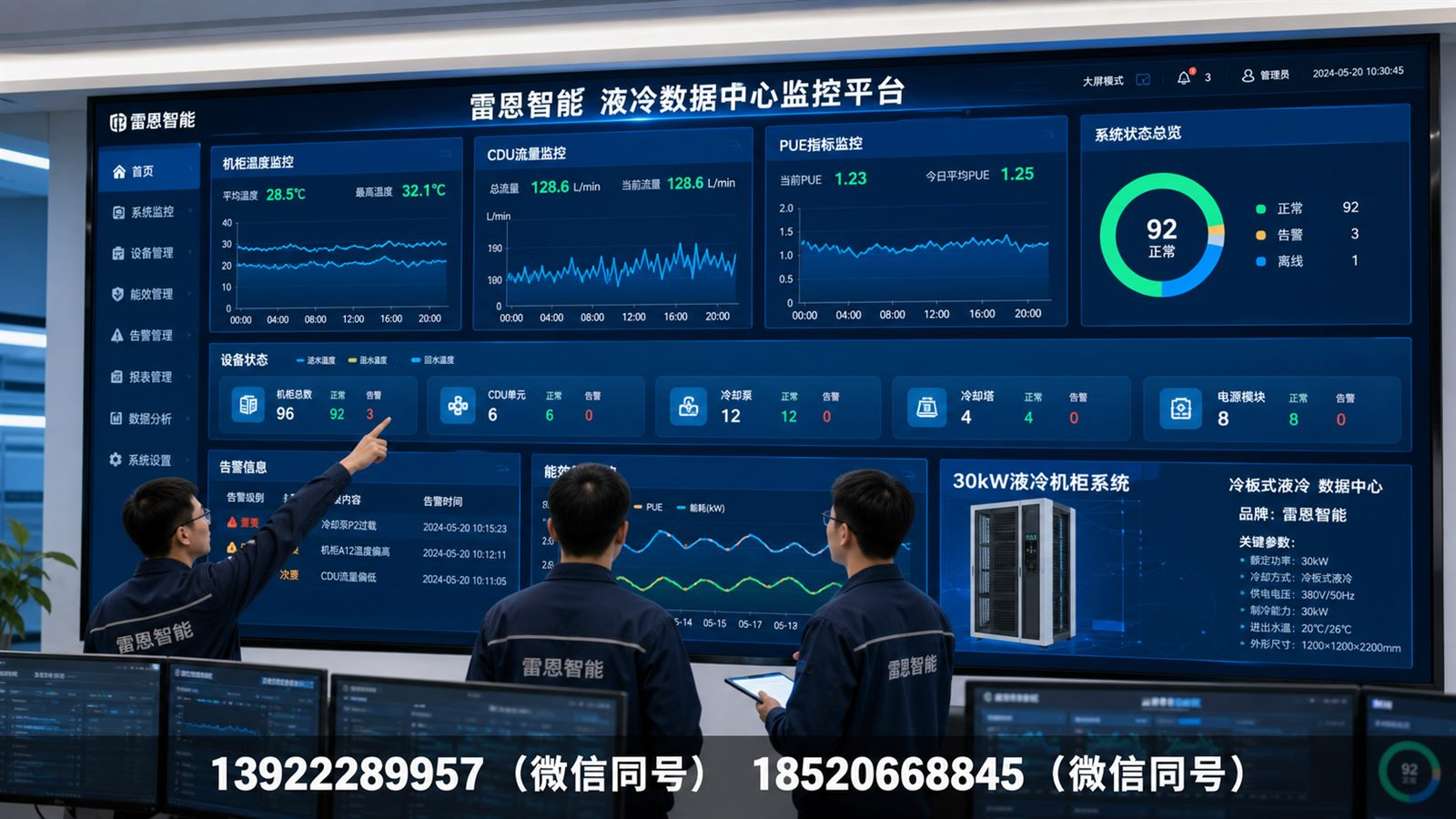
4. Intelligent O&M. Full-parameter real-time collection and visualization from cabinet to cold-station level; fault self-diagnosis, alarms and automatic linkage; DCIM integration; remote monitoring without entering the machine room.
5. Low noise, improved environment. Liquid cooling replaces high-speed server fans — machine-room noise drops from 70–80 dB to below 50 dB; fewer fan failure points, more stable servers.
6. High power density, space saving. 30 kW per cabinet (3–5× an air-cooled cabinet) — fewer cabinets and less floor area for the same compute, enabling AI and HPC clusters.
8. Technical Q&A
Q1. What is cold-plate liquid cooling?
A: A mainstream liquid cooling route where metal cold plates attach to CPUs and coolant flows through internal microchannels to remove heat directly. The coolant never contacts electronic components — indirect liquid cooling with high safety and compatibility.
Q2. Cold-plate vs immersion liquid cooling?
A: Cold-plate is indirect — cools main heat sources only, minimal server changes, standard-rack compatible, flexible deployment; immersion submerges whole servers in dielectric fluid — stronger cooling but requires custom servers and higher deployment cost. They suit different power density and cost requirements.
Q3. What is a CDU and its function?
A: Coolant Distribution Unit — the core heat-exchange device that isolates primary water from secondary coolant via a plate exchanger, and provides circulation, filtration, pressurization and stabilization for the secondary side, ensuring clean, stable, appropriately-tempered coolant reaches the cold plates.
Q4. What does primary/secondary isolation mean and why is it beneficial?
A: The two fluids exchange heat only through the plate exchanger and never mix — primary-side impurities, scale and microbes cannot enter the precision server cold plates, preventing clogging and corrosion and protecting servers; the secondary side can use purer, better-suited coolant.
Q5. What coolant is used, and is it safe?
A: 25% ethylene glycol aqueous solution with corrosion/scale inhibitors — stable, non-toxic, non-corrosive, freezing point ≈ −15 °C; the most common safe coolant for cold-plate systems.
Q6. What server configuration can 30 kW per cabinet support?
A: 20 dual-socket high-power CPU servers at full load (single CPU 200–280 W), with compatibility for some GPU accelerators — suiting AI inference, cloud computing and HPC configurations.
Q7. Is there cooling redundancy, and what is the peak?
A: The CDU is rated 35 kW (~17% margin); single-cabinet peak cooling 35 kW handles load fluctuation and elevated ambient conditions.
Q8. What is the secondary supply temperature? Can it be adjusted?
A: Design supply 35 °C, adjustable within a range via the CDU VFD pump and regulating valves; supply temperature/flow can follow load dynamically for optimal energy efficiency.
Q9. What is the cold plate thermal resistance?
A: Microchannel copper cold plate + TIM gives overall thermal resistance ≤0.15 °C/W — chip temperatures 10–15 °C lower than air cooling at the same power.
Q10. What is the system working pressure? Is it safe?
A: Design 1.0 MPa, test 1.5 MPa; all pressure parts are designed/manufactured to ≥1.6 MPa — far above working pressure; safety valves, pressure sensors and overpressure alarms provide multiple protection.
Q11. Are the liquid cooling cabinets the same size as ordinary cabinets?
A: Standard 42U, 600 mm wide, 1200 mm deep — identical to standard server cabinets, fully compatible with existing layouts, and can be ganged with air-cooled cabinets seamlessly.
Q12. Does the machine room need waterproofing?
A: The fully sealed piping and self-sealing couplings mean no leakage risk under normal operation; for ultimate safety, drip trays and leak detection under cabinets/piping and conventional floor waterproofing are recommended — no special waterproof retrofit needed.
Q13. Is piping installation complex, and how long does it take?
A: In-cabinet piping is factory-prefabricated; on-site work connects cabinets to row/main headers. Standardized welding and flanges; overall project from equipment arrival to acceptance ≈30–45 days depending on scale.
Q14. Is cold plate installation on servers complex?
A: Similar to conventional heatsink installation using original mounting hardware; because liquid connections are involved, trained professionals should perform it to ensure leak-free joints.
Q15. How is the system leak-tested?
A: 1.5 MPa hydrostatic hold for 24 h (pressure drop within limit); in operation, position-locating leak detection (response ≤2 s); routine inspection via pressure trends and visual checks.
Q16. Is daily O&M workload large?
A: Fully automatic — minimal: periodic parameter checks, joint inspection, filter cartridge and coolant replenishment; far less than air-cooled dust/fan maintenance.
Q17. How often are filters replaced?
A: Every 6–12 months depending on water quality, per the differential-pressure indicator; bypass valve allows online cartridge change without system stoppage.
Q18. Does the coolant need periodic replacement?
A: Ethylene glycol solution is stable; with inhibitors and water treatment, replace every 3–5 years; routinely check level and top up with the same coolant.
Q19. Can servers be hot-swapped? Will it leak?
A: Yes — self-sealing quick couplings close on disconnect (leakage ≤0.01 mL per mate), supporting hot-swap maintenance without draining the system.
Q20. What is the pump life, and what if it fails?
A: Sealless magnetic-drive pumps, life ≥50,000 h (~5–6 years continuous); modular CDU with quick pump replacement and standby auto-switch — single pump failure does not stop the system.
Q21. What happens if coolant leaks?
A: Full leak detection triggers audible/visual alarm within 2 s and can link valve shutdown; detection is placed at joints and CDU bases where drip trays first catch the liquid — servers are essentially protected with ample response time.
Q22. Can the system freeze in winter?
A: 25% glycol (freezing ≈ −15 °C) prevents freezing in normal machine-room conditions; the cold station has freeze-protection mode (auto circulation or electric heating).
Q23. What happens on a sudden power failure?
A: Pumps stop; coolant absorbs residual heat for a short period without immediate over-temperature; the system auto-restarts on power restoration; critical sites can add UPS for pumps and monitoring.
Q24. Does one CDU failure affect the whole cabinet?
A: The corresponding cabinet’s secondary circulation stops, but primary-side natural convection removes some heat short-term; immediate alarm, modular CDU replacement restores service quickly.
Q25. What safety protections exist?
A: Overpressure, over-temperature, low-level, overload, short-circuit, leak and freeze protection — all abnormal conditions alarm automatically with corresponding protective actions.
Q26. How much higher is the initial cost than air cooling, and the payback?
A: Initial cost ≈20–30% higher, but electricity savings typically pay back in 3–5 years; higher power density also saves floor space and supporting construction cost.
Q27. What PUE can be achieved?
A: Annual comprehensive PUE ≤1.2 vs 1.5–1.8 for air-cooled rooms — cooling energy down 40%+.
Q28. Is maintenance cost high?
A: Few wear parts — mainly filter cartridges and coolant; annual maintenance ≈2–3% of initial cost, lower than air-cooled fan/filter/AC maintenance.
Q29. Can it be upgraded to higher power later?
A: Yes — single-cabinet cooling can be upgraded to 40–50 kW by replacing the CDU and cold plates with higher-flow units; cold station and main piping have reserved margins.
Q30. Can an existing machine room be retrofitted?
A: Yes — cold-plate liquid cooling has low building requirements (only cooling source and piping needed), cabinets can be replaced progressively — easier, cheaper and faster than immersion retrofits.
9. Construction Schedule
Total ≈90 calendar days in six phases:
| Phase | Days | Main Activities |
|---|---|---|
| 1. Preparation & design | 1–10 | Site survey, detailed design (piping/power/monitoring/installation drawings), procurement & production orders, team mobilization |
| 2. Production & procurement | 11–40 | Cabinet & CDU production/testing; cooling tower, chiller, pumps; piping & accessories arrival; factory inspection; dispatch |
| 3. Site foundation & piping | 41–60 | Foundation works, main/row piping welding and installation, branch piping, section & whole-system hydrostatic test, insulation |
| 4. Equipment installation & wiring | 61–75 | Cold-station equipment installation; cabinet/CDU/manifold installation; PDU & cabling & grounding; monitoring wiring; water treatment systems |
| 5. Commissioning & trial run | 76–85 | System flushing, coolant charging & venting, single-equipment tests, linkage tests, loaded trial run, parameter optimization |
| 6. Acceptance & training | 86–90 | As-built documentation, customer acceptance, operator training, handover, after-sales follow-up |
10. Construction Organization, Quality and Safety Measures
10.1 Organization
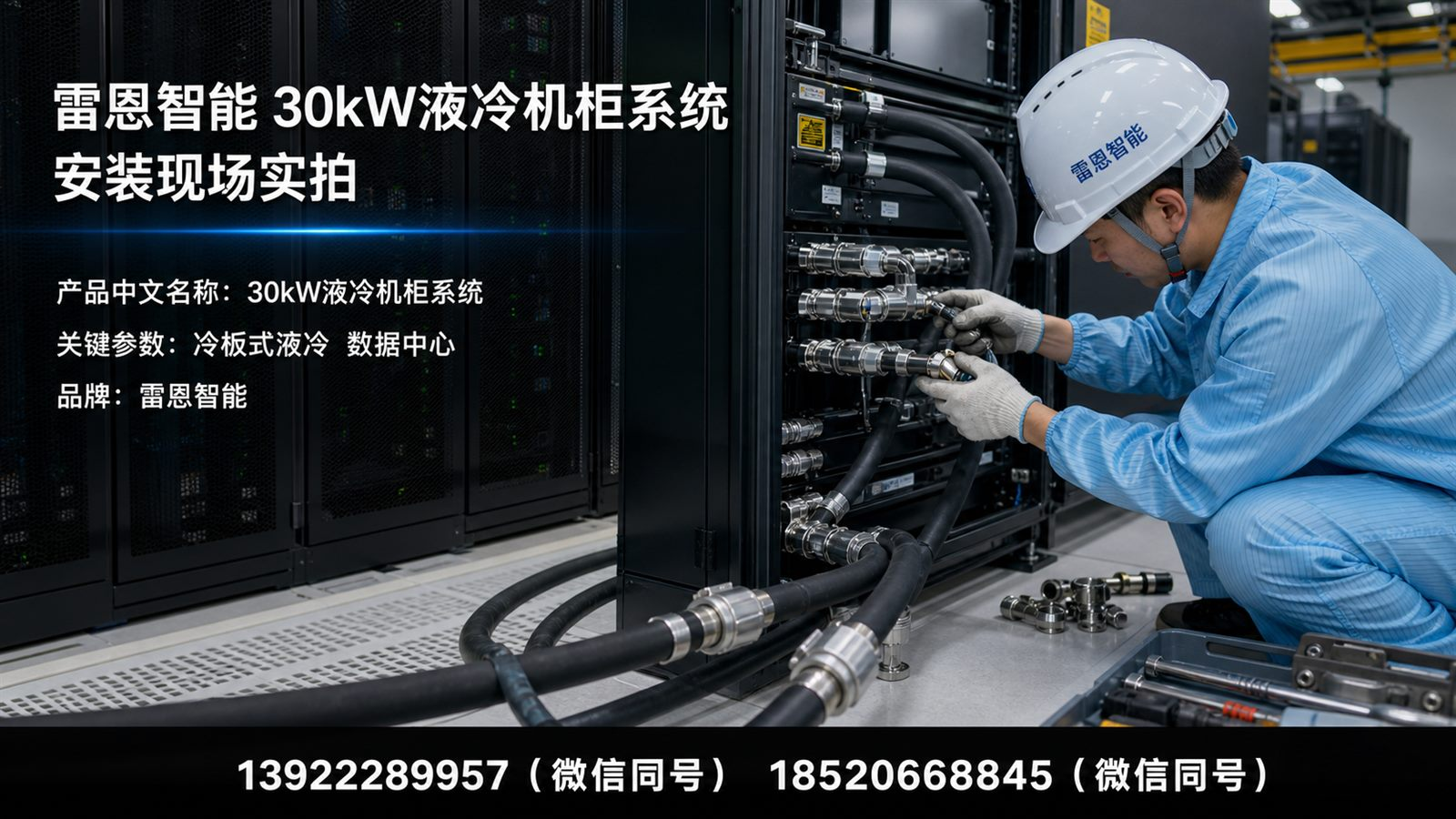
Project manager (overall); technical lead (disclosure, quality, commissioning); safety officer; piping crew (welding, insulation, pressure test); equipment installation crew (cabinets, cooling source, pumps, power); electrical/automation crew (wiring, sensors, control commissioning); logistics/documentation clerk.
10.2 Preparation
Technical: drawing review, technical and safety disclosure, special plans (welding, pressure test, commissioning), dimension verification. Materials: phased arrival with certificate/test-report checks; tools and instruments ready; PPE and firefighting equipment. Site: clearance, storage/processing zones, temporary power/water, permits, finished-product protection.
10.3 Key Processes
– Stainless piping welding: TIG single-side weld/double-side forming; pre-weld cleaning and beveling per code; argon back-purge against inner oxidation; visual + radiographic inspection; acid-wash passivation.
– Equipment installation: foundation check, anti-vibration mounts, flexible pipe connections, leveling and fixing, manual rotation test.
– Hydrostatic test: 1.5× design pressure (1.5 MPa) with clean water, slow ramp, 30-min hold, then 24 h at working pressure — no leak/permitted drop; drain and dry after.
– Insulation: clean surfaces, tight joints bonded, fittings trimmed to fit, aluminum-foil fiberglass jacket, uniform thickness.
10.4 Quality Assurance
Three-level inspection (crew self → inter-process → project dedicated); QC hold points at welding, pressure test and commissioning; certified materials only; records kept in sync with progress; customer and supervisor supervision with timely rectification.
10.5 Safety and Civilized Construction
Safety training for all personnel; permits for work at height, hot work and live work; full PPE; three-level two-protection temporary power; fire extinguishers with dedicated watch during hot work; neat material storage and daily cleanup; noise control; site rules observed.
10.6 Emergency Response
– Leak: close the affected section valves, stop related pumps, contain liquid, locate and analyze, repair (pressurized tightening for minor / drain-and-repair for severe), re-test and resume.
– Electric shock: cut power, rescue with insulation, CPR if needed, call 120, investigate and rectify.
– Fire: cut power, use extinguishers on incipient fire, call 119, evacuate, move flammables, cooperate with firefighters.
11. After-Sales Service
11.1 Warranty
– Whole system: 2 years free warranty from acceptance.
– Core components (plate heat exchangers, circulation pumps, controllers, cabinet bodies): 3 years.
– Non-human faults during warranty: free repair and part replacement; free technical support and periodic inspections.
11.2 Response Commitment
7×24 hotline; remote solution within 2 hours; on-site arrival within 4 h urban / 8 h suburban / 24 h remote; general faults repaired within 24 h, major within 48 h, with backup equipment if delayed.
11.3 Regular Services
Quarterly on-site inspection during warranty with written reports; technical consultation and optimization advice; free lifetime monitoring firmware/software upgrades; original spare parts stocked; regular telephone follow-ups.
11.4 Post-Warranty Services
Annual maintenance agreements (inspection, repair, spares, support); preferential parts pricing; upgrade support with favorable quotations; lifetime technical consultation.
11.5 Service Commitment
Certified engineers only; original parts; standardized procedures protecting customer equipment and environment; service reports after each visit; customer service archives for full tracking.
12. Operation and Maintenance Training Plan
12.1 Objectives
Enable customer O&M engineers to understand system principles and architecture; operate equipment and view parameters; perform routine inspection and identify normal/abnormal states; judge and handle common faults; perform routine maintenance; manage daily O&M independently.
12.2 Audience
Machine-room O&M engineers, equipment managers, system administrators and related staff.
12.3 Content
– Theory: liquid cooling fundamentals and architecture; equipment functions and principles; operating modes and control logic; safety rules; common fault principles and diagnosis; maintenance knowledge.
– Hands-on: system start/stop; local touchscreen operation; remote monitoring platform; valve operation and piping switching; filter cartridge replacement; coolant make-up; fault troubleshooting drills; emergency procedure simulations.
12.4 Method and Schedule
Two-day training before acceptance: Day 1 theory + system overview + safety; Day 2 hands-on + fault simulation + assessment. One-on-one guidance for key personnel; remote training afterwards; training materials and manuals provided.
12.5 Assessment and Certification
Theory + practical examination; certification issued on passing; retraining until all O&M personnel are competent.
13. Anonymous Typical Project Scenarios
*All scenarios below are anonymous, generalized examples for reference. They do not refer to any real customer, project address or testimonial.*
Scenario A — Cloud computing company liquid cooling data center.
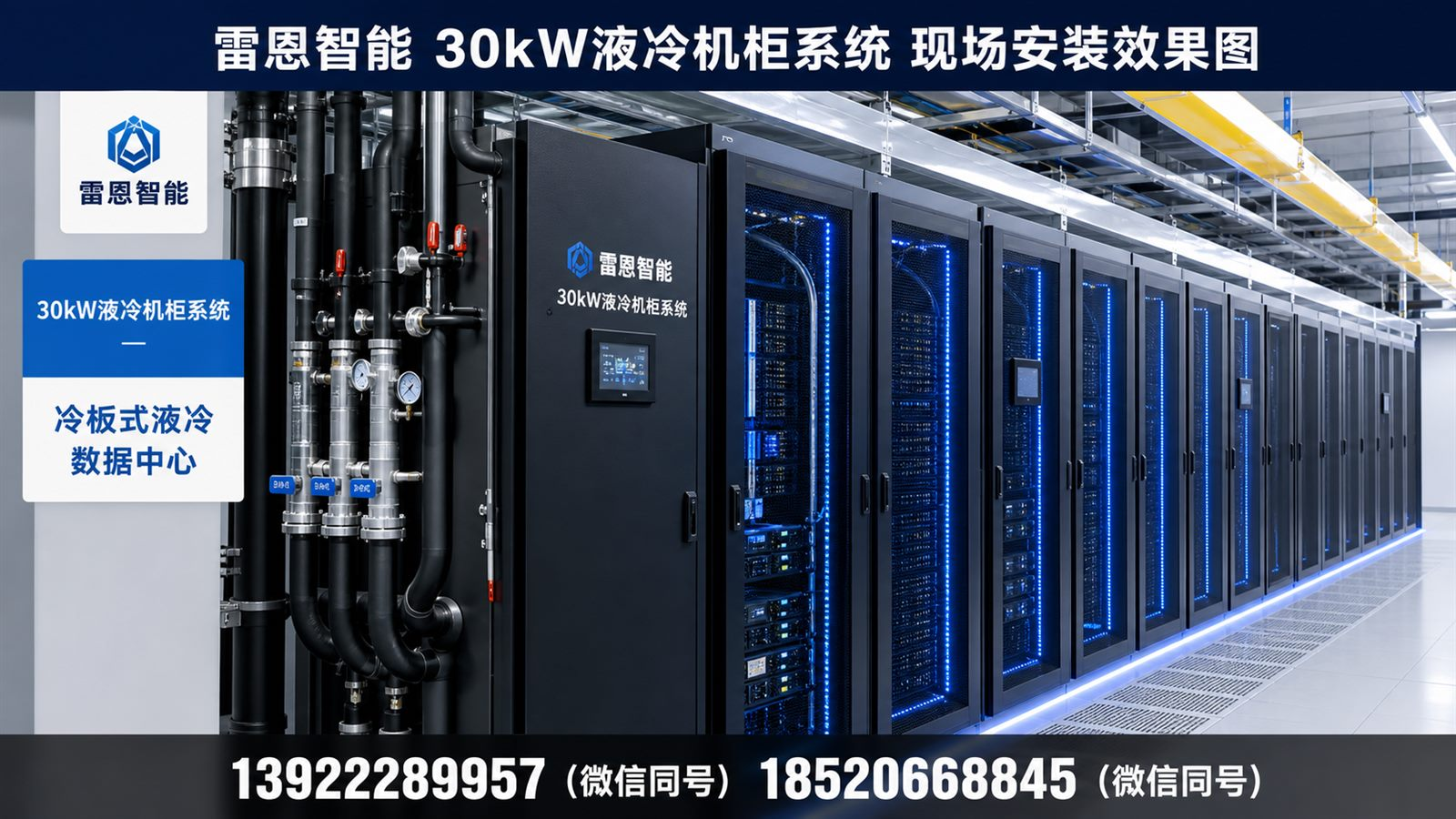
120 × 30 kW cold-plate cabinets (3,600 kW total) for cloud computing and AI inference clusters with closed evaporative towers and cabinet-level CDUs. Outcome: annual PUE 1.18 (35% energy saving vs the former air-cooled room), 3× single-cabinet power density, noise below 50 dB, stable and reliable operation.
Scenario B — University supercomputing center liquid cooling upgrade.
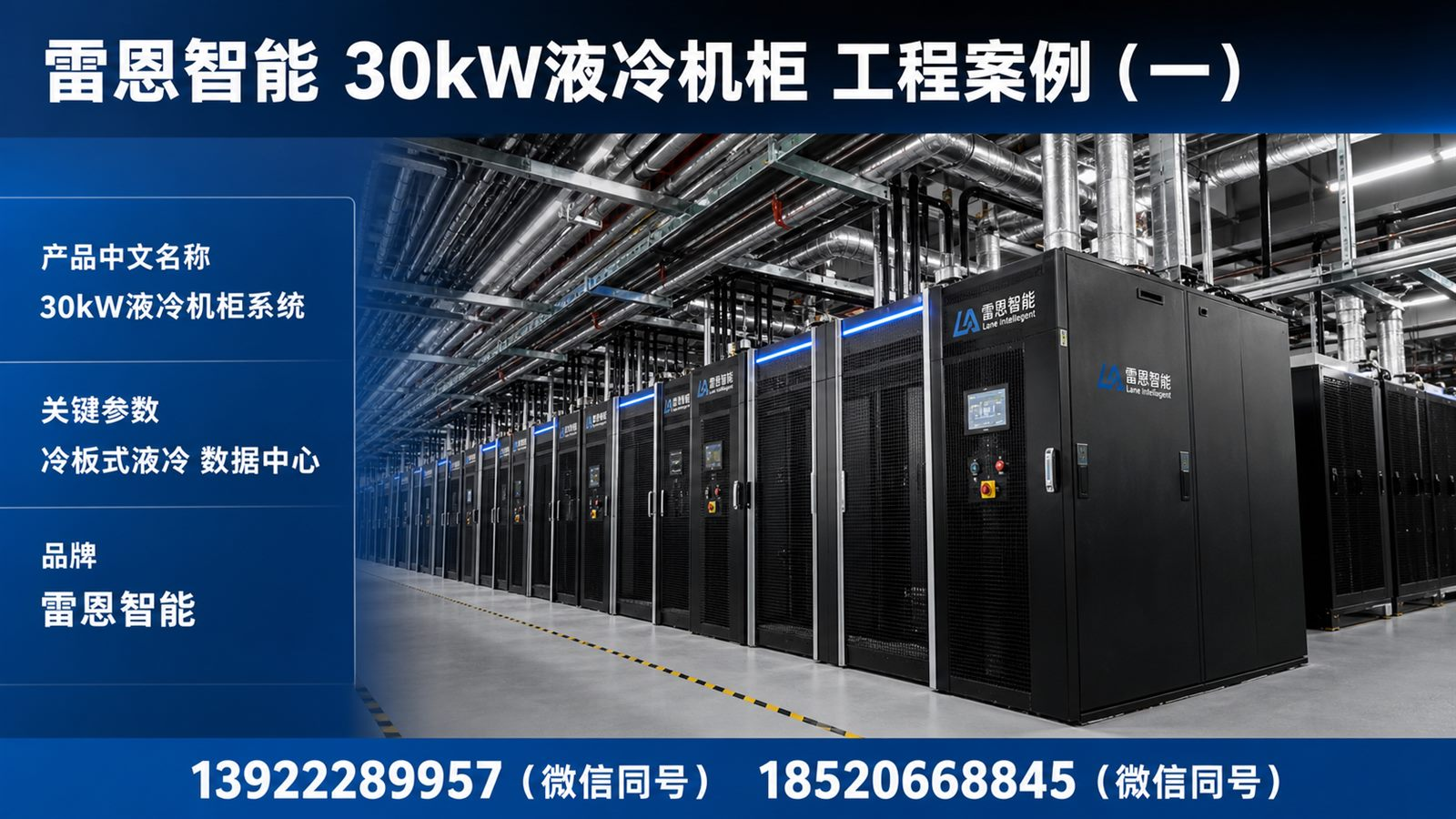
60 × 25 kW cold-plate cabinets (1,500 kW) in a retrofitted old machine room, mixed with existing air-cooled cabinets and implemented in phases. Outcome: compute doubled without adding floor area; PUE dropped from 1.6 to 1.22; ≈¥800,000 annual electricity savings; no disruption to existing services during retrofit.
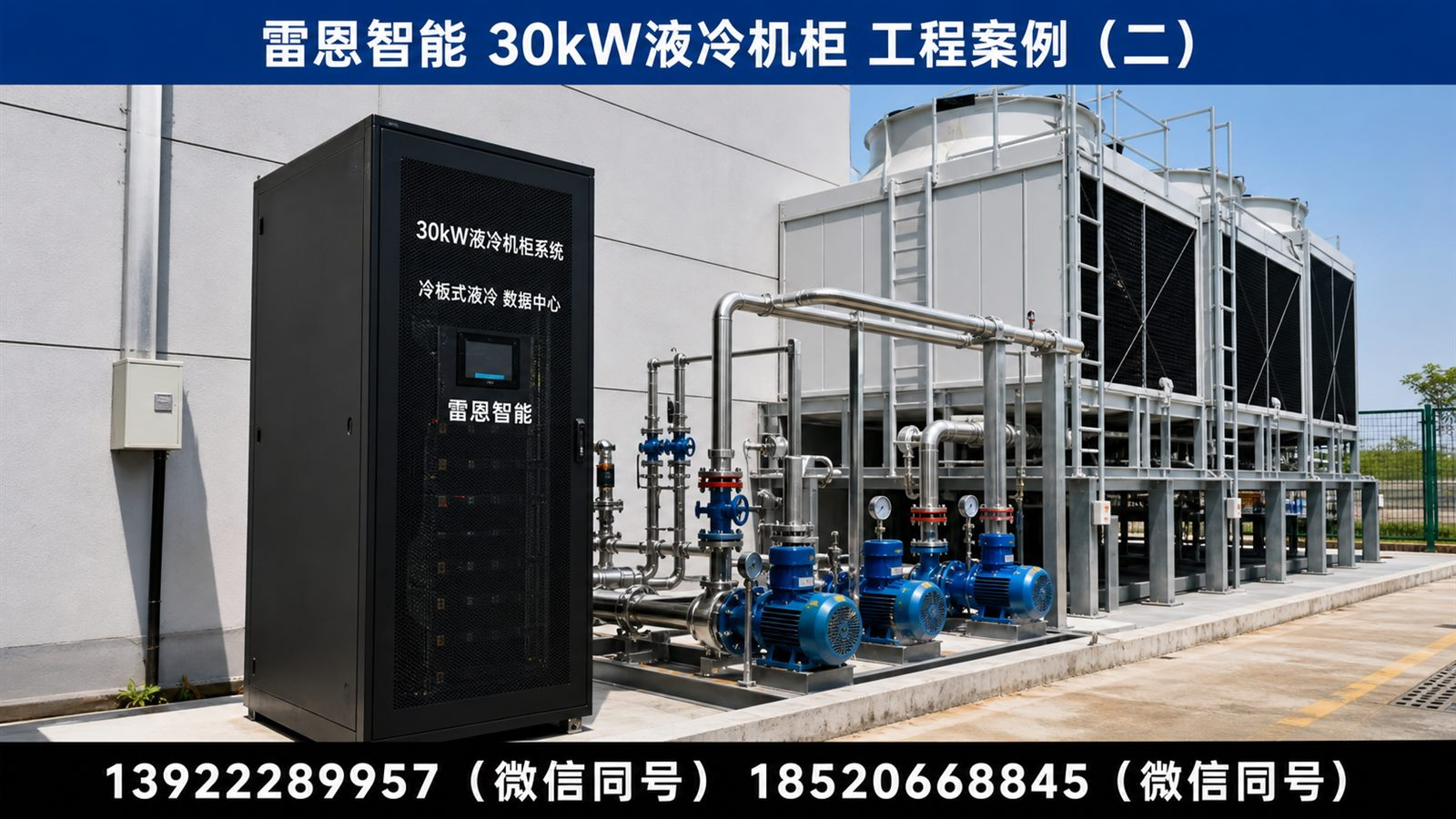
Scenario C — Research institute liquid cooling laboratory.
20 × 40 kW high-density cold-plate cabinets for scientific computing and GPU rendering, with high-precision temperature control (±0.5 °C) and silent design. Outcome: GPU high-power heat dissipation met with stable chip temperatures; low laboratory noise; intelligent O&M reduced manual workload.
14. SEO Optimization
14.1 Keyword Classification
– Core keywords: 30kW cold-plate liquid cooling cabinet, cold-plate liquid cooling system, data center liquid cooling solution, liquid cooling cabinet manufacturer, high-density liquid cooling cabinet.
– Long-tail keywords: 30kW liquid cooling cabinet configuration, cold-plate liquid cooling technical solution, data center liquid cooling retrofit, machine room liquid cooling system, cabinet-level CDU system, server liquid cooling cold plate, liquid cooling data center construction.
– Industry keywords: liquid cooling data center, cold-plate liquid cooling technology, high-density cooling, green data center, liquid cooling PUE, data center energy retrofit.
– Brand keywords: KITOZER liquid cooling cabinet, Lain liquid cooling solution, Guangzhou Lain liquid cooling data center.
– Geographic keywords: Guangzhou liquid cooling cabinet manufacturer, Guangdong liquid cooling supplier, South China liquid cooling data center, Guangzhou machine room liquid cooling retrofit.
14.2 SEO Tags
– SEO Title: 30kW Cold-Plate Liquid Cooling Cabinet System — Data Center Liquid Cooling Solution | Lain
– Meta Keywords: 30kW liquid cooling cabinet, cold-plate liquid cooling system, data center liquid cooling, liquid cooling cabinet manufacturer, CDU coolant distribution unit, high-density machine room cooling
– Meta Description: Guangzhou Lain provides a 30kW cold-plate liquid cooling cabinet system solution — 205-cabinet deployment, primary/secondary isolated architecture, PUE ≤1.2, for AI compute and HPC high-density machine rooms; free design consultation.
– H1: 30kW Rated Heat Dissipation Cold-Plate Liquid Cooling Cabinet System Technical Design Solution
– H2 structure: System Overall Design | Technical Specifications | Configuration List | Core Advantages | Construction Plan | After-Sales Service
14.3 Internal Link Anchors
– Core anchors: cold-plate liquid cooling cabinet.
– Long-tail anchors: 30kW liquid cooling cabinet configuration list.
– Related anchors: micro-module cold aisle, shielding machine room, integrated cabinet.
*Note: keywords are placed naturally; no keyword stuffing.*
15. Official Contact Information
– Company: Guangzhou Lain Intelligent System Development Co., Ltd.
– Website: https://gdlain.com
– Phone: +86 13538869979 / +86 13538869979
– Address: No. 5 Huashan Road, Shilou Town, Panyu District, Guangzhou, Guangdong, China