Technical Design Solution
1. Cover / Document Information
– Document Title: AR Forest Fire Intelligent Monitoring System Technical Design Solution
– Prepared by: Guangzhou Lain Intelligent System Development Co., Ltd.
– Brand: KITOZER (Pioneer)
– Date: August 2026
2. Table of Contents Structure
1. Company Introduction
2. Project Overview
3. User Requirement Analysis
4. System Design Description
5. System Quotation and Configuration List
6. Detailed Technical Parameters of Each Unit
7. Core Advantages of the Solution
8. Construction Schedule Plan
9. Construction Organization Plan
10. After-Sales Service System
11. System Training Plan
12. Typical Project Cases
13. SEO Optimization Keywords and Tag System
14. Module Technical Q&A and Website Backend Configuration
15. Contact Information
3. Company Introduction
Founded in 2002, Guangzhou Lain Intelligent System Development Co., Ltd. is a high-tech enterprise focusing on R&D, production and integration of intelligent computer room construction, security monitoring systems and environmental monitoring systems, with its own brand KITOZER (Pioneer). With more than 20 years of industry experience, the company has accumulated rich project implementation experience and product customization capability, masters efficient, green and safe intelligent system core technologies, can customize exclusive solutions for different industries and scenarios, and its business covers data centers, forestry, parks, cultural heritage, industry and other fields.
The company has a flexible customization production factory and professional technical R&D, project construction and after-sales service teams, with original factory customization strength, providing full-process services from solution design, product production, construction and installation to O&M training. The company always adheres to the quality-first concept, has established a strict quality control system, and its products and services have gained recognition and praise from many domestic and foreign enterprise customers.
Core advantages:
– Professional depth: more than 20 years of intelligent system industry experience, mature technical system and numerous implemented project cases;
– Quality guarantee: strict quality standards for product production and project construction, third-party testing escort, stable and controllable delivery time and quality;
– Customization service: on-demand solution and hardware product customization, highly matching customer on-site scenarios and business needs, multiple design solutions free of charge;
– Worry-free after-sales: 7×24-hour professional online service, rapid response to customer needs, dedicated personnel following the full project cycle.
4. Project Background and Objectives
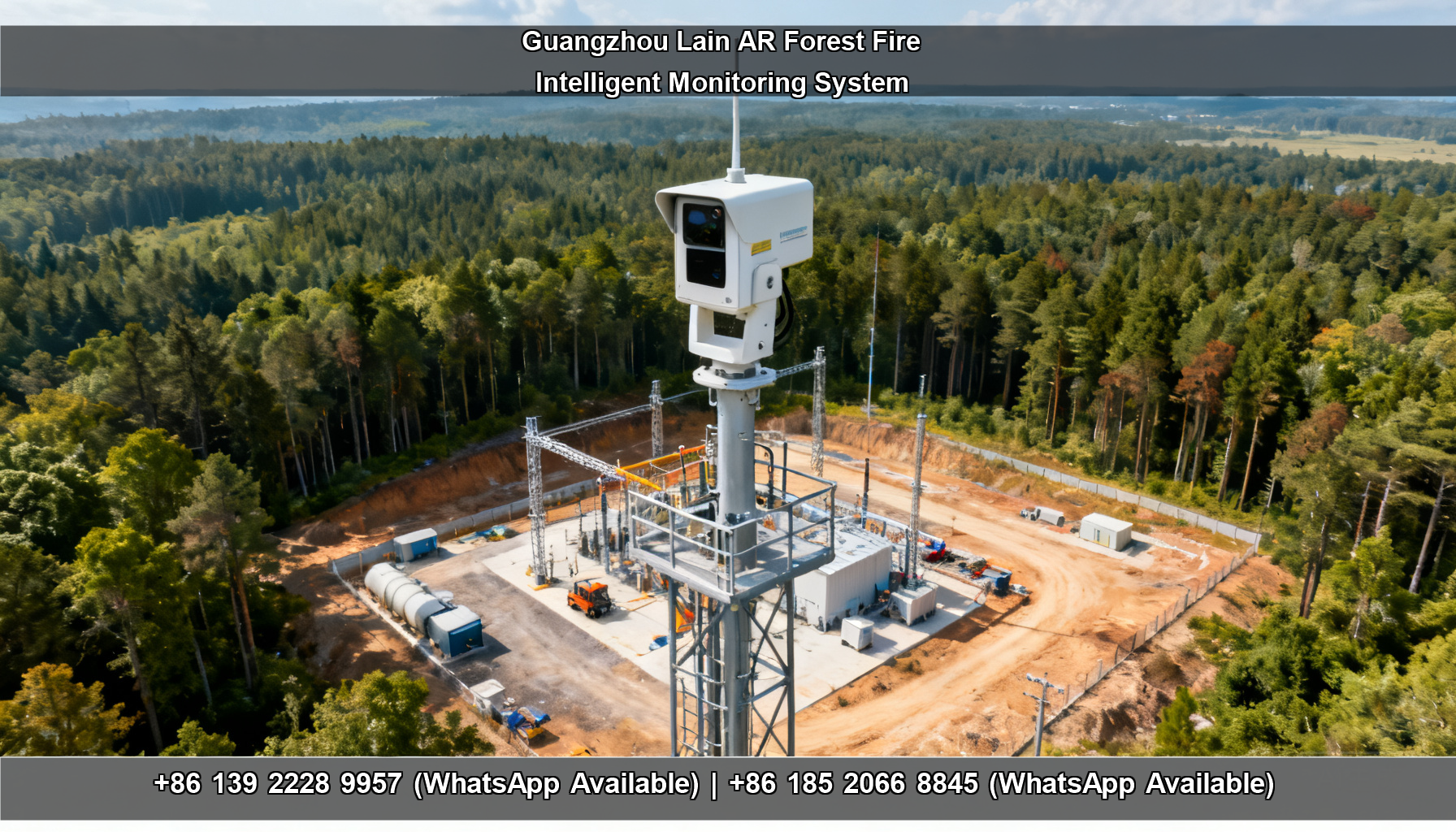
Forest resources are an important foundation for ecological environment and economic development, while forest fires have the characteristics of sudden onset, rapid spread, difficult handling and serious losses, making them the primary disaster threatening forest resource safety. Traditional forest fire prevention mainly relies on manual patrol and lookout tower manual observation, with problems such as limited monitoring range, slow response speed, insufficient monitoring capability at night and in bad weather, low fire location accuracy and high labor costs, unable to meet the modern forest fire prevention management needs of intelligence, precision and efficiency.
With the rapid development of video surveillance, thermal imaging temperature measurement, AR augmented reality and artificial intelligence analysis technologies, intelligent visual monitoring has become the core technical means of forest fire prevention. Based on Dahua’s full series of intelligent monitoring equipment, combined with AR augmented reality technology and forest fire prevention dedicated algorithms, this solution builds an AR forest fire intelligent monitoring system, realizing core functions such as 360° panoramic monitoring of forest areas without blind spots, thermal imaging smoke and fire intelligent identification, multi-device automatic linkage tracking, AR real-scene visualized management and control, personnel and vehicle target intelligent identification and dynamic display, and extreme high-temperature environment special monitoring, comprehensively improving the early warning capability, response speed and handling efficiency of forest fire prevention, providing solid technical support for forest resource safety.
This solution is designed according to the standard architecture of single high-point monitoring station + monitoring center, and can flexibly expand the number of points and functional modules according to forest area scale, terrain characteristics and monitoring needs, balancing practicality, advancement and scalability.
5. User Requirement Analysis
Combined with forest fire prevention business scenarios and technical requirements, this system needs to meet the following core requirements:
5.1 360° Panoramic Monitoring and AR Fire Prevention Template Requirements
Deploy panoramic monitoring equipment at forest area commanding heights to realize 360° horizontal coverage without blind spots, eliminating monitoring blind areas; the equipment must support AR augmented reality functions with built-in forest fire prevention dedicated display templates, able to overlay thermal imaging heat maps, equipment points, fire prevention signs, target annotations and other information on the panoramic picture, building an intuitive real-scene monitoring interface to improve monitoring efficiency and situational awareness.
5.2 Thermal Sensing Temperature Measurement and Smoke/Fire Warning Requirements
Configure professional thermal imaging temperature measurement equipment to realize thermal sensing temperature monitoring of the monitoring area with real-time display of regional temperature distribution heat maps; built-in professional forest fire smoke/fire identification algorithm can accurately identify flames, smoke and high-temperature hot spots, support graded warnings, automatically trigger alarms, realizing early fire detection, early warning and early handling.
5.3 Multi-Device Linkage and Automatic Focus Requirements
Configure a high-speed intelligent tracking PTZ camera deeply linked with the panoramic camera and thermal imaging camera. When the system detects a fire or abnormal target, it automatically drives the tracking PTZ to turn to the target area, automatically zoom and focus to magnify target details, without manual intervention throughout, guaranteeing continuous precise monitoring of fires and abnormal targets.
5.4 Full-Link Alarm Linkage Requirements
After fire warning is triggered, the system realizes multi-dimensional linked alarms: front-end on-site sound/light warning, monitoring center synchronized sound/light indication, platform automatically popping up alarm pictures, starting alarm recording and pushing alarm information, forming a complete alarm closed loop, ensuring duty personnel get fire information at the first moment.
5.5 AR Scenario Simulation and Visualization Requirements
The platform supports AR scenario simulation, able to build 1:1 simulated AR scenarios based on forest area geographic information and monitoring points, simulating the whole process of fire occurrence, spread and handling, used for fire prevention drills, plan rehearsal and personnel training; at the same time, realize whole-area situational one-map display, intuitively presenting the positions and status of all equipment, targets and alarms.
5.6 180°C High-Temperature Environment Special Monitoring Requirements
For scenarios in forest areas where ordinary cameras cannot work stably, such as high-temperature operation belts and high-risk areas near fire points, deploy dedicated high-temperature-resistant cameras that can work continuously and stably at 180°C, realizing video monitoring and temperature monitoring in extreme high-temperature environments and eliminating monitoring blind spots.
5.7 Personnel and Vehicle Target Identification and Dynamic Display Requirements
The system supports intelligent detection, classification and tracking of personnel and vehicle targets, can dynamically annotate target positions, attributes and motion trajectories in the Dahua platform and AR panoramic picture, supports rule alarms such as crossing and regional intrusion, realizing intelligent management and control of forest area personnel and vehicles, preventing illegal fire use and illegal entry.
5.8 Dahua Platform Full Compatibility Requirements
All front-end equipment and platforms adopt the Dahua brand, deeply connected through private protocols, guaranteeing equipment compatibility, linkage response speed and system stability, realizing unified equipment management, unified video preview, unified alarm handling and unified data display.
6. Design Principles and Applicable Standards
6.1 Design Principles
– Advancement principle: adopt current mainstream AR augmented reality, thermal imaging temperature measurement, AI analysis and HD video surveillance technologies, select mature and leading Dahua brand intelligent equipment;
– Reliability principle: all equipment adopts industrial-grade design with wide temperature, wide voltage and high protection level characteristics, adapting to forest field harsh environments; redundant architecture with backup mechanisms at key nodes, guaranteeing 7×24-hour stable operation;
– Practicality principle: system functions closely fit actual forest fire prevention business needs with simple and intuitive operation interface;
– Scalability principle: modular, layered architecture supporting flexible expansion of front-end points, platform function modules and storage capacity;
– Security principle: complete safety protection mechanisms including equipment lightning and surge protection, network transmission security, platform user permission management and encrypted data storage;
– Precision principle: thermal imaging temperature measurement and smoke/fire identification algorithms have high accuracy and low false alarm rate, with high fire location precision and fast linkage tracking response.
6.2 Design Basis
The system design strictly follows relevant national and industry standards and specifications, mainly including:
– GB 50348-2018 Technical Code for Engineering of Security and Protection System
– GB 50395-2007 Code of Design for Video Monitoring System Engineering
– LY/T 5008-2011 Technical Standard for Forest Fire Prevention Engineering
– GB/T 38668-2020 Technical Requirements for Thermal Imaging Human Body Temperature Measurement System
– GB 17859-1999 Classified Criteria for Security Protection of Computer Information Systems
– GB 4943.1-2011 Safety of Information Technology Equipment – Part 1: General Requirements
– GB 50343-2012 Technical Code for Protection of Building Electronic Information System Against Lightning
– GB 50311-2016 Code for Engineering Design of Generic Cabling System
– Dahua equipment related technical standards and enterprise specifications
– Project on-site actual conditions and business requirement documents
6.3 Overall Architecture Design
The system adopts a layered architecture design, divided into front-end perception layer, network transmission layer, platform application layer and display interaction layer:
– Front-end perception layer: the data collection terminal of the system, deployed at forest area monitoring points, collecting video data, temperature data and intelligent analysis data, mainly including 360° AR panoramic cameras, dual-spectrum thermal imaging PTZ cameras, high-temperature-resistant thermal imaging cameras, high-speed intelligent tracking PTZ cameras, edge computing terminals, sound/light alarms, supporting power supply and lightning protection equipment. Front-end devices have local intelligent analysis capability for front-end warning, reducing transmission bandwidth pressure and response delay;
– Network transmission layer: the bridge connecting front-end devices and the monitoring center, mainly using fiber-optic wired transmission through industrial-grade switches, fiber transceivers and armored optical cables; for remote points difficult to wire, wireless bridge transmission can be extended;
– Platform application layer: the core control hub of the system, deployed on monitoring center servers, mainly including AR real-scene intelligent monitoring platform, smoke/fire identification algorithm engine, personnel/vehicle target analysis algorithm, multi-device linkage scheduling engine and video storage management module;
– Display interaction layer: responsible for visualized display and human-computer interaction, mainly including splicing displays, HD decoders, monitoring operation consoles and client software.
7. System Architecture and Working Principle
7.1 System Composition
The AR forest fire intelligent monitoring system is composed of the following units:
1. Front-end AR panoramic fire perception unit: 360° four-lens stitching AR panoramic network camera + dual-spectrum thermal imaging PTZ camera (fire measurement type) + front-end edge computing intelligent terminal;
2. Fire automatic linkage tracking unit: 4MP starlight high-speed intelligent tracking PTZ camera + PTZ high-altitude protection housing;
3. 180°C high-temperature environment monitoring unit: high-temperature-resistant thermal imaging temperature measurement cameras + high-temperature environment dedicated power supplies;
4. AR intelligent platform and algorithm unit: AR real-scene intelligent monitoring comprehensive platform + smoke/fire intelligent identification algorithm license + personnel/vehicle target intelligent analysis algorithm license + multi-device linkage scheduling engine + platform dedicated business server;
5. Network transmission and video storage unit: industrial-grade gigabit switches + gigabit single-mode fiber transceivers + 64-channel 4K NVR + surveillance-grade hard disks;
6. Center display and alarm linkage unit: outdoor/indoor sound-light alarms + 9-channel 4K HD decoder + 55-inch 4K monitoring displays + dual-workstation monitoring console;
7. Installation auxiliary materials and protection supporting unit: 15m high-point monitoring pole + outdoor waterproof equipment box + power/network lightning arresters + DC regulated power supplies + mounting bracket kits + armored optical cable + shielded network cable + power wires.
7.2 Working Principle
– Perception: the panoramic camera provides 360° seamless full-view coverage; the dual-spectrum thermal imaging PTZ provides temperature measurement and smoke/fire identification (detection distance up to 5km); high-temperature cameras monitor extreme high-temperature areas;
– Intelligent analysis: edge computing terminals and platform algorithms identify flames, smoke, hot spots, personnel and vehicles with millisecond-level response;
– Linkage: when a fire is detected, the linkage engine drives the tracking PTZ to turn and zoom to the fire point within 1 second, triggers front-end and center sound-light alarms, pops up alarm pictures, starts alarm recording and pushes alarm notifications;
– AR visualization: the platform builds a 1:1 3D forest scenario, overlays video, heat maps, equipment points, targets and fire prevention facilities, realizing whole-area one-map situational awareness and fire spread simulation;
– Storage and display: videos are stored on the NVR with 4K splicing display at the monitoring center, supporting event retrieval and playback.
8. Detailed Technical Design
8.1 Front-End AR Panoramic Fire Perception Unit Design
– 360° four-lens stitching AR panoramic network camera (DH-IPC-PDBW88400-B360): 4× 1/1.8-inch CMOS sensors, 4MP each, 16MP total; panorama 8192×1440 after stitching; min illumination color 0.005Lux / B/W 0.001Lux / 0Lux with IR; 120dB wide dynamic; H.265+/H.265/H.264+/H.264/MJPEG; three-stream output; ROI up to 8 regions; built-in smoke/fire, personnel/vehicle, intrusion, crossing, loitering and video anomaly detection; AR functions: real-time seamless stitching, AR label mounting, heat map overlay with transparency adjustment, 3D terrain fusion, target linkage annotation, electronic map linkage; IP66; -40°C~+70°C; wind resistance grade 12; power 6kV/network 4kV lightning protection; DC12V/AC24V/POE; ≤30W; IR distance 50m;
– Dual-spectrum thermal imaging PTZ camera, fire measurement type (DH-TPC-PT8620A-TF): thermal channel: uncooled vanadium oxide FPA, 640×512, 12μm, 8-14μm, temperature range -20°C~550°C, accuracy ±2°C or ±2%, up to 10 measurement regions, high/low/temperature-difference alarms, 16 pseudo-color modes, 25mm lens, FOV 25.6°×20.5°, spatial resolution 0.69mrad; visible channel: 1/1.8-inch CMOS 4MP, 30× optical zoom, 120dB WDR, IR 150m; PTZ: 360° continuous rotation, -90°~+90°, 240°/s horizontal, 300 presets, 8 cruise paths, positioning accuracy ±0.1°; built-in forest fire algorithm: smoke/flame identification up to 5km, GIS fire point location, hotspot tracking, graded alarms, false alarm suppression; IP67, 6000V lightning protection; AC24V/DC24V/POE+, ≤50W;
– Front-end edge computing intelligent terminal (DH-IVS-IF1000-F): embedded high-performance AI processor, 16 TOPS; 8-channel 1080P access and analysis; built-in smoke/fire, personnel/vehicle, crossing, intrusion algorithms; analysis delay ≤100ms; 4 gigabit RJ45 ports, 2 alarm in/2 out, RS485; 1 SATA up to 8TB; IP40; -30°C~+60°C; DC12V, ≤25W; operates independently when disconnected with local alarms.
8.2 Fire Automatic Linkage Tracking Unit Design
– 4MP starlight high-speed intelligent tracking PTZ (DH-SD-6A9430UA-HNI): 1/1.8-inch starlight CMOS, 4MP 2560×1440; 30× optical zoom 4.5-135mm; min illumination 0.005Lux color / 0.001Lux B/W / 0Lux IR; 120dB WDR; 360° continuous, -15°~+90°, 240°/160° per second; 256 presets ±0.1°; intelligent auto tracking receiving target coordinates from panoramic/thermal devices, auto turn/zoom/focus; single/multi-target switch/manual tracking; human/vehicle classification, crossing/intrusion, loitering, face detection; IP67, 6000V lightning protection; AC24V, ≤30W;
– PTZ high-altitude protection housing (DH-PFH610N): aluminum alloy + tempered glass, IP67, built-in wiper, temperature-controlled heating and cooling fan, for 6-inch high-speed PTZ, -40°C~+70°C.
8.3 180°C High-Temperature Environment Monitoring Unit Design
– High-temperature-resistant thermal imaging temperature camera (DH-TPC-BF5400-HT): uncooled vanadium oxide FPA, 384×288, 17μm, 8-14μm; temperature range 0°C~300°C, accuracy ±2°C or ±2%; point/region measurement with high-temperature threshold alarms; 16 pseudo-color modes; working environment -20°C~+180°C continuous stable operation; special high-temperature alloy housing; high-temperature germanium lens; IP68; DC12V wide voltage, ≤15W;
– High-temperature dedicated power supply (DH-PFM320-HT): AC100-240V input, DC12V/2A/24W output; wide-temperature industrial components and high-temperature housing, continuous output at -40°C~185°C; four protections (overvoltage, overcurrent, short-circuit, overtemperature) with auto-restart; DIN-rail mounting; Class II insulation; ripple ≤120mVpp.
8.4 AR Intelligent Platform and Algorithm Unit Design
– AR real-scene intelligent monitoring comprehensive platform (DH-DSS-AR7000-F): microservices distributed architecture, B/S, supports Web/PC/mobile clients; single server up to 1024 video channels, ≥200 concurrent users, alarm response ≤200ms, video forwarding ≤300ms; MySQL/PostgreSQL/Oracle support; imports oblique photography models, DEM terrain and vector map data to build 1:1 3D forest scenes; video and thermal heat maps mapped to 3D scenes; AR labels (text, icon, device point, fire facility, area annotation) with hierarchical display and click-through; first/third-person roaming, 3D measurement (distance, area, height, angle); fire warning management with graded alarms and closed-loop handling (confirm, dispatch, archive); fire point GIS location precision ≤50m; fire spread simulation based on weather, terrain and vegetation data; resource dispatch visualization; statistical reports (daily/weekly/monthly) exportable to Excel/PDF; device management with online/offline status, remote configuration, firmware upgrade; recording management with event retrieval, speed playback, frame-by-frame, clipping, batch download and lock backup; multi-device linkage scheduling;
– Smoke/fire intelligent identification algorithm license (DH-IVA-FIRE-04): deep learning CNN, trained on massive real forest samples covering seasons, weather, terrain and vegetation; flame/smoke/hot-spot detection; detection distance ≥5km for flames ≥2㎡, ≥8km for smoke ≥10㎡; flame accuracy ≥99%, smoke ≥95%; false alarm rate ≤1%/day with suppression of sunlight, cloud shadow, dust, moisture, vehicle lights and animals; 1-10 sensitivity levels; single-frame analysis ≤100ms, alarm output ≤1s; output includes fire point coordinates, confidence, temperature, alarm screenshot and short video; per-channel license, permanent activation, 1-year free algorithm iteration;
– Personnel/vehicle target intelligent analysis algorithm license (DH-IVA-IVS-08): detects and classifies personnel, cars, trucks, motorcycles, non-motor vehicles; personnel accuracy ≥98%, vehicle ≥99%; ≥100 targets tracked simultaneously; behavior rules: crossing, intrusion, regional leave, loitering, fast movement, gathering; personnel/vehicle counting; attribute recognition (gender, age, clothing color, vehicle color, type); trajectories drawn in real time on AR panorama with historical traceback; supports edge terminal and platform server deployment;
– Multi-device linkage scheduling engine (DH-DSS-LINK-01): event-driven architecture; trigger sources: intelligent analysis alarms, temperature abnormality alarms, device abnormality alarms, manual trigger, timer trigger; dozens of linkage actions: PTZ preset turn, auto zoom/focus, video popup, alarm recording, sound-light alarm, SMS/email push, voice broadcast, access control and broadcast linkage; multi-level linkage strategy with timing; response ≤100ms; event logs with traceback; compatibility with Dahua private protocol and standard SDK; auto-retry, success rate ≥99.9%;
– Platform dedicated business server (DH-IVS-B700-R): 2U rack-mounted; 2× Intel Xeon Silver 4314 (16 cores/32 threads each, 2.4GHz); 32GB DDR4 ECC (expandable to 1TB); 2× 4TB enterprise SATA in RAID1 system disk; 8× 3.5-inch bays; RAID array card 0/1/5/6/10; 2 gigabit + 2 10G optical ports with link aggregation; 550W redundant hot-swap power; 4 USB3.0, 2 VGA, 1 serial; preinstalled server OS with platform software.
8.5 Network Transmission and Video Storage Unit Design
– Industrial-grade gigabit switch (DH-S3000C-8GT2GF): 8× 10/100/1000Base-T + 2× 1000Base-X SFP; switching capacity 24Gbps; forwarding rate 17.9Mpps; 8K MAC table; fanless; IP40; DIN-rail; -40°C~+75°C; DC12-48V dual power with reverse protection; ≤10W; MTBF ≥300000h;
– Gigabit single-mode fiber transceiver (DH-OTE113T/R-G): IEEE 802.3/802.3u/802.3ab; single-fiber bidirectional; standard 20km (40/60/80km optional); SC/UPC; full/half duplex with flow control; status LEDs; DC5V 2A; -20°C~+60°C; desktop or rack-mount;
– 64-channel 4K NVR (DH-NVR5864-4KS2): 64-channel access, up to 12MP cameras; H.265+/H.265/H.264+/H.264; 4× 4K or 16× 1080P decoding; HDMI 4K + VGA output; 8× SATA3.0, up to 10TB each, 80TB total; manual/timed/event/motion/alarm recording with pre/post recording; 1/8/16/32-channel synchronous playback with speed/frame-by-frame/reverse; 2 gigabit ports (multi-address, fault tolerance, load balancing); 16 alarm in / 4 alarm out; 2U rack; AC100-240V, ≤40W (excl. disks); -10°C~+55°C;
– Surveillance-grade hard disk (ST6000VX001): 6TB, SATA 6.0Gb/s, 7200RPM, 256MB cache; optimized for surveillance, 180TB/year workload; error recovery control; vibration compensation; MTBF ≥1.5 million hours.
8.6 Center Display and Alarm Linkage Unit Design
– Outdoor sound-light alarm (DH-ARA12): 110dB siren + red high-brightness LED strobe (1-2Hz adjustable); DC12V, ≤500mA; ABS flame-retardant housing; IP65; -30°C~+70°C; NO/NC trigger, wall/pole mounting;
– Indoor sound-light alarm (DH-ARA10): 90dB siren + red LED; DC12V, ≤300mA; IP40; -10°C~+50°C; desktop/wall mounting;
– 9-channel 4K HD decoder (DH-NVD0905DH-4K): 9× HDMI outputs up to 4K@30fps; 9× 4K or 36× 1080P decoding; H.265+/H.265/H.264+/H.264/MJPEG; 1/4/9/16 screen division; 3×3 splicing; window scaling/roaming/overlay; 2 gigabit ports; 1U rack;
– 55-inch 4K monitoring display (DH-LM55-S400): industrial IPS, 3840×2160, 500cd/㎡, 1200:1, 8ms, 178°/178°, 16.7M colors, 72% NTSC; 2 HDMI + VGA + BNC + USB with BNC loop-out; 7×24h continuous operation; life ≥60000h; AC100-240V, standby ≤0.5W;
– Dual-workstation monitoring console: cold-rolled steel, 25mm fireproof density board anti-static surface, dual-workstation for dual/quad screens, ergonomic height, keyboard drawer, host tray, cable trough, power strip, cooling fan, load ≥100kg.
8.7 Installation Auxiliary Materials and Protection Supporting Unit Design
– High-point monitoring pole (15m): Q235 steel pipe, hot-dip galvanized (life ≥15 years), three-section telescopic, bottom φ219mm / top φ114mm, wall ≥4mm, wind resistance grade 12; ladder with protective cage (width 400mm, step spacing 300mm); top work platform 600×600mm with 1.2m guardrail; lightning rod and grounding system (grounding resistance ≤4Ω); pre-embedded foundation with concrete pouring;
– Outdoor waterproof equipment box: 600×800×300mm, 304 stainless steel 1.5mm, IP66, double-layer door with anti-theft lock and rainproof eave, internal mounting backplate, cable trough and power socket; pole-hoop or wall mounting; -40°C~+70°C, optional heating/cooling modules;
– Power lightning arrester (DH-PD-220V): AC220V, Uc 385V, In 20kA, Imax 40kA, Up ≤1.5kV, response ≤25ns; DIN rail; failure indication window; IP20; -40°C~+85°C; per GB 18802.1;
– Network signal lightning arrester (DH-PD-RJ45): 5V DC, In 10kA, Imax 20kA, Up ≤20V, response ≤1ns; RJ45, 10/100/1000Mbps; POE compatible; IP20; -40°C~+85°C;
– DC regulated power supply (DH-PFM300-12V): AC100-240V input, DC12V/2A/24W output, regulation ±1%, ripple ≤100mVpp; four protections; desktop with optional DIN-rail; -20°C~+60°C; MTBF ≥100000h;
– Mounting bracket kit: 304 stainless steel ≥3mm, angle adjustable, brushed, single bracket load ≥50kg;
– Armored optical cable (GYTA-4B1): 4-core G.652D single-mode, attenuation ≤0.36dB/km@1310nm, ≤0.22dB/km@1550nm; long-term tensile 600N, short-term 1500N; crush 1000N/100mm long-term, 3000N/100mm short-term; -40°C~+70°C; life ≥25 years;
– Shielded network cable (CAT5e FTP): TIA/EIA 568-C.2, 4-pair 8-core oxygen-free copper, aluminum foil total shielding with drain wire, 100MHz, 305m/box;
– Power wire (RVV2×1.5): 2-core 1.5mm² stranded copper, PVC insulation/sheath, 300/500V, per GB/T 5023-2008.
9. Recommended Configuration and Preliminary Budget
| No. | System unit | Equipment | Model | Brand | Unit | Qty | Remarks |
|---|---|---|---|---|---|---|---|
| I | Front-end AR panoramic fire perception unit | 360° four-lens AR panoramic network camera | DH-IPC-PDBW88400-B360 | Dahua | set | 1 | 4×4MP stitching, 360° panorama, AR supported |
| Dual-spectrum thermal imaging PTZ (fire measurement) | DH-TPC-PT8620A-TF | Dahua | set | 1 | 640×512, -20°C~550°C, smoke/fire ID | ||
| Front-end edge computing terminal | DH-IVS-IF1000-F | Dahua | set | 1 | Local analysis, millisecond alarms | ||
| II | Fire linkage tracking unit | 4MP starlight intelligent tracking PTZ | DH-SD-6A9430UA-HNI | Dahua | set | 1 | 30× zoom, auto focus, intelligent tracking |
| PTZ high-altitude protection housing | DH-PFH610N | Dahua | pcs | 1 | IP67, wiper, temperature control | ||
| III | 180°C high-temp monitoring unit | High-temp thermal imaging camera | DH-TPC-BF5400-HT | Dahua | set | 2 | 180°C resistant, 0°C~300°C |
| High-temp dedicated power supply | DH-PFM320-HT | Dahua | pcs | 2 | Wide-temp industrial | ||
| IV | AR platform and algorithm unit | AR real-scene intelligent monitoring platform | DH-DSS-AR7000-F | Dahua | set | 1 | 3D AR modeling, fire template, situational visualization |
| Smoke/fire ID algorithm license | DH-IVA-FIRE-04 | Dahua | channel | 4 | Smoke + flame recognition | ||
| Personnel/vehicle analysis license | DH-IVA-IVS-08 | Dahua | channel | 8 | Detection, classification, tracking | ||
| Multi-device linkage engine | DH-DSS-LINK-01 | Dahua | set | 1 | Panoramic + thermal + PTZ linkage | ||
| Platform dedicated business server | DH-IVS-B700-R | Dahua | set | 1 | 2U, 16-core CPU, 32G RAM | ||
| V | Network and storage unit | Industrial gigabit switch | DH-S3000C-8GT2GF | Dahua | set | 2 | 8 electrical + 2 optical, front-end + center |
| Gigabit single-mode fiber transceiver | DH-OTE113T/R-G | Dahua | pair | 1 | Single fiber, 20km | ||
| 64-channel 4K NVR | DH-NVR5864-4KS2 | Dahua | set | 1 | H.265+, 4K decoding | ||
| Surveillance-grade hard disk | ST6000VX001 | Seagate | pcs | 8 | 6TB, 7200RPM | ||
| VI | Center display and alarm unit | Outdoor sound-light alarm | DH-ARA12 | Dahua | pcs | 1 | IP65, 110dB |
| Indoor sound-light alarm | DH-ARA10 | Dahua | pcs | 1 | Center alarm | ||
| 9-channel 4K HD decoder | DH-NVD0905DH-4K | Dahua | set | 1 | 9×4K decoding, wall display | ||
| 55-inch 4K monitoring display | DH-LM55-S400 | Dahua | set | 4 | 4K, industrial, 2×2 splicing | ||
| Dual-workstation monitoring console | Custom | Domestic | set | 1 | Steel structure | ||
| VII | Installation and protection unit | High-point monitoring pole (15m) | Custom galvanized | Domestic | pcs | 1 | With ladder and work platform |
| Outdoor waterproof equipment box | 600×800×300mm 304 SS | Domestic | pcs | 1 | IP66 | ||
| Power lightning arrester | DH-PD-220V | Dahua | pcs | 2 | 220V, 20kA | ||
| Network signal lightning arrester | DH-PD-RJ45 | Dahua | pcs | 6 | Gigabit | ||
| DC regulated power supply | DH-PFM300-12V | Dahua | pcs | 6 | DC12V/2A | ||
| Mounting bracket kit | Custom stainless | Domestic | set | 1 | For all cameras | ||
| Armored optical cable | GYTA-4B1 | Domestic | m | 500 | 4-core, buried/overhead | ||
| Shielded network cable | CAT5e FTP | Domestic | box | 1 | 305m/box | ||
| Power wire | RVV2×1.5 | Domestic | m | 500 | 2-core 1.5mm² |
Reference estimate note: The configuration list above is provided for engineering planning purposes. The final quotation is a reference estimate in RMB (CNY) and does not constitute a formal commercial quotation from Guangzhou Lain; final pricing depends on actual requirements, quantities and site conditions.
10. Technical Specifications
Reference estimate note: All specifications below are reference estimates in RMB (CNY) and do not constitute a formal commercial quotation from Guangzhou Lain. Final pricing depends on actual requirements, quantity and site conditions.
10.1 360° Four-Lens AR Panoramic Network Camera (DH-IPC-PDBW88400-B360)
| Item | Parameter |
|---|---|
| Sensor | 4× 1/1.8-inch progressive CMOS, 4MP each, 16MP total |
| Max resolution | 8192×1440 panorama, 2560×1440 single |
| Min illumination | Color 0.005Lux, B/W 0.001Lux, 0Lux with IR |
| Lens | 4mm wide-angle per channel, F1.2 |
| FOV | Horizontal 360°, vertical 60° |
| WDR | 120dB |
| Compression | H.265+/H.265/H.264+/H.264/MJPEG |
| Bitrate | 32Kbps-16Mbps, CBR/VBR/ABR |
| Intelligent | Smoke/fire, personnel/vehicle, intrusion, crossing, loitering, object left/removed, fast movement, video anomaly |
| AR functions | Seamless stitching, AR labels, heat map overlay, 3D fusion, target linkage annotation, e-map linkage |
| Protection | IP66, power 6kV / network 4kV lightning |
| Temperature | -40°C ~ +70°C |
| Power | DC12V/AC24V/POE, ≤30W |
| IR distance | 50m |
10.2 Dual-Spectrum Thermal Imaging PTZ (DH-TPC-PT8620A-TF)
| Item | Parameter |
|---|---|
| Thermal detector | Uncooled vanadium oxide FPA, 640×512, 12μm, 8-14μm |
| Temperature range | -20°C ~ 550°C, accuracy ±2°C or ±2% |
| Measurement modes | Point/line/region, up to 10 regions |
| Pseudo colors | 16 modes |
| Thermal lens | 25mm, FOV 25.6°×20.5°, 0.69mrad |
| Visible channel | 1/1.8″ CMOS 4MP, 30× optical zoom, 120dB WDR, IR 150m |
| PTZ | 360° continuous, -90°~+90°, 240°/s, 300 presets, 8 cruises, ±0.1° |
| Fire algorithm | Smoke/flame ID up to 5km, GIS fire point location, hotspot tracking, graded alarms, false alarm suppression |
| Protection | IP67, 6000V lightning |
| Temperature | -40°C ~ +70°C |
| Power | AC24V/DC24V/POE+, ≤50W |
10.3 Edge Computing Terminal (DH-IVS-IF1000-F)
– AI processor 16 TOPS; 8× 1080P access/analysis; smoke/fire, personnel/vehicle, crossing, intrusion algorithms;
– Analysis delay ≤100ms; 4 gigabit ports, 2 alarm in/2 out, RS485; 1 SATA up to 8TB;
– IP40; -30°C~+60°C; DC12V, ≤25W; independent operation when disconnected.
10.4 High-Speed Intelligent Tracking PTZ (DH-SD-6A9430UA-HNI)
– 1/1.8″ starlight CMOS 4MP; 30× optical zoom (4.5-135mm); 0.005Lux color; 120dB WDR;
– 360° continuous, -15°~+90°, 240°/160° per second; 256 presets ±0.1°;
– Auto tracking with coordinate reception; single/multi-target/manual tracking; auto zoom/focus;
– Human/vehicle classification, crossing/intrusion, loitering, face detection;
– IP67, 6000V lightning; AC24V, ≤30W; -40°C~+70°C.
10.5 High-Temperature Thermal Imaging Camera (DH-TPC-BF5400-HT)
– Uncooled vanadium oxide FPA, 384×288, 17μm, 8-14μm;
– Temperature range 0°C~300°C, accuracy ±2°C or ±2%; point/region measurement, high-temp threshold alarms;
– Working environment -20°C ~ +180°C continuous; special high-temperature alloy housing; germanium lens; IP68;
– DC12V, ≤15W; wall/flange mounting.
10.6 AR Platform and Algorithms
AR platform (DH-DSS-AR7000-F): microservices, B/S, 1024 channels/server, ≥200 concurrent users, alarm response ≤200ms; 3D scene construction (oblique photography, DEM, vector maps), video/heat map mapping, AR labels, roaming, 3D measurement, fire warning closed-loop management, fire point GIS location ≤50m, fire spread simulation, resource dispatch, statistical reports, device management, recording management.
Smoke/fire algorithm (DH-IVA-FIRE-04): flame accuracy ≥99%, smoke ≥95%; detection ≥5km (flames ≥2㎡), ≥8km (smoke ≥10㎡); false alarm ≤1%/day; sensitivity 1-10; single-frame ≤100ms; alarm output ≤1s.
Personnel/vehicle algorithm (DH-IVA-IVS-08): personnel accuracy ≥98%, vehicle ≥99%; ≥100 targets tracked; behavior rules; counting; attribute recognition; trajectory display.
Linkage engine (DH-DSS-LINK-01): event-driven; dozens of linkage actions; multi-level strategies; response ≤100ms; full event logs; SDK compatible; auto-retry ≥99.9% success.
Business server (DH-IVS-B700-R): 2U; 2× Xeon Silver 4314; 32GB DDR4 ECC; RAID1 system disk; 8× 3.5″ bays; 2 gigabit + 2 10G optical; 550W redundant power.
10.7 Network and Storage
– Switch (DH-S3000C-8GT2GF): 8 electrical + 2 SFP; 24Gbps; fanless; IP40; DIN-rail; -40°C~+75°C; DC12-48V; ≤10W; MTBF ≥300000h;
– Fiber transceiver (DH-OTE113T/R-G): single-fiber bidirectional, 20km standard (up to 80km), SC/UPC, DC5V, -20°C~+60°C;
– NVR (DH-NVR5864-4KS2): 64 channels, up to 12MP; 4×4K/16×1080P decoding; 8× SATA up to 80TB; 16 alarm in/4 out; 2U; AC100-240V, ≤40W;
– Hard disk (ST6000VX001): 6TB, 7200RPM, 256MB cache, 180TB/year workload, MTBF ≥1.5M hours.
10.8 Display and Alarm
– Outdoor alarm (DH-ARA12): 110dB + LED strobe; DC12V ≤500mA; IP65; -30°C~+70°C;
– Indoor alarm (DH-ARA10): 90dB + LED; DC12V ≤300mA; IP40;
– Decoder (DH-NVD0905DH-4K): 9× HDMI 4K@30fps; 9×4K/36×1080P decode; 3×3 splicing; 1U;
– Display (DH-LM55-S400): 55″ IPS 4K, 500cd/㎡, 1200:1, 8ms, 178°, 16.7M colors; life ≥60000h.
10.9 Installation and Protection
– Pole (15m): Q235 galvanized, bottom φ219/top φ114mm, wall ≥4mm, grade 12 wind; ladder + cage + platform; lightning rod; grounding ≤4Ω;
– Equipment box: 304 SS 600×800×300mm, IP66, double-layer door, -40°C~+70°C;
– Power arrester (DH-PD-220V): AC220V, In 20kA, Imax 40kA, Up ≤1.5kV, ≤25ns;
– Network arrester (DH-PD-RJ45): In 10kA, Imax 20kA, Up ≤20V, ≤1ns, POE compatible;
– DC power (DH-PFM300-12V): DC12V/2A, ±1%, ≤100mVpp, four protections;
– Optical cable (GYTA-4B1): 4-core G.652D, ≤0.36dB/km@1310nm; tensile 600N/1500N; life ≥25 years;
– Network cable (CAT5e FTP): shielded, 100MHz, 305m/box;
– Power wire (RVV2×1.5): 2×1.5mm², 300/500V.
11. Key Advantages and Customer Value
11.1 Panoramic + Thermal Dual Fusion, Full-Area Monitoring Without Blind Spots
This solution adopts the front-end perception combination of 360° panoramic visible light camera + dual-spectrum thermal imaging PTZ, building a dual-layer monitoring system of large-scene full coverage + precise detail tracking. The panoramic camera realizes 360° horizontal coverage without blind spots; a single high point can cover several square kilometers of forest area, solving the problem of large blind spots and easy fire omission of traditional rotating PTZ cameras; the thermal imaging channel relies on infrared temperature measurement, unaffected by light, rain, fog, smoke and dust, with precise monitoring capability at night and in bad weather.
The two data streams are deeply fused on the AR platform: visible light provides scene details and target features, thermal imaging provides temperature distribution and smoke/fire warnings, complementing each other to realize all-time, all-weather, all-area forest fire monitoring. Compared with traditional single visible light monitoring solutions, night monitoring capability improves by 100%, fog-day recognition distance improves by more than 60%, and fire discovery time is shortened from hours to minutes.
11.2 AR Real-Scene Visualization, Greatly Improved Command Efficiency
Traditional video monitoring relies on duty personnel staring at multiple split-screen pictures, with poor spatial sense, slow positioning and unintuitive overall situational awareness, resulting in low emergency command efficiency. This solution introduces AR augmented reality technology, building a forest area real-scene model based on real 3D terrain, overlaying video pictures, heat maps, equipment, targets, facilities and all information on the 3D scene, creating a forest fire prevention one-map.
Duty personnel can freely roam, zoom and view in the 3D scene, intuitively grasping the overall situation; fire alarms automatically locate and jump, one-click access to surrounding video and resources; distance/area measurement and fire spread simulation support command decisions. The traditional passive “watch video” monitoring mode is upgraded to the active “manage scene” control mode, reducing fire handling response time by more than 50% and significantly improving command and dispatch efficiency.
11.3 Multi-Level Intelligent Algorithms, Precise Warning with Low False Alarm Rate
The solution is equipped with a professional forest fire smoke/fire identification algorithm based on deep learning, trained on hundreds of thousands of real forest smoke/fire samples, with high recognition accuracy for open flames, smoldering fires and smoke. The algorithm is specially optimized for common interference sources in forest areas, effectively filtering sunlight reflection, cloud movement, dust, moisture, wild animals and distant lights through multi-frame verification, feature comparison and scene adaptation, controlling the false alarm rate within 1%/day in normal scenes, greatly reducing the interference of invalid alarms on duty personnel.
In addition to smoke/fire identification, the supporting personnel/vehicle target intelligent analysis algorithm automatically detects, classifies and tracks personnel and vehicles entering the forest area, identifies crossing, intrusion and loitering abnormal behaviors, preventing illegal fire use and illegal mountain entry from the source. The algorithm supports the two-level architecture of front-end edge computing + platform center review, balancing response speed and recognition accuracy.
11.4 Full-Link Automatic Linkage, Closed-Loop Efficient Fire Handling
The solution designs a complete automated linkage handling process, uniformly controlled by the multi-device linkage scheduling engine. When a fire warning is detected, a series of linkage actions are triggered in milliseconds: the high-speed tracking PTZ automatically turns to the fire point, zooms and focuses to lock fire details; the front-end high-point sound-light alarm automatically starts to warn surrounding personnel on site; the monitoring center sound-light alarm triggers synchronously, and the platform automatically pops up the alarm picture and handling plan; alarm recording and screenshots are automatically started and retained, and alarm information is pushed to relevant responsible persons.
The entire linkage process requires no manual intervention, completes response within 1 second, ensuring the fire is locked, warned and reported at the first moment. Multi-level linkage strategies can be customized according to different fire levels, adapting to graded handling needs and building a complete closed loop from discovery to warning to handling.
11.5 Extreme High-Temperature Special Coverage, Eliminating Monitoring Blind Spots
For extreme scenarios in forest areas where ordinary cameras cannot work stably, such as high-temperature operation belts, flammable/explosive storage areas and high-risk areas near fire points, the solution specially configures high-temperature-resistant thermal imaging cameras. The equipment adopts special high-temperature-resistant materials and heat insulation heat dissipation design, can operate continuously for a long time at 180°C, monitoring regional temperature changes and fire hazards in real time.
This fills the application gap of ordinary monitoring equipment in high-temperature scenarios, ensuring key high-risk areas are monitored without gaps, truly realizing full-area coverage of forest areas without dead corners. The system is equipped with dedicated high-temperature power supplies and high-temperature-resistant cables, and the entire system has been verified in high-temperature environments for stable and reliable operation.
11.6 Industrial-Grade Equipment Selection, Adapting to Harsh Field Environments
Forest field environments are complex; high temperature, low temperature, thunderstorm, humidity, dust and strong wind all affect equipment life and stability. All front-end equipment in this solution is industrial-grade with wide temperature design covering -40°C~+70°C and protection levels reaching IP66/IP67, dustproof, waterproof and corrosion-proof.
A complete protection system is configured: poles with hot-dip galvanized anti-corrosion, 304 stainless steel waterproof equipment boxes, dual lightning protection for power and network, wide-voltage regulated power supply, comprehensively guaranteeing stable equipment operation in harsh environments. The entire front-end system has an MTBF ≥50000 hours, greatly reducing O&M costs and failure probability, suitable for unattended forest scenarios.
11.7 Modular Scalable Architecture, Fully Protecting Investment
The system adopts a layered decoupled modular architecture; the front-end perception layer, network transmission layer, platform application layer and display layer are independent, supporting flexible expansion. Later new monitoring points only need to access front-end equipment without changing the existing platform architecture; platform functions can be expanded on demand, supporting later integration of drone inspection, fire material management, emergency command dispatch and forest fire big data analysis modules; storage capacity, decoding capability and access channels all support smooth expansion.
The system architecture is forward-looking, meeting the business development and technology upgrade needs of the next 3-5 years, avoiding repeated construction and fully protecting user early investment. Multi-level cascade is supported, expandable from a single forest area to district/county and municipal forest fire prevention networking systems.
11.8 Full-Process Original Factory Service, Complete After-Sales Guarantee
The solution is provided by a professional team with years of intelligent system experience, covering the full lifecycle of early on-site survey, solution customization and detailed design, mid-stage construction installation, system commissioning and personnel training, and later O&M guarantee, technical support and system upgrades.
7×24-hour technical hotline support; general faults responded and solved within 2 hours; major faults handled by engineers on site; regular on-site inspections within the warranty period; lifetime maintenance service after the warranty period; stable parts supply. A dedicated project manager connects throughout, ensuring long-term stable system operation and maximum application value.
12. Technical Q&A (50+ Items)
12.1 Front-End AR Panoramic Fire Perception
Q1: What are the advantages of a 360° panoramic camera over an ordinary PTZ camera in forest fire prevention?
A: Ordinary high-speed PTZ cameras can only monitor a single direction, with large monitoring blind spots during rotation and reliance on manual control, easily missing fires. The 360° panoramic camera realizes 360° horizontal full coverage through multi-sensor stitching; a single high point can monitor several square kilometers of forest area without any blind spots, simultaneously monitoring the dynamics of the entire area. At the same time, the AR panoramic camera supports real-scene label mounting, heat map overlay and target linkage annotation; after detecting abnormalities, it can automatically drive the PTZ to zoom in on details, balancing large-scene full coverage and detail precise tracking, very suitable for forest high-point lookout monitoring scenarios.
Q2: Why is the dual-spectrum thermal imaging camera suitable for forest fire prevention?
A: The dual-spectrum thermal imaging camera integrates both a thermal imaging channel and a visible light channel, complementing each other. The thermal imaging channel images by detecting infrared radiation, does not rely on light, and can image clearly at night, in fog, cloudy days and smoke/dust environments, precisely identifying temperature anomalies, open flames and smoke with long detection distance; the visible light channel provides color HD pictures for identifying target details and on-site confirmation. In forest fire prevention, thermal imaging realizes 24-hour uninterrupted monitoring, especially at night and in bad weather, far better than ordinary visible light cameras, and with professional smoke/fire identification algorithms realizes early fire warning – the core perception equipment of forest fire prevention.
Q3: What is the function of the front-end edge computing terminal?
A: The front-end edge computing terminal is deployed locally at the monitoring point, directly performing intelligent analysis on front-end camera video without transmitting all video back to the center platform for processing. Three core functions: first, fast response – local analysis alarm delay is at the millisecond level, discovering fires more promptly; second, bandwidth saving – only alarm information and screenshots need to be returned, no need for full-time HD video transmission, especially suitable for forest scenarios with limited bandwidth and difficult wiring; third, high reliability – even if the network is interrupted, the front end can still operate independently with local alarms, not failing due to network faults, improving overall system reliability.
Q4: What are the protection level requirements for front-end cameras in forest fire prevention?
A: Forest field environments are complex with rain, dust, large temperature differences and lightning, placing high requirements on equipment protection. Outdoor camera protection levels should not be lower than IP66, completely preventing dust entry and withstanding strong water spray; working temperature range should cover -40°C~+70°C; lightning protection capability is required with built-in lightning protection circuits on power and network interfaces plus dedicated lightning arresters; the housing should be corrosion-resistant and UV-resistant for long-term outdoor exposure.
Q5: Will there be blind spots or picture distortion at the stitching points of the panoramic camera?
A: Mature industrial-grade 360° panoramic cameras adopt precision optical design and professional stitching algorithms for seamless stitching, with no obvious blind spots at stitching points and no impact on smoke/fire identification and target detection. Distortion correction algorithms effectively correct edge deformation, keeping the overall panoramic picture natural and clear. In actual installation, adjusting the mounting height and pitch angle further optimizes the stitching effect.
Q6: What is the difference between optical zoom and digital zoom?
A: Optical zoom magnifies the image through the physical movement of lens groups, maintaining image quality at any magnification; digital zoom is electronic magnification of the captured image, which loses picture quality. In forest fire prevention, optical zoom ≥30× is recommended; digital zoom is only an auxiliary. High optical zoom combined with high resolution enables clear viewing of fire details and targets several kilometers away.
12.2 Fire Linkage Tracking
Q7: When a fire occurs, how does the linkage PTZ realize automatic focus tracking?
A: The entire linkage process is uniformly controlled by the multi-device linkage scheduling engine. When the panoramic camera or thermal imaging camera detects a fire, it sends the fire point pixel coordinates and spatial position information to the linkage engine; the engine combines the PTZ installation position, parameters and coordinate system conversion to automatically calculate the horizontal angle, vertical angle and zoom multiple the PTZ needs to turn, sending control commands to the PTZ; the PTZ quickly turns to the fire point direction after receiving the command, automatically zooms and focuses, placing the fire point at the picture center with clear imaging, realizing automatic locked tracking. The entire process is completed within 1 second without manual intervention.
Q8: Can the intelligent tracking PTZ track multiple targets simultaneously?
A: A single PTZ can only zoom and track one target at a time, but the algorithm can detect multiple targets in the picture simultaneously and supports multi-target switching tracking, with priority tracking of the largest fire or first-appearing target configurable, and manual click to specify the tracking target. For large-area multi-fire-point scenarios, multiple PTZs cooperating with the panoramic camera can realize multi-target simultaneous tracking coverage; cruise strategies can also be set to view multiple alarm points in sequence.
Q9: What linkage actions can alarm linkage trigger?
A: The system supports rich alarm linkage actions, mainly divided into several categories: video linkage (PTZ preset turn, auto zoom, alarm picture popup, alarm recording start, alarm picture wall display); warning linkage (front-end outdoor sound-light alarm, center indoor sound-light alarm, voice broadcast); notification linkage (SMS push alarm information, email push alarm screenshots and recordings, platform popup); third-party system linkage (broadcast system, access control system, fire protection system). All linkage actions are customizable, flexibly adapting to different scenarios and alarm levels.
Q10: What PTZ zoom multiple is suitable for forest fire prevention scenarios?
A: For forest high-point monitoring scenarios, PTZs with optical zoom of 30× and above are recommended. 30× optical zoom with 4MP resolution can clearly see fire details and personnel/vehicle targets several kilometers away. For longer monitoring distances or higher points, 33×, 40× or higher zoom PTZs can be selected. Pay attention to optical zoom when selecting; digital zoom loses quality and is only auxiliary. Starlight low-illumination sensors are recommended for night monitoring.
Q11: Will rain and fog affect the monitoring effect of the PTZ?
A: Visible light PTZs have shortened visible distance in extreme bad weather such as heavy rain and dense fog, which is a physical characteristic of visible light. Professional PTZs generally have wipers and temperature-controlled defogging functions to automatically remove rain and fog on the lens surface. The solution also includes thermal imaging equipment, which has much stronger penetration of rain and fog than visible light; in bad weather, monitoring mainly relies on thermal imaging, realizing all-weather effective monitoring.
12.3 High-Temperature Environment Monitoring
Q12: What scenarios is the 180°C high-temperature-resistant camera mainly used in?
A: It is mainly used in high-temperature scenarios where ordinary cameras cannot work: high-temperature operation areas in forest areas, flammable/explosive storage areas, high-risk areas near fire points, around high-temperature equipment and near kilns. Ordinary cameras in long-term high-temperature environments will freeze, have component damage and greatly shortened life; the high-temperature camera adopts special design to operate stably at 180°C, realizing continuous monitoring of high-temperature areas and eliminating monitoring blind spots.
Q13: Why can the high-temperature camera withstand 180°C?
A: Through multi-faceted special design: the housing uses special high-temperature-resistant alloy materials that do not deform or damage at high temperature; the lens uses high-temperature-resistant germanium glass with stable optical performance at high temperature; internal circuits use high-temperature-resistant components with special heat insulation structure and heat dissipation design, keeping core components working in a reasonable temperature range; dedicated wide-temperature industrial-grade power supplies adapt to high-temperature power supply. The entire set has been verified by high-temperature environment testing for long-term stable operation at 180°C.
Q14: What is the temperature measurement accuracy of the high-temperature camera?
A: The accuracy is generally ±2°C or ±2% of the reading, whichever is greater, fully meeting forest fire high-temperature warning and temperature monitoring needs. Point/region/line temperature measurement modes are supported with multi-level temperature alarm thresholds; when regional temperature reaches the warning value, alarms are automatically triggered to discover high-temperature hazards in advance and prevent fires. Regional maximum temperature, average temperature and temperature distribution heat maps are displayed in real time.
Q15: What should be noted during high-temperature camera installation?
A: First, confirm the installation position environment temperature does not exceed the equipment maximum working temperature; second, use high-temperature-resistant mounting brackets to avoid deformation and loosening; third, use high-temperature-resistant cables – ordinary cables age and damage quickly at high temperature; fourth, do equipment grounding and lightning protection; fifth, avoid direct flame burning – although the equipment is high-temperature-resistant, direct flame contact still damages it.
Q16: Can an ordinary camera with a protective housing replace a high-temperature camera?
A: No. Ordinary protective housings only provide dust/water protection and some sun/heat insulation, unable to withstand the 180°C extreme environment. The maximum working temperature of ordinary camera components is generally only 60-70°C; even with a housing, environmental heat conducts into the equipment, causing overheating, freezing, component burnout and even safety problems. High-temperature monitoring must use specially designed high-temperature cameras.
12.4 AR Platform and Algorithms
Q17: How does the AR forest fire platform realize augmented reality?
A: Through 3D modeling + video fusion + information mounting: first build a 1:1 real-scale 3D forest scene through oblique photography and GIS terrain data; then through coordinate mapping, precisely project front-end camera video and thermal heat maps onto the corresponding positions of the 3D scene, realizing video and real-scene fusion; then mount device points, fire facilities, annotation information, target dynamics and other business data as labels on the 3D scene. Users see a real 3D scene overlaid with video, data and annotations – more intuitive than traditional e-maps and pure video monitoring, with clearer situational awareness.
Q18: What is the accuracy of the smoke/fire identification algorithm? Will it often give false alarms?
A: Professional forest smoke/fire identification algorithms are based on deep learning, trained on massive real forest smoke/fire samples, with open flame identification accuracy above 99% and smoke identification accuracy above 95%. The algorithm is specially optimized for common forest interference sources such as sunlight reflection, cloud movement, dust, moisture, animals and distant lights, with false alarm rate controlled within 1%/day in normal scenes. In actual application, algorithm sensitivity can be adjusted according to the on-site environment, balancing miss rate and false alarm rate.
Q19: Can the AR platform connect third-party devices?
A: Mainstream AR monitoring platforms support standard protocol connection such as ONVIF and GB/T 28181, and most mainstream brand cameras and NVRs can be accessed. Devices with special protocols can also be connected through SDK development. However, to guarantee linkage speed, functional completeness and system stability, same-brand equipment and platform matching is recommended; private protocol connection has better compatibility, response speed and function richness.
Q20: What information can personnel/vehicle target identification recognize?
A: The algorithm first detects and distinguishes personnel and vehicles in the picture and counts targets; second, tracks target motion trajectories and records routes; third, recognizes basic attributes such as personnel clothing color and vehicle color/type. With the AR platform, target positions, attributes and motion directions are dynamically annotated in the panoramic picture, realizing visualized management and control of forest personnel and vehicles. Behavior rule alarms such as crossing, intrusion, loitering and gathering are supported to prevent illegal mountain entry and illegal fire use.
Q21: How many monitoring points can the platform access at most?
A: The platform access capability depends on server configuration and deployment architecture. A single standard business server can generally access several hundred video channels, meeting small and medium forest area needs. For many points, distributed cluster deployment can expand access capability by adding server nodes, supporting thousands of points. For multi-level administrative areas, platform cascade from forest area to district/county and municipal levels is supported, with flexible expansion protecting early investment.
Q22: What is the role of the multi-device linkage scheduling engine?
A: It is the linkage control hub of the system, adopting an event-driven architecture supporting trigger sources such as intelligent analysis alarms, temperature abnormality alarms, device abnormality alarms, manual triggers and timer triggers; executing dozens of linkage actions including PTZ preset turn, video popup, alarm recording, sound-light alarm, SMS/email push and voice broadcast; supporting multi-level linkage strategy configuration with response ≤100ms; recording all linkage event logs for traceability and audit.
12.5 Network, Storage and Display
Q23: How much storage capacity is needed for the NVR?
A: The NVR has 8 SATA slots with up to 80TB total capacity. Storage duration depends on the number of channels, resolution, bitrate and recording mode. For example, with the current configuration using H.265+ encoding and event/motion recording, storage duration can reach 30-90 days; with 24-hour continuous recording, storage duration is shorter. Storage capacity can be expanded by adding hard disks or configuring storage servers as needed.
Q24: Why use armored optical cable for transmission?
A: Forest areas have complex environments; armored optical cable has a steel tape armor layer with high mechanical strength, able to withstand soil pressure, external force impact and rodent/ant gnawing, suitable for buried, overhead and conduit laying in field environments, with long service life (≥25 years). It is the standard transmission medium for forest monitoring networks.
Q25: What is the difference between the decoder and the NVR video output?
A: The NVR video output is mainly for local monitoring of a few channels with limited decoding capability; the decoder is a professional decoding wall-mounting device with strong decoding capability (9×4K or 36×1080P), supporting screen division, splicing and roaming, designed for large-screen display walls. In this solution, the NVR is responsible for recording and the decoder for wall display, with clear division of labor.
Q26: What is the video retention period of the surveillance-grade hard disk?
A: Surveillance-grade hard disks are designed for 24-hour continuous operation with 180TB/year write workload, supporting multi-channel concurrent video write without frame loss; with error recovery control and vibration compensation, suitable for long-term stable recording. Service life is generally 3-5 years under continuous monitoring operation, and health status can be checked through the NVR.
12.6 Construction and Environment
Q27: How long is the construction period of a forest fire monitoring system?
A: Depends on project scale, point quantity and construction difficulty. A standard project of single high point + single monitoring center takes about 30 days in total, including foundation construction, wiring, equipment installation, commissioning and acceptance. More points, complex terrain and inconvenient transport extend the period. The specific period needs to be evaluated according to actual site conditions and project needs, with cross-construction to compress the period.
Q28: Will forest construction damage vegetation and the environment?
A: Formal construction teams strictly comply with forest environmental protection requirements, minimizing damage to vegetation and environment. Cable laying prefers overhead methods to reduce excavation; foundation construction chooses areas with sparse vegetation; construction waste is cleaned and taken away promptly; excavated areas are backfilled and restored after construction. The entire process is supervised by forestry departments and Party A, achieving civilized and green construction.
Q29: What are the requirements for the pole foundation construction?
A: C30 concrete cast-in-place with excavation depth not less than 1.5m depending on geological conditions, crushed stone cushion at the bottom compacted; pre-embedded anchor bolts and grounding electrodes firmly fixed with position deviation ≤5mm; vibration compaction during pouring with surface leveling; curing not less than 7 days; pole erection after strength meets design requirements; grounding system connects the pole and grounding electrodes with galvanized flat steel, welding points anti-corrosion treated, grounding resistance ≤4Ω.
Q30: What are the requirements for optical cable laying?
A: Single-disk testing before laying (loss and appearance); direct burial depth not less than 0.8m with fine sand at the bottom, red brick protection before backfilling; overhead laying with steel strand suspension, uniform hook spacing, sag per specification, margin at turns and splices; bending radius not less than 15× cable OD; pulling force within allowable tension; fusion splicing with average joint loss ≤0.08dB; clear labels at both ends with reserved length.
12.7 O&M and After-Sales
Q31: Does the system need dedicated personnel for daily O&M?
A: Daily duty operation only requires ordinary duty personnel after simple training, not professional technicians. The system itself is highly stable with very little daily O&M work, mainly regular equipment cleaning, line inspection and equipment running status viewing. General IT personnel or electricians can handle common small problems after training; complex faults are handled by the service provider on site, with low O&M cost.
Q32: What is the warranty period of the forest fire system?
A: The industry conventional warranty period is 1 year from the date of completion acceptance. Within the warranty period, non-human damage equipment faults are repaired and replaced free of charge, with free technical support and system upgrades. Some core equipment has longer original factory warranty that can be negotiated. After the warranty period, maintenance agreements can be signed for lifetime O&M services at cost.
Q33: What is included in the regular inspection service?
A: Quarterly on-site inspections within the warranty period (4 times/year): front-end equipment appearance check, cleaning, angle check, running status detection; line, interface, waterproof and lightning/grounding tests; center server, NVR, decoder and display equipment status checks; hard disk health detection, storage space check, system garbage cleaning; platform function testing, alarm function testing and linkage function verification; system parameter optimization. A formal inspection report is issued after each inspection.
Q34: How to handle a front-end camera offline?
A: Check in order: power supply (whether the power adapter is normal, whether the power lightning arrester failed); network (whether the switch port is normal, whether the fiber link is normal, whether the network arrester is damaged); device (whether the camera is damaged, whether the IP address is correct); then handle accordingly – replace power, repair line, restart or replace equipment; complex faults contact technical support.
Q35: What if there is no network in remote forest areas?
A: Points without wired network can use wireless transmission such as wireless bridges and 4G/5G to return video and alarm data to the center. For areas completely without network signal, front-end local storage + local alarm can be adopted with periodic inspection and data retrieval; solar power supply systems can also be configured for unattended monitoring. The most suitable solution can be customized according to on-site network, power conditions and actual needs.
12.8 Business and Management
Q36: How does the system realize fire point positioning?
A: The thermal imaging camera and platform support GIS geographic information integration; after fire detection, the platform automatically calculates the fire point longitude and latitude coordinates and the administrative area it belongs to based on device parameters, with positioning accuracy ≤50m, and displays the fire point position on the AR scene and e-map.
Q37: What is the fire spread simulation function?
A: The platform has a built-in fire spread model that combines meteorological data, terrain data and vegetation type data to simulate fire spread trends and impact ranges, assisting command decisions; combined with resource dispatch modules, the positions and status of fire materials, suppression teams, water sources and isolation belts are displayed on the AR map, supporting one-click dispatch and route planning.
Q38: Can the system generate statistical reports?
A: Yes. Daily, weekly and monthly statistical reports can be customized, covering fire statistics, alarm statistics, equipment operation statistics and personnel/vehicle statistics, exportable to Excel and PDF, meeting fire prevention ledger management needs.
Q39: Can the system be integrated with drone inspection?
A: Yes. The modular architecture supports later integration of drone inspection modules; drone video can be accessed to the platform through standard protocols, realizing air-ground integrated monitoring; the AR scene can also display drone positions in real time.
Q40: What is the user permission management of the platform?
A: The platform supports graded user permission management with role-based operation permissions, full operation log recording for security audit, and data backup and disaster recovery mechanisms to guarantee business data security.
12.9 Selection and Customization
Q41: How to determine the number of monitoring points?
A: According to forest area scale, terrain and fire risk levels: key areas (high fire risk zones, areas near residential and traffic lines) should be covered by single points; high points with good visibility can cover several square kilometers each. Generally, one point covers 5-10 square kilometers depending on terrain; specific planning requires on-site survey and coverage analysis.
Q42: Can the system be expanded later?
A: Yes. Adding monitoring points only requires accessing front-end equipment without changing the platform architecture; storage, decoding and access channels support smooth expansion; platform functions can be expanded on demand; multi-level cascade supports expansion from a single forest area to municipal-level networking.
Q43: What is the difference between visible light monitoring and thermal imaging monitoring?
A: Visible light provides color HD pictures with rich details, suitable for daytime and target identification, but affected by light and weather; thermal imaging detects temperature, works day and night regardless of light, fog, smoke and dust, suitable for fire point detection and temperature monitoring. The two complement each other: this solution adopts the combination of both for all-weather monitoring.
Q44: Can the system be used for other scenarios besides forest fire prevention?
A: Yes. The same architecture can be extended to scenic area security, nature reserve monitoring, agricultural straw burning monitoring, industrial park safety, border defense monitoring and other scenarios by adjusting the algorithm configuration and business templates.
Q45: Why choose Guangzhou Lain?
A: More than 20 years of intelligent system experience, professional technical team, original factory customization capability, strict quality control with third-party testing, complete construction and after-sales service, and full-process one-stop services from solution design to O&M, providing reliable guarantees for forest fire prevention projects.
Q46: What is the nighttime monitoring capability of the system?
A: The thermal imaging channel works day and night without light dependence; the panoramic and PTZ cameras support starlight sensors and infrared fill light for night monitoring. Night monitoring capability is 100% better than traditional visible light solutions, realizing 24-hour uninterrupted monitoring.
Q47: How is the false alarm rate controlled?
A: Through three layers: front-end algorithm sensitivity adjustment, multi-frame verification and false alarm suppression models (filtering sunlight, clouds, dust, animals, lights), and platform center review; the two-level architecture of edge computing + platform review balances response speed and accuracy, controlling false alarm rate within 1%/day.
Q48: What training is provided?
A: Three types of training: basic operation training for duty personnel (1 day), O&M management training for IT/O&M personnel (1 day), and management command training for project leaders (half day), with theory + practice + assessment; operation and maintenance manuals provided in paper and electronic versions; free retraining for personnel changes.
Q49: What is the response time for after-sales service?
A: 7×24-hour hotline and WeChat support; response within 30 minutes with preliminary solution; general faults solved within 2 hours by remote assistance; major faults with engineers on site within 4 hours, system restored within 24 hours; spare device service for core equipment.
Q50: What is the delivery cycle of the system?
A: The standard delivery cycle is about 30 days from contract signing to completion acceptance for the standard configuration (single high point + single center), including 3 days preparation, 7 days foundation, 8 days cable laying, 5 days front-end installation, 4 days center construction, 3 days single-device commissioning, 4 days system joint commissioning and 3 days acceptance delivery. The period can be adjusted according to project scale.
Q51: What documents are delivered with acceptance?
A: Complete as-built documents: design drawings, device configuration tables, cable route diagrams, commissioning records, test reports, operation manuals, maintenance manuals, training records and warranty certificates, providing full support for later O&M management.
13. Construction Schedule
This project compiles the construction schedule according to the standard configuration of single high-point monitoring station + single monitoring center, with a total construction period expected at 30 calendar days. The specific stages and work contents are shown in the following table; the actual period can be dynamically adjusted according to project scale, on-site conditions and Party A requirements.
| Stage No. | Construction stage | Main work contents | Duration | Responsible | Remarks |
|---|---|---|---|---|---|
| 1 | Construction preparation | On-site survey review, construction drawing deepening, equipment/material procurement and stocking, personnel entry, temporary facility setup, safety technical disclosure, Party A coordination for entry procedures | 3 days | Project manager | Party A cooperation needed for forest entry and construction permits |
| 2 | Foundation construction | High point foundation positioning, earthwork excavation, grounding electrode burial, anchor bolt embedding, concrete pouring, foundation curing, pole prefabrication and transport | 7 days | Construction team leader | Curing period included; wiring can proceed in parallel |
| 3 | Cable laying | Optical cable route survey, cable laying (buried/overhead), power wire laying, network wire laying, optical cable fusion termination, continuity and loss testing, cable labeling | 8 days | Wiring engineer | Cross with foundation construction to compress the period |
| 4 | Front-end equipment installation | Pole hoisting, verticality correction, bracket installation, camera and PTZ installation, equipment box installation, lightning arrester and power installation, equipment wiring, waterproofing | 5 days | Weak current engineer | Start after foundation concrete strength is reached |
| 5 | Center computer room construction | Console installation, splicing screen installation and commissioning, server and NVR racking, decoder installation, room wiring, power and grounding system construction | 4 days | Computer room engineer | Parallel with front-end construction |
| 6 | Single-device commissioning | Front-end equipment power-on test, camera angle and focus adjustment, equipment parameter configuration, storage device formatting and commissioning, display device testing | 3 days | Commissioning engineer | Item-by-item function verification |
| 7 | System joint commissioning | Platform software deployment and configuration, equipment access to platform, AR scene modeling and label configuration, intelligent algorithm commissioning, linkage strategy configuration, alarm function testing | 4 days | Technical supervisor | Full-system function joint commissioning |
| 8 | Acceptance and delivery | 72-hour trial operation, problem rectification, user operation training, as-built document compilation and submission, formal acceptance and delivery | 3 days | Project manager | Trial operation included; training in operation and O&M types |
13.1 Schedule Guarantee Measures
– Personnel guarantee: experienced dedicated project team with core members having 5+ years of security and forestry project experience; project manager on site throughout;
– Material guarantee: advance equipment/material procurement planning, core equipment stocked in advance, spare equipment for supply emergencies; batch material entry;
– Cross construction: reasonable process arrangement – foundation and wiring in parallel, front-end and center construction in parallel, using foundation curing period for other work;
– Coordination mechanism: daily construction meetings reporting progress and problems; weekly progress reports to Party A;
– Emergency plan: special plans for bad weather, supply delays and site condition changes with alternative solutions prepared.
14. Construction Organization and Quality/Safety Measures
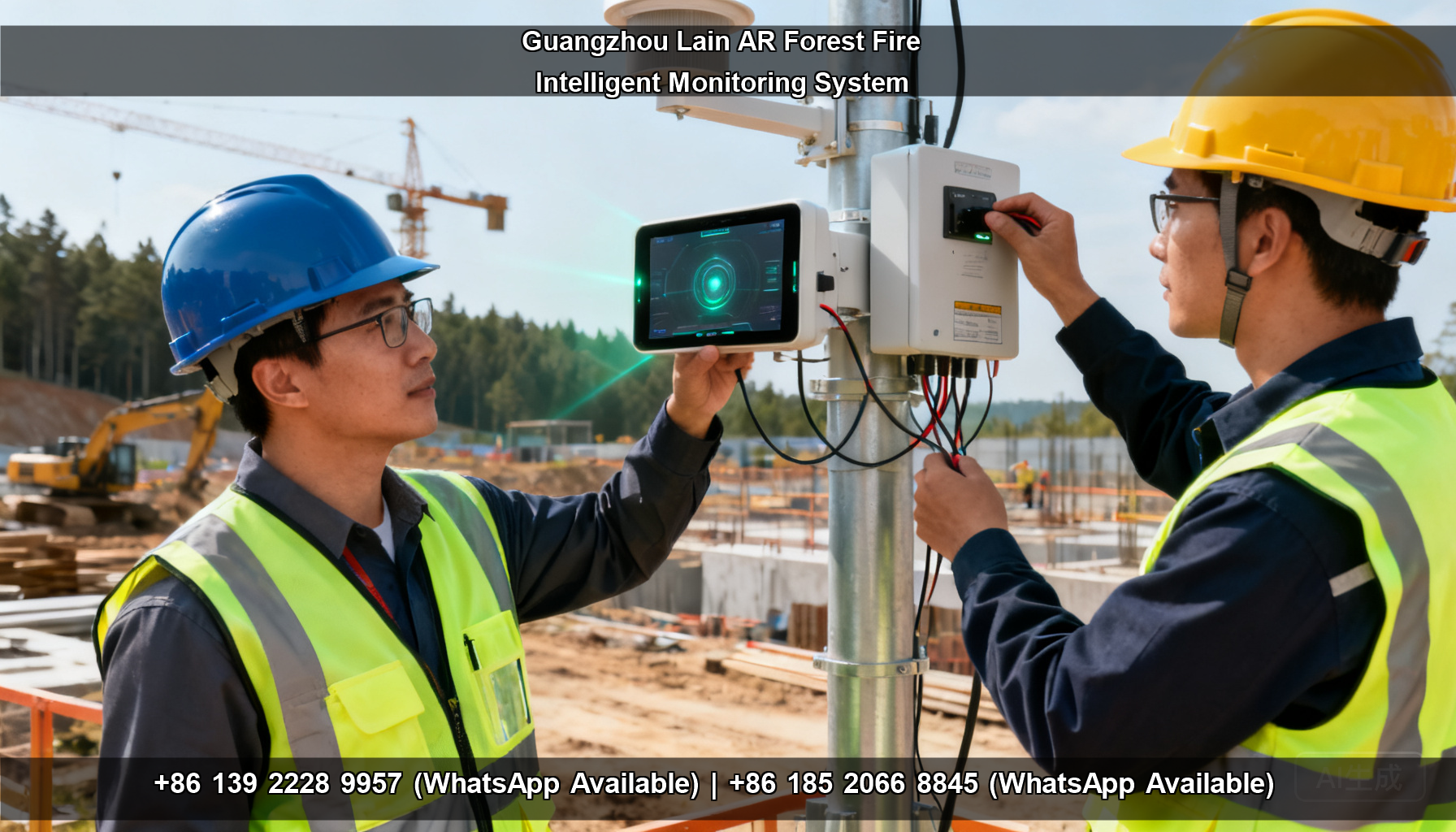
14.1 Project Organization Structure
This project implements a project manager responsibility system with a professional project team:
– Project manager (1): overall project management, overall responsibility for progress, quality, cost and safety; coordinating Party A, suppliers and construction teams; formulating construction plans and controlling the full process;
– Technical director (1): solution deepening, technical disclosure, system commissioning and technical research; solving construction technical difficulties; controlling system function and performance indicators;
– Construction team leader (1): on-site construction management, leading the construction team; controlling construction technology and quality, implementing safety specifications; managing personnel, tools and equipment;
– Weak current engineers (2): front-end equipment installation, cable laying, equipment wiring, waterproofing and other on-site construction work;
– Commissioning engineers (2): equipment parameter configuration, platform deployment, system joint commissioning, function testing and optimization;
– Safety officer (1): on-site safety management, implementing safety specifications, safety education and inspection, hazard investigation, zero-accident construction;
– Document officer (1): construction document compilation, recording, archiving, as-built document preparation and project document management.
14.2 Construction Preparation Work
#### 14.2.1 Technical Preparation
– Organize technical personnel to familiarize themselves with construction drawings and design solutions, conduct drawing review, clarifying construction points, technical requirements and quality standards;
– Conduct on-site survey to verify point coordinates, pole positions, cable routes and computer room environment, comparing with the design solution and adjusting deviations promptly;
– Compile detailed technical disclosure documents and special construction plans, with special disclosure for high-altitude operations, optical cable fusion and lightning grounding key processes.
#### 14.2.2 Material Preparation
– Formulate detailed equipment/material procurement plans per the configuration list and schedule, clarifying entry times;
– Inspect equipment and materials before entry, verifying model, specification and quantity, checking appearance integrity and product certificates/test reports; unqualified products strictly prohibited from entry;
– Prepare construction tools and testing instruments in advance, including high-altitude work vehicles, electric hammers, fusion splicers, optical power meters, multimeters and grounding resistance testers;
– On-site storage with dedicated areas, moisture, fire and theft prevention.
#### 14.2.3 On-Site Preparation
– Coordinate with Party A for construction entry procedures, clarifying construction areas, temporary power and water interfaces;
– Set up temporary office and material storage, arrange safety warning signs;
– Confirm high-altitude operation conditions and investigate on-site safety hazards;
– Conduct entry safety education and safety disclosure, sign safety responsibility letters.
14.3 Main Construction Technology and Methods
#### 14.3.1 Pole Foundation Construction
– Position and set out per design drawings to determine foundation position and dimensions;
– C30 concrete cast-in-place, excavation depth not less than 1.5m depending on geological conditions, crushed stone cushion compacted at the bottom;
– Pre-embed anchor bolts and grounding electrodes firmly, position deviation ≤5mm;
– Vibration compaction during pouring, surface leveling;
– Curing not less than 7 days; pole erection after strength meets design requirements;
– Grounding system connects the pole and grounding electrodes with galvanized flat steel, welding points anti-corrosion treated; grounding resistance tested ≤4Ω.
#### 14.3.2 Optical Cable Laying Construction
– Single-disk testing before laying (loss and appearance); unqualified cables not used;
– Direct burial depth not less than 0.8m with fine sand at the bottom, red brick protection before backfilling and compacting; overhead laying with steel strand suspension, uniform hook spacing, sag per specification, margin at turns and splices;
– Bending radius not less than 15× cable OD; pulling force within allowable cable tension;
– Fusion splicing with fusion splicer, average joint loss ≤0.08dB after testing;
– Clear labels at both ends, reserved length, end protection after termination.
#### 14.3.3 Front-End Equipment Installation
– Pole hoisting with crane, vertical erection, anchor bolt tightening, verticality correction with deviation ≤1‰;
– Firm bracket installation, level and vertical, angle adjustment margin reserved;
– Camera, PTZ and ball machine installation strictly per manual, aligned interfaces, tightened screws;
– Standard equipment wiring with firm crimping and clear labels; outdoor joints with double waterproofing (waterproof tape + heat-shrink tube);
– Equipment box installed level with neat internal wiring, strong/weak current separation and clear labels; lightning arresters connected in series at power and network inlet ends with reliable grounding;
– Power-on pre-inspection before energization.
#### 14.3.4 Center Computer Room Equipment Installation
– Cabinet installed level and vertical, firmly fixed, reliably grounded;
– Neat equipment racking with tightened screws and clear labels;
– Standard wiring with power, network and video wires classified and bound, strong/weak current separation, neat routing and accurate labels;
– Splicing screens installed level with uniform joints and aligned pictures, color and brightness consistency commissioned;
– Power-on testing after installation.
14.4 Quality Guarantee Measures
– Strictly construct per national construction specifications, design drawings and process standards; each process implements the “three-inspection system” (team self-inspection, team leader re-inspection, technical director final inspection); key processes invite Party A supervision acceptance;
– All hidden works must pass inspection before concealment, with hidden work acceptance records and image data retained;
– Qualified equipment and materials only; unqualified products prohibited from entry;
– Construction and quality records kept in sync with construction for complete and true as-built documents;
– Comprehensive function and performance testing after project completion; acceptance application only after all indicators meet standards;
– Reserve a certain proportion of spare materials and parts for later maintenance.
14.5 Safety and Civilized Construction
#### 14.5.1 Safety Construction Guarantee
– Strictly comply with national safety production regulations and Party A on-site safety management regulations, adhering to “safety first, prevention first”;
– High-altitude workers must hold certificates, wear safety belts and helmets; working under the influence or illegal operations strictly prohibited;
– Standard construction power with leakage protectors for temporary power; private wiring strictly prohibited;
– Open fire strictly prohibited in forest construction; fire-fighting equipment equipped;
– Daily pre-shift safety disclosure, regular safety inspections, timely hazard investigation and elimination;
– Safety emergency plans for sudden safety events, ensuring zero safety accidents.
#### 14.5.2 Civilized Construction Measures
– Neat material stacking, timely waste cleaning, clean site after work completion;
– Uniform construction personnel attire with work badges; civilized construction without damaging vegetation and facilities, minimizing impact on the forest environment;
– Noise control with reasonable construction time to avoid disturbing residents;
– Restore the construction area after completion, protecting the ecological environment.
15. After-Sales Service
15.1 Warranty Service Commitment
– The overall warranty period of this project is 1 year from the date of completion acceptance;
– Within the warranty period, non-human damage equipment faults are repaired and replaced free of charge; system software is upgraded free of charge and algorithms iteratively updated;
– Quarterly on-site inspections within the warranty period (4 times/year) for proactive hazard investigation and system optimization;
– 7×24-hour technical hotline support.
15.2 Fault Response Mechanism
– Dedicated project after-sales liaison with 7×24-hour hotline and WeChat support;
– Response within 30 minutes with preliminary solution; general faults solved within 2 hours by remote assistance;
– Major faults that cannot be solved remotely: engineers on site within 4 hours, system restored within 24 hours;
– Spare device service for core equipment; fault handling reports issued after handling with cause analysis and prevention measures.
15.3 Regular Inspection Service
– Quarterly on-site inspection within the warranty period, including: front-end equipment appearance check, cleaning, angle check and running status detection; line/interface/waterproof checks and lightning/grounding tests; center server, NVR, decoder and display equipment status checks; hard disk health, storage space and system garbage cleaning; platform, alarm and linkage function tests; system parameter optimization;
– Formal inspection report issued after each inspection and submitted to Party A for archiving.
15.4 Post-Warranty Services
– Lifetime maintenance service with annual maintenance agreements at cost;
– Long-term parts supply with compatible replacement solutions for discontinued products;
– Continuous technical support and system upgrade suggestions;
– Value-added services such as system expansion, function upgrades and renovation optimization.
16. Training Plan
16.1 Training Objectives
Through systematic theory and practice training, enable personnel in different positions to master corresponding skills:
– Duty operators: master daily system operation, alarm handling, video playback and other basic functions;
– O&M management personnel: master system basic principles, daily equipment maintenance and common fault troubleshooting;
– Management and command personnel: be familiar with overall system functions, AR command dispatch and data statistics reports.
16.2 Training Targets and Duration
| Training category | Targets | Duration | Form |
|---|---|---|---|
| Basic operation training | Monitoring duty personnel | 1 day | On-site explanation + practice + Q&A |
| O&M management training | IT/O&M personnel | 1 day | Theory + practice + fault simulation |
| Management command training | Project leaders/commanders | Half day | Function demonstration + operation guidance |
16.3 Training Contents
#### 16.3.1 Basic Operation Training
– Overall system introduction: architecture, equipment composition, functional value and workflow;
– AR monitoring platform operation: login, 3D scene roaming, view switching, label viewing, layer control;
– Video monitoring operation: real-time preview, PTZ control, zoom/focus, preset setting, picture switching;
– Alarm handling operation: alarm information viewing, alarm confirmation, alarm linkage control, alarm archiving, alarm record query;
– Video playback operation: retrieval by time/event/channel, playback control, video download and backup;
– Personnel/vehicle target viewing: target trajectory query, attribute viewing, alarm record query;
– Daily precautions and simple problem handling.
#### 16.3.2 O&M Management Training
– Front-end equipment principles and structure: camera, thermal imaging, PTZ, power, lightning arrester working principles;
– Daily equipment maintenance: cleaning, inspection, tightening, waterproofing;
– Center equipment maintenance: server, NVR, decoder, splicing screen daily inspection and maintenance;
– Common fault troubleshooting: device offline, picture abnormality, alarm abnormality, network fault, power fault troubleshooting;
– System parameter configuration: camera parameter adjustment, alarm rule configuration, linkage strategy modification, user permission management;
– System backup and recovery: configuration backup, data backup, system recovery;
– Safety management specifications and O&M precautions.
#### 16.3.3 Management Command Training
– Overall system functions and business applications;
– AR real-scene command dispatch: fire location, resource viewing, route planning, situational analysis;
– Fire spread simulation and auxiliary decision function operation;
– Data statistics and report viewing/export;
– System management and O&M coordination.
16.4 Training Methods and Assessment
– Combination of “theory explanation + on-site practice + Q&A communication” with hands-on teaching;
– Paper and electronic operation and maintenance manuals distributed;
– Theory and practice assessment after training; free retraining for failures; free retraining for personnel changes later.
17. Anonymous Typical Project Scenarios
The following cases are anonymous, generalized examples based on typical project implementations; no real customer names or locations are disclosed.
17.1 Forest Fire Monitoring Project of a Provincial Nature Reserve
Project Overview
An intelligent forest fire monitoring system was built for a provincial nature reserve, constructing 5 high-point monitoring stations and 1 district-level monitoring center, covering 300,000 mu (20,000 hectares) of forest area. The system adopts the front-end configuration of 360° panoramic cameras + dual-spectrum thermal imaging PTZs, equipped with an AR real-scene monitoring platform and smoke/fire intelligent identification algorithm, realizing full-area visualized monitoring and intelligent warning of the forest area.
Implementation Effect
After commissioning, the system successfully warned of multiple fire hazards and illegal fire use behaviors; the average fire discovery time was shortened from 2 hours of traditional manual lookout to 3 minutes, with a false alarm rate below 0.8%, greatly improving the reserve’s forest fire prevention capability and management efficiency, highly recognized by the customer.
17.2 Smart Security Project of a 4A Scenic Forest Park
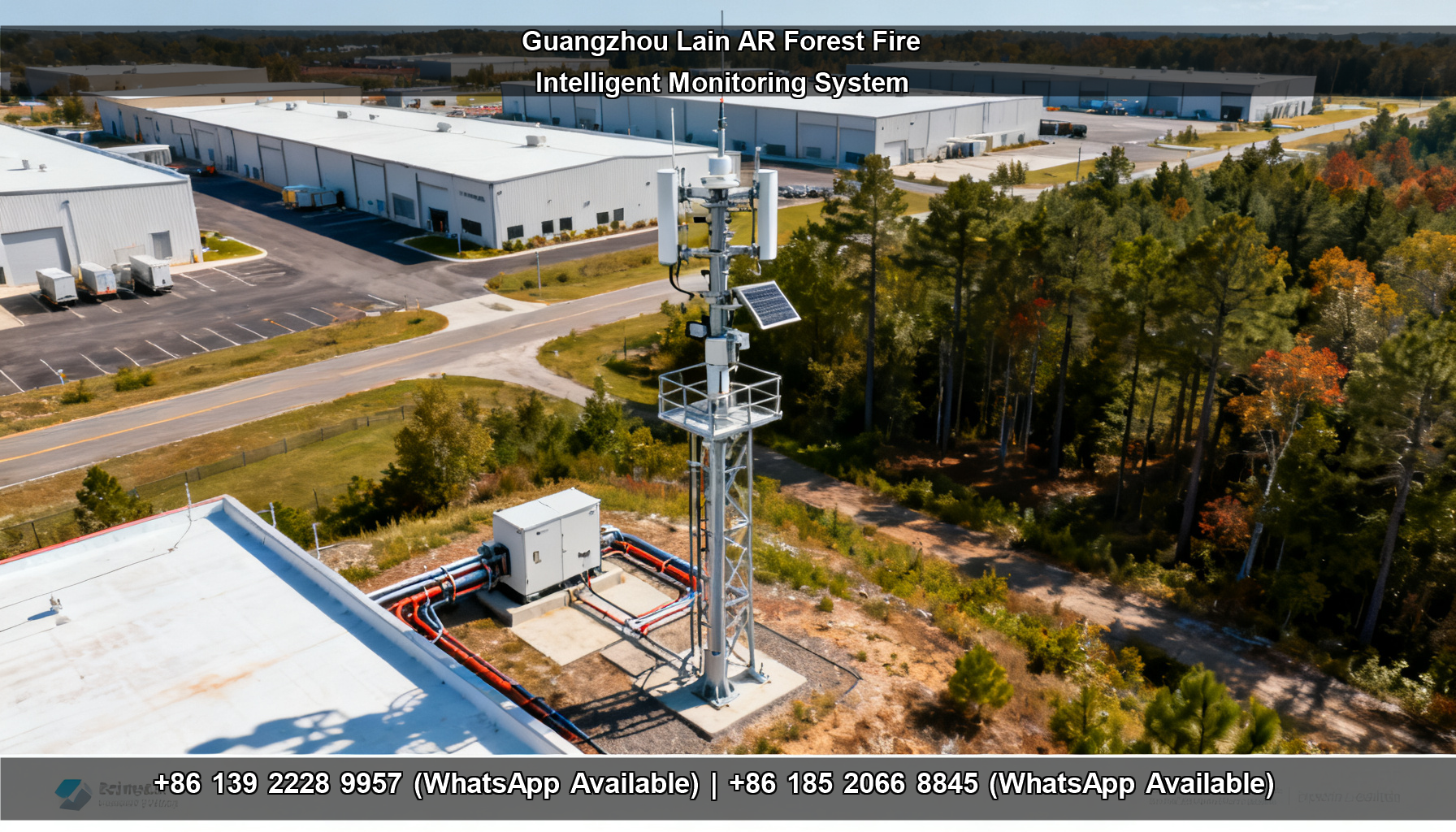
Project Overview
A smart security comprehensive system was built for a 4A scenic forest park, covering four modules: forest fire prevention, personnel control, vehicle management and perimeter security. Multiple thermal imaging cameras and HD intelligent PTZs were deployed, an AR real-scene monitoring platform was built, and intelligent functions such as smoke/fire identification, personnel/vehicle identification and crossing alarms were integrated, connected to the scenic area command center.
Implementation Effect
After the system went live, the scenic area realized whole-area one-map management, not only improving forest fire warning capability but also effectively controlling illegal mountain-entry personnel and vehicles; the scenic area safety accident rate dropped by 70%, management efficiency greatly improved, supporting the scenic area’s intelligent upgrade.
17.3 High-Temperature Operation Area Monitoring Project in a Forest Area
Project Overview
A high-temperature environment special monitoring system was built for a mining high-temperature operation area in a forest area. Multiple 180°C high-temperature-resistant thermal imaging cameras were deployed with dedicated high-temperature power supplies and high-temperature-resistant cables, connected to a unified monitoring platform with multi-level temperature alarm thresholds, realizing 24-hour uninterrupted temperature monitoring and fire warning of the high-temperature area.
Implementation Effect
The project solved the problem of ordinary cameras being unable to work stably in high-temperature areas, filled the monitoring blind spot, warned of multiple high-temperature abnormal hazards, effectively prevented fire risks and guaranteed the safety of the operation area.
18. SEO Optimization Section
18.1 Keyword Classification
Core primary keywords
AR forest fire monitoring system
High-conversion long-tail keywords
Dahua AR forest fire solution, 360-degree panoramic forest fire monitoring, thermal imaging smoke/fire identification monitoring system, fire automatic linkage tracking system, high-temperature-resistant forest fire camera
Industry traffic keywords
forest fire intelligent monitoring system, forest video monitoring solution, forest fire early warning system, forestry security monitoring equipment, forest fire monitoring system
Brand-specific keywords
KITOZER forest fire monitoring, Pioneer AR forest fire system, Lain forest fire solution
Dropdown/related search keywords
how much does a forest fire monitoring system cost, what equipment for forest fire monitoring, AR forest fire monitoring principle, thermal imaging forest fire accuracy, how to build a forest fire linkage system
18.2 Page Optimization Tags
– Title tag: AR Forest Fire Intelligent Monitoring System_Thermal Imaging Smoke/Fire Identification_360° Panoramic Linkage Warning Solution – KITOZER Pioneer
– Meta Keywords: AR forest fire monitoring system, 360-degree panoramic forest fire prevention, thermal imaging smoke/fire identification, fire automatic linkage tracking, high-temperature-resistant forest fire camera, forest video monitoring solution
– Meta Description: Professional AR forest fire intelligent monitoring system solution, adopting Dahua 360° panoramic + thermal imaging dual-fusion equipment, supporting smoke/fire intelligent identification, multi-device automatic linkage, AR real-scene visualization and 180°C high-temperature environment monitoring, suitable for various forest areas, forest parks and nature reserves.
– H1 tag: AR Forest Fire Intelligent Monitoring System Technical Design Solution
– H2 tags: Front-end AR Panoramic Fire Perception Unit, Fire Automatic Linkage Tracking System, AR Intelligent Monitoring Platform, Forest Fire Construction Plan, Forest Fire After-Sales Service
18.3 Internal Link Anchor Text
– Core anchor text: AR forest fire monitoring system
– Long-tail anchor text: 360-degree panoramic forest fire monitoring solution, thermal imaging smoke/fire identification system, fire automatic linkage tracking camera
– Related anchor text: intelligent security monitoring system, environmental monitoring system, computer room construction engineering
19. Official Contact Information
– Company Name: Guangzhou Lain Intelligent System Development Co., Ltd.
– Brand: KITOZER (Pioneer)
– Website: https://gdlain.com
– Tel: +86 139 2228 9957 (WeChat available), +86 185 2066 8845 (WeChat available)
– Address: No. 5 Huashan Road, Shilou Town, Panyu District, Guangzhou, China