1. Overview: Custom Enclosures Built Around Your Equipment
Standard racks and cabinets fit standard equipment — until they do not. Odd dimensions, mixed mounting, outdoor exposure, special protection classes, unusual cable entry layouts or a distinctive brand finish all push projects toward custom enclosures. Cabinet fabrication is the sheet-metal manufacturing service that turns those requirements into finished hardware: design support, laser cutting, CNC punching and bending, welding, surface treatment and assembly of 19″ racks, wall boxes, outdoor cabinets and instrument enclosures, built to customer drawings or to our engineering.
Guangzhou Lain Intelligent System Development Co., Ltd. operates its own sheet-metal fabrication for the enclosures used across its monitoring, power and container products — and offers the same workshop to customers who need custom enclosures for their own equipment. This guide explains the fabrication process, materials, finishes, quality control and lead times, and how to commission a custom cabinet that arrives right the first time.
2. What Cabinet Fabrication Covers
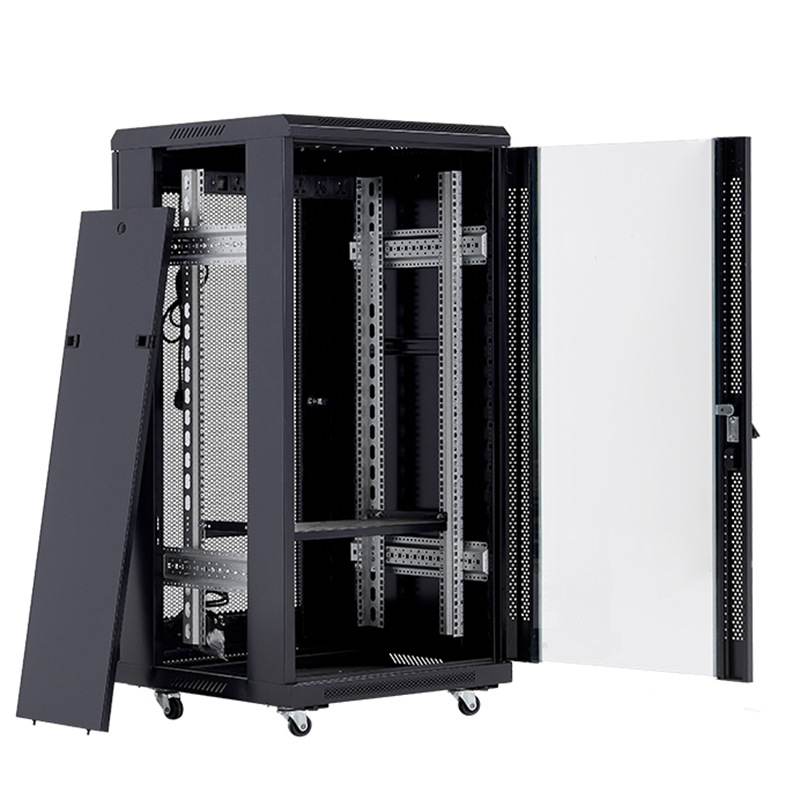
Custom enclosure projects range from a single prototype to production batches of hundreds. Typical deliverables include:
- 19″ racks and server cabinets — standard and deep versions, vented or solid doors, for data rooms and network closets.
- Wall-mount boxes and instrument enclosures — compact housings for controllers, sensors, terminals and small electronics.
- Outdoor cabinets — weatherproof enclosures with IP-rated doors, sun shields and thermal provisions for telecom and industrial sites.
- Battery cabinets, power distribution enclosures and custom sub-racks — built around the specific hardware they must hold.
- Non-standard one-offs — retrofit housings, operator consoles, shelter furniture and test fixtures.
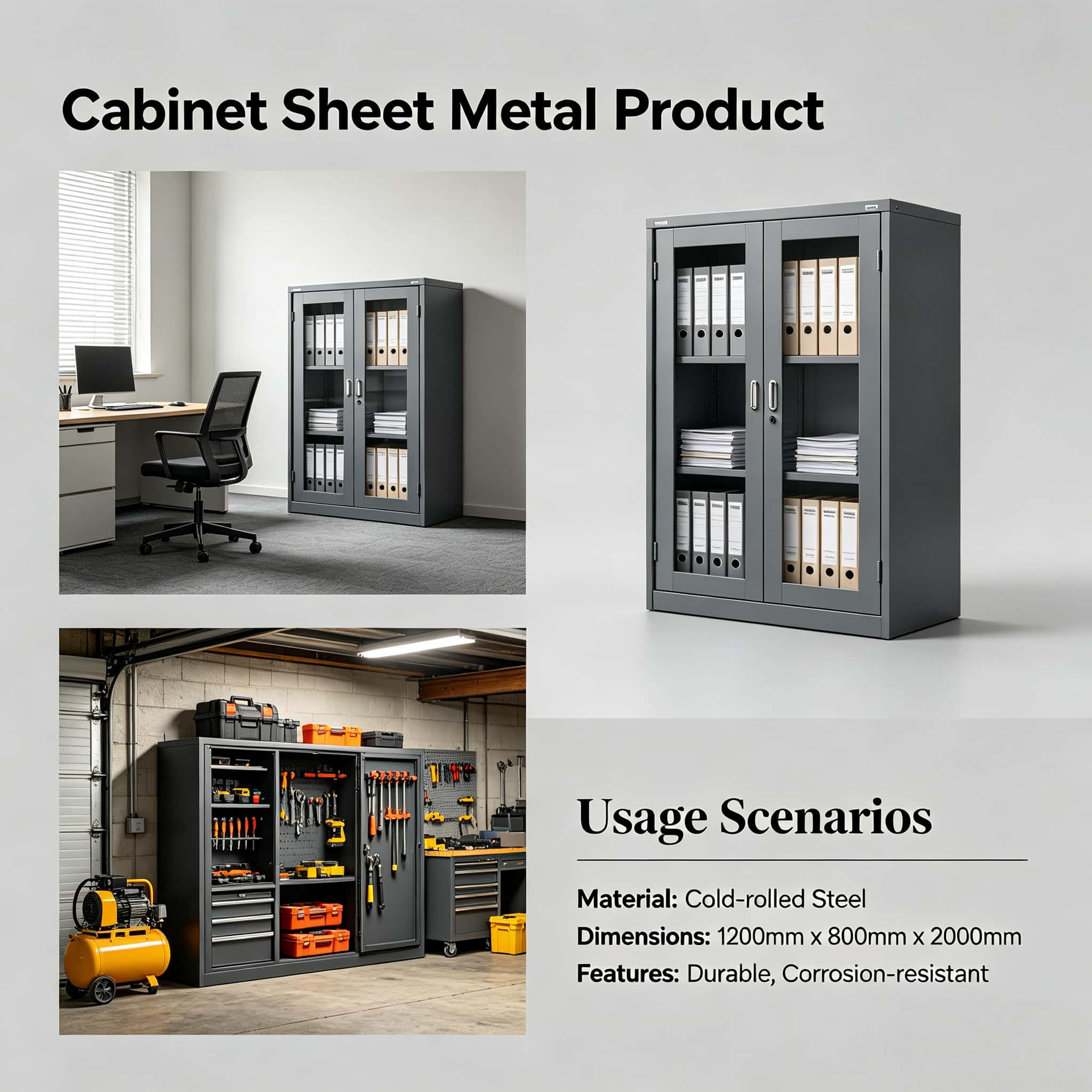
Because Lain both fabricates and uses these enclosures, the engineering is practical: designs are reviewed for manufacturability, service access, cable management and thermal behavior before a single sheet is cut.
3. The Fabrication Process
3.1 Design and Engineering Support
Projects start from a sketch, a sample, or a requirements list. Lain engineers produce production drawings with material and finish recommendations, check the design for bend radii, tolerances and assembly sequence, and confirm critical dimensions with the customer before cutting. For projects that need to match an existing product line, existing drawings can be adapted to new sizes, materials or finishes.
3.2 Laser Cutting and CNC Punching
Sheet metal is cut on laser and CNC punching equipment, producing accurate blanks with clean edges for doors, panels, mounting plates and brackets. Modern nesting keeps material waste low, which matters for both cost and lead time on production runs.
3.3 CNC Bending and Forming
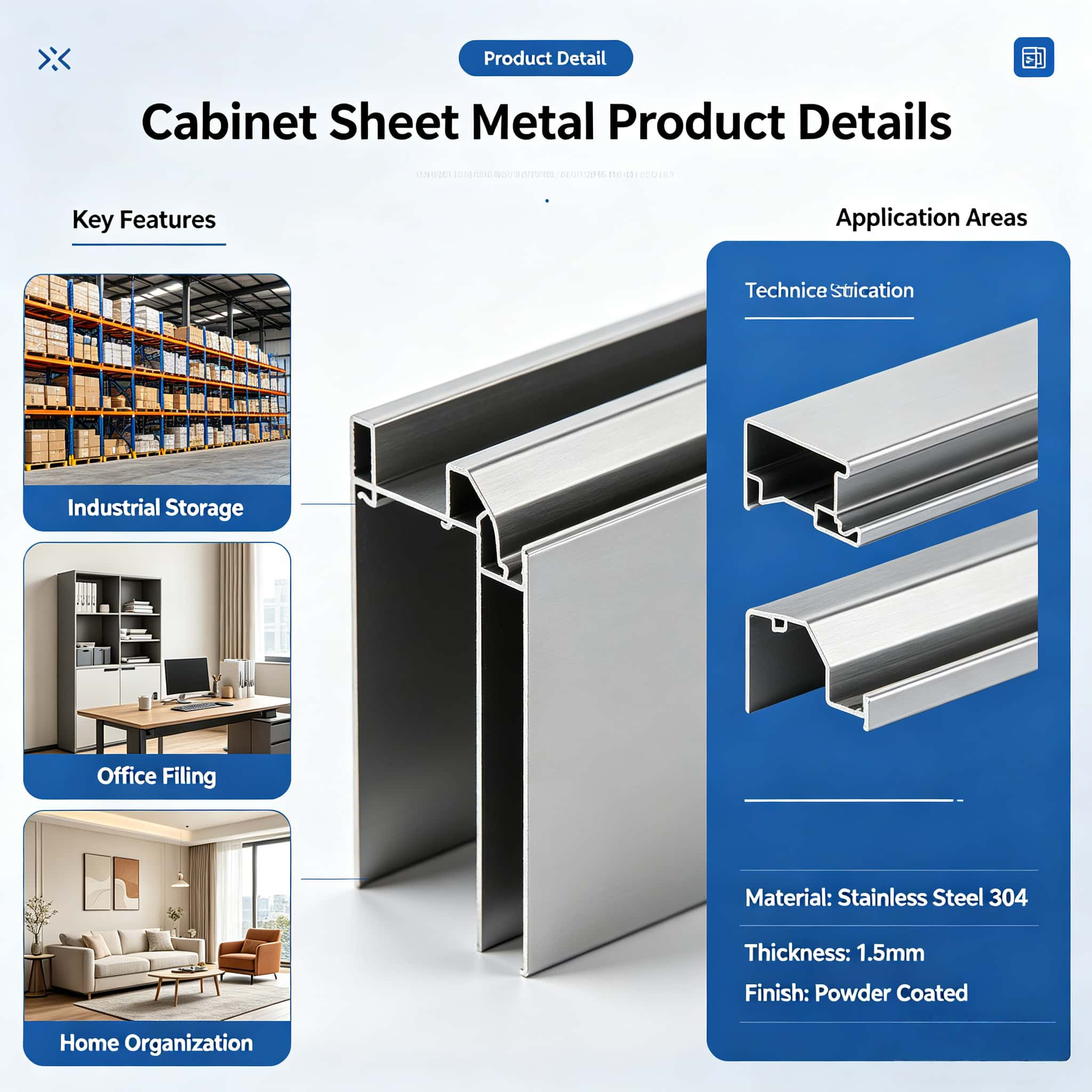
Blanks are formed on CNC press brakes into precise 3D shapes: cabinet frames, door profiles, flanges and mounting rails. Programmed bending gives repeatable angles across a batch, so doors align, panels sit flat and hardware mounts line up from unit to unit. Tolerances are held to what electronic enclosures need — frames stay square and rack mounting holes align across the full height of the cabinet.
3.4 Welding
Where frames must be rigid — load-bearing racks, outdoor cabinets, heavy equipment enclosures — robotic and manual welding joins the formed parts. Robotic welding gives consistent, clean seams on repetitive joints; manual welding covers complex or low-volume assemblies. Welded frames are checked for squareness and twist before they move to finishing.
3.5 Assembly and Hardware
Finished parts are assembled with the specified hardware: hinges, locks and handles, gaskets and seals, mounting rails, earth studs, cable entries and glands, fans or filter grilles, and silk-screened labels and logos. Assembly is where the cabinet becomes a product — doors align and close smoothly, panels fit without forcing, and every accessory is fitted and checked.
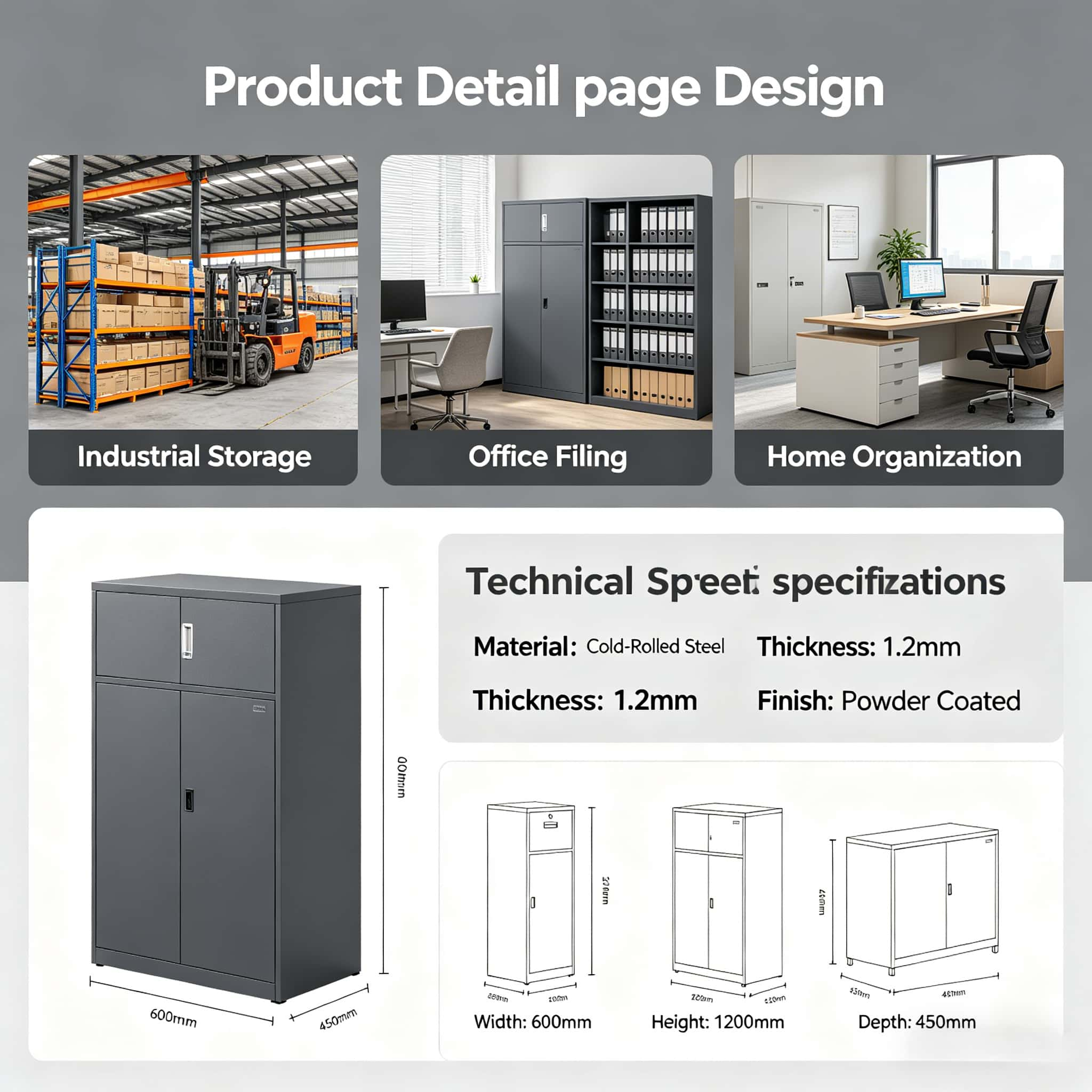
4. Materials: Choosing What the Cabinet Is Made Of
| Material | Typical Use | Key Properties |
|---|---|---|
| Cold-rolled steel (SPCC/SECC) | Indoor racks, wall boxes, panels | Good strength, clean surface, easy to paint |
| Galvanized steel | Outdoor cabinets, battery areas | Corrosion resistance before coating |
| Stainless steel 304/316 | Coastal, food, chemical and hygienic sites | Maximum corrosion resistance |
| Aluminum alloys | Lightweight, portable and transportable enclosures | Low weight, good corrosion behavior |
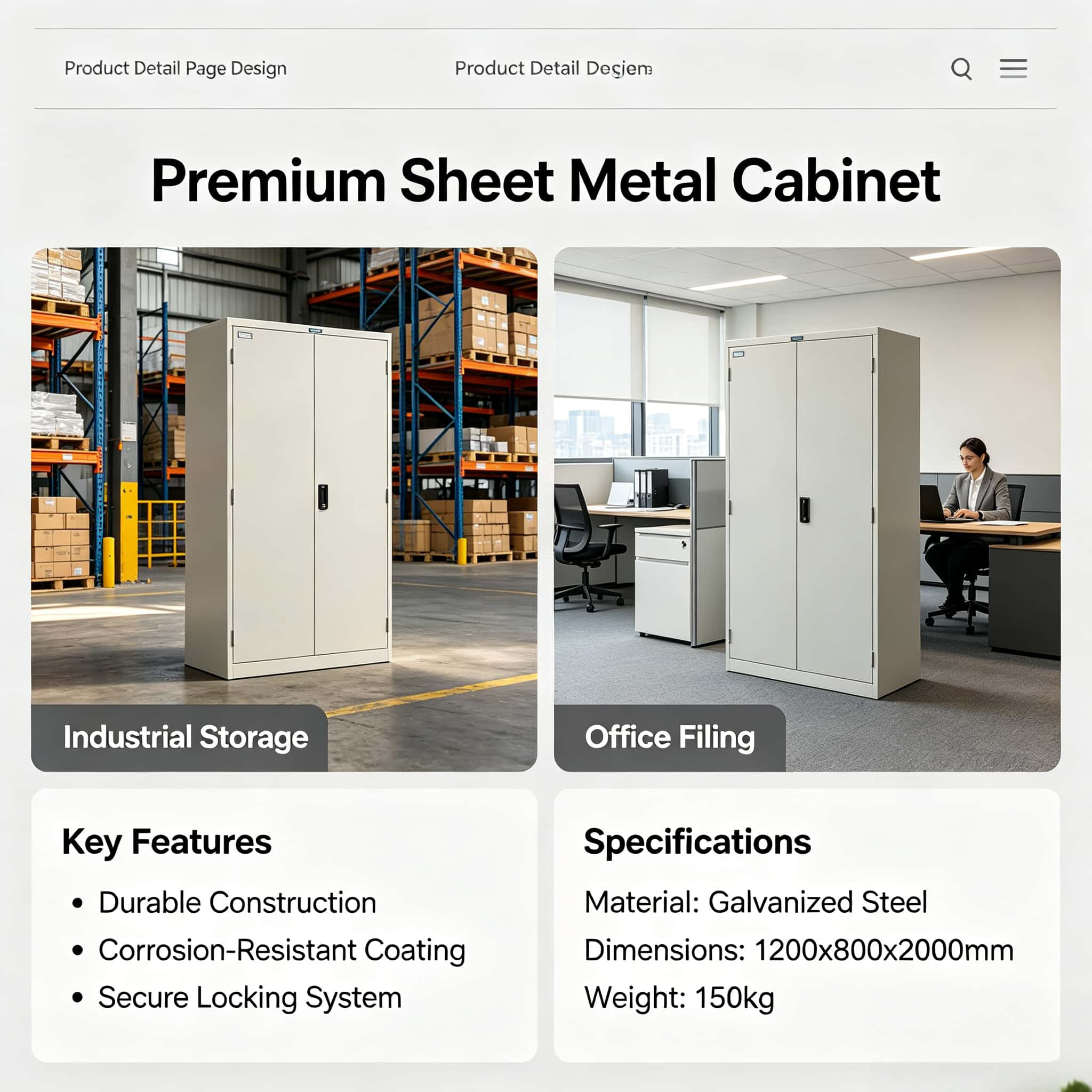
Sheet gauges commonly run from 0.6 mm for internal panels and doors up to 3.0 mm and beyond for load-bearing frames and outdoor structures. Material choice balances mechanical load, corrosion environment and cost: indoor electronics rarely need stainless, while an outdoor cabinet on a coastal rooftop may justify it. Lain advises on material and gauge during the design review so the enclosure is neither over- nor under-specified.
5. Surface Treatment and Finishing
The finish determines how the cabinet looks in year one — and how it survives year ten. The standard line is:
- Degreasing and cleaning — removes oil and process residues from the formed parts.
- Phosphating or conversion coating — prepares the surface and improves paint adhesion and corrosion resistance.
- Powder coating — applied in RAL colors and textures; thick, tough and uniform, powder coating is the default for indoor and outdoor enclosures alike.
- Hot-dip galvanizing (where specified) — for outdoor structural parts that need maximum corrosion protection.
- Labeling — silk-screen printing or adhesive labels for logos, warning marks, rating plates and terminal identification.
Outdoor products receive weather-resistant coating systems matched to the site environment, and all coated parts are inspected for coverage, thickness and appearance before assembly.
6. Quality Control and Inspection
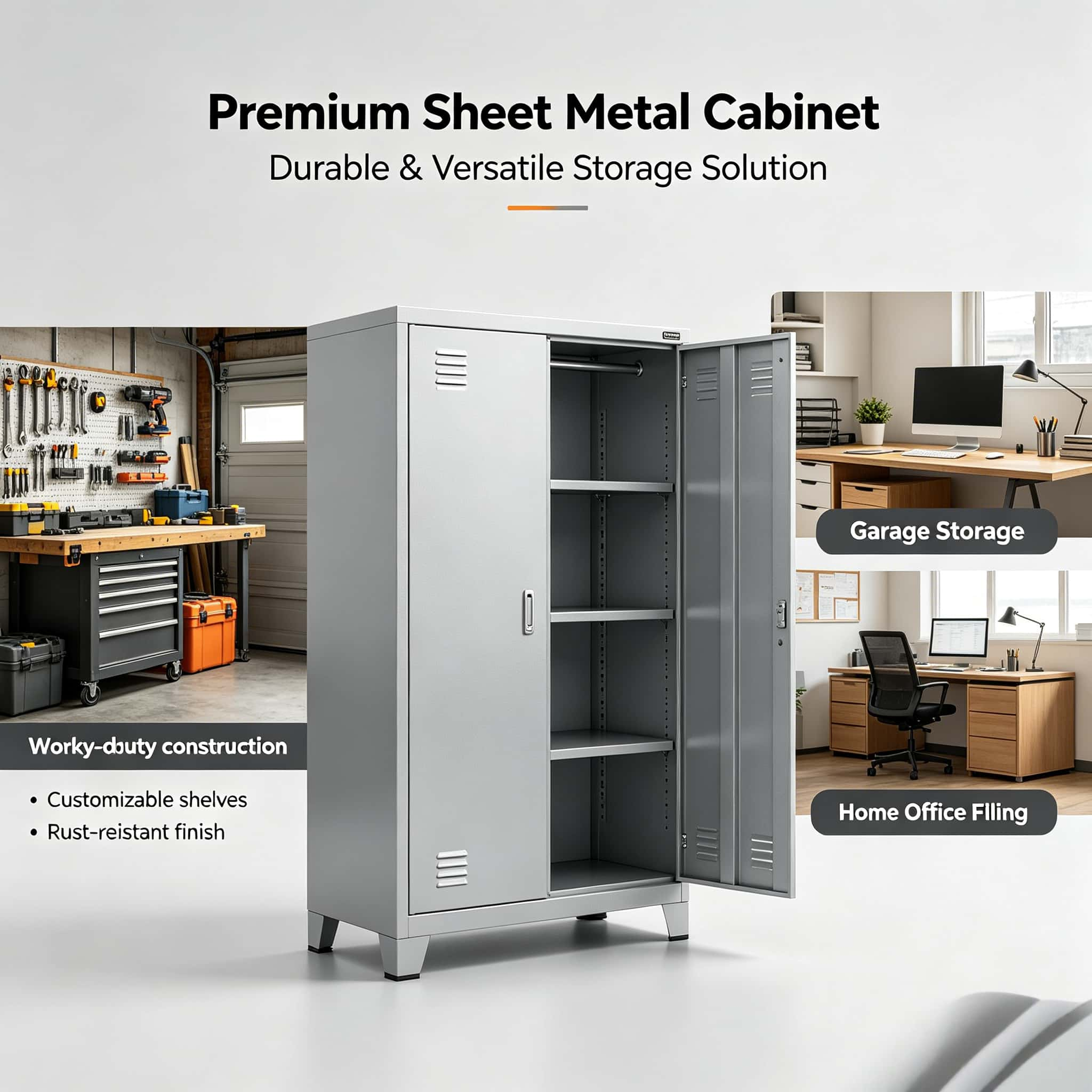
Quality is checked at three points. First, incoming material is verified against the specification. Second, in-process checks confirm bend accuracy, weld quality and coating before assembly. Third, each finished batch is inspected for dimensions, finish and fit — doors operate, panels fit, hardware functions, and critical mounting dimensions are measured against the drawing. Sample approval precedes mass production: the customer approves a first article (or a pre-production sample) so that any requested change is captured before the full batch runs.
Lain also provides the documentation that goes with professional equipment: material certificates, dimensional inspection reports, and the drawings and test records for the batch.
7. Lead Times, Packaging and Delivery
Typical lead times are 10-20 days for prototypes and first articles and 15-25 days for production runs, depending on batch size, materials and finish. Packaging is planned for the destination: individual protective wrapping, palletized cartons for small enclosures, and timber crating for large or fragile cabinets, all suitable for export shipment by sea, air or express. Lain ships enclosures worldwide and coordinates with the customer’s forwarder or handles delivery door-to-door.
8. How to Commission a Custom Enclosure
- Requirements — equipment dimensions, weights, mounting, environment (indoor/outdoor), protection class and finish.
- Drawing or sketch — customer drawing, sample, or a requirements list for Lain engineering.
- Design review — material and gauge, tolerances, manufacturability, thermal and cable provisions.
- Quotation — price and lead time for prototype and production quantities.
- First article — sample approval before mass production.
- Production, inspection and shipment — with the agreed documentation and packaging.
9. Frequently Asked Questions
Cabinet Fabrication FAQ
1. What types of enclosures can you fabricate?
19″ racks and server cabinets, wall boxes, instrument enclosures, outdoor cabinets, battery cabinets, power distribution enclosures and custom one-offs.
2. Do I need to supply drawings?
No — you can send a sketch, a sample or a requirements list, and Lain engineering produces the production drawings for approval.
3. Which materials do you work with?
Cold-rolled steel (SPCC/SECC), galvanized steel, stainless steel 304/316 and aluminum alloys, in gauges from 0.6 mm to 3.0 mm and beyond.
4. What tolerances can you hold?
Tolerances suited to electronic enclosures: frames stay square, doors align and rack mounting holes line up across the full cabinet height.
5. What finishes are available?
Degreasing, phosphating, powder coating in RAL colors and textures, hot-dip galvanizing for outdoor parts, and silk-screen labeling.
6. Can you make outdoor enclosures?
Yes — weatherproof cabinets with IP-rated doors, sun shields, gaskets and thermal provisions for telecom and industrial sites.
7. What are typical lead times?
10-20 days for prototypes and first articles, 15-25 days for production runs, depending on batch size, material and finish.
8. Do you provide samples before mass production?
Yes — sample approval precedes mass production so any change is captured before the full batch runs.
9. Can you match a specific RAL color or logo?
Yes — powder coating is available in RAL colors and textures, and logos, warning marks and rating plates can be silk-screened or labeled.
10. Do you offer design support?
Yes — Lain engineers review designs for manufacturability, service access, cable management and thermal behavior, and recommend material and finish.
11. How do you package for export?
Individual wrapping plus palletized cartons for small enclosures and timber crating for large cabinets, all suitable for sea, air or express shipment.
12. Can you fabricate small prototype batches?
Yes — single-unit prototypes and first articles are a standard part of the service before production quantities.
10. Related Solutions
- General Outdoor Cabinets
- Control Cabinet Fabrication
- Cabinet Thermal Control Module
- 4G/5G Base Station Hub
- Accommodation Container
- Cold-Chain Container
About Guangzhou Lain Intelligent System Development Co., Ltd.
Guangzhou Lain Intelligent System Development Co., Ltd. operates its own sheet-metal fabrication workshop — design, laser cutting, CNC bending, welding, finishing and assembly of custom racks, cabinets and enclosures for customers worldwide. From single rooms to enterprise facilities, KITOZER provides design, manufacturing, integration, testing and after-sales service. Export and support scope are confirmed on the quotation.
Contact us for a free technical consultation:
- Company: Guangzhou Lain Intelligent System Development Co., Ltd.
- Address: 1st Floor, Building A, Chaotian Industrial Park, Zhongrun Industrial Park, Shilou Town, Panyu District, Guangzhou, Guangdong, China
- Tel/WeChat: +86 135-0923-8849 | +86 135-0923-8849
- WhatsApp: +86 135-0923-8849
- Email: zl19068534140@gmail.com
- Website: www.gdlain.com | Request a Quote
Typical response time: within one business day. Project references, drawings and samples are available on request.