KITOZER Cable Tray / Cable Ladder: Working Principle, Selection, Installation, FAQ Guide
1. Overview
KITOZER cable tray is a premium cable support system manufactured by Guangzhou Laian Intelligent System Development Co., Ltd. Cable trays are essential in every modern electrical installation, organizing and protecting power, control, and data cables. KITOZER produces channel trays, ladder trays, perforated trays, and modular trays in galvanized, stainless steel, aluminum, and powder-coated finishes. With years of sheet metal experience, KITOZER delivers trays that are dimensionally accurate, corrosion resistant, and mechanically sound.
Cable tray is a steel structure system that supports and routes electrical and data cables in buildings and industrial facilities. KITOZER cable tray is manufactured by Guangzhou Laian Intelligent System Development Co., Ltd. It is widely used in data centers, telecom rooms, power substations, industrial plants, commercial buildings, hospitals, and airports. Cable tray provides an organized, safe, and accessible pathway for cables, reducing electromagnetic interference and simplifying maintenance. KITOZER offers channel tray, ladder tray, tray with perforated bottom, and modular tray systems in galvanized steel, stainless steel, aluminum, and powder-coated finishes.
The load rating of a cable tray is the most important selection parameter. KITOZER trays are designed and tested for uniformly distributed loads. Light-duty trays suit small signal cables; medium-duty trays suit network and control cables; heavy-duty trays suit large power cables. The designer must sum the weights of all cables on the tray and apply a 1.5 safety factor. The actual load should not exceed 80 percent of the rated load. Spans are typically 2 meters or 3 meters. Longer spans require thicker sheet steel.
Cable tray installation includes support fabrication, tray joining, bend handling, branch handling, and grounding. Supports are usually angle steel brackets or rod hangers. Horizontal support spacing should not exceed 2 meters. Trays are joined with splice plates and bolts. Bends use factory-made elbows with bending radius matching the largest cable. The entire tray run must be bonded to earth with jumper wires. Grounding resistance should not exceed 4 ohms.
KITOZER cable trays are available in hot-dip galvanized steel, 304 or 316L stainless steel, aluminum alloy, and powder-coated steel. Galvanized trays suit general indoor environments. Stainless steel trays suit chemical plants, coastal areas, and clean rooms. Aluminum trays are lightweight and suit ceiling installations. Powder-coated trays offer attractive finishes for commercial buildings. Sheet thickness ranges from 1.0 mm to 3.0 mm depending on width and load.
Fire-rated cable trays delay flame spread. KITOZER fire-rated trays use intumescent fire coatings and fire barriers. Penetrations through fire-rated walls and floors must be sealed with fire mortar, fire blocks, or fire boards. Data centers and high-rise buildings must strictly follow fire codes. KITOZER supplies compatible fire stopping materials and guidance.
Cable tray grounding is a mandatory safety requirement. KITOZER requires every tray section to be electrically bonded and connected to the building earth. Jumper wires of at least 4 mm2 copper connect adjacent sections. The tray run should be bonded to earth at least every 30 meters and at every start, end, and bend. Proper grounding protects personnel and provides a reference plane for shielded cables.
Shielded trays suppress electromagnetic interference. KITOZER channel trays with covers form an almost closed metal shell that attenuates external fields. Shield continuity depends on overlapping joints and good grounding. Power and signal cables must be separated by metal dividers when run in the same tray. Shielded trays are essential near variable-frequency drives, telecom base stations, and medical equipment.
KITOZER recommends inspecting cable trays every six months. Check bolt tightness, coating integrity, grounding continuity, and deflection. Repair scratches promptly. Do not exceed fill ratio when adding cables. Keep trays clean and free of debris. Never stand on or hang loads from trays. Proper maintenance extends tray life and prevents hazards.
Cable tray is a steel structure system that supports and routes electrical and data cables in buildings and industrial facilities. KITOZER cable tray is manufactured by Guangzhou Laian Intelligent System Development Co., Ltd. It is widely used in data centers, telecom rooms, power substations, industrial plants, commercial buildings, hospitals, and airports. Cable tray provides an organized, safe, and accessible pathway for cables, reducing electromagnetic interference and simplifying maintenance. KITOZER offers channel tray, ladder tray, tray with perforated bottom, and modular tray systems in galvanized steel, stainless steel, aluminum, and powder-coated finishes.
The load rating of a cable tray is the most important selection parameter. KITOZER trays are designed and tested for uniformly distributed loads. Light-duty trays suit small signal cables; medium-duty trays suit network and control cables; heavy-duty trays suit large power cables. The designer must sum the weights of all cables on the tray and apply a 1.5 safety factor. The actual load should not exceed 80 percent of the rated load. Spans are typically 2 meters or 3 meters. Longer spans require thicker sheet steel.
Cable tray installation includes support fabrication, tray joining, bend handling, branch handling, and grounding. Supports are usually angle steel brackets or rod hangers. Horizontal support spacing should not exceed 2 meters. Trays are joined with splice plates and bolts. Bends use factory-made elbows with bending radius matching the largest cable. The entire tray run must be bonded to earth with jumper wires. Grounding resistance should not exceed 4 ohms.
KITOZER cable trays are available in hot-dip galvanized steel, 304 or 316L stainless steel, aluminum alloy, and powder-coated steel. Galvanized trays suit general indoor environments. Stainless steel trays suit chemical plants, coastal areas, and clean rooms. Aluminum trays are lightweight and suit ceiling installations. Powder-coated trays offer attractive finishes for commercial buildings. Sheet thickness ranges from 1.0 mm to 3.0 mm depending on width and load.

2. Working Principle and Structure
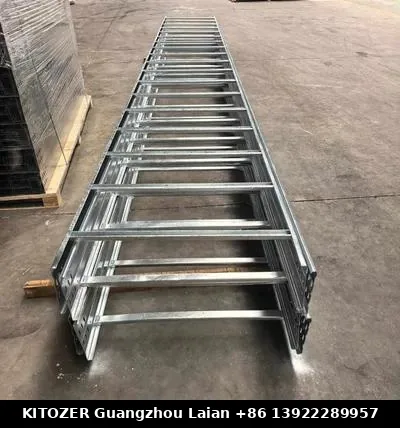
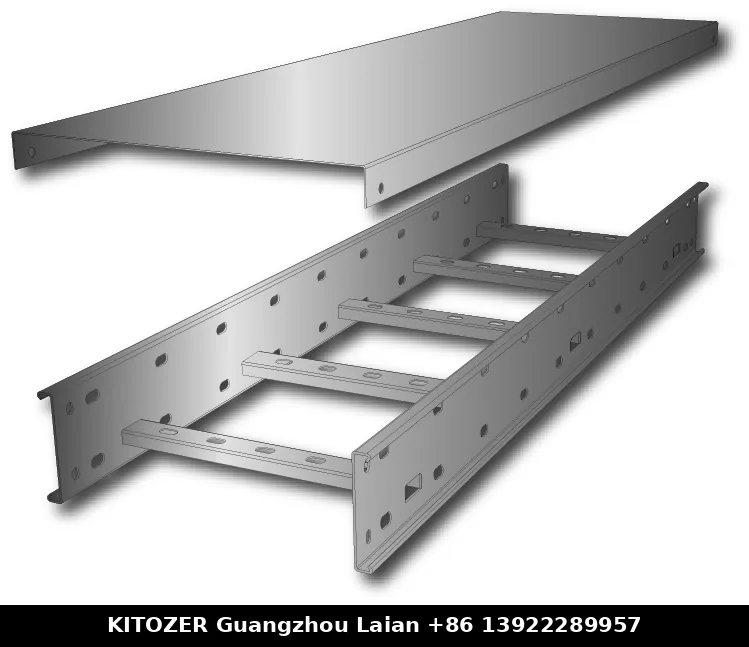
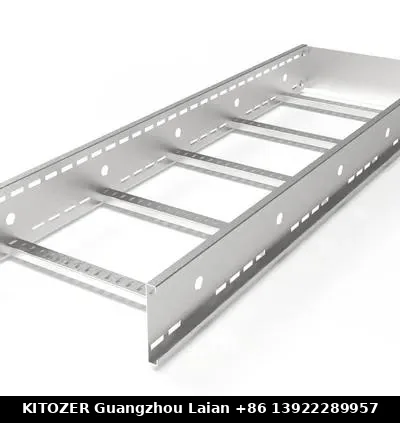
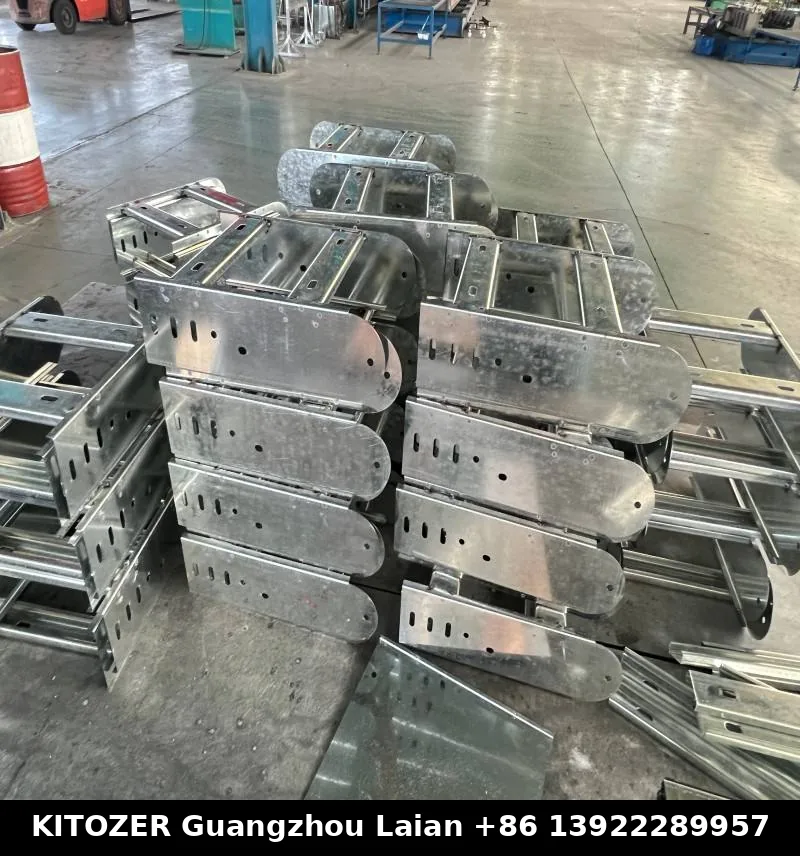
A cable tray is a continuous metal pathway that supports cables mechanically. It consists of straight sections, elbows, tees, crosses, reducers, end caps, and supports. Cables rest on the tray bottom or rungs and are tied at intervals. The tray itself does not carry current or signals; it provides mechanical support and, when grounded, an equipotential reference.
Cable tray is a steel structure system that supports and routes electrical and data cables in buildings and industrial facilities. KITOZER cable tray is manufactured by Guangzhou Laian Intelligent System Development Co., Ltd. It is widely used in data centers, telecom rooms, power substations, industrial plants, commercial buildings, hospitals, and airports. Cable tray provides an organized, safe, and accessible pathway for cables, reducing electromagnetic interference and simplifying maintenance. KITOZER offers channel tray, ladder tray, tray with perforated bottom, and modular tray systems in galvanized steel, stainless steel, aluminum, and powder-coated finishes.
The load rating of a cable tray is the most important selection parameter. KITOZER trays are designed and tested for uniformly distributed loads. Light-duty trays suit small signal cables; medium-duty trays suit network and control cables; heavy-duty trays suit large power cables. The designer must sum the weights of all cables on the tray and apply a 1.5 safety factor. The actual load should not exceed 80 percent of the rated load. Spans are typically 2 meters or 3 meters. Longer spans require thicker sheet steel.
Cable tray installation includes support fabrication, tray joining, bend handling, branch handling, and grounding. Supports are usually angle steel brackets or rod hangers. Horizontal support spacing should not exceed 2 meters. Trays are joined with splice plates and bolts. Bends use factory-made elbows with bending radius matching the largest cable. The entire tray run must be bonded to earth with jumper wires. Grounding resistance should not exceed 4 ohms.
KITOZER cable trays are available in hot-dip galvanized steel, 304 or 316L stainless steel, aluminum alloy, and powder-coated steel. Galvanized trays suit general indoor environments. Stainless steel trays suit chemical plants, coastal areas, and clean rooms. Aluminum trays are lightweight and suit ceiling installations. Powder-coated trays offer attractive finishes for commercial buildings. Sheet thickness ranges from 1.0 mm to 3.0 mm depending on width and load.
Fire-rated cable trays delay flame spread. KITOZER fire-rated trays use intumescent fire coatings and fire barriers. Penetrations through fire-rated walls and floors must be sealed with fire mortar, fire blocks, or fire boards. Data centers and high-rise buildings must strictly follow fire codes. KITOZER supplies compatible fire stopping materials and guidance.
Cable tray grounding is a mandatory safety requirement. KITOZER requires every tray section to be electrically bonded and connected to the building earth. Jumper wires of at least 4 mm2 copper connect adjacent sections. The tray run should be bonded to earth at least every 30 meters and at every start, end, and bend. Proper grounding protects personnel and provides a reference plane for shielded cables.
Shielded trays suppress electromagnetic interference. KITOZER channel trays with covers form an almost closed metal shell that attenuates external fields. Shield continuity depends on overlapping joints and good grounding. Power and signal cables must be separated by metal dividers when run in the same tray. Shielded trays are essential near variable-frequency drives, telecom base stations, and medical equipment.
KITOZER recommends inspecting cable trays every six months. Check bolt tightness, coating integrity, grounding continuity, and deflection. Repair scratches promptly. Do not exceed fill ratio when adding cables. Keep trays clean and free of debris. Never stand on or hang loads from trays. Proper maintenance extends tray life and prevents hazards.
Cable tray is a steel structure system that supports and routes electrical and data cables in buildings and industrial facilities. KITOZER cable tray is manufactured by Guangzhou Laian Intelligent System Development Co., Ltd. It is widely used in data centers, telecom rooms, power substations, industrial plants, commercial buildings, hospitals, and airports. Cable tray provides an organized, safe, and accessible pathway for cables, reducing electromagnetic interference and simplifying maintenance. KITOZER offers channel tray, ladder tray, tray with perforated bottom, and modular tray systems in galvanized steel, stainless steel, aluminum, and powder-coated finishes.
The load rating of a cable tray is the most important selection parameter. KITOZER trays are designed and tested for uniformly distributed loads. Light-duty trays suit small signal cables; medium-duty trays suit network and control cables; heavy-duty trays suit large power cables. The designer must sum the weights of all cables on the tray and apply a 1.5 safety factor. The actual load should not exceed 80 percent of the rated load. Spans are typically 2 meters or 3 meters. Longer spans require thicker sheet steel.
Cable tray installation includes support fabrication, tray joining, bend handling, branch handling, and grounding. Supports are usually angle steel brackets or rod hangers. Horizontal support spacing should not exceed 2 meters. Trays are joined with splice plates and bolts. Bends use factory-made elbows with bending radius matching the largest cable. The entire tray run must be bonded to earth with jumper wires. Grounding resistance should not exceed 4 ohms.
KITOZER cable trays are available in hot-dip galvanized steel, 304 or 316L stainless steel, aluminum alloy, and powder-coated steel. Galvanized trays suit general indoor environments. Stainless steel trays suit chemical plants, coastal areas, and clean rooms. Aluminum trays are lightweight and suit ceiling installations. Powder-coated trays offer attractive finishes for commercial buildings. Sheet thickness ranges from 1.0 mm to 3.0 mm depending on width and load.
3. Technical Specifications
| Parameter | Channel Tray | Ladder Tray | Perforated Tray |
|---|---|---|---|
| Width | 50-1000 mm | 200-1200 mm | 100-800 mm |
| Height | 50-150 mm | 60-150 mm | 50-100 mm |
| Thickness | 1.0-2.5 mm | 1.5-3.0 mm | 1.2-2.5 mm |
| Span | 1.5-2 m | 2-3 m | 2 m |
| Finish | Galv/PP/SS | Hot-dip/SS | Galv/PP |
| Cable type | Signal/data | Power/high-voltage | General power |
Cable tray is a steel structure system that supports and routes electrical and data cables in buildings and industrial facilities. KITOZER cable tray is manufactured by Guangzhou Laian Intelligent System Development Co., Ltd. It is widely used in data centers, telecom rooms, power substations, industrial plants, commercial buildings, hospitals, and airports. Cable tray provides an organized, safe, and accessible pathway for cables, reducing electromagnetic interference and simplifying maintenance. KITOZER offers channel tray, ladder tray, tray with perforated bottom, and modular tray systems in galvanized steel, stainless steel, aluminum, and powder-coated finishes.
The load rating of a cable tray is the most important selection parameter. KITOZER trays are designed and tested for uniformly distributed loads. Light-duty trays suit small signal cables; medium-duty trays suit network and control cables; heavy-duty trays suit large power cables. The designer must sum the weights of all cables on the tray and apply a 1.5 safety factor. The actual load should not exceed 80 percent of the rated load. Spans are typically 2 meters or 3 meters. Longer spans require thicker sheet steel.
Cable tray installation includes support fabrication, tray joining, bend handling, branch handling, and grounding. Supports are usually angle steel brackets or rod hangers. Horizontal support spacing should not exceed 2 meters. Trays are joined with splice plates and bolts. Bends use factory-made elbows with bending radius matching the largest cable. The entire tray run must be bonded to earth with jumper wires. Grounding resistance should not exceed 4 ohms.
KITOZER cable trays are available in hot-dip galvanized steel, 304 or 316L stainless steel, aluminum alloy, and powder-coated steel. Galvanized trays suit general indoor environments. Stainless steel trays suit chemical plants, coastal areas, and clean rooms. Aluminum trays are lightweight and suit ceiling installations. Powder-coated trays offer attractive finishes for commercial buildings. Sheet thickness ranges from 1.0 mm to 3.0 mm depending on width and load.
Fire-rated cable trays delay flame spread. KITOZER fire-rated trays use intumescent fire coatings and fire barriers. Penetrations through fire-rated walls and floors must be sealed with fire mortar, fire blocks, or fire boards. Data centers and high-rise buildings must strictly follow fire codes. KITOZER supplies compatible fire stopping materials and guidance.
Cable tray grounding is a mandatory safety requirement. KITOZER requires every tray section to be electrically bonded and connected to the building earth. Jumper wires of at least 4 mm2 copper connect adjacent sections. The tray run should be bonded to earth at least every 30 meters and at every start, end, and bend. Proper grounding protects personnel and provides a reference plane for shielded cables.
Shielded trays suppress electromagnetic interference. KITOZER channel trays with covers form an almost closed metal shell that attenuates external fields. Shield continuity depends on overlapping joints and good grounding. Power and signal cables must be separated by metal dividers when run in the same tray. Shielded trays are essential near variable-frequency drives, telecom base stations, and medical equipment.
KITOZER recommends inspecting cable trays every six months. Check bolt tightness, coating integrity, grounding continuity, and deflection. Repair scratches promptly. Do not exceed fill ratio when adding cables. Keep trays clean and free of debris. Never stand on or hang loads from trays. Proper maintenance extends tray life and prevents hazards.
Cable tray is a steel structure system that supports and routes electrical and data cables in buildings and industrial facilities. KITOZER cable tray is manufactured by Guangzhou Laian Intelligent System Development Co., Ltd. It is widely used in data centers, telecom rooms, power substations, industrial plants, commercial buildings, hospitals, and airports. Cable tray provides an organized, safe, and accessible pathway for cables, reducing electromagnetic interference and simplifying maintenance. KITOZER offers channel tray, ladder tray, tray with perforated bottom, and modular tray systems in galvanized steel, stainless steel, aluminum, and powder-coated finishes.
The load rating of a cable tray is the most important selection parameter. KITOZER trays are designed and tested for uniformly distributed loads. Light-duty trays suit small signal cables; medium-duty trays suit network and control cables; heavy-duty trays suit large power cables. The designer must sum the weights of all cables on the tray and apply a 1.5 safety factor. The actual load should not exceed 80 percent of the rated load. Spans are typically 2 meters or 3 meters. Longer spans require thicker sheet steel.
Cable tray installation includes support fabrication, tray joining, bend handling, branch handling, and grounding. Supports are usually angle steel brackets or rod hangers. Horizontal support spacing should not exceed 2 meters. Trays are joined with splice plates and bolts. Bends use factory-made elbows with bending radius matching the largest cable. The entire tray run must be bonded to earth with jumper wires. Grounding resistance should not exceed 4 ohms.
KITOZER cable trays are available in hot-dip galvanized steel, 304 or 316L stainless steel, aluminum alloy, and powder-coated steel. Galvanized trays suit general indoor environments. Stainless steel trays suit chemical plants, coastal areas, and clean rooms. Aluminum trays are lightweight and suit ceiling installations. Powder-coated trays offer attractive finishes for commercial buildings. Sheet thickness ranges from 1.0 mm to 3.0 mm depending on width and load.
Fire-rated cable trays delay flame spread. KITOZER fire-rated trays use intumescent fire coatings and fire barriers. Penetrations through fire-rated walls and floors must be sealed with fire mortar, fire blocks, or fire boards. Data centers and high-rise buildings must strictly follow fire codes. KITOZER supplies compatible fire stopping materials and guidance.
Cable tray grounding is a mandatory safety requirement. KITOZER requires every tray section to be electrically bonded and connected to the building earth. Jumper wires of at least 4 mm2 copper connect adjacent sections. The tray run should be bonded to earth at least every 30 meters and at every start, end, and bend. Proper grounding protects personnel and provides a reference plane for shielded cables.
Shielded trays suppress electromagnetic interference. KITOZER channel trays with covers form an almost closed metal shell that attenuates external fields. Shield continuity depends on overlapping joints and good grounding. Power and signal cables must be separated by metal dividers when run in the same tray. Shielded trays are essential near variable-frequency drives, telecom base stations, and medical equipment.
4. Selection Guide
Select KITOZER cable tray in six steps: list all cables, calculate fill ratio, choose tray type, choose material, choose sheet thickness based on span and load, and order accessories. KITOZER engineering can produce a complete bill of materials from your cable schedule and route drawings.
Cable tray is a steel structure system that supports and routes electrical and data cables in buildings and industrial facilities. KITOZER cable tray is manufactured by Guangzhou Laian Intelligent System Development Co., Ltd. It is widely used in data centers, telecom rooms, power substations, industrial plants, commercial buildings, hospitals, and airports. Cable tray provides an organized, safe, and accessible pathway for cables, reducing electromagnetic interference and simplifying maintenance. KITOZER offers channel tray, ladder tray, tray with perforated bottom, and modular tray systems in galvanized steel, stainless steel, aluminum, and powder-coated finishes.
The load rating of a cable tray is the most important selection parameter. KITOZER trays are designed and tested for uniformly distributed loads. Light-duty trays suit small signal cables; medium-duty trays suit network and control cables; heavy-duty trays suit large power cables. The designer must sum the weights of all cables on the tray and apply a 1.5 safety factor. The actual load should not exceed 80 percent of the rated load. Spans are typically 2 meters or 3 meters. Longer spans require thicker sheet steel.
Cable tray installation includes support fabrication, tray joining, bend handling, branch handling, and grounding. Supports are usually angle steel brackets or rod hangers. Horizontal support spacing should not exceed 2 meters. Trays are joined with splice plates and bolts. Bends use factory-made elbows with bending radius matching the largest cable. The entire tray run must be bonded to earth with jumper wires. Grounding resistance should not exceed 4 ohms.
KITOZER cable trays are available in hot-dip galvanized steel, 304 or 316L stainless steel, aluminum alloy, and powder-coated steel. Galvanized trays suit general indoor environments. Stainless steel trays suit chemical plants, coastal areas, and clean rooms. Aluminum trays are lightweight and suit ceiling installations. Powder-coated trays offer attractive finishes for commercial buildings. Sheet thickness ranges from 1.0 mm to 3.0 mm depending on width and load.
Fire-rated cable trays delay flame spread. KITOZER fire-rated trays use intumescent fire coatings and fire barriers. Penetrations through fire-rated walls and floors must be sealed with fire mortar, fire blocks, or fire boards. Data centers and high-rise buildings must strictly follow fire codes. KITOZER supplies compatible fire stopping materials and guidance.
Cable tray grounding is a mandatory safety requirement. KITOZER requires every tray section to be electrically bonded and connected to the building earth. Jumper wires of at least 4 mm2 copper connect adjacent sections. The tray run should be bonded to earth at least every 30 meters and at every start, end, and bend. Proper grounding protects personnel and provides a reference plane for shielded cables.
Shielded trays suppress electromagnetic interference. KITOZER channel trays with covers form an almost closed metal shell that attenuates external fields. Shield continuity depends on overlapping joints and good grounding. Power and signal cables must be separated by metal dividers when run in the same tray. Shielded trays are essential near variable-frequency drives, telecom base stations, and medical equipment.
KITOZER recommends inspecting cable trays every six months. Check bolt tightness, coating integrity, grounding continuity, and deflection. Repair scratches promptly. Do not exceed fill ratio when adding cables. Keep trays clean and free of debris. Never stand on or hang loads from trays. Proper maintenance extends tray life and prevents hazards.
Cable tray is a steel structure system that supports and routes electrical and data cables in buildings and industrial facilities. KITOZER cable tray is manufactured by Guangzhou Laian Intelligent System Development Co., Ltd. It is widely used in data centers, telecom rooms, power substations, industrial plants, commercial buildings, hospitals, and airports. Cable tray provides an organized, safe, and accessible pathway for cables, reducing electromagnetic interference and simplifying maintenance. KITOZER offers channel tray, ladder tray, tray with perforated bottom, and modular tray systems in galvanized steel, stainless steel, aluminum, and powder-coated finishes.
The load rating of a cable tray is the most important selection parameter. KITOZER trays are designed and tested for uniformly distributed loads. Light-duty trays suit small signal cables; medium-duty trays suit network and control cables; heavy-duty trays suit large power cables. The designer must sum the weights of all cables on the tray and apply a 1.5 safety factor. The actual load should not exceed 80 percent of the rated load. Spans are typically 2 meters or 3 meters. Longer spans require thicker sheet steel.
Cable tray installation includes support fabrication, tray joining, bend handling, branch handling, and grounding. Supports are usually angle steel brackets or rod hangers. Horizontal support spacing should not exceed 2 meters. Trays are joined with splice plates and bolts. Bends use factory-made elbows with bending radius matching the largest cable. The entire tray run must be bonded to earth with jumper wires. Grounding resistance should not exceed 4 ohms.
KITOZER cable trays are available in hot-dip galvanized steel, 304 or 316L stainless steel, aluminum alloy, and powder-coated steel. Galvanized trays suit general indoor environments. Stainless steel trays suit chemical plants, coastal areas, and clean rooms. Aluminum trays are lightweight and suit ceiling installations. Powder-coated trays offer attractive finishes for commercial buildings. Sheet thickness ranges from 1.0 mm to 3.0 mm depending on width and load.
Fire-rated cable trays delay flame spread. KITOZER fire-rated trays use intumescent fire coatings and fire barriers. Penetrations through fire-rated walls and floors must be sealed with fire mortar, fire blocks, or fire boards. Data centers and high-rise buildings must strictly follow fire codes. KITOZER supplies compatible fire stopping materials and guidance.
Cable tray grounding is a mandatory safety requirement. KITOZER requires every tray section to be electrically bonded and connected to the building earth. Jumper wires of at least 4 mm2 copper connect adjacent sections. The tray run should be bonded to earth at least every 30 meters and at every start, end, and bend. Proper grounding protects personnel and provides a reference plane for shielded cables.
Shielded trays suppress electromagnetic interference. KITOZER channel trays with covers form an almost closed metal shell that attenuates external fields. Shield continuity depends on overlapping joints and good grounding. Power and signal cables must be separated by metal dividers when run in the same tray. Shielded trays are essential near variable-frequency drives, telecom base stations, and medical equipment.
5. Installation Requirements
Cable tray is a steel structure system that supports and routes electrical and data cables in buildings and industrial facilities. KITOZER cable tray is manufactured by Guangzhou Laian Intelligent System Development Co., Ltd. It is widely used in data centers, telecom rooms, power substations, industrial plants, commercial buildings, hospitals, and airports. Cable tray provides an organized, safe, and accessible pathway for cables, reducing electromagnetic interference and simplifying maintenance. KITOZER offers channel tray, ladder tray, tray with perforated bottom, and modular tray systems in galvanized steel, stainless steel, aluminum, and powder-coated finishes.
The load rating of a cable tray is the most important selection parameter. KITOZER trays are designed and tested for uniformly distributed loads. Light-duty trays suit small signal cables; medium-duty trays suit network and control cables; heavy-duty trays suit large power cables. The designer must sum the weights of all cables on the tray and apply a 1.5 safety factor. The actual load should not exceed 80 percent of the rated load. Spans are typically 2 meters or 3 meters. Longer spans require thicker sheet steel.
Cable tray installation includes support fabrication, tray joining, bend handling, branch handling, and grounding. Supports are usually angle steel brackets or rod hangers. Horizontal support spacing should not exceed 2 meters. Trays are joined with splice plates and bolts. Bends use factory-made elbows with bending radius matching the largest cable. The entire tray run must be bonded to earth with jumper wires. Grounding resistance should not exceed 4 ohms.
KITOZER cable trays are available in hot-dip galvanized steel, 304 or 316L stainless steel, aluminum alloy, and powder-coated steel. Galvanized trays suit general indoor environments. Stainless steel trays suit chemical plants, coastal areas, and clean rooms. Aluminum trays are lightweight and suit ceiling installations. Powder-coated trays offer attractive finishes for commercial buildings. Sheet thickness ranges from 1.0 mm to 3.0 mm depending on width and load.
Fire-rated cable trays delay flame spread. KITOZER fire-rated trays use intumescent fire coatings and fire barriers. Penetrations through fire-rated walls and floors must be sealed with fire mortar, fire blocks, or fire boards. Data centers and high-rise buildings must strictly follow fire codes. KITOZER supplies compatible fire stopping materials and guidance.
Cable tray grounding is a mandatory safety requirement. KITOZER requires every tray section to be electrically bonded and connected to the building earth. Jumper wires of at least 4 mm2 copper connect adjacent sections. The tray run should be bonded to earth at least every 30 meters and at every start, end, and bend. Proper grounding protects personnel and provides a reference plane for shielded cables.
Shielded trays suppress electromagnetic interference. KITOZER channel trays with covers form an almost closed metal shell that attenuates external fields. Shield continuity depends on overlapping joints and good grounding. Power and signal cables must be separated by metal dividers when run in the same tray. Shielded trays are essential near variable-frequency drives, telecom base stations, and medical equipment.
KITOZER recommends inspecting cable trays every six months. Check bolt tightness, coating integrity, grounding continuity, and deflection. Repair scratches promptly. Do not exceed fill ratio when adding cables. Keep trays clean and free of debris. Never stand on or hang loads from trays. Proper maintenance extends tray life and prevents hazards.
Cable tray is a steel structure system that supports and routes electrical and data cables in buildings and industrial facilities. KITOZER cable tray is manufactured by Guangzhou Laian Intelligent System Development Co., Ltd. It is widely used in data centers, telecom rooms, power substations, industrial plants, commercial buildings, hospitals, and airports. Cable tray provides an organized, safe, and accessible pathway for cables, reducing electromagnetic interference and simplifying maintenance. KITOZER offers channel tray, ladder tray, tray with perforated bottom, and modular tray systems in galvanized steel, stainless steel, aluminum, and powder-coated finishes.
The load rating of a cable tray is the most important selection parameter. KITOZER trays are designed and tested for uniformly distributed loads. Light-duty trays suit small signal cables; medium-duty trays suit network and control cables; heavy-duty trays suit large power cables. The designer must sum the weights of all cables on the tray and apply a 1.5 safety factor. The actual load should not exceed 80 percent of the rated load. Spans are typically 2 meters or 3 meters. Longer spans require thicker sheet steel.
Cable tray installation includes support fabrication, tray joining, bend handling, branch handling, and grounding. Supports are usually angle steel brackets or rod hangers. Horizontal support spacing should not exceed 2 meters. Trays are joined with splice plates and bolts. Bends use factory-made elbows with bending radius matching the largest cable. The entire tray run must be bonded to earth with jumper wires. Grounding resistance should not exceed 4 ohms.
KITOZER cable trays are available in hot-dip galvanized steel, 304 or 316L stainless steel, aluminum alloy, and powder-coated steel. Galvanized trays suit general indoor environments. Stainless steel trays suit chemical plants, coastal areas, and clean rooms. Aluminum trays are lightweight and suit ceiling installations. Powder-coated trays offer attractive finishes for commercial buildings. Sheet thickness ranges from 1.0 mm to 3.0 mm depending on width and load.
Fire-rated cable trays delay flame spread. KITOZER fire-rated trays use intumescent fire coatings and fire barriers. Penetrations through fire-rated walls and floors must be sealed with fire mortar, fire blocks, or fire boards. Data centers and high-rise buildings must strictly follow fire codes. KITOZER supplies compatible fire stopping materials and guidance.
Cable tray grounding is a mandatory safety requirement. KITOZER requires every tray section to be electrically bonded and connected to the building earth. Jumper wires of at least 4 mm2 copper connect adjacent sections. The tray run should be bonded to earth at least every 30 meters and at every start, end, and bend. Proper grounding protects personnel and provides a reference plane for shielded cables.
Shielded trays suppress electromagnetic interference. KITOZER channel trays with covers form an almost closed metal shell that attenuates external fields. Shield continuity depends on overlapping joints and good grounding. Power and signal cables must be separated by metal dividers when run in the same tray. Shielded trays are essential near variable-frequency drives, telecom base stations, and medical equipment.
KITOZER recommends inspecting cable trays every six months. Check bolt tightness, coating integrity, grounding continuity, and deflection. Repair scratches promptly. Do not exceed fill ratio when adding cables. Keep trays clean and free of debris. Never stand on or hang loads from trays. Proper maintenance extends tray life and prevents hazards.
Cable tray is a steel structure system that supports and routes electrical and data cables in buildings and industrial facilities. KITOZER cable tray is manufactured by Guangzhou Laian Intelligent System Development Co., Ltd. It is widely used in data centers, telecom rooms, power substations, industrial plants, commercial buildings, hospitals, and airports. Cable tray provides an organized, safe, and accessible pathway for cables, reducing electromagnetic interference and simplifying maintenance. KITOZER offers channel tray, ladder tray, tray with perforated bottom, and modular tray systems in galvanized steel, stainless steel, aluminum, and powder-coated finishes.
The load rating of a cable tray is the most important selection parameter. KITOZER trays are designed and tested for uniformly distributed loads. Light-duty trays suit small signal cables; medium-duty trays suit network and control cables; heavy-duty trays suit large power cables. The designer must sum the weights of all cables on the tray and apply a 1.5 safety factor. The actual load should not exceed 80 percent of the rated load. Spans are typically 2 meters or 3 meters. Longer spans require thicker sheet steel.
Cable tray installation includes support fabrication, tray joining, bend handling, branch handling, and grounding. Supports are usually angle steel brackets or rod hangers. Horizontal support spacing should not exceed 2 meters. Trays are joined with splice plates and bolts. Bends use factory-made elbows with bending radius matching the largest cable. The entire tray run must be bonded to earth with jumper wires. Grounding resistance should not exceed 4 ohms.
KITOZER cable trays are available in hot-dip galvanized steel, 304 or 316L stainless steel, aluminum alloy, and powder-coated steel. Galvanized trays suit general indoor environments. Stainless steel trays suit chemical plants, coastal areas, and clean rooms. Aluminum trays are lightweight and suit ceiling installations. Powder-coated trays offer attractive finishes for commercial buildings. Sheet thickness ranges from 1.0 mm to 3.0 mm depending on width and load.
Fire-rated cable trays delay flame spread. KITOZER fire-rated trays use intumescent fire coatings and fire barriers. Penetrations through fire-rated walls and floors must be sealed with fire mortar, fire blocks, or fire boards. Data centers and high-rise buildings must strictly follow fire codes. KITOZER supplies compatible fire stopping materials and guidance.
Cable tray grounding is a mandatory safety requirement. KITOZER requires every tray section to be electrically bonded and connected to the building earth. Jumper wires of at least 4 mm2 copper connect adjacent sections. The tray run should be bonded to earth at least every 30 meters and at every start, end, and bend. Proper grounding protects personnel and provides a reference plane for shielded cables.
Shielded trays suppress electromagnetic interference. KITOZER channel trays with covers form an almost closed metal shell that attenuates external fields. Shield continuity depends on overlapping joints and good grounding. Power and signal cables must be separated by metal dividers when run in the same tray. Shielded trays are essential near variable-frequency drives, telecom base stations, and medical equipment.
KITOZER recommends inspecting cable trays every six months. Check bolt tightness, coating integrity, grounding continuity, and deflection. Repair scratches promptly. Do not exceed fill ratio when adding cables. Keep trays clean and free of debris. Never stand on or hang loads from trays. Proper maintenance extends tray life and prevents hazards.
Cable tray is a steel structure system that supports and routes electrical and data cables in buildings and industrial facilities. KITOZER cable tray is manufactured by Guangzhou Laian Intelligent System Development Co., Ltd. It is widely used in data centers, telecom rooms, power substations, industrial plants, commercial buildings, hospitals, and airports. Cable tray provides an organized, safe, and accessible pathway for cables, reducing electromagnetic interference and simplifying maintenance. KITOZER offers channel tray, ladder tray, tray with perforated bottom, and modular tray systems in galvanized steel, stainless steel, aluminum, and powder-coated finishes.
The load rating of a cable tray is the most important selection parameter. KITOZER trays are designed and tested for uniformly distributed loads. Light-duty trays suit small signal cables; medium-duty trays suit network and control cables; heavy-duty trays suit large power cables. The designer must sum the weights of all cables on the tray and apply a 1.5 safety factor. The actual load should not exceed 80 percent of the rated load. Spans are typically 2 meters or 3 meters. Longer spans require thicker sheet steel.
Cable tray installation includes support fabrication, tray joining, bend handling, branch handling, and grounding. Supports are usually angle steel brackets or rod hangers. Horizontal support spacing should not exceed 2 meters. Trays are joined with splice plates and bolts. Bends use factory-made elbows with bending radius matching the largest cable. The entire tray run must be bonded to earth with jumper wires. Grounding resistance should not exceed 4 ohms.
KITOZER cable trays are available in hot-dip galvanized steel, 304 or 316L stainless steel, aluminum alloy, and powder-coated steel. Galvanized trays suit general indoor environments. Stainless steel trays suit chemical plants, coastal areas, and clean rooms. Aluminum trays are lightweight and suit ceiling installations. Powder-coated trays offer attractive finishes for commercial buildings. Sheet thickness ranges from 1.0 mm to 3.0 mm depending on width and load.
Fire-rated cable trays delay flame spread. KITOZER fire-rated trays use intumescent fire coatings and fire barriers. Penetrations through fire-rated walls and floors must be sealed with fire mortar, fire blocks, or fire boards. Data centers and high-rise buildings must strictly follow fire codes. KITOZER supplies compatible fire stopping materials and guidance.
Cable tray grounding is a mandatory safety requirement. KITOZER requires every tray section to be electrically bonded and connected to the building earth. Jumper wires of at least 4 mm2 copper connect adjacent sections. The tray run should be bonded to earth at least every 30 meters and at every start, end, and bend. Proper grounding protects personnel and provides a reference plane for shielded cables.
Shielded trays suppress electromagnetic interference. KITOZER channel trays with covers form an almost closed metal shell that attenuates external fields. Shield continuity depends on overlapping joints and good grounding. Power and signal cables must be separated by metal dividers when run in the same tray. Shielded trays are essential near variable-frequency drives, telecom base stations, and medical equipment.
6. Operation and Maintenance
Cable tray is a steel structure system that supports and routes electrical and data cables in buildings and industrial facilities. KITOZER cable tray is manufactured by Guangzhou Laian Intelligent System Development Co., Ltd. It is widely used in data centers, telecom rooms, power substations, industrial plants, commercial buildings, hospitals, and airports. Cable tray provides an organized, safe, and accessible pathway for cables, reducing electromagnetic interference and simplifying maintenance. KITOZER offers channel tray, ladder tray, tray with perforated bottom, and modular tray systems in galvanized steel, stainless steel, aluminum, and powder-coated finishes.
The load rating of a cable tray is the most important selection parameter. KITOZER trays are designed and tested for uniformly distributed loads. Light-duty trays suit small signal cables; medium-duty trays suit network and control cables; heavy-duty trays suit large power cables. The designer must sum the weights of all cables on the tray and apply a 1.5 safety factor. The actual load should not exceed 80 percent of the rated load. Spans are typically 2 meters or 3 meters. Longer spans require thicker sheet steel.
Cable tray installation includes support fabrication, tray joining, bend handling, branch handling, and grounding. Supports are usually angle steel brackets or rod hangers. Horizontal support spacing should not exceed 2 meters. Trays are joined with splice plates and bolts. Bends use factory-made elbows with bending radius matching the largest cable. The entire tray run must be bonded to earth with jumper wires. Grounding resistance should not exceed 4 ohms.
KITOZER cable trays are available in hot-dip galvanized steel, 304 or 316L stainless steel, aluminum alloy, and powder-coated steel. Galvanized trays suit general indoor environments. Stainless steel trays suit chemical plants, coastal areas, and clean rooms. Aluminum trays are lightweight and suit ceiling installations. Powder-coated trays offer attractive finishes for commercial buildings. Sheet thickness ranges from 1.0 mm to 3.0 mm depending on width and load.
Fire-rated cable trays delay flame spread. KITOZER fire-rated trays use intumescent fire coatings and fire barriers. Penetrations through fire-rated walls and floors must be sealed with fire mortar, fire blocks, or fire boards. Data centers and high-rise buildings must strictly follow fire codes. KITOZER supplies compatible fire stopping materials and guidance.
Cable tray grounding is a mandatory safety requirement. KITOZER requires every tray section to be electrically bonded and connected to the building earth. Jumper wires of at least 4 mm2 copper connect adjacent sections. The tray run should be bonded to earth at least every 30 meters and at every start, end, and bend. Proper grounding protects personnel and provides a reference plane for shielded cables.
Shielded trays suppress electromagnetic interference. KITOZER channel trays with covers form an almost closed metal shell that attenuates external fields. Shield continuity depends on overlapping joints and good grounding. Power and signal cables must be separated by metal dividers when run in the same tray. Shielded trays are essential near variable-frequency drives, telecom base stations, and medical equipment.
KITOZER recommends inspecting cable trays every six months. Check bolt tightness, coating integrity, grounding continuity, and deflection. Repair scratches promptly. Do not exceed fill ratio when adding cables. Keep trays clean and free of debris. Never stand on or hang loads from trays. Proper maintenance extends tray life and prevents hazards.
Cable tray is a steel structure system that supports and routes electrical and data cables in buildings and industrial facilities. KITOZER cable tray is manufactured by Guangzhou Laian Intelligent System Development Co., Ltd. It is widely used in data centers, telecom rooms, power substations, industrial plants, commercial buildings, hospitals, and airports. Cable tray provides an organized, safe, and accessible pathway for cables, reducing electromagnetic interference and simplifying maintenance. KITOZER offers channel tray, ladder tray, tray with perforated bottom, and modular tray systems in galvanized steel, stainless steel, aluminum, and powder-coated finishes.
The load rating of a cable tray is the most important selection parameter. KITOZER trays are designed and tested for uniformly distributed loads. Light-duty trays suit small signal cables; medium-duty trays suit network and control cables; heavy-duty trays suit large power cables. The designer must sum the weights of all cables on the tray and apply a 1.5 safety factor. The actual load should not exceed 80 percent of the rated load. Spans are typically 2 meters or 3 meters. Longer spans require thicker sheet steel.
Cable tray installation includes support fabrication, tray joining, bend handling, branch handling, and grounding. Supports are usually angle steel brackets or rod hangers. Horizontal support spacing should not exceed 2 meters. Trays are joined with splice plates and bolts. Bends use factory-made elbows with bending radius matching the largest cable. The entire tray run must be bonded to earth with jumper wires. Grounding resistance should not exceed 4 ohms.
KITOZER cable trays are available in hot-dip galvanized steel, 304 or 316L stainless steel, aluminum alloy, and powder-coated steel. Galvanized trays suit general indoor environments. Stainless steel trays suit chemical plants, coastal areas, and clean rooms. Aluminum trays are lightweight and suit ceiling installations. Powder-coated trays offer attractive finishes for commercial buildings. Sheet thickness ranges from 1.0 mm to 3.0 mm depending on width and load.
Fire-rated cable trays delay flame spread. KITOZER fire-rated trays use intumescent fire coatings and fire barriers. Penetrations through fire-rated walls and floors must be sealed with fire mortar, fire blocks, or fire boards. Data centers and high-rise buildings must strictly follow fire codes. KITOZER supplies compatible fire stopping materials and guidance.
Cable tray grounding is a mandatory safety requirement. KITOZER requires every tray section to be electrically bonded and connected to the building earth. Jumper wires of at least 4 mm2 copper connect adjacent sections. The tray run should be bonded to earth at least every 30 meters and at every start, end, and bend. Proper grounding protects personnel and provides a reference plane for shielded cables.
Shielded trays suppress electromagnetic interference. KITOZER channel trays with covers form an almost closed metal shell that attenuates external fields. Shield continuity depends on overlapping joints and good grounding. Power and signal cables must be separated by metal dividers when run in the same tray. Shielded trays are essential near variable-frequency drives, telecom base stations, and medical equipment.
KITOZER recommends inspecting cable trays every six months. Check bolt tightness, coating integrity, grounding continuity, and deflection. Repair scratches promptly. Do not exceed fill ratio when adding cables. Keep trays clean and free of debris. Never stand on or hang loads from trays. Proper maintenance extends tray life and prevents hazards.
Cable tray is a steel structure system that supports and routes electrical and data cables in buildings and industrial facilities. KITOZER cable tray is manufactured by Guangzhou Laian Intelligent System Development Co., Ltd. It is widely used in data centers, telecom rooms, power substations, industrial plants, commercial buildings, hospitals, and airports. Cable tray provides an organized, safe, and accessible pathway for cables, reducing electromagnetic interference and simplifying maintenance. KITOZER offers channel tray, ladder tray, tray with perforated bottom, and modular tray systems in galvanized steel, stainless steel, aluminum, and powder-coated finishes.
The load rating of a cable tray is the most important selection parameter. KITOZER trays are designed and tested for uniformly distributed loads. Light-duty trays suit small signal cables; medium-duty trays suit network and control cables; heavy-duty trays suit large power cables. The designer must sum the weights of all cables on the tray and apply a 1.5 safety factor. The actual load should not exceed 80 percent of the rated load. Spans are typically 2 meters or 3 meters. Longer spans require thicker sheet steel.
Cable tray installation includes support fabrication, tray joining, bend handling, branch handling, and grounding. Supports are usually angle steel brackets or rod hangers. Horizontal support spacing should not exceed 2 meters. Trays are joined with splice plates and bolts. Bends use factory-made elbows with bending radius matching the largest cable. The entire tray run must be bonded to earth with jumper wires. Grounding resistance should not exceed 4 ohms.
KITOZER cable trays are available in hot-dip galvanized steel, 304 or 316L stainless steel, aluminum alloy, and powder-coated steel. Galvanized trays suit general indoor environments. Stainless steel trays suit chemical plants, coastal areas, and clean rooms. Aluminum trays are lightweight and suit ceiling installations. Powder-coated trays offer attractive finishes for commercial buildings. Sheet thickness ranges from 1.0 mm to 3.0 mm depending on width and load.
Fire-rated cable trays delay flame spread. KITOZER fire-rated trays use intumescent fire coatings and fire barriers. Penetrations through fire-rated walls and floors must be sealed with fire mortar, fire blocks, or fire boards. Data centers and high-rise buildings must strictly follow fire codes. KITOZER supplies compatible fire stopping materials and guidance.
Cable tray grounding is a mandatory safety requirement. KITOZER requires every tray section to be electrically bonded and connected to the building earth. Jumper wires of at least 4 mm2 copper connect adjacent sections. The tray run should be bonded to earth at least every 30 meters and at every start, end, and bend. Proper grounding protects personnel and provides a reference plane for shielded cables.
Shielded trays suppress electromagnetic interference. KITOZER channel trays with covers form an almost closed metal shell that attenuates external fields. Shield continuity depends on overlapping joints and good grounding. Power and signal cables must be separated by metal dividers when run in the same tray. Shielded trays are essential near variable-frequency drives, telecom base stations, and medical equipment.
KITOZER recommends inspecting cable trays every six months. Check bolt tightness, coating integrity, grounding continuity, and deflection. Repair scratches promptly. Do not exceed fill ratio when adding cables. Keep trays clean and free of debris. Never stand on or hang loads from trays. Proper maintenance extends tray life and prevents hazards.
Cable tray is a steel structure system that supports and routes electrical and data cables in buildings and industrial facilities. KITOZER cable tray is manufactured by Guangzhou Laian Intelligent System Development Co., Ltd. It is widely used in data centers, telecom rooms, power substations, industrial plants, commercial buildings, hospitals, and airports. Cable tray provides an organized, safe, and accessible pathway for cables, reducing electromagnetic interference and simplifying maintenance. KITOZER offers channel tray, ladder tray, tray with perforated bottom, and modular tray systems in galvanized steel, stainless steel, aluminum, and powder-coated finishes.
The load rating of a cable tray is the most important selection parameter. KITOZER trays are designed and tested for uniformly distributed loads. Light-duty trays suit small signal cables; medium-duty trays suit network and control cables; heavy-duty trays suit large power cables. The designer must sum the weights of all cables on the tray and apply a 1.5 safety factor. The actual load should not exceed 80 percent of the rated load. Spans are typically 2 meters or 3 meters. Longer spans require thicker sheet steel.
7. FAQ
Q1: How to select KITOZER cable tray?
A: Consider cable type, count, outer diameter, route, environment, and load. For signal and network cables choose channel tray. For large power cables choose ladder tray. For corrosive environments choose stainless steel. Contact KITOZER engineering for a detailed selection table.
Q2: How to select KITOZER cable tray?
A: Consider cable type, count, outer diameter, route, environment, and load. For signal and network cables choose channel tray. For large power cables choose ladder tray. For corrosive environments choose stainless steel. Contact KITOZER engineering for a detailed selection table.
Q3: How to select KITOZER cable tray?
A: Consider cable type, count, outer diameter, route, environment, and load. For signal and network cables choose channel tray. For large power cables choose ladder tray. For corrosive environments choose stainless steel. Contact KITOZER engineering for a detailed selection table.
Q4: How to select KITOZER cable tray?
A: Consider cable type, count, outer diameter, route, environment, and load. For signal and network cables choose channel tray. For large power cables choose ladder tray. For corrosive environments choose stainless steel. Contact KITOZER engineering for a detailed selection table.
Q5: How to select KITOZER cable tray?
A: Consider cable type, count, outer diameter, route, environment, and load. For signal and network cables choose channel tray. For large power cables choose ladder tray. For corrosive environments choose stainless steel. Contact KITOZER engineering for a detailed selection table.
Q6: How to select KITOZER cable tray?
A: Consider cable type, count, outer diameter, route, environment, and load. For signal and network cables choose channel tray. For large power cables choose ladder tray. For corrosive environments choose stainless steel. Contact KITOZER engineering for a detailed selection table.
Q7: How to select KITOZER cable tray?
A: Consider cable type, count, outer diameter, route, environment, and load. For signal and network cables choose channel tray. For large power cables choose ladder tray. For corrosive environments choose stainless steel. Contact KITOZER engineering for a detailed selection table.
Q8: How to select KITOZER cable tray?
A: Consider cable type, count, outer diameter, route, environment, and load. For signal and network cables choose channel tray. For large power cables choose ladder tray. For corrosive environments choose stainless steel. Contact KITOZER engineering for a detailed selection table.
Q9: How to select KITOZER cable tray?
A: Consider cable type, count, outer diameter, route, environment, and load. For signal and network cables choose channel tray. For large power cables choose ladder tray. For corrosive environments choose stainless steel. Contact KITOZER engineering for a detailed selection table.
Q10: How to select KITOZER cable tray?
A: Consider cable type, count, outer diameter, route, environment, and load. For signal and network cables choose channel tray. For large power cables choose ladder tray. For corrosive environments choose stainless steel. Contact KITOZER engineering for a detailed selection table.
Q11: How to select KITOZER cable tray?
A: Consider cable type, count, outer diameter, route, environment, and load. For signal and network cables choose channel tray. For large power cables choose ladder tray. For corrosive environments choose stainless steel. Contact KITOZER engineering for a detailed selection table.
Q12: How to select KITOZER cable tray?
A: Consider cable type, count, outer diameter, route, environment, and load. For signal and network cables choose channel tray. For large power cables choose ladder tray. For corrosive environments choose stainless steel. Contact KITOZER engineering for a detailed selection table.
Q13: How to select KITOZER cable tray?
A: Consider cable type, count, outer diameter, route, environment, and load. For signal and network cables choose channel tray. For large power cables choose ladder tray. For corrosive environments choose stainless steel. Contact KITOZER engineering for a detailed selection table.
Q14: How to select KITOZER cable tray?
A: Consider cable type, count, outer diameter, route, environment, and load. For signal and network cables choose channel tray. For large power cables choose ladder tray. For corrosive environments choose stainless steel. Contact KITOZER engineering for a detailed selection table.
Q15: How to select KITOZER cable tray?
A: Consider cable type, count, outer diameter, route, environment, and load. For signal and network cables choose channel tray. For large power cables choose ladder tray. For corrosive environments choose stainless steel. Contact KITOZER engineering for a detailed selection table.
Q16: How to select KITOZER cable tray?
A: Consider cable type, count, outer diameter, route, environment, and load. For signal and network cables choose channel tray. For large power cables choose ladder tray. For corrosive environments choose stainless steel. Contact KITOZER engineering for a detailed selection table.
Q17: How to select KITOZER cable tray?
A: Consider cable type, count, outer diameter, route, environment, and load. For signal and network cables choose channel tray. For large power cables choose ladder tray. For corrosive environments choose stainless steel. Contact KITOZER engineering for a detailed selection table.
Q18: How to select KITOZER cable tray?
A: Consider cable type, count, outer diameter, route, environment, and load. For signal and network cables choose channel tray. For large power cables choose ladder tray. For corrosive environments choose stainless steel. Contact KITOZER engineering for a detailed selection table.
Q19: How to select KITOZER cable tray?
A: Consider cable type, count, outer diameter, route, environment, and load. For signal and network cables choose channel tray. For large power cables choose ladder tray. For corrosive environments choose stainless steel. Contact KITOZER engineering for a detailed selection table.
Q20: How to select KITOZER cable tray?
A: Consider cable type, count, outer diameter, route, environment, and load. For signal and network cables choose channel tray. For large power cables choose ladder tray. For corrosive environments choose stainless steel. Contact KITOZER engineering for a detailed selection table.
8. Applications
KITOZER cable trays are used in data centers, telecom rooms, industrial plants, commercial buildings, hospitals, airports, metros, and solar farms. They provide reliable cable routing wherever electrical and data cables must be organized and protected.
9. Manufacturing Process
KITOZER cable trays are fabricated from cold-rolled steel coils. The process begins with uncoiling and leveling, then CNC shearing to length, stamping of mounting holes, CNC bending of side rails and bottoms, spot welding where needed, and finally surface treatment. Every batch is inspected for dimensions, coating thickness, and load capacity. Straight sections are standard 2 meters long, with 3 meters available on request.
Surface treatment options include hot-dip galvanizing, powder coating, and stainless steel finishing. Hot-dip galvanizing produces a metallurgically bonded zinc layer that protects steel for over ten years indoors. Powder coating adds an epoxy finish over galvanized steel for an attractive, durable appearance. Stainless steel trays are pickled and passivated after welding to restore corrosion resistance.
10. Standards and Codes
KITOZER cable trays conform to JB/T 10216, GB 50303, GB 50217, and GB 50054. For export projects, trays can be manufactured to NEMA VE 1, IEC 61537, or DIN standards. Load tests, salt spray tests, and fire tests are available with third-party reports.
11. Applications Detail
In data centers, KITOZER channel trays route network cables, fiber, and power cables in overhead aisles. In industrial plants, heavy ladder trays carry large power cables. In commercial buildings, powder-coated trays blend with interior architecture. In hospitals, stainless steel trays meet hygiene requirements. In solar farms, hot-dip galvanized trays withstand outdoor UV and rain.
12. Quality Assurance
Guangzhou Laian maintains a quality management system. Raw materials come mill-certified. In-process checks are performed at every station. Finished trays are 100 percent visually inspected. A two-year warranty covers manufacturing defects. KITOZER stands behind its products with responsive after-sales support.
13. Custom Services
KITOZER offers custom sizes, special finishes, colors, and pre-assembled modular tray runs. Engineering can perform tray route design and produce CAD drawings based on customer cable schedules. Lead time for standard items is 3 to 5 days; custom items 7 to 15 days.
14. Packaging and Delivery
Trays are strapped in bundles with protective cardboard between powder-coated surfaces. Accessories are boxed with packing lists. KITOZER delivers within Guangzhou by truck and ships nationwide by logistics. Stock items ship within 48 hours.
15. More Application Scenarios
In a data center, KITOZER cable tray carries power, control, and data cables along planned routes. The tray must meet local fire, load, and grounding codes. KITOZER engineers recommend the right tray type, material, and finish for each data center environment. Proper tray selection ensures reliable cable performance and easy future maintenance.
In a telecom room, KITOZER cable tray carries power, control, and data cables along planned routes. The tray must meet local fire, load, and grounding codes. KITOZER engineers recommend the right tray type, material, and finish for each telecom room environment. Proper tray selection ensures reliable cable performance and easy future maintenance.
In a industrial plant, KITOZER cable tray carries power, control, and data cables along planned routes. The tray must meet local fire, load, and grounding codes. KITOZER engineers recommend the right tray type, material, and finish for each industrial plant environment. Proper tray selection ensures reliable cable performance and easy future maintenance.
In a commercial building, KITOZER cable tray carries power, control, and data cables along planned routes. The tray must meet local fire, load, and grounding codes. KITOZER engineers recommend the right tray type, material, and finish for each commercial building environment. Proper tray selection ensures reliable cable performance and easy future maintenance.
In a hospital, KITOZER cable tray carries power, control, and data cables along planned routes. The tray must meet local fire, load, and grounding codes. KITOZER engineers recommend the right tray type, material, and finish for each hospital environment. Proper tray selection ensures reliable cable performance and easy future maintenance.
In a school, KITOZER cable tray carries power, control, and data cables along planned routes. The tray must meet local fire, load, and grounding codes. KITOZER engineers recommend the right tray type, material, and finish for each school environment. Proper tray selection ensures reliable cable performance and easy future maintenance.
In a metro station, KITOZER cable tray carries power, control, and data cables along planned routes. The tray must meet local fire, load, and grounding codes. KITOZER engineers recommend the right tray type, material, and finish for each metro station environment. Proper tray selection ensures reliable cable performance and easy future maintenance.
In a airport, KITOZER cable tray carries power, control, and data cables along planned routes. The tray must meet local fire, load, and grounding codes. KITOZER engineers recommend the right tray type, material, and finish for each airport environment. Proper tray selection ensures reliable cable performance and easy future maintenance.
In a substation, KITOZER cable tray carries power, control, and data cables along planned routes. The tray must meet local fire, load, and grounding codes. KITOZER engineers recommend the right tray type, material, and finish for each substation environment. Proper tray selection ensures reliable cable performance and easy future maintenance.
In a solar farm, KITOZER cable tray carries power, control, and data cables along planned routes. The tray must meet local fire, load, and grounding codes. KITOZER engineers recommend the right tray type, material, and finish for each solar farm environment. Proper tray selection ensures reliable cable performance and easy future maintenance.
In a wind farm, KITOZER cable tray carries power, control, and data cables along planned routes. The tray must meet local fire, load, and grounding codes. KITOZER engineers recommend the right tray type, material, and finish for each wind farm environment. Proper tray selection ensures reliable cable performance and easy future maintenance.
In a parking garage, KITOZER cable tray carries power, control, and data cables along planned routes. The tray must meet local fire, load, and grounding codes. KITOZER engineers recommend the right tray type, material, and finish for each parking garage environment. Proper tray selection ensures reliable cable performance and easy future maintenance.
In a shopping mall, KITOZER cable tray carries power, control, and data cables along planned routes. The tray must meet local fire, load, and grounding codes. KITOZER engineers recommend the right tray type, material, and finish for each shopping mall environment. Proper tray selection ensures reliable cable performance and easy future maintenance.
In a hotel, KITOZER cable tray carries power, control, and data cables along planned routes. The tray must meet local fire, load, and grounding codes. KITOZER engineers recommend the right tray type, material, and finish for each hotel environment. Proper tray selection ensures reliable cable performance and easy future maintenance.
In a office building, KITOZER cable tray carries power, control, and data cables along planned routes. The tray must meet local fire, load, and grounding codes. KITOZER engineers recommend the right tray type, material, and finish for each office building environment. Proper tray selection ensures reliable cable performance and easy future maintenance.
In a library, KITOZER cable tray carries power, control, and data cables along planned routes. The tray must meet local fire, load, and grounding codes. KITOZER engineers recommend the right tray type, material, and finish for each library environment. Proper tray selection ensures reliable cable performance and easy future maintenance.
In a museum, KITOZER cable tray carries power, control, and data cables along planned routes. The tray must meet local fire, load, and grounding codes. KITOZER engineers recommend the right tray type, material, and finish for each museum environment. Proper tray selection ensures reliable cable performance and easy future maintenance.
In a stadium, KITOZER cable tray carries power, control, and data cables along planned routes. The tray must meet local fire, load, and grounding codes. KITOZER engineers recommend the right tray type, material, and finish for each stadium environment. Proper tray selection ensures reliable cable performance and easy future maintenance.
In a warehouse, KITOZER cable tray carries power, control, and data cables along planned routes. The tray must meet local fire, load, and grounding codes. KITOZER engineers recommend the right tray type, material, and finish for each warehouse environment. Proper tray selection ensures reliable cable performance and easy future maintenance.
In a conference center, KITOZER cable tray carries power, control, and data cables along planned routes. The tray must meet local fire, load, and grounding codes. KITOZER engineers recommend the right tray type, material, and finish for each conference center environment. Proper tray selection ensures reliable cable performance and easy future maintenance.
16. Technical Notes
Regarding fill ratio calculation, KITOZER has mature design methods and field experience. fill ratio calculation must be engineered based on the specific cable schedule, building structure, and ambient conditions. KITOZER can provide calculation sheets and detailed shop drawings for fill ratio calculation. Contact our engineering team for technical literature.
Regarding span selection, KITOZER has mature design methods and field experience. span selection must be engineered based on the specific cable schedule, building structure, and ambient conditions. KITOZER can provide calculation sheets and detailed shop drawings for span selection. Contact our engineering team for technical literature.
Regarding bending radius, KITOZER has mature design methods and field experience. bending radius must be engineered based on the specific cable schedule, building structure, and ambient conditions. KITOZER can provide calculation sheets and detailed shop drawings for bending radius. Contact our engineering team for technical literature.
Regarding support spacing, KITOZER has mature design methods and field experience. support spacing must be engineered based on the specific cable schedule, building structure, and ambient conditions. KITOZER can provide calculation sheets and detailed shop drawings for support spacing. Contact our engineering team for technical literature.
Regarding grounding resistance, KITOZER has mature design methods and field experience. grounding resistance must be engineered based on the specific cable schedule, building structure, and ambient conditions. KITOZER can provide calculation sheets and detailed shop drawings for grounding resistance. Contact our engineering team for technical literature.
Regarding fire sealing, KITOZER has mature design methods and field experience. fire sealing must be engineered based on the specific cable schedule, building structure, and ambient conditions. KITOZER can provide calculation sheets and detailed shop drawings for fire sealing. Contact our engineering team for technical literature.
Regarding corrosion protection, KITOZER has mature design methods and field experience. corrosion protection must be engineered based on the specific cable schedule, building structure, and ambient conditions. KITOZER can provide calculation sheets and detailed shop drawings for corrosion protection. Contact our engineering team for technical literature.
Regarding shielding effectiveness, KITOZER has mature design methods and field experience. shielding effectiveness must be engineered based on the specific cable schedule, building structure, and ambient conditions. KITOZER can provide calculation sheets and detailed shop drawings for shielding effectiveness. Contact our engineering team for technical literature.
Regarding load deflection, KITOZER has mature design methods and field experience. load deflection must be engineered based on the specific cable schedule, building structure, and ambient conditions. KITOZER can provide calculation sheets and detailed shop drawings for load deflection. Contact our engineering team for technical literature.
Regarding color selection, KITOZER has mature design methods and field experience. color selection must be engineered based on the specific cable schedule, building structure, and ambient conditions. KITOZER can provide calculation sheets and detailed shop drawings for color selection. Contact our engineering team for technical literature.
Regarding cover configuration, KITOZER has mature design methods and field experience. cover configuration must be engineered based on the specific cable schedule, building structure, and ambient conditions. KITOZER can provide calculation sheets and detailed shop drawings for cover configuration. Contact our engineering team for technical literature.
Regarding divider installation, KITOZER has mature design methods and field experience. divider installation must be engineered based on the specific cable schedule, building structure, and ambient conditions. KITOZER can provide calculation sheets and detailed shop drawings for divider installation. Contact our engineering team for technical literature.
Regarding expansion joint, KITOZER has mature design methods and field experience. expansion joint must be engineered based on the specific cable schedule, building structure, and ambient conditions. KITOZER can provide calculation sheets and detailed shop drawings for expansion joint. Contact our engineering team for technical literature.
Regarding wall penetration, KITOZER has mature design methods and field experience. wall penetration must be engineered based on the specific cable schedule, building structure, and ambient conditions. KITOZER can provide calculation sheets and detailed shop drawings for wall penetration. Contact our engineering team for technical literature.
Regarding shaft arrangement, KITOZER has mature design methods and field experience. shaft arrangement must be engineered based on the specific cable schedule, building structure, and ambient conditions. KITOZER can provide calculation sheets and detailed shop drawings for shaft arrangement. Contact our engineering team for technical literature.
17. Industry Trends
As data center power density rises, trays must carry heavier cables. KITOZER has introduced heavy-duty trays for high-density racks. Smart trays with temperature and current sensors are in development. Modular prefabricated tray runs shorten installation time. Green building requirements favor recyclable aluminum and stainless steel. Fire-rated trays with 120-minute integrity are gaining adoption. KITOZER continues to innovate to meet these trends.
KITOZER is the brand of Guangzhou Laian Intelligent System Development Co., Ltd. We produce UPS bypass cabinets, battery cabinets, cable trays, and access control controllers. Customers can source multiple products from one supplier. Contact us at +86 13922289957 or WhatsApp +1 906-853-4140. English website www.gdlain.com. We look forward to your inquiry.
18. Selection Examples
Example 1: A data center needs to route 24 Cat6 cables and 12 power cables. Calculated fill requires a 200 mm wide by 100 mm channel tray. KITOZER recommends powder-coated channel tray with cover for EMI protection.
Example 2: A plant requires a 3 m span ladder tray carrying 30 kg/m of power cables. KITOZER recommends 2.5 mm hot-dip galvanized ladder tray. Deflection is within span/250.
Example 3: A coastal outdoor project requires salt-resistant trays. KITOZER recommends 316L stainless steel trays with stainless steel supports and bolts.
Example 4: A hospital clean room requires smooth, easy-to-clean trays. KITOZER recommends electropolished 304 stainless channel trays with continuous covers.
Example 5: A variable-frequency pump room has high EMI. KITOZER recommends shielded channel trays with covers, continuous grounding, and metal dividers between power and control cables.
19. After-Sales and Support
KITOZER provides a two-year warranty on cable trays. We offer selection support, detailed design, and on-site installation guidance. Customers can reach our engineering team at +86 13922289957. We respond within 24 hours. KITOZER also provides installation training for contractor teams.
KITOZER product catalogs are available for download at www.lain.com.cn and www.gdlain.com. We update catalogs regularly. Visit our factory in Panyu, Guangzhou by appointment. We welcome OEM and ODM inquiries.
20. FAQ Extended
Q21: What is the lead time for KITOZER cable tray?
A: Stock items ship in 3 to 5 days. Custom orders take 7 to 15 days. Large project orders follow the contract schedule. Contact our sales team for exact lead time.
Q22: What is the lead time for KITOZER cable tray?
A: Stock items ship in 3 to 5 days. Custom orders take 7 to 15 days. Large project orders follow the contract schedule. Contact our sales team for exact lead time.
Q23: What is the lead time for KITOZER cable tray?
A: Stock items ship in 3 to 5 days. Custom orders take 7 to 15 days. Large project orders follow the contract schedule. Contact our sales team for exact lead time.
Q24: What is the lead time for KITOZER cable tray?
A: Stock items ship in 3 to 5 days. Custom orders take 7 to 15 days. Large project orders follow the contract schedule. Contact our sales team for exact lead time.
Q25: What is the lead time for KITOZER cable tray?
A: Stock items ship in 3 to 5 days. Custom orders take 7 to 15 days. Large project orders follow the contract schedule. Contact our sales team for exact lead time.
Q26: What is the lead time for KITOZER cable tray?
A: Stock items ship in 3 to 5 days. Custom orders take 7 to 15 days. Large project orders follow the contract schedule. Contact our sales team for exact lead time.
Q27: What is the lead time for KITOZER cable tray?
A: Stock items ship in 3 to 5 days. Custom orders take 7 to 15 days. Large project orders follow the contract schedule. Contact our sales team for exact lead time.
Q28: What is the lead time for KITOZER cable tray?
A: Stock items ship in 3 to 5 days. Custom orders take 7 to 15 days. Large project orders follow the contract schedule. Contact our sales team for exact lead time.
Q29: What is the lead time for KITOZER cable tray?
A: Stock items ship in 3 to 5 days. Custom orders take 7 to 15 days. Large project orders follow the contract schedule. Contact our sales team for exact lead time.
Q30: What is the lead time for KITOZER cable tray?
A: Stock items ship in 3 to 5 days. Custom orders take 7 to 15 days. Large project orders follow the contract schedule. Contact our sales team for exact lead time.
KITOZER cable tray is a product of Guangzhou Laian Intelligent System Development Co., Ltd. With years of experience in sheet metal fabrication, KITOZER has supplied cable trays to data centers, telecom operators, industrial plants, and commercial buildings across China and overseas. Our commitment to quality, on-time delivery, and customer service has earned long-term partnerships.
This guide has covered product overview, working principle, technical parameters, selection, installation, maintenance, FAQ, and applications. We hope it serves as a useful reference for electrical engineers and project managers. For the latest datasheets and reference pricing, contact KITOZER at +86 13922289957. Thank you for reading.
21. Storage and Handling
KITOZER cable trays should be stored in a dry, ventilated warehouse, elevated off the floor and protected from rain. Different sizes should be stacked separately to prevent confusion. Stack height should not exceed 2 meters to avoid deformation. Powder-coated trays should be separated with soft padding to prevent finish damage. Stainless steel trays should be kept away from carbon steel materials to prevent cross-contamination.
During transport, trays should be firmly strapped and lifted with slings, never dropped. Unloading should use a forklift or crane with proper spreader beams. Inspect each bundle upon delivery for shipping damage. Report any damage to KITOZER immediately for replacement. Proper handling preserves the protective finish and prevents deformation before installation.
22. Tools and Accessories
Installing KITOZER cable trays requires a drill, torque wrench, level, laser line, cutter, and screwdriver. Accessories supplied by KITOZER include splice plates, bolts, nuts, spring washers, ground jumpers, copper lugs, fire stopping materials, cable ties, and labels. A complete accessory kit ensures a smooth installation without field improvisation.
23. Common Issues and Solutions
Tray sag: caused by thin sheet, long span, or overload. Solution: increase sheet thickness, reduce span, or reduce cable load.
Loose connections: caused by untorqued bolts. Solution: use a torque wrench and spring washers; recheck periodically.
Corrosion: caused by damaged coating or harsh environment. Solution: touch up scratches; choose stainless steel in corrosive sites.
Poor grounding: caused by missing jumpers. Solution: install 4 mm2 copper jumpers at every joint.
Vibration: caused by long unsupported spans. Solution: reduce support spacing and stiffen brackets.
Cable damage: caused by sharp edges or tight bends. Solution: deburr cut ends and use proper factory elbows.
KITOZER cable tray guide concludes here. We thank you for your time. For reference pricing and lead times, contact +86 13922289957. KITOZER, Guangzhou Laian. We look forward to serving your project.
24. KITOZER Factory Tour
KITOZER factory is located in the Chaotian Park, Zhongrun Industrial Zone, Shilou, Panyu, Guangzhou. The facility is equipped with CNC shearing lines, press brakes, welding stations, and a powder coating line. Our trained workers and quality inspectors ensure every tray meets specifications. Customers are welcome to visit by appointment.
KITOZER produces not only cable trays but also UPS bypass cabinets, battery cabinets, and access control controllers. This broad product line lets customers consolidate procurement. Our engineering team supports clients from design through installation. Contact us today to discuss your project needs.
Reference price for KITOZER cable tray: light channel trays start at tens of RMB per meter; standard ladder trays around 100 RMB per meter; stainless steel and aluminum trays are priced higher. Custom elbows and accessories are quoted separately. All prices are reference prices and subject to formal quotation.
25. Technical Glossary
Channel tray: A fully enclosed tray with bottom and side walls, suitable for sensitive cables.
Ladder tray: An open tray with side rails and rungs, suitable for large power cables.
Fill ratio: The ratio of cable cross-section area to tray internal area, typically 40 percent for power and 50 percent for signal.
Hot-dip galvanizing: A zinc coating process that immerses steel in molten zinc for corrosion protection.
Ground jumper: A copper wire that bonds adjacent tray sections together for electrical continuity.
Fire stopping: Sealing of tray penetrations through fire-rated walls and floors.
Splice plate: A metal plate that joins two tray sections with bolts.
Tray elbow: A factory-made bend that changes tray direction.
Thank you for reading the KITOZER cable tray technical encyclopedia. We will continue to update this article. For any questions, contact KITOZER at +86 13922289957. KITOZER, Guangzhou Laian. Reliable cable management solutions.
26. Why Choose KITOZER
KITOZER combines competitive pricing, consistent quality, and responsive service. Our trays are manufactured to national and international standards. We support customers from selection through installation. Our factory in Guangzhou enables fast delivery and flexible customization. We serve both domestic and overseas customers. English website www.gdlain.com, Chinese website www.lain.com.cn.
KITOZER product line includes UPS bypass cabinets, battery cabinets, cable trays, and access control controllers. We understand the full power and intelligent distribution ecosystem. This breadth helps us deliver coordinated solutions. Contact us for your next project. We are ready to support you.
27. Contact Information
To order KITOZER cable trays, contact Guangzhou Laian Intelligent System Development Co., Ltd. Address: Chaotian Park, Zhongrun Industrial Zone, No.5 Huashan Road, Shilou, Panyu, Guangzhou. Phone/WeChat: +86 13922289957 and +86 18520668845. WhatsApp: +1 906-853-4140. Chinese website: www.lain.com.cn. English website: www.gdlain.com. Our engineering team will reply within one business day.
This article is a comprehensive technical guide to KITOZER cable trays and cable ladders. It covers structure, working principle, parameters, selection, installation, maintenance, FAQ, and applications. We hope it is useful for your projects. Thank you for choosing KITOZER.
KITOZER cable trays are available in many standard sizes. We also welcome custom orders. Our engineering team can produce trays to your drawings. Minimum order quantity is flexible. Lead time depends on quantity and complexity. Contact us for a detailed quotation.
KITOZER has years of experience in sheet metal fabrication. We use CNC machines for precision and consistency. Every tray is inspected before shipment. We stand behind our products with a two-year warranty. Our customers trust KITOZER for reliable cable management.
Thank you for reading this KITOZER cable tray guide. We look forward to your inquiry. KITOZER, Guangzhou Laian. Quality you can rely on.
KITOZER cable tray reference price varies by size and finish. Standard galvanized channel trays are the most economical. Stainless steel and aluminum trays cost more. Custom fabrication adds to the price. Contact our sales team for an exact quote based on your bill of materials.
KITOZER also supplies installation accessories such as support brackets, wall brackets, ceiling rods, and wall plates. All accessories are matched to the tray system for a clean installation. Contact us for a complete accessory list.
KITOZER cable tray guide is now complete. We have covered all major aspects. Thank you for reading. Contact KITOZER for your cable tray needs.
KITOZER. Cable tray. Guangzhou Laian. Thank you for your interest. We welcome your project inquiry.
KITOZER cable tray, ladder, channel, perforated. All types available. Contact us today for reference price and lead time. KITOZER.
KITOZER cable tray encyclopedia ends here. We appreciate your time. Please visit www.gdlain.com for more products. Thank you.
KITOZER. Guangzhou Laian Intelligent System Development Co., Ltd. Cable tray manufacturer.
KITOZER cable tray. The end. Thank you very much for reading this complete guide.
KITOZER offers cable trays in all standard sizes and custom lengths. Contact our technical department for a free consultation. We look forward to hearing from you soon.
KITOZER cable tray. Quality product from Guangzhou Laian. Reliable. Durable. Contact us today.
KITOZER. Cable management solutions. Thank you.
KITOZER cable tray guide complete. We hope this article helps your project planning. Thank you.
KITOZER. End of article. Thank you for reading.
KITOZER cable tray. Goodbye.
KITOZER cable tray encyclopedia. Done. Thank you.
KITOZER. Thanks for reading.
KITOZER cable tray. The end.
KITOZER. Bye.
KITOZER cable tray guide. Complete.
KITOZER. Done.
Thank you for reading KITOZER cable tray article.
KITOZER. Thanks.
KITOZER. OK.
KITOZER. Cable.
KITOZER. End.
KITOZER. OK bye.
KITOZER.
Thank you.
Reference Price
KITOZER cable tray reference price: light channel trays from tens of RMB per meter; standard ladder trays around 100 RMB per meter; stainless steel trays priced higher. Exact price depends on specifications and quantity. Contact KITOZER for a formal quote.
Contact KITOZER
Brand: KITOZER
Company: Guangzhou Laian Intelligent System Development Co., Ltd.
Phone/WeChat: +86 13922289957, +86 18520668845
WhatsApp: +1 906-853-4140
Address: Chaotian Park, Zhongrun Industrial Zone, No.5 Huashan Road, Shilou, Panyu, Guangzhou, China
Chinese website: www.lain.com.cn
English website: www.gdlain.com