1. Overview: Exchange Data Without Lowering the Wall
Industrial control networks, government networks and financial systems hold data that must be shared – but they sit on the other side of a security boundary from the office network, the Internet or a partner’s system. Copying files on USB media is slow and risky, opening a TCP port is dangerous, and a plain firewall still allows an attacker who compromises one side to reach the other. A gap gateway (network security gap) is the device built for exactly this problem: it moves data between two networks of different trust levels while making direct network connection between them physically impossible.
Guangzhou Lain Intelligent System Development Co., Ltd. supplies, configures and integrates gap gateway solutions for industrial, government and enterprise customers – from hardware selection and rule design to full commissioning with the customer’s applications. This guide explains how a gap gateway works, where it is needed, and how to deploy one without breaking the applications that depend on it.

2. Why a Firewall Is Not Enough
2.1 The Limits of Packet Filtering
A firewall inspects packets and lets some through while blocking others, based on addresses, ports and application signatures. Because a firewall is by definition a connected device with routes to both sides, an attacker who compromises a host on one network can, in principle, use that same connection path to probe or reach the other side. State-of-the-art firewalls raise the bar, but they cannot remove the fundamental fact: both networks are on the same wire.
2.2 Networks That Need More Than a Firewall
| Environment | Why Isolation Matters |
|---|---|
| Industrial control (SCADA/DCS) | A breach of the office network must not reach production plant |
| Government and confidential systems | Classified data must be shared only through controlled, auditable channels |
| Financial settlement and clearing | Core systems exchange files with partners but must stay unreachable |
| Power, water and energy utilities | OT networks feed the grid; remote access must be one-way and logged |
| Healthcare and public records | Personal data moves between agencies without exposing the source system |
For these environments the requirement is not “filter the connection” but “do not have a connection at all” – while still transferring the data people need. That is what a gap gateway delivers.
3. How a Gap Gateway Works
3.1 The Air Gap You Can Drive Data Through
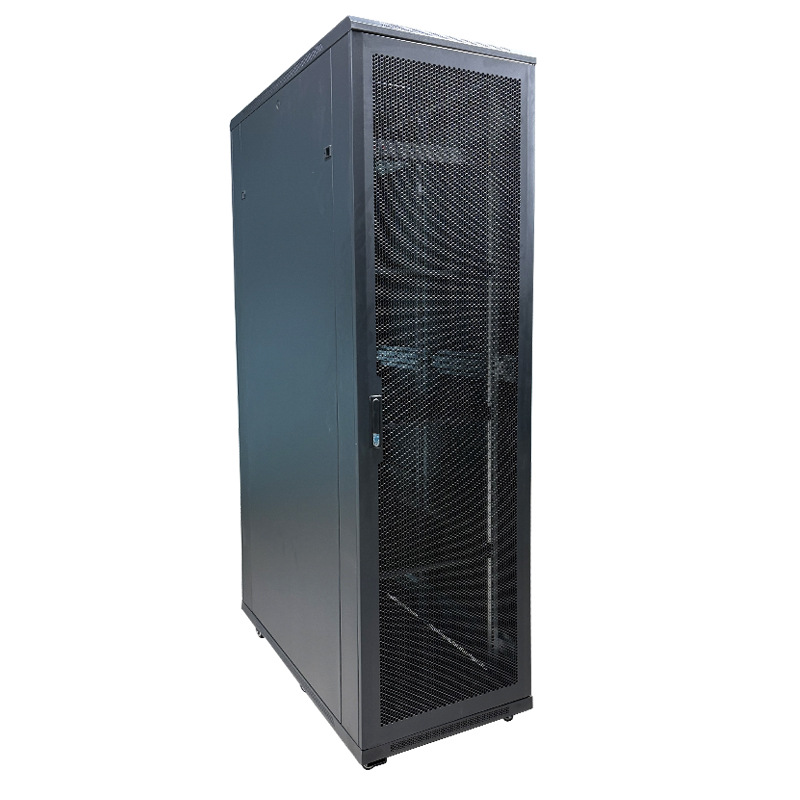
A classic gap gateway is built from three parts: an internal host unit connected to the high-security network, an external host unit connected to the lower-trust network, and a switching/transfer unit between them. There is no direct cable between the two networks. Data is read by one side, written to the middle unit, and then read out by the other side – with the transfer mechanism physically breaking the connection between the two hosts in every cycle.
3.2 Protocol Break and Content Inspection
Because the two networks never speak to each other’s protocol stacks, the gateway performs a full protocol break: application data is extracted, inspected against the allowed content rules, verified and then repackaged on the destination side. Attackers cannot send commands through the gap, because there is no live session to hijack – only individual, validated data objects that match the configured policy.
3.3 Data Objects, Not Connections
Operators define what may cross the gap in terms of data objects: database synchronization records, files of certain types and sizes, emails, video streams or sensor/SCADA telemetry values. Each object is checked against rules (format, virus, keyword, source and destination), logged in full, and only then released. Anything that does not match policy is quarantined and reported.
4. Core Capabilities to Specify
| Capability | What to Check |
|---|---|
| Transfer throughput | Peak daily file/database volume with margin, e.g. 100 Mbps to multi-Gbps models |
| Supported data types | Files, database sync (Oracle/SQL/MySQL/Kingbase), emails, video, SCADA telemetry |
| One-way vs two-way | 单向导入 (import only), unidirectional export, or bidirectional with strict rules |
| Content inspection | AV scanning, format validation, keyword/DLP rules, file type allow-list |
| Audit trail | Complete logs of every object, decision and operator action, exportable |
| High availability | Dual power, redundant units, cluster mode for mission-critical sites |
| Protocol support | Native connectors for the customer databases, messaging and industrial protocols |
5. Deployment Scenarios
5.1 Industrial Control and SCADA
In a typical plant deployment the gap gateway sits between the control network and the enterprise/office network. Historian data, production reports and alarm summaries flow out for analysis, while only vetted configuration or schedule files flow in. Maintenance access from vendors is brokered through the gateway rather than opened as a direct VPN into the control network.
5.2 Government and Confidential Networks
Departments exchange application data with upper-level platforms or external partners. The gateway enforces the “minimum data necessary” rule, records every transfer, and lets auditors prove that no direct connection ever existed between the two networks – a requirement in many classified-network policies.
5.3 Financial and Data-Service Integration
Settlement files, reporting extracts and partner data feeds move on schedule through the gap. Because the gateway understands database and file semantics, it can transform and validate records so the receiving system accepts them without custom glue code.

6. One-Way and Two-Way Modes
6.1 Choosing the Direction
Many boundaries only need data to move in one direction – sensor readings out, or approved files in. A unidirectional gateway (often implemented with optical one-way transmission) gives the strongest guarantee: data physically cannot travel back, which is ideal for protecting control systems from any return traffic. Two-way gap gateways suit applications such as database synchronization that genuinely need exchanges in both directions, and enforce separate rule sets per direction.
6.2 Optical One-Way Technology
In unidirectional mode, an optical transmitter on the sending side and a receiver with no transmit path on the receiving side make reverse transmission physically impossible, not merely forbidden by policy. This is the technology of choice for the most sensitive control and government boundaries.
7. Deployment Process with Lain
7.1 Requirements and Rule Design
Deployment starts with a data-flow survey: what applications exchange data, in which direction, how often, at what volume, and what must never cross. From that survey we size the hardware, choose the mode (one-way or two-way), and draft the content rules and the approval workflow for exceptions.
7.2 Installation, Integration and Testing
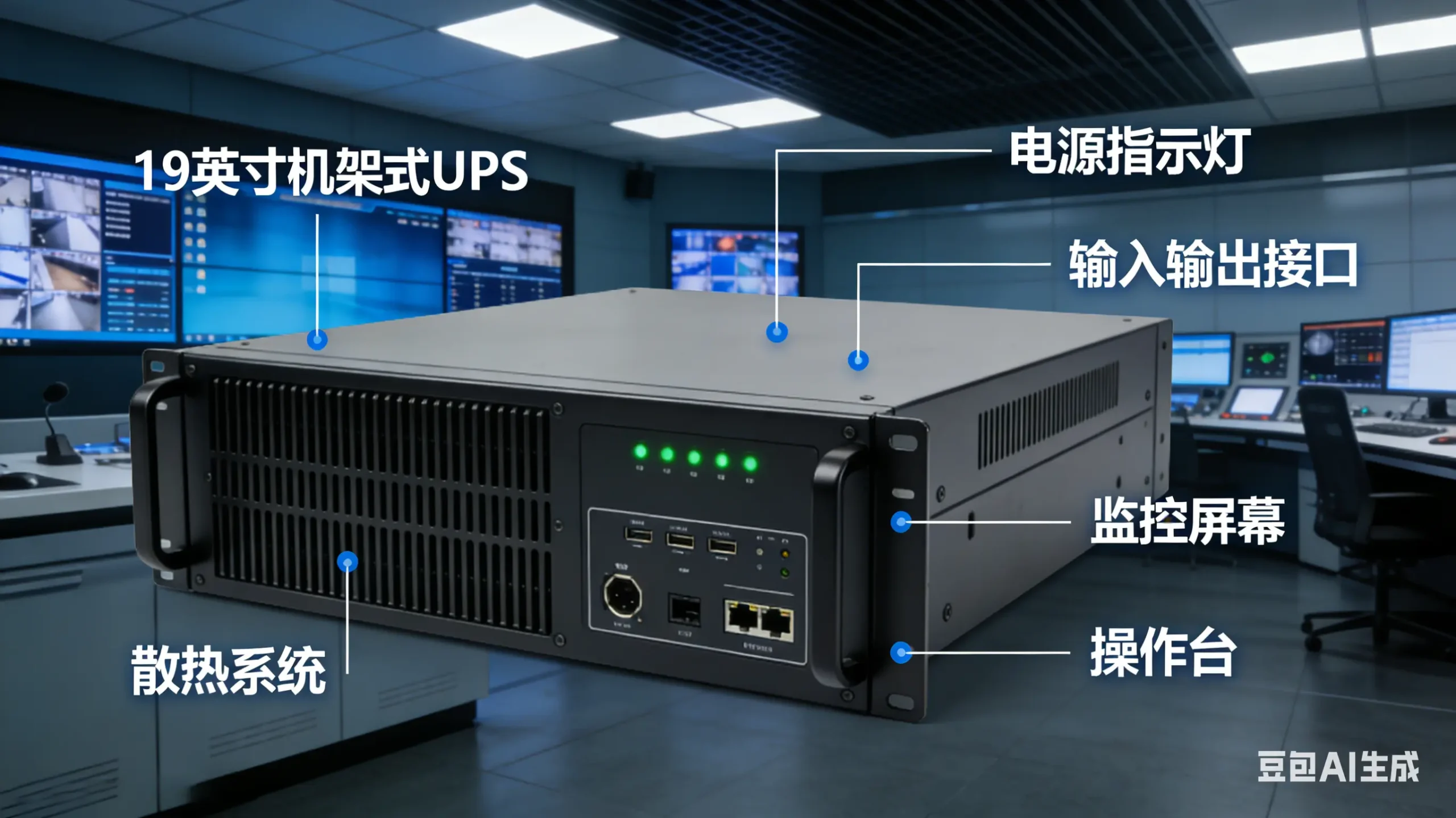
Lain engineers install the units in the network cabinet, wire power and management interfaces, configure the rule sets and connectors for the customer’s databases and applications, and run a test campaign that covers normal transfers, rejected objects, failover and audit reporting – before the gateway is put into production traffic.
7.3 Operation and Maintenance
Routine operation covers signature and AV updates, rule reviews as applications change, log archiving and periodic policy audits. High-availability configurations are maintained so rule changes or unit maintenance never stop the data flow the business depends on.
8. Frequently Asked Questions
Gap Gateway FAQ
1. What is a gap gateway?
A network security device that transfers data between two networks of different trust levels while making direct network connection between them physically impossible – also called a network security gap, isolation gateway or data diode system.
2. How is it different from a firewall?
A firewall filters traffic on a live connection between networks. A gap gateway provides no live connection at all: data is extracted on one side, inspected and repackaged on the other, so there is no session an attacker can hijack or route through.
3. What data can pass through a gap gateway?
Typical objects are files, database synchronization records, emails, video streams and SCADA/telemetry values – anything that can be represented as discrete, inspectable data objects with configurable rules.
4. What is the difference between one-way and two-way?
One-way (unidirectional) mode allows data to travel in a single direction, often using optical transmission so return traffic is physically impossible; two-way mode supports controlled exchange in both directions with separate rule sets.
5. Is a gap gateway suitable for industrial control networks?
Yes – it is a standard component for protecting SCADA/DCS networks, letting historian data and reports leave the plant while blocking direct remote access into the control environment.
6. Will it slow down our data exchange?
Throughput depends on the model and the inspection rules. Sizing is done against your peak daily volume with headroom, and high-throughput models handle hundreds of Mbps for file and database traffic.
7. Can it block viruses and sensitive data?
Yes – the gateway scans each object for malware, validates file type and format, and applies keyword/DLP rules so only objects matching policy are released to the destination network.
8. Do you provide complete gap gateway solutions?
Yes – Guangzhou KITOZER supplies the hardware, designs the rules, integrates the connectors for your databases and applications, and provides commissioning, training and ongoing support worldwide.
9. Related Solutions
- Core Router
- Fibre Channel Switch
- IDS/IPS
- Network Traffic Analysis
- NMS Software
- Data Center Turnkey Integration
About Guangzhou Lain Intelligent System Development Co., Ltd.
Guangzhou Lain Intelligent System Development Co., Ltd. supplies and integrates gap gateway (network security gap) solutions – one-way and two-way controlled data exchange for industrial control, government and enterprise networks worldwide. From single rooms to enterprise facilities, KITOZER provides design, manufacturing, integration, testing and after-sales service under one roof and exports worldwide.
Contact us for a free technical consultation:
- Company: Guangzhou Lain Intelligent System Development Co., Ltd.
- Address: 1st Floor, Building A, Chaotian Industrial Park, Zhongrun Industrial Park, Shilou Town, Panyu District, Guangzhou, Guangdong, China
- Tel/WeChat: +86 135-0923-8849 | +86 135-0923-8849
- WhatsApp: +86 135-0923-8849
- Email: zl19068534140@gmail.com
- Website: www.gdlain.com | Request a Quote
Typical response time: within one business day. Project references, drawings and samples are available on request.