I. System Introduction
The KITOZER Computer Room Cabling System is a structured cabling solution compliant with international and domestic standards such as TIA/EIA-568-D and GB/T 50311-2016. Specifically designed for critical information infrastructure including data centers, computer rooms and network rooms, it provides end-to-end physical connection and management from the core computer room to terminal devices. With high reliability, high scalability and easy manageability as its core design concepts, the system adopts a modular architecture and supports the hybrid deployment of copper cables and optical fibers. It meets the high-speed data transmission requirements from 1G to 400G, adapts to future network upgrades and business expansion, and lays a solid physical foundation for the stable operation of IT systems.
II. System Composition
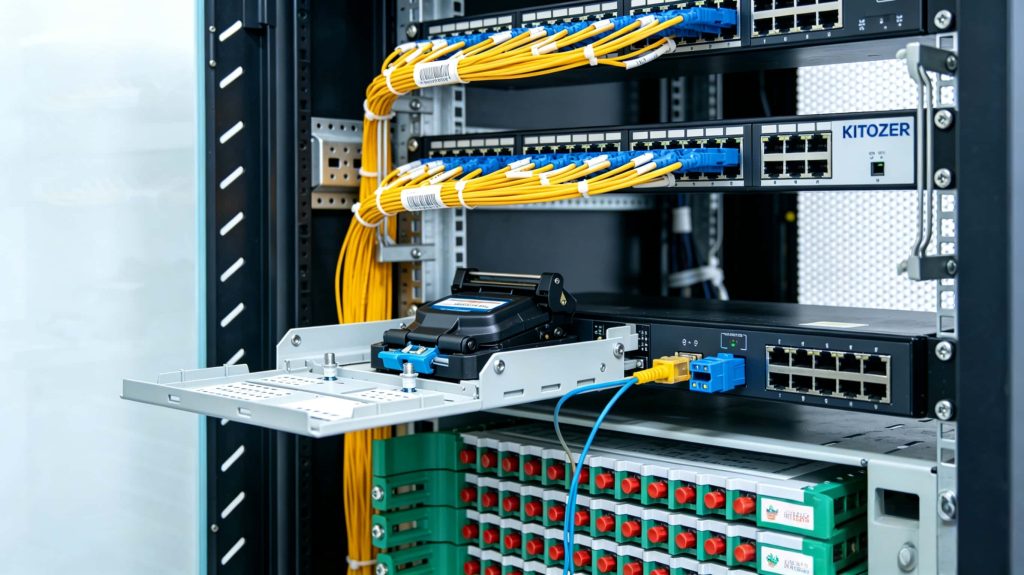
The KITOZER Computer Room Cabling System consists of six core subsystems, forming a complete end-to-end connection solution:
| Subsystem | Core Components | Functional Positioning |
|---|---|---|
| Work Area Subsystem | Information outlets, patch cords, adapters | Connects terminal devices (PC/servers/network devices) to information points, supporting plug-and-play |
| Horizontal Subsystem | Category 6/Category 7 copper cables, OM3/OM4 multimode optical fibers, metal trunking | Connects the work area and the telecommunication room to achieve high-speed data transmission in the horizontal area |
| Vertical Backbone Subsystem | Large-count copper cables, single-mode/multimode optical cables, computer room cable trays | Serves as the “main artery” for data transmission, connecting the core computer room and telecommunication rooms on each floor |
| Administration Subsystem | Copper patch panels, optical distribution frames (ODF), cable managers, patch cords | Implements cable termination, cross-connection and management, supporting flexible adjustment and fault troubleshooting |
| Equipment Room Subsystem | Core switches, server cabinets, fiber fusion splice closures, high-density patch panels | Installation area for core network devices, enabling high-speed data exchange and centralized management |
| Campus Backbone Subsystem | Outdoor optical cables, optical cable splice closures, fiber fusion splice accessories | Connects communication links between different buildings, supporting long-distance high-speed transmission |
III. System Classification
3.1 Classification by Transmission Medium
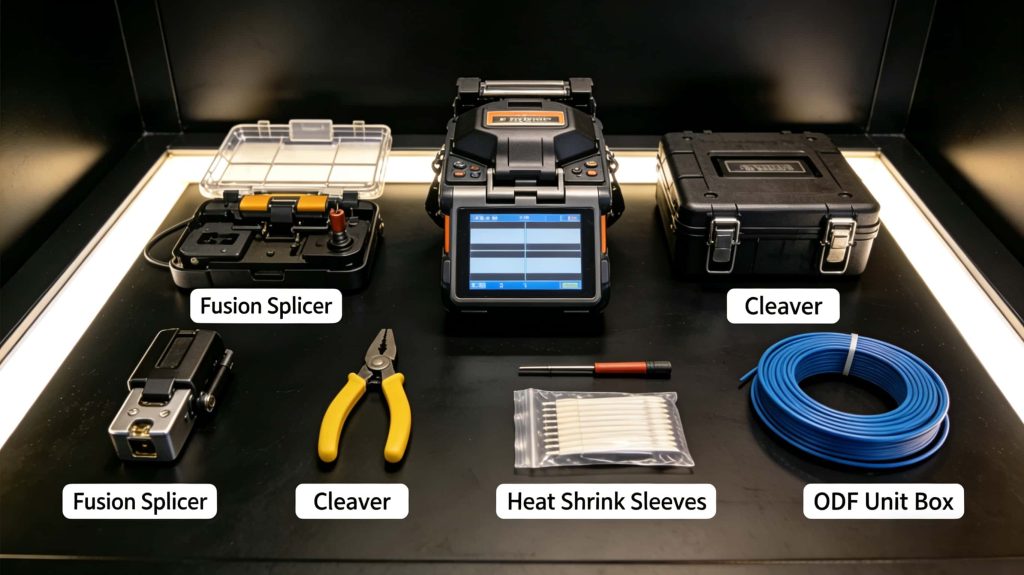
- Copper Cabling System: Adopts Category 6/Cat.6A/Category 7 shielded/unshielded twisted pair cables, supporting 1G to 40Gbps transmission. Suitable for short-distance (≤100m) high-speed data connections such as server clusters and network device interconnection.
- Optical Fiber Cabling System:
- Multimode Optical Fiber (OM3/OM4/OM5): Supports 10G to 400G transmission, suitable for short-distance (≤300m) high-bandwidth connections inside computer rooms.
- Single-mode Optical Fiber (OS2): Supports ultra-long-distance (≤10km) high-speed transmission, suitable for cross-floor and cross-building connections.
- Hybrid Cabling System: Combined deployment of copper cables and optical fibers, with copper cables for terminal connections and optical fibers for backbone transmission. It balances performance and cost, and adapts to complex computer room environments.
3.2 Classification by Application Scenario
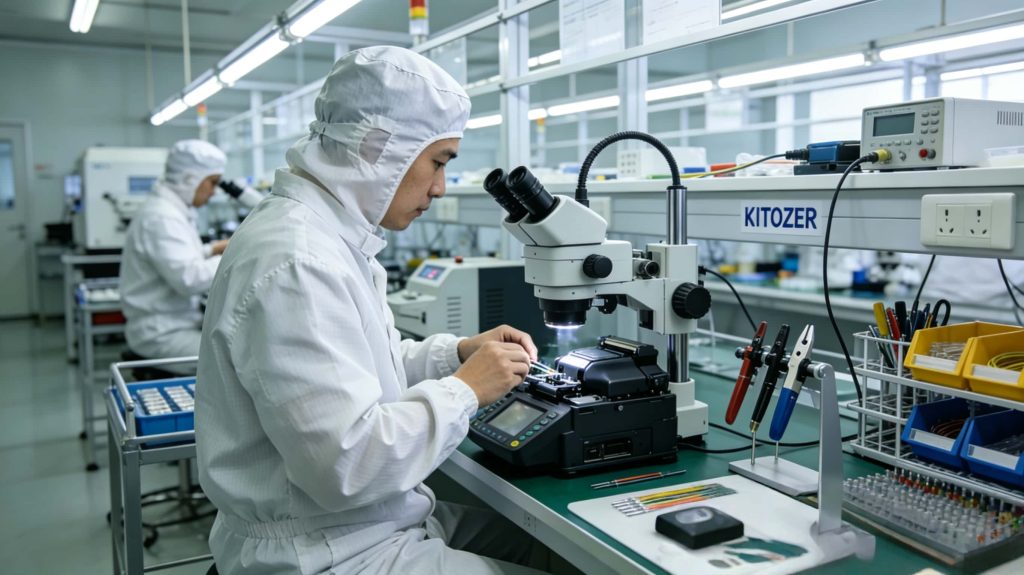
- Standard Computer Room Cabling System: Suitable for small and medium-sized enterprise computer rooms, supporting 10Gbps transmission. Equipped with basic cable trays and distribution equipment to meet regular IT needs.
- High-Density Data Center Cabling System: Adopts high-density patch panels and MPO pre-terminated optical fiber systems, supporting 40G/100G/400G transmission and adapting to the deployment of high-power density cabinets.
- Modular Computer Room Cabling System: Supports rapid deployment and flexible expansion, adapting to new infrastructure such as container data centers and modular computer rooms.
- Shielded Cabling System: Features end-to-end shielded design, including shielded cables, shielded patch panels and shielded modules. Suitable for environments with severe electromagnetic interference (such as industrial control computer rooms and medical equipment rooms).
3.3 Classification by Management Method
- Traditional Cabling System: Manually managed, with asset management and fault troubleshooting through labels and document records.
- Intelligent Cabling System: Integrates electronic patch panels, intelligent patch cords and management software, supporting real-time port status monitoring, automatic link identification and remote management. The fault location time is shortened to within 30 seconds.
IV. System Configuration List (KITOZER Brand)
4.1 Computer Room Cable Tray Series
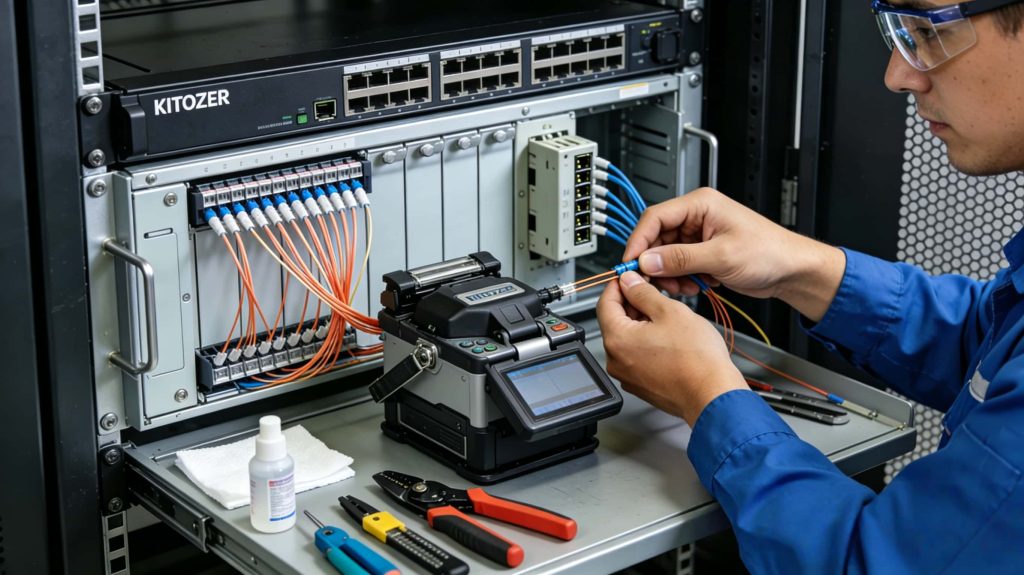
| Product Name | Model | Specification | Material | Applicable Scenario |
|---|---|---|---|---|
| Trough-type Computer Room Cable Tray | KT-QJ-C | 100×50/200×100/300×150/400×200mm | Hot-dip galvanized steel sheet/aluminum alloy, thickness 1.2-2.0mm | Backbone routing in computer rooms, protecting cables from mechanical damage |
| Ladder-type Computer Room Cable Tray | KT-QJ-T | 300×100/400×150/500×200mm | Hot-dip galvanized steel sheet, rung spacing 150mm | Server areas with high ventilation and heat dissipation requirements, with large cable bearing capacity |
| Mesh Computer Room Cable Tray | KT-QJ-W | 300×100/400×150mm | Galvanized steel wire, mesh size 50×50mm | Flexible cabling scenarios, supporting branching and installation in any direction |
| Cable Tray Accessories | KT-QJ-PJ | Supporting elbows, tees, crosses, brackets, hangers | Hot-dip galvanized steel sheet | Connection and fixation of cable trays, meeting complex routing requirements |
4.2 Metal Trunking Series
| Product Name | Model | Specification | Material | Applicable Scenario |
|---|---|---|---|---|
| Enclosed Metal Trunking | KT-XC-F | 50×25/100×50/150×75mm | Galvanized steel sheet, thickness 0.8-1.2mm | Horizontal area cabling, protecting cables from external damage |
| Open Metal Trunking | KT-XC-K | 100×50/150×75/200×100mm | Galvanized steel sheet with heat dissipation holes | Connection between work area and telecommunication room, facilitating cable addition, reduction and maintenance |
| Metal Trunking Accessories | KT-XC-PJ | Elbows, tees, connectors, fixings | Galvanized steel sheet | Connection and fixation of metal trunking, adapting to various installation environments |
4.3 Patch Panel Series
| Product Name | Model | Specification | Performance Parameters | Applicable Scenario |
|---|---|---|---|---|
| 24-port Category 6 Unshielded Patch Panel | KT-PP-24U6 | 19-inch 1U, 24 ports | Contact resistance ≤20mΩ, insulation resistance ≥500MΩ, plugging times ≥1000 | Copper cable termination in horizontal areas, supporting 1G transmission |
| 48-port Cat.6A Shielded Patch Panel | KT-PP-48S6A | 19-inch 2U, 48 ports | Shielding effectiveness ≥90dB@1GHz, supporting 10Gbps transmission | High-density server areas and electromagnetic interference environments |
| 24-port LC Duplex ODF | KT-ODF-24LC | 19-inch 1U, 24-port LC duplex | Insertion loss ≤0.3dB, return loss ≥50dB | Termination of multimode/single-mode optical fibers, supporting 10G transmission |
| 12-port MPO High-Density ODF | KT-ODF-12MPO | 19-inch 1U, 12-port MPO | Supports OM4/OM5 multimode optical fibers, 40/100G transmission | Core areas of data centers, high-density optical fiber interconnection |
4.4 Fiber Fusion Splice Accessories Series
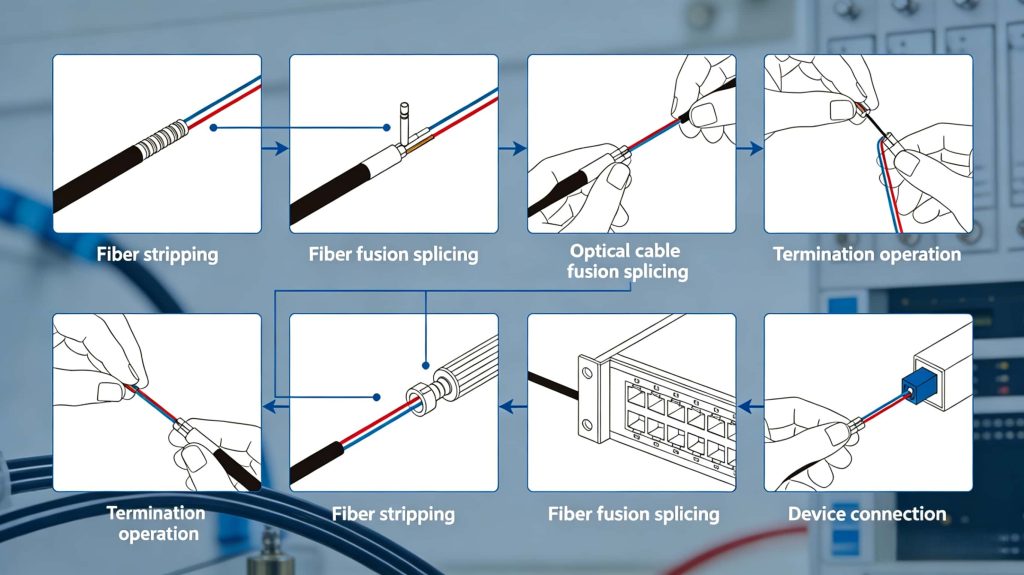
| Product Name | Model | Specification | Performance Parameters | Applicable Scenario |
|---|---|---|---|---|
| Fiber Fusion Splice Closure | KT-RJ-8/12/24 | 8/12/24 cores, wall/rack-mounted | Protection grade IP65, operating temperature -20℃~+60℃ | Protection of fiber fusion splice points, applicable to computer room and outdoor environments |
| Fiber Quick Connector | KT-FC-LC/SC | LC/SC interface, single-mode/multimode | Insertion loss ≤0.5dB, return loss ≥45dB | Quick fiber connection without fusion splice equipment, suitable for emergency scenarios |
| Fiber Patch Cord | KT-FJ-LC/SC | LC-LC/SC-SC, single-mode/multimode, length 1-10m | Insertion loss ≤0.3dB, bending radius ≥10 times the fiber outer diameter | Fiber connection between equipment rooms, adapting to different interface types |
| Fiber Coupler | KT-FC-LC/SC | LC/SC single-mode/multimode | Insertion loss ≤0.2dB, repeatability ≥1000 times | Expansion of fiber ports, supporting connection between different devices |
4.5 Cabling Auxiliary Materials Series
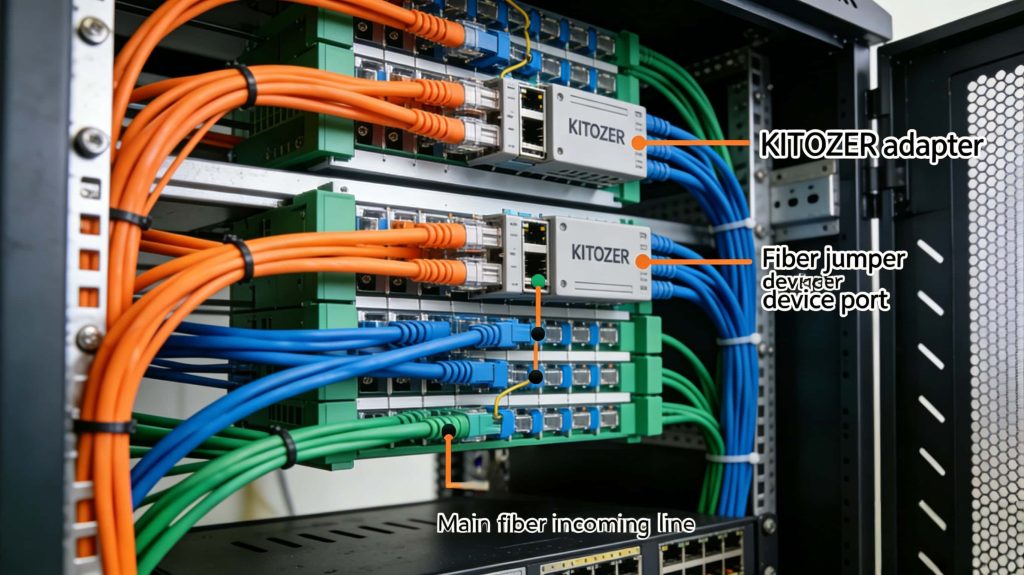
| Product Name | Model | Specification | Material/Characteristics | Applicable Scenario |
|---|---|---|---|---|
| Category 6 Unshielded Twisted Pair Cable | KT-C6-UTP | 4 pairs 8 cores, outer diameter 6.0mm | Oxygen-free copper conductor, cross separator, PVC/LSZH sheath | Horizontal subsystem, supporting 1G transmission, flame retardant grade CMR |
| Category 7 Shielded Twisted Pair Cable | KT-C7-STP | 4 pairs 8 cores, aluminum foil + copper mesh double shielding | Oxygen-free copper conductor, TPE insulation, LSZH sheath | High-density data centers, supporting 40Gbps transmission, strong anti-interference |
| OM4 10G Multimode Optical Fiber | KT-F-OM4 | 50/125μm, 12 cores, outer diameter 2.0mm | Low-loss optical fiber, bandwidth ≥4700MHz·km | Short-distance (≤550m) 10G transmission, such as inter-floor interconnection |
| OS2 Single-mode Optical Fiber | KT-F-OS2 | 9/125μm, 12 cores, outer diameter 2.0mm | Low-loss optical fiber, transmission distance ≥10km | Long-distance transmission, such as inter-building connection |
| Cable Manager | KT-LXQ | 19-inch 1U, metal material | Modular design, supporting front/back cable management | Administration subsystem, cable arrangement and fixation, improving aesthetics |
| Information Outlet | KT-TO-6A | 86-type, single/double port, Category 6/Cat.6A | Phosphor bronze gold-plated, contact resistance ≤20mΩ | Work area subsystem, connection point for terminal devices |
V. System Schematic Diagram
5.1 System Topology
[Terminal Devices]—[Work Area Information Outlets]—[Horizontal Subsystem (Metal Trunking + Category 6/Cat.6A Copper Cables/OM4 Optical Fibers)]—[Floor Telecommunication Room (Patch Panels + Cable Managers + Switches)]<br/>┃<br/>[Vertical Backbone Subsystem (Computer Room Cable Trays + OS2 Single-mode/OM4 Multimode Optical Fibers)]<br/>┃<br/>[Core Computer Room Equipment Room (High-Density ODF + Core Switches + Server Cabinets)]—[Campus Backbone Subsystem (Outdoor Optical Cables)]—[Other Buildings]
5.2 Typical Connection Schematic
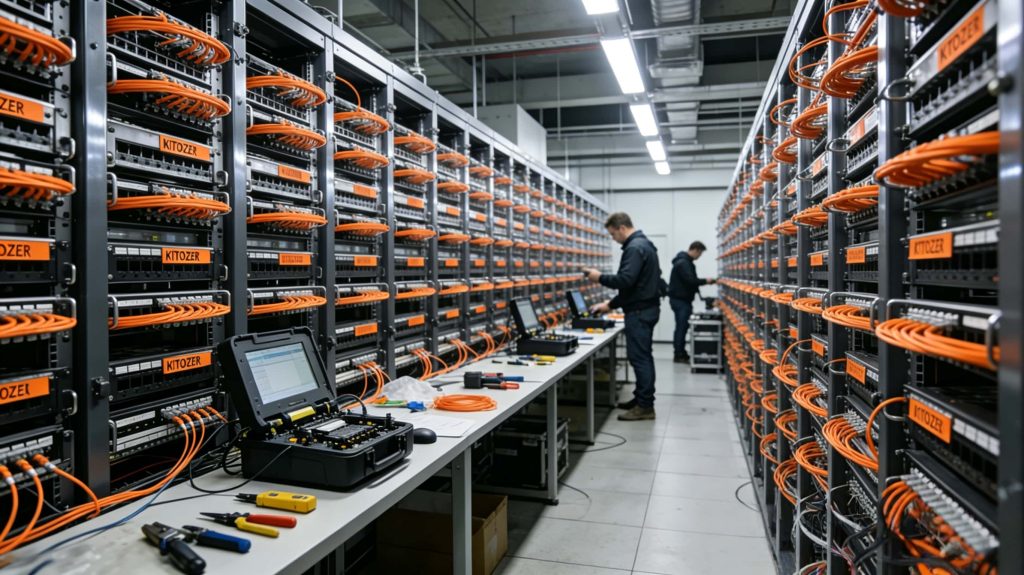
- Copper Cable Connection Path: Server — Category 6 patch cord — Information outlet — Category 6 twisted pair cable — Copper patch panel — Patch cord — Network switch
- Optical Fiber Connection Path: Core switch — LC fiber patch cord — ODF — OM4 multimode optical fiber — Fusion splice closure — Fiber fusion splice — OM4 multimode optical fiber — ODF — LC fiber patch cord — Access switch
- Telecommunication Room Connection: Horizontal cables — Patch panels — Cable managers — Patch cords — Network devices, enabling flexible cross-connection and management
VI. Product Technical Parameters
6.1 Technical Parameters of Computer Room Cable Trays and Metal Trunking
| Parameter Item | Technical Requirements | Test Standard |
|---|---|---|
| Material | Hot-dip galvanized steel sheet (zinc coating ≥275g/m²) or aluminum alloy (6063-T5) | GB/T 2694-2018 |
| Load Capacity | Uniform load ≥2000N/m², concentrated load ≥500N | GB/T 21648-2008 |
| Fire Rating | Metal material, Grade A non-combustible | GB 8624-2012 |
| Protection Grade | IP40 (enclosed type), IP20 (open type) | GB 4208-2017 |
| Surface Treatment | Hot-dip galvanizing/electrostatic spraying, coating thickness ≥60μm | GB/T 18684-2014 |
| Dimensional Tolerance | Length deviation ≤±3mm, width/height deviation ≤±1mm | GB/T 12770-2012 |
6.2 Technical Parameters of Copper Cables and Optical Fibers
| Product Type | Key Parameters | Technical Indicators |
|---|---|---|
| Category 6 Unshielded Twisted Pair Cable | Transmission frequency/bandwidth | 250MHz, supporting 1G transmission |
| Insertion loss | ≤21.0dB@100m, 250MHz | |
| Return loss | ≥24.0dB@250MHz | |
| NEXT (Near End Crosstalk) | ≥44.3dB@250MHz | |
| Cat.6A Shielded Twisted Pair Cable | Transmission frequency/bandwidth | 500MHz, supporting 10Gbps transmission |
| Insertion loss | ≤21.0dB@100m, 500MHz | |
| Return loss | ≥23.0dB@500MHz | |
| Shielding effectiveness | ≥90dB@1-400MHz | |
| OM4 Multimode Optical Fiber | Core/cladding diameter | 50/125μm |
| Transmission distance | 10G: 550m, 40G: 100m | |
| Bandwidth | ≥4700MHz·km | |
| Insertion loss | ≤0.3dB/km | |
| OS2 Single-mode Optical Fiber | Core/cladding diameter | 9/125μm |
| Transmission distance | 10G: 40km, 40G: 2km | |
| Attenuation | ≤0.4dB/km@1310nm, ≤0.3dB/km@1550nm |
6.3 Technical Parameters of Patch Panels and Connecting Devices
| Parameter Item | Copper Patch Panel | Optical Distribution Frame (ODF) | Information Outlet |
|---|---|---|---|
| Contact resistance | ≤20mΩ | – | ≤20mΩ |
| Insulation resistance | ≥500MΩ | ≥10^12Ω | ≥500MΩ |
| Plugging times | ≥1000 times | – | ≥1000 times |
| Insertion loss | – | ≤0.3dB (LC interface) | – |
| Return loss | – | ≥50dB (single-mode), ≥30dB (multimode) | – |
| Shielding effectiveness | ≥90dB@1GHz (shielded type) | – | ≥90dB@1GHz (shielded type) |
| Operating temperature | -20℃~+60℃ | -20℃~+60℃ | -20℃~+60℃ |
VII. Product Application Scope
7.1 Data Center Scenarios
- Large Cloud Data Centers: Adopt high-density optical fiber cabling (MPO + LC duplex), supporting 400G high-speed interconnection and adapting to the deployment of high-power density cabinets.
- Enterprise-level Data Centers: Hybrid deployment of copper cables and optical fibers, supporting virtualization and cloud computing environments, and providing high-reliability connections.
- Edge Data Centers: Modular cabling design, supporting rapid deployment and flexible expansion, adapting to space-constrained scenarios.
7.2 Industry Application Scenarios
| Industry | Application Characteristics | Recommended Configuration |
|---|---|---|
| Financial Industry | High security, low latency, 24×7 uninterrupted operation | Category 7 shielded cabling + intelligent management system, supporting rapid fault location |
| Medical Industry | Anti-electromagnetic interference, high reliability, compliance with medical standards | Shielded cabling + low smoke zero halogen (LSZH) sheath, adapting to medical equipment rooms |
| Government Agencies | High security, manageability, long-term stable operation | Category 6/Cat.6A cabling + intelligent patch panels, supporting asset management and auditing |
| Education Industry | High cost performance, easy maintenance, supporting multimedia teaching | Category 6 unshielded cabling + standard management system, adapting to campus network environments |
| Manufacturing Industry | Anti-interference, resistance to harsh environments, supporting industrial control | Armored cables + metal trunking, adapting to factory workshops and control computer rooms |
7.3 Special Application Scenarios
- Modular Computer Rooms: Adopt prefabricated cabling solutions, supporting factory pre-installation and on-site rapid assembly, shortening the construction period.
- Container Data Centers: Customized cable trays and trunking, adapting to narrow space and seismic requirements, supporting rapid deployment.
- Shielded Computer Rooms: End-to-end shielded design, including shielded cable trays, shielded cables and shielded patch panels, meeting electromagnetic compatibility (EMC) requirements.
VIII. Product Advantages
8.1 Performance Advantages
- High-speed Transmission: Supports Category 6/Cat.6A/Category 7 copper cables (1G to 40G) and OM3/OM4/OS2 optical fibers (10G to 400G), meeting the network upgrade needs for the next 10 years.
- Low-loss Design: Copper cables adopt cross separator and tight sheath design, and optical fibers adopt low-loss cores, ensuring signal transmission quality and reducing bit error rate.
- Anti-interference Capability: Shielded series products (cable trays, trunking, cables, patch panels) provide shielding effectiveness of ≥90dB, adapting to environments with severe electromagnetic interference.
8.2 Reliability Advantages
- High Durability: Key components (such as patch panels and information outlets) adopt phosphor bronze gold-plated contacts, with plugging times ≥1000 and long service life.
- Fire Safety: The full range of products complies with UL94-V0 or IEC 60332-1 flame retardant standards, and some products support low smoke zero halogen (LSZH), reducing fire risks.
- Environmental Adaptability: Operating temperature range from -20℃ to +60℃, adapting to various climatic conditions and computer room environments.
8.3 Management Advantages
- Modular Design: Supports on-demand expansion, reducing initial investment and lowering the total cost of ownership (TCO).
- Intelligent Management: Optional electronic patch panels and management software support real-time monitoring, remote management and fault early warning, improving maintenance efficiency by 50%.
- Standardized Interfaces: Compliant with international standards, supporting the compatibility of devices from different manufacturers and reducing replacement costs.
8.4 Installation and Maintenance Advantages
- Rapid Deployment: Modular components and plug-and-play design shorten installation time by 30% and reduce labor costs.
- Flexible Adjustment: The administration subsystem supports rapid cross-connection and configuration changes, adapting to business adjustment needs.
- Easy Maintainability: Clear identification and document support, combined with the intelligent management system, shorten fault troubleshooting time to within 30 seconds.
IX. Product Bid Control Parameters
9.1 General Technical Requirements
- The system must comply with international and domestic standards such as TIA/EIA-568-D, GB/T 50311-2016 and ISO/IEC 11801, and provide third-party test reports.
- The copper cabling system must pass the FLUKE DSX-8000 certification test, and the optical fiber system must pass the FLUKE OF-500 certification test, with test reports provided.
- All products must provide certificate of origin and quality guarantee, with a warranty period of ≥15 years and lifelong technical support provided.
- The system supports end-to-end link performance guarantee and provides a 25-year application guarantee to ensure network upgrade compatibility.
9.2 Sub-item Bid Control Parameters
9.2.1 Computer Room Cable Trays and Metal Trunking
- Material: Hot-dip galvanized steel sheet with zinc coating thickness ≥65μm, compliant with GB/T 2694-2018 standard.
- Load Capacity: Uniform load ≥2000N/m², concentrated load ≥500N, without obvious deformation.
- Fire Rating: Compliant with GB 8624-2012 Grade A non-combustible standard, with test report provided.
- Protection Grade: Enclosed cable trays/trunking ≥IP40, meeting the dustproof requirements of computer room environments.
9.2.2 Copper Cables and Connecting Devices
- Category 6/Cat.6A Copper Cables: Must pass third-party testing, comply with ANSI/TIA-568.2-D standard, and meet the requirements of crosstalk and return loss.
- Patch Panels/Information Outlets: Contact resistance ≤20mΩ, insulation resistance ≥500MΩ, plugging times ≥1000, with test reports provided.
- Shielding Performance (Shielded Series): Shielding effectiveness ≥90dB@1GHz, compliant with IEC 61587 standard.
9.2.3 Optical Fibers and Accessories
- Multimode Optical Fiber: OM4 grade, bandwidth ≥4700MHz·km, transmission distance ≥550m (10G), with test report provided.
- Single-mode Optical Fiber: OS2 grade, attenuation ≤0.4dB/km@1310nm, transmission distance ≥10km.
- Optical Fiber Connecting Devices: Insertion loss ≤0.3dB, return loss ≥50dB (single-mode)/30dB (multimode), compliant with Telcordia GR-326 standard.
X. Product Solutions
10.1 High-Density Data Center Cabling Solution
Core Requirements: Support 400G high-speed interconnection, adapt to high-power density cabinets, and provide high reliability and easy manageability.
Solution:
- Backbone Transmission: Adopt MPO high-density optical fibers (12/24 cores) + OS2 single-mode optical fibers, supporting 400G high-speed interconnection and adapting to the connection between core switches and servers.
- Horizontal Area: Cat.6A shielded twisted pair cables + metal trunking, supporting 10Gbps transmission to meet the connection needs of servers and storage devices.
- Management System: High-density ODF (1U 48-port LC duplex) + intelligent electronic patch panels, supporting real-time port monitoring and remote management.
- Cable Tray System: Hybrid ladder-type and mesh cable trays, improving ventilation and heat dissipation performance, and supporting flexible cable deployment and management.
Implementation Key Points:
- Adopt BIM modeling technology to pre-plan cable routing paths, reducing material waste by 15%.
- Implement color code management: copper cables (blue for data, purple for storage), optical fibers (orange for multimode, yellow for single-mode) to improve maintenance efficiency.
- Adopt pre-terminated optical fiber components to shorten on-site construction time and reduce fusion splice loss.
10.2 Enterprise-level Computer Room Cabling Solution
Core Requirements: High cost performance, easy maintenance, support for business expansion, and adaptation to virtualization and cloud computing environments.
Solution:
- Backbone Transmission: OM4 multimode optical fibers + Category 6 unshielded twisted pair cables, supporting 10G transmission to meet the interconnection between core and access layers.
- Horizontal Area: Category 6 unshielded twisted pair cables + enclosed metal trunking, providing 1G high-speed connections and adapting to desktop terminals and network devices.
- Management System: Standard ODF (1U 24-port LC duplex) + 24-port Category 6 patch panels, supporting manual management and label identification.
- Cable Tray System: Combined trough-type and ladder-type cable trays to meet the cable laying needs of different areas.
Implementation Key Points:
- Adopt modular design, reserve 30% port and cable margin to support future business expansion.
- Implement layered cabling: separate laying of strong and weak current (horizontal spacing ≥30cm), with metal partitions for isolation at cross points.
- Adopt standard cable managers to ensure neat and beautiful cables and improve maintenance efficiency.
10.3 Shielded Computer Room Cabling Solution
Core Requirements: Meet electromagnetic compatibility (EMC) requirements, prevent information leakage, and adapt to high-security environments.
Solution:
- End-to-end Shielding: Shielded cable trays + shielded metal trunking + Category 7 shielded twisted pair cables + shielded patch panels + shielded information outlets, providing shielding effectiveness of ≥90dB.
- Grounding System: Single-point grounding design with grounding resistance ≤1Ω, ensuring effective grounding of the shielding layer and improving anti-interference capability.
- Optical Fiber System: Armored OS2 single-mode optical fibers, providing physical protection and anti-interference capability, adapting to long-distance transmission needs.
- Management System: Shielded ODF + shielded patch panels to ensure the integrity of the shielded link and prevent signal leakage.
Implementation Key Points:
- The shielding layer is continuous throughout without breakpoints to ensure the consistency of shielding effectiveness.
- Adopt special shielded patch cords to ensure end-to-end shielding performance and reduce electromagnetic radiation.
- Conduct electromagnetic compatibility testing to verify the system’s anti-interference capability and information security.
XI. Product Application Cases
11.1 Case 1: Financial Technology Center of the Head Office of Bank of China
Project Background: Construction of a world-class financial data center to support high-concurrency transactions and big data processing, requiring 24×7 uninterrupted operation.
Solution Configuration:
- Backbone Transmission: OS2 single-mode optical fibers (12 cores) + OM4 multimode optical fibers (24 cores), supporting 400G high-speed interconnection.
- Horizontal Area: Cat.6A shielded twisted pair cables + ladder-type cable trays, supporting 10Gbps transmission to meet the connection of servers and storage devices.
- Management System: High-density ODF (1U 48-port LC duplex) + intelligent electronic patch panels, supporting rapid fault location (≤30 seconds).
- Cable Tray System: Hybrid trough-type and ladder-type cable trays to meet the cable laying needs of different areas.
Implementation Effect:
- Supports 3 million daily transactions without errors, with system availability reaching 99.999%.
- Fault location time is shortened to 28 seconds, improving maintenance efficiency by 60%.
- Reserves 40% expansion space to support business growth needs for the next 5 years.
11.2 Case 2: Relocation of a Data Center of an Internet Enterprise in Shenzhen
Project Background: Data center relocation requires the shortest downtime (≤4 hours) to ensure business continuity.
Solution Configuration:
- Prefabricated Cabling: Factory pre-terminated optical fibers + Cat.6A twisted pair cables, supporting on-site rapid connection and shortening deployment time.
- Modular Design: Pre-assembled cable tray and trunking components, supporting on-site rapid installation and reducing construction difficulty.
- Intelligent Management: Electronic labels + handheld terminals, supporting rapid device identification and location, shortening relocation time.
- Redundancy Design: Dual-link backup to ensure uninterrupted business during relocation.
Implementation Effect:
- The actual downtime is only 2.5 hours, far lower than the expected 4 hours.
- BIM modeling is adopted for pre-planning, reducing material costs by 15% and construction time by 30%.
- The system operates stably after relocation without any connection faults, ensuring business continuity.
11.3 Case 3: A Grade III Class A Hospital Data Center
Project Background: Construction of a medical standard-compliant data center to support electronic medical records, imaging systems and telemedicine, requiring high reliability and anti-interference capability.
Solution Configuration:
- End-to-end Shielding: Shielded cable trays + shielded trunking + Category 7 shielded twisted pair cables + shielded patch panels to meet the anti-interference needs of medical equipment.
- Low Smoke Zero Halogen Design: The full range adopts LSZH sheath, reducing fire risks and complying with medical environment safety standards.
- Optical Fiber System: OM4 multimode optical fibers + OS2 single-mode optical fibers, supporting high-speed transmission (≥10Gbps) of PACS system images.
- Management System: Intelligent electronic patch panels + mobile terminal management, supporting rapid fault location and maintenance.
Implementation Effect:
- The system’s anti-interference capability is improved by 90%, medical equipment operates stably without signal interference problems.
- Supports rapid transmission of CT/MRI images (≤3 seconds), improving diagnosis and treatment efficiency.
- Complies with HIPAA and national medical information security standards, ensuring the security of patient data.
XII. Search Keywords, SEO and Tags
12.1 Core Search Keywords
Computer room cabling solution, KITOZER computer room cable tray, metal trunking, Category 6/Cat.6A patch panel, fiber fusion splice accessory, intelligent cabling system, high-density data center cabling, shielded computer room cabling, enterprise-level computer room cabling, modular computer room cabling
12.2 SEO Optimization Keywords
- Core Keywords: Computer room cabling system, data center cabling solution, KITOZER cabling products
- Long-tail Keywords: Category 6/Cat.6A copper cabling solution, OM4/OS2 optical fiber cabling system, intelligent electronic patch panel, metal trunking installation specification, computer room cable tray selection guide
- Regional Keywords: Guangzhou computer room cabling, Shenzhen data center cabling, Dongguan enterprise computer room cabling, Foshan shielded computer room solution
12.3 Tags
#ComputerRoomCabling #DataCenter #StructuredCabling #KITOZER #CableTraySystem #MetalTrunking #PatchPanel #FiberFusionSplice #IntelligentCabling #ShieldedCabling #Category6/Cat.6A #OM4OpticalFiber #OS2Single-modeOpticalFiber #HighDensityCabling #EnterpriseLevelComputerRoom #FinancialDataCenter #MedicalCabling #ModularComputerRoom