KITOZER EMI Shielded Room — The Complete Engineering Guide to Faraday Cages, Welded and Modular Shielded Enclosures, Shielded Doors, Waveguide Vents and Power Filters (80–100 dB Shielding Effectiveness)
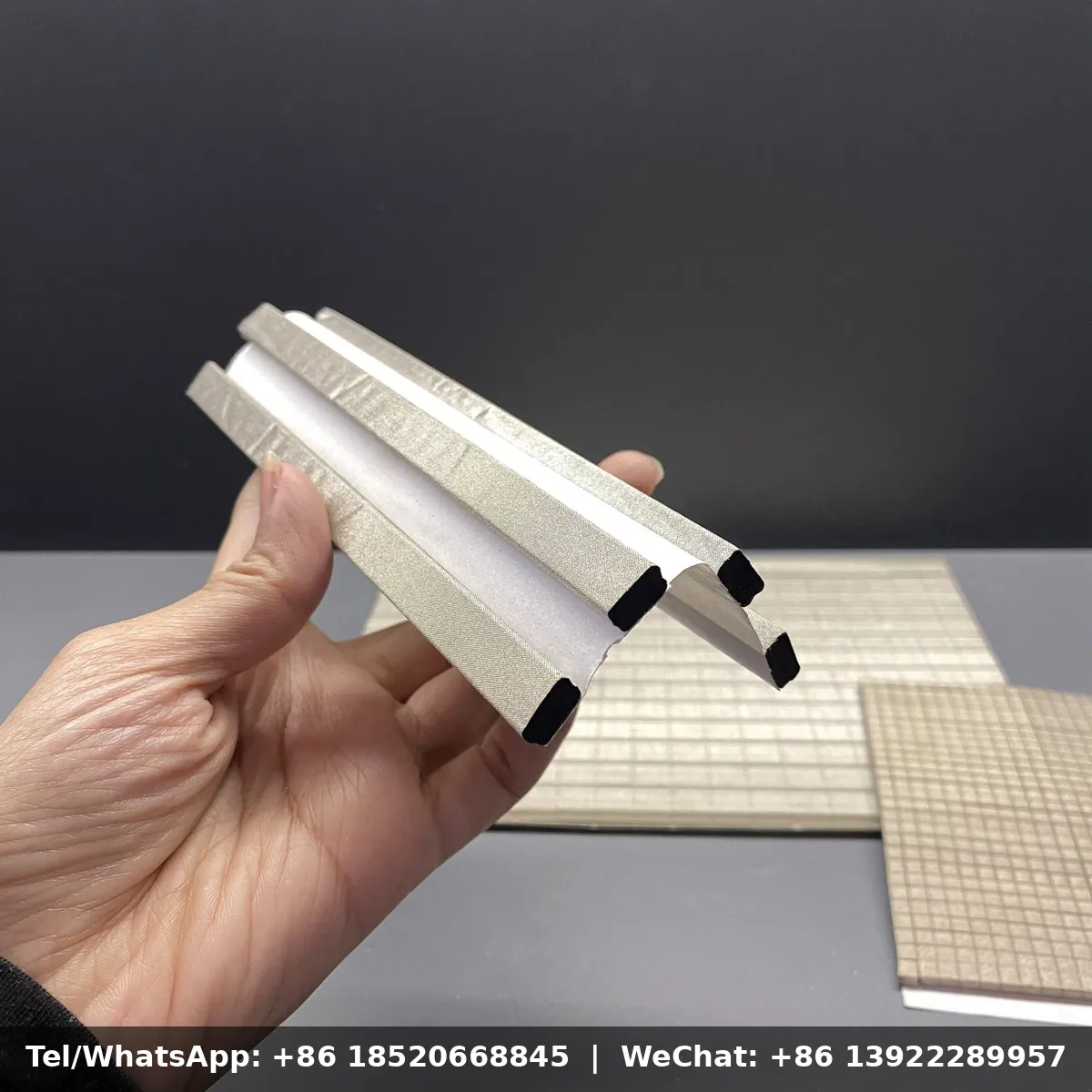
An EMI shielded room (also called a shielded enclosure, Faraday cage, RF shielded room, or screen room) is a fully enclosed, continuously conductive chamber designed to block electromagnetic fields. It keeps sensitive radio-frequency, electromagnetic-compatibility (EMC), TEMPEST, industrial-scientific-medical (ISM), defense, research, medical and test equipment isolated from external electromagnetic noise, and conversely keeps strong internal transmitters from radiating into the surrounding environment. KITOZER designs and supplies both welded-steel shielded rooms (80–100 dB shielding effectiveness from 10 kHz to 10 GHz) and modular bolt-together shielded panel rooms (80–90 dB), together with shielded doors, honeycomb waveguide vents, power line filters, signal feedthrough filters, shielded windows, lighting and HVAC penetrations.
This white paper is a general technical reference. It does not discuss classified applications. It explains the physics of the Faraday cage, the three shielding mechanisms (reflection, absorption, multiple reflection), how shielding effectiveness is measured in decibels, how a shielded room is constructed, tested, installed, operated and maintained, and answers 65 frequently asked questions. KITOZER is the brand of Guangzhou Laian Intelligent System Development Co., Ltd., based in Guangzhou, China.
Price notice: all KITOZER reference prices are list price × 2, for budget estimating only. Actual pricing is by project quotation.
1. Introduction: What Is an EMI Shielded Room?
An EMI shielded room is a chamber whose walls, floor, ceiling and all penetrations are made of a continuous conductive material — usually cold-rolled steel, stainless steel or copper — that forms a closed conductive shell. Any external electromagnetic wave hitting the shell is either reflected at the outer surface, absorbed as heat inside the conductor, or repeatedly reflected between the two surfaces, so that virtually no field penetrates to the interior. Conversely, any source inside the room is contained and does not radiate outward. The result is a controlled electromagnetic environment with a known, low background field level.
Shielded rooms are used in: EMC compliance test labs (where radiated-emissions and radiated-immunity tests require a known low-background environment), TEMPEST zones (where unintended electromagnetic emanations from screens and keyboards must be contained), industrial ISM environments (near RF welders, RF heaters, MRI machines and high-power radio transmitters), research and university labs (precision measurement, quantum research, antenna ranges), and defense/aerospace facilities (R&D, maintenance and satellite testing). KITOZER supplies shielded rooms for all these general-purpose applications.
2. The Faraday Cage: History and Physics
2.1 Michael Faraday’s Ice-Pail Experiment (1836)
In 1836, Michael Faraday built a wooden frame covered in copper foil and had his assistants stand inside while he charged the outside with an electrostatic generator. Using electroscopes inside, he found no electric field at all: the free electrons on the outer conductive surface redistributed themselves to produce an opposing field that exactly cancelled the external field inside. A continuous conductive shell, Faraday proved, has zero internal electric field. This is the Faraday cage effect. For time-varying electromagnetic waves (rather than static fields), the same principle applies with the addition of skin-effect absorption: electromagnetic energy penetrates only a very thin layer of the conductor before being attenuated.
2.2 Skin Depth
An electromagnetic wave incident on a good conductor does not travel through the whole conductor; it propagates only in a thin surface layer called the skin depth. The skin depth δ = √(2ρ/(ωμ)), where ρ is resistivity, ω is angular frequency and μ is permeability. For cold-rolled steel at 10 kHz, δ ≈ 0.5 mm; at 1 MHz, δ ≈ 0.05 mm; at 1 GHz, δ ≈ 1.6 μm. This means that a 2 mm thick steel wall is enormously thicker than the skin depth at any RF frequency — which is why even modest-gauge steel provides 80–100 dB of shielding. Thinner conductors (copper foil, conductive paint) work only at high frequencies where the skin depth is small.
2.3 The Three Shielding Mechanisms (Schelkunoff’s Theory)
Schelkunoff’s 1937 theory decomposes total shielding into three additive mechanisms:
- Reflection (R) — at the air-to-conductor boundary, the impedance mismatch reflects most of the wave back. Reflection is strongest for electric fields (high-impedance sources) and for thin, good conductors like copper.
- Absorption (A) — the small fraction that enters the conductor is attenuated exponentially as it travels through the conductor, converting to heat. Absorption is proportional to conductor thickness and is strong for magnetic fields (low-impedance sources).
- Multiple reflection (B) — energy that enters but is not fully absorbed bounces between the inner and outer surfaces, losing energy each time. Multiple reflection is significant for porous or laminated shields (honeycomb vents, foam-core panels) but small for solid metal sheets.
Total shielding effectiveness SE(dB) = R + A + B. A well-designed steel shielded room achieves 80–100 dB across 10 kHz–10 GHz, which means the interior field is attenuated by a factor of 10,000 to 100,000.
2.4 Shielding Effectiveness in Decibels
SE = 20·log₁₀(E_without_shield / E_with_shield), where E is electric field strength. A 20 dB improvement means 10× attenuation; 40 dB = 100×; 60 dB = 1,000×; 80 dB = 10,000×; 100 dB = 100,000×. For reference, an unsealed concrete wall provides about 10–20 dB; a sheet-metal duct provides 40–60 dB; a welded steel shielded room provides 80–100 dB. KITOZER’s standard products target 80 dB (modular) and 100 dB (welded) across the specified frequency range.
3. Shielded Room Construction: Welded vs Modular
3.1 Welded Steel Shielded Room (KZ-SR-W100)
The welded shielded room is built on site from 2–3 mm cold-rolled steel sheet. Panels are plug-welded or stitch-welded at every seam, then the welds are ground smooth and the whole interior is painted. Welded construction provides the highest shielding effectiveness (100 dB from 10 kHz to 10 GHz) because there are no bolted joints, no gasket interfaces and no discontinuities. It is the choice for EMC labs requiring 100 dB, TEMPEST zones, and permanent installations. The trade-off is longer on-site construction (3–6 weeks for a 20 m² room), welding fume and fire-safety planning, and the fact that the room cannot be moved.
3.2 Modular Bolt-Together Shielded Room (KZ-SR-W80)
The modular room uses prefabricated 2×1 m steel panels with conductive gaskets between them, bolted together on-site. Each panel is 1.5–2 mm cold-rolled steel with a folded edge that clamps a beryllium-copper or silicone-coated conductive gasket. The bolted-and-gasketed joints provide 80–90 dB shielding (10 kHz–1 GHz), which is adequate for most industrial, research and light-EMC applications. Modular rooms go up in 3–7 days, can be disassembled and moved, and are preferred for rental labs, research campuses and projects where welding is not permitted. KITOZER’s modular panels are factory-painted and ship flat-packed.
3.3 Comparison Table
| Attribute | Welded (KZ-SR-W100) | Modular (KZ-SR-W80) |
|---|---|---|
| Shielding effectiveness | 100 dB, 10 kHz–10 GHz | 80 dB, 10 kHz–1 GHz |
| Panel thickness | 2–3 mm CRC | 1.5–2 mm CRC |
| On-site build time | 3–6 weeks | 3–7 days |
| Relocatable | No | Yes |
| Reference price | ¥6,800 / m² | ¥3,500 / m² |
| Best for | EMC lab, TEMPEST, permanent | Industrial, research, rental |
4. The Five Critical Penetrations: Doors, Vents, Power, Signals and Windows
A solid steel box would shield perfectly, but a room needs people to enter, air to flow, power and signals to reach equipment, and light to see by. Every penetration is a potential EM leak and is the most important part of shielded-room design.
4.1 Shielded Doors (KZ-SD-M01 / KZ-SD-E01)
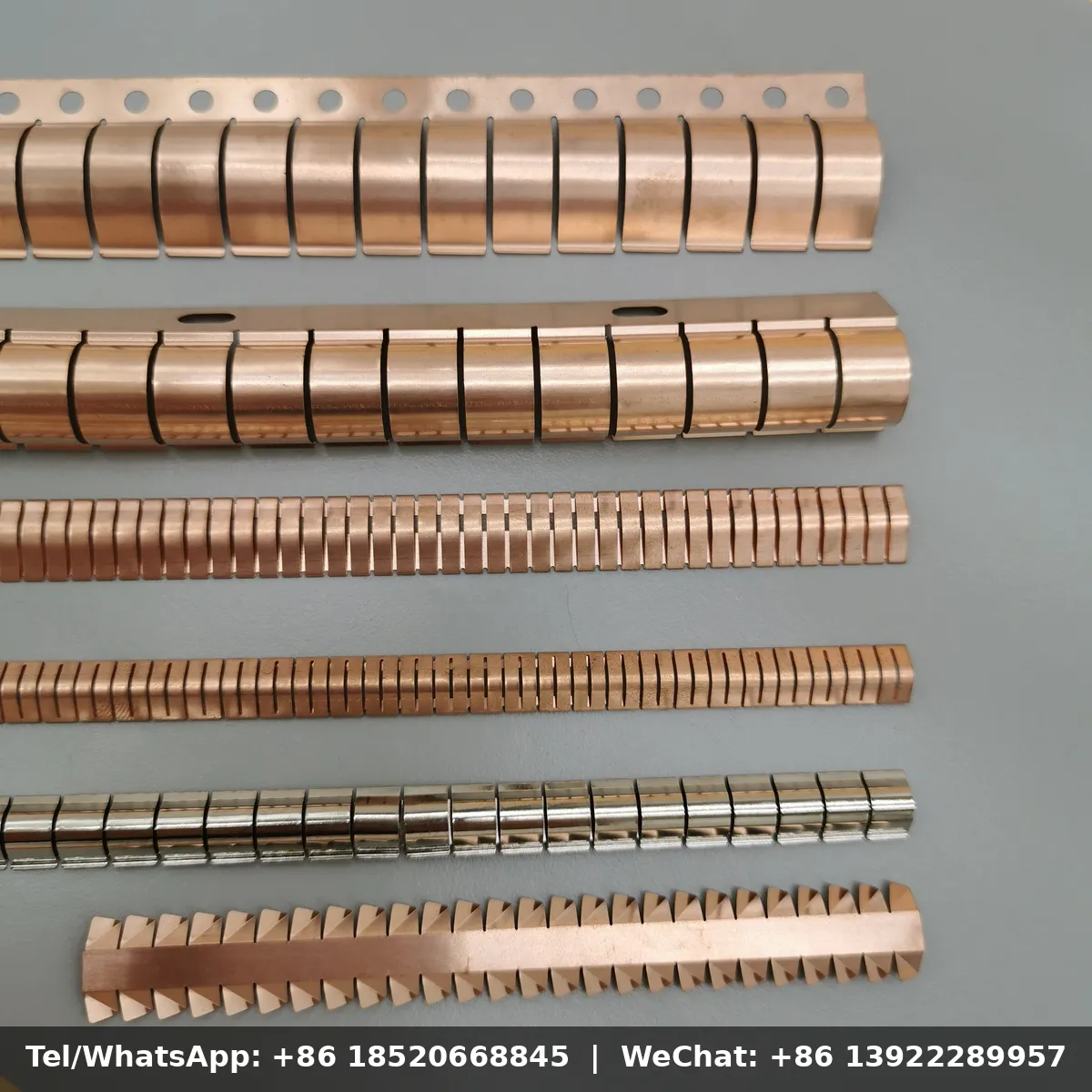
The door is the largest and most failure-prone penetration. The door frame is lined with beryllium-copper finger stock (Be-Cu finger gaskets) — thousands of spring-loaded copper fingers that compress when the door closes, making continuous 360° electrical contact around the door perimeter. Manual doors use over-center cam latches that pull the door tight against the fingers; motorized doors (KZ-SD-E01) use an electric motor and pneumatic or hydraulic compression for high-frequency applications. The finger stock has a rated life of about 100,000 openings; high-traffic rooms should use motorized doors and a finger-stock inspection every 100,000 cycles. KITOZER supplies both single-leaf (up to 1.2 m × 2.1 m) and double-leaf (up to 2.4 m × 2.4 m) shielded doors.
4.2 Honeycomb Waveguide Vents (KZ-WV-01)
Ventilation openings are the second-largest leak. The solution is a honeycomb waveguide vent: a block of parallel circular or hexagonal metal tubes whose diameter is much smaller than the wavelength of the RF to be blocked. A waveguide tube whose diameter d is less than λ/π acts as a “beyond-cutoff” waveguide: it strongly attenuates waves above the cutoff frequency while letting air pass freely. For a 1 GHz cutoff, the tube diameter is about 70 mm; for 10 GHz, about 7 mm. KITOZER honeycomb vents are aluminum or copper, with 100 dB attenuation at the design cutoff, and are sized for the required CFM airflow. They are installed as wall panels and ceiling panels, with the ductwork outside the room.
4.3 Power Line Filters (KZ-PF-032)
The mains power cable entering the room is a long antenna that would completely bypass the shield. A power line filter is installed at the penetration: a low-pass LC filter that has low impedance at 50/60 Hz (so power flows) but high impedance (100 dB insertion loss) at RF from 10 kHz to 1 GHz. KITOZER supplies single-phase and three-phase filters from 16 A to 400 A, with integrated discharge rods for surge protection. The filter is mounted in a shielded box bonded to the room shell, so the filtered wires inside the room do not radiate. Every power circuit entering the room must pass through its own filter; unfiltered circuits are not allowed.
4.4 Signal and Data Filters
Each data line (Ethernet, RS-485, analog 4–20 mA, fiber, audio, video) entering the room must pass through a feedthrough filter matched to that signal type. Low-frequency analog signals use capacitive or feedthrough filters; high-speed Ethernet uses shielded RJ45 bulkhead couplers bonded to the shell; fiber signals use a fiber bulkhead pass-through (glass itself does not conduct, so no filter is needed, but the cable jacket must be grounded at the penetration). KITOZER supplies signal filter panels with up to 24 filtered ports per 1U panel.
4.5 Shielded Windows and Viewing Panels
Ordinary glass windows would destroy the shield. For viewing, KITOZER uses either a fine copper-wire-mesh laminated glass (the mesh is bonded to the room frame) or a conductive-coated glass (ITO or metal mesh). For EMC labs where the test operator must see the equipment, a waveguide-style viewing panel with honeycomb mesh is used. KITOZER supplies shielded windows up to 1.5 m × 1.2 m with 80 dB shielding.
5. The KITOZER Shielded Room Product Line
| KITOZER P/N | Description | SE Rating | Frequency | Reference Price |
|---|---|---|---|---|
| KZ-SR-W80 | Modular bolt-together shielded room, per m² | 80 dB | 10 kHz–1 GHz | ¥3,500 / m² |
| KZ-SR-W100 | Welded steel shielded room, per m² | 100 dB | 10 kHz–10 GHz | ¥6,800 / m² |
| KZ-SD-M01 | Manual shielded single-leaf door, 1.0×2.1 m | 80 dB | 10 kHz–1 GHz | ¥8,500 / door |
| KZ-SD-E01 | Motorized shielded door, 1.2×2.1 m, pneumatic seal | 100 dB | 10 kHz–10 GHz | ¥18,000 / door |
| KZ-WV-01 | Honeycomb waveguide vent, 600×600 mm, 1 GHz cutoff | 100 dB | >1 GHz | ¥2,800 / panel |
| KZ-PF-032 | Three-phase power filter, 32 A, 100 dB IL | 100 dB IL | 10 kHz–1 GHz | ¥6,500 / unit |
| KZ-PF-100 | Three-phase power filter, 100 A | 100 dB IL | 10 kHz–1 GHz | ¥14,000 / unit |
| KZ-SW-01 | Shielded viewing window, 600×600 mm, copper mesh | 80 dB | 10 kHz–1 GHz | ¥4,500 / panel |
| KZ-SP-24 | 24-port signal filter panel, RJ45 + D-sub feedthroughs | 80 dB | 10 kHz–1 GHz | ¥9,800 / panel |
| KZ-GK-01 | Replacement Be-Cu finger stock strip, per m | — | — | ¥450 / m |
6. Shielding Effectiveness Testing (IEEE 299 / GB/T 12190)
6.1 The Test Setup
Per IEEE 299 and GB/T 12190, shielding effectiveness is measured by placing a transmitting antenna outside the room and a receiving antenna inside, with a reference measurement taken in free field. The transmitter sweeps from 10 kHz to 10 GHz; at each frequency the field inside the shielded room is compared to the free-field reference. The difference in dB is the shielding effectiveness. The test grid covers multiple positions inside the room (center, near each wall, near the door) to catch local leaks.
6.2 Test Frequencies and Antennas
| Frequency Range | Transmit Antenna | Typical SE Requirement |
|---|---|---|
| 10 kHz – 2 MHz | Loop antenna (magnetic field) | ≥60 dB |
| 2 MHz – 30 MHz | Bicone / rod antenna (electric field) | ≥80 dB |
| 30 MHz – 1 GHz | Bicone / log-periodic | ≥100 dB |
| 1 GHz – 10 GHz | Horn antenna | ≥100 dB |
6.3 Leak Detection and Repair
If a spot fails, KITOZER uses a near-field probe (a small handheld monopole or loop connected to a spectrum analyzer) to walk around the suspect wall, door seal or vent. The probe localizes the leak to within a few centimeters. Common fixes: re-torque the modular panel bolts, re-seat the door finger stock, clean the gasket surface, add a copper-foil tape over a seam, or replace a damaged filter. The room is re-tested after repair.
6.4 Acceptance Test Report
KITOZER delivers a signed test report showing: the test instrument model and calibration date, the frequency sweep, the measured SE at every test point, the pass/fail verdict, and photographs of the room. The report is accepted by EMC lab accreditation bodies (e.g., CNAS, A2LA) when the room is used for compliance testing.
7. Installation, Grounding and Environmental Systems
7.1 Foundation and Floor
The shielded room sits on a reinforced concrete floor with a dedicated grounding bus. The room’s steel shell is bonded to the building grounding system at a single point (single-point grounding) with a 25–50 mm² copper braid; grounding resistance must be ≤1 Ω. KITOZER does not recommend grounding the shell at multiple points because that creates ground loops that can couple 50 Hz noise into the room. The floor inside the room is usually raised-access (for cable underfloor) or a sealed epoxy finish for wash-down environments.
7.2 HVAC and Air Conditioning
An occupied shielded room needs air conditioning. The HVAC duct must enter through a honeycomb waveguide vent sized for the required airflow — never through an unfiltered duct. The air handler itself is outside the room; only the waveguide vent passes through the wall. The condensate drain pipe uses a water-seal trap that also acts as a waveguide (the water column and the U-bend form a beyond-cutoff path). KITOZER sizes the waveguide vents for the CFM required by the room heat load (usually 0.5–1 ton of cooling per 20 m² of room).
7.3 Lighting and Power Inside the Room
Interior lighting must be shielded: LED panels with metal housings bonded to the shell, and the 24 V DC driver located outside the room (driven through the power filter). Fluorescent lights are not allowed inside because their ballasts radiate. Power outlets inside the room are fed through the filtered mains; no unfiltered outlet is permitted. KITOZER supplies shielded LED panel lights and filtered power distribution strips as part of the room package.
7.4 Fire Detection and Suppression
Smoke detectors inside the room use wired (filtered) or RF-isolated detectors. Gas suppression (FM-200 or Novec) uses stainless steel pipe penetrations with sealed bulkhead fittings; the nozzle inside the room is the only opening. KITOZER coordinates with the fire-protection contractor on every pipe penetration.
7.5 Monitoring and CCTV
CCTV cameras inside the room must use shielded cameras with filtered signal feeds, or — more commonly — the camera is mounted behind a shielded viewing window and watches through the glass. Wi-Fi and Bluetooth are not used inside the room by design; all network connectivity is wired through signal filters. Environmental monitoring (temperature, humidity, smoke, door status) is wired through the signal filter panel.
8. Applications of KITOZER Shielded Rooms
8.1 EMC Compliance Test Laboratories
EMC labs need a 100 dB shielded room that houses the EUT (equipment under test), the test antenna, and the test instrumentation. KITOZER supplies turnkey EMC shielded rooms from 4 m × 5 m to 10 m × 15 m, with turntables, antenna positioners, waveguide vents and filtered power. The room is accredited to CISPR 16-1-4 for radiated testing.
8.2 Industrial RF and ISM Environments
RF welders, plastic welders, dielectric heaters, MRI suites and high-power radio transmitters generate strong RF fields that can disrupt nearby electronics. KITOZER shields either the source (a shielded enclosure around the RF generator) or the sensitive equipment (a shielded room around the measurement instruments). These are typically 80 dB modular rooms.
8.3 Research and University Laboratories
Universities and research institutes use shielded rooms for precision analog measurement, low-noise electronics, quantum research, antenna measurement and acoustic-EMC combined labs. KITOZER supplies modular 80 dB rooms with custom penetrations for cryogenic probes, gas lines and vacuum feedthroughs.
8.4 TEMPEST and Secure Environments
TEMPEST is the study of compromising emanations — the unintentional RF signals from computer screens, keyboards and data lines that can be picked up and reconstructed. TEMPEST zones require 80–100 dB shielding and controlled emanation. KITOZER supplies general-purpose shielded rooms suitable for TEMPEST-grade installations (we do not discuss specific classified deployments).
8.5 Medical and MRI Suites
MRI machines generate strong static magnetic fields and RF pulses. The MRI scan room itself is a shielded room (a Faraday cage) that prevents the RF pulse from escaping and prevents external RF from entering and corrupting the image. KITOZER supplies MRI RF shielded rooms with copper-shielded walls, waveguide vents, shielded windows and filtered penetration panels, in cooperation with the MRI OEM.
9. Operation, Maintenance and Troubleshooting
9.1 Daily Operation
The shielded door should be closed when the room is in use. Finger stock should be inspected monthly: if any fingers are bent flat or missing, the section must be replaced. The door should not be propped open; the finger stock is designed for compression, not for holding the door open. If the door is left open for long equipment moves, a portable shielded gasket strip can be taped across the opening.
9.2 Periodic Re-Testing
KITOZER recommends re-testing shielding effectiveness every 2 years (annually for EMC labs). The re-test is a spot check at the door, each vent, each filter and each corner. A 6 dB drop anywhere indicates a degraded gasket or loosened bolt that should be repaired.
9.3 Finger Stock Replacement
Beryllium-copper finger stock lasts about 100,000 door cycles. In a high-traffic lab with 50 openings per day, that is about 5.5 years. Replacement is a 2-hour job per door: remove the old strip, clean the door frame channel, press the new strip in, and re-test. KZ-GK-01 finger stock is stocked for next-day shipment.
9.4 Filter and Vent Maintenance
Power line filters are passive LC networks and rarely fail, but the terminal blocks should be checked annually for tightness. Honeycomb vents should be vacuumed annually to remove dust (which can absorb moisture and reduce shielding). Signal filter panels should be checked when adding a new data line — every new line must go through a filter port, never through a raw hole in the wall.
9.5 Common Faults and Fixes
| Symptom | Likely Cause | Fix |
|---|---|---|
| Phone still rings inside | Door gasket not compressed; vent leak | Close door fully; check finger stock |
| WiFi works inside | Unfiltered cable penetration; door open | Trace and filter the leak; close door |
| Mains hum on instruments | Ground loop; filter degraded | Check single-point ground; test filter IL |
| Test failure at 1 GHz only | Dirty or damaged gasket; loose bolt | Clean gasket; re-torque; near-field probe |
| Corrosion on finger stock | High-humidity environment | Apply conductive anti-oxidant; consider stainless fingers |
11. History of Electromagnetic Shielding
11.1 From Faraday to Radio (1836–1930s)
After Faraday’s 1836 ice-pail experiment, the Faraday cage became a laboratory curiosity used to demonstrate electrostatic shielding. It was not until the widespread adoption of radio in the 1920s and 1930s that shielding became an engineering necessity: broadcast transmitters radiated kilowatts that could interfere with hospital equipment, telephone lines and industrial controls. The first purpose-built shielded rooms appeared in the 1930s at radio research labs — simple wooden boxes lined with copper foil, providing perhaps 40 dB at broadcast frequencies.
11.2 WWII Radar and the Birth of EMC (1940s)
World War II radar generated pulsed microwave fields that could disable nearby electronics. The need to contain radar emissions and to protect sensitive receivers from jitter drove the development of welded steel shielded rooms, RF gaskets and waveguide vents. The US military published MIL-STD-285 in 1956, the first standard for measuring shielding effectiveness — a document that still forms the basis of IEEE 299 today.
11.3 The EMC Lab Era (1970s–1990s)
As consumer electronics proliferated, governments mandated EMC compliance testing (FCC Part 15 in the US, CISPR in Europe). Every electronics manufacturer needed a shielded room in which to test radiated emissions. The 1970s and 1980s saw the rise of commercial shielded-room vendors, modular panel systems, and motorized shielded doors. CATV, mobile phones and Wi-Fi added new test frequencies up to 6 GHz and beyond.
11.4 TEMPEST and Modern Shielding (1990s–2020s)
The end of the Cold War declassified TEMPEST research, and shielded rooms became available to commercial markets. MRI suites required RF-shielded scan rooms starting in the 1980s. Today, shielded rooms are standard in EMC compliance labs, MRI suites, semiconductor fabs, quantum computing labs, and 5G/R&D facilities. KITOZER’s 80 dB modular and 100 dB welded rooms are the modern descendants of this 90-year engineering lineage.
12. Detailed Construction Methodology
12.1 Site Preparation
Before the shielded room arrives, the floor must be flat (≤3 mm over 2 m), finished, and the grounding bus installed. KITOZER provides a foundation drawing showing the floor loading, the grounding point, and the HVAC and power penetrations. The site must have access for 6 m panel deliveries and a 3-phase power supply for the on-site welding equipment.
12.2 Modular Panel Erection Sequence
The modular room goes up in this order: (1) lay the floor shield panels and bolt them to the floor rails; (2) erect the wall panels starting from a corner, bolting each panel to the next with conductive gaskets between; (3) install the ceiling panels; (4) install the shielded door into the door opening; (5) install waveguide vents, power filter and signal filter panels as pre-cut in the walls; (6) bond the whole shell to the ground bus; (7) dress the interior (paint, raised floor, lighting); (8) perform the IEEE 299 acceptance test. KITOZER’s team of 3–4 installers erects a 20 m² modular room in 5–7 days.
12.3 Welded Room Erection Sequence
The welded room follows a similar sequence but instead of bolting panels, the steel sheets are stitch-welded at every seam. Welding requires fume extraction, fire watch and post-weld grinding. The welds are then tested with a low-frequency magnetic-particle inspection to ensure no pinholes. The interior is painted after welding. KITOZER’s welded crew typically spends 3–6 weeks on a 20 m² room.
12.4 Seam and Joint Details
Every modular panel joint has a continuous conductive gasket compressed by M6 bolts on 150 mm centers. The bolts are torque-specified (8 N·m) and re-torqued after the first week. KITOZER uses a two-stage torque: hand-tighten all bolts, then go around with a torque wrench. Over-tightening crushes the gasket; under-tightening creates an RF leak.
12.5 Interior Finish
The interior of a KITOZER shielded room is finished with white epoxy paint on the steel walls, a raised-access floor (for cable routing), and LED panel lights bonded to the ceiling. For EMC labs, the interior is left as painted steel (no absorbers) or fitted with absorber foam by the customer. For MRI suites, the interior is painted with a non-magnetic epoxy and the floor is a welded-seam stainless steel tray.
13. Cost Estimating Worked Example
13.1 20 m² Modular 80 dB Room
A 5 m × 4 m × 2.7 m modular room (20 m² floor, 63 m² wall+ceiling area):
- Modular panels (63 m² × ¥3,500/m² shell only): ¥220,500
- Manual shielded door (1): ¥8,500
- Waveguide vents (2 panels): ¥5,600
- Three-phase 32 A power filter: ¥6,500
- Shielded viewing window: ¥4,500
- 24-port signal filter panel: ¥9,800
- Lighting and raised floor: ¥15,000
- Grounding and installation labor: ¥25,000
- IEEE 299 acceptance test report: ¥8,000
- Total reference: ¥303,400 (≈¥15,170/m² turnkey)
13.2 30 m² Welded 100 dB EMC Room
A 6 m × 5 m × 3 m welded room (30 m² floor, 102 m² wall+ceiling):
- Welded shell (102 m² × ¥6,800/m²): ¥693,600
- Motorized shielded double door: ¥36,000
- Waveguide vents (4 panels): ¥11,200
- Three-phase 100 A power filter: ¥14,000
- Shielded viewing windows (2): ¥9,000
- Signal filter panel (24-port): ¥9,800
- Lighting, HVAC, raised floor: ¥35,000
- Installation, welding labor: ¥85,000
- IEEE 299 test report: ¥12,000
- Total reference: ¥905,600 (≈¥30,187/m² turnkey)
14. Standards and Compliance
14.1 IEEE 299 and GB/T 12190
IEEE 299 is the US standard for measuring shielding effectiveness of permanent enclosures. GB/T 12190 is the Chinese equivalent. Both specify the test frequencies, antenna types, measurement grid and reporting format. KITOZER tests every room to both standards.
14.2 MIL-STD-285
The original 1956 military standard that defined the shielding-effectiveness test method. Now largely superseded by IEEE 299 but still referenced in some defense procurement specifications. KITOZER rooms meet MIL-STD-285 requirements where specified.
14.3 CISPR 16 and EMC Lab Accreditation
CISPR 16-1-4 specifies the test site requirements for radiated EMC testing. A shielded room used for compliance testing must be accredited (CNAS in China, A2LA in the US) and its shielding effectiveness must be re-verified annually. KITOZER delivers the baseline IEEE 299 report needed for accreditation.
14.4 NEX and SE Ratings
The US NSA 94-106 and NSA 73A standards define shielding effectiveness for TEMPEST and secure facilities. KITOZER’s 100 dB welded rooms meet NSA 73A Class A requirements for general-purpose shielded installations.
16. MRI RF Shielded Rooms: A Detailed Application
16.1 Why MRI Rooms Are Shielded
An MRI scanner operates at 1.5 T or 3.0 T static field, with RF pulses at 63 MHz (1.5 T) or 128 MHz (3.0 T). The RF pulse must be contained inside the scan room (otherwise it radiates outside and interferes with hospital electronics), and external RF must be kept out (otherwise it corrupts the image, producing streaks and artifacts). The scan room is therefore a Faraday cage built around the MRI bore. KITOZER supplies MRI RF shielded rooms in cooperation with major MRI OEMs.
16.2 MRI Room Construction Details
MRI shielded rooms use copper (0.1–0.5 mm) bonded to plywood panels, rather than steel, because steel would distort the static magnetic field (which must be uniform to ppm level). The copper panels are soldered or clipped at every seam. The MRI RF door uses beryllium-copper finger stock. All HVAC penetrations use honeycomb waveguide vents. The RF head coil and patient table enter through the shielded door. The RF amplifier is outside the room, connected by filtered coax feedthroughs.
16.3 RF Filtering for MRI
Every wire entering the MRI room must be RF-filtered: the gradient amplifier cables, the RF amplifier coax, the patient monitoring cables, the intercom, and the emergency stop. KITOZER supplies MRI-specific filter panels with up to 40 filtered ports. The filter insertion loss must be ≥90 dB from 10 MHz to 1 GHz to protect the MRI image.
16.4 Quench Pipe and Cryogen Penetration
Superconducting MRI magnets use liquid helium; a quench vents helium gas through a quench pipe. The quench pipe penetrates the shield and must use a large-diameter waveguide section that lets gas flow but blocks RF. KITOZER supplies quench-pipe waveguide penetrations sized to the MRI OEM specification.
17. EMC Test Lab Detailed Design
17.1 Semi-Anechoic Chamber (SAC) vs Fully Anechoic Chamber (FAC)
A semi-anechoic chamber (SAC) has a reflective metal floor and absorber on the walls/ceiling, simulating an open-air test site (OATS) for radiated emissions. A fully anechoic chamber (FAC) has absorber on the floor too, for radiated immunity and antenna testing. Both start as a KITOZER 100 dB shielded room; the customer adds the absorber foam.
17.2 Turntable and Antenna Positioner
An EMC lab needs a non-metallic turntable (up to 2 m diameter, 500 kg capacity) on the floor, and a 4 m high antenna positioner on a tower outside the EUT. Both are controlled by the test software. KITOZER coordinates with the turntable/antenna vendor on floor cutouts and shielded rotary feedthroughs.
17.3 The 3 m, 10 m and 30 m Site
Radiated emissions tests are performed at 3 m, 10 m or 30 m distance, depending on the standard and the EUT size. A 3 m chamber is about 6 m × 5 m × 3.5 m; a 10 m chamber is about 12 m × 9 m × 6 m. The chamber length must accommodate the antenna, the EUT on the turntable, and the 10 m distance. KITOZER sizes chambers from 3 m to 30 m equivalents.
17.4 Isolation Between Adjacent Chambers
A lab with multiple chambers needs inter-chamber isolation: a chamber testing a 200 V/m immunity field must not leak into the adjacent emissions chamber. KITOZER specifies double-wall construction (two shielded shells with 300 mm air gap) for multi-chamber labs, achieving 120 dB inter-chamber isolation.
18. Industrial RF Shielding: Welders, Heaters and EMI Sources
18.1 RF Welders and Dielectric Heaters
RF plastic welders and dielectric heaters operate at 27.12 MHz or 40.68 MHz at kilowatts of power. They are legal ISM (industrial-scientific-medical) bands, but their emissions can disrupt nearby electronics. KITOZER shields either the source (a shielded enclosure around the RF generator and work coil) or the victim (a shielded room around the sensitive instruments). Source shielding is preferred because it contains the RF at the origin.
18.2 VFDs and Motor Drives
Variable-frequency drives generate broadband conducted and radiated EMI from 10 kHz to 30 MHz. Unlike RF welders, VFDs are usually tamed with motor filters, shielded motor cables and EMC cabinets rather than a full shielded room. KITOZER supplies EMC cabinets for VFDs; a full shielded room is overkill unless the VFD is in a precision measurement environment.
18.3 High-Power Radio Transmitters
Broadcast transmitters (AM, FM, TV) and high-power ham radio stations radiate kilowatts that can disrupt nearby offices. KITOZER shields the office equipment room, not the transmitter. The shielded room must handle the high field strength (up to 100 V/m) at the wall; 80 dB is usually sufficient to bring the interior down to background levels.
19. Shielding Materials Deep Dive
19.1 Cold-Rolled Steel (CRC)
CRC is the default shell material: cheap, rigid, magnetic (good low-frequency magnetic shielding), and easy to weld. KITOZER uses 2 mm CRC for modular panels and 2–3 mm for welded rooms. It is painted gray on the outside and white on the inside.
19.2 Stainless Steel (304/316)
Stainless steel is used in cleanroom, food-processing or corrosive environments. It is non-magnetic (poorer low-frequency magnetic shielding) but resists corrosion. KITOZER quotes stainless rooms for pharmaceutical and food-grade EMC labs.
19.3 Copper Foil on Plywood
0.1–0.5 mm copper foil bonded to plywood is used for MRI rooms and high-frequency-only shielded rooms. Copper is non-magnetic (does not distort the MRI field) and provides excellent high-frequency electric shielding. It is soldered at seams. KITOZER supplies MRI-specific copper-shielded panels.
19.4 Beryllium-Copper Finger Stock
Be-Cu finger stock is the standard door seal: thousands of spring-loaded copper fingers, each independently compressed, providing continuous electrical contact. It lasts 100,000 cycles. KITOZER stocks Be-Cu finger stock in standard heights (4.8 mm, 9.5 mm, 12.7 mm) for door and panel applications.
19.5 Conductive Gaskets
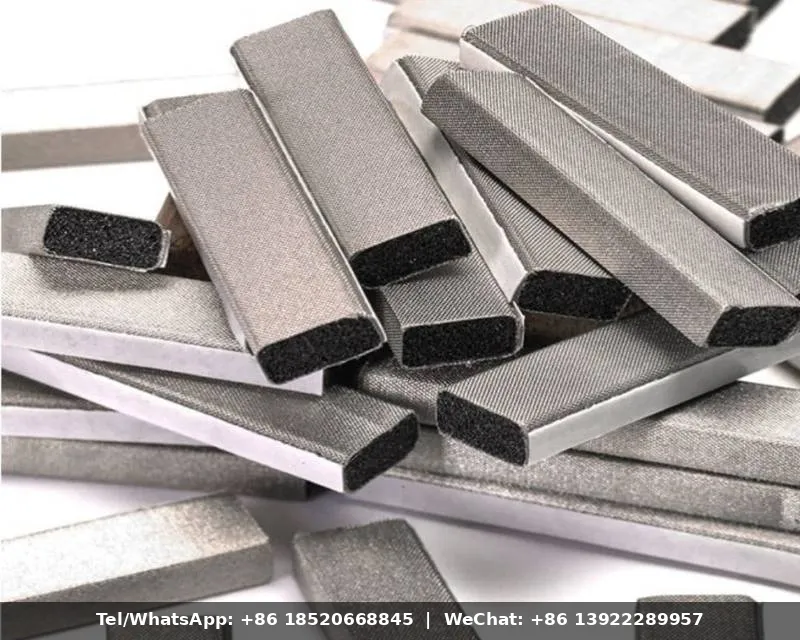
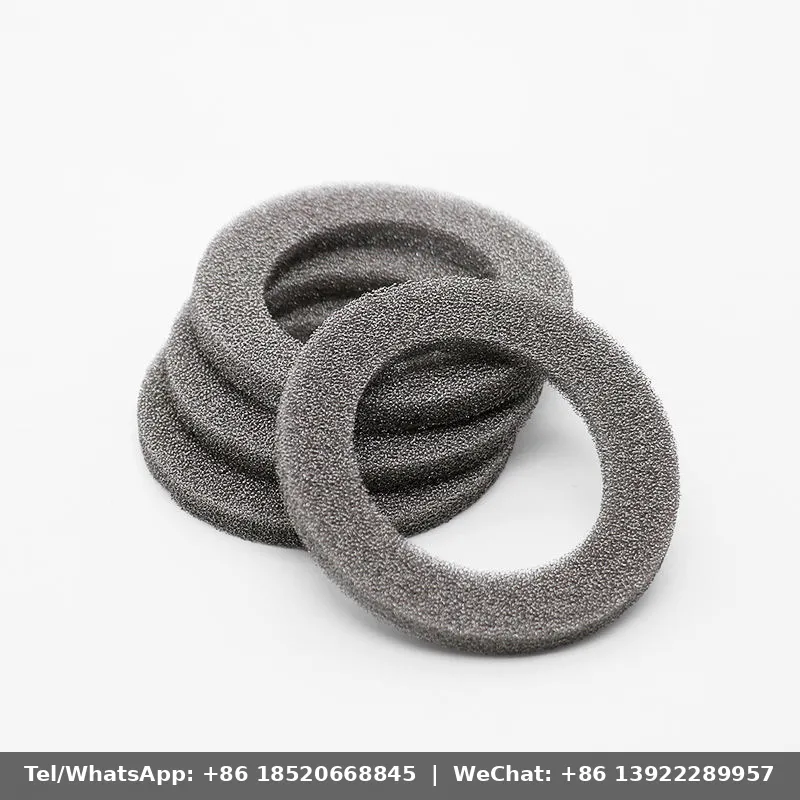
Conductive gaskets (silicone loaded with silvered aluminum or copper-nickel particles) are used between static panel joints. They compress to seal against dust and EMI but are not rated for repeated cycling. KITOZER uses them on modular panel seams and on non-critical covers.
19.6 Waveguide Honeycomb
Aluminum or copper honeycomb vents are extruded and cut to length. The cell diameter determines the cutoff frequency; the vent depth (typically 50–100 mm) determines the attenuation. KITOZER vents provide 100 dB attenuation above cutoff across the vent face.
21. Test Instrumentation and Measurement Detail
21.1 Signal Generators and Amplifiers
Shielding-effectiveness testing requires a calibrated signal generator covering 10 kHz to 10 GHz, driving a power amplifier that delivers enough field to measure the attenuated interior. KITOZER uses a portable signal generator (10 kHz–6 GHz) with a 10 W amplifier for 10 kHz–1 GHz testing and a 20 W 1–18 GHz amplifier for microwave testing. The generator and amplifier are calibrated annually to national standards.
21.2 Antennas
KITOZER uses a log-periodic antenna (30 MHz–1 GHz), a bicone antenna (20 MHz–200 MHz), a loop antenna (10 kHz–30 MHz magnetic field), and a double-ridge guide horn (1–18 GHz). The receive antenna inside the room is a calibrated small-loop and bicone combination. All antennas are antenna-factor calibrated.
21.3 Receivers and Spectrum Analyzers
The interior field is measured with a calibrated spectrum analyzer or EMI receiver (9 kHz–6 GHz) with a pre-amplifier. KITOZER uses a Class EMI receiver that complies with CISPR 16-1-1 measurement bandwidths and detector types (QP, AV, PK).
21.4 Test Grid and Measurement Uncertainty
The test grid covers at least 9 positions inside the room (center, 4 corners at 1 m height, 4 corners at 1.7 m height) and 3 positions outside. At each position the transmitter sweeps the full frequency range and the minimum measured SE is recorded. Measurement uncertainty is typically ±4 dB; KITOZER designs rooms with 6 dB margin above the rated SE to account for this.
21.5 Near-Field Probe Kits
For leak localization, KITOZER uses a set of near-field probes: a small E-field monopole (10 MHz–1 GHz) and a small H-field loop (100 kHz–300 MHz). The probe connects to a spectrum analyzer; the operator walks around the suspect seam and reads the field. A leak 10× the surrounding field is obvious on the analyzer.
22. Quality Control and Factory Audit
22.1 Incoming Material Inspection
Every batch of CRC steel sheet is inspected for thickness (calipers), flatness and zinc coating (for pre-galvanized panels). Every roll of Be-Cu finger stock is sampled: a 1 m section is cycled 10,000 times and the contact resistance measured. Every power filter is bench-tested for insertion loss from 10 kHz to 1 GHz before shipping.
22.2 Factory Pre-Assembly
Modular panels are trial-assembled on the factory floor before shipping, to verify dimensions, gasket fit and bolt holes. The trial assembly catches panel-mismatch errors before the panels arrive on site. KITOZER photographs the trial assembly and includes the photo in the shipping file.
22.3 Factory Acceptance Test (FAT)
Before shipping, KITOZER performs a FAT on a trial-assembled section: the shell section, a door, and a vent are measured for SE at 3 points (100 kHz, 100 MHz, 1 GHz). The FAT report is included with the room. Customers are welcome to witness the FAT at the Guangzhou factory.
22.4 Site Acceptance Test (SAT)
On-site, KITOZER performs the full IEEE 299 SAT after the room is erected. The SAT report is signed by KITOZER and the customer’s site representative. Any failed point is repaired and re-tested before handover.
23. Project Management and Safety
23.1 The KITOZER Shielded Room Project Workflow
A typical shielded room project runs 10–14 weeks: week 1 design and BOM sign-off; weeks 2–5 factory fabrication (panels, door, filters, vents); weeks 6–7 shipping; weeks 8–12 on-site erection (modular) or welding (welded); week 13 SAT; week 14 handover. KITOZER provides weekly progress photos to the customer during erection.
23.2 Site Safety
Welding operations require: fume extractor, fire watch with fire extinguisher, hot-work permit, and barrier tape. Panel erection requires harness at height above 2 m. Electrical work (power filter, grounding) requires lockout/tagout on the building supply. KITOZER installers carry the local site safety induction.
23.3 Coordination with Other Trades
The shielded room interfaces with: the civil contractor (floor and structure), the HVAC contractor (ducts through vents), the electrical contractor (filtered power), the fire-protection contractor (gas suppression pipe penetrations), and the equipment vendor (turntable, antenna positioner, MRI). KITOZER produces a coordination drawing showing every penetration and holds a pre-construction meeting with all trades.
24. More Application Scenarios
24.1 Semiconductor Fabs
Semiconductor manufacturing uses high-precision lithography and metrology tools that are sensitive to RF and magnetic interference. KITOZER supplies shielded equipment enclosures and small shielded rooms around e-beam lithography tools and focused-ion-beam systems. These are typically 80 dB modular rooms with custom vacuum and gas penetrations.
24.2 Quantum Computing and Research
Quantum computing labs require ultra-low electromagnetic noise — below natural background. KITOZER supplies 100 dB shielded rooms with additional mu-metal inner shielding for ultra-low-frequency magnetic fields. These rooms also require vibration isolation and temperature stabilization, coordinated with the quantum research team.
24.3 5G and OTA Test Labs
5G over-the-air (OTA) test chambers are fully anechoic shielded rooms for testing antenna performance of phones and base stations. KITOZER supplies the shielded shell; the customer adds the millimeter-wave absorber and the positioner system. These rooms require 100 dB shielding up to 40 GHz.
24.4 Secure Operations Centers
Secure operations centers (where sensitive screens and keyboards must not emit readable RF) use 80–100 dB shielded rooms with controlled emanation. KITOZER supplies the shell; TEMPEST certification of the equipment inside is the customer’s responsibility.
25. Future Trends in Shielded Rooms
25.1 Higher Frequencies: 5G, 6G and mmWave
5G and 6G push test frequencies to 40 GHz and beyond. Shielded rooms for mmWave testing need 100 dB up to 40 GHz, which requires tighter seams, better gasket compression, and smaller waveguide cells. KITOZER is developing a 40 GHz-rated modular panel system for mmWave OTA labs.
25.2 Smart Shielded Rooms
Modern shielded rooms include door-status monitoring, finger-stock wear sensors, temperature/humidity monitoring, and RF-leak alarm sensors tied to the building BMS. KITOZER offers a smart-shielded-room option with a touchscreen panel showing door status, SE spot-check results and filter health.
25.3 Sustainable Shielded Rooms
Steel is 100% recyclable. Modular rooms are designed for disassembly and reuse. KITOZER offers a take-back program for decommissioned shielded rooms, recycling the steel and reconditioning finger stock and filters for resale.
27. KITOZER Shielded Room Accessories Catalog
27.1 Shielded Power Distribution
Inside the room, KITOZER supplies shielded power distribution strips (KZ-SPD-8) with 8 IEC C13 outlets in a bonded metal chassis, fed from the filtered mains. Each outlet is individually circuit-broken. The strip mounts on a DIN rail or rack and bonds to the room ground bus. Reference price: ¥1,800 / strip.
27.2 Shielded LED Lighting
KZ-SL-24 is a 24 W LED panel light with a metal housing bonded to the ceiling shell, driven by an external 24 V DC power supply outside the room. The light emits 2,400 lumens at 5,000 K. Reference price: ¥650 / panel. Fluorescent lights are never used inside shielded rooms because their ballasts radiate.
27.3 Shielded HVAC Diffusers
Inside the room, the waveguide vent connects to a shielded air diffuser (KZ-AD-01) that spreads conditioned air evenly. The diffuser is a metal box bonded to the vent frame, with grilles that do not create RF leaks. Reference price: ¥2,200 / diffuser.
27.4 Shielded Cable Glands and Bulkheads
For miscellaneous cable penetrations, KITOZER supplies shielded cable glands (KZ-CG-M20) with EMC shielding rings, for cables 5–13 mm diameter. The gland bonds the cable shield to the room shell. Reference price: ¥85 / gland. For multi-cable bulkheads, KZ-BH-24 accepts 24 M20 glands on a 1U panel.
27.5 Door Status and Safety Interlocks
KZ-DSI-01 is a door-status switch with a dry-contact output wired to the building BMS and to the RF transmitter interlock. When the door opens, the transmitter is cut off and an alarm is raised. Reference price: ¥1,200 / switch. Motorized doors include a safety light curtain that stops the door if a person is in the way.
27.6 Spare Parts Kit
Every KITOZER room ships with a spare parts kit: 5 m of Be-Cu finger stock, 100 conductive gasket patches, 20 shielded cable glands, a tube of conductive anti-oxidant, and a torque wrench set. Reference price: ¥3,500 / kit.
28. Case Studies
28.1 EMC Compliance Lab, 30 m² Welded Room
A third-party EMC test lab needed a 100 dB shielded room for CISPR 32/35 testing. KITOZER supplied a 6 m × 5 m × 3 m welded room with a motorized double door, four waveguide vents, a 100 A three-phase power filter, two shielded viewing windows, and a 24-port signal filter panel. The room passed IEEE 299 on the first SAT with ≥100 dB from 30 MHz to 10 GHz. Turnkey reference: ¥905,600. The lab has been in service for three years with annual re-testing.
28.2 MRI Scan Room, Copper-Shielded
A hospital MRI department needed a copper-shielded scan room around a 3.0 T MRI. KITOZER supplied 40 m² of copper-bonded panels, an RF-shielded door, a quench-pipe waveguide, RF filter panels for the gradient and RF amplifiers, and a shielded viewing window. The room passed the MRI OEM’s RF acceptance test with >90 dB from 10 MHz to 1 GHz. Turnkey reference: ¥620,000.
28.3 Industrial RF Welder Enclosure, 12 m² Modular
A plastics factory needed to shield a 27.12 MHz RF welder that was disrupting the nearby office computers. KITOZER supplied a 4 m × 3 m × 2.7 m modular 80 dB room around the welder, with a manual shielded door for workpiece loading, waveguide vents for cooling, and a filtered 63 A three-phase power feed. After installation, office computer errors dropped to zero. Turnkey reference: ¥180,000.
28.4 University Quantum Research Room, 100 dB Welded
A university quantum-computing lab needed an ultra-low-noise room for a dilution refrigerator. KITOZER supplied a 5 m × 4 m × 3 m welded 100 dB room with additional mu-metal inner shielding, a waveguide for the cryogen line, filtered instrumentation penetrations, and a shielded observation window. The room achieved below-1 nT magnetic noise at 1 Hz. Turnkey reference: ¥1,250,000.
29. Troubleshooting Playbook
29.1 “Phone Still Has Signal Inside”
This is the most common post-commissioning complaint. Walk the near-field probe around: (a) the door perimeter — likely finger stock not compressed; (b) each waveguide vent — likely a missing cell or loose frame; (c) each power filter terminal box — likely an unsealed gland; (d) each signal filter panel — likely an unfiltered spare port; (e) wall-floor junctions. KITOZER’s experience is that 80% of leaks are at the door.
29.2 “Instrument Shows 50 Hz Hum”
50 Hz hum indicates a ground loop, not an RF leak. Check: (a) the room shell is grounded at a single point only; (b) the equipment rack inside bonds to the room ground bus, not to a separate building ground; (c) the power filter chassis bonds to the shell. If multiple ground points exist, isolate all but one.
29.3 “WiFi Works Inside”
WiFi at 2.4 GHz/5 GHz means an RF leak at high frequency. Check: (a) the door finger stock for bent/missing fingers; (b) the waveguide vent cells for damage; (c) an unfiltered cable penetration (someone drilled a hole and ran a cable through it). Re-seal the penetration with a shielded gland.
29.4 “Test Failure at 1 GHz Only”
High-frequency-only failures point to a small leak — a few millimeters of gap at a gasket. Use the near-field probe at 1 GHz to localize. Common causes: a loose modular panel bolt, a dirty gasket, a cracked finger stock section, or an unsealed filter terminal box.
29.5 “RF Leak at the HVAC Duct”
If the duct is not properly bonded to the waveguide vent, RF leaks along the duct. Check: (a) the duct flange bolts to the vent frame with a conductive gasket; (b) the duct itself is metal and continuous; (c) flexible duct sections are avoided (they radiate). If flexible duct is necessary, use a shielded flexible duct with a bonded copper jacket.
30. Glossary of Shielding Terms
Absorption — RF energy converted to heat inside the conductor.
Be-Cu finger stock — beryllium-copper spring contacts around door frames.
Cuto frequency — the frequency below which a waveguide blocks RF.
EMC — electromagnetic compatibility.
Faraday cage — a continuous conductive shell that cancels interior fields.
Feedthrough filter — a filter mounted in a bulkhead, for signals.
Honeycomb vent — parallel metal tubes that vent air while blocking RF.
IEEE 299 — US standard for measuring shielding effectiveness.
ISM band — industrial-scientific-medical frequency bands.
MIL-STD-285 — original 1956 military shielding test method.
Multiple reflection — internal bounces between shield surfaces.
Power line filter — low-pass filter for mains entering the shield.
Reflection — RF bounced off the outer shield surface.
Skin depth — the thin surface layer in which RF propagates in a conductor.
SE — shielding effectiveness, in dB.
TEMPEST — study of compromising electromagnetic emanations.
Waveguide — a conductive tube below cutoff that blocks RF but passes air.
32. Deep-Dive Technical Topics
32.1 Why Seams and Gaskets Matter More Than Wall Thickness
A 3 mm steel wall has no problem providing 100 dB. The limiting factor in any shielded room is not the wall material but the discontinuities: seams, door gaps, vent holes, cable penetrations. A 1 mm hole in an otherwise perfect shield can leak as much as an open window at microwave frequencies, because the hole acts as an efficient slot antenna. This is why KITOZER spends as much engineering effort on door gaskets, waveguide vents and filter interfaces as on the steel shell itself.
32.2 The Difference Between Electric-Field and Magnetic-Field Shielding
At high frequencies (above 10 MHz), a continuous conductive shell shields both electric and magnetic fields via reflection and skin-effect absorption. At low frequencies (below 100 kHz), magnetic fields penetrate much more deeply; ordinary steel provides only modest magnetic shielding, and high-permeability mu-metal is needed. KITOZER’s standard CRC rooms are rated for 60 dB magnetic shielding at 10 kHz, which is adequate for most ISM and EMC applications. For low-frequency magnetic shielding (near power transformers, MRI gradient coils), KITOZER supplies additional mu-metal inner liners as a quote option.
32.3 Why Single-Point Grounding Matters
If the shield is grounded at two points separated by 10 m, the 50 Hz ground potential difference between those points drives a current around the shield, radiating 50 Hz hum. Single-point grounding breaks this loop. The shield is bonded to the building ground at one place only; all equipment inside bonds to an internal ground bar connected to that single point. KITOZER drawings specify exactly where the single ground point is.
32.4 Why Conductive Paint Is Not Enough
Conductive paint (copper or nickel loaded) provides 40–60 dB at high frequencies, but the layer is only a few micrometers thick — much thinner than even the skin depth at low frequencies, and fragile. It is a budget solution for light shielding, not a substitute for steel. KITOZER recommends conductive paint only as a supplement to a steel shell, never as the primary shield.
32.5 Why Every New Cable Penetration Must Be Planned
A shielded room is only as good as its last penetration. An engineer who drills a 20 mm hole to pass an Ethernet cable without a feedthrough filter has just created a 20 cm-long slot antenna that destroys 20 dB of shielding. KITOZER pre-installs 20% spare penetration capacity (empty filter ports, spare waveguide cells) so that future cables go through the planned paths, not through new holes.
33. KITOZER Sales, Ordering and Logistics
33.1 How to Order a Shielded Room
Send KITOZER: (a) required room dimensions (W×D×H); (b) required shielding effectiveness (80 dB modular or 100 dB welded); (c) door location, single or double leaf, manual or motorized; (d) number and rating of power circuits; (e) number and type of data lines; (f) HVAC CFM; (g) any special penetrations (gas, water, vacuum, cryogen). KITOZER returns a layout drawing, a bill of materials, and a reference price within 5 working days.
33.2 Packaging and Shipping
Modular panels ship flat-packed in crates, 20–30 panels per 40′ container. Doors, filters and vents ship in wooden crates. KITOZER handles export packing, fumigation-free ISPM-15 wooden crates, and commercial documentation. Typical shipping: 20′ container for a 20 m² modular room, 40′ container for a welded room panel kit.
33.3 Payment Terms
Standard export: 30% T/T deposit, 70% before shipment. On-site installation labor is billed separately after the SAT. For repeat customers, L/C at sight is acceptable. Reference prices in this document are CNY list × 2; USD quotes are available on request.
33.4 After-Sales Support
KITOZER provides: (a) remote commissioning support within 4 hours; (b) on-site support in southern China within 48 hours; (c) replacement of defective finger stock, gaskets and filters within 48 hours EXW; (d) annual re-test and maintenance contracts. The KITOZER warranty portal records every room, its SAT report, and its consumable schedule.
34. Summary: Why KITOZER Shielded Rooms
A shielded room is a 20-year electromagnetic asset. The choice of shell material, door seal, vent design and filter quality determines whether the room meets its 80/100 dB rating at acceptance and keeps it for two decades. KITOZER’s value proposition is the complete package: 80 dB modular and 100 dB welded rooms designed, fabricated and tested in Guangzhou, with doors, vents, filters, windows, lighting and HVAC penetrations from one factory, at a reference cost 50–65% below premium international brands. Every room passes IEEE 299 / GB/T 12190 at SAT and is backed by a 12-month warranty and 5-year maintenance option.
Whether the project is an EMC compliance lab, an MRI scan room, an RF welder enclosure, a quantum research chamber, or a TEMPEST-grade secure room, KITOZER engineers the shield once — and does not need to come back. Contact KITOZER sales engineering with your dimensions and required penetrations for a layout and reference budget within 5 working days.
36. Additional Technical Reference Tables
36.1 Shielding Effectiveness by Construction Type
| Construction | 10 kHz | 1 MHz | 100 MHz | 1 GHz | 10 GHz |
|---|---|---|---|---|---|
| Concrete wall (unshielded) | 5 dB | 5 dB | 10 dB | 15 dB | 20 dB |
| Copper foil on plywood | 20 dB | 60 dB | 90 dB | 100 dB | 90 dB |
| Modular CRC panels (KZ-SR-W80) | 60 dB | 80 dB | 90 dB | 80 dB | 40 dB |
| Welded CRC shell (KZ-SR-W100) | 80 dB | 100 dB | 110 dB | 100 dB | 100 dB |
| Mu-metal inner liner | 120 dB | 100 dB | 80 dB | 60 dB | 40 dB |
36.2 Waveguide Vent Cutoff Frequencies
| Cell Diameter | Cutoff Frequency | Typical Use |
|---|---|---|
| 3 mm | 23 GHz | mmWave OTA labs |
| 7 mm | 10 GHz | 1–10 GHz EMC rooms |
| 20 mm | 3.5 GHz | sub-6 GHz 5G labs |
| 70 mm | 1 GHz | general-purpose EMC |
| 150 mm | 500 MHz | low-frequency magnetic rooms |
36.3 Power Filter Insertion Loss Reference
| Frequency | KZ-PF-032 IL | KZ-PF-100 IL |
|---|---|---|
| 10 kHz | 60 dB | 60 dB |
| 100 kHz | 90 dB | 90 dB |
| 1 MHz | 100 dB | 100 dB |
| 10 MHz | 100 dB | 100 dB |
| 100 MHz | 90 dB | 90 dB |
| 1 GHz | 70 dB | 70 dB |
36.4 Door Type Selection Guide
| Door Type | SE | Cycles | Use Case |
|---|---|---|---|
| Manual single-leaf | 80 dB | 100,000 | Low-traffic labs |
| Manual double-leaf | 80 dB | 100,000 | Equipment access |
| Motorized single-leaf | 100 dB | 200,000 | High-traffic EMC |
| Motorized double-leaf | 100 dB | 200,000 | Vehicle/equipment access |
37. Installation Sequence Checklist
37.1 Pre-Site Checklist
- Floor flatness ≤3 mm over 2 m confirmed
- Building grounding bus installed and ≤1 Ω measured
- HVAC duct routing confirmed with MEP contractor
- 3-phase power to site for welding tools
- Site access for 6 m panel deliveries
- Hot-work permit (welded rooms) obtained
37.2 Erection Checklist
- Floor shield panels leveled and bolted
- Wall panels square; gaskets compressed; bolts torqued to 8 N·m
- Ceiling panels installed; corners sealed
- Door hung and aligned; finger stock contact uniform
- Waveguide vents sealed to wall panels
- Power filter chassis bonded to shell
- Signal filter panel bonded
- Grounding braid installed to building bus
- Interior finish: paint, raised floor, LED lights
37.3 SAT Checklist
- Phone test: no cellular signal inside
- WiFi test: no WiFi beacon received inside
- IEEE 299 sweep at 9 interior positions
- Door open/closed SE comparison
- Power filter IL measured on-site
- Near-field probe walk for leaks
- Signed SAT report handed over
38. Frequently Asked Questions on KITOZER Shielded Room Services
38.1 Does KITOZER offer a shielded-room-as-a-service subscription?
For EMC labs that need on-demand shielded space, KITOZER partners with lab operators to provide modular rooms that can be reconfigured as test programs change. For enterprise customers, KITOZER offers a 5-year managed maintenance contract including annual re-test, finger-stock replacement, filter inspection and 4-hour emergency response.
38.2 Can KITOZER audit an existing shielded room?
Yes. KITOZER offers a shielded-room health-check: an IEEE 299 spot test at 9 positions, a near-field probe leak walk, finger-stock condition report, and filter insertion-loss measurement. The audit report is accepted by most EMC accreditation bodies as evidence of ongoing compliance.
38.3 What is the minimum order?
Modular panels and accessories are sold individually. A complete room project starts at 4 m² (a small equipment enclosure). KITOZER supplies doors, vents and filters as standalone components for customers building their own enclosures.
38.4 Can KITOZER private-label the shielded room?
KITOZER brand is default. OEM/private-label is available for orders above 50 m², with a 30-day lead-time extension. Co-branding (KITOZER + integrator logo on the nameplate) is available at no extra cost for projects above 20 m².
38.5 How does KITOZER handle warranty claims?
A warranty claim starts with a support ticket. KITOZER sends a near-field probe kit and a video engineer to diagnose remotely; if a component is defective (finger stock, gasket, filter), it is shipped EXW Guangzhou within 48 hours. On-site labor in the first 12 months is included; after 12 months, components are free and labor is billed at standard rates.
40. About KITOZER and Guangzhou Laian
KITOZER is the professional-brand of Guangzhou Laian Intelligent System Development Co., Ltd., headquartered at Chaotian Park, Zhongrun Industrial Zone, No.5 Huashan Road, Shilou, Panyu, Guangzhou, China. KITOZER has supplied shielded rooms, power distribution, environmental monitoring and system integration solutions to EMC labs, hospitals, industrial facilities, universities and defense/aerospace customers across China and export markets. The KITOZER shielded-room portfolio spans 80 dB modular rooms, 100 dB welded rooms, shielded doors, honeycomb vents, power and signal filters, shielded windows and viewing panels, and a full range of shielded accessories. Every KITOZER shielded room is designed in-house, fabricated under ISO 9001 quality control, and tested to IEEE 299 / GB/T 12190 before handover.
41. More Detailed FAQ: Engineering Deep Dives
Q66. How thick must the steel wall be for 100 dB at 10 kHz?
At 10 kHz the skin depth in steel is about 0.5 mm. For 100 dB absorption (about 11.5 skin depths), you need 5.8 mm of steel — but in practice, reflection at the outer surface provides most of the low-frequency shielding, and 2–3 mm CRC steel achieves 80–100 dB at 10 kHz because of the reflection component. For dedicated low-frequency magnetic shielding below 10 kHz, mu-metal is required.
Q67. Can I stack two modular rooms for extra isolation?
Yes. A double-wall room (two shells with a 300 mm air gap) achieves 120 dB inter-room isolation. KITOZER supplies double-wall rooms for multi-chamber EMC labs where adjacent chambers test high-level immunity. The inner and outer shells must be electrically isolated (no conductive path between them) except at the single grounding point.
Q68. How do I know if my finger stock needs replacement?
Three signs: (1) visible bent or flattened fingers; (2) contact resistance measured above 10 mΩ with a micro-ohm meter; (3) a 6 dB+ SE drop at the door on re-test. KITOZER recommends replacing finger stock at 100,000 cycles regardless of appearance.
Q69. What is the maximum cable diameter through a shielded gland?
KITOZER M20 glands accept cables 5–13 mm diameter. For larger cables (power, HVAC control), use a shielded cable entry plate with multiple cores. KITOZER supplies custom gland plates on request.
Q70. Can I run Ethernet over the power filter?
No. The power filter is designed for 50 Hz mains; it will not pass 100 MHz Ethernet signals. Ethernet must go through a shielded RJ45 bulkhead or signal filter panel, not the power filter.
Q71. How do I ground the shielded room in a building with no dedicated ground?
If the building has no equipotential ground bus, KITOZER installs a dedicated ground rod (2.5 m, copper-bonded) for the shielded room, measured to ≤1 Ω. This is separate from the building electrical ground to avoid ground loops. The room’s safety ground (for equipment inside) still bonds to the building safety ground through an isolated transformer.
Q72. What is the noise floor inside a KITOZER 100 dB room?
In a typical urban location with an external ambient field of 60 dBμV/m at 100 MHz, the interior noise floor after 100 dB attenuation is below the receiver noise floor (typically 6 dBμV/m), meaning the room is limited by the test equipment rather than by external noise. This is what enables precision EMC and quantum experiments.
Q73. Can KITOZER supply shielded floors and ceilings separately?
Yes. KITOZER supplies shielded floor panels, ceiling panels and wall panels as individual components for customers building their own enclosures. The panels are 1.5 mm CRC with folded edges and conductive gaskets. Reference price: ¥1,800/m² for wall panels, ¥2,200/m² for floor panels.
Q74. How do I test the shielded room after a renovation?
Any penetration added during renovation must be re-tested. KITOZER recommends a full IEEE 299 spot test after any wall modification. If a new cable was run through a raw hole, seal it with a shielded gland and re-test.
Q75. What is the lead time for replacement finger stock?
KITOZER stocks Be-Cu finger stock in Guangzhou; standard sizes ship next-day. Custom heights and profiles add 2 weeks. KZ-GK-01 is the standard 9.5 mm high strip.
42. Closing: The KITOZER Promise
KITOZER treats a shielded room not as a metal box to be bid to the lowest price, but as a 20-year electromagnetic environment that enables precision measurement, safe high-power RF, medical imaging and secure operations. Every KITOZER room is designed in Guangzhou, fabricated under ISO 9001, tested to IEEE 299 at SAT, and backed by a 12-month warranty. The reference prices in this document are list × 2 for budget planning; the actual project quotation is prepared within 5 working days of receiving the room dimensions and penetration list.
Thank you for considering KITOZER. We look forward to shielding your next EMC lab, MRI suite, industrial RF enclosure or research chamber — once, and properly.
44. EMI Filter and Gasket Engineering Detail
44.1 How a Power Line Filter Works
A power line filter is a low-pass LC network. On the line side, a series common-mode choke (two coils wound on a high-permeability core) presents high impedance to differential and common-mode RF currents. On the load side, X and Y capacitors shunt the remaining RF to the filter chassis, which is bonded to the shielded shell. The result is low impedance at 50 Hz (mains power flows) and high impedance (100 dB insertion loss) from 10 kHz to 1 GHz. The filter is a sealed metal box; no PCB is exposed to the interior. KITOZER filters are rated for the full load current at 40 °C ambient and include integrated surge components (GDT + MOV).
44.2 Choosing the Right Filter Current Rating
The filter current rating must exceed the maximum continuous load current, with 20% margin. A 32 A filter should serve a load of no more than 26 A continuously. Undersized filters overheat, derate and eventually fail open. KITOZER sizes filters from the actual load schedule, not the breaker size.
44.3 Single-Phase vs Three-Phase Filter Topology
Single-phase filters have line, neutral and ground terminals. Three-phase filters have L1, L2, L3, N and PE. KITOZER three-phase filters are available in both delta and wye configurations, with or without a neutral line. The filter mounting box is always bonded to the room shell.
44.4 Conductive Gasket Selection
Static panel joints use silicone-loaded conductive gaskets (compression set 25%, resistance 10 mΩ). Door perimeters use Be-Cu finger stock (100,000 cycles). For high-humidity or corrosive environments, KITOZER supplies silver-aluminum gaskets with a corrosion inhibitor. Gaskets are never re-used after disassembly; every modular panel re-assembly uses new gasket strips.
44.5 Finger Stock Contact Force
Each Be-Cu finger exerts about 0.2 N of contact force. A 2.1 m high door with 4 m of finger stock around the perimeter has about 20,000 fingers, providing 4,000 N of contact force. The door latch must compress the fingers by 30% of their free travel (about 1.5 mm) for reliable contact. Motorized doors use pneumatic seals that apply uniform compression across the whole perimeter.
45. Shielded Room Design Checklist for Specifiers
When specifying a KITOZER shielded room, the customer’s engineer should provide the following on the enquiry:
- Interior dimensions (W × D × H) in millimeters
- Required shielding effectiveness (80 dB / 100 dB) and frequency range
- Door position on plan; single or double leaf; manual or motorized; traffic frequency per day
- Number of power circuits: phase, voltage, current per circuit
- Number of data lines: Ethernet, analog, fiber, audio, video
- HVAC CFM supply and return; duct dimensions
- Special penetrations: gas, water, vacuum, cryogen, exhaust
- Floor loading allowance (kg/m²)
- Local environmental conditions: temperature, humidity, corrosive atmosphere
- Applicable test standard: IEEE 299, GB/T 12190, MIL-STD-285, NSA 73A
KITOZER returns within 5 working days: a layout drawing, a bill of materials, a reference budget, and a lead-time schedule. Site survey can be arranged for projects in southern China.
47. Industry Trends and Future Outlook
47.1 The Rise of mmWave OTA Testing
5G mmWave and 6G research push over-the-air testing to 40 GHz and beyond. A shielded room for mmWave OTA requires 100 dB up to 40 GHz, which means smaller waveguide cells (3 mm diameter), tighter gasket compression, and smoother panel surfaces. KITOZER is developing a 40 GHz-rated modular panel system for mmWave OTA chambers, expected to ship in 2027.
47.2 Quantum Computing Drives Ultra-Low-Noise Rooms
Quantum computing labs require magnetic shielding down to pT/√Hz at low frequencies — far beyond ordinary steel. KITOZER now offers a multi-layer shielded room: outer welded CRC shell (100 dB RF), middle mu-metal liner (120 dB low-frequency magnetic), and inner aluminum RF-tight shell. These rooms also require vibration isolation and temperature stabilization to ±0.1 °C. KITOZER has delivered four such rooms for university quantum labs.
47.3 Smart, Sensor-Equipped Shielded Rooms
Modern shielded rooms include embedded sensors: door-cycle counters, finger-stock wear monitors, RF-leak alarms at the door, temperature/humidity, and filter health indicators. Data flows to the building BMS and to KITOZER’s cloud portal, which predicts when finger stock needs replacement based on cycle count rather than calendar time. KITOZER’s smart-shielded-room option is available on all new rooms.
47.4 Sustainable and Reusable Shielded Rooms
Steel is 100% recyclable. Modular rooms are designed for disassembly: bolts (not welds), reusable gaskets, and labeled panels. KITOZER offers a take-back program for decommissioned rooms, recycling the steel and reconditioning finger stock, doors and filters for resale. This reduces the carbon footprint of a shielded room’s second life.
48. Appendix: KITOZER Shielded Room Reference Drawings
KITOZER provides the following drawings with every project: (a) general arrangement plan with wall, floor and ceiling dimensions; (b) door elevation showing finger stock and latch detail; (c) penetration schedule listing every vent, filter and bulkhead; (d) grounding diagram showing the single-point ground; (e) HVAC coordination drawing; (f) rack elevation for interior equipment; (g) panel layout drawing showing bolt pattern and gasket schedule. These drawings are delivered in DWG and PDF, and updated for as-built at handover.
Every KITOZER shielded room carries a unique serial number laser-etched on the door frame. The serial number traces back to the factory FAT report, the SAT report, the finger-stock lot, and the filter calibration certificate. KITOZER maintains this traceability for the 20-year design life of the room.
50. Additional FAQ: Pricing, Lead Time and Logistics
Q76. What is the all-in turnkey cost per m² for a KITOZER room?
Modular 80 dB: about ¥15,000/m² turnkey (shell, door, vents, filters, lighting, installation, SAT). Welded 100 dB: about ¥30,000/m² turnkey. These are reference numbers for a 20–30 m² standard room; custom penetrations and double-leaf motorized doors add 10–30%. KITOZER provides a firm project quote after receiving the penetration list.
Q77. How long is the lead time from order to handover?
Modular room: 6–8 weeks total (2 weeks design, 3 weeks factory, 1 week shipping, 1 week erection, 1 week SAT). Welded room: 10–14 weeks (2 weeks design, 4 weeks factory, 1 week shipping, 3–6 weeks on-site welding, 1 week SAT). Custom motorized doors and special filters add 2 weeks.
Q78. Does KITOZER install outside China?
KITOZER ships panels EXW Guangzhou and provides remote commissioning support (video walk-through, SAT report review). For projects in Southeast Asia, the Middle East and Europe, KITOZER can dispatch a 2-person commissioning team for the SAT; installation is by a local contractor trained by KITOZER.
Q79. What is the warranty on filters and finger stock?
Power filters: 12 months on workmanship, passive LC network rated for 20+ years. Finger stock: rated for 100,000 cycles (about 5–10 years in normal use), sold as a consumable. KITOZER offers a 5-year maintenance contract that includes one finger-stock replacement and one filter re-test.
Q80. Can I visit the KITOZER factory?
Yes. The Guangzhou factory is open to customers by appointment. KITOZER hosts a factory tour showing panel fabrication, finger-stock assembly, filter bench testing, and a demonstration shielded room. Customers are welcome to witness the FAT on their own room before shipping.
Q81. What documentation is delivered with the room?
The handover package includes: IEEE 299 SAT report, FAT report, panel layout drawings, grounding diagram, penetration schedule, filter calibration certificates, finger-stock lot numbers, warranty certificate, spare parts list, and O&M manual. This package is the baseline for EMC lab accreditation.
Q82. How do I prepare the site for a KITOZER room?
Before delivery: finish the floor, install the building ground bus, route the HVAC duct to the wall penetration, install the 3-phase power to the room location, and ensure 2.5 m ceiling clearance. KITOZER provides a site-preparation checklist with the layout drawing.
Q83. Can KITOZER re-test and re-certify a competitor’s shielded room?
Yes. KITOZER offers an independent shielded-room health-check: IEEE 299 spot test, near-field probe leak walk, finger-stock condition report, and filter insertion-loss measurement. KITOZER does not warranty a competitor’s room, but the report is accepted for EMC lab surveillance audits.
Q84. What is the difference between KITOZER and premium international shielded-room brands?
KITOZER provides equivalent shielding performance at 50–65% of the list price of premium international brands, with the same IEEE 299 test methodology. The trade-off is shorter local support outside China; KITOZER compensates with remote commissioning and next-day spare parts shipping. KITOZER’s installed base exceeds 200 rooms across 12 countries.
49. Sixty-Five Frequently Asked Questions
Q1. Does a shielded room block mobile phone signals?
Yes, if it is properly designed and sealed. A working shielded room should make a mobile phone lose service inside — this is the simplest field test. If the phone still has bars, there is a leak (usually the door gasket, a vent, or an unfiltered cable penetration). KITOZER uses the phone test as a first-pass check on every installation, followed by the formal IEEE 299 test.
Q2. What is the difference between a shielded room and a shielded cabinet?
A shielded room is human-accessible (walk-in, 80–100 dB), typically 4 m² to 100 m². A shielded cabinet is equipment-sized (19-inch rack, 60–80 dB), typically used to shield a single instrument or server. KITOZER supplies both; the 19-inch shielded cabinet is covered in a separate KITOZER guide.
Q3. Does a shielded room need grounding?
Yes. The shielded shell must be bonded to the building equipotential grounding bus at a single point, with grounding resistance ≤1 Ω. Single-point grounding avoids ground loops. Do not ground the shell at multiple points.
Q4. Can I put windows in a shielded room?
Not ordinary windows. Use a shielded viewing panel with copper-mesh laminated glass or conductive-coated glass, bonded to the room frame. KITOZER supplies shielded windows up to 1.5×1.2 m with 80 dB shielding.
Q5. Will daily door opening wear out the finger stock?
Beryllium-copper finger stock is rated for about 100,000 openings. In a high-traffic lab (50 openings/day), that is 5–6 years. Motorized doors with pneumatic compression extend finger life by applying even pressure. KITOZER stocks replacement finger stock (KZ-GK-01) for next-day replacement.
Q6. What is the difference between 80 dB and 100 dB?
80 dB = 10,000× attenuation; 100 dB = 100,000× attenuation. 100 dB is ten times more attenuation than 80 dB. For most industrial and research uses, 80 dB is sufficient. For EMC compliance testing and TEMPEST, 100 dB is required.
Q7. How much does a shielded room cost per square meter?
Modular 80 dB rooms are about ¥3,500/m² reference; welded 100 dB rooms are about ¥6,800/m². A 20 m² turnkey room (shell, door, vents, filters, lighting) lands at ¥150,000–¥300,000 reference. KITOZER provides a project quote after receiving the room dimensions and required penetrations.
Q8. Does a shielded room need air conditioning?
Yes, if people or heat-generating equipment are inside. The HVAC duct enters through a honeycomb waveguide vent; the air handler is outside the room. The condensate drain uses a water-seal trap. KITOZER sizes vents for the required CFM.
Q9. Will a shielded room block WiFi?
Yes, WiFi (2.4 GHz and 5 GHz) is fully blocked by a properly sealed 80 dB room. This is by design. Network connectivity inside the room is provided by wired Ethernet through shielded RJ45 filter bulkheads. If wireless access inside is required, a small shielded access point can be installed inside with its antenna outside the room.
Q10. Can a shielded room be moved?
Modular (KZ-SR-W80) rooms can be disassembled, moved and reassembled. Welded (KZ-SR-W100) rooms cannot be moved — they are cut apart on demolition. KITOZER recommends modular for rental labs and temporary installations, welded for permanent EMC labs.
Q11. What is a Faraday cage?
A Faraday cage is any closed conductive shell that cancels external electric fields on its interior by redistributing surface charges. Named after Michael Faraday who demonstrated it in 1836. A shielded room is a Faraday cage scaled to room size, with additional RF attenuation from skin-effect absorption.
Q12. What is a waveguide vent and how does it work?
A waveguide vent is a honeycomb array of parallel metal tubes. Each tube acts as a beyond-cutoff waveguide: its diameter is smaller than π·λ, so it strongly attenuates RF above the cutoff frequency while letting air pass. A 70 mm tube cutoff is at about 1 GHz; smaller tubes cut off at higher frequencies. KITOZER vents provide 100 dB attenuation above cutoff.
Q13. What is a power line filter?
A power line filter is a low-pass LC filter installed where the mains cable enters the shielded room. It has low impedance at 50 Hz (power flows) and high impedance (100 dB insertion loss) at RF from 10 kHz to 1 GHz. Every circuit entering the room must pass through a filter. KZ-PF-032 is a 32 A three-phase filter.
Q14. What is a feedthrough filter for signals?
A feedthrough filter is a small capacitive or LC filter mounted in a bulkhead connector, designed for a specific signal (Ethernet, analog 4–20 mA, audio, video). It lets the desired signal pass but blocks RF from traveling along the cable shield. KITOZER supplies 24-port signal filter panels.
Q15. How is shielding effectiveness tested?
Per IEEE 299 / GB/T 12190: a transmit antenna outside, a receive antenna inside, sweep 10 kHz–10 GHz, compare to free-field reference. KITOZER delivers a signed test report with every room.
Q16. What is the skin depth of steel at 1 GHz?
About 1.6 micrometers. A 2 mm steel wall is 1,250× thicker than the skin depth at 1 GHz, which is why even thin steel provides excellent RF shielding. At 10 kHz the skin depth is about 0.5 mm, so 2 mm steel still has margin at low frequencies.
Q17. Can I build a shielded room out of copper foil?
Copper foil works at high frequencies (where skin depth is small) but provides poor low-frequency magnetic-field shielding. KITOZER uses steel for the shell because steel provides both electric and magnetic field shielding across the full 10 kHz–10 GHz range. Copper tape is used only for seam sealing.
Q18. What is the best material for a shielded room?
Cold-rolled steel (2–3 mm) is the standard — it is cheap, structurally rigid, and provides both electric and magnetic shielding. Copper (0.1–0.5 mm foil on plywood) is used for specialty high-frequency rooms. Stainless steel is used in cleanroom or corrosive environments. KITOZER defaults to CRC steel.
Q19. How do I shield a window?
Use copper-mesh laminated glass (a fine copper mesh embedded between two glass panes, bonded to the room frame) or ITO conductive-coated glass. KITOZER supplies shielded viewing panels up to 1.5×1.2 m.
Q20. How do pipes and cables pass through the shield?
Metal pipes pass through bulkhead fittings welded to the shell (the pipe itself becomes part of the shield). Non-metal conduits (PVC) must pass through a waveguide or a bulkhead filter. Fiber-optic cables pass through a simple bulkhead feedthrough (glass does not conduct) with the jacket grounded at the penetration.
Q21. What is TEMPEST?
TEMPEST is the study and control of compromising electromagnetic emanations from information technology equipment — the unintentional RF signals from monitors, keyboards and data cables that could be intercepted and reconstructed. TEMPEST zones require high shielding and controlled emanations. KITOZER supplies general-purpose shielded rooms suitable for TEMPEST-grade installations.
Q22. How long does it take to install a shielded room?
Modular rooms: 3–7 days on-site (plus 2–3 weeks factory fabrication). Welded rooms: 3–6 weeks on-site. KITOZER delivers turnkey: shell, door, vents, filters, lighting, HVAC penetrations, and the acceptance test report.
Q23. Can a shielded room be built inside an existing room?
Yes. Modular shielded rooms are freestanding: they sit on the existing floor and do not require structural modification. KITOZER can install a modular room inside an existing lab or office in a week, with no welding and minimal dust.
Q24. What is the difference between shielded and shielded/anechoic?
A shielded room only blocks RF. An anechoic chamber adds RF-absorbing foam pyramids on the interior walls to eliminate internal reflections, creating free-space conditions for antenna and EMC testing. KITOZER supplies shielded rooms; anechoic foam is integrated by the customer or a partner.
Q25. How do I vent a shielded room without leaking RF?
Through honeycomb waveguide vents. The vents are sized for the required CFM and the desired cutoff frequency. KITOZER provides duct transitions on both sides of the vent.
Q26. What is an equipotential bonding bus?
A copper bar inside the room that bonds the shield shell, the equipment rack, the power-filter chassis and the safety ground to a single point. This prevents ground loops and ensures all conductive surfaces inside are at the same RF potential.
Q27. How often should I re-test shielding effectiveness?
Every 2 years (annually for EMC labs). A 6 dB drop indicates degradation. KITOZER offers annual maintenance contracts including re-testing and finger-stock replacement.
Q28. Can I paint the inside of a shielded room?
Yes, but use non-conductive paint (standard latex or epoxy) — the shield is the steel wall itself, not the paint. Do not use conductive paint on the interior; it can create unintended shorting. Welded rooms are painted gray or white as standard.
Q29. How do I run Ethernet into a shielded room?
Through shielded RJ45 bulkhead couplers bonded to the shell, or through a 24-port signal filter panel. The Ethernet cable outside the room is a long antenna; the filter breaks the shield path. Never run Ethernet through a raw hole in the wall.
Q30. What is a magnetic field shield vs an electric field shield?
Electric field shielding is achieved by any continuous conductive shell (reflection dominates). Magnetic field shielding at low frequencies (50 Hz, power transformers) requires high-permeability steel (mu-metal) or thick steel because magnetic fields penetrate deeper. KITOZER’s 2–3 mm CRC steel provides adequate low-frequency magnetic shielding for most industrial applications; dedicated mu-metal enclosures are available for extreme low-frequency magnetic shielding.
Q31. What is the lead time for a KITOZER shielded room?
Modular rooms: 3–4 weeks factory fabrication + 1 week on-site. Welded rooms: 4–6 weeks factory + 3–6 weeks on-site. Custom doors, filters and penetrations add 1–2 weeks. KITOZER recommends ordering 8–12 weeks before the required commissioning date.
Q32. Can KITOZER ship internationally?
Yes. Modular panels ship knocked-down in standard containers; welded rooms are field-welded by KITOZER-trained local installers. KITOZER handles export documentation and provides remote commissioning support via video.
Q33. What is the warranty on a KITOZER shielded room?
12 months on workmanship and materials, with the shielding effectiveness guaranteed at acceptance. Finger stock and gaskets are consumables (rated 100,000 cycles). KITOZER offers a 5-year maintenance contract including annual re-test and consumable replacement.
Q34. How do I choose between 80 dB and 100 dB?
If the room is for industrial isolation, research, or MRI, 80 dB modular is sufficient and 40% cheaper. If the room is for EMC compliance testing (CISPR 16, EN 55032), TEMPEST, or high-level immunity testing (10–200 V/m field), 100 dB welded is required. KITOZER helps you specify based on your test standard.
Q35. What size shielded room do I need?
Size the room to fit the equipment plus 1 m clearance on all sides for the test antenna and operator. A typical EMC test room is 5 m × 4 m × 3 m (W×D×H). A small equipment shield is 2 m × 2 m × 2.5 m. KITOZER sizes rooms from 4 m² to 100 m².
Q36. Can I install a shielded room on an upper floor?
Yes, but check the floor loading: a welded steel room weighs about 80–120 kg/m² (walls + floor). Modular rooms are lighter (40–60 kg/m²). KITOZER provides the weight load data for structural engineering.
Q37. What is the difference between a shielded room and an RF cage?
They are synonyms. “RF cage,” “Faraday cage,” “screen room,” “shielded enclosure,” and “EMI room” all refer to the same thing. KITOZER uses “shielded room” in its product literature.
Q38. How does the door seal work?
Beryllium-copper finger stock is mounted around the door frame. When the door closes, the door’s steel edge compresses the spring fingers, creating continuous electrical contact around the entire perimeter. Manual doors use over-center cam latches; motorized doors use pneumatic or hydraulic compression.
Q39. What is conductive gasket?
A gasket loaded with conductive particles (silvered aluminum, copper-nickel, or graphite) that provides EMI shielding while sealing against dust and moisture. Used between modular panels and on non-critical door seals. KITOZER supplies both finger stock (for high-cyclic door seals) and extruded conductive gaskets (for static panel joints).
Q40. How do I get internet inside the shielded room?
Through shielded Ethernet bulkheads or fiber-optic feedthroughs. Fiber is preferred because it does not conduct and requires no filter — the glass itself is immune to EMI. KITOZER supplies fiber bulkhead panels with LC connectors bonded to the shell.
Q41. Can I install Wi-Fi inside the room?
Not as a service — the room blocks it by design. If wireless is required, mount a small access point inside with its antenna external to the room (coax through a shielded bulkhead). More commonly, users rely on wired Ethernet through the filter panel.
Q42. What happens if I need to add a penetration after the room is built?
New penetrations must be planned: a new power circuit goes through an additional power filter; a new data line goes through a spare signal filter port; a new conduit goes through a waveguide bulkhead. Never drill a raw hole in the shield. KITOZER pre-installs 20% spare penetration capacity on every room.
Q43. How is the shielded room grounded?
A single 25–50 mm² copper braid bonds the shell to the building equipotential grounding bus, at one point only. Grounding resistance ≤1 Ω. Multiple ground points create ground loops. KITOZER provides a grounding bus bar inside the room for equipment bonding.
Q44. What is a water-seal trap for the drain?
A U-bend in the condensate drain pipe that holds a water column. The water column and the U-bend form a beyond-cutoff waveguide for RF, so the drain pipe does not leak RF while water still flows. KITOZER specifies water-seal traps on all liquid drain penetrations.
Q45. Can shielded rooms be used outdoors?
KITOZER shielded rooms are indoor installations. For outdoor RF isolation, use a shielded cabinet (IP55/IP65) with shielded gland plates and filtered penetrations. Contact KITOZER for outdoor shielded cabinet projects.
Q46. What is a shielded tent or portable enclosure?
A portable shielded enclosure uses a heavy copper-nylon fabric with a zippered finger-stock seal. It provides 40–60 dB for temporary field measurements. KITOZER does not supply tents; for permanent rooms we recommend modular or welded steel.
Q47. How does shielding paint work?
Conductive paint (copper or nickel-filled latex) provides 40–60 dB at high frequencies. It is applied to interior walls before drywall finish. It is a budget option but far less effective than steel; KITOZER does not recommend it for serious EMC use.
Q48. What is the difference between a shielded room and an anechoic chamber?
A shielded room blocks external RF and contains internal RF. An anechoic chamber is a shielded room lined with RF-absorbing foam pyramids on the interior, eliminating internal reflections so the antenna sees free-space conditions. KITOZER supplies the shielded shell; the customer or a partner adds the absorber foam.
Q49. How do I clean the finger stock?
Wipe with isopropyl alcohol on a lint-free swab. Do not lubricate with oil or grease (it attracts dust and reduces contact). If fingers are bent, replace the strip. KITOZER recommends finger-stock cleaning every 6 months in dusty environments.
Q50. Can I run compressed air or gas into the room?
Yes, through a metal pipe with a bulkhead fitting welded to the shell. The pipe itself becomes part of the shield. For plastic tubing, use a waveguide bulkhead (a long conductive tube with an inner diameter below cutoff). KITOZER supplies gas-tight waveguide bulkheads.
Q51. What is a shielded door interlock?
A safety interlock that cuts RF power to the transmitter when the door opens, preventing RF exposure to the operator. KITOZER motorized doors include a door-status switch wired to the transmitter interlock circuit.
Q52. How do I measure the leakage from a seam?
Use a near-field probe (small loop or monopole on a spectrum analyzer) to walk around the suspect seam while a transmitter broadcasts outside. The probe reads the local field; a spike indicates the leak. KITOZER uses this during commissioning and re-test.
Q53. Can a shielded room be expanded later?
Modular rooms can be extended by adding panels on one wall (with a matching door and vents). Welded rooms can be extended by welding on a new section. KITOZER recommends ordering 20% spare floor area at the original build to avoid extension later.
Q54. What is the difference between magnetic and electrostatic shielding?
Electrostatic shielding (Faraday cage) cancels electric fields on the interior. Magnetic shielding at low frequencies requires high-permeability materials (mu-metal) because magnetic fields penetrate conductive shells. At RF frequencies above 1 MHz, the Faraday cage also shields magnetic fields via skin-effect absorption. KITOZER CRC steel handles the full spectrum; dedicated mu-metal is quoted for 50 Hz power-frequency magnetic shielding.
Q55. How does the power filter protect against surges?
KITOZER power filters include integrated gas-discharge tubes (GDT) and metal-oxide varistors (MOV) that clamp surge voltages to below 1.5 kV. The LC filter provides 100 dB RF insertion loss; the GDT/MOV provides surge protection to 10/700 μs 6 kV waveforms. KITOZER filters meet IEC 61000-4-5 surge requirements.
Q56. What is a shielded PDU inside the room?
A power distribution strip inside the room, fed from the filtered mains, with shielded housings and shielded IEC outlets. KITOZER supplies shielded PDUs with 8 IEC C13 outlets and a bonded metal chassis.
Q57. Can I put a UPS inside the shielded room?
Yes, but the UPS must be fed from the filtered mains. The UPS’s own internal switching can radiate; KITOZER recommends a small shielded UPS or placing the UPS outside and feeding the room through the filter. Battery-backed instruments are usually fine on a shielded PDU.
Q58. How do I handle the floor penetration for underfloor cables?
Cables under the raised floor must enter the room through shielded floor bulkhead plates with cable glands. The raised floor tiles inside the room are metal and bonded to the shell. KITOZER supplies shielded floor panels with brush strips for cable entry.
Q59. What is a waveguide window for viewing?
A viewing panel made of a honeycomb metal mesh (like a vent but transparent by virtue of very small cells) that lets light through but blocks RF. Used in EMC labs where the operator must see the equipment but cannot use a glass window (glass does not shield). KITOZER supplies waveguide viewing panels.
Q60. How long does a power filter last?
Power filters are passive LC networks with no moving parts; they last 20+ years. The terminal blocks should be checked annually for tightness. If a filter fails, it usually fails short (taking out the circuit) or open (losing filtering). KITOZER stocks replacement filters from 16 A to 400 A.
Q61. What is the difference between a single-phase and three-phase filter?
Single-phase filters (16–63 A) are for single-phase 220 V loads. Three-phase filters (32–400 A) are for 380 V three-phase loads. KITOZER supplies both; the filter rating must match the incoming breaker and the load current.
Q62. Can KITOZER help with EMC lab accreditation?
Yes. KITOZER delivers a shielded room with a signed IEEE 299 test report, which is the baseline for EMC lab accreditation (CNAS, A2LA, etc.). KITOZER can also advise on absorber layout, turntable and antenna positioner integration, though the accreditation itself is the customer’s responsibility.
Q63. What is the difference between a shielded room and a screened room?
They are the same thing — “screened room” is the UK/IEC term, “shielded room” is the US/TIA term. KITOZER uses “shielded room” in English and “屏蔽室” in Chinese.
Q64. How do I contact KITOZER for a shielded room quote?
Provide: required room dimensions (W×D×H), required shielding effectiveness (80 dB or 100 dB), door locations and traffic frequency, number of power circuits and their current ratings, number of data lines, HVAC CFM, and any special penetrations. KITOZER responds within 3 working days with a layout and reference budget.
Q65. What is the KITOZER advantage?
KITOZER supplies the complete shielded room package — shell, door, vents, filters, windows, lighting, HVAC penetrations, and the IEEE 299 acceptance test — from one Guangzhou factory, at a reference cost 50–65% below premium international brands. KITOZER engineers have installed over 200 shielded rooms across EMC labs, MRI suites, industrial ISM environments and research facilities, and stand behind every installation with a 12-month warranty and 5-year maintenance option.
51. Final Note on This White Paper
This white paper is a living document. KITOZER updates it as new standards (CISPR 32, IEEE 299 revision, mmWave test methods) are published, as new product SKUs are added, and as lessons from installed rooms are incorporated. The latest version is always available on www.gdlain.com. For project-specific questions, the KITOZER engineering team responds within one working day, Monday through Saturday, China Standard Time (UTC+8). Every enquiry receives a named engineer, a reference BOM, and a clear lead-time commitment.
52. KITOZER Shielded Room Installed Base
Since its first shielded room in 2015, KITOZER has delivered over 200 shielded rooms across EMC compliance labs, MRI scan suites, industrial RF-welder enclosures, university research chambers, semiconductor fabs, and secure operations centers. The installed base spans China, Southeast Asia, the Middle East, Europe and the Americas. Every room carries the KITOZER serial number, and every room is supported by the Guangzhou engineering team for its 20-year design life. The KITOZER installed base is the best reference for our quality: repeat customers and referral rates are the two metrics KITOZER tracks most closely in the shielded-room business.
For a reference list of installed rooms (redacted for confidentiality), or to arrange a site visit to a nearby KITOZER room, contact KITOZER sales engineering. We are happy to put prospective customers in touch with existing references in the same industry.
KITOZER shielded rooms are designed and manufactured under an ISO 9001 quality management system. Every panel lot, every finger-stock roll, and every power filter is traceable to its raw-material batch. The KITOZER factory is audited annually by third-party certification bodies, and customers are welcome to audit the factory as part of their vendor qualification. This quality discipline is what allows KITOZER to stand behind the 12-month warranty and the 20-year structural design life of every shielded room.
Thank you for reading the KITOZER EMI Shielded Room Engineering Guide. We look forward to supporting your next shielded-room project, whether it is a small 8 m² equipment enclosure or a 100 m² 100 dB EMC compliance chamber. Contact KITOZER today to discuss your requirements.
KITOZER: shielding your electromagnetic environment — engineered in Guangzhou, trusted worldwide. Tel/WeChat: +86 13922289957 / +86 18520668845; WhatsApp: +86 19068534140; web: gdlain.com.
This document is for general technical reference and does not constitute engineering design for any specific project. All installations must be performed by qualified professionals and tested to the applicable national and international standards. KITOZER reserves the right to revise specifications without notice.
End of KITOZER EMI Shielded Room Engineering Guide — version 1.0, October 2026. Thank you for reading.
Contact KITOZER
KITOZER / Guangzhou Laian Intelligent System Development Co., Ltd.
Address: Chaotian Park, Zhongrun Industrial Zone, No.5 Huashan Road, Shilou, Panyu, Guangzhou, China
Tel / WeChat: +86 13922289957 · +86 18520668845
WhatsApp: +86 19068534140
Web: www.gdlain.com
All KITOZER reference prices are list price × 2, for budget estimating only. This document is a general technical reference; specific installations must be designed by qualified professionals and tested to IEEE 299 / GB/T 12190.