1. Overview: Temperature and Humidity — The Two Silent Killers
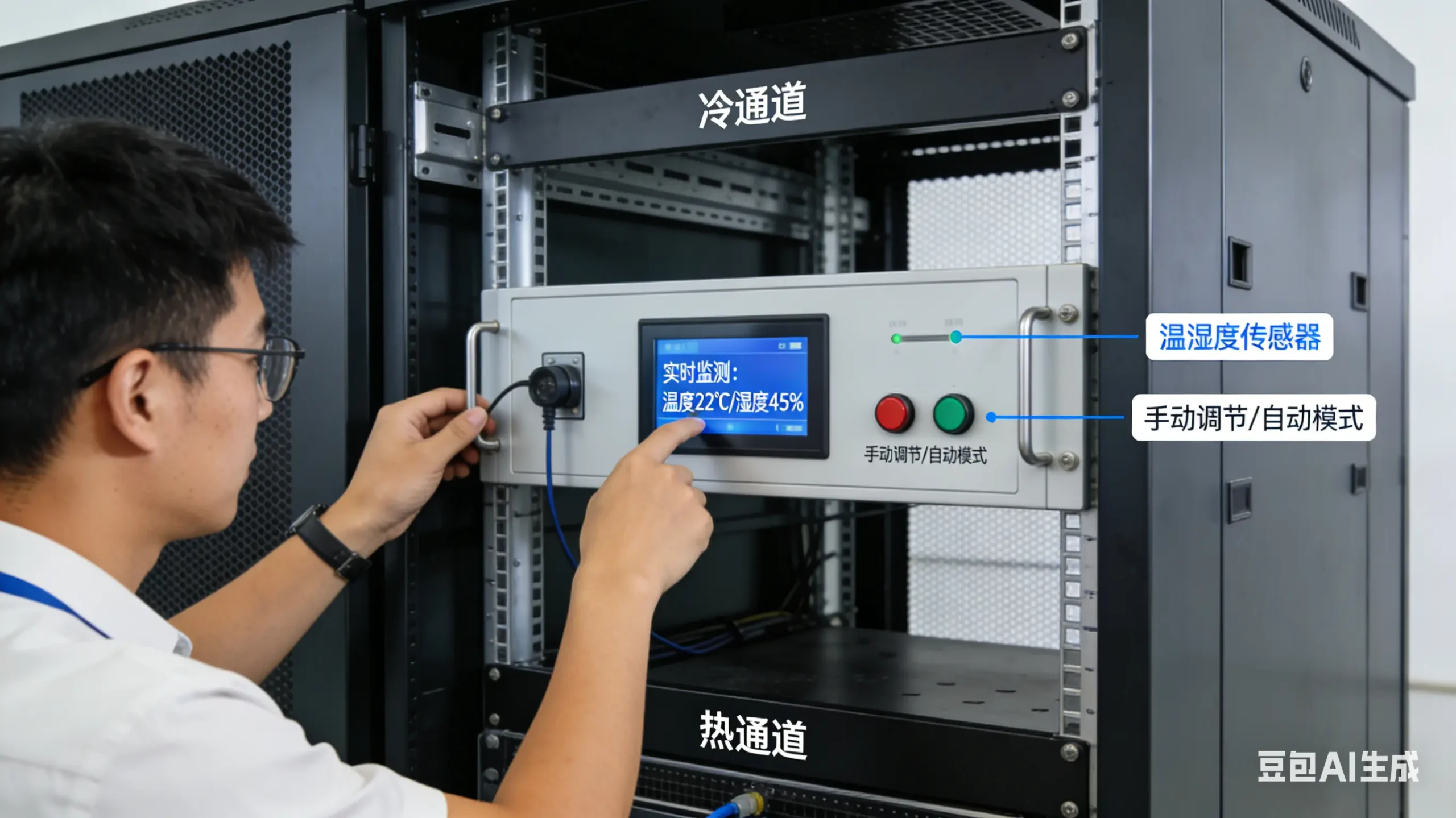
IT equipment tolerates a remarkably narrow environmental band. Too hot, and components degrade and fail early; too cold with condensation risk, and moisture damages boards; humidity too low invites static discharge; too high breeds corrosion. ASHRAE guidance for most data centers is 18-27°C intake temperature and 20-80% RH — but the real requirement is stability and early warning, not just staying inside limits.
A precision temperature and humidity monitoring system continuously measures conditions at the points that matter — rack intake, room zones, cabinet interiors — and alerts operators before drift becomes damage. Guangzhou Lain Intelligent System Development Co., Ltd. supplies sensor networks, monitoring hosts and platforms for computer rooms, data centers, cabinets, warehouses and laboratories. This guide covers design, placement, thresholds and operation.
2. Why Precision Monitoring Matters
2.1 Cooling Failures Are Invisible Until It Is Too Late
A precision AC unit can fail gradually — a weak compressor, a clogged filter, a slipping fan belt — raising room temperature over hours or days. By the time staff notice discomfort or alarms from equipment, components have already accumulated heat stress. Rack-level sensors catch the trend early, often before any equipment alarm.
2.2 Hot Spots Hide in Plain Sight
Average room temperature can look fine while specific racks overheat: poor airflow, blocked floor tiles, or a failed tile fan create local hot spots. Only distributed sensing at rack level reveals them.
2.3 Humidity Drives Both Corrosion and Static
High humidity plus temperature swings causes condensation on cold surfaces; low humidity (below ~20% RH) enables static discharge that can corrupt data or damage electronics. Precision humidity sensing with dew-point calculation protects against both.
3. Where to Place Sensors
| Location | Purpose | Density Guide |
|---|---|---|
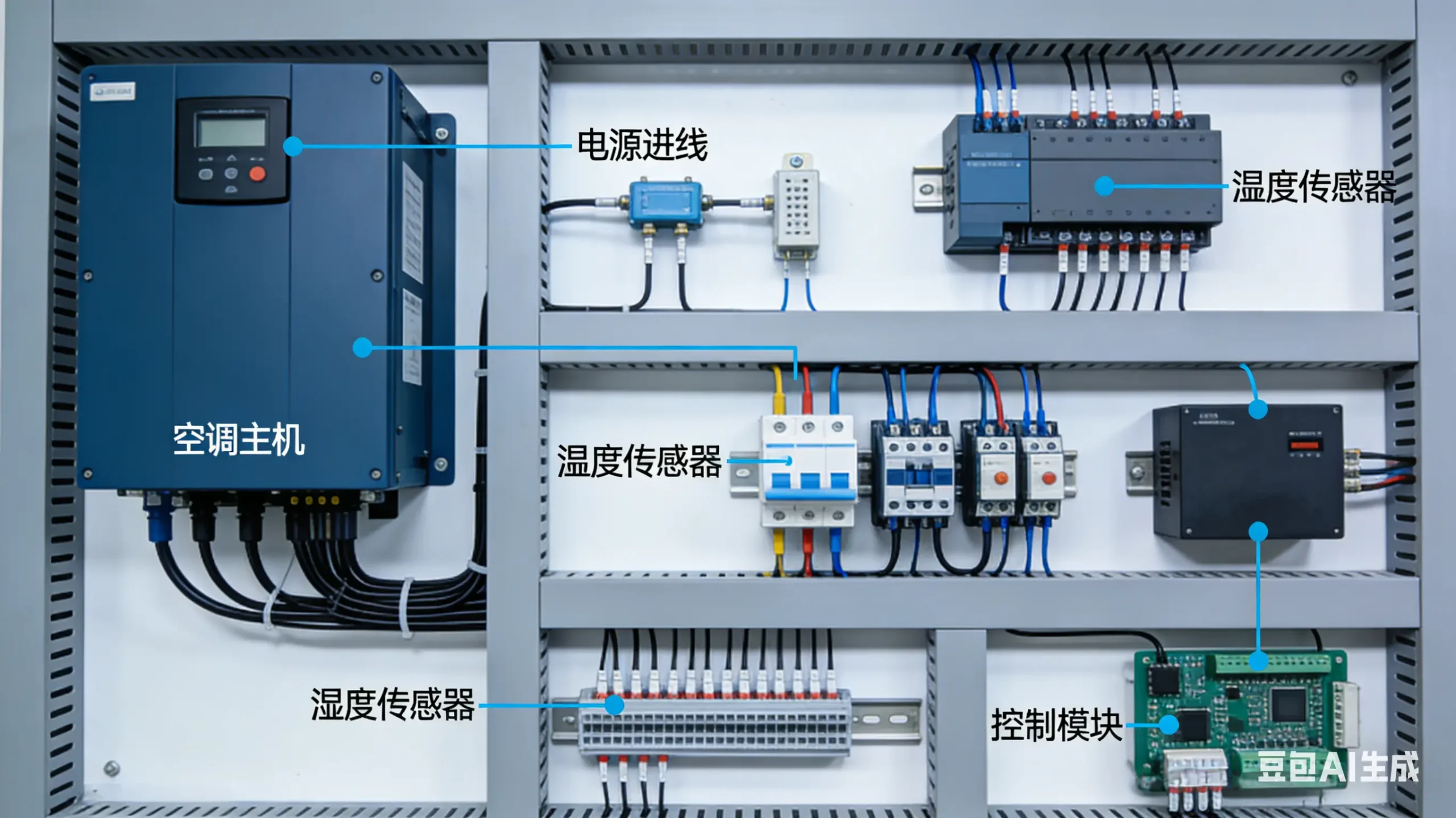
| Rack intake (front) | Real air temperature seen by servers | One per rack or per 2-3 racks in cold aisles |
| Room zones | Overall climate map | 1 per 50-100 m² plus corners |
| Above/below raised floor | Plenum supply and leakage detection | At AC supply points and floor openings |
| AC supply/return | Cooling performance | At each precision AC unit |
| Cabinet interior | Enclosed equipment (telecom, batteries) | Per critical cabinet |
| Special areas | Warehouse, lab, archive tolerance | Per zone specification |
Sensors are mounted at equipment intake height (not on walls near supply vents, which read the vent not the equipment) and away from direct airflow that would mask real conditions.
4. Sensor Technology and Accuracy
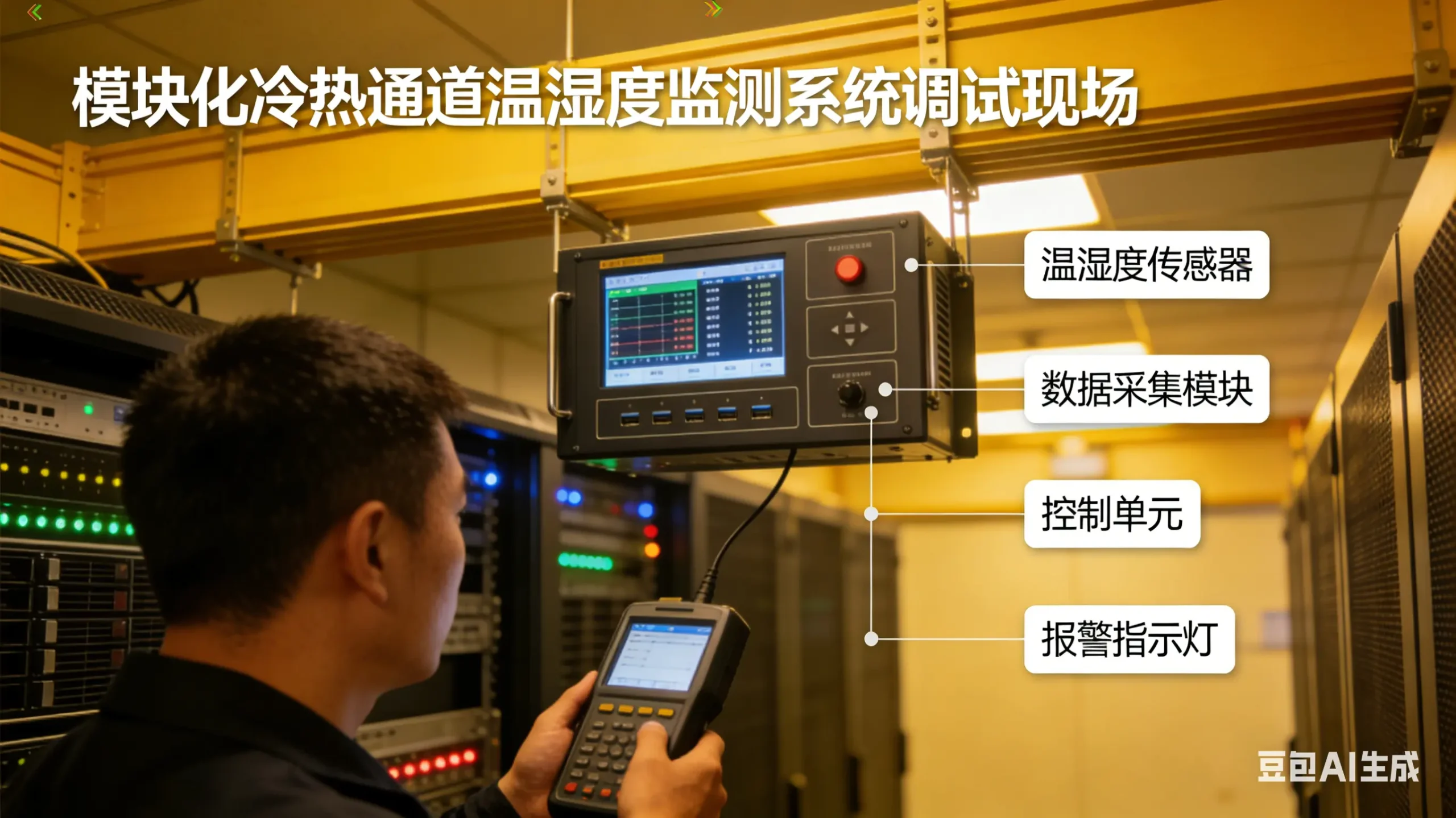
- Digital temperature/humidity sensors — typical accuracy ±0.3°C and ±2-3% RH across the operating range, with low drift.
- Dew-point calculation — derived from temperature and RH to warn of condensation risk directly.
- Interchangeable probes — simple field replacement and recalibration without rewiring.
- Calibration options — certificates available for metrology-sensitive applications (labs, pharma, compliance).
5. System Architecture
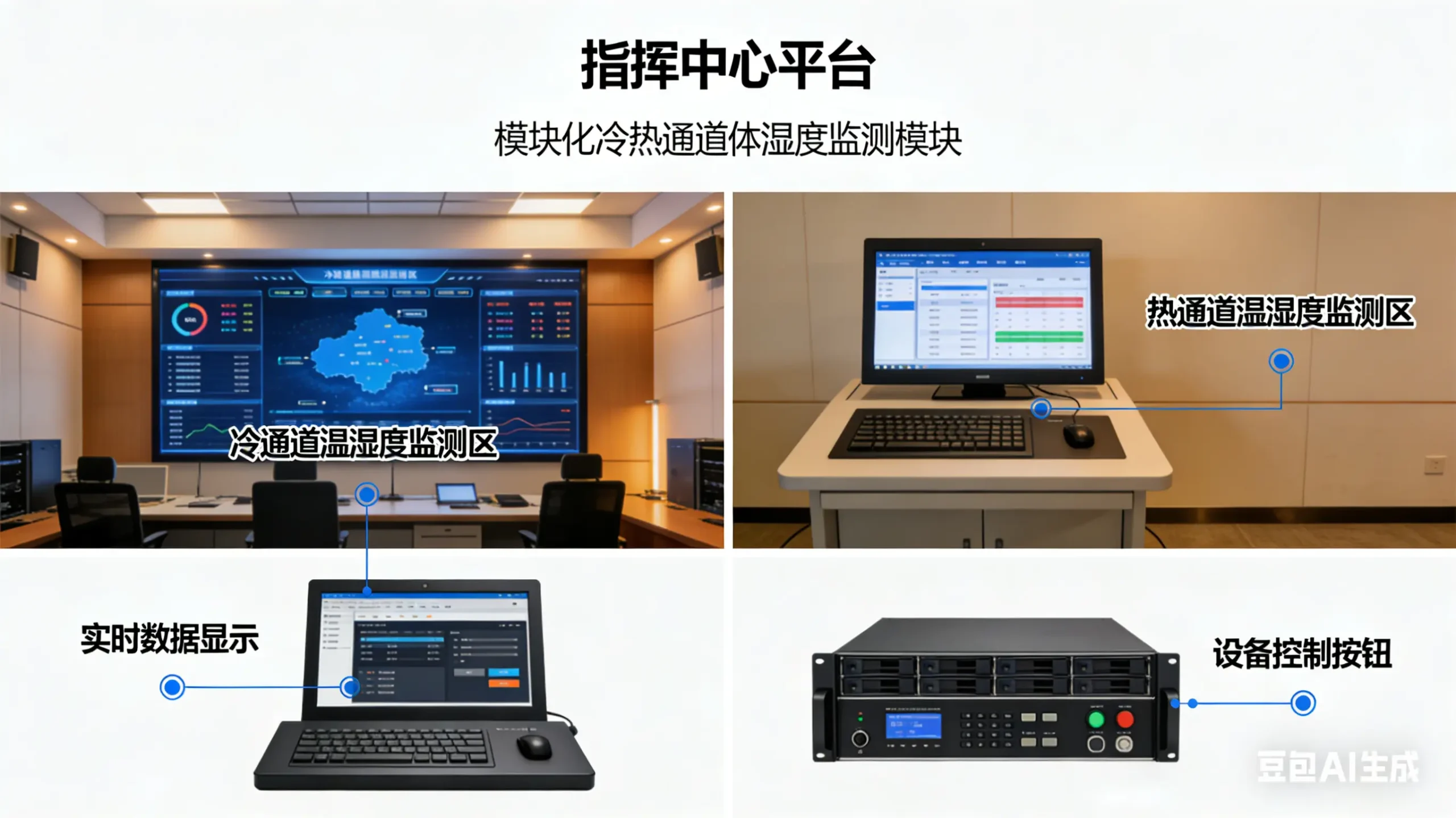
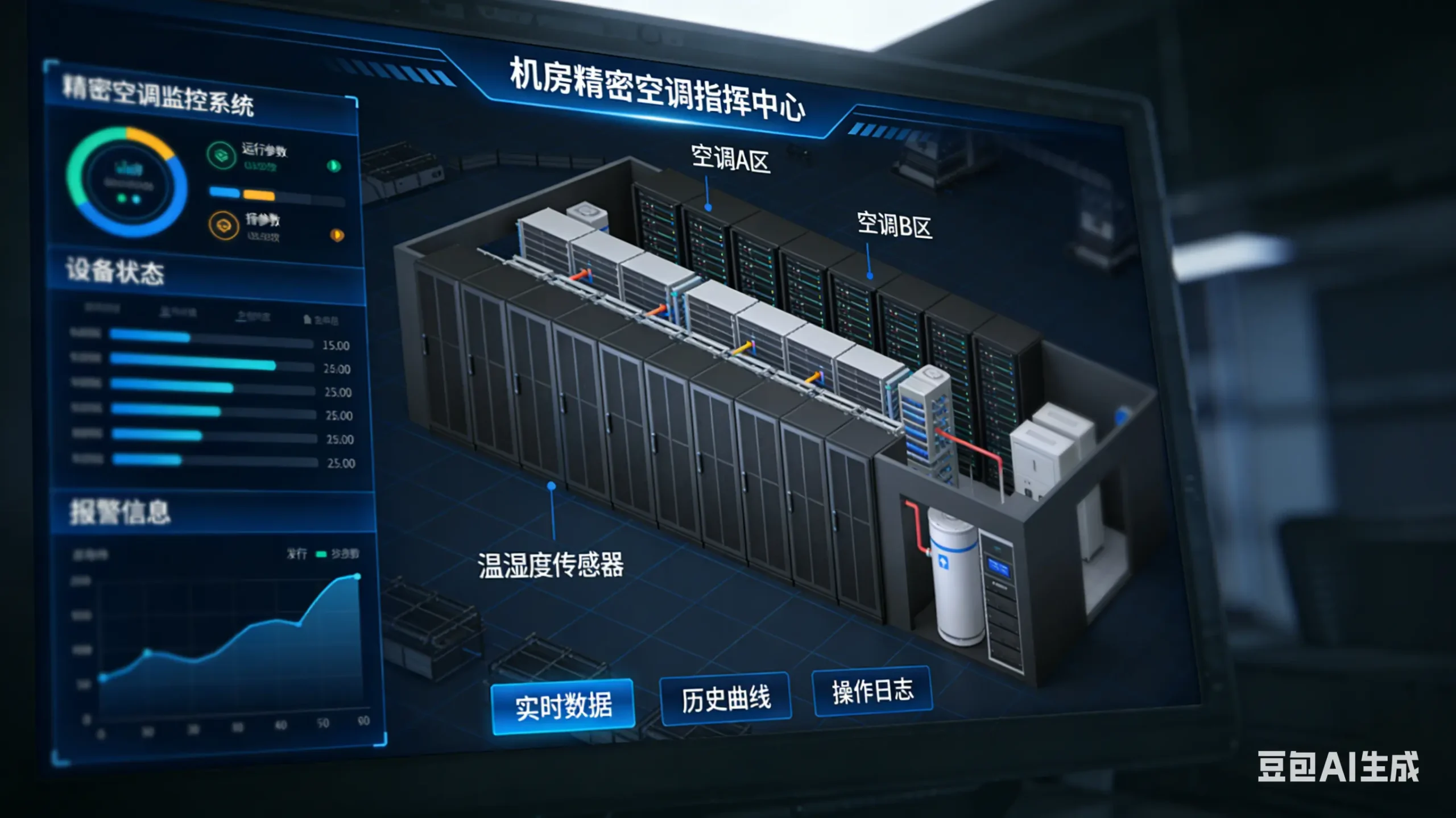
Sensors connect over RS485 (Modbus) or wireless (LoRa/ZigBee) to a monitoring host that polls every point every few seconds. The host stores history, applies thresholds with hysteresis (preventing alarm flapping around setpoints), and reports to a local screen and web/cloud platform. Alarms are delivered by SMS, email, WeChat/WhatsApp or voice call according to severity, and trend curves support root-cause analysis and cooling optimization.
6. Threshold Design
- Warning thresholds — set inside the normal range (e.g. 22-25°C band) to catch drift early.
- Critical thresholds — at the equipment limit (e.g. 27°C intake, ASHRAE A1) for immediate response.
- Rate-of-change alarms — rapid rise indicates cooling failure; gradual rise indicates degradation.
- Humidity bands — typically 30-70% RH operational with dew-point limits, per facility policy.
Thresholds are configurable per zone and season — summer heat waves need different settings than winter — reducing nuisance alarms while keeping protection.
7. Applications
- Data centers and server rooms — rack and room monitoring with cooling correlation.
- Telecom rooms and outdoor cabinets — cabinet sensors including battery compartments.
- Warehouses and archives — product and record protection with compliance records.
- Laboratories and clean areas — tight-tolerance monitoring with calibration certificates.
- Cold chain and medical storage — refrigerated environments with audit-grade logging.
8. Integration
The system integrates with existing platforms through Modbus RTU/TCP and SNMP, feeding DCIM, BMS or NMS dashboards — or runs standalone with its own web/cloud platform. For multi-site estates, each room runs a local host reporting to one central platform, giving facility managers a single view across locations.
9. Deployment and Retrofit
- Survey — map the room, cooling layout, rack positions and access points.
- Sensor plan — point placement and quantities per the density guide, approved by the customer.
- Installation — sensors mounted and networked; wireless versions suit retrofits and rented spaces.
- Configuration — thresholds, alarm routing and dashboard layout per facility policy.
- Calibration and testing — each sensor verified against a reference; alarms function-tested.
- Handover — training, documentation and calibration certificates.
Retrofit is non-intrusive: sensors are surface-mounted, cabling follows existing routes, and the room keeps operating throughout.
10. Maintenance and Accuracy Assurance
Most IT applications need no annual calibration — sensors drift well under ±0.1°C/year. For regulated or metrology-sensitive use, we offer recalibration with certificates. The platform tracks sensor health and communication status so a failed sensor cannot silently blind a zone, and replacement probes are interchangeable without reconfiguration.
11. Frequently Asked Questions
Precision Temperature & Humidity Monitoring FAQ
1. What accuracy do the sensors have?
Typical precision sensors achieve ±0.3°C and ±2-3% RH across the operating range, with optional calibration certificates for metrology-sensitive applications.
2. Where should I place sensors in a server room?
At rack intake (front) roughly 0.5 m above the floor and at mid-height, plus one at AC return air. A typical 100 m² room uses 8-16 points.
3. What are recommended setpoints?
ASHRAE A1 guidance is 18-27°C intake and 20-80% RH with dew-point limits; many operators alarm at 22-25°C bands to catch drift early.
4. Can it connect to my existing monitoring platform?
Yes — sensors and hosts support Modbus RTU/TCP and SNMP, feeding an existing DCIM, BMS or NMS, or our own platform.
5. How are alarms delivered?
Through SMS, email, voice call or WeChat/WhatsApp message, with different thresholds for warning and critical levels and escalation if unacknowledged.
6. Is calibration required?
For most IT applications no annual calibration is needed; for laboratories or regulated use we offer recalibration with certificates.
7. How does the system detect cooling problems early?
Rack-level sensors show rising intake temperatures and rate-of-change alarms before equipment limits are reached.
8. What is dew-point monitoring?
The system calculates dew point from temperature and RH, warning when surfaces may reach condensation conditions.
9. Wireless or wired sensors?
Wired RS485 is most reliable in new builds; wireless (LoRa/ZigBee) suits retrofits, rented spaces and temporary deployments.
10. Can it monitor outdoor cabinets?
Yes — wide-temperature sensor versions operate from about -40 to +70°C for outdoor enclosure environments.
11. How many sensors does my room need?
Typically one per rack row section (50-100 m² coverage) plus AC and under-floor points; the survey produces an exact plan.
12. What reports are available?
Temperature maps, trends, alarm history and compliance exports — daily, monthly or per requested period.
12. Related Solutions
- Data Center Monitoring System
- Cabinet Thermal Control Module
- Data Center Dust Monitoring
- Electrical Room Environmental Monitoring
- Cold Chain & Blood-Bank Monitoring
About Guangzhou Lain Intelligent System Development Co., Ltd.
Guangzhou Lain Intelligent System Development Co., Ltd. supplies precision environment monitoring, sensors and platforms for data centers, telecom sites, laboratories and cold chain worldwide. From single rooms to enterprise facilities, KITOZER provides design, manufacturing, integration, testing and after-sales service under one roof and exports worldwide.
Contact us for a free technical consultation:
- Company: Guangzhou Lain Intelligent System Development Co., Ltd.
- Address: 1st Floor, Building A, Chaotian Industrial Park, Zhongrun Industrial Park, Shilou Town, Panyu District, Guangzhou, Guangdong, China
- Tel/WeChat: +86 13922289957 | +86 18520668845 | +86 13538869979
- WhatsApp: +86 19068534140
- Email: zl19068534140@gmail.com
- Website: www.gdlain.com | Request a Quote
Typical response time: within one business day. Project references, drawings and samples are available on request.