I. System Introduction
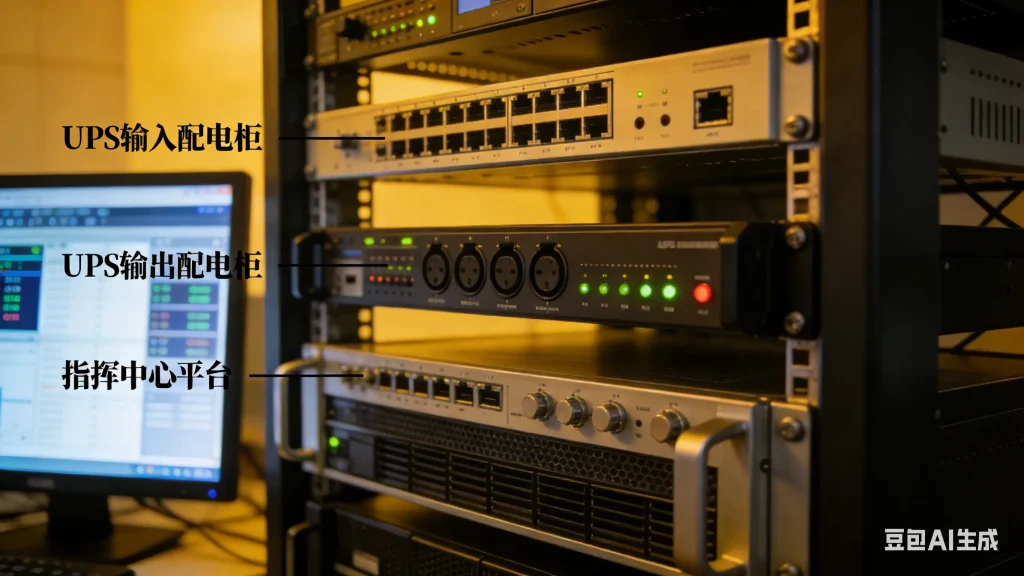
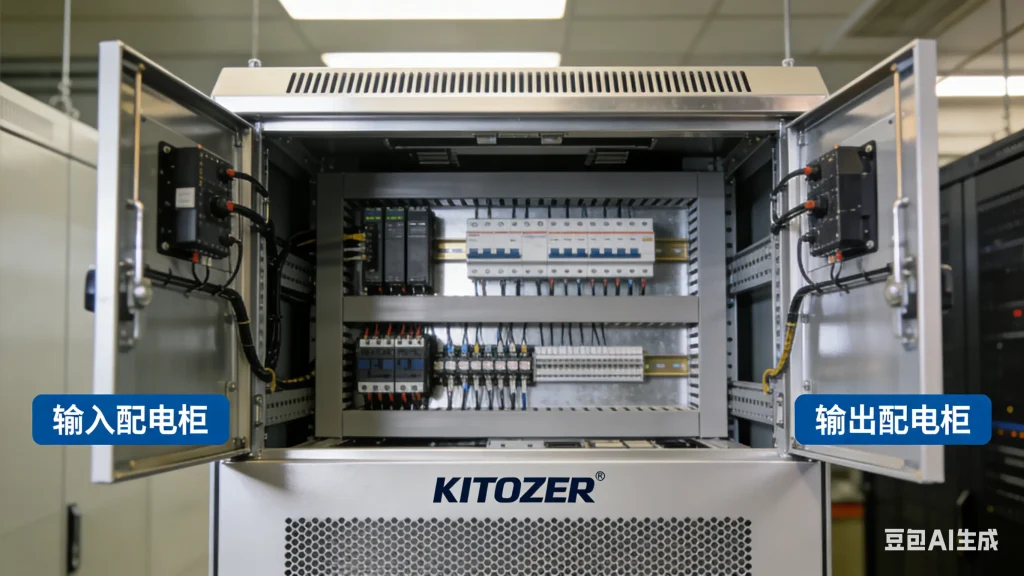
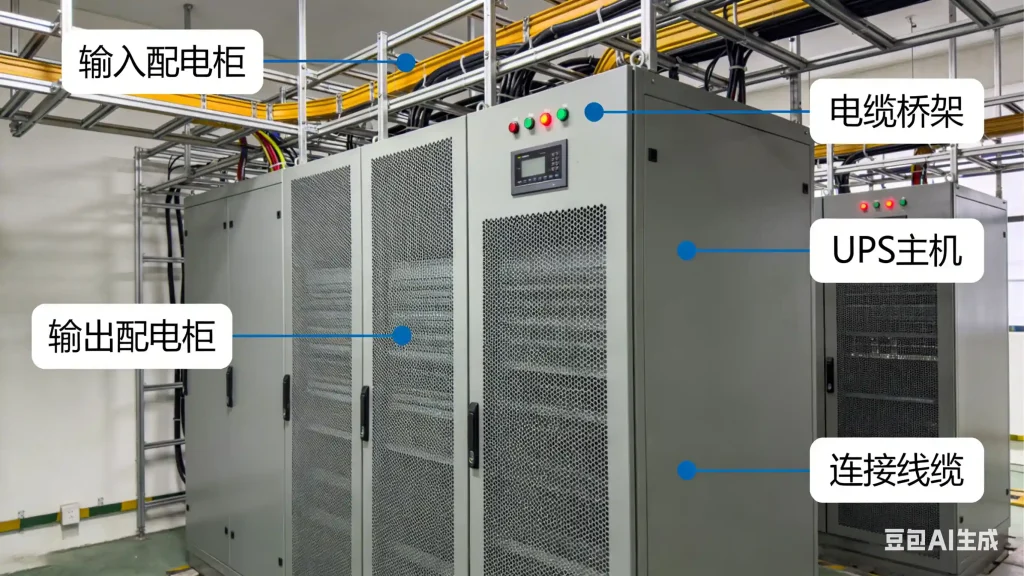
The UPS input and output distribution cabinet (also known as UPS input and output distribution box) serves as the core hub of power supply and distribution systems in computer rooms. It is specially designed for power distribution on the input side, power management on the output side and safety protection of UPS systems. It connects the utility grid, UPS main units and critical loads in computer rooms such as servers, switches and precision air conditioners, enabling stable power transmission, intelligent monitoring and fault protection.
Developed with KITOZER products, this solution fully complies with GB 50174-2017 Code for Design of Data Centers, GB/T 7260.3-2017 National Standard for UPS and T/EQTA—002—2019 Standard for Precision Distribution Cabinets. In response to the requirements of high reliability, safety and intelligence for computer room power distribution, it integrates mature power distribution technologies and intelligent monitoring systems to deliver standardized and modular power distribution solutions applicable to various computer room scenarios. It ensures efficient operation of UPS systems, provides uninterrupted, stable and safe power supply for core equipment, defuses power risks including grid fluctuation, overload, short circuit and lightning surge, and guarantees continuous operation of computer room services.
The system features protected input, controllable output, real-time monitoring and early fault warning. Combining practicality and expandability, its configuration can be adjusted flexibly according to computer room scale, load capacity and redundancy demands, covering scenarios from small server rooms to large data centers. Leveraging the strengths of KITOZER products, it realizes standardized construction, intelligent operation and maintenance as well as cost-effective management for computer room power distribution, and helps build an efficient, safe and eco-friendly power supply and distribution mode.
II. System Composition
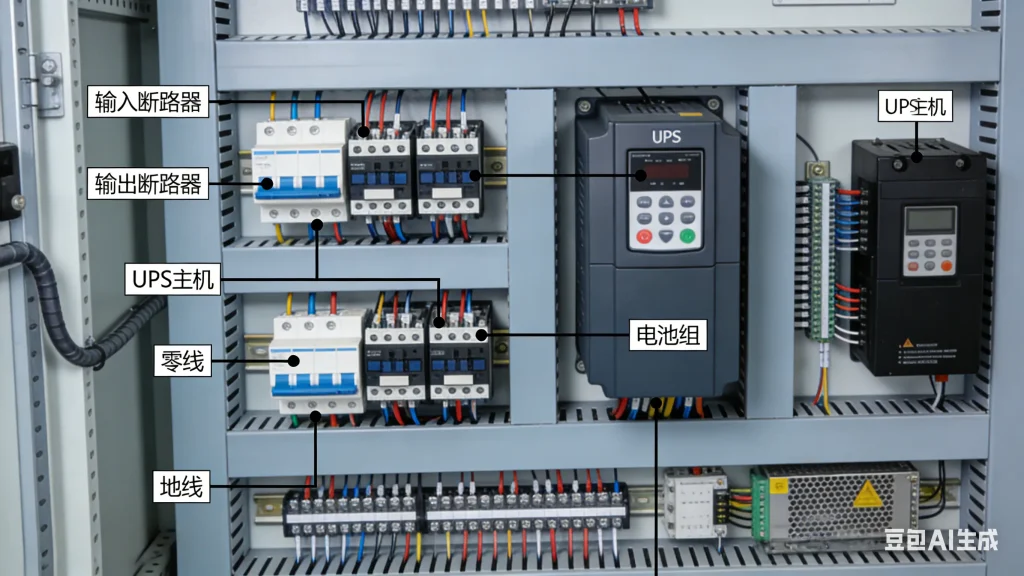
The UPS input & output distribution cabinet system consists of four major categories: core power distribution components, protection components, monitoring components and auxiliary components. All parts are standardized KITOZER products that work collaboratively to ensure system stability and reliability. Details are as follows:
2.1 Core Power Distribution Components
As the key carriers for power transmission, these components undertake power distribution and switching to guarantee efficient and stable power delivery.
- Incoming Circuit Breaker: KITOZER Molded Case Circuit Breakers (MCCB), including models T2N-160TMD/3P-100A, T2N-250TMD/4P-200A, act as the main incoming switches to control power on and off for the entire system. They provide overload and short-circuit protection. Rated current can be selected based on load capacity to match power demands of different computer rooms. Both manual and electric operation are supported with high breaking capacity.
- Branch Circuit Breaker: KITOZER Miniature Circuit Breakers (MCB) with D-curve and A-curve characteristics. Rated current ranges include 16A, 25A, 32A, 50A, 100A. They distribute power to individual UPS units and on-site loads, implementing branch control and protection to prevent single-circuit faults from affecting the whole system and facilitate subsequent maintenance and troubleshooting.
- ATS Automatic Transfer Switch: KITOZER ATS switches in specifications 1×100A, 1×400A realize automatic switching between utility power and standby power (e.g. diesel generators). When utility power fails or operates abnormally, the ATS quickly switches to standby power to sustain UPS operation and load power supply. The switching time is adjustable to meet diverse redundancy requirements.
- Copper Busbars & Terminals: KITOZER copper busbars (30×3, 40×3 and other sizes) are made of high-purity electrolytic copper with excellent conductivity and heat dissipation. Tin-plated surface delivers superior anti-oxidation and anti-corrosion performance. Terminals adopt flame-retardant materials featuring low contact resistance and firm connection, effectively avoiding overheating and sparking caused by poor contact. Equipped with nameplates for easy identification and maintenance.
- Power Distribution Cables: KITOZER flame-retardant power cables such as ZB-YJV 4×240+1×120, ZB-YJV 4×185+1×95, ZB-YJV 4×70+1×35. Selected according to distribution power and transmission distance, the cables are flame-retardant, low-smoke and halogen-free, complying with computer room fire safety regulations. They own good conductivity and mechanical strength for stable power transmission.
2.2 Protection Components
These components safeguard system operation by resisting various power faults and protecting UPS units, distribution equipment and loads from damage.
- Surge Protective Device (SPD): KITOZER three-level SPDs (Class B, C and D) are installed at incoming and branch circuits respectively. They absorb surge voltage and lightning overvoltage from the grid, limit overvoltage amplitude and protect power interfaces of UPS and loads. Compliant with GB 50057-2010 Code for Design of Building Lightning Protection.
- Current Transformer: KITOZER current transformers in 100/5A, 400/5A and other specifications convert high current into low current and transmit signals to the intelligent monitoring module for real-time current measurement and metering. They also provide signal support for overload and short-circuit protection to ensure accurate protection actions.
- Fuse: KITOZER fuses are used for short-circuit protection of DC circuits such as UPS battery loops. They blow rapidly to cut off faulty circuits and prevent fault escalation, protecting battery packs and related distribution equipment. Specifications are selected according to battery capacity and loop current.
- Insulation Monitoring Module: It monitors insulation performance of lines in real time. Alarms will be triggered once insulation degradation or electric leakage is detected, reminding operators to handle faults and eliminate risks of electric shock and fire.
2.3 Monitoring Components
They enable real-time operating status monitoring, data collection and remote control, improve operation efficiency and reduce manual intervention.
- Intelligent Power Meter: KITOZER intelligent power meters monitor voltage, current, power, power factor, electric energy and other parameters with high precision (voltage/current error ≤ 0.5%, power error ≤ 1%). They display real-time power parameters of input and output circuits, support local data storage and remote upload, and send alerts when parameters exceed limits.
- Monitoring Host: KITOZER intelligent monitoring host integrates data collection, analysis, alarm and remote control functions. It adopts Modbus_RTU protocol with data refresh cycle ≤ 3s and switch status response time ≤ 1s. Historical data can be stored for over 30 days. It connects to computer room environment monitoring systems to realize linkage control with air conditioning, fire alarm and access control systems. Local touch screen operation as well as remote access via PC and mobile phones are available to support unattended operation.
- Temperature & Humidity Sensor: Installed inside the cabinet to monitor ambient conditions. Alarms activate when temperature or humidity exceeds preset thresholds, preventing component aging and short circuit caused by overheating or dampness.
- Door Contact Sensor: Monitors the open/closed state of cabinet doors. Alarms will be triggered for unauthorized door opening to prevent equipment theft and misoperation.
2.4 Auxiliary Components
These components support system operation and enhance practicality, safety and maintainability.
- Cabinet: Made of cold-rolled steel plate with thickness ≥ 1.5mm and electrostatic spray coating for corrosion and oxidation resistance. Protection class ≥ IP54 for dustproof, waterproof and foreign object prevention. Designed in accordance with EIA-310-D standard, it supports wall-mounted and floor-mounted installation. Reasonable internal layout and ventilation holes ensure good heat dissipation.
- Electrical Rail: Standard TH35mm rails provide standardized mounting bases for circuit breakers, relays and modules, facilitating quick assembly, disassembly and layout optimization.
- Nameplates & Indicators: Clear nameplates mark circuit names and specifications for easy identification. Power and fault indicators display operating status and prompt faults timely for rapid troubleshooting.
- Earthing System: Consists of KITOZER earthing terminals, earthing cables (ZB-BVR6, ZB-BVR16, etc.) and 25mm² flexible copper braids. It achieves reliable earthing with grounding resistance ≤ 4Ω to eliminate static electricity and electric leakage risks. Designed in line with TN-S system requirements, the PE wire adopts independent low-impedance connection throughout the circuit.
III. System Classification
Based on computer room scale, load demand, installation mode and functional positioning, the systems are divided into four categories, all adopting KITOZER products for different application scenarios.
3.1 Classification by Function
- UPS Input Distribution Cabinet: Specialized in power distribution and protection on the input side. It receives utility or standby power, implements surge, overload and short-circuit protection, and distributes power to UPS units. Core components include incoming circuit breakers, ATS, SPD, current transformers and intelligent power meters. Its main functions are stabilizing input power and isolating upstream power faults.
- UPS Output Distribution Cabinet: Dedicated to power distribution and management on the output side. It receives stable power from UPS units and distributes power to core loads such as servers, switches and precision air conditioners after branch protection. Core components include branch circuit breakers, intelligent power meters and insulation monitoring modules. It realizes precise power distribution, parameter monitoring and load protection.
- Integrated UPS Input & Output Distribution Cabinet: Combines input and output power distribution functions. Ideal for small computer rooms and micro data centers with limited space. It saves floor area and simplifies wiring while retaining all power distribution, protection and monitoring functions. Featuring flexible configuration and easy deployment, it follows the design concept of KITOZER integrated cabinets.
- UPS Parallel Distribution Cabinet: Designed for parallel operation of multiple UPS units. It delivers centralized control, monitoring and power distribution for parallel UPS systems, suitable for large data centers requiring ultra-high reliability. N+X hot redundancy is supported: the remaining modules can carry full loads when any X power modules fail to ensure uninterrupted power supply. Core components include parallel busbars, circuit breakers and monitoring modules.
3.2 Classification by Installation Mode
- Wall-mounted UPS Input & Output Distribution Cabinet: Compact size with rated current generally ≤ 100A for small loads. Suitable for small computer rooms and weak current rooms with limited space. Easy to install without occupying floor space. Protection class ≥ IP54.
- Floor-mounted UPS Input & Output Distribution Cabinet: Large internal space to accommodate more components. Rated current ranges from 100A to 5000A, applicable to medium and large computer rooms and data centers with heavy loads. It supports multi-circuit configuration and flexible expansion. Sufficient maintenance space is required during installation.
3.3 Classification by Load Capacity
- Small Type: Rated current ≤ 100A, load capacity ≤ 50kW. Applied to small server rooms and office computer rooms. Simple configuration meets basic power distribution and protection demands with high cost performance.
- Medium Type: Rated current 100A~400A, load capacity 50kW~200kW. Used in medium-sized data centers and enterprise computer rooms. Fully equipped with comprehensive protection and monitoring functions and remote operation support.
- Large Type: Rated current ≥ 400A, load capacity ≥ 200kW. Deployed in large data centers and cloud computing centers. Equipped with large MCCBs, redundant ATS and high-precision monitoring systems. It features high reliability and expandability and supports multi-circuit and multi-UPS parallel operation.
3.4 Classification by Power Supply System
- AC UPS Input & Output Distribution Cabinet: Rated voltage 220V/380V. The most widely used type for mainstream AC loads such as servers and switches. Complies with technical requirements for AC distribution cabinets specified in T/EQTA—002—2019.
- DC UPS Input & Output Distribution Cabinet: Rated voltage -48V/240V. Mainly used in telecommunication rooms and sites with DC loads. Equipped with DC circuit breakers and DC monitoring meters to realize DC power distribution, protection and monitoring.
IV. System Configuration List (Brand: KITOZER)
This list covers four types of distribution cabinets: small, medium, large and integrated. All components are KITOZER products, and configurations can be adjusted flexibly according to on-site load and scenario demands.
4.1 Small UPS Input & Output Distribution Cabinet
Wall-mounted | Rated current ≤ 100A | Load capacity ≤ 50kW
| Component | Model & Specification | Quantity | Function |
|---|---|---|---|
| Incoming MCCB | KITOZER T2N-160TMD/3P-100A | 1 set | Main incoming switch with overload and short-circuit protection |
| Branch MCB | KITOZER D-curve 16A/1P, 25A/1P, 32A/3P | 4~8 circuits on demand | Branch control and load protection |
| SPD | KITOZER Class C 20kA, 3P+N | 1 set | Surge voltage absorption and equipment protection |
| Current Transformer | KITOZER 100/5A | 2 pcs | Input & output current monitoring |
| Intelligent Power Meter | KITOZER KZ-100 | 1 set | Real-time monitoring of voltage, current and power |
| Cabinet | Wall-mounted, 600×800×300mm, IP54 | 1 set | Component mounting, dustproof, waterproof & anti-corrosion |
| Copper Busbar | KITOZER 30×3mm | Custom length | Power transmission |
| Terminal | KITOZER 2.5mm², 4mm² | On demand | Circuit connection |
| Earthing System | Earthing terminal + ZB-BVR6 earthing cable | 1 set | Reliable earthing for safety |
| Electrical Rail | KITOZER TH35mm | Custom length | Component mounting base |
| Nameplate & Indicator | Standard type | On demand | Circuit identification & status indication |
4.2 Medium UPS Input & Output Distribution Cabinet
Floor-mounted | Rated current 100A~400A | Load capacity 50kW~200kW
| Component | Model & Specification | Quantity | Function |
|---|---|---|---|
| Incoming MCCB | KITOZER T2N-250TMD/4P-200A, T2N-400TMD/4P-400A | 1 set | Main incoming switch with overload and short-circuit protection |
| ATS Automatic Transfer Switch | KITOZER 1×100A, 1×400A, 4P | 1 set | Automatic switching between utility and standby power |
| Branch Breaker | MCCB 100A/3P, D-curve MCB 32A/3P, 50A/3P | 8~16 circuits on demand | Branch control and load protection |
| SPD | Class B 40kA + Class C 20kA, 3P+N | 1 set | Multi-level surge protection |
| Current Transformer | KITOZER 100/5A, 400/5A | 4 pcs | Current monitoring for input, output and standby circuits |
| Intelligent Power Meter | KITOZER KZ-300 | 1 set | Multi-parameter monitoring, remote data upload & alarm |
| Monitoring Host | KITOZER KZ-600 (Modbus_RTU) | 1 set | Data collection, analysis, alarm & remote control |
| Temperature & Humidity Sensor | KITOZER KZ-TH01 | 1 pc | Cabinet environment monitoring & abnormal alarm |
| Cabinet | Floor-mounted, 800×1000×2000mm, IP54 | 1 set | Component mounting, heat dissipation & protection |
| Copper Busbar | KITOZER 30×3mm, 40×3mm | Custom length | Power transmission |
| Power Cable | ZB-YJV 4×70+1×35, ZB-YJV 4×35+1×16 | Custom length | Power transmission |
| Terminal | KITOZER 4mm², 10mm² | On demand | Circuit connection |
| Earthing System | Earthing terminal + ZB-BVR16 + 25mm² flexible copper braid | 1 set | Reliable earthing |
| Electrical Rail | KITOZER TH35mm | Custom length | Component mounting base |
| Nameplate & Indicator | Standard type | On demand | Circuit identification & status indication |
4.3 Large UPS Input & Output Distribution Cabinet
Floor-mounted | Rated current ≥ 400A | Load capacity ≥ 200kW
| Component | Model & Specification | Quantity | Function |
|---|---|---|---|
| Incoming Air Circuit Breaker | 630A/4P, 1000A/4P | 1 set | Main switch with overload, short-circuit & undervoltage protection |
| ATS Automatic Transfer Switch | 1×400A and above, 4P (redundant) | 2 sets | Redundant switching for utility and standby power |
| Branch MCCB | 200A/3P, 400A/3P | 16~32 circuits on demand | Branch protection, support multi-UPS parallel |
| SPD | Class B 60kA + Class C 40kA + Class D 20kA, 3P+N | 1 set | Three-level lightning & surge protection |
| Current Transformer | 400/5A, 630/5A | 6~8 pcs | Multi-circuit current monitoring |
| Intelligent Power Meter | KITOZER KZ-500 | 2~3 sets | High-precision multi-circuit monitoring & remote upload |
| Monitoring Host | KITOZER KZ-800 | 1 set | Data management, linkage control & environment system access |
| Temperature & Humidity Sensor | KITOZER KZ-TH01 | 2~3 pcs | Zoned environment monitoring |
| Door Contact Sensor | KITOZER KZ-DC01 | 1 pc | Cabinet door status monitoring & anti-theft alarm |
| Insulation Monitoring Module | KITOZER KZ-JY01 | 1 set | Line insulation monitoring & leakage alarm |
| Cabinet | Floor-mounted, 1000×1200×2200mm, IP54 | 1~2 sets | Enhanced protection and heat dissipation |
| Copper Busbar | 40×3mm and above | Custom length | High-current power transmission |
| Power Cable | ZB-YJV 4×240+1×120, ZB-YJV 4×185+1×95 | Custom length | High-power long-distance transmission |
| Terminal | 10mm², 25mm² | On demand | High-current circuit connection |
| Earthing System | Earthing terminal + ZB-BVR16 + 25mm² flexible copper braid | 1 set | Comply with TN-S earthing standard |
| Electrical Rail | KITOZER TH35mm | Custom length | Component mounting base |
| Nameplate & Indicator | Standard type | On demand | Circuit identification & status indication |
4.4 Integrated UPS Input & Output Distribution Cabinet
For micro data centers | Rated current ≤ 200A | Load capacity ≤ 100kW
| Component | Model & Specification | Quantity | Function |
|---|---|---|---|
| Incoming MCCB | KITOZER T2N-250TMD/4P-200A | 1 set | Main incoming switch with overload & short-circuit protection |
| ATS Automatic Transfer Switch | KITOZER 1×100A, 4P | 1 set | Automatic power switching |
| Branch Breaker | D-curve MCB 32A/3P, MCCB 100A/3P | 6~12 circuits on demand | Input & output branch control |
| SPD | Class B 40kA + Class C 20kA, 3P+N | 1 set | Multi-level surge protection |
| Current Transformer | 100/5A, 200/5A | 4 pcs | Multi-circuit current monitoring |
| Intelligent Power Meter | KITOZER KZ-300 | 1 set | Multi-parameter monitoring & remote upload |
| Monitoring Host | KITOZER KZ-600 | 1 set | Data management & environment system linkage |
| Temperature & Humidity Sensor | KITOZER KZ-TH01 | 1 pc | Cabinet environment monitoring |
| Cabinet | Integrated cabinet, 600×1000×2000mm, IP54 | 1 set | Integrated layout, dustproof & sealed design |
| Copper Busbar | 30×3mm, 40×3mm | Custom length | Power transmission |
| Power Cable | ZB-YJV 4×70+1×35, ZB-YJV 4×35+1×16 | Custom length | Power transmission |
| Terminal | 4mm², 10mm² | On demand | Circuit connection |
| Earthing System | Earthing terminal + ZB-BVR16 + 25mm² flexible copper braid | 1 set | Reliable earthing |
| Electrical Rail | KITOZER TH35mm | Custom length | Component mounting base |
| Nameplate & Indicator | Standard type | On demand | Circuit identification & status indication |
V. System Schematic Diagram
The schematic diagram complies with IEC 62040-1/3 and GB/T 7260.3-2017. It adopts online double-conversion architecture with high-frequency IGBT three-level rectifier and full-bridge inverter. The diagram clearly shows power flow, protection logic and monitoring nodes, divided into five parts: input circuit, protection circuit, UPS linkage circuit, output circuit and monitoring circuit. All components are KITOZER products.
5.1 Core Logic
Utility Power → Incoming Circuit Breaker → ATS (standby power linkage) → SPD (Class B/C/D) → Current Transformer → UPS Input Terminal
UPS Output Terminal → Current Transformer → Branch Circuit Breaker → Computer Room Loads
Meanwhile, monitoring modules collect power parameters, temperature & humidity and cabinet door status in real time and transmit data to the monitoring host for alarm and remote control. Protection components respond rapidly to cut off faulty circuits when overload, short circuit, surge or leakage occurs.
5.2 Detailed Description of Each Circuit
- Input Circuit: Utility power accesses the system via incoming circuit breakers. ATS connects utility power and diesel generator sets and switches to standby power automatically upon utility failure. Class B SPD at the incoming end suppresses grid surge and lightning overvoltage.
- Protection Circuit: Class C and D SPDs are installed at input and output branches to form a complete surge protection system. Current transformers convert high current for metering and protection signal output. Insulation monitoring modules track line insulation, and fuses provide short-circuit protection for DC battery loops.
- UPS Linkage Circuit: UPS units analyze input power quality via collected parameters. Under normal utility power, the rectifier converts AC to DC: part charges batteries, and the rest is inverted to stable AC for output. Once utility power fails or voltage fluctuates severely, UPS switches to battery power within ≤ 10ms without power interruption, and sends status signals to the monitoring host. ATS resets automatically when utility power recovers. For parallel UPS systems, parallel busbars realize load sharing among multiple units.
- Output Circuit: Stable AC from UPS passes current transformers and branch breakers to various loads. Each branch breaker protects its corresponding load; faulty branches will be isolated without affecting the whole system. Insulation monitoring modules on the output side trigger alarms and isolate leakage faults. DC distribution cabinets are equipped with additional DC fuses for enhanced protection.
- Monitoring Circuit: Centered on the monitoring host, it connects power meters, sensors and UPS units. Power meters transmit real-time electrical data via Modbus_RTU (refresh cycle ≤ 3s). Temperature & humidity sensors and door contact sensors monitor cabinet status and trigger linkage alarms. The system supports local and remote operation, historical data storage (over 30 days) and connection to the overall computer room environment monitoring system for unattended operation.
5.3 Notes for Schematic Application
The diagram shall be interpreted and used by qualified electrical engineers. It must strictly follow electrical drawing standards and keep consistent with on-site wiring. Any configuration adjustment must be approved before implementation. Operation and maintenance personnel shall be familiar with the diagram for inspection and troubleshooting. Both paper and electronic versions shall be properly archived and updated timely.
VI. Installation & Commissioning
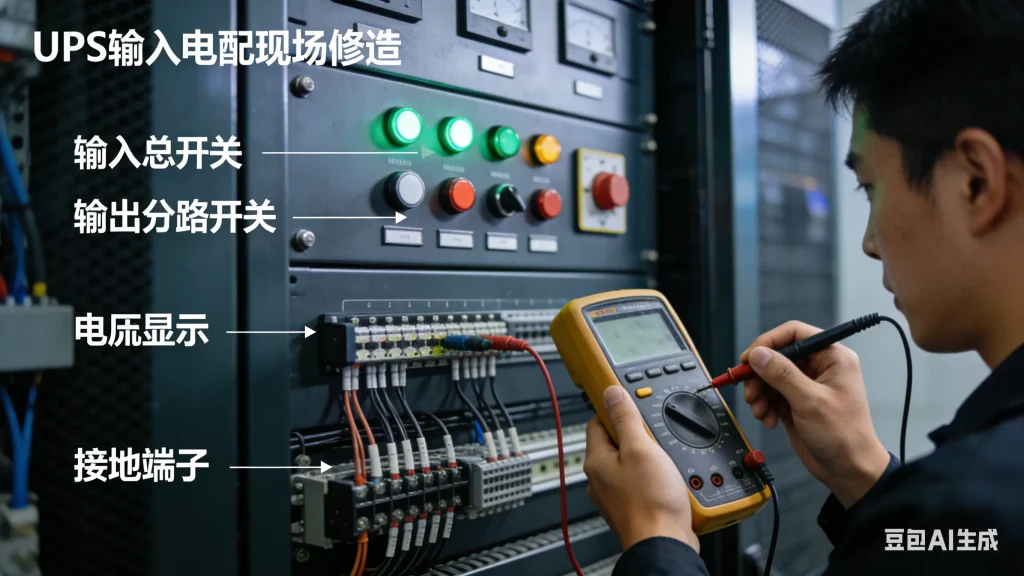
Installation and commissioning directly affect system stability. All work must be carried out by professional technicians in accordance with GB 50174-2017 and KITOZER installation manuals.
6.1 Pre-installation Preparation
- Site Preparation: Choose well-ventilated locations away from water, heat and flammables. Reserve maintenance space ≥ 80cm for floor-mounted cabinets. Wall-mounted cabinets shall be installed on load-bearing walls with convenient access.
- Equipment Inspection: Verify component models, specifications and appearance. Check breakers, sensors, meters, busbars and cables for damage or aging.
- Tools & Auxiliary Materials: Use calibrated professional tools such as screwdrivers, wire strippers, crimping pliers, multimeters and megohmmeters. Prepare bolts, insulating tapes and nameplates that meet electrical safety standards.
6.2 On-site Installation Specifications
- Cabinet Installation: Fix wall-mounted cabinets with expansion bolts (vertical deviation ≤ 3mm). Level floor-mounted cabinets via adjustable feet. Implement TN-S earthing with grounding resistance ≤ 4Ω and firm cable connection.
- Component Installation: Mount components on standard rails as per layout requirements. Install busbars flat and firmly with contact resistance ≤ 0.01Ω at joints. Ensure terminals and cables are connected correctly without virtual connection.
- Wiring Separation: Separate AC/DC circuits and power/control cables. Use shielded control cables with grounded shielding layers. Arrange cables neatly with clear labels.
6.3 Commissioning Procedures
- No-load Commissioning: Power on and check indicators and meters. Test switching performance of breakers and ATS, and confirm no false alarms from protection components.
- Load Commissioning: Connect simulated loads and increase capacity gradually. Verify smooth switching between utility and battery power (switching time ≤ 10ms). Calibrate monitoring data and test alarm functions.
- Linkage Commissioning: Test signal transmission and linkage between distribution cabinets, UPS and environment monitoring systems. Simulate overload, short circuit and surge faults to verify reliable operation of protection components.
- Acceptance: Sort out commissioning records. Deliver for formal use after passing acceptance.
VII. Operation, Maintenance & Troubleshooting
Standard maintenance management is required to ensure long-term stable operation.
7.1 Daily Maintenance Requirements
- Daily Inspection: Check indicators, alarms, ventilation, cable and busbar connections, and real-time parameters.
- Regular Maintenance: Clean internal dust monthly; inspect components and earthing systems; calibrate meters and sensors quarterly; replace aging cables and components and conduct anti-corrosion treatment annually.
- Maintenance Records: Establish complete logs to record inspection content, faults and solutions, and analyze potential risks regularly.
7.2 Common Faults & Solutions
| Fault Phenomenon | Possible Causes | Troubleshooting & Solutions |
|---|---|---|
| No display on power meter | Power failure, meter damage, poor wiring | Check power supply and wiring; replace faulty meter |
| Circuit breaker tripping | Overload, short circuit, breaker aging, surge impact | Reduce load; repair short circuit; replace breaker; inspect SPD |
| No data received by monitoring host | Communication fault, sensor failure, host fault, protocol mismatch | Repair communication lines; replace sensors or monitoring host; verify protocol settings |
| Severe cabinet overheating | Excessive load, poor contact, blocked vents, component aging | Reduce load; fasten connections and clean oxide layers; clear vents; replace aging parts |
| Abnormal alarm | Sensor drift, unreasonable threshold, faulty protection component, line interference | Calibrate or replace sensors; adjust alarm thresholds; repair components; optimize line shielding |
7.3 Notes for Fault Handling
Cut off power supply and hang warning signs before maintenance. Troubleshoot according to the schematic diagram. Replace components with original KITOZER products of the same model. Test system operation thoroughly before power restoration and record the whole process.
VIII. Solution Advantages
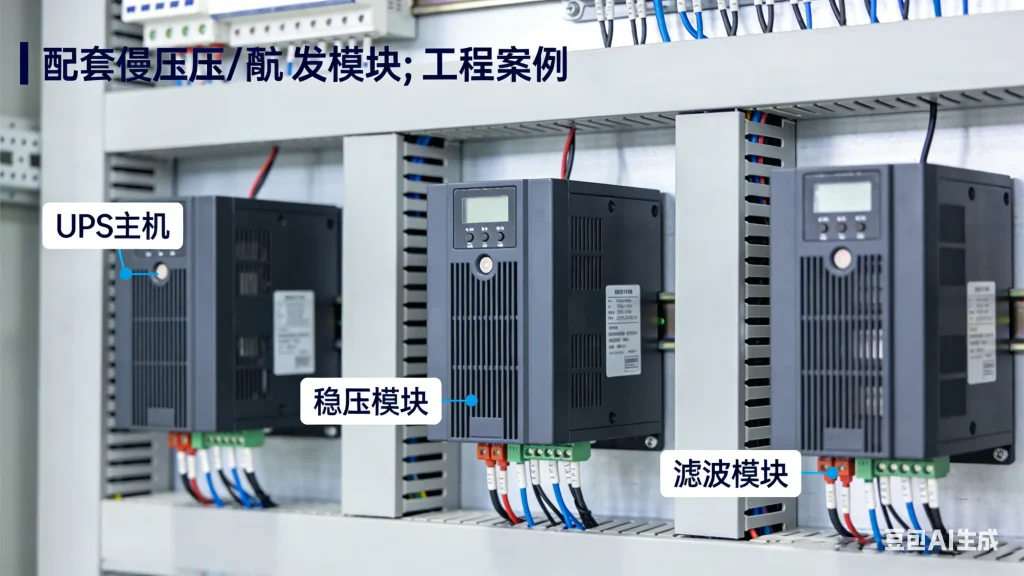
- High Reliability: Adopt standardized KITOZER products with comprehensive protection functions to resist various power faults and guarantee uninterrupted power supply.
- High Intelligence: Complete intelligent monitoring system supports local/remote control, early fault warning and data statistics, realizing unattended operation and high efficiency.
- Strong Flexibility: Diversified cabinet types and flexible configurations adapt to computer rooms of different scales and support later expansion to reduce renovation costs.
- Safety & Compliance: Fully compliant with national and industrial standards. All products pass relevant certifications to eliminate safety hazards.
- Easy Maintenance: Reasonable layout and clear labels facilitate inspection and repair. Standardized maintenance procedures and professional after-sales service ensure stable long-term operation.
IX. Conclusion
As the core hub of computer room power supply systems, UPS input & output distribution cabinets are critical to business continuity. Based on KITOZER products and relevant standards, this solution integrates professional distribution, protection and monitoring components to deliver standardized, intelligent and flexible power distribution services for various computer room scenarios.
In the future, the monitoring system can be upgraded with AI diagnosis and big data analysis to realize accurate fault prediction and intelligent operation, further improving reliability and intelligence of power distribution systems.