1. Overview: The Role of the AC Distribution Unit
Every telecom site, computer room and industrial cabinet needs one thing before anything else: safe, reliable AC power delivered to the right circuits. The AC distribution unit (AC PDU, AC distribution box or distribution panel) is the component that receives incoming mains or generator power and distributes it through individually protected branches to air conditioners, rectifiers, sockets, lighting and other AC loads.
Guangzhou Lain Intelligent System Development Co., Ltd. manufactures AC distribution units in standard 19″ rack, wall-mount and floor-standing versions. Each unit is engineered for the application, factory load-tested and delivered with full documentation. This guide explains what an AC distribution unit does, how it is built, how to specify one correctly, and how to maintain it over its service life.

2. Core Functions of an AC Distribution Unit
2.1 Input Management
The unit receives power from one or two sources. Single-input versions are the economic choice for ordinary sites; dual-input versions with automatic transfer switching (mains A/B, or mains/generator) keep loads alive when one source fails. Input protection includes a main breaker, surge protection at the entry point and, on higher-rated units, a metering section for the incoming supply.
2.2 Branch Distribution
Inside the unit, power is split into 4 to 48 output ways. Each way is protected by a miniature circuit breaker (MCB) or fuse, sized to its circuit and labeled per the circuit schedule. Branches are color-coded and grouped so that technicians can identify and isolate circuits without tracing wires.
2.3 Metering and Monitoring
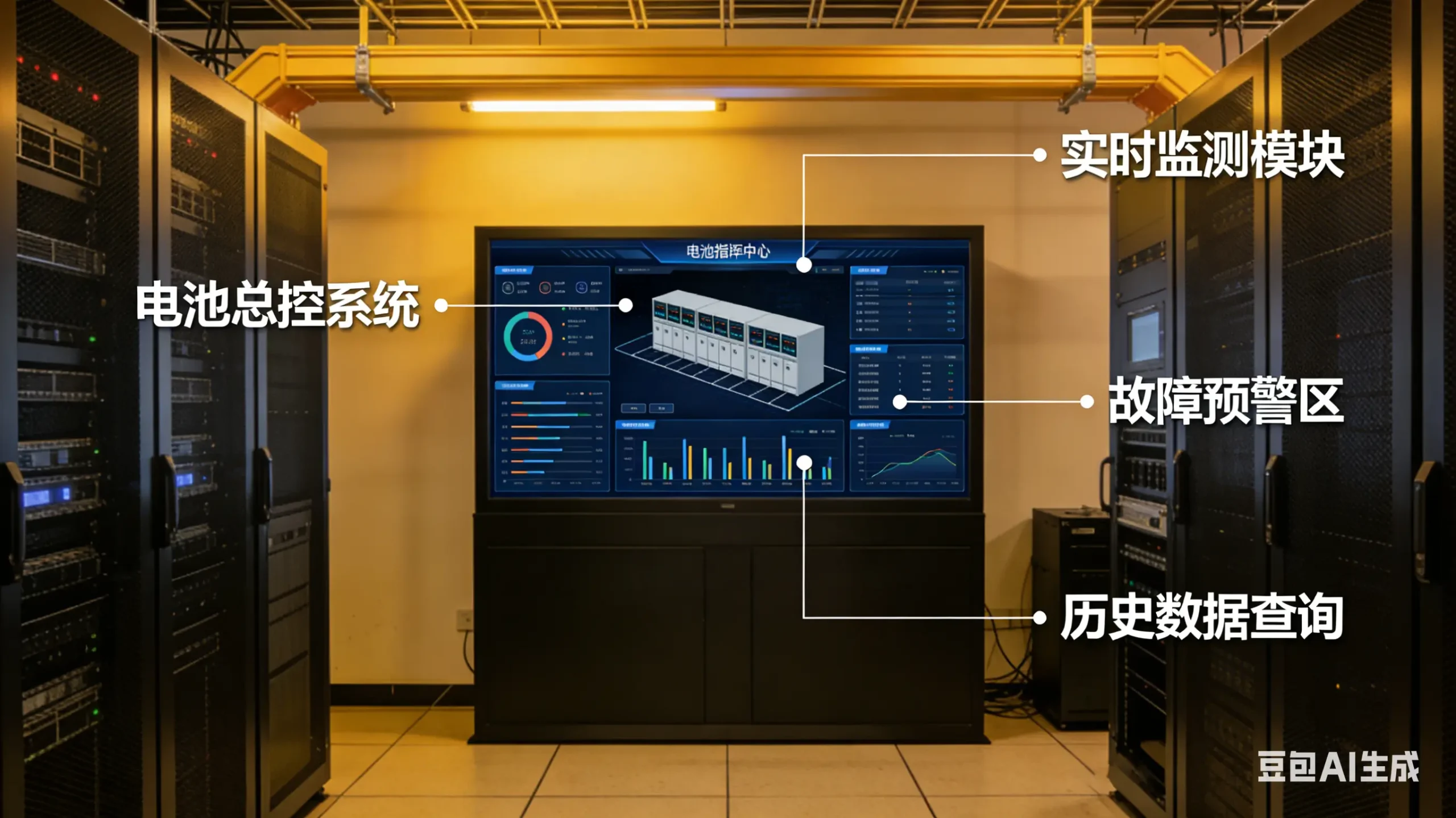
Modern units include a digital meter displaying voltage, current, frequency, active power and energy (kWh) for the whole unit. Smart versions add per-branch monitoring: each circuit reports its own current and status, and the unit communicates over RS485/Modbus, SNMP or dry contacts to the site controller, DCIM or building management system. Branch trip and power-quality events become visible alarms instead of silent failures.
2.4 Protection and Safety
Beyond branch breakers, protection features include residual-current devices (RCD) for personnel protection on socket circuits, surge protective devices (SPD Type 2) at the input, over/under-voltage monitoring and proper earthing. Safety design follows the principle that every circuit is identifiable, isolatable and tested.

3. Applications: Where AC Distribution Units Are Used
- Telecom shelters and outdoor cabinets — distributing AC to air conditioners, rectifiers and maintenance sockets in base stations and transmission sites.
- Data center rooms and rows — feeding rack PDUs, precision AC units and lighting, with phase-balance display to spread load evenly.
- Industrial control rooms and plant buildings — sub-distribution for equipment groups, PLC panels and instrumentation supplies.
- Commercial buildings — small distribution boards for tenant areas, signage, EV chargers and mechanical plant.
- Remote and outdoor installations — IP-rated enclosures for roadside, oilfield and renewable-energy sites.
The common thread is the same: controlled, protected, measurable AC power where loads are diverse and reliability matters.
4. Technical Specifications and Options
| Parameter | Standard Range | Notes |
|---|---|---|
| Input rating | 63 A to 630 A (three-phase) | Sized from connected load with margin |
| Input configuration | Single / dual with ATS | Dual input for high-availability sites |
| Output ways | 4 to 48 | MCB or fuse protected branches |
| Branch ratings | 16 A / 32 A / 63 A / 125 A | Mixed ratings in one unit |
| Output voltage | 230 V single / 400 V three-phase | Other voltages on request |
| Enclosure | Rack 19″, wall-mount, floor-standing | IP43-IP55 as required |
| Metering | Digital total / per-branch smart | RS485/Modbus, SNMP |
| Surge protection | Type 2 SPD at input | Type 1+2 for exposed rural sites |
| Standards | IEC 61439-2 / GB/T 7251 | Type-test documentation on request |
4.1 Construction Quality
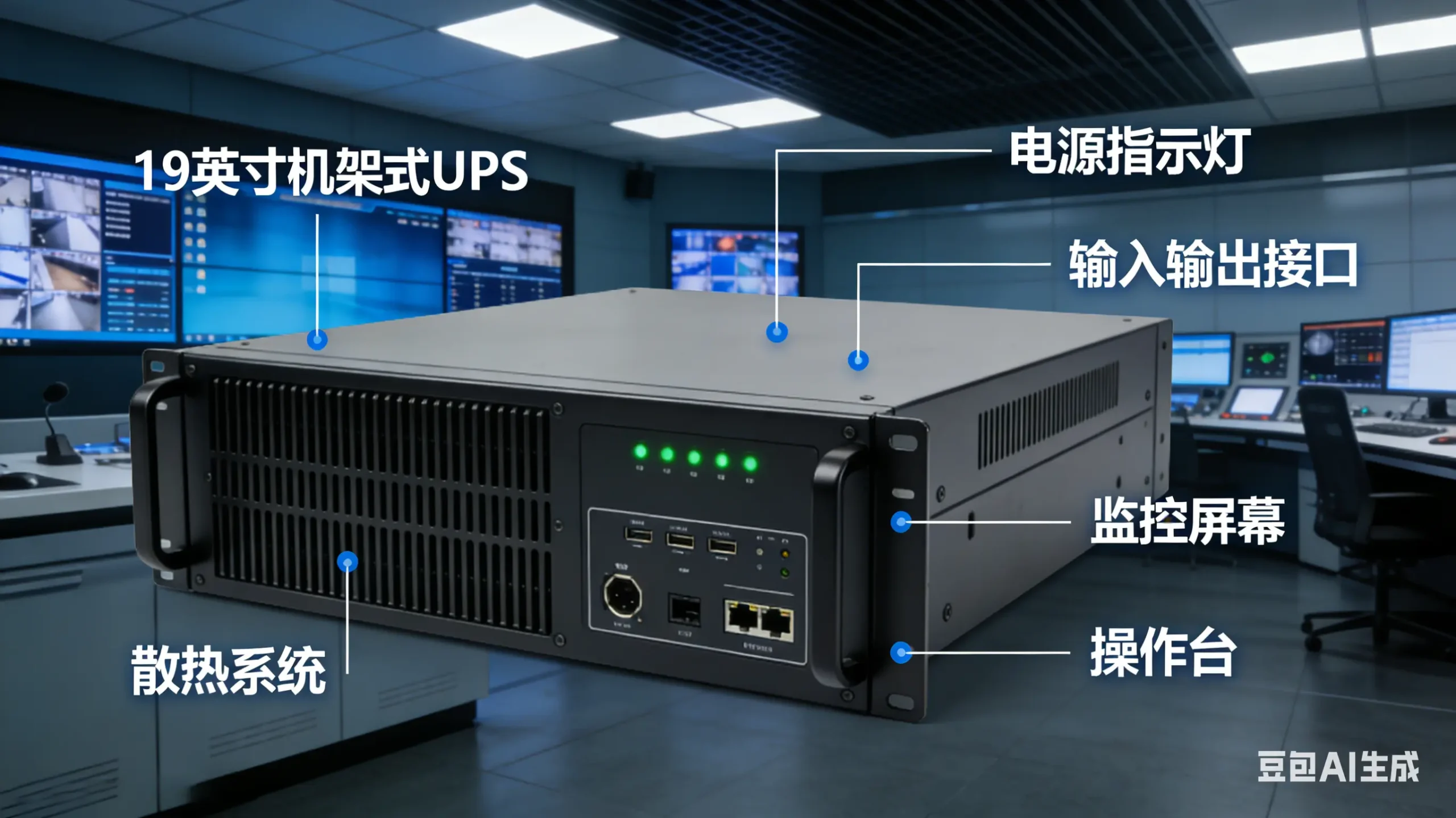
Enclosures are fabricated from cold-rolled steel with powder coating. Internal wiring uses flame-retardant cables terminated with ferrules; busbars are sized with proper thermal margin and clearances follow the applicable standard. Every unit is tested for insulation resistance, dielectric withstand and temperature rise before delivery, and supplied with cable entries and gland plates matched to site cabling.
5. Design and Engineering: How We Build Your Unit
Each AC distribution unit starts from a circuit schedule: what loads, what ratings, what redundancy. Our engineers then produce a single-line diagram, select breakers with correct breaking capacity and selectivity, arrange the busbar and wiring layout, and submit drawings for approval before fabrication. Custom requirements — special voltages, DC tap-offs, touchscreen displays, remote on/off control, energy-meter modules for submetering projects — are engineered into the same process.
6. Installation and Commissioning
- Site preparation — mounting position, cable entries and earthing point confirmed.
- Mounting and connection — unit fixed, incoming and outgoing cables terminated with correct torque, earthing connected.
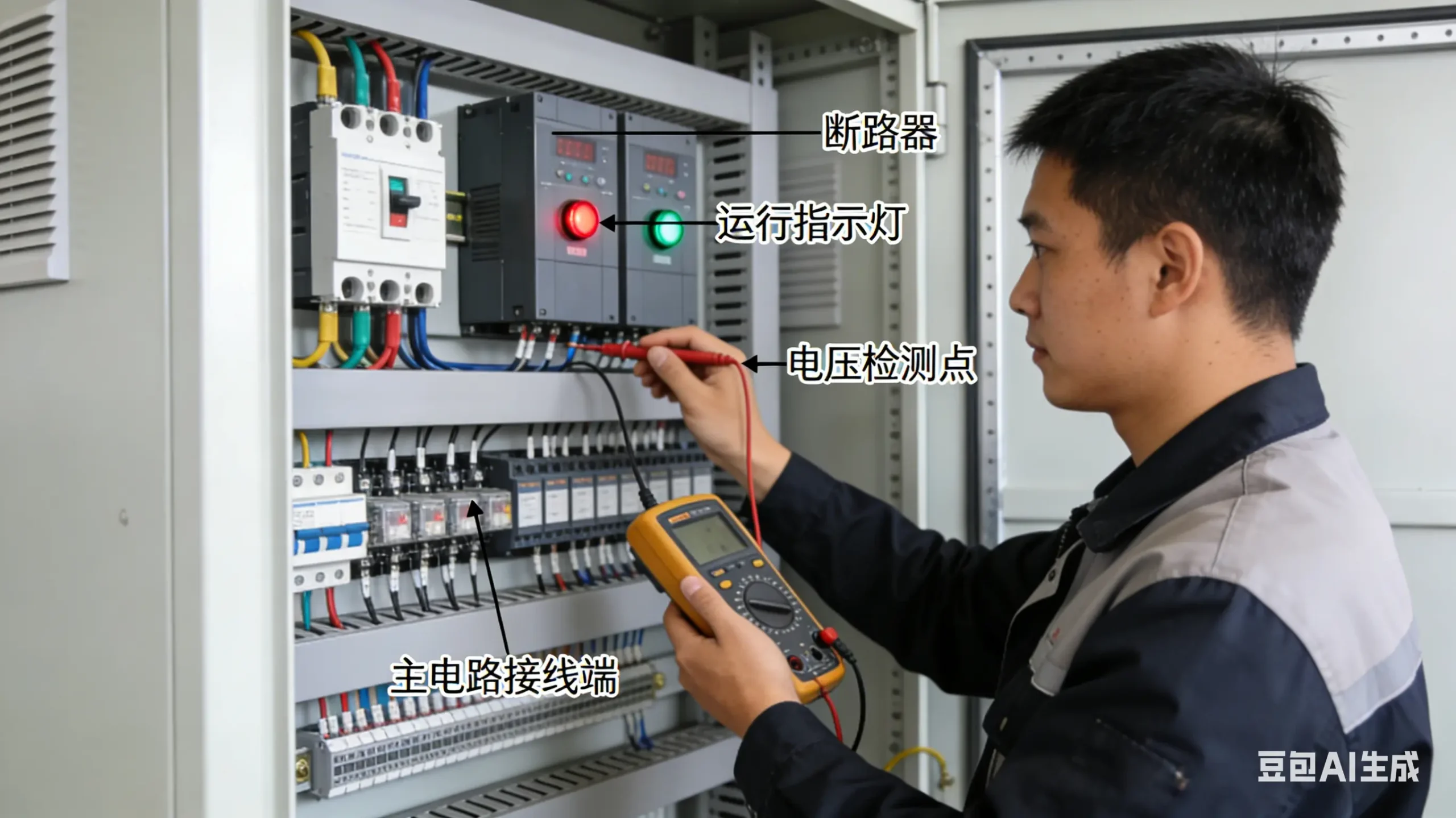
- Verification — insulation test, phase sequence, breaker function and RCD trip test.
- Load test — circuits energized one by one; meter readings checked against a reference.
- Handover — circuit schedule, test record and operating instructions delivered; staff trained on isolation and reset procedures.
Commissioning can be scheduled around site activity because the unit is self-contained — most installations complete in hours, not days.
7. Selection Guide: Which AC Distribution Unit Do You Need?
- Count the loads — list every AC circuit (AC units, rectifiers, sockets, lighting) with its rating; add 20-30% margin for future loads.
- Choose input — dual input with ATS where two sources exist or where downtime is unacceptable.
- Decide metering level — total metering for cost centers; per-branch smart metering for remote sites where truck rolls are expensive.
- Match the enclosure — indoor rack for server rooms, wall-mount for small sites, IP55 floor cabinet for outdoor or dusty areas.
- Add protection — SPD rating follows exposure; RCDs protect personnel on socket circuits.
8. Maintenance and Troubleshooting
AC distribution units are low-maintenance by design. Recommended care: quarterly visual inspection (heat discoloration, loose connections, dust), annual torque re-check of terminations, breaker trip testing on sample circuits, and SPD status check (replace modules showing end-of-life). Common issues and their causes are documented in the operating manual: nuisance trips (overload or faulty downstream equipment), meter showing no reading (blown VT fuse or wiring), and warm enclosures (overload, poor ventilation, or loose terminations). With proper maintenance, a quality unit serves 15-20 years.
9. Safety and Compliance Standards
Units are designed and routine-tested to IEC 61439-2 (low-voltage switchgear and controlgear assemblies) and GB/T 7251 for local projects. Compliance covers clearances and creepage distances, temperature-rise limits, dielectric performance and protection against electric shock. Each delivery includes test reports; type-test documentation from the assembly family is available on request for project submissions.
10. Industry Use Cases
10.1 Base Station Power Room Upgrade
A telecom operator replaced aging distribution at 40 macro sites with dual-input smart units, gaining per-branch current visibility and remote trip alarms. Unbalanced-phase faults that previously caused unexplained rectifier trips were identified and corrected within the first month.
10.2 Data Center Row Distribution
An enterprise data center standardized on rack and row AC units with per-branch metering, feeding power data to its DCIM. Phase balance improved, capacity planning became data-driven, and submetering supported tenant showback.
10.3 Industrial Plant Sub-Distribution
A manufacturing plant used IP54 floor units for workshop sub-distribution with energy-meter modules, creating the measurement backbone for its ISO 50001 energy review.
11. Frequently Asked Questions
AC Distribution Unit FAQ
1. What is the difference between an AC distribution unit and a socket PDU?
A socket PDU distributes power to IT equipment outlets inside a rack. An AC distribution unit is the higher-level panel feeding multiple circuits — rectifiers, air conditioners, socket PDUs, lighting — typically installed near the room entry or in the shelter.
2. Can it support dual power input?
Yes. Dual-input versions accept two independent sources (mains A/B, or mains and generator) and transfer automatically with manual override, preventing downtime during source switching.
3. What output circuits can I configure?
Any combination of single-phase and three-phase circuits: typical ratings 16 A, 32 A, 63 A and 125 A per way, with total panel capacity from 63 A to 630 A.
4. Is remote monitoring available?
Yes. Smart units report voltage, current, power, energy and breaker status over RS485/Modbus or SNMP, and can trigger remote shutdown of non-critical circuits.
5. Which standards apply?
Panels follow IEC 61439-2 / GB/T 7251, with routine tests per unit and type-test documentation on request.
6. How long is delivery?
Standard configurations ship in 7-12 days; custom panels with metering and monitoring typically 12-18 days after drawing confirmation.
7. Can the unit be retrofitted into an existing shelter?
Yes — wall-mount and rack versions fit existing spaces; input and output cabling are terminated on site to the existing cable schedule.
8. What does per-branch metering add over total metering?
Per-branch current shows load balance and lets you identify which circuit trips or overloads remotely — saving site visits at telecom and distributed sites.
9. Do you offer DC tap-offs inside an AC unit?
Hybrid AC/DC panels are available where a small -48V or 24V DC section is needed alongside AC distribution.
10. What IP rating should outdoor units have?
IP54 covers rain and dust for sheltered outdoor mounting; IP55-IP65 with sealed entries is used for exposed locations.
11. Can the unit connect to a building management system?
Yes — Modbus/SNMP interfaces integrate with BMS, DCIM or site controllers for centralized visibility.
12. What documentation is delivered?
Single-line diagram, circuit schedule, test reports, operation manual and, for smart units, communication protocol documentation.
12. Related Solutions from Guangzhou Lain
- DC Distribution Cabinet (-48V)
- LV Distribution Switchgear
- Telecom Power Distribution Unit
- Distribution SPD Module
- Data Center Monitoring System
All Lain products are engineered, tested and supported by the same in-house team — contact us to combine solutions for a complete project package.
About Guangzhou Lain Intelligent System Development Co., Ltd.
Guangzhou Lain Intelligent System Development Co., Ltd. manufactures AC distribution units, DC power systems, switchgear, monitoring platforms and data center infrastructure for telecom, data center and industrial customers worldwide. From single rooms to enterprise facilities, KITOZER provides design, manufacturing, integration, testing and after-sales service under one roof and exports worldwide.
Contact us for a free technical consultation:
- Company: Guangzhou Lain Intelligent System Development Co., Ltd.
- Address: 1st Floor, Building A, Chaotian Industrial Park, Zhongrun Industrial Park, Shilou Town, Panyu District, Guangzhou, Guangdong, China
- Tel/WeChat: +86 13922289957 | +86 18520668845 | +86 13538869979
- WhatsApp: +86 19068534140
- Email: zl19068534140@gmail.com
- Website: www.gdlain.com | Request a Quote
Typical response time: within one business day. Project references, drawings and samples are available on request.