1. Overview: The Small Parts That Decide Your Cooling Bill
Hot/cold aisle containment only delivers its energy saving when the aisle is actually sealed. Every gap — at rack tops, between cabinets, around columns, under the raised floor — lets hot exhaust air recirculate into the cold aisle, raising server intake temperatures and forcing cooling to work harder. Studies and field measurements consistently show that a “contained” aisle with unsealed gaps performs barely better than no containment at all.
Aisle sealing strips close those gaps and complete the containment envelope. Guangzhou Lain Intelligent System Development Co., Ltd. supplies and installs aisle sealing for new and existing data centers. This guide explains where sealing is needed, what materials are used, and what savings a proper seal delivers.
2. Where the Gaps Are
| Gap Location | What It Leaks | Solution |
|---|---|---|
| Top of racks vs ceiling | Hot air spills over rack tops into cold aisle | Ceiling-mounted brush/hinged strips |
| Between adjacent racks | Cross-flow between cold and hot aisles | Vertical brush or rubber profiles |
| Around columns | Bypass at structural intrusions | Custom-shaped sealing profiles |
| Under raised floor | Supply air escapes through cable cut-outs | Brush grommets and sealed floor tiles |
| End doors | Aisle pressure lost at openings | Sealed sliding/hinged doors |
3. Materials and Design
3.1 Brush Seals
Flame-retardant nylon/polyester brush on aluminum or steel carriers — the workhorse of aisle sealing. Brushes seal irregular gaps, allow cables to pass without damage, and remain effective as rack positions shift. Standard brush depths range 25-100 mm.
3.2 Rubber and Gasket Profiles
EPDM or PU foam profiles for solid joints and door seals where a firm, airtight closure is needed and no cable access is required.
3.3 Mounting Systems
Tool-free click or screw carriers, adjustable brackets for uneven rack heights, and gasket interfaces at the ceiling — installation is quick and reversible for maintenance access.
4. Fire Rating and Compliance
Sealing materials are available in flame-retardant grades meeting UL94 V-0 or Class A requirements, and are compatible with fire suppression layouts — containment design coordinates ceiling panels and seals with sprinkler or gas nozzle positions. Material certificates are provided per project.
5. Measured Benefits
- Intake temperature control — proper sealing typically lowers server intake temperatures 2-6°C versus a leaky aisle.
- Cooling energy savings — containment savings of 15-30% on cooling energy depend on the seal being complete.
- Predictable airflow — CFD assumptions and capacity plans hold true when the envelope is real.
- Higher density support — contained, sealed aisles support higher rack densities without hot spots.
6. Retrofit Installation
Most sealing installs during normal operation: top and joint sealing is done from the aisle without moving racks; under-floor work is brief and scheduled at low load. A survey produces a sealing plan with quantities; installation completes an aisle in a day. No IT downtime is required.
7. Verification
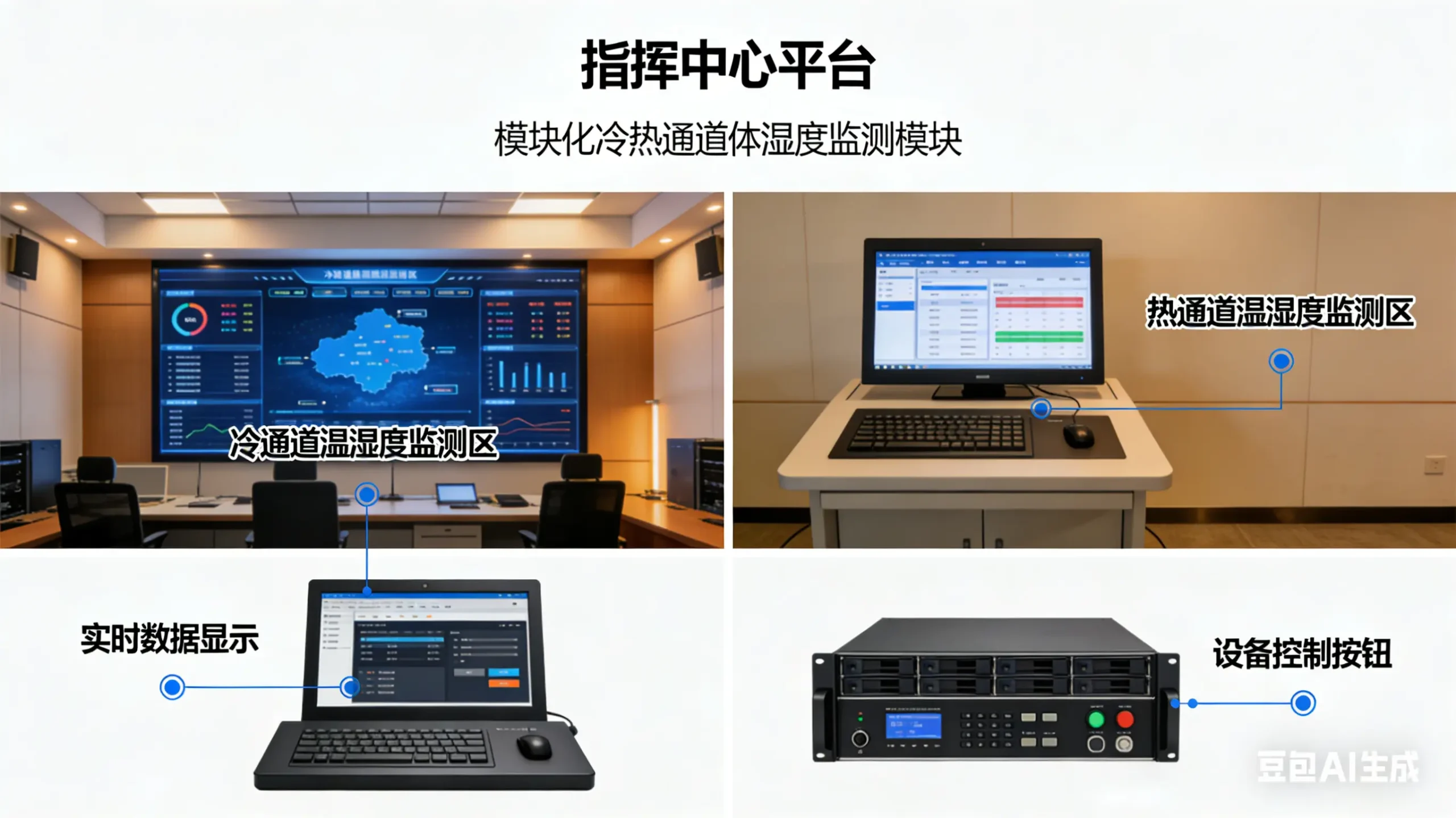
Guangzhou Lain verifies results with before/after measurement — rack intake temperatures and AC return temperatures document the improvement, and the monitoring system’s temperature data confirms the seal is working over time. This evidence turns a sealing project from an assumption into a measured investment.
8. Frequently Asked Questions
Aisle Sealing Strips FAQ
1. Why are aisle sealing strips necessary in containment?
Containment works only when airtight. Gaps at rack tops, joints and columns let hot air recirculate into the cold aisle, raising intake temperatures and wasting cooling energy.
2. Where exactly do I need sealing strips?
Everywhere the containment envelope is broken: between rack tops and ceiling, between racks, around columns, at aisle doors and under raised floors at cable openings.
3. What materials are used?
Flame-retardant brush (nylon/polyester) or EPDM rubber profiles on aluminum/steel carriers; brush is most common because it seals irregular gaps while allowing cables to pass.
4. Can strips be installed without stopping IT equipment?
Yes — top and joint sealing is done from the aisle without touching racks; under-floor work is brief and scheduled at low load. No IT downtime is normally required.
5. How much energy can proper sealing save?
In a typical contained data center, completing the seal lowers intake temperature 2-6°C and reduces cooling energy 15-30% compared with a leaky aisle.
6. Do you provide custom sizes?
Yes — strips are cut to site dimensions, and irregular interfaces (columns, beams, pipes) are covered with custom profiles after an on-site survey.
7. Do seals affect fire suppression?
Materials are available in flame-retardant grades, and containment geometry is coordinated with nozzle and detector positions.
8. How is the seal maintained?
Brush seals last for years; they are inspected during routine maintenance and replaced when compressed or damaged.
9. Can sealing be added to existing containment?
Yes — retrofit kits mount on existing rack tops and containment with brackets and adhesive carriers.
10. How do I know the seal is effective?
Rack intake temperatures and AC return temperatures measured before/after quantify the improvement.
11. What do you supply?
Complete kits per aisle — strips, carriers, brackets, fixings and seals — from a surveyed bill of quantities.
12. How long does installation take?
An aisle typically completes in one day with two technicians, during normal operation.
9. Related Solutions
- Dual-Row Hot Aisle Containment
- Aisle Ceiling Tiles
- Precision Temperature & Humidity Monitoring
- Cabinet Thermal Control Module
- Data Center Monitoring System
About Guangzhou Lain Intelligent System Development Co., Ltd.
Guangzhou Lain Intelligent System Development Co., Ltd. supplies aisle containment sealing, thermal management and monitoring products for data centers worldwide. From single rooms to enterprise facilities, KITOZER provides design, manufacturing, integration, testing and after-sales service under one roof and exports worldwide.
Contact us for a free technical consultation:
- Company: Guangzhou Lain Intelligent System Development Co., Ltd.
- Address: 1st Floor, Building A, Chaotian Industrial Park, Zhongrun Industrial Park, Shilou Town, Panyu District, Guangzhou, Guangdong, China
- Tel/WeChat: +86 135-0923-8849 | +86 135-0923-8849
- WhatsApp: +86 135-0923-8849
- Email: zl19068534140@gmail.com
- Website: www.gdlain.com | Request a Quote
Typical response time: within one business day. Project references, drawings and samples are available on request.