1. Overview: When a Cabinet Becomes an Oven
Enclosed cabinets concentrate heat: servers, network gear, telecom power and batteries generate watts inside a box whose surfaces can only dissipate so much. When heat load exceeds what natural convection and cabinet surface can remove — often above a few hundred watts in a sealed rack — internal temperatures climb, components derate and fail early, and fans spin at maximum as a last defense.
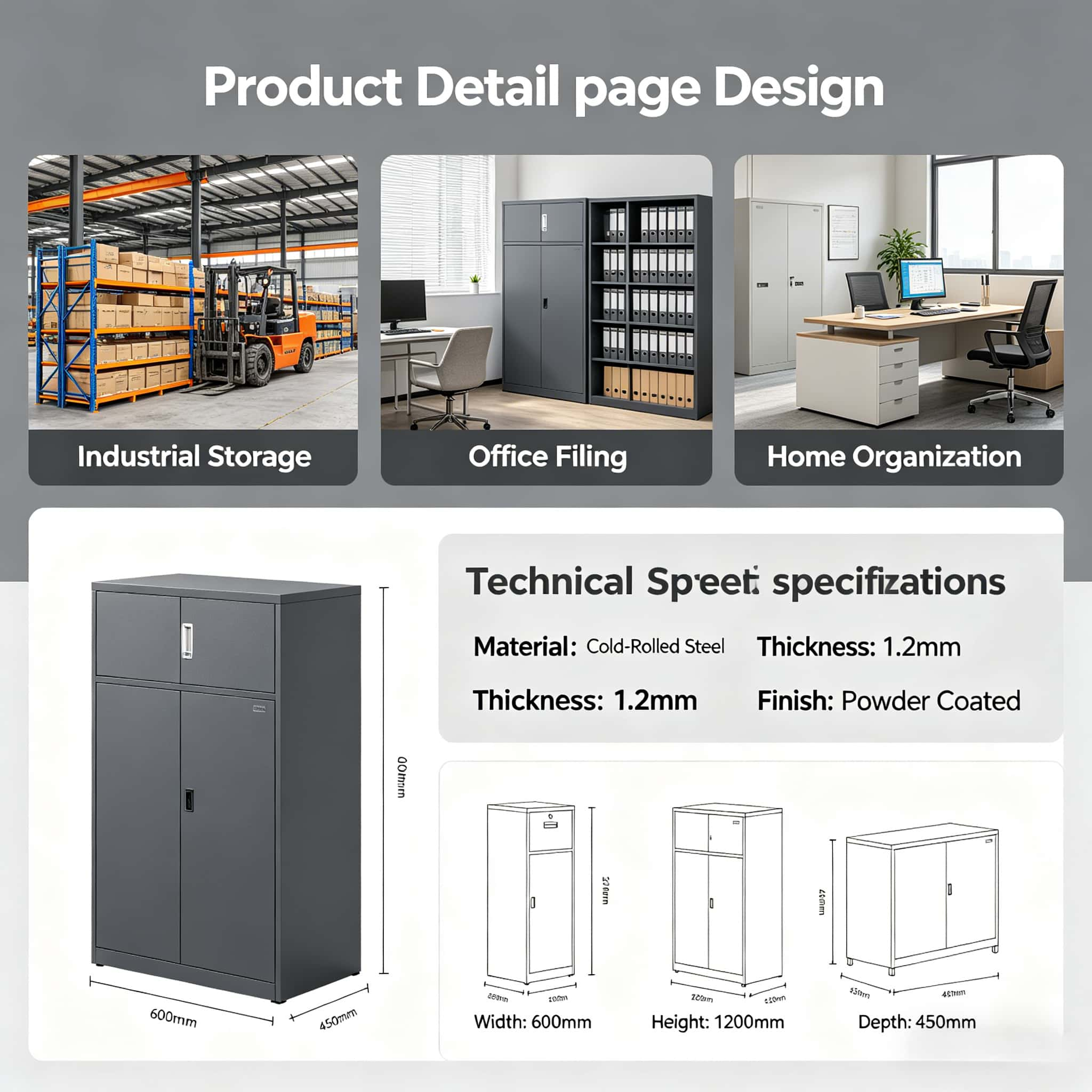
A cabinet thermal control module is a compact cooling unit mounted on or inside the cabinet that removes heat locally, keeping equipment within its rated range regardless of room conditions. Guangzhou Lain Intelligent System Development Co., Ltd. supplies fans, air-to-air heat exchangers, cabinet air conditioners and thermoelectric coolers for indoor and outdoor enclosures. This guide explains the options, how to size them and how to select the right technology.
2. Thermal Control Technologies
2.1 Fan Modules
Filtered exhaust or intake fans exchange cabinet air with the room — the economical choice for moderate heat loads where room cooling is adequate. Thermostat-controlled versions run fans only when needed, saving energy and filter life. Fan modules suit indoor racks and cabinets with up to roughly 500-1000 W of load, depending on room conditions.
2.2 Air-to-Air Heat Exchangers
Closed-loop coolers that separate cabinet air from ambient air while transferring heat through a heat exchanger core. They keep dust, humidity and contaminants out — ideal for dusty or humid environments — with cooling capacities typically 100-1000 W/K. No compressor means low power consumption and long life.
2.3 Cabinet Air Conditioners
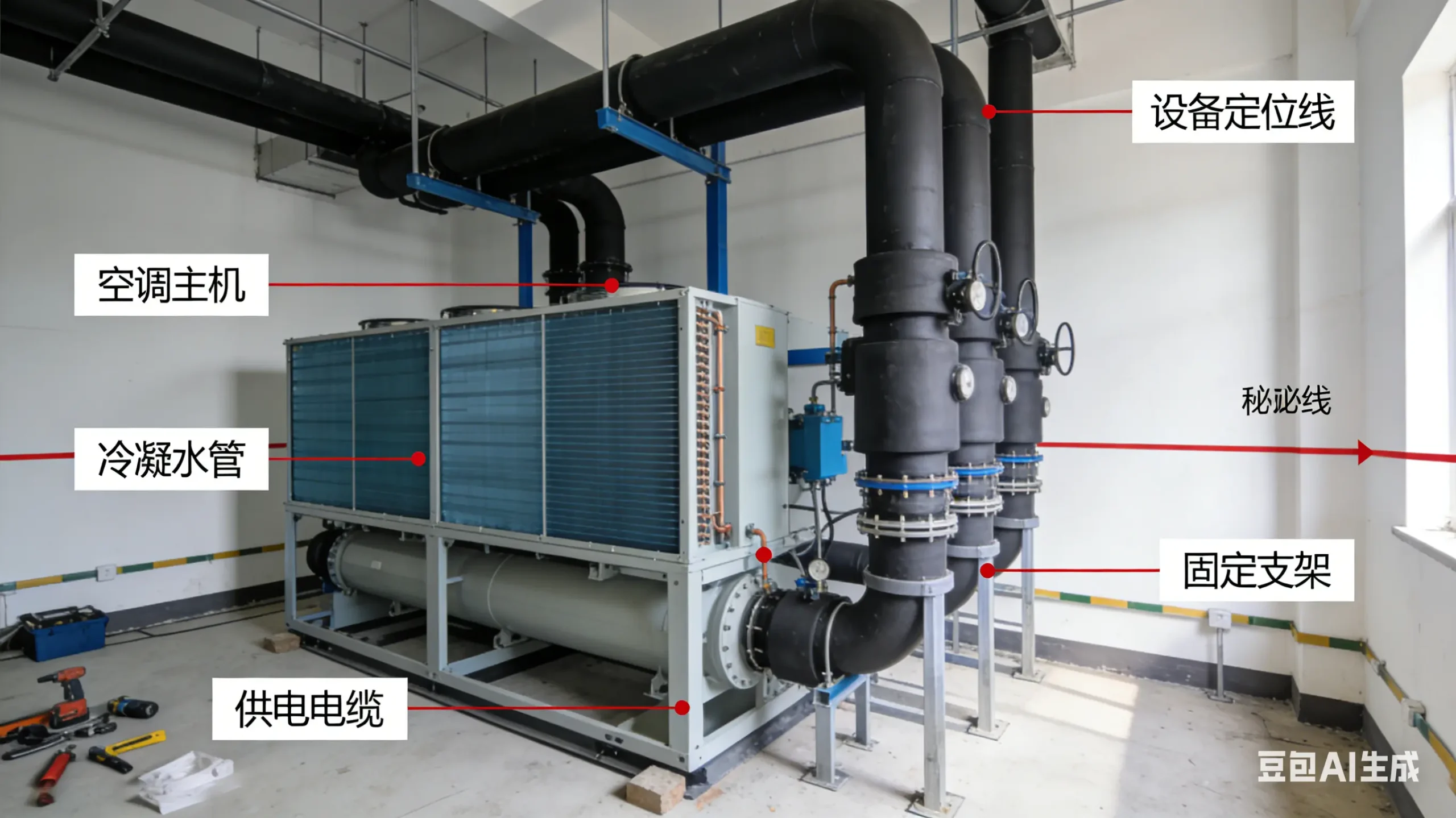
Compressor-based units (300 W to 3+ kW cooling) for sealed cabinets in hot rooms or outdoor enclosures where ambient air is too warm for fan or exchanger solutions. They maintain a set temperature inside regardless of outside conditions — the choice for outdoor telecom, battery and high-density applications.
2.4 Thermoelectric (Peltier) Coolers
Solid-state coolers with no moving parts — quiet, vibration-free and maintenance-light, suited to sensitive electronics and small enclosures with modest heat loads.
3. Sizing: How Much Cooling Do You Need?
| Heat Source | How to Estimate |
|---|---|
| Equipment | Sum nameplate power (W) of all devices in the cabinet |
| Cabinet surface | Heat gain through walls — depends on surface area, insulation, ambient |
| Solar gain (outdoor) | Sun load on the enclosure in direct sun |
| Total requirement | Equipment + gains, with 20-30% margin for growth |
The calculated total is matched to a module’s cooling capacity at the site’s maximum ambient temperature — ratings are quoted at specific ambient conditions, and derating at high ambient must be considered.
4. Selection Considerations
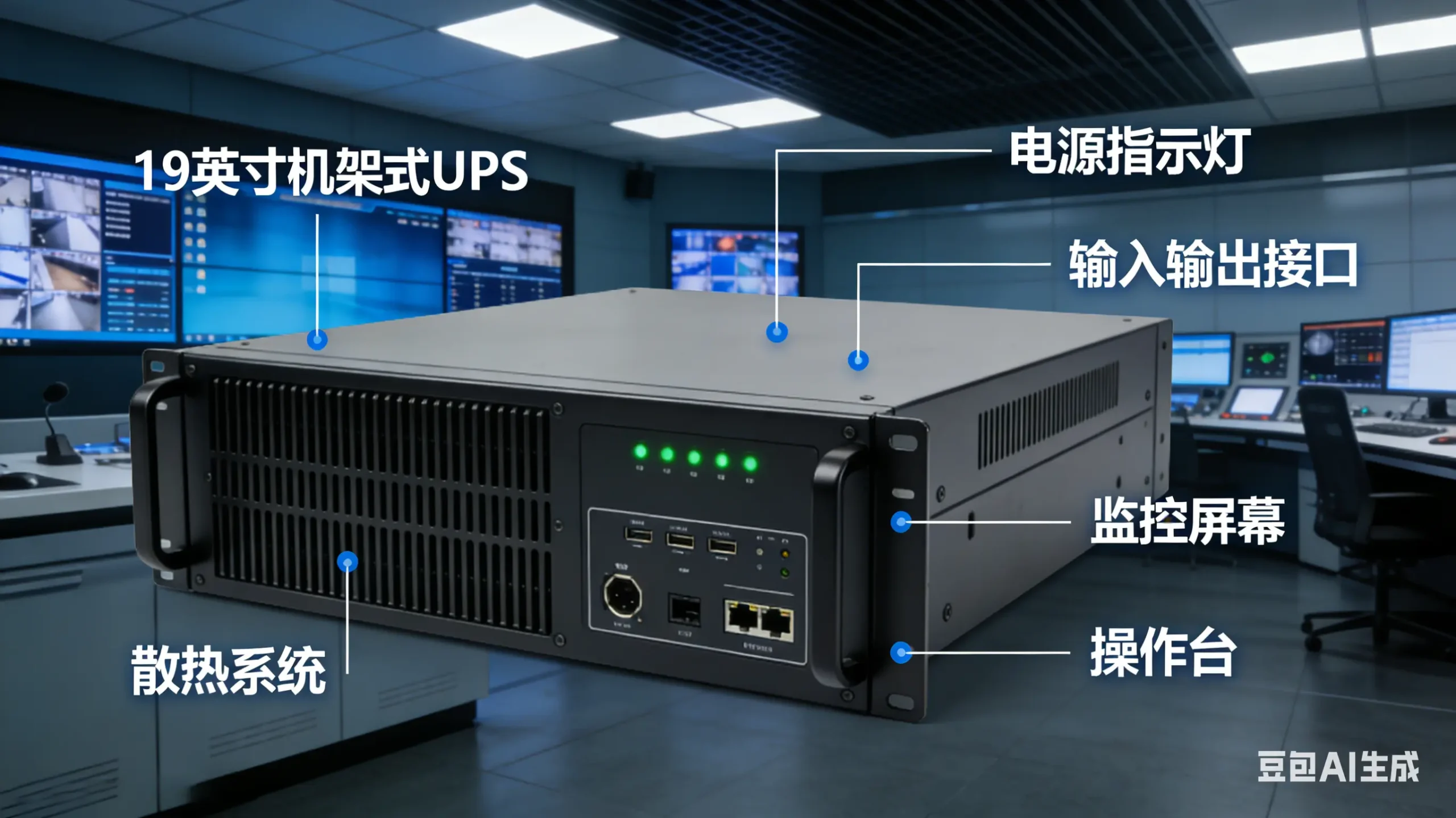
- Heat load and ambient — fans/exchangers for moderate loads in cool rooms; AC for sealed or hot environments.
- Contamination — dusty or humid sites favor closed-loop (exchanger or AC) over fan ventilation.
- Power supply — AC or DC (-48V) versions; DC avoids an inverter at telecom sites and improves efficiency.
- Noise — offices and labs favor quiet thermoelectric or low-speed fan solutions.
- Mounting — door, side or top mount matched to cabinet construction and available space.
- IP rating — outdoor and washdown areas need sealed units with the required protection.
5. Monitoring and Control Integration
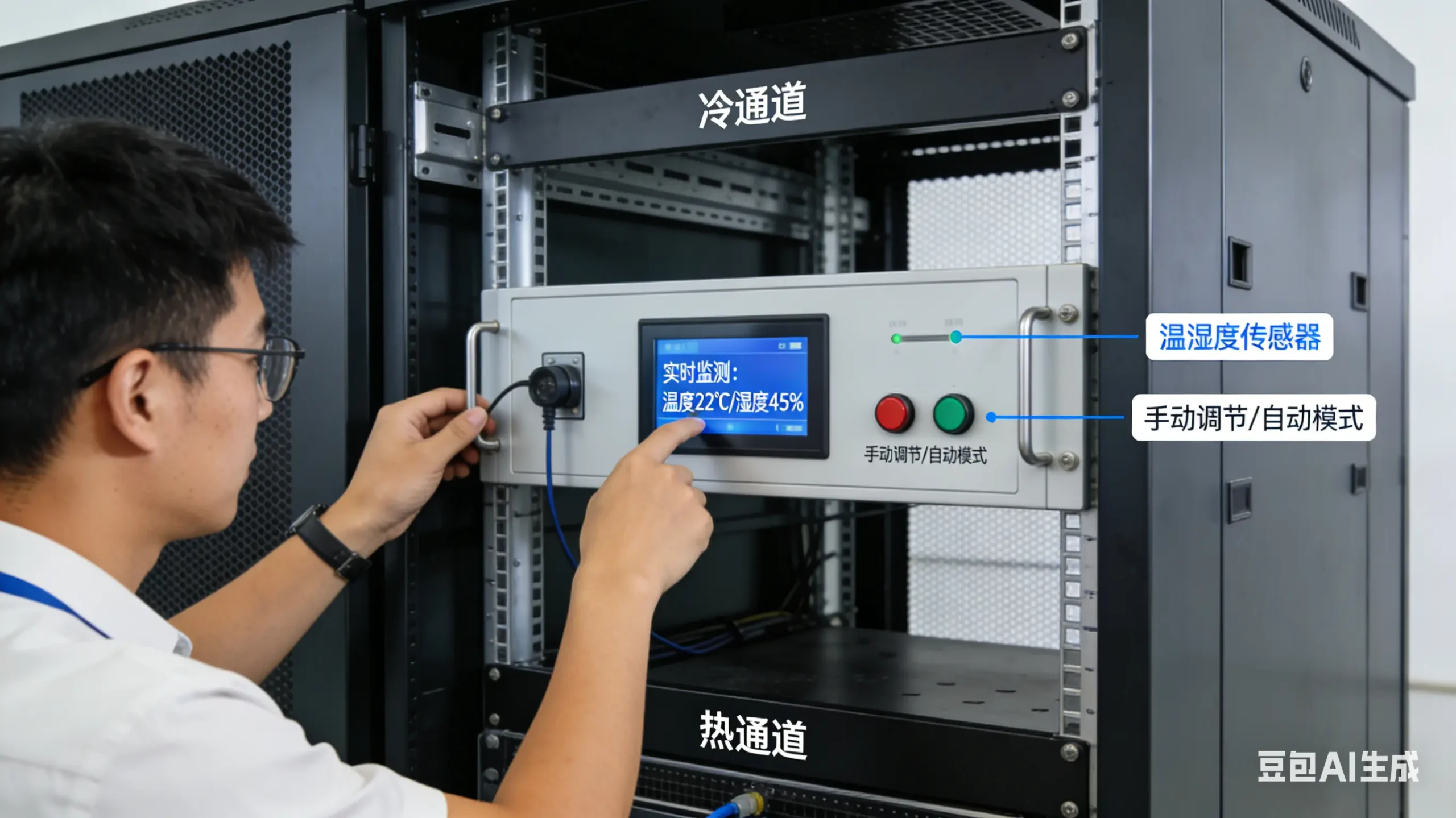
Smart modules report temperature, fan or compressor status and filter blockage to the cabinet controller or site monitoring platform — so thermal faults are visible before equipment overheats. Thermostat control, alarm contacts and Modbus/SNMP reporting turn cooling from a passive component into a managed system. Temperature-controlled operation also saves energy: fans and compressors run only when needed.
6. Retrofit Installation
Most units mount on the door or side panel with standard cut-outs and gaskets; retrofit kits include sealing and power connection parts. Installation is completed in hours without removing cabinet contents — a practical upgrade for cabinets running hot in existing rooms.
7. Frequently Asked Questions
Cabinet Thermal Control FAQ
1. When does a cabinet need a thermal control module?
When internal heat load exceeds what cabinet surface and natural ventilation can dissipate — typically above a few hundred watts in a sealed rack, or anytime the room is hot or dusty and closed-loop cooling is preferred.
2. What are the cooling options?
Fan ventilation (lowest cost, moderate loads), air-to-air heat exchangers (closed loop, no compressor), cabinet AC (full cooling for sealed/hot environments), and thermoelectric coolers (quiet, sensitive electronics).
3. How do I calculate the cooling capacity I need?
Add the heat load of all equipment (roughly nameplate power in watts), add solar gain for outdoor cabinets, and select a module with capacity above the total with 20-30% margin.
4. Can modules work with DC power (e.g. -48V)?
Yes — DC-powered fan and cooling modules are available for telecom cabinets, avoiding an extra inverter and improving efficiency.
5. Are the modules monitored?
Smart versions report temperature, fan/compressor status and filter blockage to the site controller or monitoring platform, enabling predictive maintenance.
6. Can a module be retrofitted to an existing cabinet?
Yes — most units mount on the door or side panel with standard cut-outs and gaskets; retrofit kits include sealing and power parts.
7. Fan, heat exchanger or air conditioner?
Fans for clean rooms with moderate loads; heat exchangers where dust/humidity must stay out; AC where ambient exceeds what passive solutions can handle.
8. How noisy are cabinet coolers?
Fans and thermoelectric units are quiet; compressor AC produces more noise but can be specified with low-noise models for office areas.
9. What is the typical service life?
Fans and thermoelectric units last many years with filter changes; AC units follow standard compressor life with scheduled maintenance.
10. Do modules save energy?
Temperature-controlled units run only when needed, and closed-loop solutions avoid the energy cost of continuously exchanging room air.
11. What IP ratings are available?
Indoor units are typically IP20-IP44; outdoor sealed units reach IP54-IP66 for exposed installation.
12. What documentation is provided?
Capacity calculations, installation drawings, wiring diagrams and test certificates per unit.
8. Related Solutions
- Precision Temperature & Humidity Monitoring
- Aisle Sealing Strips
- Hot Aisle Containment
- General Outdoor Cabinets
- Data Center Monitoring System
About Guangzhou Lain Intelligent System Development Co., Ltd.
Guangzhou Lain Intelligent System Development Co., Ltd. supplies cabinet thermal control, environmental monitoring and enclosure solutions for data centers, telecom and industry worldwide. From single rooms to enterprise facilities, KITOZER provides design, manufacturing, integration, testing and after-sales service under one roof and exports worldwide.
Contact us for a free technical consultation:
- Company: Guangzhou Lain Intelligent System Development Co., Ltd.
- Address: 1st Floor, Building A, Chaotian Industrial Park, Zhongrun Industrial Park, Shilou Town, Panyu District, Guangzhou, Guangdong, China
- Tel/WeChat: +86 13922289957 | +86 18520668845 | +86 13538869979
- WhatsApp: +86 19068534140
- Email: zl19068534140@gmail.com
- Website: www.gdlain.com | Request a Quote
Typical response time: within one business day. Project references, drawings and samples are available on request.