1. Overview: Capture Heat Where It Leaves the Rack
Server exhaust air leaves the rear of every rack at 35-45°C. In an open room that heat mixes with the supply air, raises return temperatures unpredictably and forces cooling units to work harder. Dual-row hot aisle containment solves this by building an enclosed hot aisle between two facing rack rows: exhaust air is captured, channeled and returned to the cooling units without ever mixing with the cold supply.
Guangzhou Lain Intelligent System Development Co., Ltd. designs and installs dual-row hot aisle containment systems for new and existing data centers. This guide explains how they work, what they contain and how to specify one correctly.
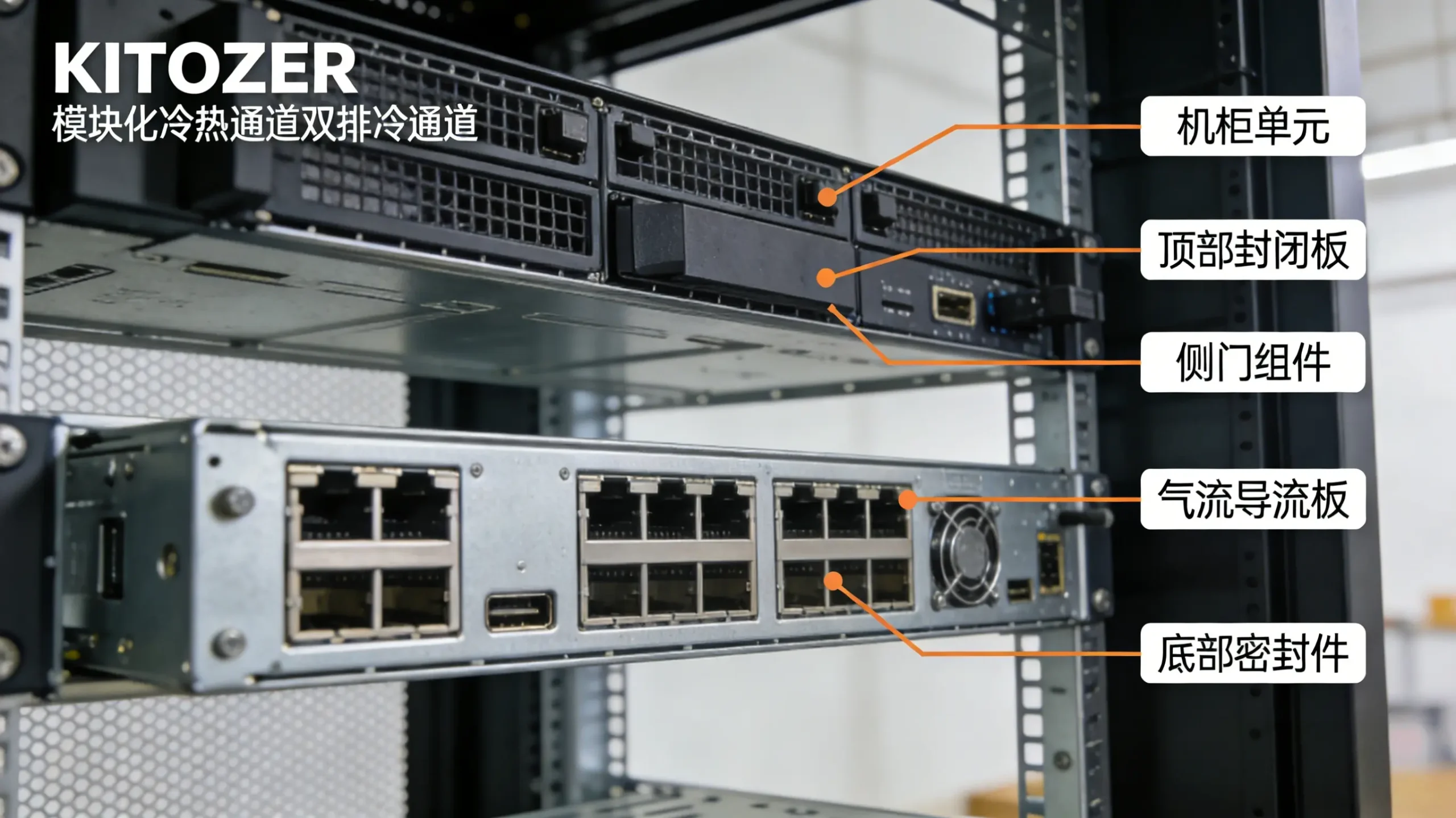
2. How Dual-Row Hot Aisle Containment Works
2.1 The Contained Hot Aisle
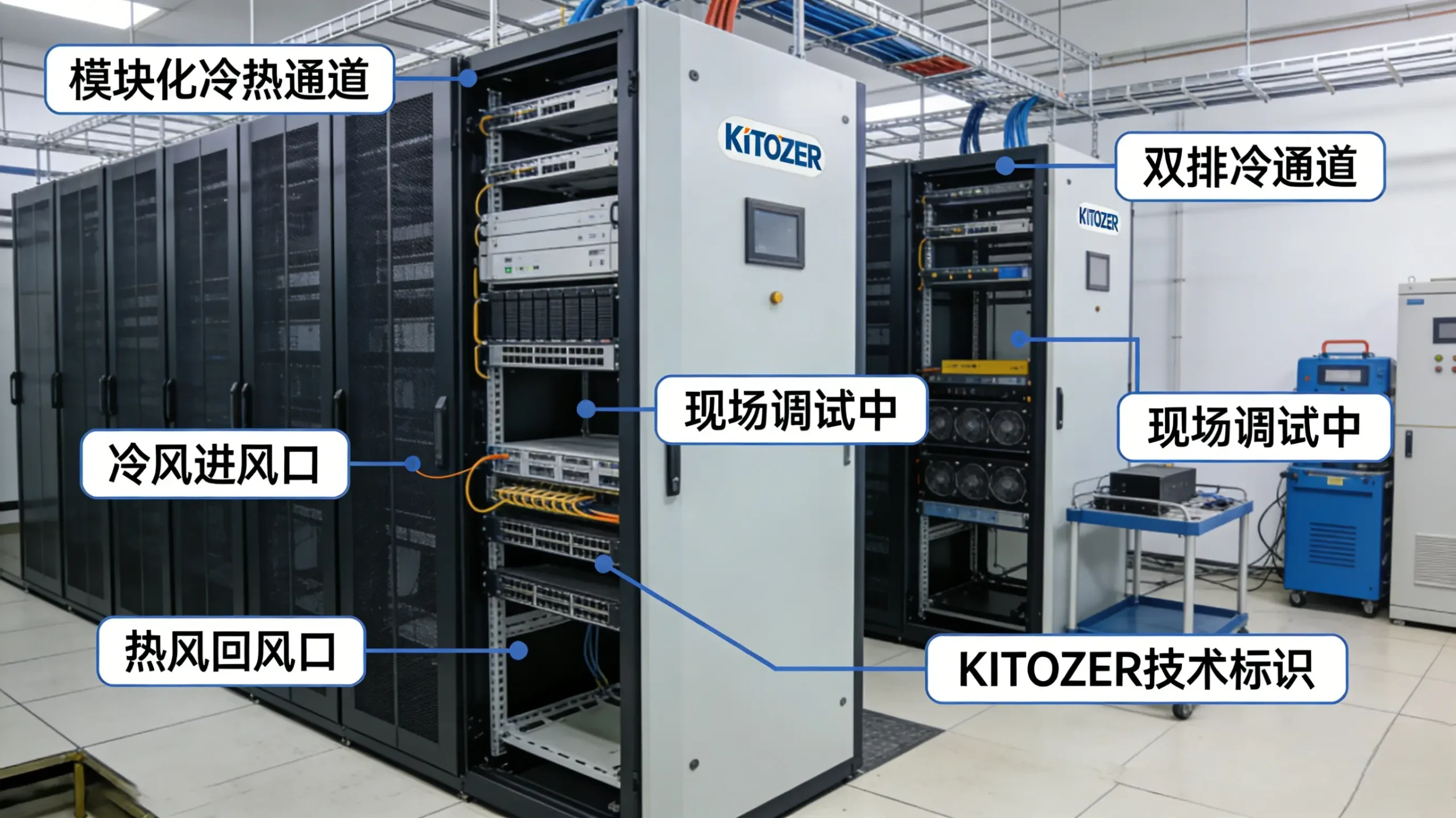
Two rows of racks face each other so that the rear (hot) sides form a shared aisle. A ceiling, end doors and a door or curtain system at the row ends turn that aisle into a closed plenum. Supply air stays in the cold aisles on the outside of the rows; exhaust air is trapped inside the hot aisle.
2.2 Return to the Cooling Units
Because the hot aisle is enclosed, its temperature rises predictably. Cooling units — perimeter CRAC/CRAH units or row-based coolers — draw this warm air back through their return side, or duct it directly to the units. The higher, stable return temperature improves cooling efficiency and enables economizer modes.
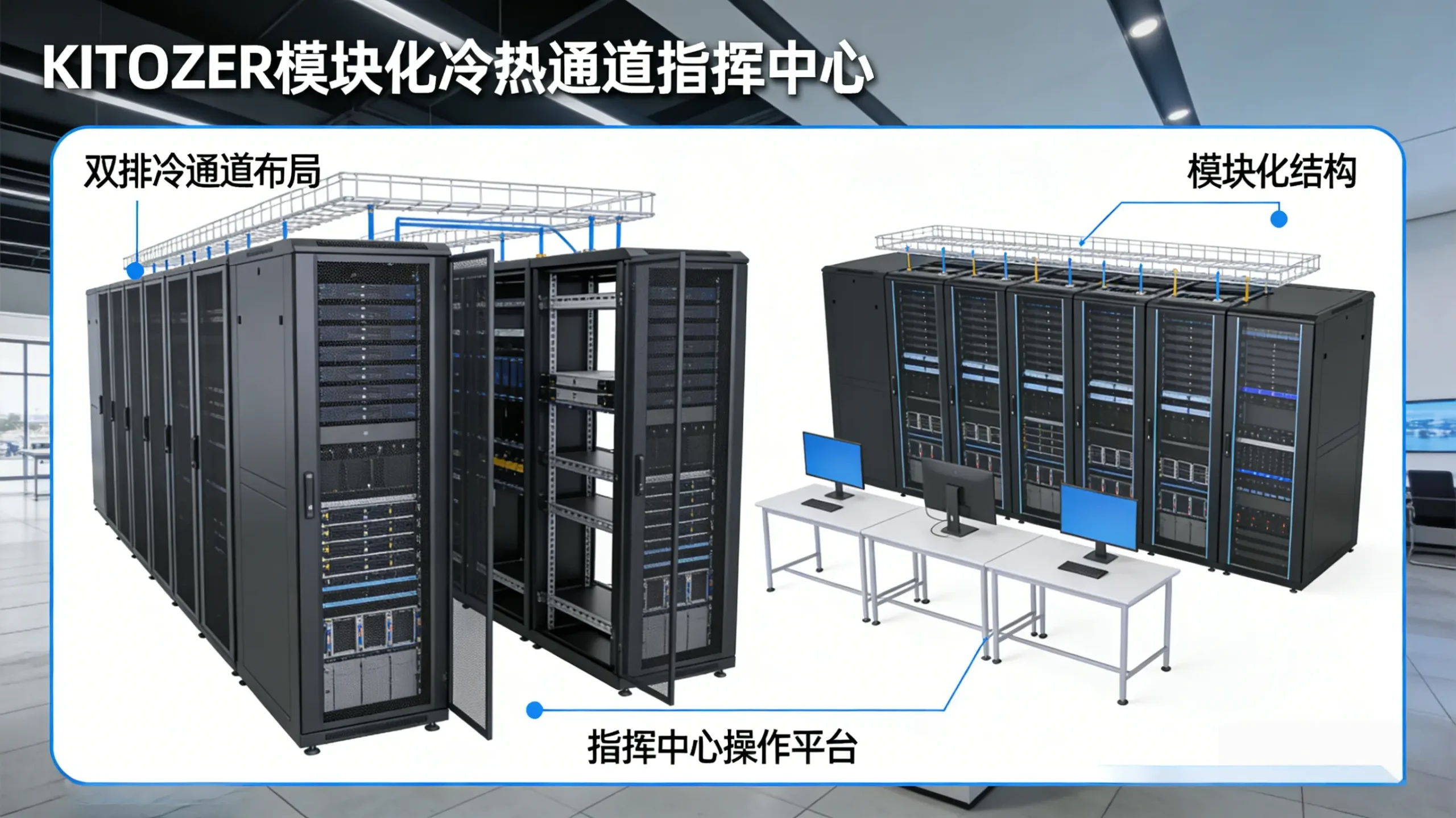
2.3 Separation of Air Streams
The key performance point is separation: cold supply air and hot exhaust air never mix. Every opening — under racks, between cabinets, at row ends, above the ceiling — must be sealed so the only path for exhaust air is back to the cooling units.
3. Components of a Dual-Row System
| Component | Function |
|---|---|
| Ceiling/roof panels | Close the top of the aisle; fire-triggered versions drop open on alarm |
| Aisle end doors | Sliding or hinged doors at row ends, usually with break-glass or auto-open for safety |
| Aisle door system | Optional powered doors with sensors that open for personnel movement |
| Sealing brushes | Close gaps around cables and between racks without blocking cable entry |
| Filler panels | Fill unused rack positions and cover the top of each cabinet |
| Lighting and sensors | Aisle lighting, temperature and smoke detection inside the contained space |
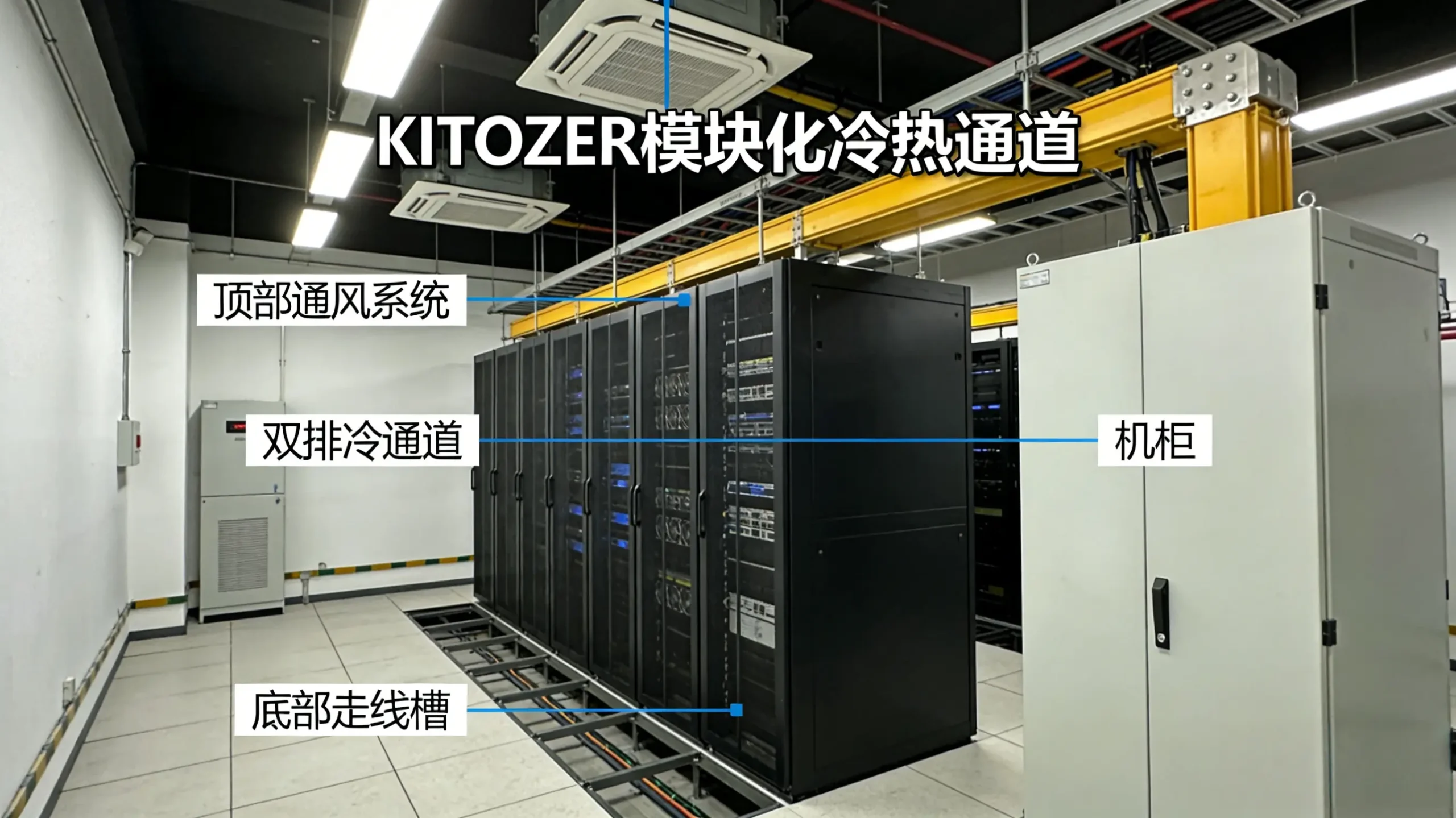
4. Design Considerations
4.1 Aisle Width and Row Length
The hot aisle is typically 1.0-1.2 m wide for service access. Row length affects the number of end doors and the need for intermediate access doors; longer rows are more efficient but require planning for emergency egress.
4.2 Fire Suppression Compatibility
Because the hot aisle is an enclosed space, fire protection must be integrated: smoke detectors inside the aisle, and ceiling panels that release or drop when the fire system activates so gas or water suppression reaches the aisle. This is a code-critical point in every project.
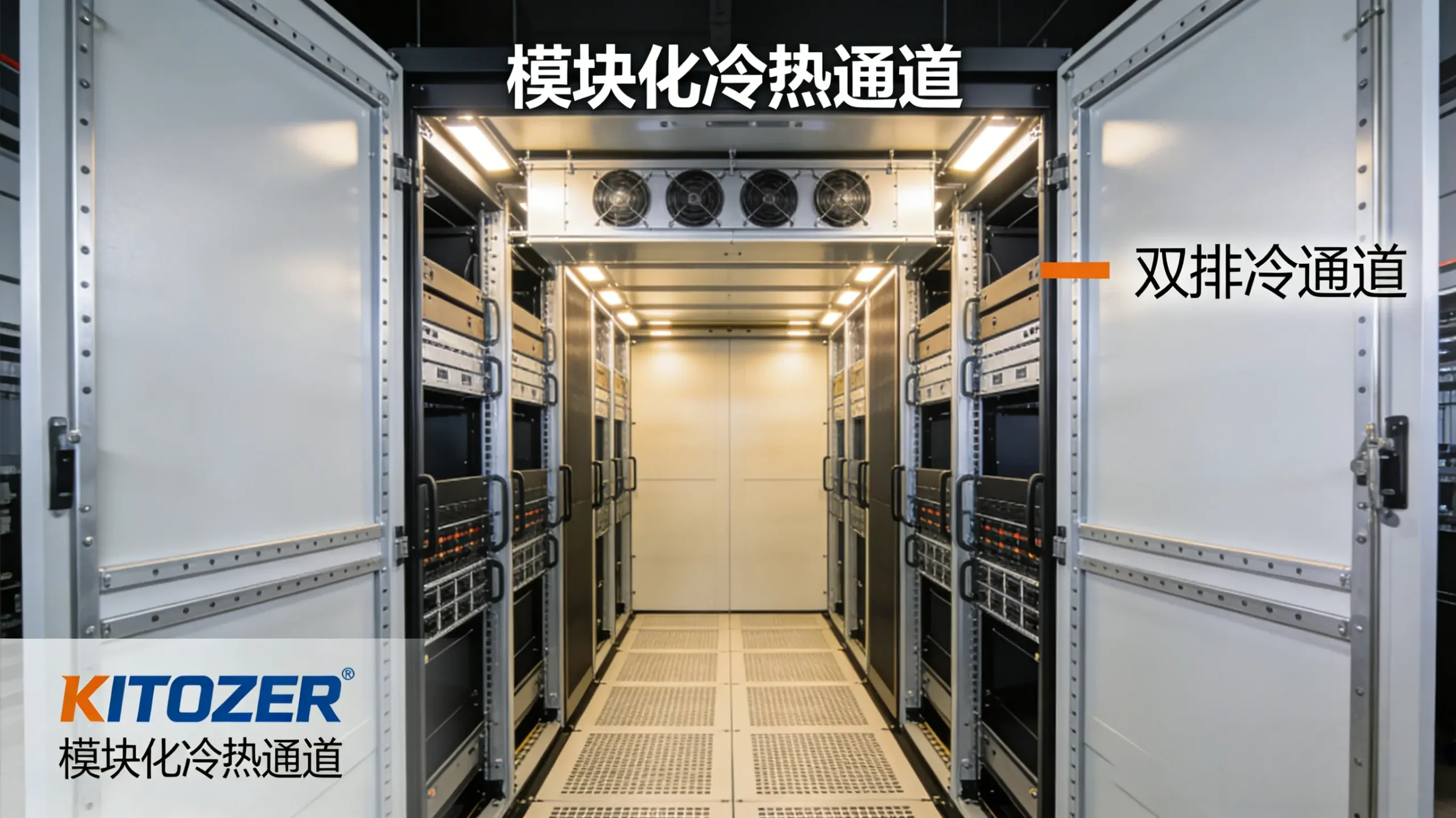
4.3 Cooling Strategy
Dual-row containment works with chilled-water perimeter units, direct-expansion units or row coolers. The return-air temperature target (typically 35-40°C) must be agreed with the cooling design so the units operate in their efficient range.
5. Specification Checklist
| Item | Specify |
|---|---|
| Aisle geometry | Width, row length, rack height and top-of-rack clearance |
| Ceiling type | Fixed, hinged or auto-release panels per fire code |
| Doors | Type, opening width, safety release and access control |
| Sealing scope | Rack gaps, under-floor, cable openings and wall junctions |
| Materials | Fire-retardant panels, steel or aluminum framing |
| Sensors | Temperature, smoke detection and aisle lighting |
6. Frequently Asked Questions
Dual-Row Hot Aisle Containment FAQ
1. What is dual-row hot aisle containment?
An enclosure over the hot aisle between two facing rack rows that captures server exhaust air and returns it directly to cooling units, keeping it separate from cold supply air.
2. How does it differ from cold aisle containment?
Cold aisle containment encloses the cold supply aisle in front of racks; hot aisle containment encloses the exhaust aisle. Both separate the air streams, and some sites combine the two approaches.
3. Why contain the hot aisle instead of the cold aisle?
Hot aisle containment captures heat at its source and delivers high, stable return temperatures, which improves cooling efficiency and supports free-cooling modes.
4. What is the typical return temperature?
Contained hot aisles commonly operate at 35-40°C return air depending on IT load and cooling setpoints.
5. Is fire suppression affected?
Yes — the enclosure must work with the fire system: internal detection, and ceiling panels that release on alarm so suppression reaches the aisle.
6. Can it be retrofitted into an existing hall?
Yes — systems are built around existing row layouts, with ceiling panels, doors and seals adapted to the room height and row spacing.
7. Do I need aisle doors?
Doors at row ends are needed for access and to maintain the seal; powered doors with motion sensors are optional for frequent traffic.
8. What about cables entering the aisle?
Sealing brushes and grommets close cable openings while allowing new cables to be added without breaking the seal.
9. Does it work with row-based coolers?
Yes — row coolers can be placed at the row end or ducted to return the contained hot air directly.
10. Which material is used for panels?
Fire-retardant composite or steel panels with an insulated core, selected to meet the local fire code.
11. How much cooling energy can it save?
Savings depend on climate and cooling plant, but higher and stable return temperatures typically improve efficiency and enable economizer operation.
12. Do you provide design and installation?
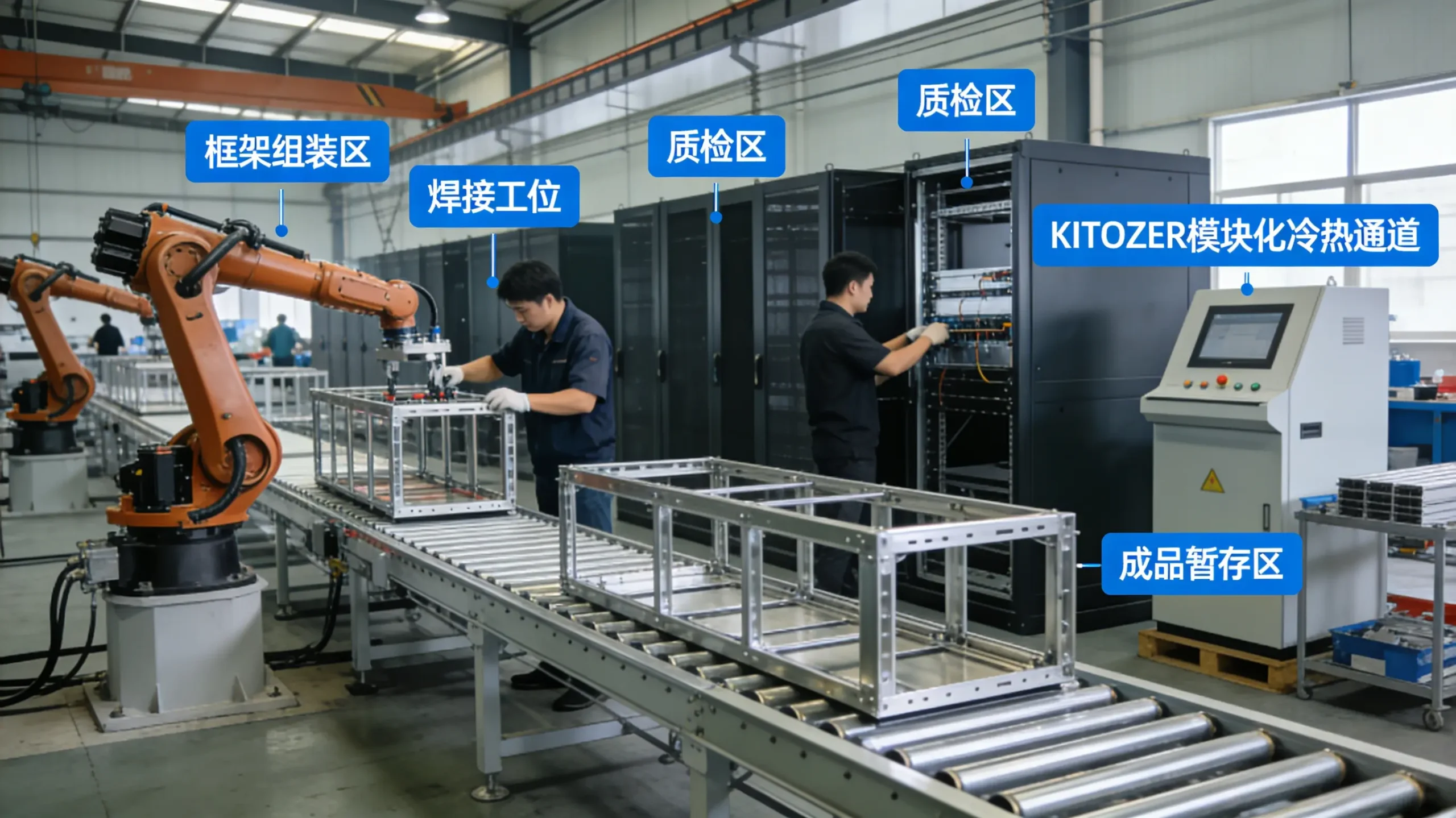
Yes — Guangzhou KITOZER provides layout design, component supply, on-site installation and commissioning as one package.
7. Related Solutions
- Aisle Ceiling Tiles
- Aisle Cooling Devices
- Aisle Sealing Strips
- Cabinet Thermal Control Module
- Data Center Turnkey Integration
About Guangzhou Lain Intelligent System Development Co., Ltd.
Guangzhou Lain Intelligent System Development Co., Ltd. designs, supplies and installs hot and cold aisle containment systems for data centers and technical rooms worldwide. From single rooms to enterprise facilities, KITOZER provides design, manufacturing, integration, testing and after-sales service under one roof and exports worldwide.
Contact us for a free technical consultation:
- Company: Guangzhou Lain Intelligent System Development Co., Ltd.
- Address: 1st Floor, Building A, Chaotian Industrial Park, Zhongrun Industrial Park, Shilou Town, Panyu District, Guangzhou, Guangdong, China
- Tel/WeChat: +86 13922289957 | +86 18520668845 | +86 13538869979
- WhatsApp: +86 19068534140
- Email: zl19068534140@gmail.com
- Website: www.gdlain.com | Request a Quote
Typical response time: within one business day. Project references, drawings and samples are available on request.