1. Overview: Compute Where the Data Is
Cloud data centers are far from the factory floor, the mine, the hospital and the cell tower — and distance costs latency, bandwidth and resilience. Edge computing moves processing close to the data source: video analytics at the camera, industrial control at the plant, 5G services at the network edge. The challenge is deploying IT infrastructure at sites that were never designed to host it.
An edge computing container answers that challenge: a factory-integrated, transportable micro data center — racks, power, cooling, fire protection, security and monitoring built into a standard container — delivered ready to run after power and network connection. Guangzhou Lain Intelligent System Development Co., Ltd. manufactures edge computing containers and containerized data centers for industry, telecom and remote operations. This guide explains the technology, configurations, sizing and deployment.
2. Why Containerized Edge
- Speed — factory integration and testing compress delivery from months to weeks; site work is foundation plus utility hookup.
- Quality — built, integrated and load-tested under factory conditions with full documentation — not assembled on a muddy site.
- Scalability — add containers as demand grows instead of overbuilding a permanent data hall.
- Relocatability — the module moves when the operation moves, protecting the investment.
- Unified design — power, cooling and monitoring engineered as one system, eliminating interface problems between separate contractors.
3. Typical Configuration
3.1 IT Space
A 20 ft container typically hosts 6-12 racks and a 40 ft unit 12-24 racks, at power densities from 3 to 10+ kW per rack. Racks are 19″ standard with copper/fiber cabling to servers, storage and network gear; hot/cold aisle layout is contained for predictable airflow.
3.2 Power System
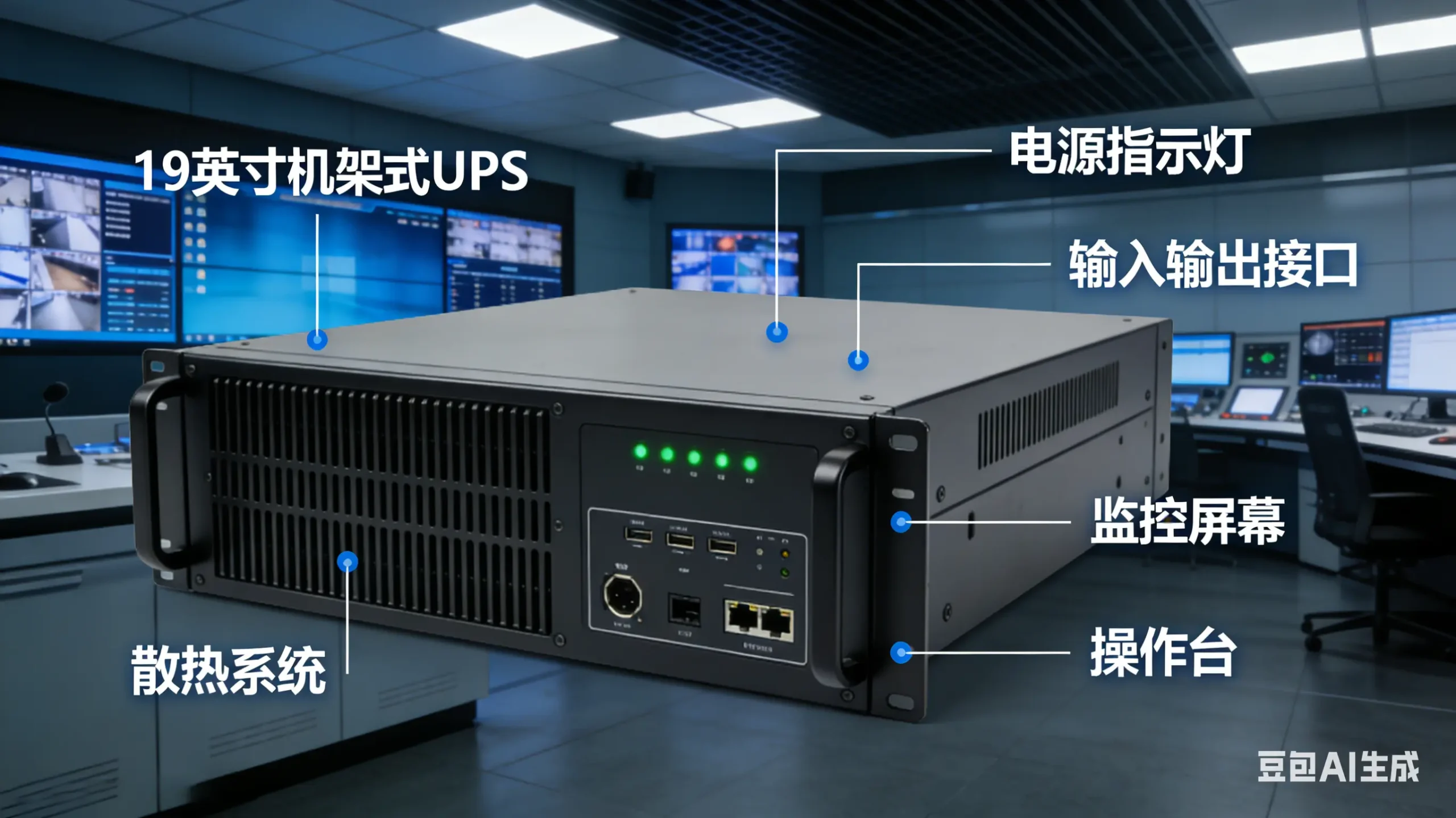
Mains feed with ATS, UPS from 20 to 200+ kVA, LiFePO4 battery backup sized for 5-30 minutes (or longer), and optional generator or solar hybrid for remote sites. Distribution includes AC and DC paths with SPD and full metering — the same engineering as a permanent data center in compact form.
3.3 Cooling
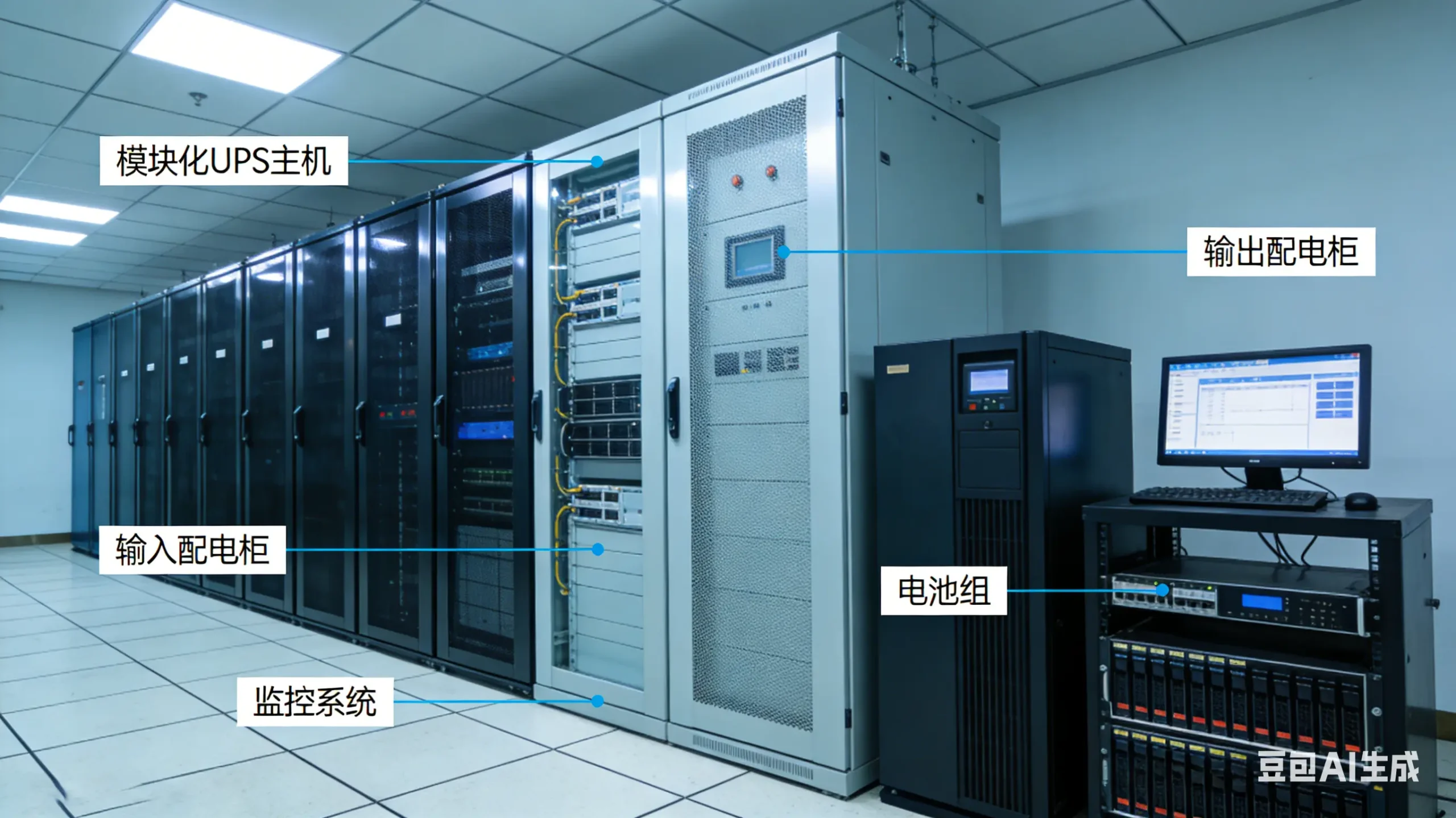
Precision AC or free-cooling (indirect evaporative or air-side economizer) sized from the IT heat load and the design ambient temperature. Redundancy options (N+1 units) protect critical loads; hot climates use higher-capacity or indirect free-cooling systems that keep efficiency high without introducing outdoor air.
3.4 Fire Protection and Security
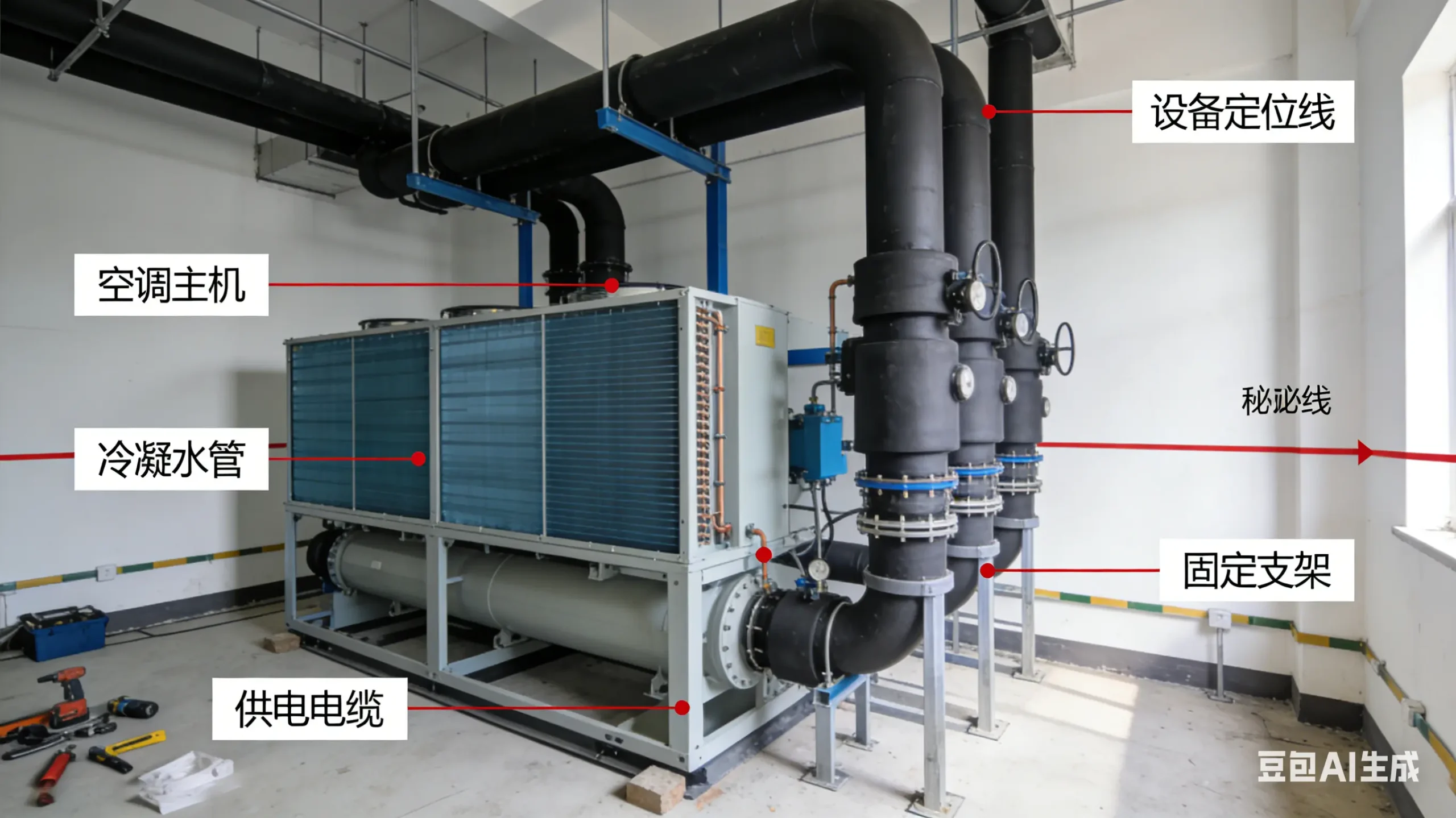
Very early smoke detection (aspirating type) with inert gas suppression protects the IT space; access control, CCTV and environmental monitoring secure the unattended module, with all events reported to the remote management platform.
4. Technical Specification Summary
| Parameter | Typical Range |
|---|---|
| Container | 20 ft (6-12 racks) / 40 ft (12-24 racks) |
| Power density | 3-10+ kW per rack |
| UPS | 20-200+ kVA with LiFePO4 backup |
| Cooling | Precision AC or indirect free-cooling, N/N+1 |
| Fire protection | Aspirating detection + inert gas suppression |
| Monitoring | Environment, power, access, CCTV — remote platform |
| Power options | Mains, generator, solar hybrid |
| Standards | IEC/GB electrical; container structural per ISO |
5. Sizing and Design Process
- Requirements — IT load (racks × kW), latency needs, site climate, autonomy and redundancy targets.
- Thermal calculation — cooling sized from heat load plus container solar gain at the site’s design ambient.
- Power design — UPS, battery and generator sizing with N+1/2N per tier objective.
- Layout — rack positions, cable routes, service aisles and equipment access.
- Factory build and test — integration, load bank testing of power and cooling, and documentation.
- Deployment — transport, foundation, hookup and commissioning — typically 1-2 weeks on site.
6. Use Cases
- Industrial IoT and video analytics — processing camera feeds and sensor data at factories, mines and ports.
- 5G/MEC aggregation — hosting edge applications close to the radio network.
- Hospitals and campuses — local compute with data residency and low latency.
- Remote and harsh environments — oil fields, renewable plants, research stations where buildings do not exist.
- Temporary and disaster-recovery capacity — rapid additional compute when and where needed.
7. Operations and Monitoring
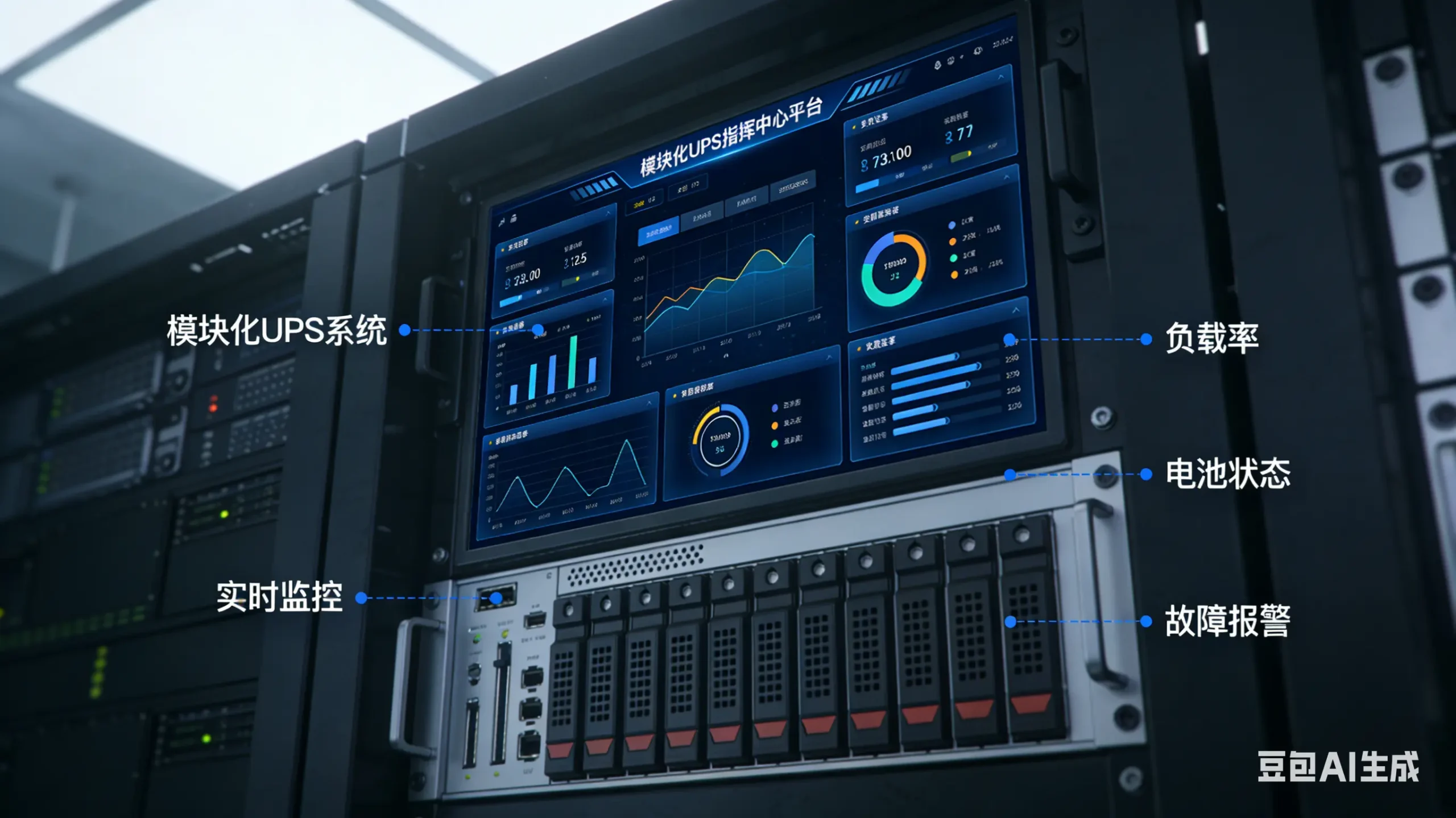
Edge containers run unattended; the integrated monitoring platform is their lifeline. Environment, power, cooling, fire and access data stream to the NOC or cloud; alarms route by SMS, WeChat/WhatsApp and email; remote management allows secure access to servers without a site visit. Regular preventive maintenance — filter cleaning, battery checks, suppression inspection — follows the schedule delivered at handover.
8. Frequently Asked Questions
Edge Computing Container FAQ
1. What is an edge computing container?
It is a self-contained micro data center built inside a standard container — racks, power, cooling, fire suppression and monitoring — delivered ready to run after power and network connection.
2. How many servers or racks can it hold?
A 20 ft container typically hosts 6-12 racks and a 40 ft unit 12-24 racks, depending on power density (usually 3-10 kW per rack).
3. What power and backup are available?
UPS ratings commonly range 20-200 kVA with 5-30 minutes of LiFePO4 backup; generator or solar hybrid options extend runtime indefinitely for remote sites.
4. How is cooling handled in hot climates?
Precision AC is standard; for hot or dusty locations, indirect free-cooling and higher-capacity units are selected. Cooling is sized from the IT heat load and design ambient temperature.
5. How fast can it be deployed?
Factory build and testing typically take 4-8 weeks; on-site deployment (foundation, power, network, commissioning) is usually 1-2 weeks.
6. Is it secure and monitored remotely?
Yes — access control, CCTV, environmental monitoring and remote management are included, so the container operates unattended with alarms to your NOC or mobile app.
7. Can the container be moved later?
Yes — modules are transportable by standard container logistics and can be relocated as operations change, preserving the investment.
8. What redundancy options exist?
N+1 cooling units, dual UPS modules and optional dual feeds are configured to the facility tier objective.
9. What fire protection is inside?
Very early aspirating smoke detection with inert gas suppression, coordinated with power isolation and alarms.
10. Can it connect to a central management platform?
Yes — monitoring integrates with your NOC, DCIM or cloud platform over TCP/IP or 4G.
11. What climate ranges are supported?
Units are designed for site conditions from arctic to tropical; insulation, cooling and heating are selected accordingly.
12. What documentation is delivered?
Design documents, factory test reports, as-built drawings, operating manuals and maintenance schedules.
9. Related Solutions
- Climate-Controlled Container
- Containerized Data Center Solutions
- Data Center Monitoring System
- Cold-Chain Container
- General Outdoor Cabinets
About Guangzhou Lain Intelligent System Development Co., Ltd.
Guangzhou Lain Intelligent System Development Co., Ltd. manufactures containerized and modular data center infrastructure — edge computing containers, precision cooling, UPS power and monitoring — for industry, telecom and remote operations worldwide. From single rooms to enterprise facilities, KITOZER provides design, manufacturing, integration, testing and after-sales service under one roof and exports worldwide.
Contact us for a free technical consultation:
- Company: Guangzhou Lain Intelligent System Development Co., Ltd.
- Address: 1st Floor, Building A, Chaotian Industrial Park, Zhongrun Industrial Park, Shilou Town, Panyu District, Guangzhou, Guangdong, China
- Tel/WeChat: +86 135-0923-8849 | +86 135-0923-8849
- WhatsApp: +86 135-0923-8849
- Email: zl19068534140@gmail.com
- Website: www.gdlain.com | Request a Quote
Typical response time: within one business day. Project references, drawings and samples are available on request.