1. Overview: What This FAQ Covers
Government networks, industrial control systems and financial platforms must exchange data with less trusted networks — yet opening a direct connection can compromise everything behind the boundary. A gap gateway (network security gap, isolation gateway or data-diode system) transfers files, database records and telemetry between two networks while making any direct network connection between them physically impossible. This page answers the practical questions buyers and integrators ask when planning such a deployment.
Guangzhou Lain Intelligent System Development Co., Ltd. supplies and integrates gap gateway solutions — hardware selection, rule design, connectors and full commissioning — for industrial, government and enterprise customers worldwide.

2. What Exactly Is a Gap Gateway?
2.1 The definition in plain language
A gap gateway is a security appliance built from three parts: an internal host unit connected to the high-security network, an external host unit connected to the lower-trust network, and a transfer unit between them. There is no direct cable between the two networks. Data is read from one side, written into the middle unit, inspected, and then read out by the other side — with the transfer mechanism physically breaking the connection in every cycle.
2.2 Other names you will hear
The same device category is called a network security gap, an isolation gateway, a data diode system or a unidirectional gateway depending on the vendor and the mode. All share the same core promise: the two networks never share a live connection, so an attacker on one side cannot ride a session into the other.
3. How Is It Different from a Firewall?
3.1 Firewalls filter a live connection
A firewall inspects packets and lets some through while blocking others, based on addresses, ports and application signatures. Because a firewall is a connected device with routes to both sides, an attacker who compromises a host on one network can, in principle, use that same path to probe or reach the other side. Firewalls raise the bar; they cannot remove the fact that both networks are on the same wire.
3.2 Gap gateways remove the connection itself
A gap gateway performs a full protocol break: application data is extracted, validated against content rules, and repackaged on the destination side. There is no live session to hijack and no route to follow — only discrete, inspected data objects that match the configured policy. When the requirement is “do not have a connection at all”, a firewall cannot deliver it and a gap gateway can.
4. What Data Can Pass Through the Gap?
4.1 Typical data objects
Operators define what may cross in terms of data objects rather than connections: files of allowed types and sizes, database synchronization records (Oracle, SQL Server, MySQL and domestic databases), emails, video streams, and SCADA or sensor telemetry values. Each object is checked for format, malware, keywords, source and destination, then logged in full before release.
4.2 What never crosses
Anything that does not match policy is quarantined and reported: executable files outside the allow-list, objects with detected malware, data containing blocked keywords, or traffic from unapproved sources. Because the gateway has no live protocol session, interactive remote access and command injection are structurally excluded rather than merely filtered.

5. One-Way or Two-Way: Which Mode Do I Need?
5.1 Unidirectional (data diode) mode
Many boundaries only need data to move in one direction — sensor readings and historian data out of a plant, or approved files into a network. Unidirectional gateways are often built with optical transmission: a transmitter on the sending side and a receiver with no transmit path on the receiving side make reverse traffic physically impossible, not merely forbidden by policy. This is the strongest guarantee available and the standard choice for the most sensitive control and government boundaries.
5.2 Bidirectional mode
Applications such as database synchronization genuinely need exchanges in both directions. Two-way gap gateways support controlled exchange with separate rule sets per direction — different content rules, sources and approvals for inbound versus outbound traffic — so each direction is locked down independently.
6. Deployment Questions Buyers Ask
6.1 Will it slow down our data exchange?
Throughput depends on the model and the depth of inspection. Sizing is done against your peak daily volume with headroom: high-throughput models handle hundreds of Mbps for file and database traffic, and most production transfers run in scheduled batches, so the gap rarely becomes the bottleneck when sized correctly.
6.2 Can it scan for viruses and sensitive data?
Yes. Each object is scanned for malware, validated for file type and format, and checked against keyword and DLP rules before release. The gateway also keeps a complete audit trail of every object, every decision and every operator action, exportable for compliance review.
6.3 Is it suitable for SCADA and industrial control?
Yes — protecting control networks is one of the main uses. Historian data, production reports and alarm summaries flow out for analysis, while only vetted configuration or schedule files flow in, and vendor maintenance access is brokered through the gateway instead of an open VPN into the control network.
6.4 What about high availability?
Mission-critical sites use dual power, redundant units or cluster mode so rule changes, signature updates or unit maintenance never stop the data flow. The redundancy philosophy mirrors the network it protects: every path has a genuine spare.
7. How Does Lain Deploy a Gap Gateway?
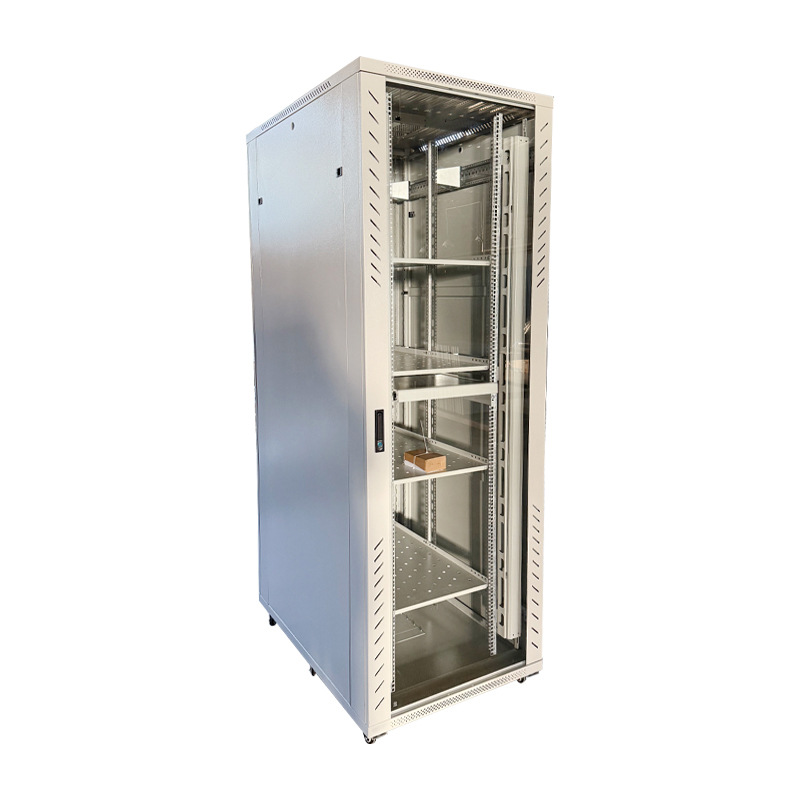
Deployment starts with a data-flow survey: which applications exchange data, in which direction, how often, at what volume, and what must never cross. Lain then sizes the hardware, chooses one-way or two-way mode, drafts the content rules and approval workflow, installs the units in the network cabinet, wires power and management, configures the connectors for your databases and applications, and runs a test campaign covering normal transfers, rejected objects, failover and audit reporting before production traffic starts. Routine operation covers signature updates, rule reviews as applications change, log archiving and periodic policy audits — with training and after-sales support throughout.
8. Frequently Asked Questions — Quick Reference
Gap Gateway FAQ
1. What is a gap gateway?
A network security device that transfers data between two networks of different trust levels while making direct network connection between them physically impossible — also called a network security gap, isolation gateway or data diode system.
2. How is it different from a firewall?
A firewall filters traffic on a live connection between networks. A gap gateway provides no live connection at all: data is extracted on one side, inspected and repackaged on the other, so there is no session an attacker can hijack or route through.
3. What data can pass through a gap gateway?
Files, database synchronization records, emails, video streams and SCADA/telemetry values — anything that can be represented as discrete, inspectable data objects with configurable rules.
4. One-way or two-way — which do I need?
One-way (unidirectional) mode lets data travel in a single direction, often with optical transmission so return traffic is physically impossible; two-way mode supports controlled exchange in both directions with separate rule sets.
5. Is a gap gateway suitable for industrial control networks?
Yes — it is a standard component for protecting SCADA/DCS networks, letting historian data and reports leave the plant while blocking direct remote access into the control environment.
6. Will it slow down our data exchange?
Throughput depends on the model and the inspection rules; sizing against peak daily volume with headroom keeps high-throughput models handling hundreds of Mbps for file and database traffic.
7. Can it block viruses and sensitive data?
Yes — each object is scanned for malware, validated for file type and format, and checked against keyword/DLP rules so only objects matching policy reach the destination network.
8. Do you provide complete gap gateway solutions?
Yes — Guangzhou KITOZER supplies the hardware, designs the rules, integrates connectors for your databases and applications, and provides commissioning, training and ongoing support worldwide.
9. Related Solutions
- Gap Gateway: Secure Data Exchange Across Networks (Complete Guide)
- Core Router
- Fibre Channel Switch
- IDS/IPS Intrusion Detection and Prevention
- Network Traffic Analysis
- NMS Software
About Guangzhou Lain Intelligent System Development Co., Ltd.
Guangzhou Lain Intelligent System Development Co., Ltd. supplies and integrates gap gateway (network security gap) solutions — one-way and two-way controlled data exchange for industrial control, government and enterprise networks worldwide. From single rooms to enterprise facilities, KITOZER provides design, manufacturing, integration, testing and after-sales service under one roof and exports worldwide.
Contact us for a free technical consultation:
- Company: Guangzhou Lain Intelligent System Development Co., Ltd.
- Address: 1st Floor, Building A, Chaotian Industrial Park, Zhongrun Industrial Park, Shilou Town, Panyu District, Guangzhou, Guangdong, China
- Tel/WeChat: +86 135-0923-8849 | +86 135-0923-8849
- WhatsApp: +86 135-0923-8849
- Email: zl19068534140@gmail.com
- Website: www.gdlain.com | Request a Quote
Typical response time: within one business day. Project references, drawings and samples are available on request.