1. Overview: Enclosure Protection Starts with the Seal
An enclosure is only as protective as its weakest gap. A cabinet door that closes, a cable opening that lets a loom pass through, a panel joint, a window or a roof seam — each is a potential path for dust, water, electromagnetic interference and heat loss. Cabinet sealing materials — gaskets, brush strips, cable glands and sealing kits — close those paths and turn a metal box into a rated, predictable environment for the equipment inside.
Guangzhou Lain Intelligent System Development Co., Ltd. supplies the full range of sealing products used in its own outdoor cabinets, telecom enclosures and data center containment systems, and offers the same materials as components for integrators and manufacturers. This guide explains what each sealing material does, how to choose between them, and how to install them so the rated protection class is actually achieved in the field.

2. Why Sealing Materials Decide the Protection Class
The IP (Ingress Protection) rating printed on an enclosure is a promise about dust and water — but the metal shell only delivers it if every opening is sealed. A cabinet built from perfect sheet metal with an unsealed door gap will fail an IP test at the first dust or water challenge. The seals are not an accessory to the design; they are the design. Three forces drive the choice of sealing material:
- Dust and moisture ingress — the classic failure path for outdoor and industrial enclosures, causing corrosion, tracking and component failure.
- EMI leakage — gaps act as slot antennas; conductive gaskets and bonded brush strips restore shielding continuity.
- Thermal performance — uncontrolled gaps leak conditioned air from containment systems and let heat or humidity enter cooled enclosures.
Because these three requirements pull in different directions, real designs usually combine several sealing materials rather than relying on one product to do everything.

3. The Sealing Material Family
3.1 Door and Frame Gaskets
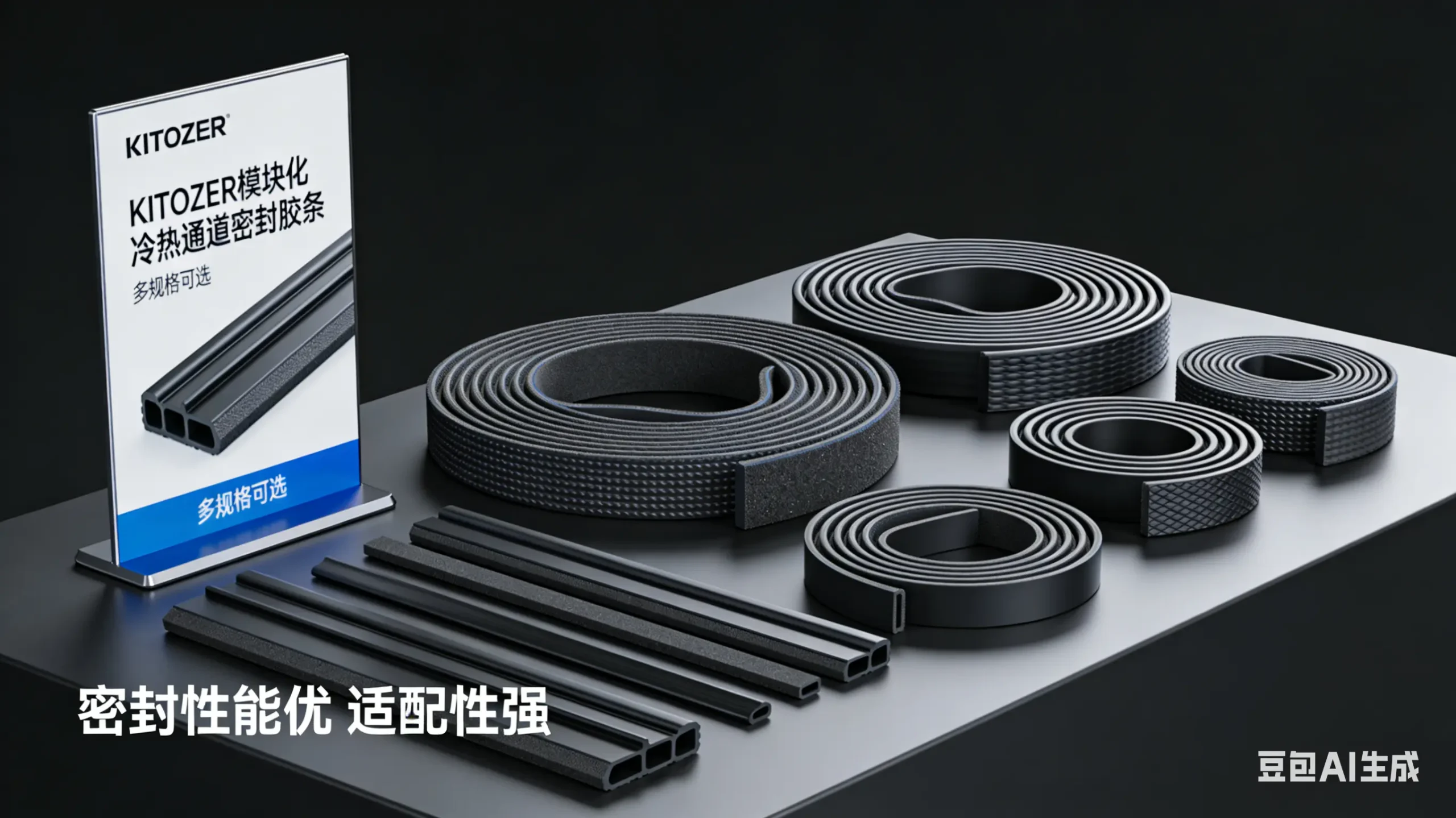
Gaskets are the primary seal for doors, removable panels and access covers. They are fitted into a groove, bonded to the frame or applied as a self-adhesive strip around the opening, and compressed when the door closes. Material options include EPDM for weather resistance, silicone for extreme temperatures, neoprene foam for low closing force, and PVC or PU foam for economical indoor seals. Solid or hollow (tubular) profiles suit different compression ranges: hollow profiles seal with lower force, solid profiles withstand higher clamping and last longer under constant compression.
3.2 Brush Strips
Brush seals are rows of fine filaments — nylon, polyester or conductive carbon-loaded fiber — held in an aluminum or plastic carrier. They are the standard answer for openings that must allow movement or cable passage while still blocking dust, drafts and light: sliding doors, moving panels, and above all cable pass-through openings where a rigid gasket would be cut away. Conductive brush strips also provide EMI continuity across a gap and are commonly used around cabinet doors in shielded and high-interference environments.
3.3 Cable Entries, Glands and Grommets
Every cable that enters an enclosure creates a hole. Cable glands seal around individual round cables with a compression ring, providing strain relief plus a dust/water-tight seal rated up to IP68 where required. Multi-cable frame entries use a block of layered rubber or brush rows that accept several cables of different diameters in one opening. Grommets protect cables passing through sharp-edged holes and add a basic seal. For high cable densities with frequent changes, brush plates or split grommets let technicians add and remove cables without breaking the seal completely.
3.4 Sealing Kits and Accessories
Beyond the main seal types, complete sealing means covering every secondary path: washers under mounting screws, seals around keyholes and lock barrels, plugs for unused cable entries, gasket strips for windows and display cutouts, and corner pieces that close the joints where straight gasket lengths meet. KITOZER supplies these as coordinated kits so a cabinet builder does not have to source ten different products from ten suppliers.
4. Matching the Seal to the Protection Class
| Protection Class | Typical Requirement | Recommended Sealing |
|---|---|---|
| IP20 – IP30 | Basic dust protection, indoor | Foam gasket on door, grommets on cable holes |
| IP43 – IP44 | Dust and splashing water, sheltered outdoor | EPDM/PVC gasket, brush plate entries, gland on single cables |
| IP54 – IP55 | Dust-limited and water jets, outdoor cabinets | Hollow EPDM or silicone gasket, sealed glands, plugged spare entries |
| IP65 | Dust-tight, water jets | Compression gasket full perimeter, IP-rated glands, torque-checked door |
| IP66 – IP68 | Powerful jets / immersion | Heavy hollow or solid gasket, dual-seal entries, factory tested |
The table is a starting point: the real rating must be verified by test, because the interaction between door bow, gasket compression and hinge alignment decides whether the design rating is achieved. Lain tests production cabinets to the declared class and can supply test documentation for project handover.

5. Material Selection: What to Use Where
| Material | Temperature Range | Best For | Notes |
|---|---|---|---|
| EPDM | -40°C to +120°C | Outdoor doors, weather seals | Excellent ozone/UV resistance |
| Silicone | -60°C to +200°C | Extreme heat/cold, food areas | Wide range, higher cost |
| Neoprene foam | -30°C to +100°C | Indoor doors, low closing force | Soft, conforms to uneven frames |
| PVC / PU foam | -10°C to +70°C | Economical indoor seals | Lower durability outdoors |
| Nylon/polyester brush | -30°C to +100°C | Cable openings, sliding parts | Low friction, dust/draft block |
| Conductive brush/fabric | -30°C to +100°C | EMI door seals | Restores shielding continuity |
| Brass/nylon glands | -40°C to +100°C | Single cable entries | IP54–IP68 with compression ring |
Environment decides the material: a cabinet on a tropical rooftop sees UV, rain and 60°C surface temperatures, while a data center door seal only needs to hold dust and conditioned air. Buying the most expensive material everywhere is as wasteful as buying the cheapest everywhere; the correct approach is to rate each opening by its exposure and movement.

6. Where Seals Are Applied on a Cabinet
6.1 Door Perimeter
The door is the largest opening and the most demanding seal. Gasket is fitted to the door or the frame so that it compresses evenly when the latch engages. Hinge adjustment is critical: a door that sags will pinch the gasket at one corner and leave a gap at the other, so the frame must stay square and hinges must be set before the seal is judged.
6.2 Cable Entry Areas
Bottom and back cable zones use glands for round cables or brush/frame entries for looms. Arrange cables before fitting, leave service loops, and fill every unused hole with a plug — an open spare entry quietly destroys the protection class of the whole cabinet.
6.3 Panels, Windows and Roof Seams
Removable side and rear panels take the same gasket treatment as doors, with screw spacing tight enough to maintain compression between fasteners. Windows and display cutouts use soft gaskets that accommodate glass and plastic expansion. On outdoor cabinets, roof-to-wall seams are sealed with continuous gasket or sealant tape rather than reliance on paint alone.
7. EMI and Grounding: When the Seal Is Also a Screen
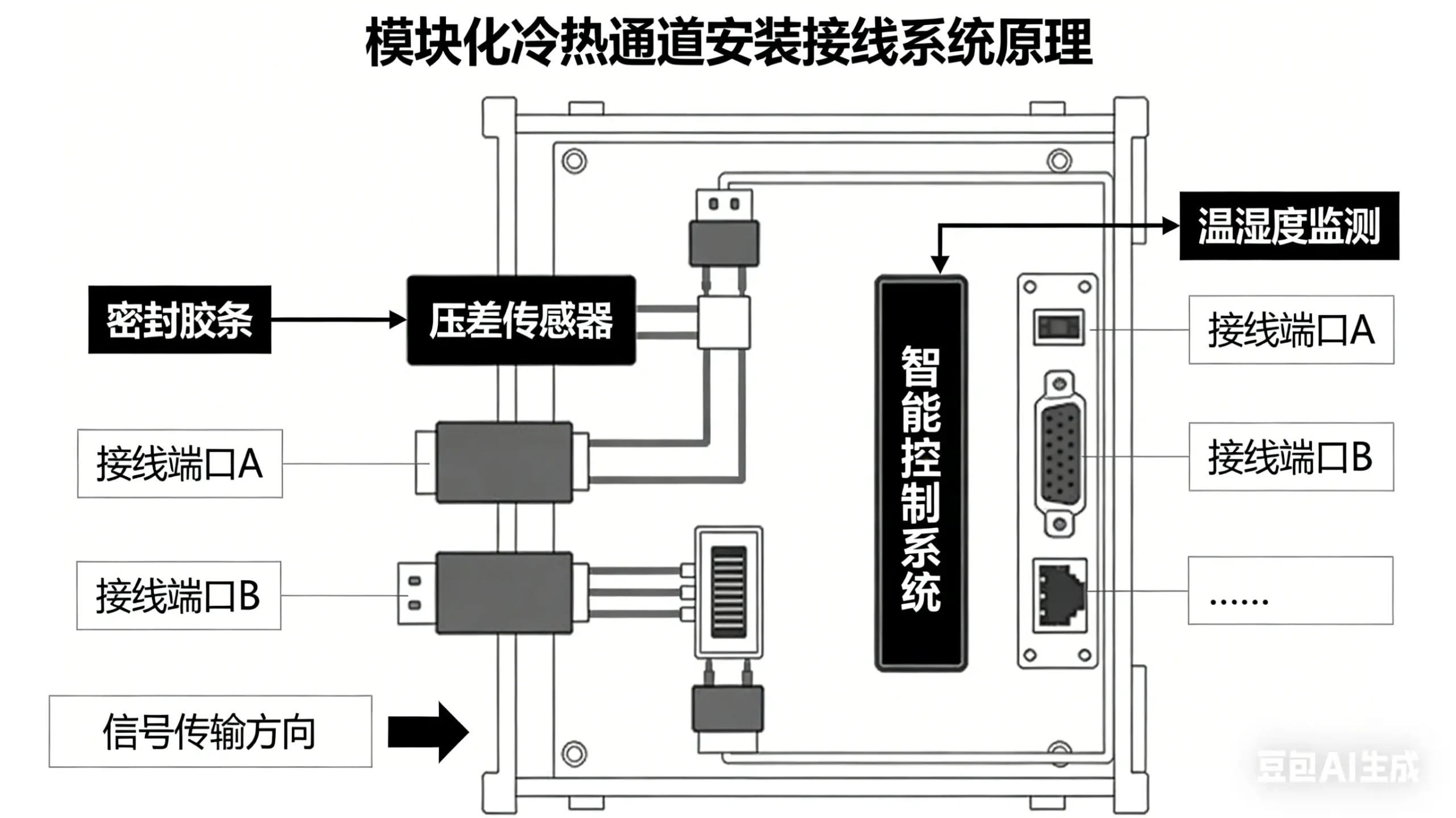
In environments with radio transmitters, variable-speed drives or sensitive instrumentation, the enclosure may need to be a shielded volume. A painted metal door against a painted frame is not a conductive joint — the paint insulates. Conductive gaskets (elastomer filled with silver, nickel-graphite or aluminum particles) or conductive brush strips restore metal-to-metal continuity around the opening, and bonding braids across hinges keep the door connected when it opens. The seal then performs double duty: environmental protection and electromagnetic containment. For maximum shielding, door cutouts are minimized, gasket compression is specified by the shielding requirement, and the cabinet is bonded to the site earth at the designated stud.
8. Installation and Maintenance Best Practice
A good seal fails in service for three common reasons: poor fitting, over-compression, and contamination. Practical rules:
- Clean and degrease the mounting surface before bonding self-adhesive gaskets; adhesion fails on dirty or oily metal.
- Fit gasket in one continuous length where possible; where ends must meet, cut square or mitred and use joint adhesive, never overlap thick profiles.
- Check door compression with a paper or feeler test around the full perimeter after installation; adjust hinges and latch pressure to distribute compression evenly.
- Keep spare entries plugged and inspect seals at every site visit — brush seals collect dust, foam seals take compression set, and UV-aged EPDM becomes hard and cracks.
- Replace seals before they fail rather than after: a degraded door gasket is a one-hour swap that prevents an expensive component failure.
9. Applications
Sealing materials appear wherever equipment meets the environment. Outdoor telecom and power cabinets rely on weather-rated door gaskets and glanded cable entries to hold IP55 or better in rain and dust. Data center hot/cold aisle containment uses brush strips and flexible gaskets where panels meet racks and floors, keeping conditioned air where it belongs. Industrial enclosures in washdown or chemical areas use EPDM or silicone seals matched to the exposure. In every case the sealing bill of materials is small relative to the equipment it protects — which is exactly why it deserves careful selection.
10. Frequently Asked Questions
Cabinet Sealing Materials FAQ
1. What is the difference between a gasket and a brush seal?
A gasket is a compressible profile that seals a closed joint such as a door; a brush seal is a row of filaments that blocks dust and drafts across openings that must allow movement or cable passage.
2. Which gasket material is best for outdoor cabinets?
EPDM is the standard outdoor choice for its ozone, UV and weather resistance over a wide temperature range; silicone suits extreme temperatures.
3. How do I know what IP rating my seals will achieve?
IP rating depends on the whole enclosure — seal type, compression, hardware and assembly — and must be confirmed by test, not assumed from the gasket alone.
4. Can brush strips provide EMI shielding?
Yes, when made with conductive filaments and bonded to bare metal, conductive brush strips restore shielding continuity across gaps and moving joints.
5. What seals cable openings while allowing cables to be added later?
Brush plates, split grommets and multi-cable frame entries let technicians add cables without removing the seal; unused openings should be plugged.
6. Do cable glands provide strain relief?
Yes — a correctly fitted gland grips the cable sheath with a compression ring, providing both sealing and strain relief for the connection inside.
7. Why does my door gasket leak at the corners?
Corner leaks usually mean the frame is out of square, hinge compression is uneven, or the gasket was cut with a butt joint that opened; re-check alignment and joint sealing.
8. How often should cabinet seals be replaced?
Inspect at routine site visits; replace when foam shows permanent compression, brush collects heavy dust, or elastomer hardens and cracks — typically every few years outdoors.
9. Are self-adhesive gaskets reliable?
Yes, when fitted to clean, degreased metal and not over-stretched during application; mechanical fixing is preferred for large or frequently opened doors.
10. Do you supply complete sealing kits for cabinets?
Yes — KITOZER provides door gaskets, brush strips, glands, plugs and corner pieces as coordinated kits, matched to the cabinet model and target protection class.
11. Can sealing materials be supplied in custom lengths and colors?
Yes — gaskets and brush strips are cut to length and can be color-matched to the cabinet finish for a professional appearance.
12. How do conductive gaskets affect environmental sealing?
Conductive elastomer gaskets seal dust and water like standard gaskets while adding EMI continuity, so one profile can serve both functions where compression is adequate.
11. Related Solutions
- Aisle Sealing Strips
- Cabinet Thermal Control Module
- Cabinet Fabrication
- Control Cabinet Fabrication
- General Outdoor Cabinets
- Aisle Ceiling Tiles
About Guangzhou Lain Intelligent System Development Co., Ltd.
Guangzhou Lain Intelligent System Development Co., Ltd. supplies cabinet sealing materials — EPDM and silicone gaskets, conductive and standard brush strips, cable glands, frame entries and complete sealing kits — matched to the protection class your enclosure must achieve. From single rooms to enterprise facilities, KITOZER provides design, manufacturing, integration, testing and after-sales service under one roof and exports worldwide.
Contact us for a free technical consultation:
- Company: Guangzhou Lain Intelligent System Development Co., Ltd.
- Address: 1st Floor, Building A, Chaotian Industrial Park, Zhongrun Industrial Park, Shilou Town, Panyu District, Guangzhou, Guangdong, China
- Tel/WeChat: +86 135-0923-8849 | +86 135-0923-8849
- WhatsApp: +86 135-0923-8849
- Email: zl19068534140@gmail.com
- Website: www.gdlain.com | Request a Quote
Typical response time: within one business day. Project references, drawings and samples are available on request.