1. Overview: What This FAQ Covers
Aisle cooling devices — in-row coolers, overhead coolers and rear-door heat exchangers — place cooling capacity where the heat actually is: at the row, inside the containment. This page answers the questions engineers ask when choosing row-level cooling for high-density or mixed-density data centers.
Guangzhou Lain Intelligent System Development Co., Ltd. supplies row-based aisle cooling devices and coordinated containment solutions for data centers. The answers below reflect our standard range and sizing practice.

2. When Aisle Cooling Is Right
2.1 When do I need aisle-level cooling instead of room AC?
When rack density exceeds roughly 8–10 kW per rack or room cooling cannot hold intake temperatures in range. Aisle cooling places capacity exactly where the heat is — so a room with a few high-density rows gets targeted cooling instead of an expensive whole-room upgrade.
2.2 What types of aisle cooling devices exist?
In-row coolers between racks, overhead coolers above the hot aisle, and rear-door heat exchangers on rack rear doors — in chilled-water or direct-expansion versions. All shorten the air path between coil and rack, which is what makes close-coupled cooling efficient and predictable.

3. Technology Choice and Sizing
3.1 Chilled water or DX?
Chilled-water units suit facilities with a chiller plant and are more efficient at scale; DX units are simpler where no water loop exists. Selection follows plant and redundancy policy — sites with existing chilled water usually extend it to the row, while edge and retrofit rooms often choose self-contained DX.
3.2 How is cooling capacity sized?
From the row heat load (rack kW summed) plus containment leakage margin, with N+1 or 2N redundancy per the facility tier. Sizing by measured or nameplate rack load — not the room average — is what prevents the hot spots row cooling was chosen to cure.
4. Retrofit and Operation
4.1 Can aisle cooling be added to an existing room?
Yes — in-row units retrofit between racks with minimal disruption; chilled-water versions need a water supply, DX versions need condenser routing. Retrofits are the most common application: existing rooms with high-density additions get row-level capacity without touching the room plant.
4.2 Do units integrate with monitoring?
Yes — they report supply/return temperature, fan and fault status via Modbus/SNMP to the environment monitoring platform. Operators watch each row’s cooling in the same dashboard as rack intake temperatures, closing the loop between cooling output and IT intake.

5. Containment and Maintenance
5.1 Do aisle coolers work with containment?
Yes — they are designed to work inside a contained hot/cold aisle, where the cooling unit sees the full rack load and every rack sees the full cooling output. KITOZER supplies the matching containment — ceiling tiles, end doors and sealing strips — so row cooling and containment are planned as one system.
5.2 How do aisle cooling devices affect maintenance?
Units are serviceable from the front or top without moving racks; filters, fans and coils are accessible, and N+1 redundancy allows maintenance without interrupting the IT load. Planned service takes a unit offline while its neighbors carry the row.

6. Frequently Asked Questions — Quick Reference
Aisle Cooling Devices FAQ
1. When do I need aisle-level cooling instead of room AC?
When rack density exceeds roughly 8–10 kW per rack or room cooling cannot hold intake temperatures in range — aisle cooling places capacity exactly where the heat is.
2. What types of aisle cooling devices exist?
In-row coolers between racks, overhead coolers above the hot aisle and rear-door heat exchangers on rack rear doors, in chilled-water or direct-expansion versions.
3. Chilled water or DX?
Chilled-water units suit facilities with a chiller plant and are more efficient at scale; DX units are simpler where no water loop exists. Selection follows plant and redundancy policy.
4. How is cooling capacity sized?
From the row heat load (rack kW summed) plus containment leakage margin, with N+1 or 2N redundancy per facility tier.
5. Can aisle cooling be added to an existing room?
Yes — in-row units retrofit between racks with minimal disruption; chilled-water versions need a water supply, DX versions need condenser routing.
6. Do units integrate with monitoring?
Yes — supply/return temperature, fan and fault status report via Modbus/SNMP to the environment monitoring platform.
7. How much heat can a rear-door heat exchanger remove?
Rear-door coils typically remove 10–30 kW per rack depending on water temperature, airflow and coil size.
8. What supply temperature should I use?
ASHRAE-recommended ranges (18–27°C intake, with higher allowance in modern designs) let you raise setpoints and save energy.
9. Do aisle coolers work without containment?
They operate in open layouts, but hot/cold aisle containment improves stability and efficiency, so installing them together is recommended.
10. How does maintenance work with redundancy?
Units service from the front or top without moving racks; N+1 redundancy lets one unit go offline while neighbors carry the row.
7. Related Solutions
- Aisle Cooling Devices: Complete Guide
- Aisle Sealing Strips
- Cabinet Thermal Control Module
- Precision Temperature & Humidity Monitoring
- Data Center Monitoring System
About Guangzhou Lain Intelligent System Development Co., Ltd.
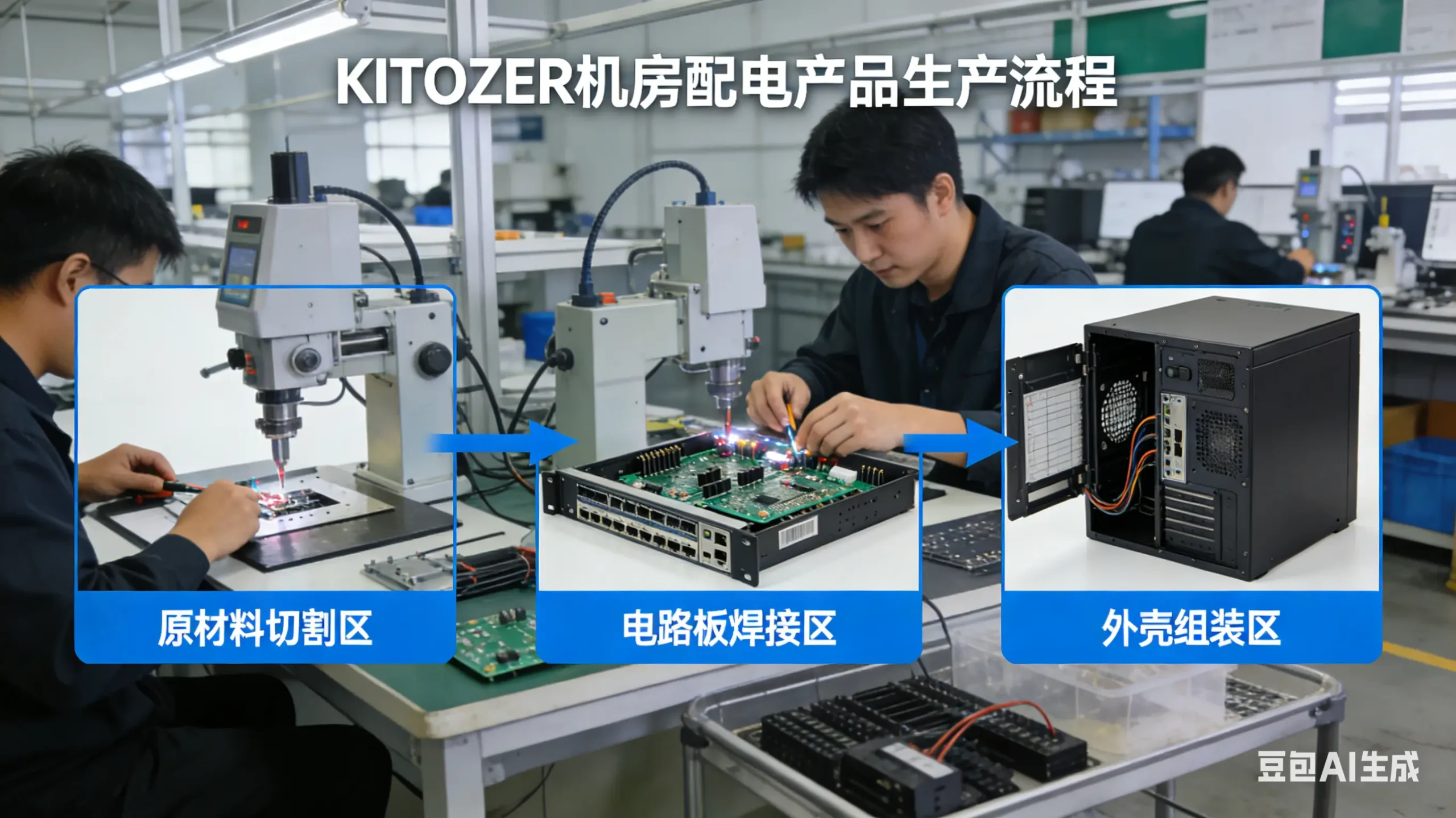
Guangzhou Lain Intelligent System Development Co., Ltd. supplies aisle cooling devices and coordinated containment systems for high-density data centers worldwide. From single rooms to enterprise facilities, KITOZER provides design, manufacturing, integration, testing and after-sales service under one roof and exports worldwide.
Contact us for a free technical consultation:
- Company: Guangzhou Lain Intelligent System Development Co., Ltd.
- Address: 1st Floor, Building A, Chaotian Industrial Park, Zhongrun Industrial Park, Shilou Town, Panyu District, Guangzhou, Guangdong, China
- Tel/WeChat: +86 135-0923-8849 | +86 135-0923-8849
- WhatsApp: +86 135-0923-8849
- Email: zl19068534140@gmail.com
- Website: www.gdlain.com | Request a Quote
Typical response time: within one business day. Project references, drawings and samples are available on request.