1. Overview: One Coordinated Safety System
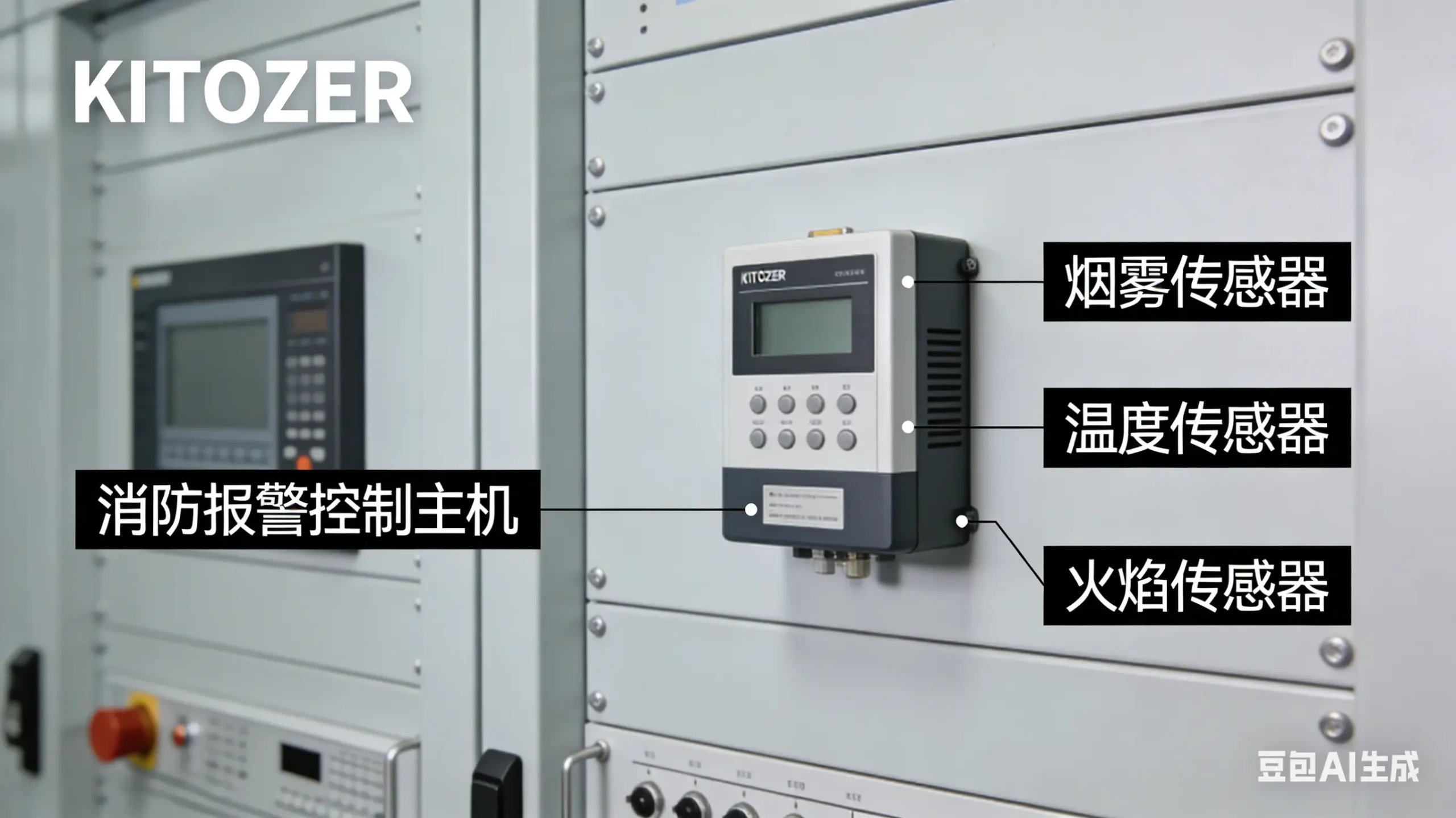
A fire in a data center is not a single event — it is a chain. Smoke appears, a detector responds, alarms sound, cooling keeps pushing air, power keeps feeding the burning cabinet, doors stay locked, and suppression either discharges correctly or is defeated by open dampers and running fans. The difference between a contained incident and a destroyed server room is rarely one good detector; it is coordination. Data center fire interlock integration links detection, alarming, suppression, HVAC, power and access control into one coordinated safety system so that every device acts in the right order at the right moment — automatically and reliably.
Guangzhou Lain Intelligent System Development Co., Ltd. designs and integrates data center fire interlock systems — from detection and gas suppression to the control matrix that shuts down cooling, isolates power and releases suppression in the correct sequence. This guide explains how a coordinated fire safety system is designed, what it interconnects and how a turnkey integration is delivered.
2. Why Fire Protection Must Be Interlocked
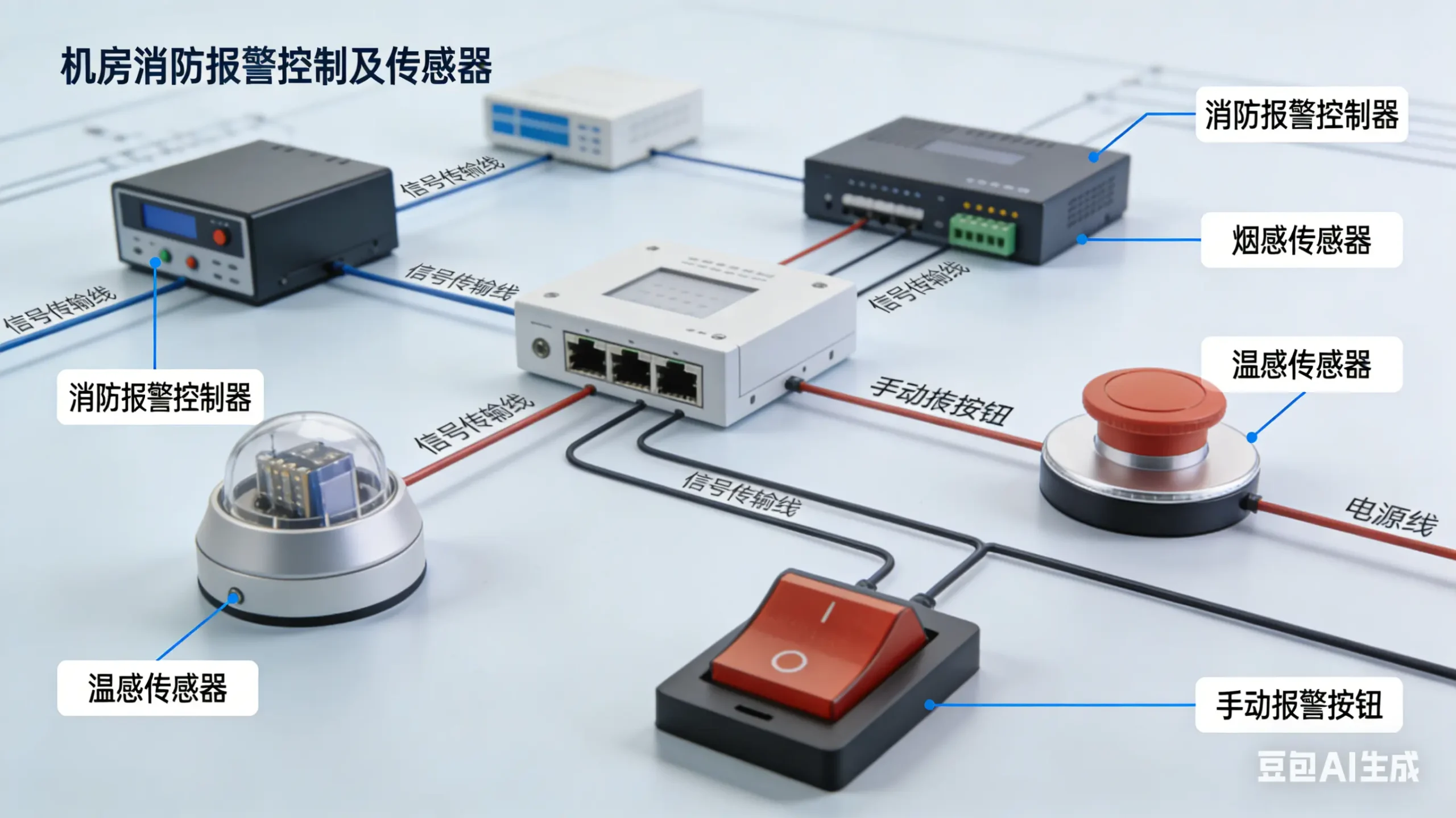
Standalone fire devices protect little on their own. A smoke detector that sounds an alarm but does not stop the CRAC units will have its smoke diluted and recirculated, delaying suppression. A gas suppression system that discharges while the exhaust dampers are open will lose its agent in seconds. A fire that is detected but not reported to the monitoring platform leaves the operations team blind. Interlock integration removes these gaps by making the response automatic and sequential: detection triggers a defined chain of actions across systems, with the sequence engineered so that suppression is effective, power is handled safely and people are protected.
The result is a system that behaves predictably in the emergency it was built for, instead of depending on operators to remember procedures under stress. It also produces a complete event record — which detector alarmed, when, which devices acted, and whether suppression actually discharged — essential for post-incident analysis and insurance.
3. The Fire Response Chain
3.1 Detection
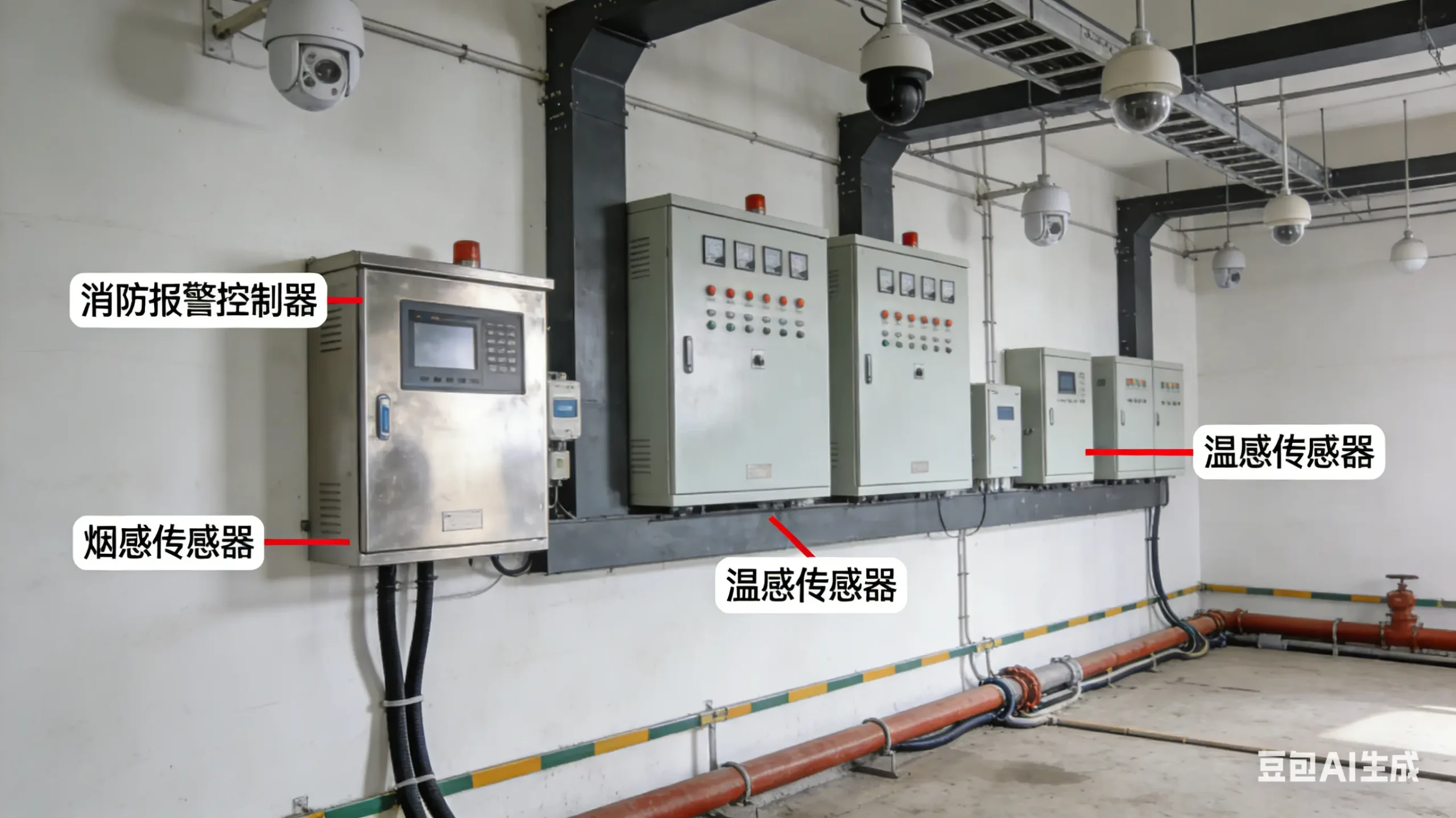
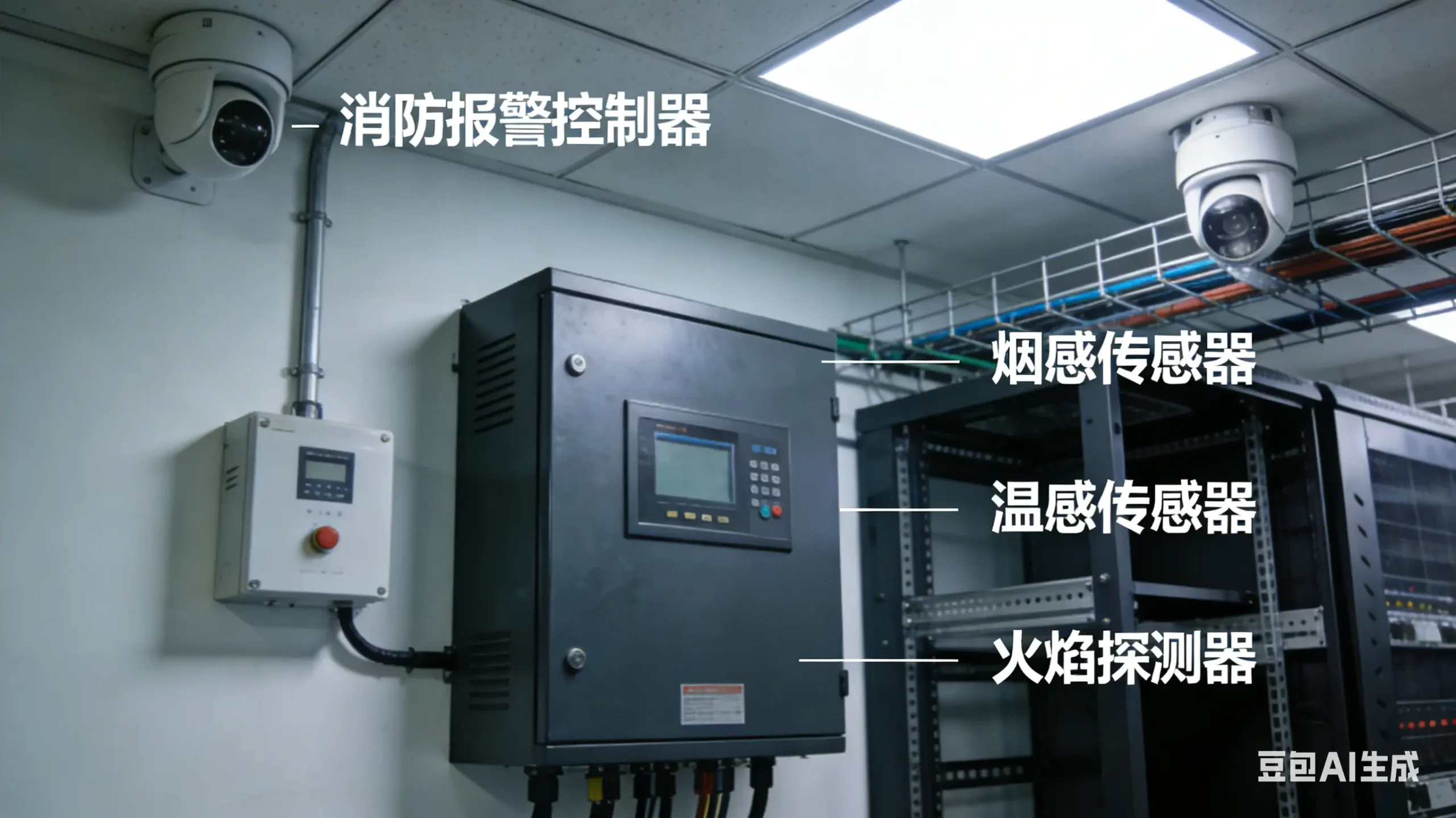
Very early warning comes from aspirating (air-sampling) smoke detectors that draw air from the room and detect smoke particles before visible smoke develops, and from sensitive point detectors protecting the space beneath raised floors and above ceilings. Heat detection and flame detection cover specific hazards such as battery rooms and fuel areas.
3.2 Alarming and Notification
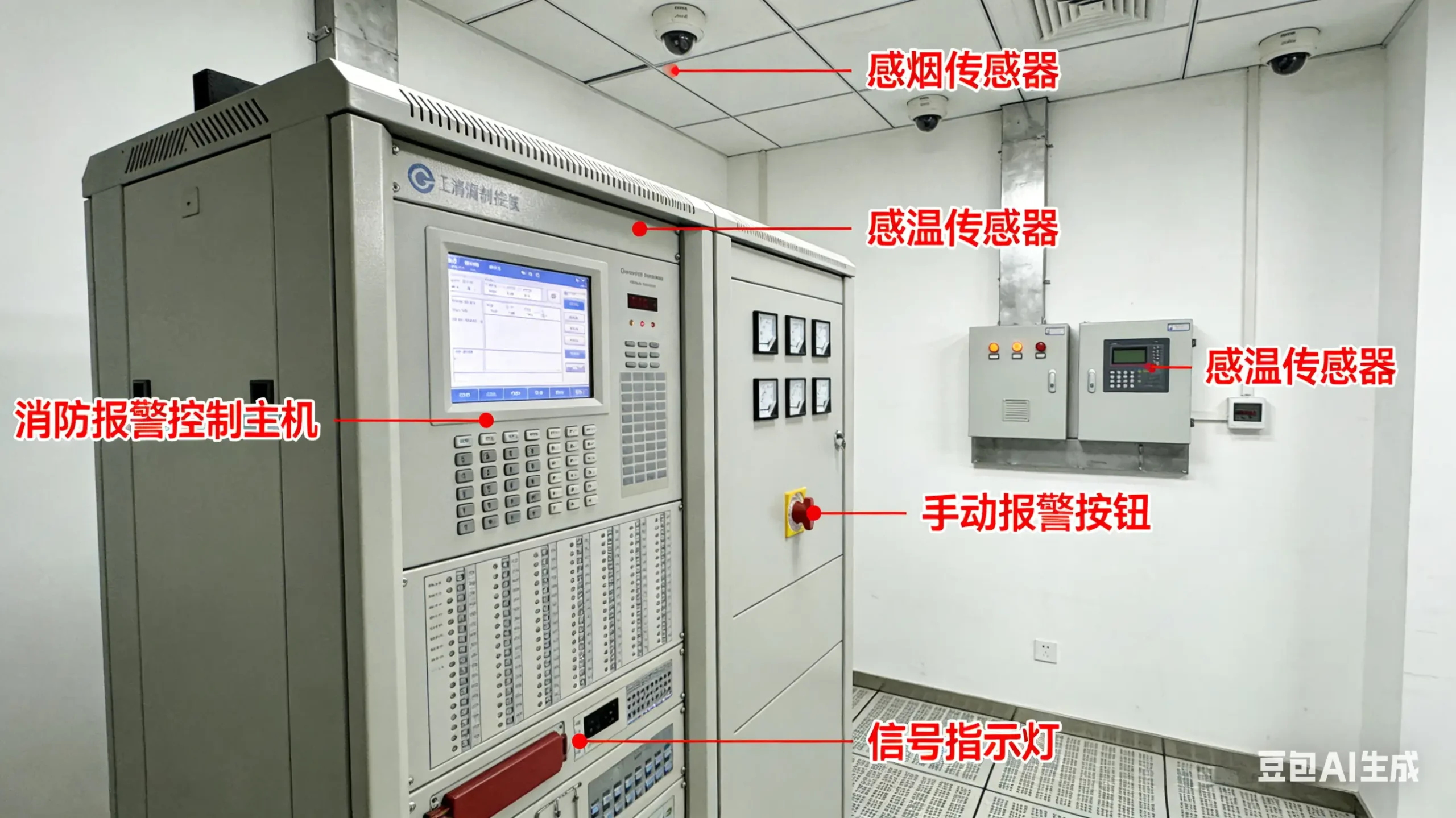
On confirmed alarm, audible and visual alarm devices activate throughout the protected space, and the event is reported to the fire alarm control panel and the data center monitoring platform. Notification extends to security, operations and, where required, the local fire service.
3.3 Suppression
Clean-agent gas suppression (such as FM200, Novec 1230 or IG-541) protects the room while equipment remains in place. The suppression system holds a pre-discharge delay during which personnel evacuate and abort is possible, then discharges the agent to flood the room to the design concentration.
3.4 Supporting Actions
Before discharge, the interlock matrix shuts down CRAC units and closes fire dampers so the agent is not vented or diluted; isolates or controls power to the protected equipment as agreed with the owner; releases doors for evacuation; and confirms to the suppression panel that the space is sealed. These actions are the difference between effective suppression and a failed discharge.
4. What the Interlock Integrates
| System | Role in the Chain | Interlocked Action |
|---|---|---|
| Detection (aspirating/point/heat) | Confirm fire condition | Alarm, cross-zone confirmation, start sequence |
| Fire alarm control panel | Supervise and command | Central decision point for the whole chain |
| Gas suppression panel | Release clean agent | Hold for evacuation, then discharge; abort option |
| CRAC / AHU cooling | Room climate | Shut down before discharge to retain agent |
| Fire dampers | Duct isolation | Close before discharge to seal the protected space |
| Power / UPS / PDU | Equipment supply | Isolate or control per owner policy before discharge |
| Access control / doors | Entry management | Release doors for evacuation; status to panel |
| Monitoring platform | Supervision and records | Live alarm view, event log, notification to staff |
Each device is connected by monitored circuits, dry contacts or fieldbus to the control layer, so the panel not only commands actions but also supervises that they happened — a damper that fails to close, a CRAC that keeps running or a door that stays locked is reported as a fault, not silently assumed.
5. Sequencing and Safety
The heart of the integration is the sequence. A typical clean-agent sequence is: first alarm from one zone confirms a potential fire and raises a pre-alarm; a second independent detector (cross-zone) confirms the fire and starts the discharge countdown; the countdown holds for 30 seconds (configurable) while alarms sound, cooling shuts down, dampers close and personnel evacuate; an abort switch inside the room lets a person stop the discharge if the alarm is false or the room is occupied; at zero the agent discharges and the panel confirms pressure; after discharge, the panel reports the event and the platform logs the complete timeline. Power isolation is decided with the owner — total shutdown protects people and stops the fire’s electrical source, while selective isolation preserves critical loads where the risk assessment allows it. Every step is engineered to protect people first, then equipment, then continuity.

6. Design, Compliance and Documentation
Design follows the applicable standards and codes for fire detection and suppression systems, with a risk assessment defining zones, detection type, agent type and quantity, and the interlock matrix. Lain produces the full engineering package — layout drawings, wiring diagrams, sequence descriptions, cause-and-effect matrix and bill of materials — before installation. After installation, every circuit and action is tested: each detector is stimulated, each damper and CRAC shutdown is verified, the discharge sequence is rehearsed in test mode, and the platform records are checked. The owner receives as-built drawings, test certificates and an operations manual, plus training for the facilities and operations teams.
7. Frequently Asked Questions
Data Center Fire Interlock Integration FAQ
1. Why not just install a fire alarm and a suppression system separately?
Separate systems leave gaps: cooling that dilutes the agent, dampers that vent it, power that keeps feeding the fire, and no coordinated record. Interlock integration closes those gaps with an automatic, sequenced response.
2. What detection is recommended for a data center?
Aspirating (air-sampling) detection gives the earliest warning and suits clean rooms with high air movement; point and heat detection cover specific zones such as underfloor and battery rooms.
3. What is cross-zone confirmation?
Two independent detectors must both alarm before discharge starts, which prevents a single faulty detector from releasing the suppression system.
4. How long is the pre-discharge delay?
Typically 30 seconds, configurable to the evacuation time of the protected space; the delay allows personnel to leave and an abort switch to stop a false discharge.
5. Does the system shut down power to the servers?
Per the owner’s risk assessment — total isolation protects people and removes the electrical source, while selective isolation can preserve critical loads. The matrix is agreed before installation.
6. Why shut down CRAC units before discharge?
Running cooling pushes air and dilutes or vents the clean agent. Shutting down CRACs and closing dampers seals the space so the agent reaches and holds its design concentration.
7. Can the system be retrofitted into an operating data center?
Yes — Lain phases the work to keep the room operational, installing and testing zone by zone with minimal disruption.
8. How is a false discharge prevented?
Cross-zone confirmation, abort capability, supervised circuits and regular testing together make accidental discharge very unlikely.
9. What record does the system keep?
The platform logs every alarm, action, fault and discharge event with time stamps, providing a complete timeline for post-incident analysis and insurance.
10. Do you handle the full project?
Yes — detection, suppression, interlock matrix, platform integration, testing, documentation and training as one turnkey contract.
11. Which standards apply?
Design follows the relevant fire detection, alarm and suppression standards applicable in the project country, with documentation to match.
12. How often should the system be tested?
Routine functional tests are recommended at least annually, with the discharge sequence rehearsed in test mode and detectors spot-tested on a schedule.
8. Related Solutions
- Fire Interlock Monitoring
- Data Center Dust Monitoring
- Electrical Room Environmental Monitoring
- Cabinet Access Control
- Building Automation System
- Data Center Turnkey Integration
About Guangzhou Lain Intelligent System Development Co., Ltd.
Guangzhou Lain Intelligent System Development Co., Ltd. integrates data center fire detection, suppression and interlock systems — engineered sequences, supervised control and full documentation — for operators worldwide. From single rooms to enterprise facilities, KITOZER provides design, manufacturing, integration, testing and after-sales service under one roof and exports worldwide.
Contact us for a free technical consultation:
- Company: Guangzhou Lain Intelligent System Development Co., Ltd.
- Address: 1st Floor, Building A, Chaotian Industrial Park, Zhongrun Industrial Park, Shilou Town, Panyu District, Guangzhou, Guangdong, China
- Tel/WeChat: +86 135-0923-8849 | +86 135-0923-8849
- WhatsApp: +86 135-0923-8849
- Email: zl19068534140@gmail.com
- Website: www.gdlain.com | Request a Quote
Typical response time: within one business day. Project references, drawings and samples are available on request.