1. Overview: The Backbone of Building and Plant Power
Every building, factory and data center relies on distribution switchgear — the assemblies of circuit breakers, busbars, meters and control devices that receive power from the transformer or generator and distribute it safely to every load. When switchgear is well engineered, faults are isolated to the affected circuit, maintenance is safe, and power quality is maintained. When it is not, outages spread, safety is compromised and energy is wasted.
Guangzhou Lain Intelligent System Development Co., Ltd. engineers, manufactures and commissions low-voltage switchgear assemblies — main distribution boards, sub-distribution boards, motor control centers and power factor correction banks — and cooperates on medium-voltage projects. This guide covers the technology, engineering process, specification and operation of distribution switchgear.
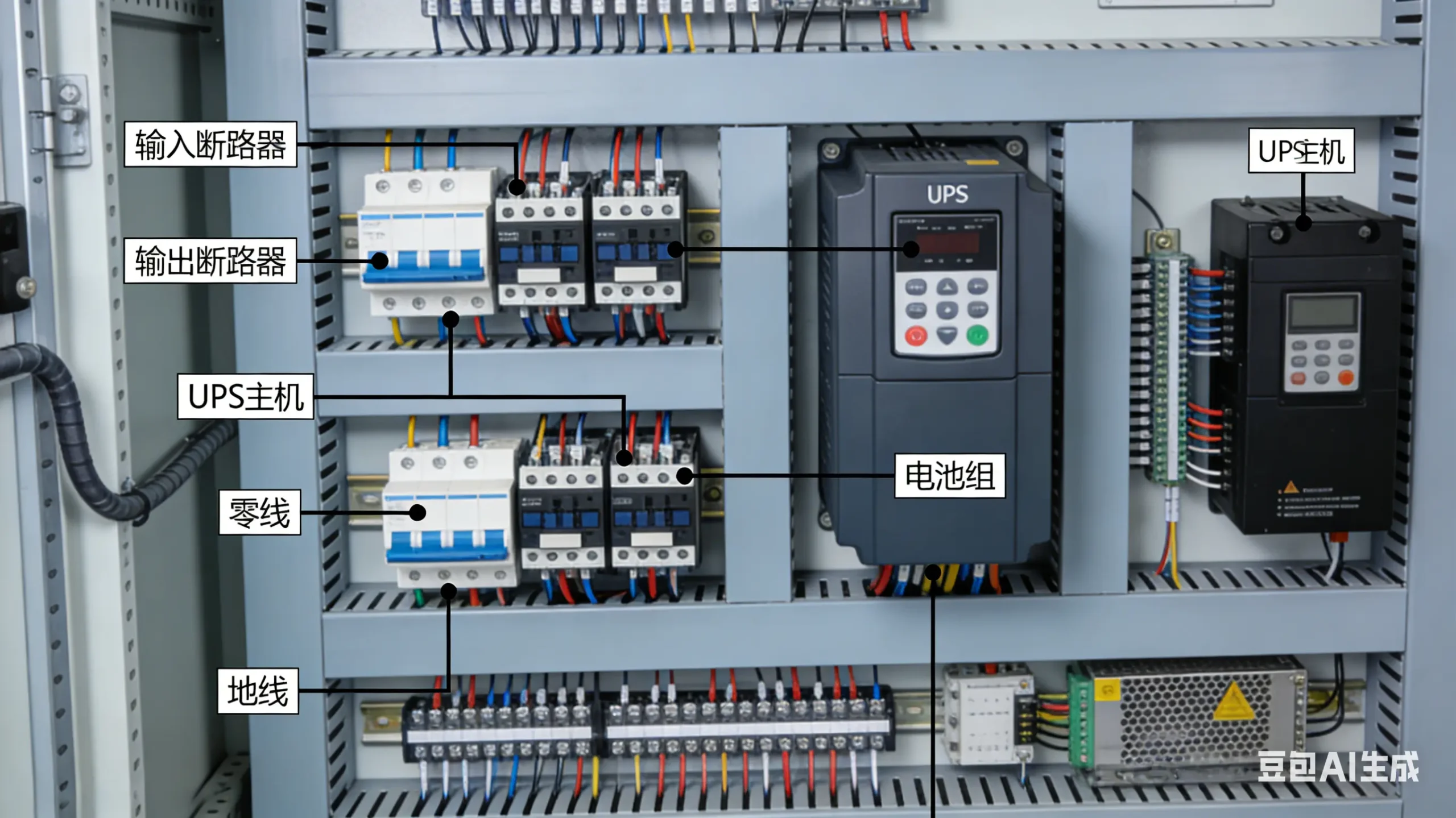
2. Types of Distribution Switchgear
2.1 Main Distribution Boards (LV Main Switchboards)
The main board receives power from the transformer secondary or generator and distributes it to sub-boards and large loads. Incoming protection is typically an air circuit breaker (ACB) with intelligent controller providing adjustable protection, metering and remote communication. Schemes include single incoming, dual incoming with bus coupler, and main-tie-main arrangements for high-availability installations.
2.2 Sub-Distribution Boards
Sub-boards distribute within a floor, area or equipment group, protected by moulded-case circuit breakers (MCCB) or miniature breakers. They are where most day-to-day circuit management happens: isolating a tenant area, feeding a mechanical plant group, or supplying a specific production line.
2.3 Motor Control Centers (MCC)
MCCs combine starters, VFDs and protection for motors — pumps, fans, compressors and process machines — in withdrawable or fixed compartments with interlocking and status indication. They centralize control and protection of motor loads for safe, convenient operation.
2.4 Power Factor Correction
Automatic capacitor banks with a controller switch capacitor steps to keep power factor above penalty thresholds (typically above 0.95), reducing reactive-power charges and releasing transformer capacity. Detuned reactors protect capacitors in harmonic-rich environments.
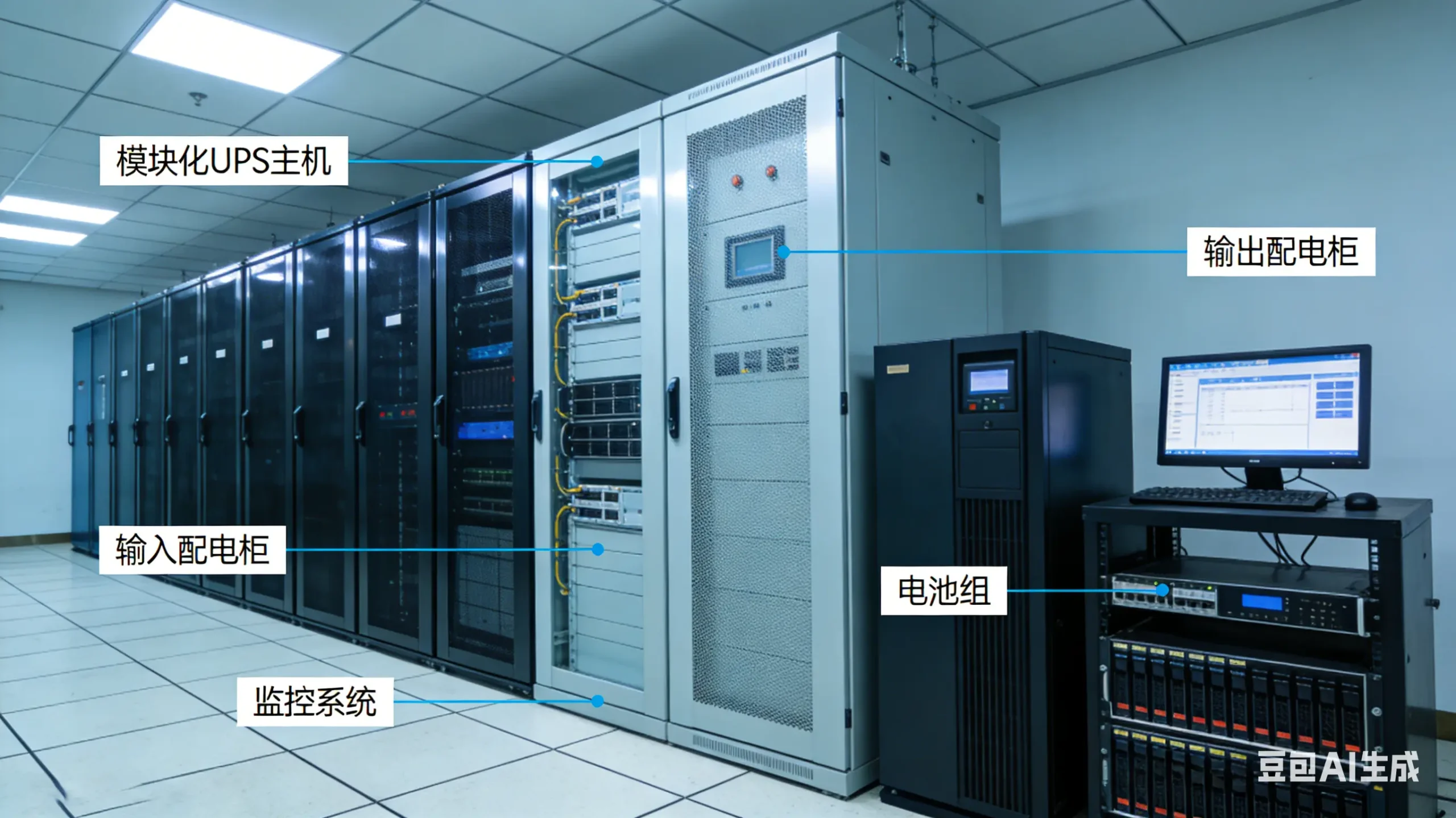
3. Core Engineering Functions
3.1 Protection and Selectivity
Each circuit is protected against overload and short circuit. Selectivity — the coordination that ensures only the faulted circuit trips — is engineered through breaker curves, current-limiting devices and discrimination studies, so a fault on one feeder does not black out the building.
3.2 Isolation and Safety
Every outgoing circuit can be isolated for maintenance; interlocking prevents unsafe operations (e.g. closing an earth switch onto a live bus). Arc-fault mitigation — compartmentalization, arc hoods and maintenance switches — protects personnel during rare internal faults.
3.3 Metering and Energy Management
Smart metering per feeder with Modbus/RS485 or Ethernet turns the switchboard into a measurement point: energy by tenant or process, power quality, load profiling and alarms — the data layer for energy management and cost allocation.
3.4 Busbar and Connection Systems
Tinned copper busbars sized for thermal and short-circuit stress carry current between incoming and outgoing devices, with supports, shrouds and tap-off points engineered for the fault level of the installation.

4. Applications
- Commercial buildings — main and floor distribution for offices, malls and hotels.
- Industrial plants — MCC and sub-distribution for process and utility loads.
- Data centers — LV rooms with 2N or N+1 distribution schemes and generator changeover.
- Infrastructure — pump stations, wastewater plants, transit and tunnel power.
- Hospitals and campuses — essential and normal power boards with standby coordination.
5. Technical Specification Summary
| Parameter | Standard Range |
|---|---|
| Rated voltage | 400/690 V AC (LV); MV cooperation to 40.5 kV |
| Incoming protection | ACB 630-6300 A or MCCB incoming |
| Busbar rating | Up to 6300 A, tinned copper |
| Short-circuit withstand | Up to 100 kA (1s) per design |
| Outgoing feeders | MCCB/MCB 16-1600 A per circuit |
| Enclosure | Floor-standing IP31-IP54, form 2b-4b |
| Communication | Modbus RTU/TCP, optional IEC 61850 gateway |
| Standards | IEC 61439-1/-2, GB/T 7251 |
6. The Engineering Process
Every board starts from a load schedule and single-line diagram. Our engineers calculate load and fault levels, select breakers with correct breaking capacity and selectivity, size busbars for thermal and dynamic stress, and design the layout for safe operation (IP rating, cable entry top/bottom, maintenance access). Drawings are submitted for approval before fabrication; during manufacturing, quality checkpoints cover wiring, torque, labeling and function. Routine tests per IEC 61439 — insulation, dielectric, protection function and wiring checks — are performed on every board and documented.

7. Installation and Commissioning
- Receiving inspection and positioning on the prepared plinth.
- Cable termination with correct torque and phase sequence verification.
- Breaker settings loaded from the protection study.
- Function tests: tripping, interlocking, metering accuracy, communication.
- Energization in sequence with load testing support and as-built documentation.
8. Maintenance and Lifecycle
Switchgear maintenance protects both safety and uptime: annual thermal imaging of connections; breaker contact resistance and trip testing on a sample basis; torque re-check on busbar joints; relay and meter verification; and enclosure cleaning in dusty environments. Older boards can be upgraded rather than replaced — new intelligent breakers, added metering and arc-flash mitigation often fit existing enclosures at a fraction of replacement cost. Guangzhou Lain supports both new builds and retrofits, with shutdown planning that minimizes operational impact.
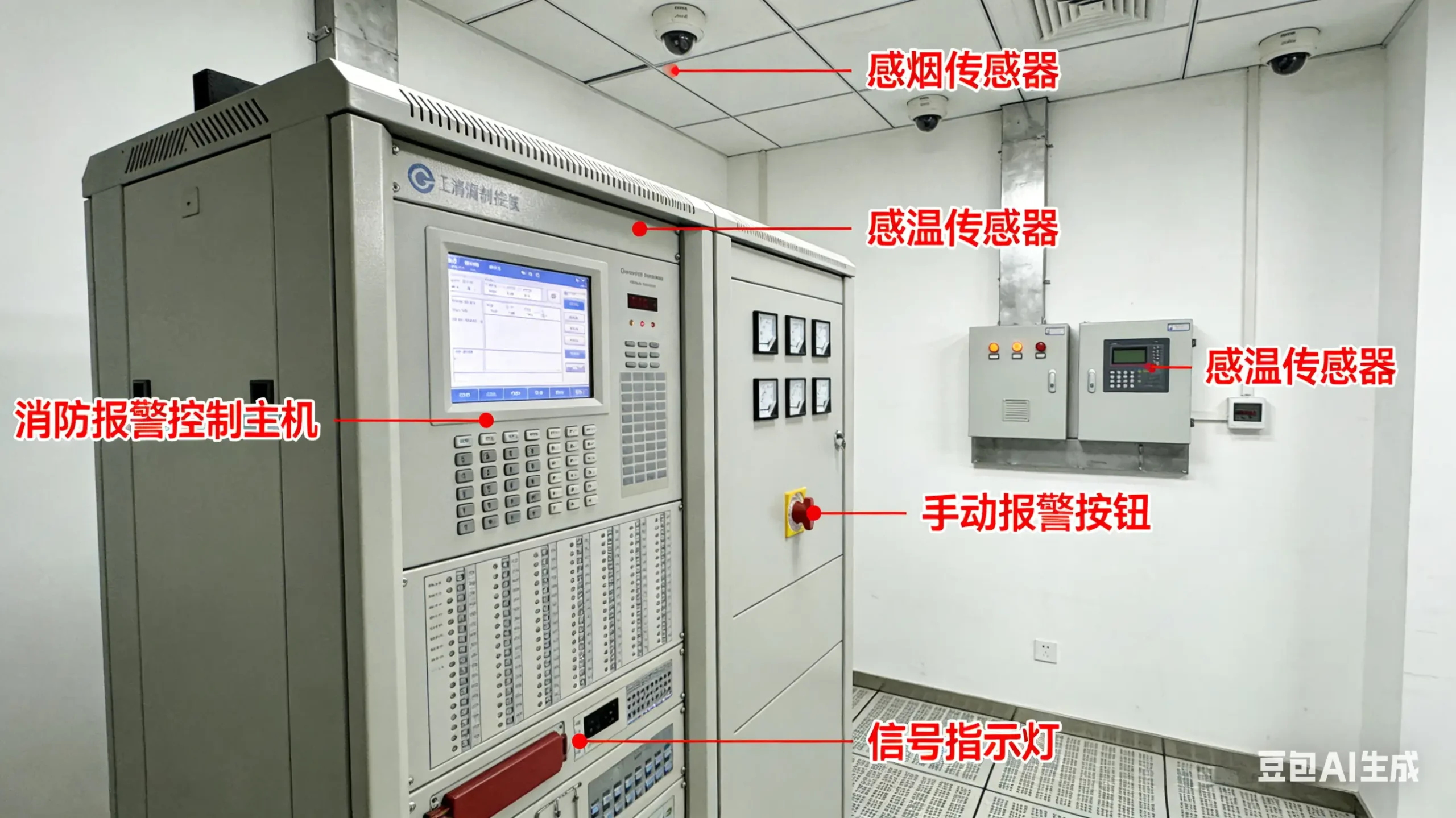
9. Standards and Compliance
Assemblies follow IEC 61439 (and GB/T 7251 for local projects): temperature-rise limits, dielectric properties, short-circuit withstand and protection against electric shock. Type-test documentation from the assembly family is available for project submission; routine tests accompany every delivery. For installations with specific requirements — marine, railway or hazardous areas — applicable modifications and documentation are provided.
10. Industry Use Cases
10.1 Commercial Complex Main Board Replacement
An aging main board with frequent nuisance trips was replaced with a new ACB-based board with selectivity study and smart metering. Feeder trips dropped, energy data enabled tenant billing, and the arc-flash risk of the old board was eliminated.
10.2 Plant MCC with VFD Integration
A food plant standardized its process drives in new MCC sections with VFDs and harmonic filtering, cutting energy use and motor failures while enabling remote start/stop from the control room.
10.3 Data Center 2N LV Room
A data center LV room was built with two independent switchboards and bus couplers, allowing one side to be maintained without affecting the other — meeting the operator’s tier requirement.
11. Frequently Asked Questions
Distribution Switchgear FAQ
1. What is the difference between LV and MV switchgear?
LV switchgear operates below 1 kV and handles final distribution; MV switchgear covers 3.3-40.5 kV and feeds transformers that step down to LV. Lain mainly fabricates LV assemblies and partners on MV works.
2. Can you design the switchgear to my load schedule?
Yes — provide your load schedule and preference; our engineers produce the single-line diagram, breaker selection, panel layout and protection coordination, then submit drawings for approval before fabrication.
3. What breakers do you use?
We build with leading brands (Schneider, ABB, Siemens, Chint, Delixi and others) according to budget and specification, or with customer-supplied breakers, ensuring selectivity and compliance.
4. Do you provide power factor correction?
Yes — automatic capacitor banks with controllers and detuned reactors for harmonic-rich loads are part of our scope, typically improving power factor from 0.6-0.85 to above 0.95.
5. What testing is performed before delivery?
Routine tests per IEC 61439: insulation, dielectric withstand, wiring and function checks, plus protection relay testing on request. Type-test documentation is available from assembly partners.
6. Can existing switchgear be upgraded?
Yes — obsolete breakers can be replaced, metering and communication modules added, and arc-flash mitigation retrofitted, often reusing the existing enclosure to reduce cost and downtime.
7. What is selectivity and why does it matter?
Selectivity ensures only the faulted circuit trips while upstream feeders stay live, limiting outages to the fault location. It is engineered through breaker curve coordination.
8. What is Form 4b separation?
A construction form separating busbars, functional units and terminals into distinct compartments, allowing safe maintenance of one unit while others remain energized.
9. How long does delivery take?
Standard boards typically 8-15 days after approval; engineered boards with protection studies 3-6 weeks depending on complexity and component lead times.
10. Do you provide after-sales service?
Yes — warranty, preventive maintenance, thermal imaging and spare parts, with remote support for intelligent breakers and metering.
11. Can the board connect to a BMS or SCADA?
Yes — smart metering and breaker communication integrate with BMS/SCADA over Modbus or Ethernet for monitoring and control.
12. What documentation is delivered?
Single-line diagrams, panel layouts, protection settings, test reports, as-built drawings and operation manuals.
12. Related Solutions
- AC Distribution Unit
- LV Distribution Cabinet
- Distribution SPD Module
- Energy Meter & Submetering
- Distribution Terminals
About Guangzhou Lain Intelligent System Development Co., Ltd.
Guangzhou Lain Intelligent System Development Co., Ltd. engineers LV switchgear, distribution boards, power factor correction and monitoring for commercial, industrial and data center customers worldwide. From single rooms to enterprise facilities, KITOZER provides design, manufacturing, integration, testing and after-sales service under one roof and exports worldwide.
Contact us for a free technical consultation:
- Company: Guangzhou Lain Intelligent System Development Co., Ltd.
- Address: 1st Floor, Building A, Chaotian Industrial Park, Zhongrun Industrial Park, Shilou Town, Panyu District, Guangzhou, Guangdong, China
- Tel/WeChat: +86 135-0923-8849 | +86 135-0923-8849
- WhatsApp: +86 135-0923-8849
- Email: zl19068534140@gmail.com
- Website: www.gdlain.com | Request a Quote
Typical response time: within one business day. Project references, drawings and samples are available on request.