1. Overview: What This FAQ Covers
Precision temperature and humidity monitoring watches the environment that sensitive equipment, materials and processes depend on — server rooms, laboratories, museums, archives, cleanrooms and storage facilities. Sensors report continuously to a platform that alarms the moment conditions drift out of their band, so problems are caught while they are still fixable. This page answers the questions engineers ask when planning environment monitoring.
Guangzhou Lain Intelligent System Development Co., Ltd. supplies precision temperature/humidity sensors, hosts and monitoring platforms for technical rooms and facilities. The answers below reflect our standard practice and ASHRAE-based guidance for server environments.
2. Accuracy and Placement
2.1 What accuracy do the temperature and humidity sensors have?
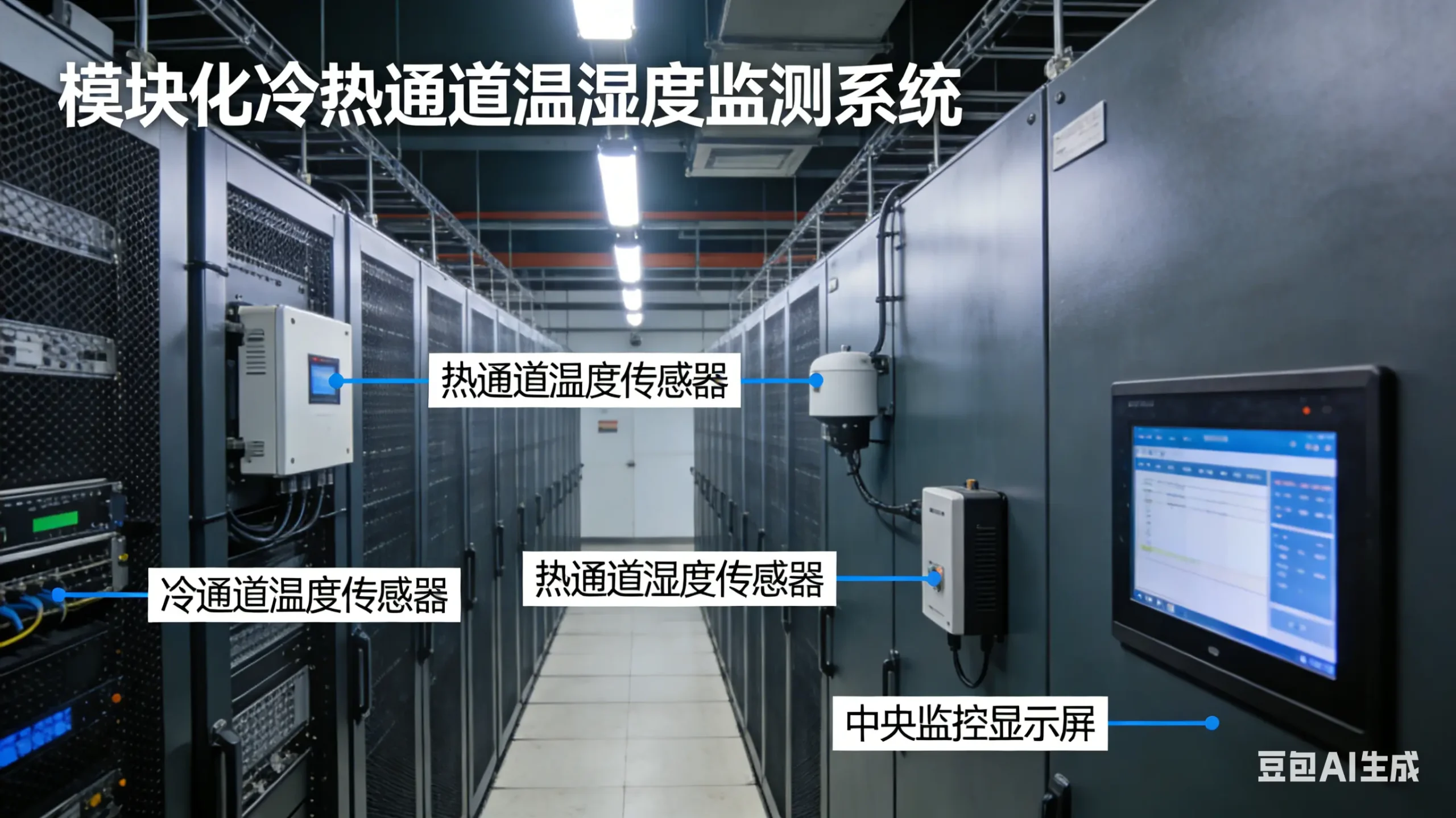
Typical precision sensors achieve ±0.3°C and ±2–3% RH across the operating range, with optional calibration certificates for metrology-sensitive applications. Repeatable, calibrated sensors matter more than raw specs — the platform trends drift over time, so consistent readings are what make early warning reliable.
2.2 Where should I place sensors in a server room?
Mount them at rack intake (front), roughly 0.5 m above the floor and at mid-height, plus one at the AC return air. Sensor density follows room size and cooling layout; a typical 100 m² room uses 8–16 points. The goal is to measure where the servers breathe, not the room average — hot spots hide between racks, not at the thermostat.
3. Setpoints and Standards
3.1 What are recommended setpoints?
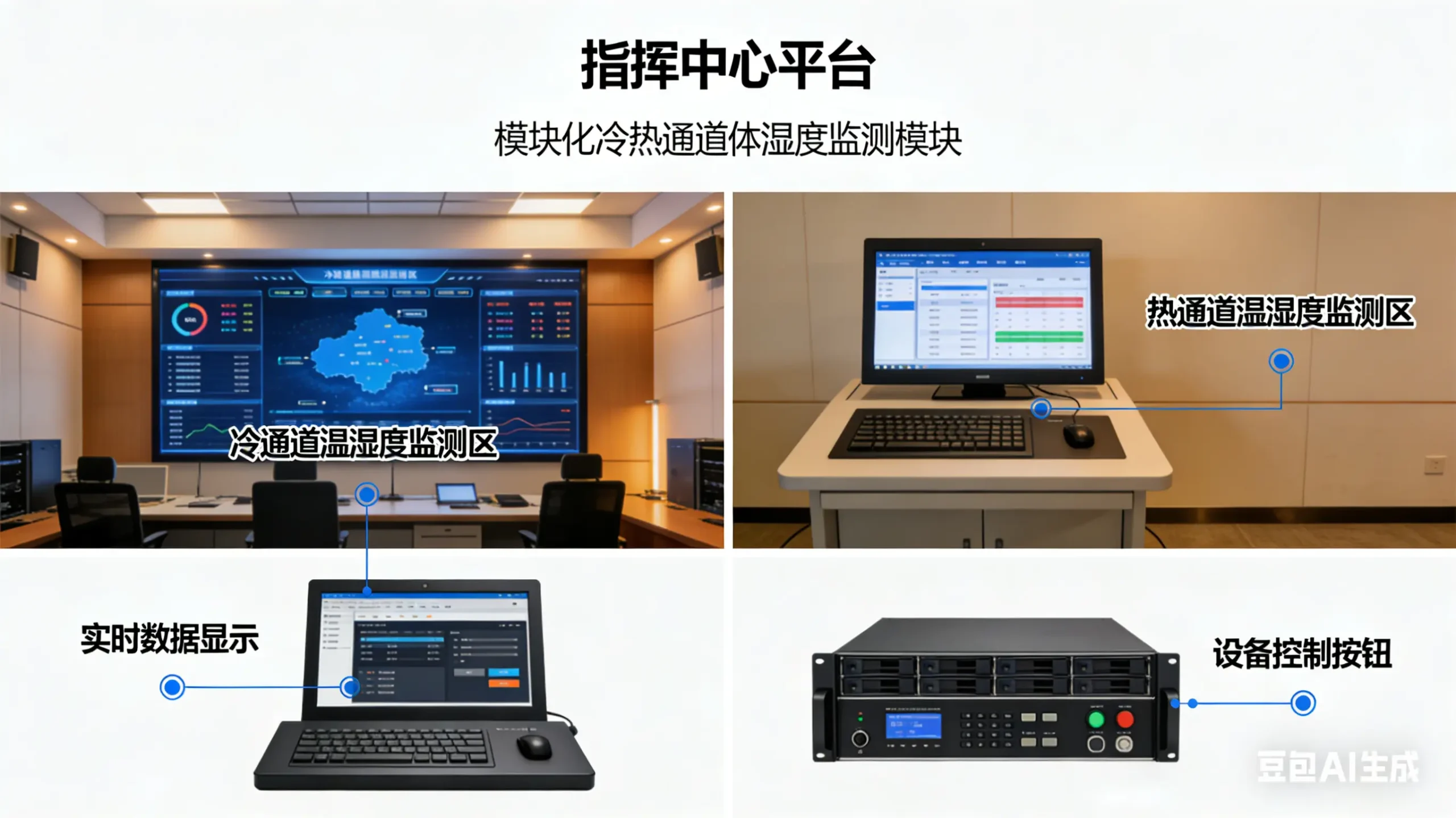
ASHRAE A1 guidance is 18–27°C intake temperature and 20–80% RH (with dew-point limits). Many operators alarm at 22–25°C bands to catch drift early rather than waiting for the hard limit — an alarm at the edge of the envelope arrives before equipment suffers, not after.
3.2 Why humidity matters as much as temperature?
Too-dry air invites electrostatic discharge; too-humid air risks condensation and corrosion. Both shorten equipment life quietly. Monitoring both parameters with dew-point awareness gives the complete picture — the two values are linked, and a change in one usually signals a change in the other.
4. Integration and Alarms
4.1 Can it connect to my existing monitoring platform?
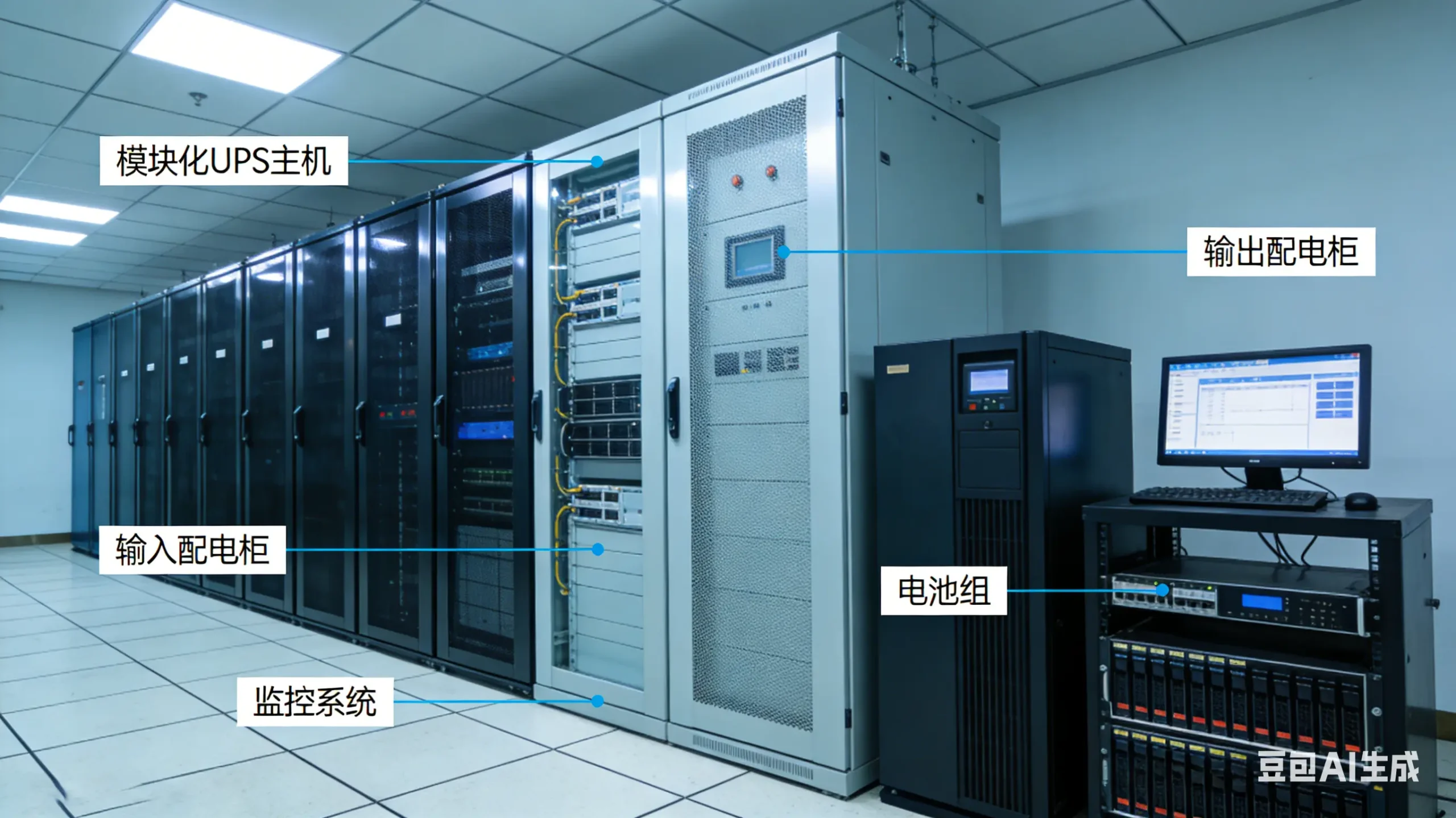
Yes — sensors and hosts support Modbus RTU/TCP and SNMP, so data can feed an existing DCIM, BMS or NMS, or our own platform. Integration keeps one screen for the whole facility and avoids a second silo of data.
4.2 How are alarms delivered?
Through SMS, email, voice call or WeChat/WhatsApp message, with different thresholds for warning and critical levels and escalation to a second contact if not acknowledged. Warning at the first drift, critical at the hard limit — and if the first engineer does not respond, the next one is paged automatically.
5. Operations
5.1 Is calibration required?
For most IT applications no annual calibration is needed; sensors have drift well under ±0.1°C/year. For laboratory or regulated use, we offer recalibration service with certificates, and the platform logs calibration dates so compliance-sensitive sites stay provably current.
5.2 How many sensors does my facility need?
Density follows the value at risk and the geometry: a small network closet needs one or two points; a large server hall with multiple AC units needs coverage per cooling zone, typically 8–16 points per 100 m² plus return-air and underfloor locations where relevant.


6. Frequently Asked Questions — Quick Reference
Precision T&H Monitoring FAQ
1. What accuracy do the sensors have?
Typical precision sensors achieve ±0.3°C and ±2–3% RH across the operating range, with optional calibration certificates for metrology-sensitive applications.
2. Where should I place sensors in a server room?
At rack intake (front), ~0.5 m above the floor and mid-height, plus AC return air; a typical 100 m² room uses 8–16 points following the cooling layout.
3. What are recommended setpoints?
ASHRAE A1: 18–27°C intake and 20–80% RH with dew-point limits; many operators alarm at 22–25°C bands to catch drift early.
4. Can it connect to my existing monitoring platform?
Yes — Modbus RTU/TCP and SNMP let sensors feed an existing DCIM, BMS or NMS, or our own platform.
5. How are alarms delivered?
SMS, email, voice call or WeChat/WhatsApp with warning/critical thresholds and escalation to a second contact if unacknowledged.
6. Is calibration required?
For most IT applications no annual calibration is needed (drift < ±0.1°C/year); recalibration with certificates is offered for laboratory or regulated use.
7. How many sensors does my facility need?
One or two for a small closet; 8–16 per 100 m² for server halls, following cooling zones plus return-air locations.
8. Why measure at rack intake?
Intake temperature is what the servers actually breathe — hot spots between racks are invisible to room-average thermostats.
9. Do you log calibration history?
Yes — the platform records calibration dates and certificates so regulated sites stay provably current.
10. Can it monitor other rooms, not just server rooms?
Yes — laboratories, museums, archives, cleanrooms and storage facilities use the same sensors and platform with site-specific setpoints.
7. Related Solutions
- Precision Temperature & Humidity Monitoring: Complete Guide
- Data Center Monitoring System
- Data Center Fire Interlock Monitoring
- Data Center Dust Monitoring System
- Electrical Room Environmental Monitoring
About Guangzhou Lain Intelligent System Development Co., Ltd.
Guangzhou Lain Intelligent System Development Co., Ltd. supplies precision temperature and humidity monitoring systems for server rooms, laboratories, museums and storage facilities worldwide. From single rooms to enterprise facilities, KITOZER provides design, manufacturing, integration, testing and after-sales service under one roof and exports worldwide.
Contact us for a free technical consultation:
- Company: Guangzhou Lain Intelligent System Development Co., Ltd.
- Address: 1st Floor, Building A, Chaotian Industrial Park, Zhongrun Industrial Park, Shilou Town, Panyu District, Guangzhou, Guangdong, China
- Tel/WeChat: +86 13922289957 | +86 18520668845 | +86 13538869979
- WhatsApp: +86 19068534140
- Email: zl19068534140@gmail.com
- Website: www.gdlain.com | Request a Quote
Typical response time: within one business day. Project references, drawings and samples are available on request.