1. Overview: Enclosures That Stand Up to the Outdoors
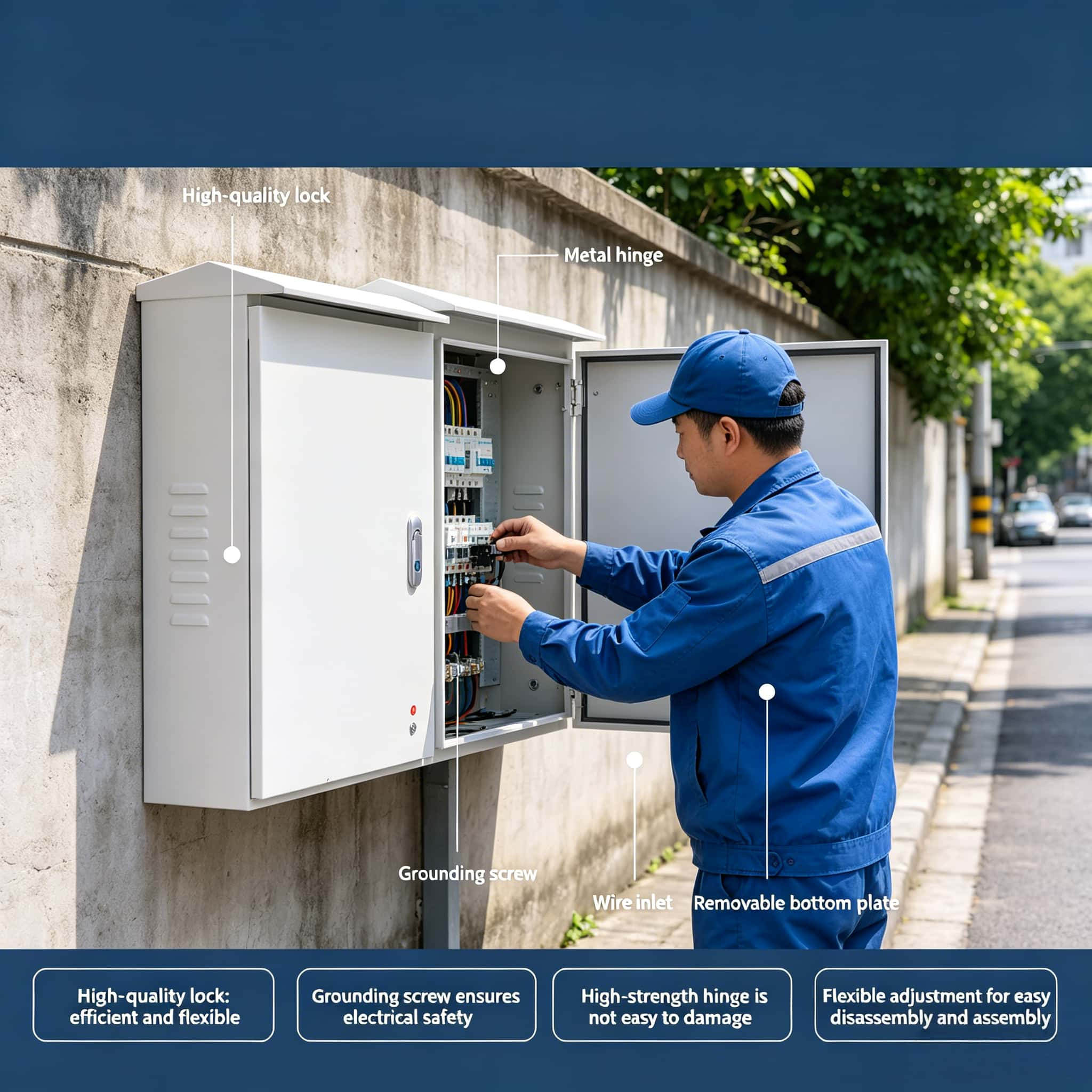
Telecom radios, monitoring nodes, roadside controllers and power equipment rarely live in air-conditioned rooms. They are mounted on poles, bolted to walls and set on concrete pads at the edge of highways, on factory roofs and inside substations – places where rain, sun, dust, salt spray and temperature swings attack electronics every day. General outdoor cabinets are the enclosures built for exactly that job: they keep equipment dry, cool enough, secure and serviceable no matter what the weather does.
Guangzhou Lain Intelligent System Development Co., Ltd. manufactures a standard range of outdoor cabinets – pole-mount, wall-mount and ground-standing types – configurable with climate control, power distribution, cable management and monitoring for almost any outdoor installation. Every cabinet is built from corrosion-resistant materials, sealed to an IP rating and tested for the wind, rain and heat loads it will actually face on site. This guide explains what makes an outdoor cabinet different from an indoor rack, how to choose the right type, and how Lain configures each unit for a specific project.
2. Why Outdoor Equipment Needs a Purpose-Built Cabinet
2.1 The Difference Between Indoor and Outdoor Enclosures
An indoor rack assumes a controlled room: stable temperature, filtered air, no rain and no casual access. An outdoor cabinet assumes the opposite. It must shed rain, resist ultraviolet (UV) degradation, keep out dust and insects, survive wind loads, resist corrosion in coastal or industrial air, and still let heat escape – all while remaining secure against vandalism and weather damage for years of unattended operation.
2.2 What Fails When the Enclosure Is Wrong
| Environment | Risk to Equipment | Cabinet Requirement |
|---|---|---|
| Direct sun and high ambient heat | Overheating, reduced component life | Shading, insulation and active/passive cooling |
| Rain, humidity and condensation | Short circuits, corrosion, rust | IP55+ sealing, drip shields, drainage, heaters |
| Dust and sand | Filter clogging, contact contamination | Filtered ventilation or sealed cooling |
| Coastal salt spray | Rapid metal corrosion | Marine-grade coating and stainless hardware |
| Vandalism and theft | Loss of equipment and service | Reinforced doors, 3-point locks, tamper alarm |
| Wide temperature swings | Condensation and thermal stress | Thermal management plus anti-condensation heater |
Choosing a cabinet that matches the site environment is the cheapest insurance an operator can buy – a few hundred dollars of enclosure protection can prevent thousands of dollars of field repairs and truck rolls.
3. Construction and Materials
3.1 Galvanized Steel and Aluminum Bodies
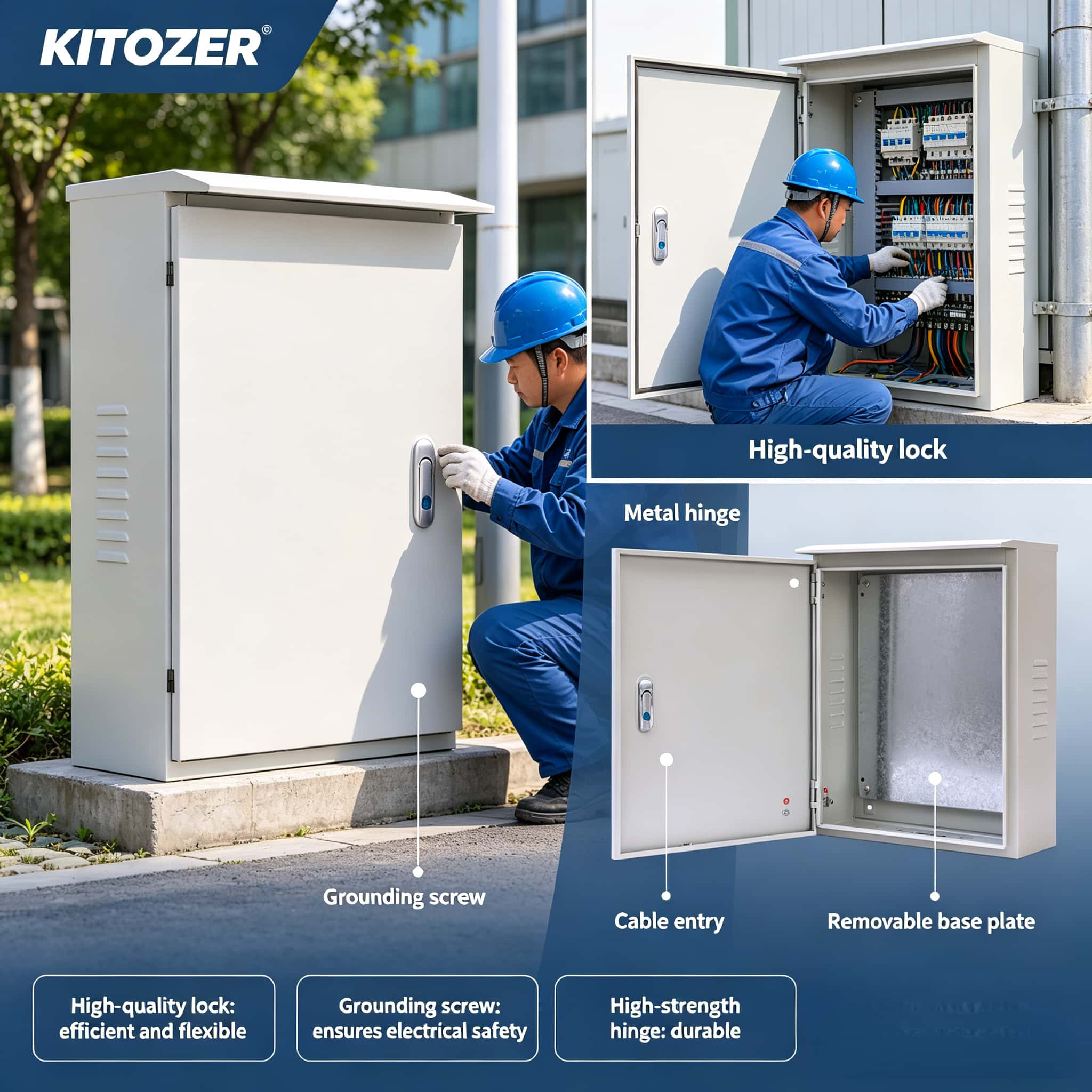
Lain outdoor cabinets use galvanized steel or aluminum bodies with a durable powder coating. Steel gives strength for ground-standing and larger cabinets; aluminum gives light weight and natural corrosion resistance for pole and wall mounts. Both are treated so that scratches and cut edges do not become starting points for rust.
3.2 Sealing and Protection Ratings
Standard cabinets are rated IP55 – protected against dust ingress and against water jets – with IP65 options for exposed locations. Door seals are closed-cell gaskets, cable entries use sealed glands or brush plates, and roof panels are sloped or fitted with drip shields so water runs off rather than pooling around hinges and locks.
3.3 Wind Load and Corrosion Resistance
Ground and pole cabinets are engineered for the wind loads of their mounting method and region, with reinforced mounting brackets and tested fixing points. For coastal areas Lain specifies marine-grade coating, stainless-steel hinges and latches, and extra corrosion protection so a salt-air installation keeps its seal and its looks for years.
4. The Standard Range: Pole, Wall and Ground
| Type | Typical Size | Best For |
|---|---|---|
| Pole-mount mini cabinet | Small footprint, hinged front | RRUs, small controllers, sensors at height |
| Wall-mount box | Compact, flat back | Local equipment near entry or machine areas |
| Ground-standing cabinet | Up to ~42U equivalent | Larger systems, batteries, full power distribution |
4.1 Pole-Mount Mini Cabinets
Pole-mount cabinets are compact enclosures that clamp to a utility pole or a dedicated mast, placing equipment at working height while keeping it out of reach of flooding and casual interference. They are the standard home for small telecom devices, amplifier units and sensor controllers at the edge of a network.
4.2 Wall-Mount Boxes
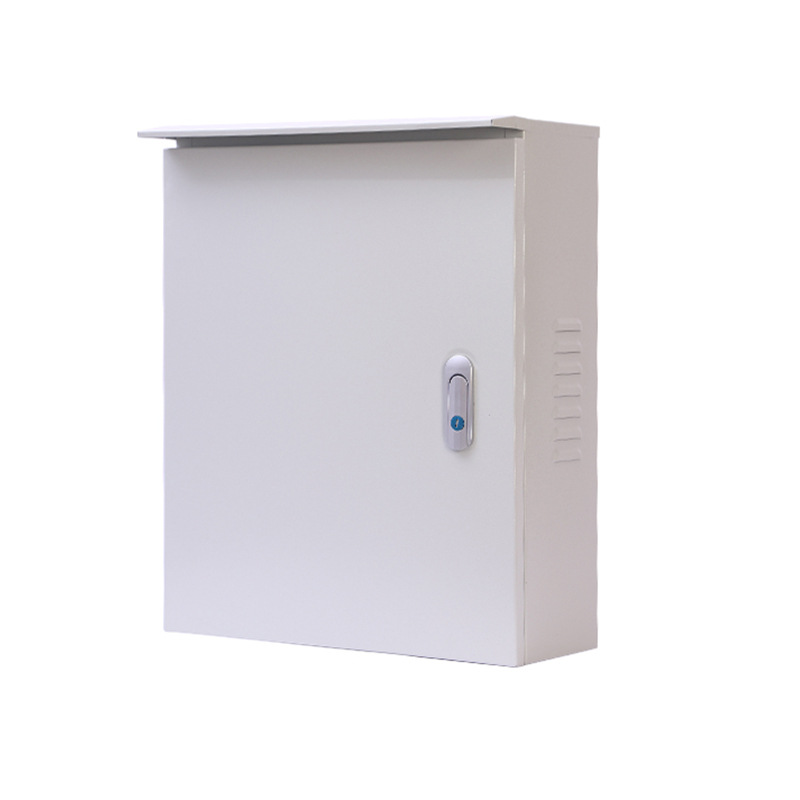
Wall-mount boxes attach to building facades, plant walls and gantries. Their shallow depth suits small controllers, termination points and local power units, and their low profile makes them unobtrusive on occupied buildings. Hinged or lift-off covers give fast access for maintenance.
4.3 Ground-Standing Cabinets
Ground-standing cabinets are full-height enclosures on plinths or legs, sized for larger systems – battery backups, power distribution, multiple controllers or complete mini-shelters up to about 42U of equipment volume. They offer the most internal space, the best thermal management options and the easiest access for routine service.
5. Thermal Management: Keeping Heat Under Control
5.1 Heat Load Is the Design Driver
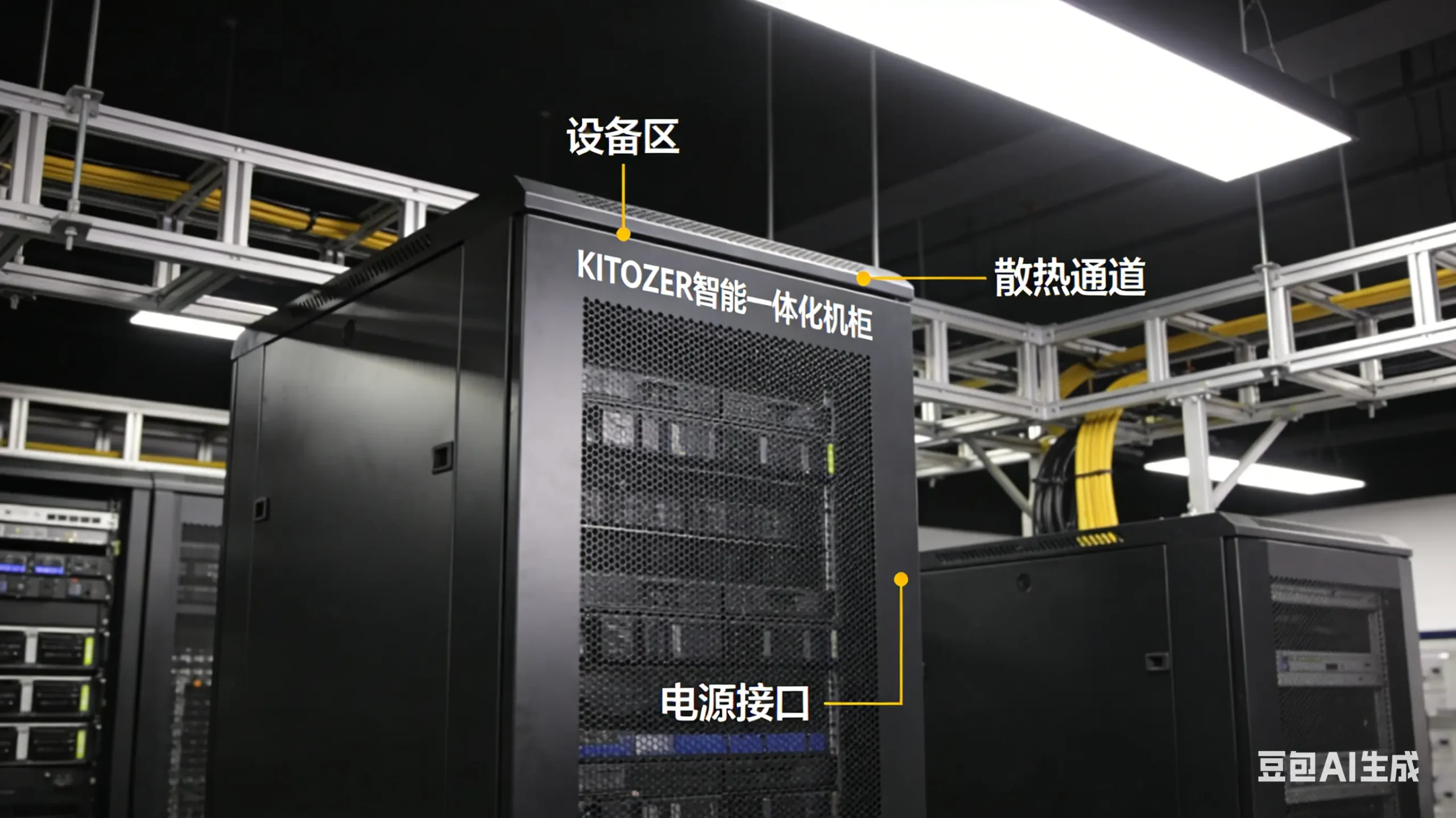
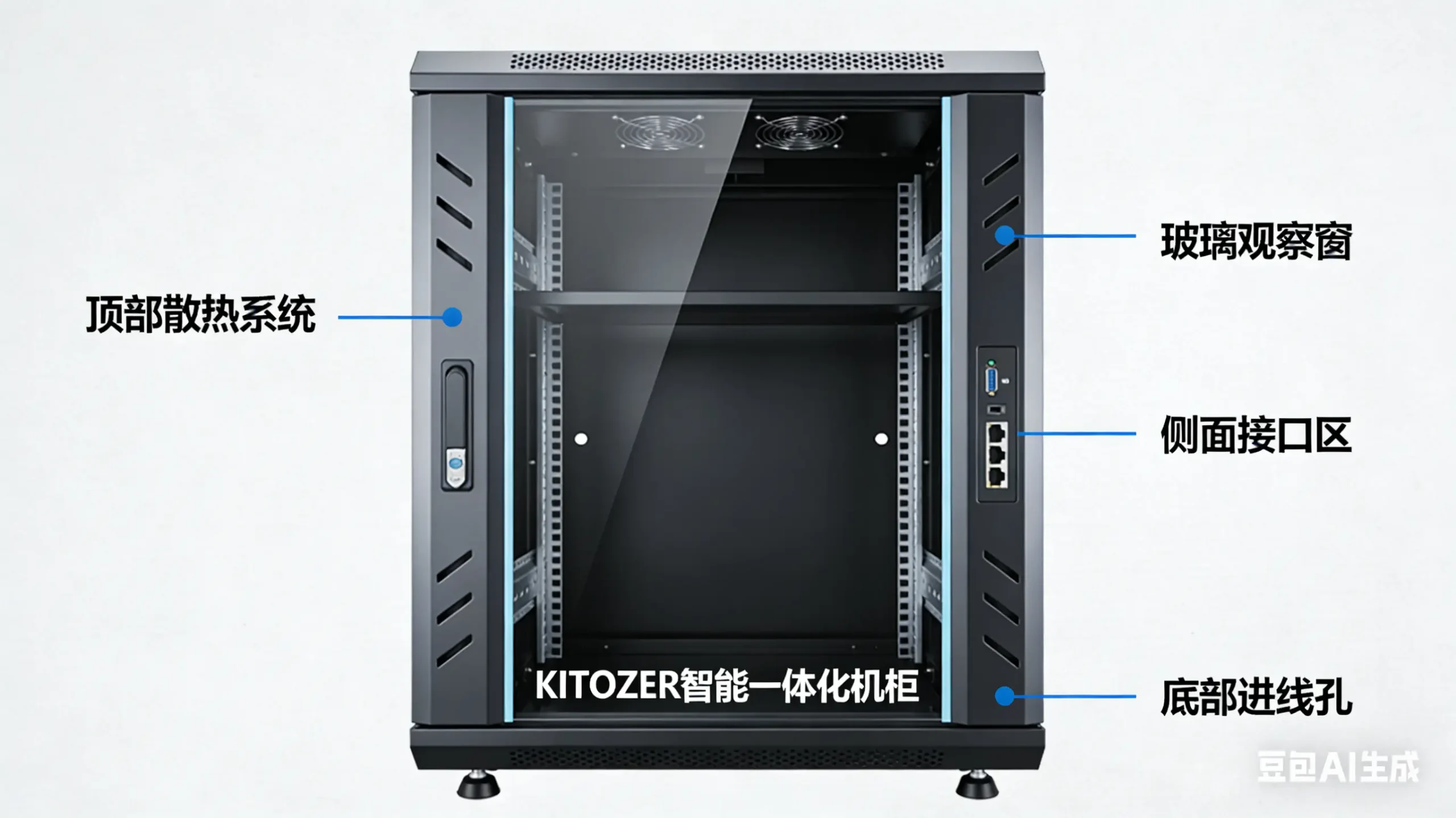
Every watt of electronics inside a sealed outdoor cabinet must be removed through the enclosure walls. Lain engineers calculate the internal heat load and the worst-case ambient temperature, then select the most economical thermal solution that keeps internal temperatures inside the equipment’s rated range – with margin for a hot summer day in full sun.
5.2 Cooling Options Compared
| Solution | How It Works | Best When |
|---|---|---|
| Passive ventilation | Ventilation louvres and natural convection | Low heat load, sheltered sites |
| Filtered fan | Fan pulls air through a filter | Moderate load, low dust levels |
| Heat exchanger | Sealed air-to-air or air-to-water exchange | Dusty or humid sites, no outside air inside |
| Cabinet air conditioner | Active compressor cooling | High heat load or hot climates |
| Anti-condensation heater | Warms air above dew point | Cool damp climates, temperature swings |
For dusty industrial or coastal sites Lain favours sealed cooling (heat exchangers or air conditioners) over filtered fans, because no outside air – and no dust or salt – enters the cabinet. For modest loads in clean rural sites, filtered fan ventilation is the most economical choice.
6. Power, Cabling and Surge Protection
6.1 AC/DC Distribution Options
Outdoor cabinets can be fitted with AC distribution (breaker, socket and metering), DC distribution (fused or breakered outputs at -48 V or other voltages), or a combined bus for mixed loads. Battery compartments for backup power can be integrated where the served equipment must stay online through mains failures.
6.2 Surge Protection and Grounding
Outdoor sites are exposed to lightning-induced surges arriving on power and signal lines. Standard Lain configurations include AC and signal surge protection devices (SPDs), a grounding kit with a clearly marked earth bar, and cable glands sized for the incoming feeders. Proper earthing is engineered as part of the cabinet, not left as an afterthought on site.
6.3 Cable Management
Internal cable routing keeps power separated from signal and provides neat, labelled pathways for future changes. Glands, brush plates and grommets protect cables where they enter the enclosure, and spare capacity is left for the next upgrade so the cabinet does not need to be re-engineered every time a circuit is added.
7. Security and Monitoring
7.1 Physical Security
Outdoor cabinets are frequent targets of theft and vandalism because they sit unattended. Standard builds include 3-point locking doors, concealed hinges, and reinforced door frames. For higher-risk sites KITOZER offers electronic locks, tamper alarm interfaces and optional door-open sensors that report to a monitoring platform.
7.2 Environmental Monitoring Inside the Cabinet
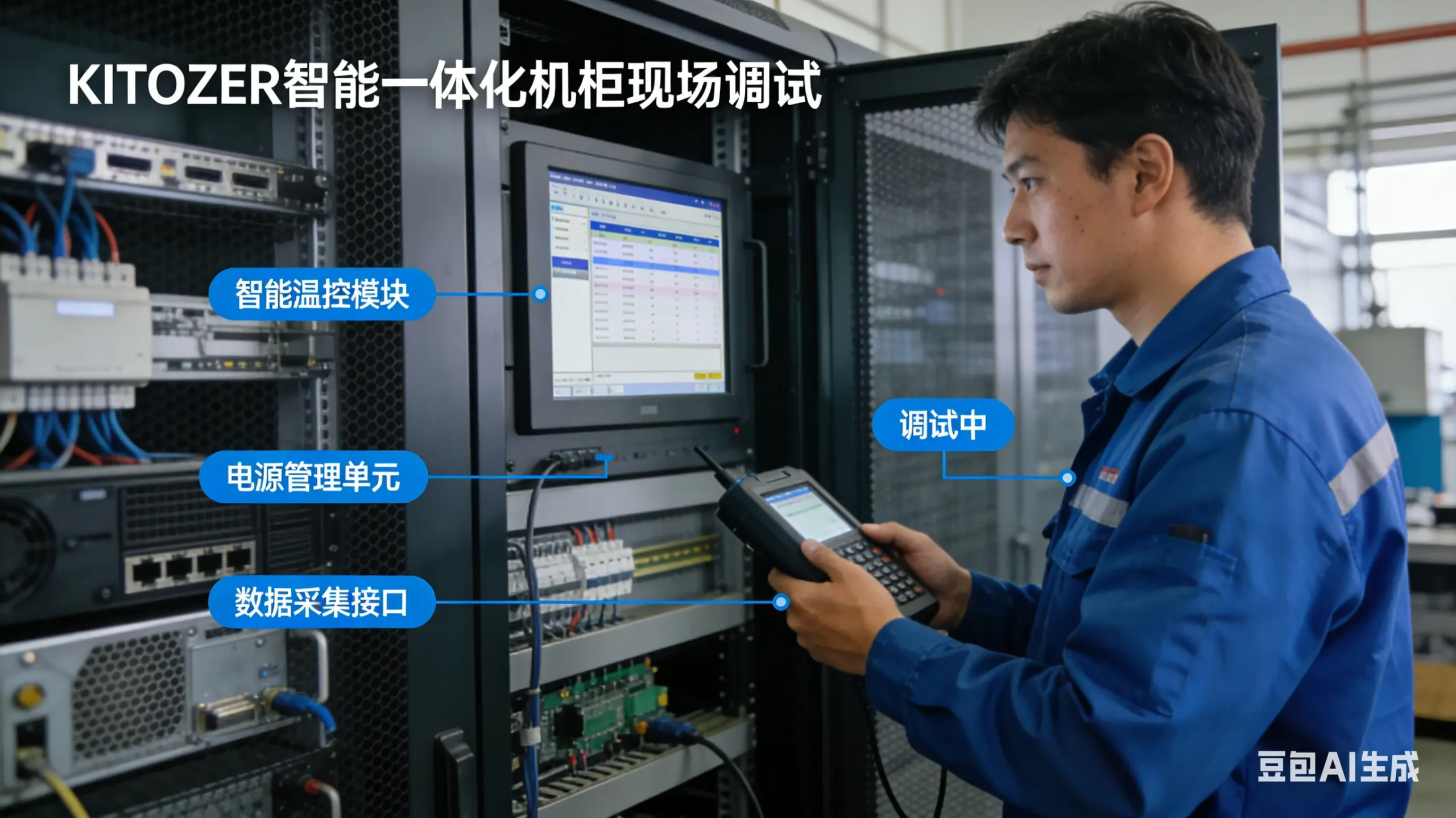
A smart outdoor cabinet can carry temperature and humidity sensors, door status detection and optional smoke or water-leak detectors. Readings are reported over the same network as the hosted equipment, so operators see an overheating fan failure or an open door in real time rather than discovering it on the next scheduled visit.
8. Applications
8.1 Telecom and Wireless Sites
Base station ancillary equipment, remote radio heads, small-cell controllers and microwave terminal units are the classic pole and ground cabinet applications. Cabinets keep feeder, power and control electronics together at the base of the structure with room for backup batteries.
8.2 Monitoring and Roadside Systems
Outdoor wireless nodes, environmental monitoring stations and roadside ITS devices (traffic cameras, vehicle detectors, message signs) all need weatherproof enclosures that can be serviced safely at the roadside. Compact pole and wall cabinets dominate here, with secure locks against interference.
8.3 Solar, Energy Storage and Industrial Field Equipment
Solar/energy-storage controllers, hybrid inverters and industrial field instrumentation live outdoors by necessity. Lain cabinets for these roles integrate the controller, breakers, SPDs and communications in one weatherproof assembly with ventilation sized for the actual dissipation of the equipment inside.
9. Customisation and Manufacturing
Because no two sites are identical, Lain produces custom outdoor cabinets from customer drawings with short lead times: custom cut-outs and mounting plates, specified colours and branding, alternate lock systems, cable entry positions, insulation, heaters, fans or air conditioners, and internal layouts matched to the exact equipment list. Sheet-metal fabrication is done in-house, so prototypes and small series are as practical as large orders.
10. Deployment Process with Lain
Deployment starts with a site survey – environment, mounting method, equipment list, heat load, power source and security needs. Lain then selects the enclosure type and thermal solution, produces the internal layout and electrical schematic, manufactures and tests the cabinet, and ships it with installation drawings and accessories. On-site work is limited to mounting, cabling and commissioning, and every cabinet comes with documentation of its rating, wiring and recommended maintenance.
11. Frequently Asked Questions
Outdoor Cabinet FAQ
1. What is a general outdoor cabinet?
A weatherproof enclosure that protects telecom, power, monitoring or industrial equipment installed outdoors – available as pole-mount, wall-mount or ground-standing types with sealing, thermal management, power distribution and security features.
2. What does the IP rating mean?
IP55 means protection against dust ingress and water jets; IP65 adds protection against stronger water jets. The rating is chosen from the site exposure, with IP55 standard and IP65 for exposed locations.
3. How is heat removed from a sealed outdoor cabinet?
By passive ventilation, filtered fans, sealed heat exchangers or cabinet air conditioners – selected from the internal heat load and worst-case ambient temperature so internal temperatures stay inside equipment limits.
4. Can outdoor cabinets include power distribution?
Yes – AC and/or DC distribution, surge protection, grounding kits and optional battery compartments can all be integrated so the cabinet is a complete power-and-equipment assembly.
5. Are the cabinets suitable for coastal areas?
Yes – coastal installations use marine-grade coating, stainless-steel hardware and sealed cooling so salt spray does not corrode the enclosure or reach the electronics inside.
6. Can cabinets be customised?
Yes – cut-outs, mounting plates, colours, locks, cable entries, thermal options and internal layouts are produced from customer drawings with short lead times by Lain’s in-house sheet-metal workshop.
7. What security features are available?
Three-point locks and reinforced doors as standard, with electronic locks, tamper alarm interfaces, door-open sensors and monitoring options for higher-risk sites.
8. Do you provide complete outdoor enclosure solutions?
Yes – Guangzhou KITOZER supplies the cabinet, thermal management, power and monitoring integration, plus installation support, for telecom, roadside, solar and industrial outdoor sites worldwide.
12. Related Solutions
- 4G/5G Base Station Hub
- Cabinet Thermal Control Module
- Cabinet Access Control
- Base Station Environmental Sensors
- Cabinet Fabrication
- Industry Application Outdoor Cabinets
About Guangzhou Lain Intelligent System Development Co., Ltd.
Guangzhou Lain Intelligent System Development Co., Ltd. manufactures general outdoor cabinets – pole-mount, wall-mount and ground-standing weatherproof enclosures with thermal management, power distribution and monitoring – for telecom, roadside, solar, storage and industrial sites worldwide. From single rooms to enterprise facilities, KITOZER provides design, manufacturing, integration, testing and after-sales service under one roof and exports worldwide.
Contact us for a free technical consultation:
- Company: Guangzhou Lain Intelligent System Development Co., Ltd.
- Address: 1st Floor, Building A, Chaotian Industrial Park, Zhongrun Industrial Park, Shilou Town, Panyu District, Guangzhou, Guangdong, China
- Tel/WeChat: +86 13922289957 | +86 18520668845 | +86 13538869979
- WhatsApp: +86 19068534140
- Email: zl19068534140@gmail.com
- Website: www.gdlain.com | Request a Quote
Typical response time: within one business day. Project references, drawings and samples are available on request.