1. Overview: Backup Power That Outlives the UPS
For decades, UPS backup meant valve-regulated lead-acid (VRLA) batteries — heavy blocks that aged in the heat, tolerated few deep discharges and had to be replaced every three to five years. LiFePO4 (lithium iron phosphate) batteries have changed that calculation: longer cycle life, faster charging, wider temperature tolerance, a fraction of the weight and no venting or acid handling. For data centers, factories, hospitals and critical infrastructure, LiFePO4 turns the UPS battery from the weakest component of the power chain into the most reliable one.
Guangzhou Lain Intelligent System Development Co., Ltd. supplies LiFePO4 battery systems and integrated UPS power solutions for commercial and industrial applications. This guide explains why LiFePO4 is replacing lead-acid in UPS duty, what the system features are, and how to select and deploy it safely.
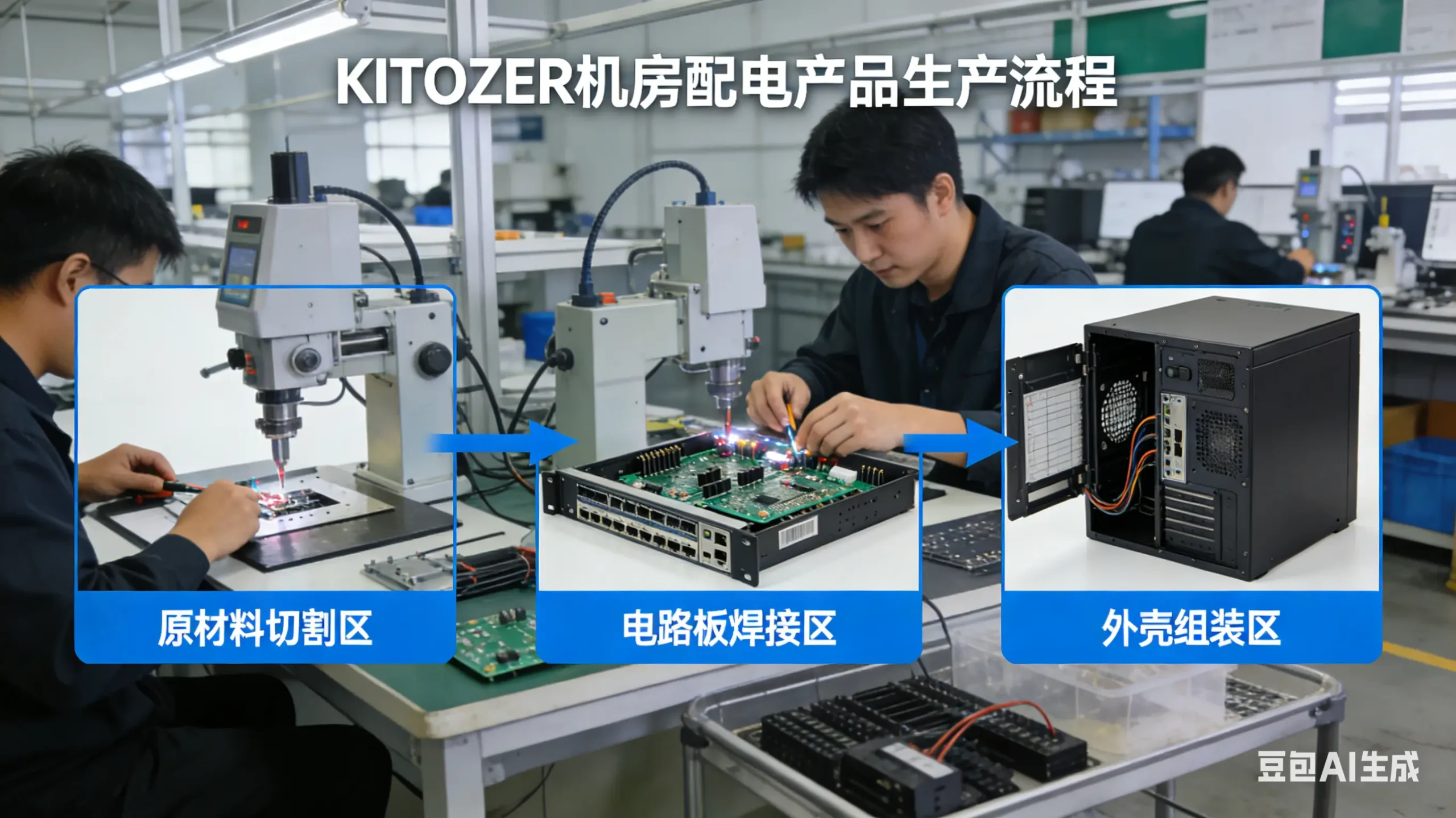
2. Why LiFePO4 for UPS Duty
| Aspect | VRLA Lead-Acid | LiFePO4 |
|---|---|---|
| Cycle life (100% DoD equivalent) | 300–500 cycles | 2,000–4,000+ cycles |
| Design life | 3–5 years typical | 10+ years typical |
| Weight / footprint | Heavy, bulky | ~50% lighter, smaller |
| Charge time to full | 8–16 hours | 2–4 hours |
| Deep-discharge tolerance | Poor (damages cells) | Excellent |
| Operating temperature | 20–25 °C preferred | Wider range with BMS control |
| Maintenance | Periodic checks, replacement cycles | Minimal with BMS |
Over a ten-year horizon, LiFePO4 usually wins on total cost of ownership even at higher first cost — because it survives two to three lead-acid lifetimes without replacement labor, downtime or disposal cost.
3. How LiFePO4 Works in a UPS System
In a UPS, the battery floats across the DC bus and takes over instantly when mains fails. LiFePO4 cells (nominal 3.2 V) are arranged in series strings to reach the UPS DC voltage, and a battery management system (BMS) guards each cell: balancing charge, protecting against over-voltage, under-voltage, over-current and temperature extremes, and reporting state of charge and health. The BMS communicates with the UPS or site monitoring platform, so operators see battery status continuously instead of discovering a dead string at the moment of outage.

4. Key System Features
- Cell-level BMS — balancing, protection and telemetry on every cell group for safety and life.
- High rate capability — delivers the short high-current discharges UPS inverters demand during transfer and run time.
- Fast recharge — batteries return to full readiness within hours, shortening the window of vulnerability after an outage.
- Thermal management — temperature control and derating keep cells inside their safe window in warm rooms.
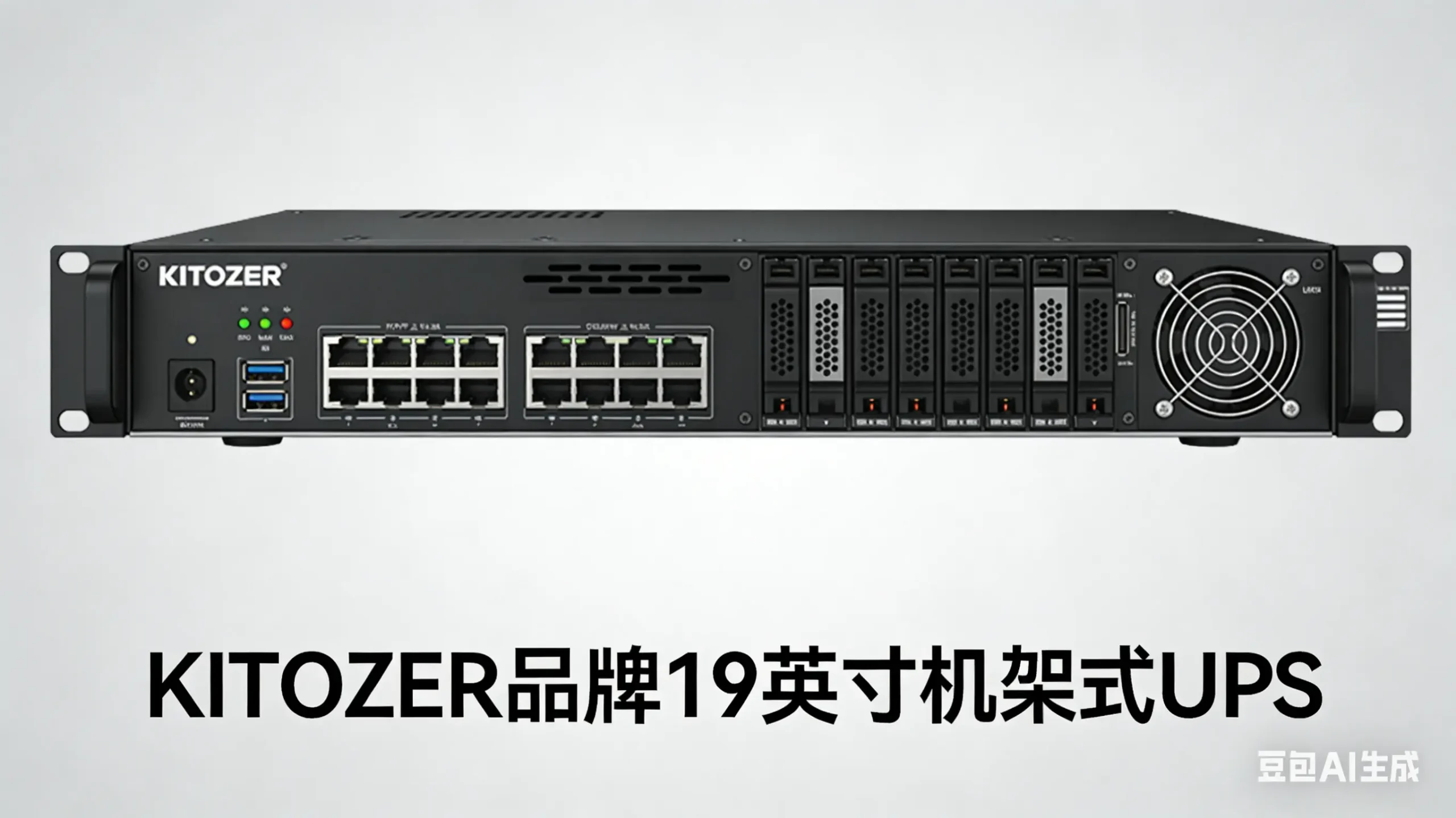
- Modular racking — 19-inch rack and cabinet formats scale from small UPS to large power rooms.
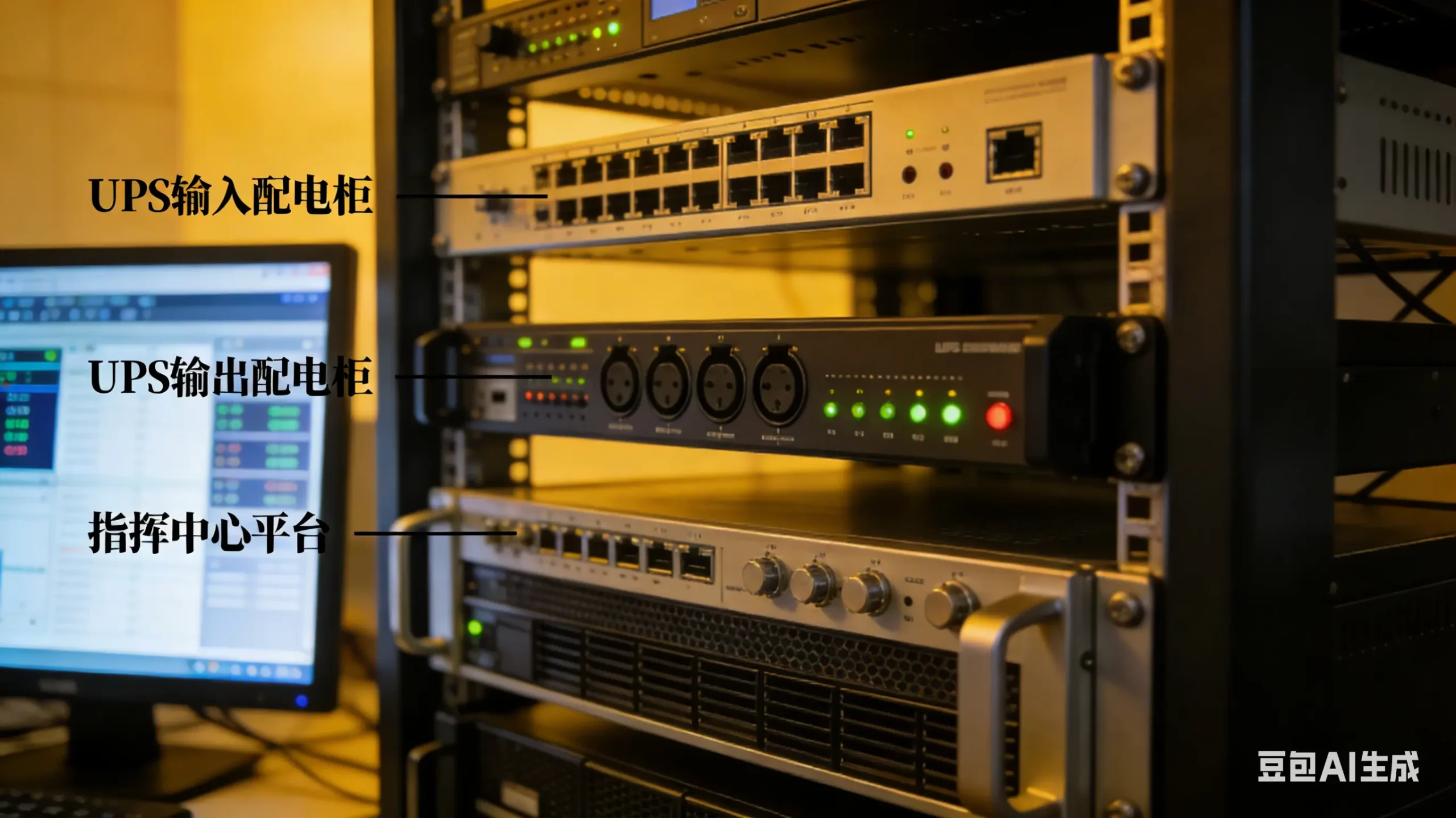
- Monitoring integration — status, alarms and run-time estimates feed the site platform with the same protocol layer as other power devices.
5. Selection: Matching the Battery to the UPS
| Selection Criterion | What to Check |
|---|---|
| Voltage compatibility | String voltage matches UPS DC bus / inverter input range |
| Capacity (Ah / kWh) | Run-time target at rated load, including aging margin |
| Discharge rate | Cell rating covers the UPS current profile without voltage collapse |
| Charge method | Charger profile (CV/CC) and BMS coordination |
| Communication | Protocol match (CAN, RS485, dry contacts) for monitoring |
| Environment | Room temperature, ventilation and footprint constraints |
A correct selection is a system design, not a shopping decision: the battery, its BMS, the charger settings and the monitoring interface must be engineered as one unit to deliver the promised run time.

6. Deployment and Safety
- Site assessment — load profile, run-time target, room conditions and existing UPS compatibility are confirmed first.
- System design — string architecture, protection (fusing, disconnects), cabling and thermal provisions are engineered and documented.
- Installation — batteries, BMS and interconnects are installed by qualified engineers following the design and torque schedule.
- Commissioning — charge, capacity test and BMS configuration verify the string delivers its rated run time.
- Operation — the BMS and monitoring platform watch every cell, with alarms and periodic health reports.
Safety follows lithium-ion best practice: correct fusing and disconnects, trained installers, thermal monitoring, and cells from qualified production with type-test evidence.
7. Total Cost of Ownership
| Cost Component | VRLA (10 years) | LiFePO4 (10 years) |
|---|---|---|
| Initial battery cost | Lower | Higher |
| Replacements | 2–3 sets | Typically 0–1 |
| Installation labor | Repeat per replacement | Once |
| Downtime risk | Higher (aging failures) | Lower (BMS visibility) |
| Disposal / handling | Lead-acid logistics | Cleaner, recyclable chemistry |
When replacement labor, outage risk and disposal are counted, LiFePO4 frequently delivers the lower ten-year cost — and the superior availability is the real prize for critical loads.

8. Applications
- Data centers and server rooms — UPS backup with fast recharge between mains events.
- Industrial plants — process control, instrumentation and emergency system backup.
- Hospitals and clinics — critical equipment and life-safety power.
- Commercial buildings — lift, security and network backup power.
- Telecom and edge sites — high-temperature, deep-cycle backup duty.
- Renewables and storage integration — coupling UPS with on-site clean energy.
9. Frequently Asked Questions
LiFePO4 UPS Battery FAQ
1. Is LiFePO4 safe for UPS use?
Yes — lithium iron phosphate is one of the most thermally stable lithium chemistries, and the BMS adds cell-level protection against over-voltage, under-voltage, over-current and temperature extremes.
2. How long do LiFePO4 UPS batteries last?
Typically 10+ years or 2,000–4,000 cycles versus 3–5 years for VRLA in the same duty — usually two to three lead-acid lifetimes.
3. Can LiFePO4 replace my existing lead-acid UPS battery?
Usually yes — string voltage can be matched to the UPS DC bus; a compatibility and design review confirms charger settings and interface requirements before replacement.
4. Why does LiFePO4 recharge faster?
Its chemistry accepts higher charge current, so a fully discharged string returns to readiness in hours instead of overnight — shortening the vulnerable window after an outage.
5. What does the BMS do?
It balances cells, protects against electrical and thermal faults, estimates state of charge and health, and communicates status to the UPS or monitoring platform.
6. How much space and weight do I save?
LiFePO4 systems are typically about half the weight and footprint of equivalent VRLA strings — a major advantage in crowded power rooms.
7. What happens in a hot UPS room?
Thermal management and derating keep cells inside their safe window; LiFePO4 also tolerates higher temperatures better than VRLA, whose life shortens sharply in heat.
8. Is the total cost lower?
First cost is higher, but over ten years fewer replacements, less labor and lower downtime risk usually make LiFePO4 the lower total cost of ownership.
9. Do you provide monitoring?
Yes — BMS data integrates with site platforms for continuous status, alarms and run-time reporting.
10. What testing backs the system?
Cells and strings carry type-test evidence and factory test records; commissioning includes charge, capacity and protection verification.
10. Related Solutions
- Telecom Power Distribution Unit (PDU)
- DC Distribution Cabinet
- Data Center Turnkey Integration
- General Outdoor Cabinets
- Industry Application Outdoor Cabinets
About Guangzhou Lain Intelligent System Development Co., Ltd.
Guangzhou Lain Intelligent System Development Co., Ltd. supplies LiFePO4 battery systems and integrated UPS power solutions with BMS and monitoring for critical facilities worldwide. From single rooms to enterprise facilities, KITOZER provides design, manufacturing, integration, testing and after-sales service. Export and support scope are confirmed on the quotation.
Contact us for a free technical consultation:
- Company: Guangzhou Lain Intelligent System Development Co., Ltd.
- Address: 1st Floor, Building A, Chaotian Industrial Park, Zhongrun Industrial Park, Shilou Town, Panyu District, Guangzhou, Guangdong, China
- Tel/WeChat: +86 13538869979 | +86 13538869979
- WhatsApp: +86 19068534140
- Email: zl19068534140@gmail.com
- Website: www.gdlain.com | Request a Quote
Typical response time: within one business day. Project references, drawings and samples are available on request.