1. Overview: Giving Every Base Station Site a Set of Eyes
A telecom base station is usually an unattended cabinet, shelter or rooftop room holding rectifiers, batteries, transmission equipment and controllers worth far more than the enclosure that protects them. The enclosure keeps weather out, but it cannot tell you what is happening inside: whether a rectifier is overheating, a battery compartment is humid, a smoke source is developing, water is leaking in, or a door has been forced open. Base station environmental sensors close that gap — compact, low-power sensing modules that continuously watch temperature, humidity, smoke, water and door events and report them to the site controller before small problems become failed sites.
Guangzhou Lain Intelligent System Development Co., Ltd. supplies a complete family of environmental sensors for telecom sites, from single-purpose temperature probes to multi-sensor modules that combine several inputs in one compact unit. This guide explains what to monitor inside a base station, how the sensors connect and report, which ratings matter for the telecom environment, and how to retrofit sensing to sites that were built without it.
2. Why Unattended Sites Need Environmental Sensing
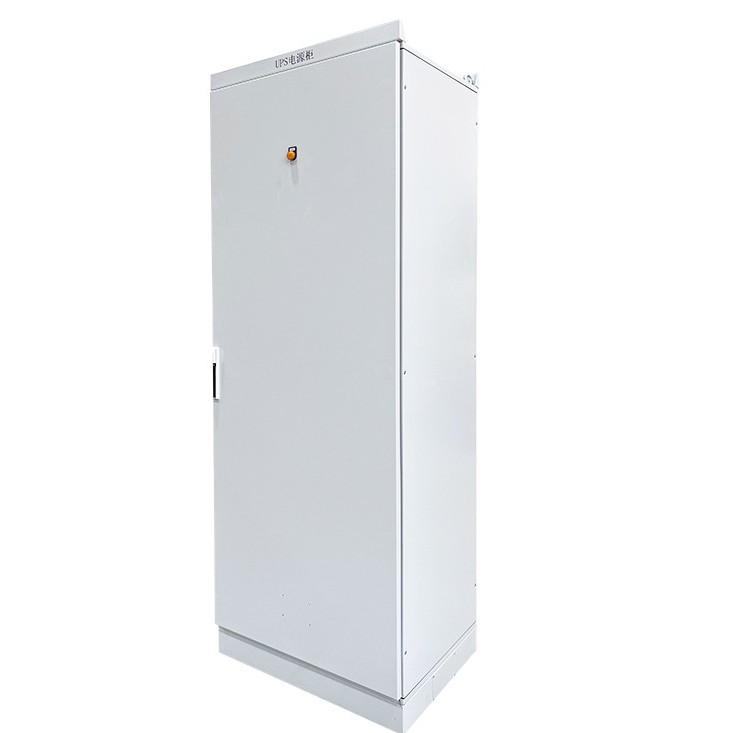
Most base station failures are environmental before they are electrical. Heat is the classic killer: rectifiers and power modules derate as cabinet temperature rises, and prolonged exposure above rated temperature shortens component life and can trigger thermal shutdown of the whole site. Condensation is the silent one: when humid air meets cold surfaces inside a shelter or cabinet, moisture forms on PCBs, connectors and battery terminals, causing corrosion, tracking and intermittent faults that are extremely hard to trace. Smoke is the emergency: an electrical fault, a failing battery cell or an overheated cable can produce smoke well before flames, and minutes of early warning can save the site. Water is the intruder: roof leaks, door seals, AC condensation trays and flood water all find their way toward equipment. And an open door is an invitation: theft of batteries, modules and cable is a real operating cost for tower companies.
Environmental sensors convert each of these risks into a measurable signal. Instead of discovering a problem at the next scheduled site visit — which may be weeks away — the operator is alerted in real time and can dispatch a technician, open a ticket and often resolve the issue remotely.
3. The Sensor Family: What to Monitor and How
3.1 Temperature and Humidity Sensors
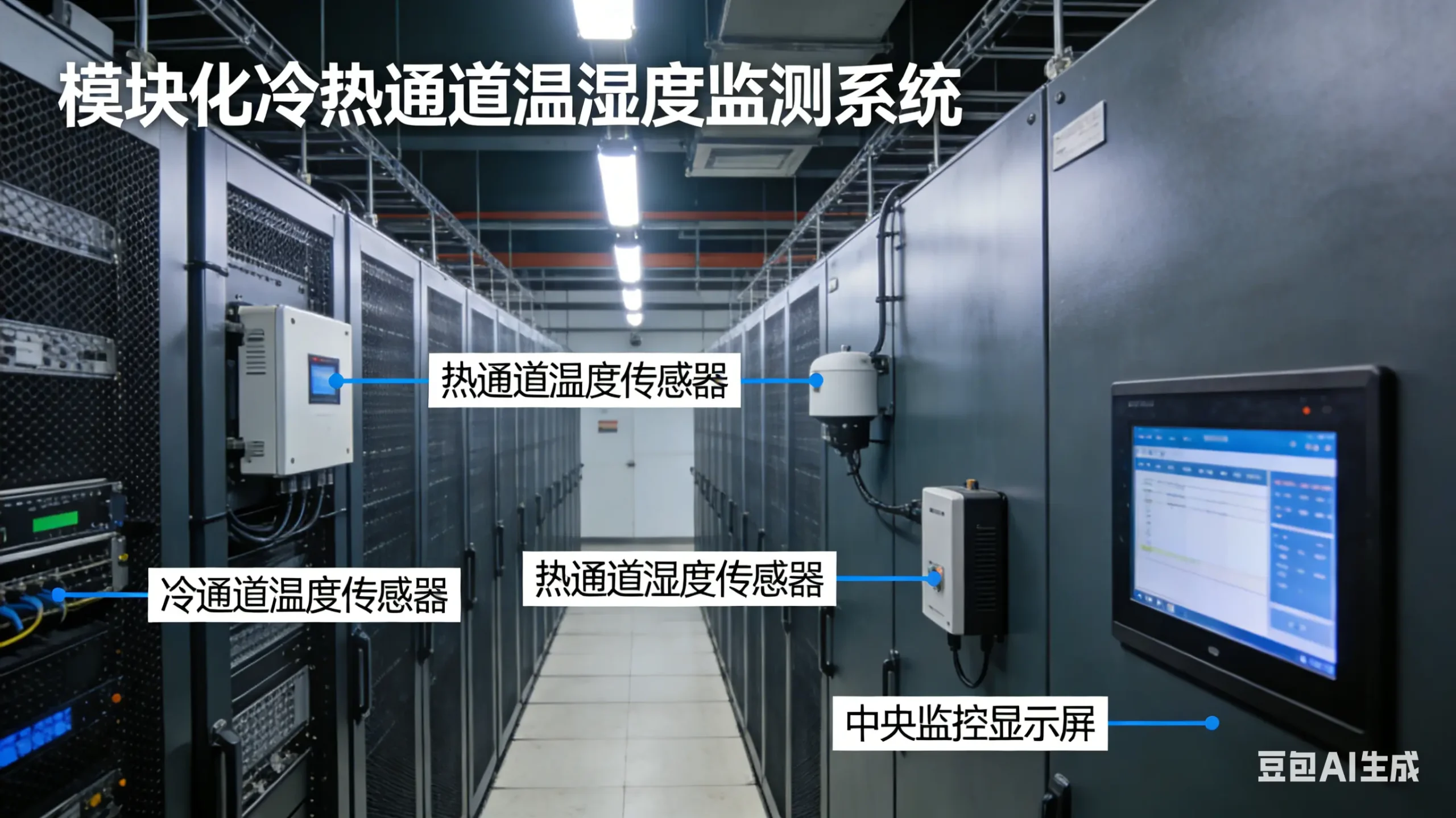
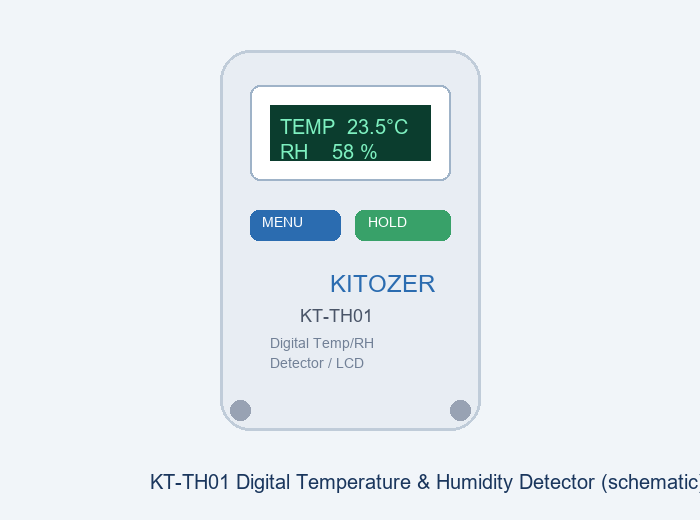
Digital temperature/humidity probes are the workhorses of site monitoring. They are installed inside cabinets (equipment compartment, battery compartment), inside the shelter and sometimes outdoors for ambient comparison. Typical accuracy is ±0.3°C for temperature and ±2-3% RH for humidity, which is more than enough to detect the trends that matter: a cabinet creeping toward its thermal limit, or humidity rising toward the dew point. Lain’s KT-TH01 detector family is a compact example of this class, mounting directly in a cabinet or on a wall and reporting over the site bus.
3.2 Smoke Detectors
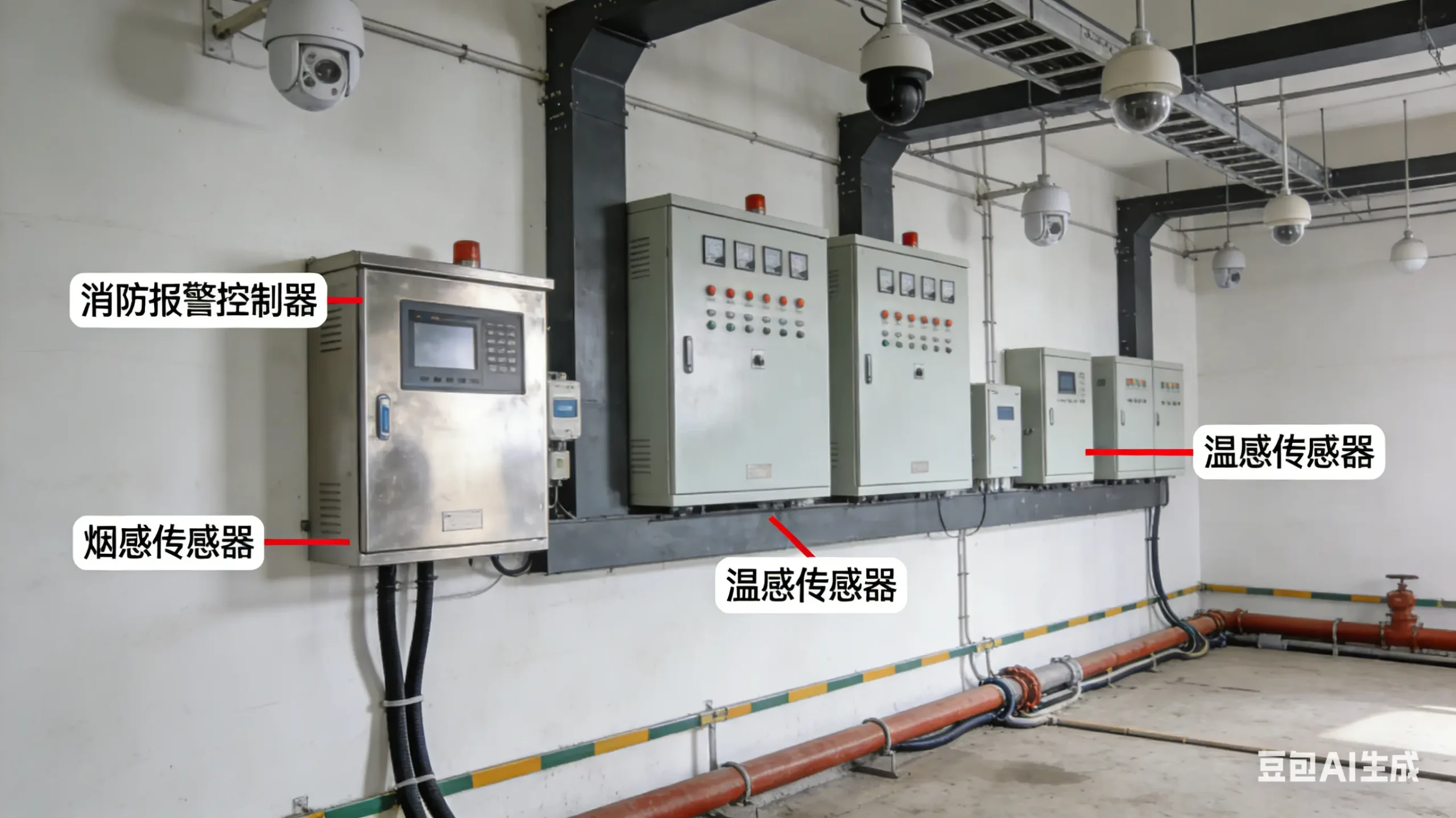
Photoelectric smoke detectors give early warning of fire inside enclosures, where smoldering cables and battery faults are the main risks. For larger shelters, aspirating (air-sampling) detectors can be used where very early warning is required, drawing air samples from multiple points to a central detector. Detectors are typically connected by dry contact or a monitored alarm input so that any alarm is visible to the site controller even if the detector itself is a third-party unit.
3.3 Water Leakage Sensors
Water leak detection uses rope sensors along shelter floors and door thresholds, plus point sensors at known risk locations: under AC units and drip trays, near pipe entries, and at the lowest point of the shelter floor. A rope sensor detects water anywhere along its length, so a leak at an unexpected point is still caught. This is especially valuable in rooftop and basement sites where water entry paths are hard to predict.
3.4 Door Position and Tamper Sensors
Magnetic door contacts report open/close state and feed forced-entry and door-left-open alarms. On cabinets, tamper switches detect when an enclosure is opened, whether by an authorized engineer or not; combined with access logging this gives a complete record of who touched what, and immediate alarm when entry happens outside the maintenance window.
3.5 Multi-Sensor Modules
For compact cabinets where space and installation effort matter, multi-sensor modules combine temperature, humidity, smoke and door inputs in one unit with a single bus connection and one address. They cut cabling, reduce the number of failure points and are the fastest way to bring an existing cabinet under monitoring.
4. Where Sensors Are Installed on a Site
| Location | Primary Sensors | What They Protect |
|---|---|---|
| Equipment cabinet | Temperature, humidity, smoke, tamper | Rectifiers, controllers, transmission modules |
| Battery compartment | Temperature, smoke, (optional) hydrogen | Batteries — heat and venting risk |
| Shelter room | Temperature, humidity, smoke, water rope, door | Whole-room protection and forced-entry alarm |
| AC / drip-tray area | Water point/rope sensors | Condensate and pipe leaks before they spread |
| Outdoor / ambient | Temperature, humidity (weather-rated) | Reference values for ventilation decisions |
| Tower / rooftop entry | Door contact, water sensor | Access control and weather ingress |
Sensor placement follows the risk, not the blueprint: every compartment that holds valuable or heat-generating equipment gets temperature and smoke coverage, every likely water path gets leak coverage, and every entry point gets door coverage. Lain engineers agree a sensor plan with the operator during survey so that each site type — outdoor cabinet, walk-in shelter, rooftop room or containerized site — is covered appropriately.
5. Integration: From Sensor to NMS
Sensors connect to the site controller or FSU (field supervision unit) over RS-485 with the Modbus protocol, the de-facto standard in telecom site monitoring, or through dry-contact alarm inputs for simple detectors. Newer Lain sensor options also support IoT protocols such as LoRa and NB-IoT, which is useful for standalone reporting where no FSU exists or where adding a wired bus to an existing site is impractical.
Values and alarms are forwarded to the network management system (NMS), where each site appears with its live readings, alarm states and history. Thresholds are configurable per site, per season and per equipment type — for example, a shelter in a hot climate can alarm on temperature at a different level than a cabinet in a temperate one, and humidity limits can be tightened in the rainy season. Alarm levels (warning vs. critical) and notification routes (ticket, SMS, app push) are set during commissioning and can be tuned without touching the sensors.
6. Designed for the Telecom Environment
Telecom sensors live in harsh conditions: wide temperature swings, dust, vibration from nearby equipment, and sites that may only be visited every few weeks. Lain environmental sensors are rated for the telecom environment, with operating temperature options down to -40°C and up to +70°C where required, and enclosures that resist dust and humidity. Power draw is kept minimal — typically a few milliamps per sensor — so that monitoring does not meaningfully shorten battery autonomy during mains failures, which is exactly when the site is most at risk and monitoring matters most.
Because the sensors are low-power and bus-connected, a full cabinet can be brought under monitoring with negligible impact on the site’s power budget, and the same bus can carry future additions (extra temperature points, a second door contact, a water rope extension) without new infrastructure.
7. The Payoff: From Silent Failure to Dispatchable Ticket
| Event | Without Monitoring | With Monitoring |
|---|---|---|
| Rectifier over-temperature | Thermal shutdown or permanent damage | Warning before shutdown; fan/vent action |
| Rising humidity / condensation | Corrosion and intermittent faults | Humidity alarm; dehumidifier or vent control |
| Smoke from cable/battery fault | Fire discovered late | Early smoke alarm; safe shutdown and dispatch |
| Water leak at AC or roof | Water reaches equipment | Leak alarm at source; remote or on-site fix |
| Door forced or left open | Theft or dust/animal ingress | Immediate forced-entry / door-open alarm |
| Battery compartment heat | Accelerated aging or thermal event | Temperature alarm and early intervention |
Continuous sensing converts environmental risk into early alarms and dispatchable tickets, and the same data supports trend analysis: operators can see which sites run hot in summer, which shelters are chronically humid, and where door events cluster — and fix the pattern rather than the symptom.
8. New Sites and Retrofits
On new sites, sensors are specified with the power system and installed during integration, with every point tested before handover. For the far larger population of existing sites, retrofitting is straightforward: multi-sensor modules mount inside cabinets with a single bus drop, rope sensors lay along floors and thresholds, and wireless (LoRa/NB-IoT) options avoid pulling cable through finished shelters. KITOZER supplies the sensor family, the site controller integration and the configuration service, so an operator can roll sensing out across a portfolio of sites without a second vendor in the middle.
9. Frequently Asked Questions
Base Station Environmental Sensors FAQ
1. Why do base stations need environmental sensors?
Base station equipment fails from heat, humidity, smoke, water and intrusion long before it fails electrically; sensors turn those risks into early alarms so faults are fixed before they become site outages.
2. What does a typical site monitor?
Cabinet and shelter temperature and humidity, smoke detection, water leak rope/points, and door/tamper status — usually on one RS-485/Modbus bus to the site controller or FSU.
3. What accuracy do the temperature/humidity sensors offer?
Typically ±0.3°C temperature and ±2-3% RH humidity, sufficient for trend alarms and dew-point protection.
4. How do sensors connect to the network?
Over RS-485 (Modbus) or dry contacts to the site controller/FSU; newer options use IoT protocols such as LoRa and NB-IoT for standalone reporting.
5. Can sensors be added to existing sites?
Yes — multi-sensor modules retrofit into cabinets with one bus drop, rope sensors install along floors and thresholds, and wireless options avoid new cabling in finished shelters.
6. What temperatures can the sensors withstand?
KITOZER offers ratings suited to the telecom environment, with operating temperature options down to -40°C and up to +70°C where required.
7. Do the sensors drain the battery?
No — each sensor draws only a few milliamps, so monitoring has negligible impact on battery autonomy during mains failure.
8. What alarms are available?
Warning and critical levels with configurable thresholds per site/season, delivered as tickets, SMS or app push through the NMS.
9. Are smoke and water sensors compatible with third-party detectors?
Yes — dry-contact alarm inputs accept standard third-party smoke, heat and water detectors so existing hardware can be brought onto the monitoring bus.
10. Do you supply the sensor plan and commissioning?
Yes — Lain surveys the site, agrees the sensor plan, integrates with the site controller/NMS and tests every point before handover.
11. Can thresholds be changed after installation?
Yes — thresholds and alarm routes are configurable per site and per season from the monitoring platform without touching the sensors.
12. How do I choose between separate sensors and a multi-sensor module?
Separate sensors suit large shelters needing distributed coverage; multi-sensor modules suit cabinets and fast retrofits where space and installation effort are limited.
10. Related Solutions
- 4G/5G Base Station Hub
- Telecom Power Distribution Unit (PDU)
- Cabinet Thermal Control Module
- Cabinet Access Control
- LiFePO4 Batteries for Base Stations
- Precision Temperature & Humidity Monitoring
About Guangzhou Lain Intelligent System Development Co., Ltd.
Guangzhou Lain Intelligent System Development Co., Ltd. supplies base station environmental sensors — temperature, humidity, smoke, water leak, door and multi-sensor modules — plus site controller integration for telecom operators and tower companies worldwide. From single rooms to enterprise facilities, KITOZER provides design, manufacturing, integration, testing and after-sales service under one roof and exports worldwide.
Contact us for a free technical consultation:
- Company: Guangzhou Lain Intelligent System Development Co., Ltd.
- Address: 1st Floor, Building A, Chaotian Industrial Park, Zhongrun Industrial Park, Shilou Town, Panyu District, Guangzhou, Guangdong, China
- Tel/WeChat: +86 13922289957 | +86 18520668845 | +86 13538869979
- WhatsApp: +86 19068534140
- Email: zl19068534140@gmail.com
- Website: www.gdlain.com | Request a Quote
Typical response time: within one business day. Project references, drawings and samples are available on request.